TRANSITION SERIES
Topics for the Advanced EMT
CHAPTER
Medical Terminology
1
Introduction
• Medical terminology is the language of
health care.
• Medical terminology is much more
concise than normal English for
describing things of a medical nature.
• By understanding terms, components,
even complex words, can be broken
down.
Structure of Medical Terms
• Three basic components
– Combining form
– Suffix
– Prefix
Use proper medical terminology to communicate with other health care
professionals.
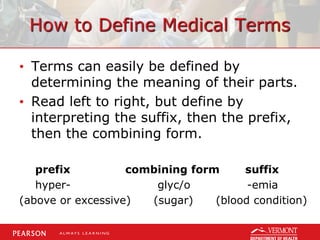
How to Define Medical Terms
• Terms can easily be defined by
determining the meaning of their parts.
• Read left to right, but define by
interpreting the suffix, then the prefix,
then the combining form.
prefix combining form suffix
hyper- glyc/o -emia
(above or excessive) (sugar) (blood condition)
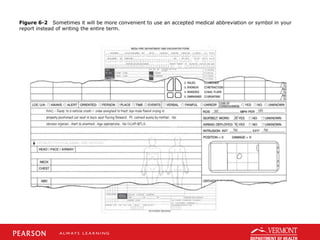
Figure 6-2 Sometimes it will be more convenient to use an accepted medical abbreviation or symbol in your
report instead of writing the entire term.
Common Prefixes in Medical Terms
Common Suffixes in Medical Terms
Case Study
• Which of the following is a root word?
A. anti-
B. hepat-
C. -itis
D. -emia
Case Study (cont’d)
• The prefix “tachy-” means:
A. above
B. outside
C. fast
D. higher
Case Study (cont’d)
• If a patient is complaining of dyspnea,
he has what condition?
A. chest pain
B. stomach ache
C. nausea
D. trouble breathing
Case Study (cont’d)
• What is the common prefix meaning
“alongside”?
A. peri-
B. poly-
C. para-
D. post-
Case Study (cont’d)
• The suffix “-logy” refers to:
A. study of
B. occurring after
C. within
D. pertaining to
Case Study (cont’d)
• The term for blood in the urine would
be:
A. diarrhea
B. rhinorrhea
C. hematuria
D. hematemesis
Case Study - Matching
______ 1. Arthritis
______ 2. Myodynia
______ 3. Hepatomegaly
______ 4. Apnea
______ 5. Hematuria
______ 6. Dysuria
______ 7. Hysterectomy
______ 8. Osteomalacia
______ 9. Aphasia
______10. Otorrhea
a. difficult or painful
urination
b. absence of breathing
c. pain in a muscle
d. softening of the bone
e. discharge from the ear
f. surgical removal of the
uterus
g. enlargement of the liver
h. inflammation of a joint
i. loss of speech
j. blood in the urine
Case Study (cont’d)
• Interpret this case using normal
English.
• History and Assessment:
– A 67 y/o male c/o angina and dyspnea x
2 hours. The pain is severe (8 out of
10), located retrosternal, with radiation
to the left humerus and mandible.
Case Study (cont’d)
• History and Assessment:
– The pain awoke the patient from his
sleep. Discomfort does not change with
movement or respirations. The pt. has a
Hx of CVD, CHF, HTN, and MI.
Medications include ASA, insulin, Lasix,
and lisinopril. He is allergic to PCN.
Case Study (cont’d)
• Physical Exam:
– Pupils: PEARL, membranes hydrated
– Airway: Patent, no abnormal sounds
– Breathing: Adequate with good Vt
– Circulation: Peripheral pulses intact
Case Study (cont’d)
• Physical Exam:
– Thorax: = BS bilaterally, excursion
normal, (+) dyspnea, (+) angina
– Abdomen: (-) N/V, (-) distention, (-)
incontinence, (-) hematuria, (-) diarrhea
– Extremities: PMS = times 4, skin W&D,
patient MAE well
Case Study (cont’d)
• Treatment:
– O2 via NRB, ASA 325 mg p.o., nitro 0.3
mg SL x3, IV initiated, patient placed in
POC. Pain diminished from 8 to 2 on
scale. Respirations now eupneic, and
patient states they “feel better.”
Hospital notified en route and bedside
report given upon arrival.
Summary
• The proper use of medical terminology
will help ensure clarity in the sharing of
information regarding the patient.
• The Advanced EMT should keep abreast
of medical terms and abbreviations as
they pertain to the practice.
• The proper use of medical terminology
is an expectation of the Advanced EMT.

2.terminology transition.ppt

  • 1.
    TRANSITION SERIES Topics forthe Advanced EMT CHAPTER Medical Terminology 1
  • 2.
    Introduction • Medical terminologyis the language of health care. • Medical terminology is much more concise than normal English for describing things of a medical nature. • By understanding terms, components, even complex words, can be broken down.
  • 3.
    Structure of MedicalTerms • Three basic components – Combining form – Suffix – Prefix
  • 4.
    Use proper medicalterminology to communicate with other health care professionals.
  • 5.
    How to DefineMedical Terms • Terms can easily be defined by determining the meaning of their parts. • Read left to right, but define by interpreting the suffix, then the prefix, then the combining form. prefix combining form suffix hyper- glyc/o -emia (above or excessive) (sugar) (blood condition)
  • 6.
    Figure 6-2 Sometimesit will be more convenient to use an accepted medical abbreviation or symbol in your report instead of writing the entire term.
  • 7.
    Common Prefixes inMedical Terms
  • 8.
    Common Suffixes inMedical Terms
  • 9.
    Case Study • Whichof the following is a root word? A. anti- B. hepat- C. -itis D. -emia
  • 10.
    Case Study (cont’d) •The prefix “tachy-” means: A. above B. outside C. fast D. higher
  • 11.
    Case Study (cont’d) •If a patient is complaining of dyspnea, he has what condition? A. chest pain B. stomach ache C. nausea D. trouble breathing
  • 12.
    Case Study (cont’d) •What is the common prefix meaning “alongside”? A. peri- B. poly- C. para- D. post-
  • 13.
    Case Study (cont’d) •The suffix “-logy” refers to: A. study of B. occurring after C. within D. pertaining to
  • 14.
    Case Study (cont’d) •The term for blood in the urine would be: A. diarrhea B. rhinorrhea C. hematuria D. hematemesis
  • 15.
    Case Study -Matching ______ 1. Arthritis ______ 2. Myodynia ______ 3. Hepatomegaly ______ 4. Apnea ______ 5. Hematuria ______ 6. Dysuria ______ 7. Hysterectomy ______ 8. Osteomalacia ______ 9. Aphasia ______10. Otorrhea a. difficult or painful urination b. absence of breathing c. pain in a muscle d. softening of the bone e. discharge from the ear f. surgical removal of the uterus g. enlargement of the liver h. inflammation of a joint i. loss of speech j. blood in the urine
  • 16.
    Case Study (cont’d) •Interpret this case using normal English. • History and Assessment: – A 67 y/o male c/o angina and dyspnea x 2 hours. The pain is severe (8 out of 10), located retrosternal, with radiation to the left humerus and mandible.
  • 17.
    Case Study (cont’d) •History and Assessment: – The pain awoke the patient from his sleep. Discomfort does not change with movement or respirations. The pt. has a Hx of CVD, CHF, HTN, and MI. Medications include ASA, insulin, Lasix, and lisinopril. He is allergic to PCN.
  • 18.
    Case Study (cont’d) •Physical Exam: – Pupils: PEARL, membranes hydrated – Airway: Patent, no abnormal sounds – Breathing: Adequate with good Vt – Circulation: Peripheral pulses intact
  • 19.
    Case Study (cont’d) •Physical Exam: – Thorax: = BS bilaterally, excursion normal, (+) dyspnea, (+) angina – Abdomen: (-) N/V, (-) distention, (-) incontinence, (-) hematuria, (-) diarrhea – Extremities: PMS = times 4, skin W&D, patient MAE well
  • 20.
    Case Study (cont’d) •Treatment: – O2 via NRB, ASA 325 mg p.o., nitro 0.3 mg SL x3, IV initiated, patient placed in POC. Pain diminished from 8 to 2 on scale. Respirations now eupneic, and patient states they “feel better.” Hospital notified en route and bedside report given upon arrival.
  • 21.
    Summary • The properuse of medical terminology will help ensure clarity in the sharing of information regarding the patient. • The Advanced EMT should keep abreast of medical terms and abbreviations as they pertain to the practice. • The proper use of medical terminology is an expectation of the Advanced EMT.

Editor's Notes

  • #3 Medical terminology is the language of health care. As an Advanced EMT, it is important that you establish a basic understanding of medical terminology so you may communicate effectively with other professionals on the health care team. Although we adjust our communication styles for our patients, as health care professionals we should use proper medical terminology when addressing others on the health care team and when documenting patient care reports.
  • #4 Most medical terms have three basic components: Prefix Combining form Suffix The combining form is the subject or foundation of the word that gives the word its essential meaning. Each combining form is composed of two parts: Root Combining vowel The root is the part of the term that provides the foundation for the rest of the term. Combining vowels are joined to the end of a root to connect the root to another root or to a suffix. Combining vowels make the word easier to pronounce. The most common combining vowel is o, followed by i. A combining vowel is not used if the suffix begins with a vowel. Some medical terms may contain more than one combining form. For example, the term cardiovascular has two combining forms: cardi/o (heart) vascul/o (vessel) cardi/o vascul/o -ar
  • #6 In this example of hyperglycemia, the meaning is derived from the suffix -emia (meaning blood condition), then the prefix hyper- (meaning above or excessive), followed by the combining form glyc/o (meaning glucose or sugar). So the meaning of the term hyperglycemia would be a blood condition that has an excessive amount of glucose (sugar) in it.
  • #10 Answer: B. hepat-
  • #11 Answer: C. fast
  • #12 Answer: D. trouble breathing
  • #13 Answer: C. para-
  • #14 Answer: A. study of
  • #15 Answer: C. hematuria
  • #16 Answer as appropriate.
  • #17 Allow student(s) to interpret this medical report.
  • #18 Allow student(s) to interpret this medical report.
  • #19 Allow student(s) to interpret this medical report.
  • #20 Allow student(s) to interpret this medical report.
  • #21 Allow student(s) to interpret this medical report.
  • #22 Discuss as needed.