2G Spectrum Scam
- By Tirtha Kale (TYBAMMC- Journalism)
ABOUT SPECTRUM
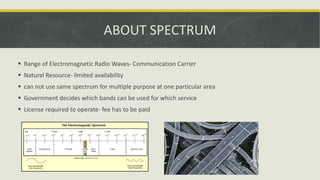
 Range of Electromagnetic Radio Waves- Communication Carrier
 Natural Resource- limited availability
 can not use same spectrum for multiple purpose at one particular area
 Government decides which bands can be used for which service
 License required to operate- fee has to be paid
WHAT IS 2G SPECTRUM SCAM?
 The wavelength between 800-1900MHz is
called 2G spectrum
 In 2008 122 new telecom licenses issued to
several domestic companies with less
experience in telecom sector at a price set in
2001.
 The shortfall is 1.76 lakh crore rupees.
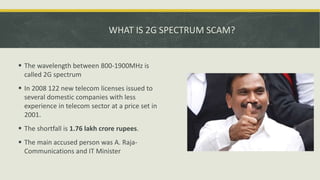
 The main accused person was A. Raja-
Communications and IT Minister
ALLOCATION OF SPECTRUM
 Auction or First Come-First Served Basis
 The Government decided- 1st come, 1st served.
 Communications and IT Minister- A. Raja
 apply for licenses before 1st October 2007 and pay license fees
 Date for submitting application changed from 1st October to 5th September
 License issue date- 10th January 2008- less time given to telecom companies to issues
documents
 place a cap of 121 licenses out of 575 applications
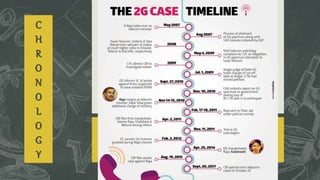
C
H
R
O
N
O
L
O
G
Y
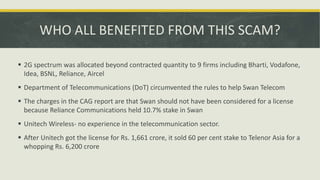
WHO ALL BENEFITED FROM THIS SCAM?
 2G spectrum was allocated beyond contracted quantity to 9 firms including Bharti, Vodafone,
Idea, BSNL, Reliance, Aircel
 Department of Telecommunications (DoT) circumvented the rules to help Swan Telecom
 The charges in the CAG report are that Swan should not have been considered for a license
because Reliance Communications held 10.7% stake in Swan
 Unitech Wireless- no experience in the telecommunication sector.
 After Unitech got the license for Rs. 1,661 crore, it sold 60 per cent stake to Telenor Asia for a
whopping Rs. 6,200 crore
COMPANIES INVOLVED IN THE 2G SCAM
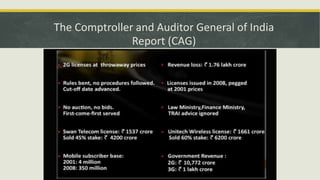
The Comptroller and Auditor General of India
Report (CAG)
MEDIA PERSONS ACCUSED
 Nira Radia- Nira Radia tapes controversy
 Barkha Dutt, an NDTV journalist
 Vir Sanghvi- Hindustan Times editor
 Rajdeep Sardesai- a CNN IBN senior editor
What happened next?
 CPI(M) reiterated its demand for cancellation of the licenses of those private Telco's who got
the spectrum through the first come first served formula and recover the losses.
 was the first to point out to this biggest scam in the country in 2008 itself
 Its continuous exposal and also of the other opposition parties had compelled the
Government to dismiss Communications Minister A. Raja and appointment of JPC (Joint
Parliamentary Commitee) to inquire in the matter
 On 2 February 2012 the Supreme Court ruled on petitions filed by Subramanian Swamy and
the Centre for Public Interest Litigation (CPIL)- cancelling all 122 spectrum licenses
INITIATIVES TO AVOID SCAMS (REMEDIES)
 Setting up of preventive mechanism
 Ministers, civil servants relation to be reformed
 Protection of civil servants.
 Stopping the culture of sponsoring politicians by businessmen
 Saving the media from rotting through checks and balances
 People should be aware of consequences of weak governments and should enable strong
governments.
THANK YOU

2G Spectrum Scam.pptx

  • 1.
    2G Spectrum Scam -By Tirtha Kale (TYBAMMC- Journalism)
  • 2.
    ABOUT SPECTRUM  Rangeof Electromagnetic Radio Waves- Communication Carrier  Natural Resource- limited availability  can not use same spectrum for multiple purpose at one particular area  Government decides which bands can be used for which service  License required to operate- fee has to be paid
  • 3.
    WHAT IS 2GSPECTRUM SCAM?  The wavelength between 800-1900MHz is called 2G spectrum  In 2008 122 new telecom licenses issued to several domestic companies with less experience in telecom sector at a price set in 2001.  The shortfall is 1.76 lakh crore rupees.  The main accused person was A. Raja- Communications and IT Minister
  • 4.
    ALLOCATION OF SPECTRUM Auction or First Come-First Served Basis  The Government decided- 1st come, 1st served.  Communications and IT Minister- A. Raja  apply for licenses before 1st October 2007 and pay license fees  Date for submitting application changed from 1st October to 5th September  License issue date- 10th January 2008- less time given to telecom companies to issues documents  place a cap of 121 licenses out of 575 applications
  • 5.
  • 6.
    WHO ALL BENEFITEDFROM THIS SCAM?  2G spectrum was allocated beyond contracted quantity to 9 firms including Bharti, Vodafone, Idea, BSNL, Reliance, Aircel  Department of Telecommunications (DoT) circumvented the rules to help Swan Telecom  The charges in the CAG report are that Swan should not have been considered for a license because Reliance Communications held 10.7% stake in Swan  Unitech Wireless- no experience in the telecommunication sector.  After Unitech got the license for Rs. 1,661 crore, it sold 60 per cent stake to Telenor Asia for a whopping Rs. 6,200 crore
  • 7.
  • 8.
    The Comptroller andAuditor General of India Report (CAG)
  • 9.
    MEDIA PERSONS ACCUSED Nira Radia- Nira Radia tapes controversy  Barkha Dutt, an NDTV journalist  Vir Sanghvi- Hindustan Times editor  Rajdeep Sardesai- a CNN IBN senior editor
  • 10.
    What happened next? CPI(M) reiterated its demand for cancellation of the licenses of those private Telco's who got the spectrum through the first come first served formula and recover the losses.  was the first to point out to this biggest scam in the country in 2008 itself  Its continuous exposal and also of the other opposition parties had compelled the Government to dismiss Communications Minister A. Raja and appointment of JPC (Joint Parliamentary Commitee) to inquire in the matter  On 2 February 2012 the Supreme Court ruled on petitions filed by Subramanian Swamy and the Centre for Public Interest Litigation (CPIL)- cancelling all 122 spectrum licenses
  • 11.
    INITIATIVES TO AVOIDSCAMS (REMEDIES)  Setting up of preventive mechanism  Ministers, civil servants relation to be reformed  Protection of civil servants.  Stopping the culture of sponsoring politicians by businessmen  Saving the media from rotting through checks and balances  People should be aware of consequences of weak governments and should enable strong governments.
  • 12.