





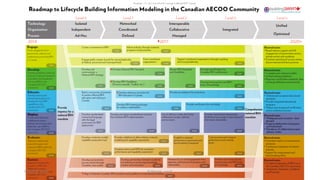

BIM  in  Canada:  
where  are  we  headed?
98th  Annual Conference
Erik  A.  Poirier,   PhD
Postdoctoral  Fellow  |  Dept.  of  Civil  Eng.
University  of  British  Columbia  |  Vancouver  (BC)  Canada
Vice-­‐Chair,   Operations  |  Chair,  Communications
buildingSMART Canada
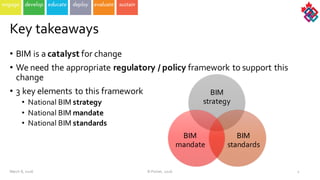
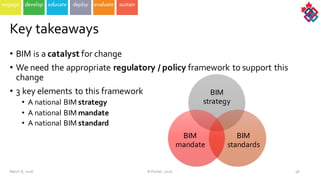
• BIM  is  a  catalyst for  change
• We  need  the  appropriate  regulatory  /  policy  framework  to  support  this  
change
• 3  key  elements  to  this  framework
• National  BIM  strategy
• National  BIM  mandate
• National  BIM  standards
March  8,  2016 ©  Poirier,  2016 2
Key  takeaways
BIM  
strategy
BIM  
standards
BIM  
mandate  
March  8,  2016 ©  Poirier,  2016 3
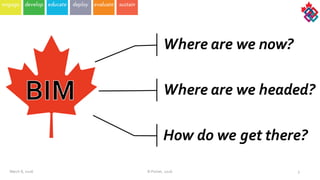
Where are  we now?
Where are  we headed?
How  do  we get there?
March  8,  2016 4
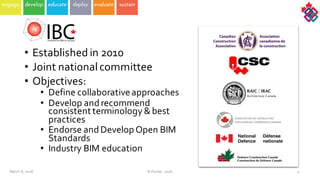
• Established  in  2010
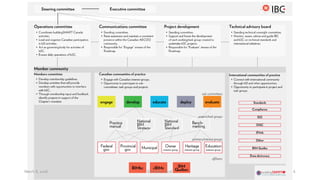
• Joint  national  committee
• Objectives:
• Define  collaborative  approaches
• Develop  and  recommend  
consistent  terminology  &  best  
practices
• Endorse  and  Develop  Open  BIM  
Standards  
• Industry  BIM  education  
©  Poirier,  2016
March  8,  2016 5
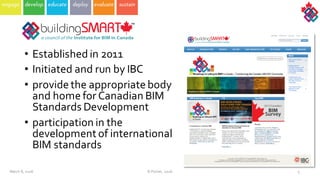
• Established  in  2011
• Initiated  and  run  by  IBC
• provide  the  appropriate  body  
and  home  for  Canadian  BIM  
Standards Development  
• participation  in  the  
development  of  international  
BIM  standards
©  Poirier,  2016
March  8,  2016 6©  Poirier,  2016
March  8,  2016 ©  Poirier,  2016 7
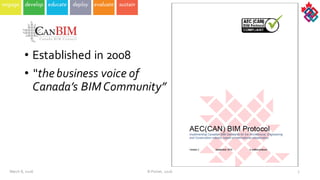
• Established  in  2008
• “the  business  voice  of  
Canada’s  BIM  Community”
March  8,  2016 ©  Poirier,  2016 8
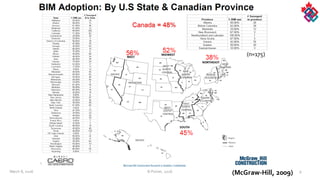
Where  are  we  now  ?
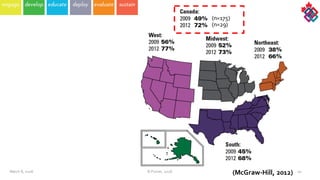
9
(n=175)
(McGraw-­‐Hill,  2009)  March  8,  2016 ©  Poirier,  2016
©  Poirier,  2016 10(McGraw-­‐Hill,  2012)  
(n=29)
(n=175)
March  8,  2016
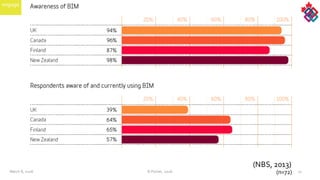
11
(NBS,  2013)  
(n=72)March  8,  2016 ©  Poirier,  2016
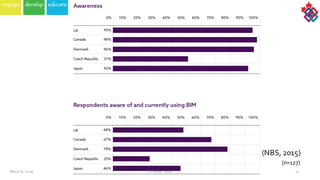
(n=127)
March  8,  2016 12©  Poirier,  2016
(NBS,  2015)  
March  8,  2016 ©  Poirier,  2016 13
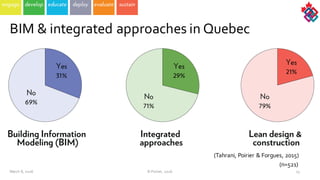
(n=521)
(Tahrani,  Poirier  &  Forgues,  2015)
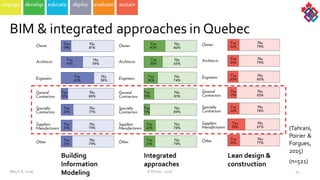
BIM  &  integrated  approaches  in  Quebec
March  8,  2016 ©  Poirier,  2016 14
BIM  &  integrated  approaches  in  Quebec
(n=521)
(Tahrani,  
Poirier  &  
Forgues,  
2015)
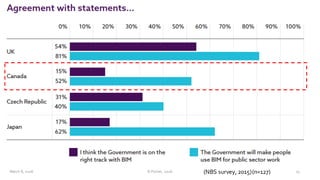
March  8,  2016 ©  Poirier,  2016 15(n=127)(NBS  survey,  2015)
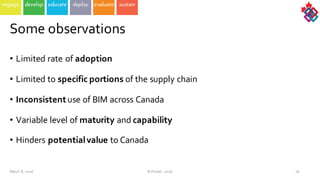
• Limited  rate  of  adoption
• Limited  to  specific portions  of  the  supply chain
• Inconsistentuse  of  BIM  across Canada
• Variable  level of  maturity and  capability
• Hinders potentialvalue  to  Canada  
March  8,  2016 ©  Poirier,  2016 16
Some observations
March  8,  2016 ©  Poirier,  2016 17
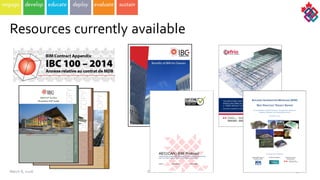
Resources  currently  available
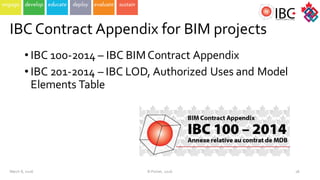
IBC  Contract  Appendix  for  BIM  projects
18
• IBC  100-­‐2014  – IBC  BIM  Contract  Appendix
• IBC  201-­‐2014  – IBC  LOD,  Authorized  Uses  and  Model  
Elements  Table
March  8,  2016 ©  Poirier,  2016
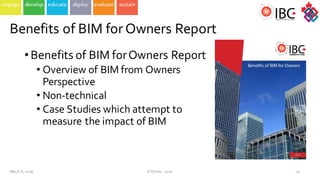
Benefits  of  BIM  for  Owners  Report
19
•Benefits  of  BIM  for  Owners  Report
• Overview  of  BIM  from  Owners  
Perspective
• Non-­‐technical
• Case  Studies  which  attempt  to  
measure  the  impact  of  BIM
March  8,  2016 ©  Poirier,  2016
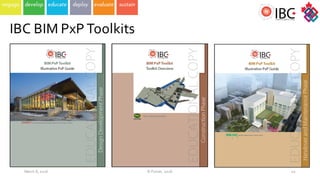
IBC  BIM  PxP Toolkits
March  8,  2016 20©  Poirier,  2016
March  8,  2016 21
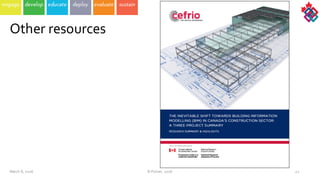
Other  resources
©  Poirier,  2016
March  8,  2016 22
Other  resources
©  Poirier,  2016
March  8,  2016 ©  Poirier,  2016 23
Where  are  we  headed  ?
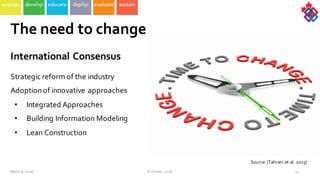
International  Consensus
Strategic  reform  of  the  industry
Adoption  of  innovative  approaches
• Integrated  Approaches
• Building  Information  Modeling
• Lean  Construction
24
The  need to  change
March  8,  2016 ©  Poirier,  2016
Source:  (Tahrani et  al.  2015)
March  8,  2016 25
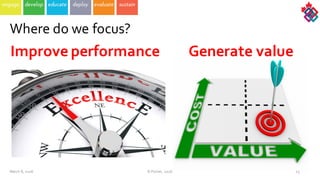
Where do  we focus?
©  Poirier,  2016
Improve  performance Generate  value
March  8,  2016 ©  Poirier,  2016 26
Where  do  we  focus?
27March  8,  2016 ©  Poirier,  2016
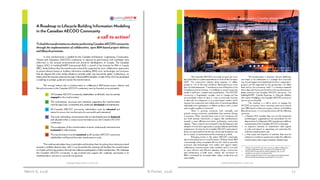
A  call  to  action
March  8,  2016 ©  Poirier,  2016 28
(Goodland,  Lindberg  &  Shorthouse,  2015)
29March  8,  2016 ©  Poirier,  2016
30March  8,  2016 ©  Poirier,  2016
March  8,  2016 31
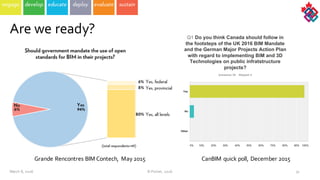
Are  we  ready?
©  Poirier,  2016
Grande  Rencontres  BIM  Contech,   May  2015   CanBIM quick  poll,  December  2015
March  8,  2016 32
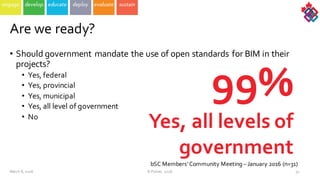
Are  we  ready?
• Should  government  mandate  the  use  of  open  standards  for  BIM  in  their  
projects?
• Yes,  federal
• Yes,  provincial
• Yes,  municipal
• Yes,  all  level  of  government
• No
©  Poirier,  2016
99%  
Yes,  all  levels  of  
government
bSC Members’  Community  Meeting  – January  2016  (n=31)
March  8,  2016 ©  Poirier,  2016 33
How  do  we  get  there  ?
March  8,  2016 ©  Poirier,  2016 34
How  do  we  structure  the  
BIM  adoption  and  
implementation  process  
in  Canada?
1. learn  from  other  countries’  experiences in  the  
transition  to  innovative  project  delivery  approaches?
2. develop  a  comprehensive  reform  strategy  in  order  
to  improve  its  performance  and  efficiency to  
ensure  its  sustainability  and  competitiveness?
35
How  can  the  Canadian  AECO  industry:
March  8,  2016 ©  Poirier,  2016
Source:  (Tahrani et  al.  2015)
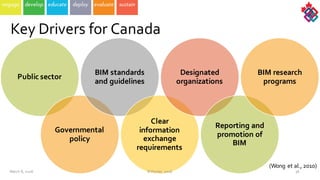
Public  sector  
Governmental  
policy  
BIM  standards  
and  guidelines
Clear  
information  
exchange  
requirements  
Designated  
organizations  
Reporting  and  
promotion  of  
BIM
BIM  research  
programs
36
Key  Drivers  for  Canada
(Wong   et  al.,  2010)  
March  8,  2016 ©  Poirier,  2016
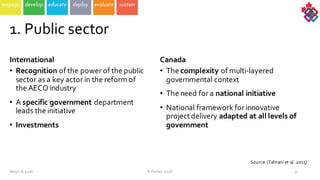
1.  Public  sector
International  
• Recognition of  the  power  of  the  public  
sector  as  a  key  actor  in  the  reform  of  
the  AECO  industry  
• A  specific  government  department  
leads  the  initiative    
• Investments
Canada  
• The  complexity of  multi-­‐layered  
governmental  context  
• The  need  for  a  national  initiative
• National  framework  for  innovative  
project  delivery  adapted  at  all  levels  of  
government    
37March  8,  2016 ©  Poirier,  2016
Source:  (Tahrani et  al.  2015)
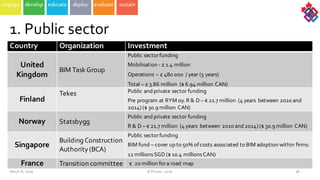
Country Organization Investment
United  
Kingdom
BIM  Task  Group
Public  sector  funding
Mobilisation  -­‐ £  1.4  million
Operations  – £  480  000    /  year  (5  years)
Total  – £  3.86  million    ($  6.94  million    CAN)
Finland
Tekes Public  and  private  sector  funding
Pre  program  at  RYM  oy.  R  &  D  – € 21.7  million    (4  years   between  2010  and  
2014)  ($  30.9  million    CAN)
Norway Statsbygg
Public  and  private  sector  funding
R  &  D  – € 21.7  million    (4  years   between  2010  and  2014)  ($  30.9  million    CAN)
Singapore
Building  Construction  
Authority  (BCA)
Public  sector  funding
BIM  fund  – cover  up  to  50%  of  costs  associated  to  BIM  adoption  within  firms:  
12  millions  SGD  ($  10.4  millions  CAN)
France   Transition committee   € 20  million  for  a  road  map  
1.  Public  sector
38March  8,  2016 ©  Poirier,  2016
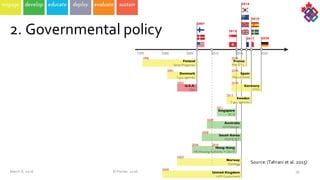
2.  Governmental  policy
39©  Poirier,  2016March  8,  2016
Source:  (Tahrani et  al.  2015)
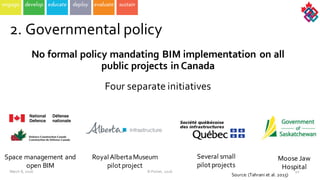
No  formal  policy  mandating  BIM  implementation  on  all  
public  projects  in  Canada
Four  separate  initiatives  
40
2.  Governmental  policy
Space  management  and  
open  BIM  
Royal  Alberta  Museum  
pilot  project  
Several  small  
pilot  projects  
Moose  Jaw  
Hospital  
March  8,  2016 ©  Poirier,  2016
Source:  (Tahrani et  al.  2015)
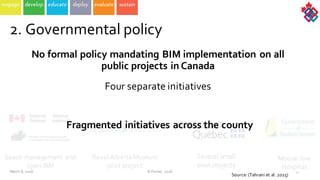
No  formal  policy  mandating  BIM  implementation  on  all  
public  projects  in  Canada
Four  separate  initiatives  
41
2.  Governmental  policy
Space  management  and  
open  BIM  
Royal  Alberta  Museum  
pilot  project  
Several  small  
pilot  projects  
Moose  Jaw  
Hospital  
Fragmented  initiatives  across  the  county
March  8,  2016 ©  Poirier,  2016
Source:  (Tahrani et  al.  2015)
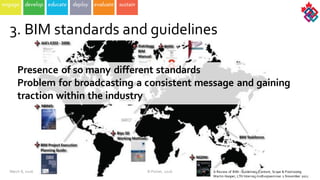
3.  BIM  standards  and  guidelines
A  Review of  BIM-­‐-­‐Guidelines:  Content,  Scope  &  Positioning
Martin  Hooper,  LTH  Interreg midtvejsseminar 2  November 2011
Presence  of  so  many  different  standards
Problem  for  broadcasting  a  consistent  message  and  gaining  
traction  within  the  industry  
42March  8,  2016 ©  Poirier,  2016
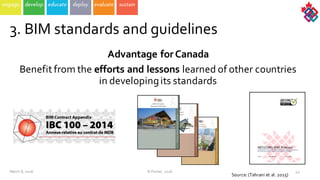
Advantage  for  Canada
Benefit  from  the  efforts  and  lessons  learned  of  other  countries  
in  developing  its  standards  
43
3.  BIM  standards  and  guidelines
March  8,  2016 ©  Poirier,  2016
Source:  (Tahrani et  al.  2015)
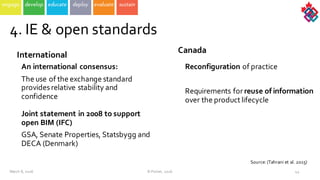
International
44
4.  IE  &  open  standards
Reconfiguration of  practice
Requirements  for  reuse  of  information
over  the  product  lifecycle  
Canada
An  international  consensus:
The  use  of  the  exchange  standard  
provides  relative  stability  and  
confidence  
Joint  statement  in  2008  to  support  
open  BIM  (IFC)
GSA,  Senate  Properties,  Statsbygg and  
DECA  (Denmark)
March  8,  2016 ©  Poirier,  2016
Source:  (Tahrani et  al.  2015)
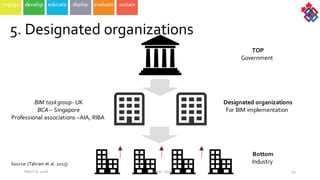
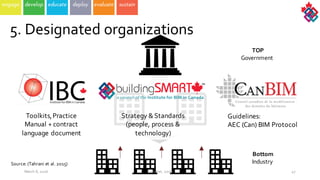
5.  Designated  organizations
TOP
Government  
Designated  organizations
For  BIM  implementation  
Bottom
Industry  
BIM  task  group-­‐ UK
BCA  – Singapore
Professional  associations  –AIA,  RIBA  
45March  8,  2016 ©  Poirier,  2016
Source:  (Tahrani et  al.  2015)
TOP
Government  
Designated  organizations
For  BIM  implementation  
Bottom
Industry  
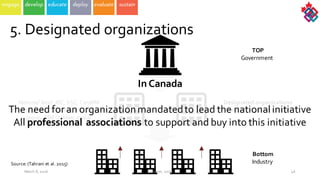
National  level:  IBC,  bSC,  CanBIM
Provincial  level:  aceBIM,  BIM  BC  user  
group,  BIM  Quebec  group  
46
In  Canada
The  need  for  an  organization  mandated  to  lead  the  national  initiative  
All  professional  associations  to  support  and  buy  into  this  initiative
March  8,  2016 ©  Poirier,  2016
Source:  (Tahrani et  al.  2015)
5.  Designated  organizations
TOP
Government  
Bottom
Industry  
47March  8,  2016 ©  Poirier,  2016
Source:  (Tahrani et  al.  2015)
Guidelines:
AEC  (Can)  BIM  Protocol  
Toolkits,  Practice  
Manual  +  contract  
language  document  
Strategy  &  Standards  
(people,  process  &  
technology)
5.  Designated  organizations
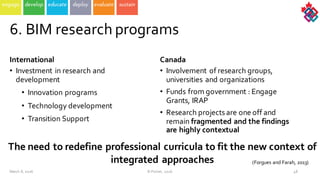
6.  BIM  research  programs
International  
• Investment  in  research  and  
development  
• Innovation  programs
• Technology  development
• Transition  Support  
Canada  
• Involvement of  research  groups,  
universities  and  organizations  
• Funds  from  government  :  Engage  
Grants,  IRAP
• Research  projects  are  one  off  and  
remain  fragmented  and  the  findings  
are  highly  contextual    
The  need  to  redefine  professional  curricula  to  fit  the  new  context  of  
integrated  approaches  
48
(Forgues and  Farah,  2013)
March  8,  2016 ©  Poirier,  2016
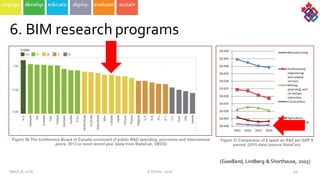
6.  BIM  research  programs
49
(Goodland,  Lindberg  &  Shorthouse,  2015)
March  8,  2016 ©  Poirier,  2016
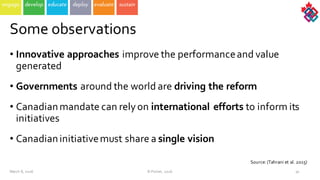
• Innovative  approaches  improve  the  performance  and  value  
generated
• Governments around  the  world  are  driving  the  reform
• Canadian  mandate  can  rely  on  international  efforts  to  inform  its  
initiatives
• Canadian  initiative  must  share  a  single  vision    
50
Some  observations
March  8,  2016 ©  Poirier,  2016
Source:  (Tahrani et  al.  2015)
51March  8,  2016 ©  Poirier,  2016
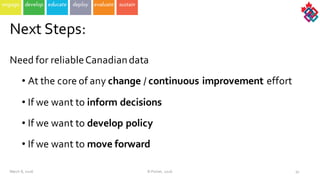
Need  for  reliable  Canadian  data
• At  the  core of  any change /  continuous improvement effort
• If  we want to  inform decisions
• If  we want to  develop policy
• If  we want to  move  forward
March  8,  2016 ©  Poirier,  2016 52
Next  Steps:  
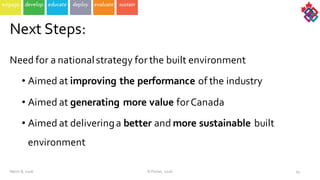
Need  for  a  national  strategy  for  the  built  environment
• Aimed  at  improving  the  performance  of  the  industry
• Aimed  at  generating  more  value  for  Canada
• Aimed  at  delivering  a  better and  more  sustainable  built  
environment
March  8,  2016 ©  Poirier,  2016 53
Next  Steps:  
March  8,  2016 ©  Poirier,  2016 54
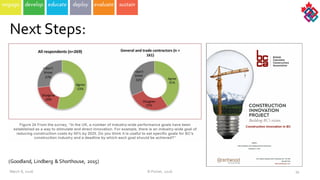
(Goodland,  Lindberg  &  Shorthouse,  2015)
Next  Steps:  
March  8,  2016 55©  Poirier,  2016
“Canada, with its federalist system,
struggles with the same challenges
international climate action poses:
how to corral widely different
political players – its diverse
provinces – towards a stringent
emissions target.”
https://www.opencanada.org/features/cop21-­‐what-­‐canadas-­‐role/
Next  Steps:  
• BIM  is  a  catalyst for  change
• We  need  the  appropriate  regulatory  /  policy  framework  to  support  this  
change
• 3  key  elements  to  this  framework
• A  national  BIM  strategy
• A  national  BIM  mandate
• A  national  BIM  standard
March  8,  2016 ©  Poirier,  2016 56
Key  takeaways
BIM  
strategy
BIM  
standards
BIM  
mandate  
57March  8,  2016 ©  Poirier,  2016

2016 03-08 b-sc_cca_final

  • 1.
    BIM  in  Canada:  where  are  we  headed? 98th  Annual Conference Erik  A.  Poirier,   PhD Postdoctoral  Fellow  |  Dept.  of  Civil  Eng. University  of  British  Columbia  |  Vancouver  (BC)  Canada Vice-­‐Chair,   Operations  |  Chair,  Communications buildingSMART Canada
  • 2.
    • BIM  is a  catalyst for  change • We  need  the  appropriate  regulatory  /  policy  framework  to  support  this   change • 3  key  elements  to  this  framework • National  BIM  strategy • National  BIM  mandate • National  BIM  standards March  8,  2016 ©  Poirier,  2016 2 Key  takeaways BIM   strategy BIM   standards BIM   mandate  
  • 3.
    March  8,  2016©  Poirier,  2016 3 Where are  we now? Where are  we headed? How  do  we get there?
  • 4.
    March  8,  20164 • Established  in  2010 • Joint  national  committee • Objectives: • Define  collaborative  approaches • Develop  and  recommend   consistent  terminology  &  best   practices • Endorse  and  Develop  Open  BIM   Standards   • Industry  BIM  education   ©  Poirier,  2016
  • 5.
    March  8,  20165 • Established  in  2011 • Initiated  and  run  by  IBC • provide  the  appropriate  body   and  home  for  Canadian  BIM   Standards Development   • participation  in  the   development  of  international   BIM  standards ©  Poirier,  2016
  • 6.
    March  8,  20166©  Poirier,  2016
  • 7.
    March  8,  2016©  Poirier,  2016 7 • Established  in  2008 • “the  business  voice  of   Canada’s  BIM  Community”
  • 8.
    March  8,  2016©  Poirier,  2016 8 Where  are  we  now  ?
  • 9.
    9 (n=175) (McGraw-­‐Hill,  2009)  March 8,  2016 ©  Poirier,  2016
  • 10.
    ©  Poirier,  201610(McGraw-­‐Hill,  2012)   (n=29) (n=175) March  8,  2016
  • 11.
    11 (NBS,  2013)   (n=72)March 8,  2016 ©  Poirier,  2016
  • 12.
    (n=127) March  8,  201612©  Poirier,  2016 (NBS,  2015)  
  • 13.
    March  8,  2016©  Poirier,  2016 13 (n=521) (Tahrani,  Poirier  &  Forgues,  2015) BIM  &  integrated  approaches  in  Quebec
  • 14.
    March  8,  2016©  Poirier,  2016 14 BIM  &  integrated  approaches  in  Quebec (n=521) (Tahrani,   Poirier  &   Forgues,   2015)
  • 15.
    March  8,  2016©  Poirier,  2016 15(n=127)(NBS  survey,  2015)
  • 16.
    • Limited  rate of  adoption • Limited  to  specific portions  of  the  supply chain • Inconsistentuse  of  BIM  across Canada • Variable  level of  maturity and  capability • Hinders potentialvalue  to  Canada   March  8,  2016 ©  Poirier,  2016 16 Some observations
  • 17.
    March  8,  2016©  Poirier,  2016 17 Resources  currently  available
  • 18.
    IBC  Contract  Appendix for  BIM  projects 18 • IBC  100-­‐2014  – IBC  BIM  Contract  Appendix • IBC  201-­‐2014  – IBC  LOD,  Authorized  Uses  and  Model   Elements  Table March  8,  2016 ©  Poirier,  2016
  • 19.
    Benefits  of  BIM for  Owners  Report 19 •Benefits  of  BIM  for  Owners  Report • Overview  of  BIM  from  Owners   Perspective • Non-­‐technical • Case  Studies  which  attempt  to   measure  the  impact  of  BIM March  8,  2016 ©  Poirier,  2016
  • 20.
    IBC  BIM  PxPToolkits March  8,  2016 20©  Poirier,  2016
  • 21.
    March  8,  201621 Other  resources ©  Poirier,  2016
  • 22.
    March  8,  201622 Other  resources ©  Poirier,  2016
  • 23.
    March  8,  2016©  Poirier,  2016 23 Where  are  we  headed  ?
  • 24.
    International  Consensus Strategic  reform of  the  industry Adoption  of  innovative  approaches • Integrated  Approaches • Building  Information  Modeling • Lean  Construction 24 The  need to  change March  8,  2016 ©  Poirier,  2016 Source:  (Tahrani et  al.  2015)
  • 25.
    March  8,  201625 Where do  we focus? ©  Poirier,  2016 Improve  performance Generate  value
  • 26.
    March  8,  2016©  Poirier,  2016 26 Where  do  we  focus?
  • 27.
    27March  8,  2016©  Poirier,  2016
  • 28.
    A  call  to action March  8,  2016 ©  Poirier,  2016 28 (Goodland,  Lindberg  &  Shorthouse,  2015)
  • 29.
    29March  8,  2016©  Poirier,  2016
  • 30.
    30March  8,  2016©  Poirier,  2016
  • 31.
    March  8,  201631 Are  we  ready? ©  Poirier,  2016 Grande  Rencontres  BIM  Contech,   May  2015   CanBIM quick  poll,  December  2015
  • 32.
    March  8,  201632 Are  we  ready? • Should  government  mandate  the  use  of  open  standards  for  BIM  in  their   projects? • Yes,  federal • Yes,  provincial • Yes,  municipal • Yes,  all  level  of  government • No ©  Poirier,  2016 99%   Yes,  all  levels  of   government bSC Members’  Community  Meeting  – January  2016  (n=31)
  • 33.
    March  8,  2016©  Poirier,  2016 33 How  do  we  get  there  ?
  • 34.
    March  8,  2016©  Poirier,  2016 34 How  do  we  structure  the   BIM  adoption  and   implementation  process   in  Canada?
  • 35.
    1. learn  from other  countries’  experiences in  the   transition  to  innovative  project  delivery  approaches? 2. develop  a  comprehensive  reform  strategy  in  order   to  improve  its  performance  and  efficiency to   ensure  its  sustainability  and  competitiveness? 35 How  can  the  Canadian  AECO  industry: March  8,  2016 ©  Poirier,  2016 Source:  (Tahrani et  al.  2015)
  • 36.
    Public  sector   Governmental  policy   BIM  standards   and  guidelines Clear   information   exchange   requirements   Designated   organizations   Reporting  and   promotion  of   BIM BIM  research   programs 36 Key  Drivers  for  Canada (Wong   et  al.,  2010)   March  8,  2016 ©  Poirier,  2016
  • 37.
    1.  Public  sector International  • Recognition of  the  power  of  the  public   sector  as  a  key  actor  in  the  reform  of   the  AECO  industry   • A  specific  government  department   leads  the  initiative     • Investments Canada   • The  complexity of  multi-­‐layered   governmental  context   • The  need  for  a  national  initiative • National  framework  for  innovative   project  delivery  adapted  at  all  levels  of   government     37March  8,  2016 ©  Poirier,  2016 Source:  (Tahrani et  al.  2015)
  • 38.
    Country Organization Investment United  Kingdom BIM  Task  Group Public  sector  funding Mobilisation  -­‐ £  1.4  million Operations  – £  480  000    /  year  (5  years) Total  – £  3.86  million    ($  6.94  million    CAN) Finland Tekes Public  and  private  sector  funding Pre  program  at  RYM  oy.  R  &  D  – € 21.7  million    (4  years   between  2010  and   2014)  ($  30.9  million    CAN) Norway Statsbygg Public  and  private  sector  funding R  &  D  – € 21.7  million    (4  years   between  2010  and  2014)  ($  30.9  million    CAN) Singapore Building  Construction   Authority  (BCA) Public  sector  funding BIM  fund  – cover  up  to  50%  of  costs  associated  to  BIM  adoption  within  firms:   12  millions  SGD  ($  10.4  millions  CAN) France   Transition committee   € 20  million  for  a  road  map   1.  Public  sector 38March  8,  2016 ©  Poirier,  2016
  • 39.
    2.  Governmental  policy 39© Poirier,  2016March  8,  2016 Source:  (Tahrani et  al.  2015)
  • 40.
    No  formal  policy mandating  BIM  implementation  on  all   public  projects  in  Canada Four  separate  initiatives   40 2.  Governmental  policy Space  management  and   open  BIM   Royal  Alberta  Museum   pilot  project   Several  small   pilot  projects   Moose  Jaw   Hospital   March  8,  2016 ©  Poirier,  2016 Source:  (Tahrani et  al.  2015)
  • 41.
    No  formal  policy mandating  BIM  implementation  on  all   public  projects  in  Canada Four  separate  initiatives   41 2.  Governmental  policy Space  management  and   open  BIM   Royal  Alberta  Museum   pilot  project   Several  small   pilot  projects   Moose  Jaw   Hospital   Fragmented  initiatives  across  the  county March  8,  2016 ©  Poirier,  2016 Source:  (Tahrani et  al.  2015)
  • 42.
    3.  BIM  standards and  guidelines A  Review of  BIM-­‐-­‐Guidelines:  Content,  Scope  &  Positioning Martin  Hooper,  LTH  Interreg midtvejsseminar 2  November 2011 Presence  of  so  many  different  standards Problem  for  broadcasting  a  consistent  message  and  gaining   traction  within  the  industry   42March  8,  2016 ©  Poirier,  2016
  • 43.
    Advantage  for  Canada Benefit from  the  efforts  and  lessons  learned  of  other  countries   in  developing  its  standards   43 3.  BIM  standards  and  guidelines March  8,  2016 ©  Poirier,  2016 Source:  (Tahrani et  al.  2015)
  • 44.
    International 44 4.  IE  & open  standards Reconfiguration of  practice Requirements  for  reuse  of  information over  the  product  lifecycle   Canada An  international  consensus: The  use  of  the  exchange  standard   provides  relative  stability  and   confidence   Joint  statement  in  2008  to  support   open  BIM  (IFC) GSA,  Senate  Properties,  Statsbygg and   DECA  (Denmark) March  8,  2016 ©  Poirier,  2016 Source:  (Tahrani et  al.  2015)
  • 45.
    5.  Designated  organizations TOP Government  Designated  organizations For  BIM  implementation   Bottom Industry   BIM  task  group-­‐ UK BCA  – Singapore Professional  associations  –AIA,  RIBA   45March  8,  2016 ©  Poirier,  2016 Source:  (Tahrani et  al.  2015)
  • 46.
    TOP Government   Designated  organizations For BIM  implementation   Bottom Industry   National  level:  IBC,  bSC,  CanBIM Provincial  level:  aceBIM,  BIM  BC  user   group,  BIM  Quebec  group   46 In  Canada The  need  for  an  organization  mandated  to  lead  the  national  initiative   All  professional  associations  to  support  and  buy  into  this  initiative March  8,  2016 ©  Poirier,  2016 Source:  (Tahrani et  al.  2015) 5.  Designated  organizations
  • 47.
    TOP Government   Bottom Industry   47March 8,  2016 ©  Poirier,  2016 Source:  (Tahrani et  al.  2015) Guidelines: AEC  (Can)  BIM  Protocol   Toolkits,  Practice   Manual  +  contract   language  document   Strategy  &  Standards   (people,  process  &   technology) 5.  Designated  organizations
  • 48.
    6.  BIM  research programs International   • Investment  in  research  and   development   • Innovation  programs • Technology  development • Transition  Support   Canada   • Involvement of  research  groups,   universities  and  organizations   • Funds  from  government  :  Engage   Grants,  IRAP • Research  projects  are  one  off  and   remain  fragmented  and  the  findings   are  highly  contextual     The  need  to  redefine  professional  curricula  to  fit  the  new  context  of   integrated  approaches   48 (Forgues and  Farah,  2013) March  8,  2016 ©  Poirier,  2016
  • 49.
    6.  BIM  research programs 49 (Goodland,  Lindberg  &  Shorthouse,  2015) March  8,  2016 ©  Poirier,  2016
  • 50.
    • Innovative  approaches improve  the  performance  and  value   generated • Governments around  the  world  are  driving  the  reform • Canadian  mandate  can  rely  on  international  efforts  to  inform  its   initiatives • Canadian  initiative  must  share  a  single  vision     50 Some  observations March  8,  2016 ©  Poirier,  2016 Source:  (Tahrani et  al.  2015)
  • 51.
    51March  8,  2016©  Poirier,  2016
  • 52.
    Need  for  reliable Canadian  data • At  the  core of  any change /  continuous improvement effort • If  we want to  inform decisions • If  we want to  develop policy • If  we want to  move  forward March  8,  2016 ©  Poirier,  2016 52 Next  Steps:  
  • 53.
    Need  for  a national  strategy  for  the  built  environment • Aimed  at  improving  the  performance  of  the  industry • Aimed  at  generating  more  value  for  Canada • Aimed  at  delivering  a  better and  more  sustainable  built   environment March  8,  2016 ©  Poirier,  2016 53 Next  Steps:  
  • 54.
    March  8,  2016©  Poirier,  2016 54 (Goodland,  Lindberg  &  Shorthouse,  2015) Next  Steps:  
  • 55.
    March  8,  201655©  Poirier,  2016 “Canada, with its federalist system, struggles with the same challenges international climate action poses: how to corral widely different political players – its diverse provinces – towards a stringent emissions target.” https://www.opencanada.org/features/cop21-­‐what-­‐canadas-­‐role/ Next  Steps:  
  • 56.
    • BIM  is a  catalyst for  change • We  need  the  appropriate  regulatory  /  policy  framework  to  support  this   change • 3  key  elements  to  this  framework • A  national  BIM  strategy • A  national  BIM  mandate • A  national  BIM  standard March  8,  2016 ©  Poirier,  2016 56 Key  takeaways BIM   strategy BIM   standards BIM   mandate  
  • 57.
    57March  8,  2016©  Poirier,  2016