Ideas to IPO: 
Entity Formation & Selection 
1 
JASON PUTNAM GORDON, ESQ. 
jpg@putnamgordon.com
Overview 
• Background 
• Entity Formation 
• Initial Ownership Structure 
• (Other Common Issues) 
• Intellectual Property 
2 
JASON PUTNAM GORDON, ESQ. 
jpg@putnamgordon.com
Personal Background 
• Practicing law since 2005. 
• My firm focuses on handling the corporate needs of 
emerging-growth companies. 
• Before I started my practice, I was a litigator at WSGR. 
• Licensed in CA, DC, MA, NJ, & PA, but I only practice in 
CA. 
• I have made almost 1,000 skydives. 
3 
JASON PUTNAM GORDON, ESQ. 
jpg@putnamgordon.com
What is your Background? 
• In a startup? 
• Founder? 
• First startup? 
• Previous successful exit? 
• Who is interested in entity 
formation? 
• Who is interested in IP? 
• What are some corporate issues 
you are facing? 
4 
JASON PUTNAM GORDON, ESQ. 
jpg@putnamgordon.com
Important Caveats 
• Today’s Discussion is General Information – Not 
Legal Advice 
• That means while we’ll be discussing rules and 
exceptions, those rules, exceptions, exceptions to the 
exceptions, may not be applicable to your situation. 
• You need to get competent specific legal counsel to 
review all facts and circumstances. Our off-the-cuff 
answers to your questions are not legal advice. 
5 
JASON PUTNAM GORDON, ESQ. 
jpg@putnamgordon.com
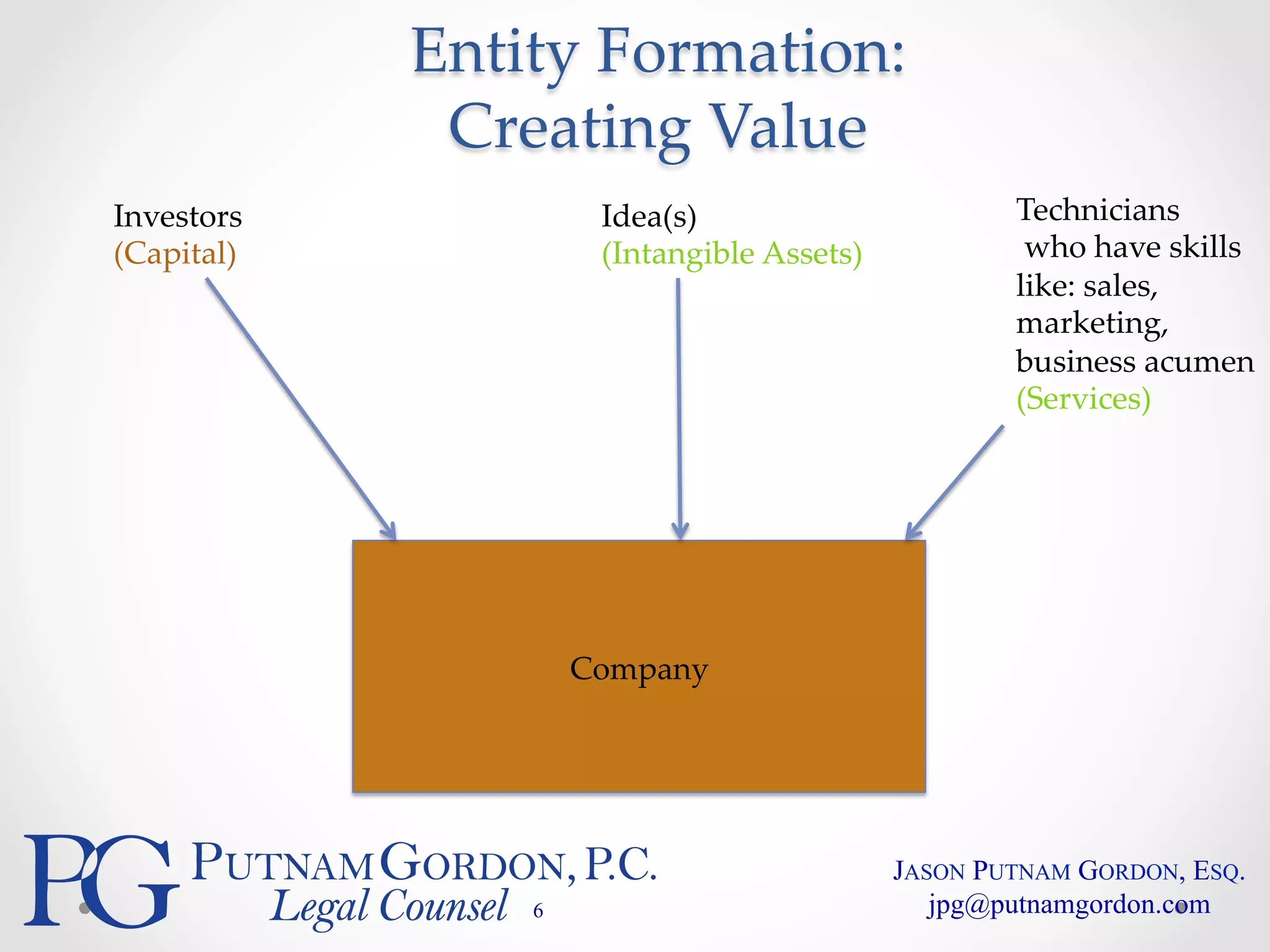
Entity Formation: 
Creating Value 
6 
JASON PUTNAM GORDON, ESQ. 
jpg@putnamgordon.com 
Company 
Investors 
(Capital) 
Idea(s) 
(Intangible Assets) 
Technicians 
who have skills 
like: sales, 
marketing, 
business acumen 
(Services)
Entity Choice 
• No entity 
• No shield against personal liability 
• No ability to grant or transfer 
equity interests 
• Accidental partnerships 
• Limited Liability Company 
• No double taxation 
• Not as attractive to venture capital 
• Harder to use equity to acquire 
other businesses 
• Difficult to reward employees with 
equity 
7 
JASON PUTNAM GORDON, ESQ. 
jpg@putnamgordon.com
Entity Choice Cont. 
• Corporation 
• Limited liability 
• Taxed as a separate entity 
• Developed Management 
structure 
• Easiest to grant/use equity 
• Jurisdiction 
• Usually Delaware 
• Beware of Section 2115 
8 
JASON PUTNAM GORDON, ESQ. 
jpg@putnamgordon.com
Mechanics 
• Name selection and 
reservation in jurisdictions 
• Different than trademark rights 
• File certificate of 
incorporation 
9 
JASON PUTNAM GORDON, ESQ. 
jpg@putnamgordon.com
Completion of Formation 
and Securities Laws 
• Not done with filing with DE Secretary of State 
• Register with CA and local authorities 
• Incorporator actions 
• Director actions, e.g., 
• Bylaws 
• Stock Issuance 
• Approval of agreements 
• Founders agreements 
• IP Assignment 
• Securities filings 
• 83(b) elections 
10 
JASON PUTNAM GORDON, ESQ. 
jpg@putnamgordon.com
Initial Ownership 
Common Considerations 
• Who gets what? 
• What happens if/when 
someone leaves? 
• What protection is possible 
against later investors? 
11 
JASON PUTNAM GORDON, ESQ. 
jpg@putnamgordon.com
Who gets what? 
• Founders 
• There isn’t a market for this 
• Generally the person(s) running the show 
should have the biggest stakes(s) 
• Do others have any stake already? 
• Nominal amount/IP 
• May not be possible if too far along 
• Post-Founder, Initial Hires and/or 
advisors 
• Possibly restricted stock 
• Possibly stock options 
12 
JASON PUTNAM GORDON, ESQ. 
jpg@putnamgordon.com
What happens if someone leaves? 
• Vesting 
• Must get agreements in place 
• Term, typically four years with a one-year cliff 
• Acceleration 
• 83(b) elections!!! 
• May get renegotiated by later investors 
• Shareholder Agreements 
• Rights of first refusal 
• Co-sale rights 
• Drag along rights 
• Restrictions in bylaws 
13 
JASON PUTNAM GORDON, ESQ. 
jpg@putnamgordon.com
Protections from later 
investors 
• Is this possible? 
• What is your clout 
• Usually, not worth time/money because of 
market power of invests 
• What are the options? 
• High-Vote founders shares 
• Founder protective provisions against a sale 
without founder consent 
14 
JASON PUTNAM GORDON, ESQ. 
jpg@putnamgordon.com
Other Issues: 
Seed Financing Options 
• Common Stock 
• Frequently done by DIYers and attorneys who do not practice in this space. 
• Places a value on the common stock and makes it difficult to issue equity to later hires. 
• Convertible Notes 
• Very common as large as 1.5 million. 
• Avoids valuing the company and a value on the common stock. 
• Convertible Equity 
• Started to be in vogue ~2012 not heard that many people doing it. 
• Series Seed 
• Essentially a slimmed down preferred round. 
• Can put later VC investors on top of the preferred to seed investors 
15 
JASON PUTNAM GORDON, ESQ. 
jpg@putnamgordon.com
Other Issues: 
Hiring and Wage 
• All full-time individuals (and maybe part-time) 
will be considered employees for purposes of 
federal and state wage laws. 
• Calling them consultants, does not fix that issue. 
• Entitled to minimum wage. 
• You are going to be responsible for withholding taxes. 
16 
JASON PUTNAM GORDON, ESQ. 
jpg@putnamgordon.com
Protecting Your Intellectual 
Property 
• Technology assignment agreements by founders 
• Proprietary Information and Assignment Agreements 
• Consulting agreements for other service providers (even if they are 
out of the US) 
• Licenses from third parties 
• Be mindful of other obligations of founders 
• Open source issues 
• Non-solicitation and non-competes among founders and employees 
• Depending on the scenario scope of enforceability will vary 
• Trade Secrets – you must protect 
• Register your IP? 
• Let’s hear from Mark Koo. 
17 
JASON PUTNAM GORDON, ESQ. 
jpg@putnamgordon.com
Questions/ 
Comments 
18 
JASON PUTNAM GORDON, ESQ. 
jpg@putnamgordon.com

Intellectual Property Primer - Entity Formation and Selection

  • 1.
    Ideas to IPO: Entity Formation & Selection 1 JASON PUTNAM GORDON, ESQ. jpg@putnamgordon.com
  • 2.
    Overview • Background • Entity Formation • Initial Ownership Structure • (Other Common Issues) • Intellectual Property 2 JASON PUTNAM GORDON, ESQ. jpg@putnamgordon.com
  • 3.
    Personal Background •Practicing law since 2005. • My firm focuses on handling the corporate needs of emerging-growth companies. • Before I started my practice, I was a litigator at WSGR. • Licensed in CA, DC, MA, NJ, & PA, but I only practice in CA. • I have made almost 1,000 skydives. 3 JASON PUTNAM GORDON, ESQ. jpg@putnamgordon.com
  • 4.
    What is yourBackground? • In a startup? • Founder? • First startup? • Previous successful exit? • Who is interested in entity formation? • Who is interested in IP? • What are some corporate issues you are facing? 4 JASON PUTNAM GORDON, ESQ. jpg@putnamgordon.com
  • 5.
    Important Caveats •Today’s Discussion is General Information – Not Legal Advice • That means while we’ll be discussing rules and exceptions, those rules, exceptions, exceptions to the exceptions, may not be applicable to your situation. • You need to get competent specific legal counsel to review all facts and circumstances. Our off-the-cuff answers to your questions are not legal advice. 5 JASON PUTNAM GORDON, ESQ. jpg@putnamgordon.com
  • 6.
    Entity Formation: CreatingValue 6 JASON PUTNAM GORDON, ESQ. jpg@putnamgordon.com Company Investors (Capital) Idea(s) (Intangible Assets) Technicians who have skills like: sales, marketing, business acumen (Services)
  • 7.
    Entity Choice •No entity • No shield against personal liability • No ability to grant or transfer equity interests • Accidental partnerships • Limited Liability Company • No double taxation • Not as attractive to venture capital • Harder to use equity to acquire other businesses • Difficult to reward employees with equity 7 JASON PUTNAM GORDON, ESQ. jpg@putnamgordon.com
  • 8.
    Entity Choice Cont. • Corporation • Limited liability • Taxed as a separate entity • Developed Management structure • Easiest to grant/use equity • Jurisdiction • Usually Delaware • Beware of Section 2115 8 JASON PUTNAM GORDON, ESQ. jpg@putnamgordon.com
  • 9.
    Mechanics • Nameselection and reservation in jurisdictions • Different than trademark rights • File certificate of incorporation 9 JASON PUTNAM GORDON, ESQ. jpg@putnamgordon.com
  • 10.
    Completion of Formation and Securities Laws • Not done with filing with DE Secretary of State • Register with CA and local authorities • Incorporator actions • Director actions, e.g., • Bylaws • Stock Issuance • Approval of agreements • Founders agreements • IP Assignment • Securities filings • 83(b) elections 10 JASON PUTNAM GORDON, ESQ. jpg@putnamgordon.com
  • 11.
    Initial Ownership CommonConsiderations • Who gets what? • What happens if/when someone leaves? • What protection is possible against later investors? 11 JASON PUTNAM GORDON, ESQ. jpg@putnamgordon.com
  • 12.
    Who gets what? • Founders • There isn’t a market for this • Generally the person(s) running the show should have the biggest stakes(s) • Do others have any stake already? • Nominal amount/IP • May not be possible if too far along • Post-Founder, Initial Hires and/or advisors • Possibly restricted stock • Possibly stock options 12 JASON PUTNAM GORDON, ESQ. jpg@putnamgordon.com
  • 13.
    What happens ifsomeone leaves? • Vesting • Must get agreements in place • Term, typically four years with a one-year cliff • Acceleration • 83(b) elections!!! • May get renegotiated by later investors • Shareholder Agreements • Rights of first refusal • Co-sale rights • Drag along rights • Restrictions in bylaws 13 JASON PUTNAM GORDON, ESQ. jpg@putnamgordon.com
  • 14.
    Protections from later investors • Is this possible? • What is your clout • Usually, not worth time/money because of market power of invests • What are the options? • High-Vote founders shares • Founder protective provisions against a sale without founder consent 14 JASON PUTNAM GORDON, ESQ. jpg@putnamgordon.com
  • 15.
    Other Issues: SeedFinancing Options • Common Stock • Frequently done by DIYers and attorneys who do not practice in this space. • Places a value on the common stock and makes it difficult to issue equity to later hires. • Convertible Notes • Very common as large as 1.5 million. • Avoids valuing the company and a value on the common stock. • Convertible Equity • Started to be in vogue ~2012 not heard that many people doing it. • Series Seed • Essentially a slimmed down preferred round. • Can put later VC investors on top of the preferred to seed investors 15 JASON PUTNAM GORDON, ESQ. jpg@putnamgordon.com
  • 16.
    Other Issues: Hiringand Wage • All full-time individuals (and maybe part-time) will be considered employees for purposes of federal and state wage laws. • Calling them consultants, does not fix that issue. • Entitled to minimum wage. • You are going to be responsible for withholding taxes. 16 JASON PUTNAM GORDON, ESQ. jpg@putnamgordon.com
  • 17.
    Protecting Your Intellectual Property • Technology assignment agreements by founders • Proprietary Information and Assignment Agreements • Consulting agreements for other service providers (even if they are out of the US) • Licenses from third parties • Be mindful of other obligations of founders • Open source issues • Non-solicitation and non-competes among founders and employees • Depending on the scenario scope of enforceability will vary • Trade Secrets – you must protect • Register your IP? • Let’s hear from Mark Koo. 17 JASON PUTNAM GORDON, ESQ. jpg@putnamgordon.com
  • 18.
    Questions/ Comments 18 JASON PUTNAM GORDON, ESQ. jpg@putnamgordon.com