How to write
a kick-ass blog post
For academics
1. Write for your audience
Who are you writing for?

• You and your coworkers
o

Most of your terminology will be understood

• The academic world
o

Discipline-specific terminology and concepts need clarifying

• A wider audience
o

Both general and specific scientific terminology, concepts and
methods need clarifying
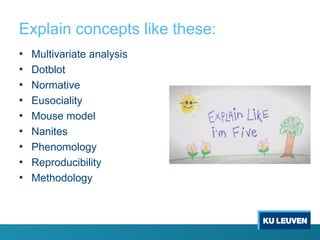
Explain concepts like these:
•
•
•
•
•
•
•
•
•

Multivariate analysis
Dotblot
Normative
Eusociality
Mouse model
Nanites
Phenomology
Reproducibility
Methodology
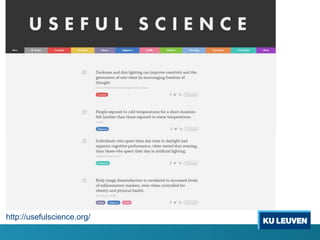
http://usefulscience.org/
2. Pick your topic
Not every blog post has to be a big thing. Pace yourself!

• Your research
Your reseach set-up, your research question
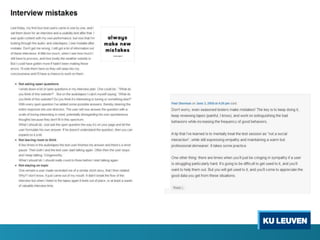
o Your mistakes (and how you fixed them)
Your experiences as a PhD
Conference visits
Subjects related to your discipline
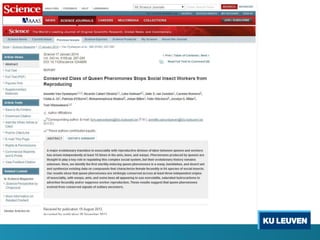
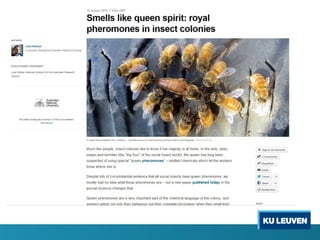
Corrections on popular media coverage about your
discipline
o

•
•
•
•
3. Get to the point!
• Keep your posts short and to-the-point
• Drop the nuance, but do add references
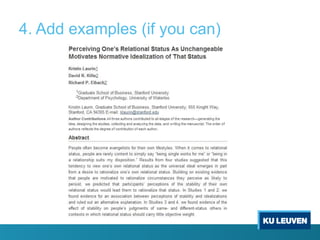
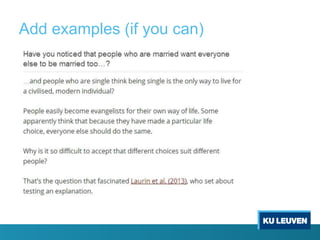
4. Add examples (if you can)
Add examples (if you can)
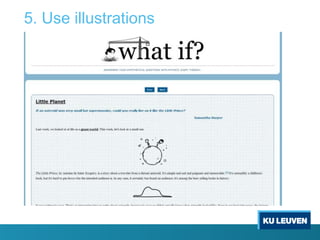
5. Use illustrations
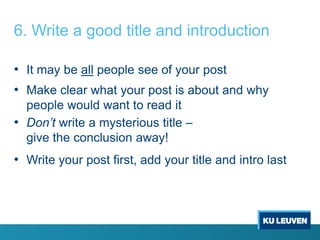
6. Write a good title and introduction
• It may be all people see of your post
• Make clear what your post is about and why
people would want to read it
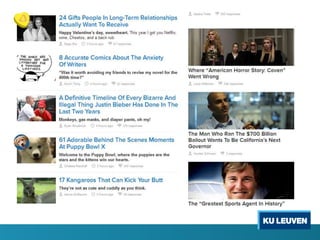
• Don’t write a mysterious title –
give the conclusion away!

• Write your post first, add your title and intro last
Source: London School of Economics
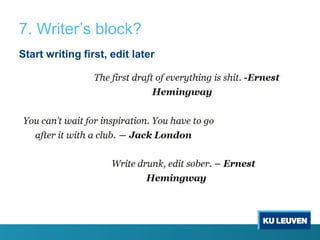
7. Writer’s block?
Start writing first, edit later
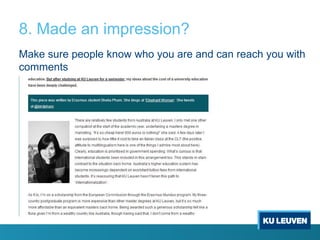
8. Made an impression?
Make sure people know who you are and can reach you with
comments
About.me
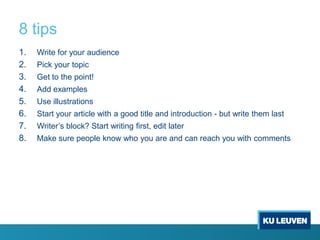
8 tips
1.
2.
3.
4.
5.
6.
7.
8.

Write for your audience
Pick your topic

Get to the point!
Add examples
Use illustrations
Start your article with a good title and introduction - but write them last
Writer’s block? Start writing first, edit later
Make sure people know who you are and can reach you with comments
Happy blogging!
Keep us posted on your social media experiences:
@julianienaber
@SarahSomers
@ManuelSintubin

How to write a kick-ass blog post

  • 1.
    How to write akick-ass blog post For academics
  • 2.
    1. Write foryour audience Who are you writing for? • You and your coworkers o Most of your terminology will be understood • The academic world o Discipline-specific terminology and concepts need clarifying • A wider audience o Both general and specific scientific terminology, concepts and methods need clarifying
  • 3.
    Explain concepts likethese: • • • • • • • • • Multivariate analysis Dotblot Normative Eusociality Mouse model Nanites Phenomology Reproducibility Methodology
  • 4.
  • 5.
    2. Pick yourtopic Not every blog post has to be a big thing. Pace yourself! • Your research Your reseach set-up, your research question o Your mistakes (and how you fixed them) Your experiences as a PhD Conference visits Subjects related to your discipline Corrections on popular media coverage about your discipline o • • • •
  • 7.
    3. Get tothe point! • Keep your posts short and to-the-point • Drop the nuance, but do add references
  • 8.
    4. Add examples(if you can)
  • 9.
  • 10.
  • 11.
    6. Write agood title and introduction • It may be all people see of your post • Make clear what your post is about and why people would want to read it • Don’t write a mysterious title – give the conclusion away! • Write your post first, add your title and intro last
  • 15.
  • 16.
    7. Writer’s block? Startwriting first, edit later
  • 17.
    8. Made animpression? Make sure people know who you are and can reach you with comments
  • 18.
  • 19.
    8 tips 1. 2. 3. 4. 5. 6. 7. 8. Write foryour audience Pick your topic Get to the point! Add examples Use illustrations Start your article with a good title and introduction - but write them last Writer’s block? Start writing first, edit later Make sure people know who you are and can reach you with comments
  • 20.
    Happy blogging! Keep usposted on your social media experiences: @julianienaber @SarahSomers @ManuelSintubin