



November 19, 2014 
Oil and Gas Education and Career Information Fair 2014 
Claudine Vidallo, PMP 
Project Manager, Labour Market Information 
Petroleum Human Resources Council (a division of Enform)
Agenda 
• Introduction 
– About the Petroleum HR Council 
• Overview of Canada’s Oil and Gas Industry 
– How the Petroleum Industry Works 
– Career Options 
• Labour Market Outlooks: Key Findings and Analysis 
– Current Oil and Gas Workforce 
– Employment and Hiring Outlook 
– Projected Labour and Skill Shortages 
• Tips and Resources for Jobseekers
About the Petroleum HR Council 
The primary resource to address workforce issues in the petroleum industry. 
• Proactively seek solutions through collaborative partnerships 
• Anticipate the evolving needs of the industry 
• A catalyst for change 
Our key priorities: 
• Labour Market Information (LMI) 
• Careers in Oil and Gas/Occupational Information and Tools 
Effective April 1, 2013, the Petroleum HR Council became a division of Enform: 
Petroleum HR Council’s human resources services 
+ 
Enform’s safety and training services 
= 
One integrated national entity serving Canada’s oil and gas industry
How does the oil and gas industry work? 
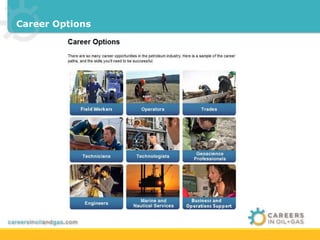
What are the career options in the industry?
Canada’s Oil & Gas Industry 
• 3rd largest natural gas producer 
• 6th largest crude oil producer (rank increasing with oil sands) 
• Employs about 550,000 people in Canada (directly and indirectly) 
• Energy is now Canada’s largest export sector (took over from 
automobile industry in 2003) 
• Industry payments to governments: $18 Billion 
• Over 6,000 products we use everyday are made from petroleum 
• Long history: first well in Canada was in 1858
How does the Oil & Gas Industry Work? 
Upstream 
Midstream 
Downstream
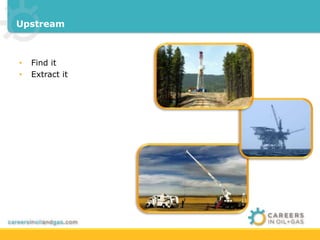
Upstream 
• Find it 
• Extract it
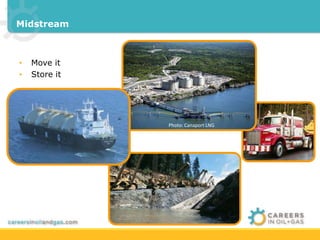
Midstream 
Photo: Canaport LNG 
• Move it 
• Store it
Downstream 
Making it useful for 
consumers 
• Refineries 
• Petrochemical companies 
• Natural gas distribution 
utilities 
• Then sell it! 
Photos: Suncor
Career Options
What kind of careers are there? 
• 1,000+ companies 
• Identify drilling prospects 
• Acquire land & mineral rights 
• Conduct public involvement 
• Contract service companies 
Exploration & 
Production
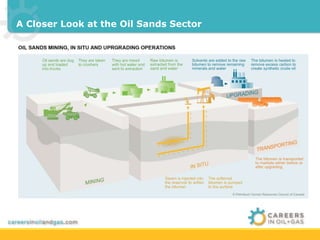
A Closer Look at the Oil Sands Sector
What kind of careers are there? 
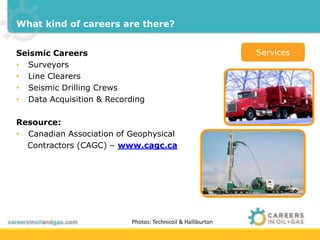
Seismic Careers 
• Surveyors 
• Line Clearers 
• Seismic Drilling Crews 
• Data Acquisition & Recording 
Resource: 
• Canadian Association of Geophysical 
Contractors (CAGC) – www.cagc.ca 
Services 
Photos: Technicoil & Halliburton
What kind of careers are there? 
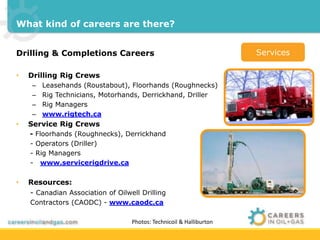
Drilling & Completions Careers 
• Drilling Rig Crews 
– Leasehands (Roustabout), Floorhands (Roughnecks) 
– Rig Technicians, Motorhands, Derrickhand, Driller 
– Rig Managers 
– www.rigtech.ca 
• Service Rig Crews 
- Floorhands (Roughnecks), Derrickhand 
- Operators (Driller) 
- Rig Managers 
- www.servicerigdrive.ca 
• Resources: 
- Canadian Association of Oilwell Drilling 
Contractors (CAODC) - www.caodc.ca 
Services 
Photos: Technicoil & Halliburton
What kind of careers are there? 
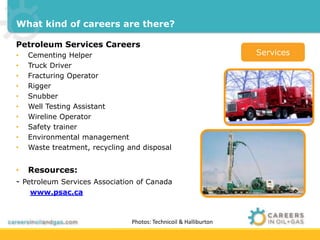
Petroleum Services Careers 
• Cementing Helper 
• Truck Driver 
• Fracturing Operator 
• Rigger 
• Snubber 
• Well Testing Assistant 
• Wireline Operator 
• Safety trainer 
• Environmental management 
• Waste treatment, recycling and disposal 
• Resources: 
- Petroleum Services Association of Canada 
www.psac.ca 
Services 
Photos: Technicoil & Halliburton
What kind of careers are there? 
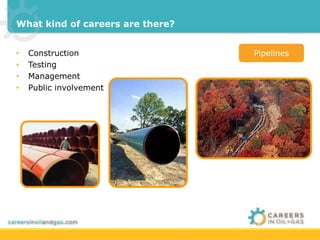
• Construction 
• Testing 
• Management 
• Public involvement 
Pipelines 
Photos: Spectra Energy & CEPA
What is the future of employment in 
Canada’s oil and gas industry?
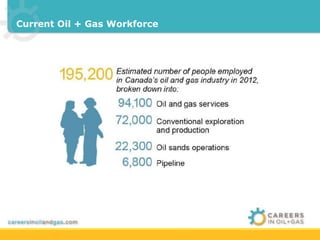
Current Oil + Gas Workforce
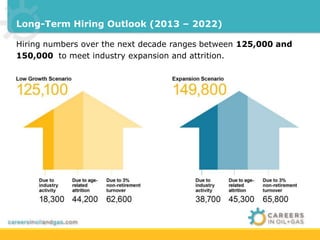
Long-Term Hiring Outlook (2013 – 2022) 
Hiring numbers over the next decade ranges between 125,000 and 
150,000 to meet industry expansion and attrition.
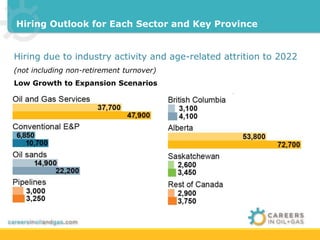
Hiring Outlook for Each Sector and Key Province 
Hiring due to industry activity and age-related attrition to 2022 
(not including non-retirement turnover) 
Low Growth to Expansion Scenarios
Top 10 Career Prospects in Canada’s Oil and Gas Industry 
TOP TEN OCCUPATIONS WITH GREATEST NET HIRING REQUIREMENTS* TO 2022 
(# of job openings Low Growth – Expansion) 
Industry Total (62,440 – 84,030 ) 
1 Power engineers (steam-ticketed operators) 2,945 – 4,105 
2 Heavy equipment operators (except crane) 2,425 – 3,990 
3 Oil and gas well drillers, servicers, testers, and related workers 2,945 – 3,985 
4 Drilling coordinators/production managers 3,050 – 3,945 
5 Supervisors, oil and gas drilling and service 2,930 – 3,640 
6 Oil and gas drilling, servicing, and related labourers 2,415 – 3,480 
7 Petroleum engineers 2,150 – 2,910 
8 Truck drivers 2,200 – 2,825 
9 Oil and gas well drilling workers and service operators 1,860 – 2,590 
10 Geologists and geophysicists 1,715 – 2,305 
*Net hiring requirements = hiring due to industry activity + age-related attrition 
(excludes non-retirement turnover)
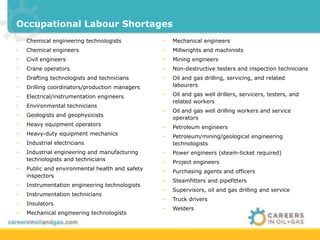
Occupational Labour Shortages 
• Chemical engineering technologists 
• Chemical engineers 
• Civil engineers 
• Crane operators 
• Drafting technologists and technicians 
• Drilling coordinators/production managers 
• Electrical/instrumentation engineers 
• Environmental technicians 
• Geologists and geophysicists 
• Heavy equipment operators 
• Heavy-duty equipment mechanics 
• Industrial electricians 
• Industrial engineering and manufacturing 
technologists and technicians 
• Public and environmental health and safety 
inspectors 
• Instrumentation engineering technologists 
• Instrumentation technicians 
• Insulators 
• Mechanical engineering technologists 
• Mechanical engineers 
• Millwrights and machinists 
• Mining engineers 
• Non-destructive testers and inspection technicians 
• Oil and gas drilling, servicing, and related 
labourers 
• Oil and gas well drillers, servicers, testers, and 
related workers 
• Oil and gas well drilling workers and service 
operators 
• Petroleum engineers 
• Petroleum/mining/geological engineering 
technologists 
• Power engineers (steam-ticket required) 
• Project engineers 
• Purchasing agents and officers 
• Steamfitters and pipefitters 
• Supervisors, oil and gas drilling and service 
• Truck drivers 
• Welders
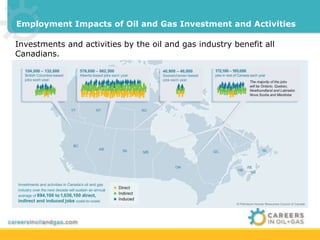
Employment Impacts of Oil and Gas Investment and Activities 
Investments and activities by the oil and gas industry benefit all 
Canadians.
Resources
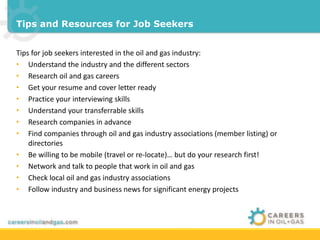
Tips and Resources for Job Seekers 
Tips for job seekers interested in the oil and gas industry: 
• Understand the industry and the different sectors 
• Research oil and gas careers 
• Get your resume and cover letter ready 
• Practice your interviewing skills 
• Understand your transferrable skills 
• Research companies in advance 
• Find companies through oil and gas industry associations (member listing) or 
directories 
• Be willing to be mobile (travel or re-locate)… but do your research first! 
• Network and talk to people that work in oil and gas 
• Check local oil and gas industry associations 
• Follow industry and business news for significant energy projects
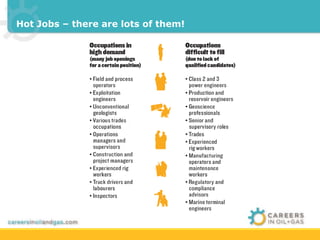
Hot Jobs – there are lots of them!
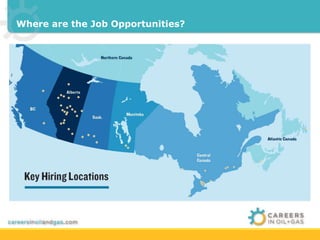
Where are the Job Opportunities?
Top Recruitment Channels
Careers in Oil + Gas – www.careersinoilandgas.com
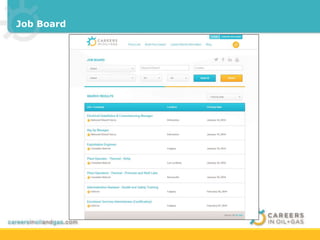
Job Board
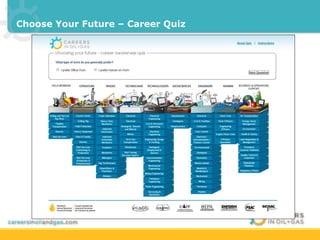
Choose Your Future – Career Quiz
Day in the Life
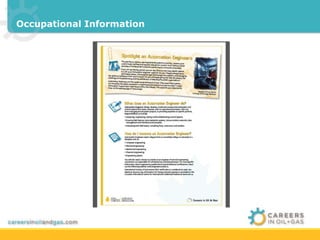
Occupational Information
Rich With Potential – Career Practitioner Guide
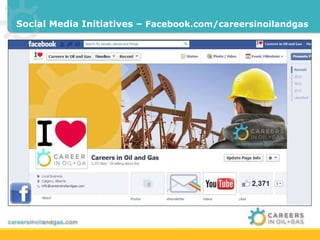
Social Media Initiatives – Facebook.com/careersinoilandgas
Social Media Initiatives – Twitter @careersinoandg
COG E-Newsletter
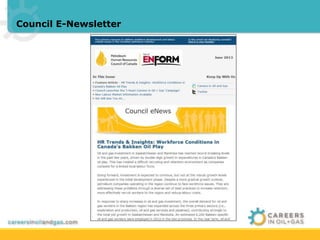
Council E-Newsletter
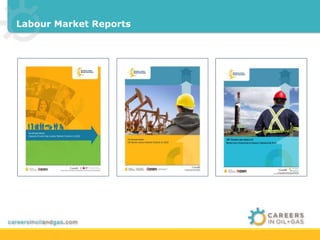
Labour Market Reports
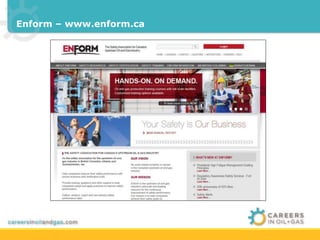
Enform – www.enform.ca
For more information 
Visit us at our Careers in Oil and Gas booth! 
Check out www.careersinoilandgas.com to 
sign up for our e-Newsletter 
Follow us @careersinoandg 
Like us www.facebook.com/careersinoilandgas 
www.slideshare.net/PetroHRCouncil

MRU Oil and Gas Education & Career Information Fair

  • 1.
    November 19, 2014 Oil and Gas Education and Career Information Fair 2014 Claudine Vidallo, PMP Project Manager, Labour Market Information Petroleum Human Resources Council (a division of Enform)
  • 2.
    Agenda • Introduction – About the Petroleum HR Council • Overview of Canada’s Oil and Gas Industry – How the Petroleum Industry Works – Career Options • Labour Market Outlooks: Key Findings and Analysis – Current Oil and Gas Workforce – Employment and Hiring Outlook – Projected Labour and Skill Shortages • Tips and Resources for Jobseekers
  • 3.
    About the PetroleumHR Council The primary resource to address workforce issues in the petroleum industry. • Proactively seek solutions through collaborative partnerships • Anticipate the evolving needs of the industry • A catalyst for change Our key priorities: • Labour Market Information (LMI) • Careers in Oil and Gas/Occupational Information and Tools Effective April 1, 2013, the Petroleum HR Council became a division of Enform: Petroleum HR Council’s human resources services + Enform’s safety and training services = One integrated national entity serving Canada’s oil and gas industry
  • 4.
    How does theoil and gas industry work? What are the career options in the industry?
  • 5.
    Canada’s Oil &Gas Industry • 3rd largest natural gas producer • 6th largest crude oil producer (rank increasing with oil sands) • Employs about 550,000 people in Canada (directly and indirectly) • Energy is now Canada’s largest export sector (took over from automobile industry in 2003) • Industry payments to governments: $18 Billion • Over 6,000 products we use everyday are made from petroleum • Long history: first well in Canada was in 1858
  • 6.
    How does theOil & Gas Industry Work? Upstream Midstream Downstream
  • 7.
    Upstream • Findit • Extract it
  • 8.
    Midstream Photo: CanaportLNG • Move it • Store it
  • 9.
    Downstream Making ituseful for consumers • Refineries • Petrochemical companies • Natural gas distribution utilities • Then sell it! Photos: Suncor
  • 10.
  • 11.
    What kind ofcareers are there? • 1,000+ companies • Identify drilling prospects • Acquire land & mineral rights • Conduct public involvement • Contract service companies Exploration & Production
  • 12.
    A Closer Lookat the Oil Sands Sector
  • 13.
    What kind ofcareers are there? Seismic Careers • Surveyors • Line Clearers • Seismic Drilling Crews • Data Acquisition & Recording Resource: • Canadian Association of Geophysical Contractors (CAGC) – www.cagc.ca Services Photos: Technicoil & Halliburton
  • 14.
    What kind ofcareers are there? Drilling & Completions Careers • Drilling Rig Crews – Leasehands (Roustabout), Floorhands (Roughnecks) – Rig Technicians, Motorhands, Derrickhand, Driller – Rig Managers – www.rigtech.ca • Service Rig Crews - Floorhands (Roughnecks), Derrickhand - Operators (Driller) - Rig Managers - www.servicerigdrive.ca • Resources: - Canadian Association of Oilwell Drilling Contractors (CAODC) - www.caodc.ca Services Photos: Technicoil & Halliburton
  • 15.
    What kind ofcareers are there? Petroleum Services Careers • Cementing Helper • Truck Driver • Fracturing Operator • Rigger • Snubber • Well Testing Assistant • Wireline Operator • Safety trainer • Environmental management • Waste treatment, recycling and disposal • Resources: - Petroleum Services Association of Canada www.psac.ca Services Photos: Technicoil & Halliburton
  • 16.
    What kind ofcareers are there? • Construction • Testing • Management • Public involvement Pipelines Photos: Spectra Energy & CEPA
  • 17.
    What is thefuture of employment in Canada’s oil and gas industry?
  • 18.
    Current Oil +Gas Workforce
  • 19.
    Long-Term Hiring Outlook(2013 – 2022) Hiring numbers over the next decade ranges between 125,000 and 150,000 to meet industry expansion and attrition.
  • 20.
    Hiring Outlook forEach Sector and Key Province Hiring due to industry activity and age-related attrition to 2022 (not including non-retirement turnover) Low Growth to Expansion Scenarios
  • 21.
    Top 10 CareerProspects in Canada’s Oil and Gas Industry TOP TEN OCCUPATIONS WITH GREATEST NET HIRING REQUIREMENTS* TO 2022 (# of job openings Low Growth – Expansion) Industry Total (62,440 – 84,030 ) 1 Power engineers (steam-ticketed operators) 2,945 – 4,105 2 Heavy equipment operators (except crane) 2,425 – 3,990 3 Oil and gas well drillers, servicers, testers, and related workers 2,945 – 3,985 4 Drilling coordinators/production managers 3,050 – 3,945 5 Supervisors, oil and gas drilling and service 2,930 – 3,640 6 Oil and gas drilling, servicing, and related labourers 2,415 – 3,480 7 Petroleum engineers 2,150 – 2,910 8 Truck drivers 2,200 – 2,825 9 Oil and gas well drilling workers and service operators 1,860 – 2,590 10 Geologists and geophysicists 1,715 – 2,305 *Net hiring requirements = hiring due to industry activity + age-related attrition (excludes non-retirement turnover)
  • 22.
    Occupational Labour Shortages • Chemical engineering technologists • Chemical engineers • Civil engineers • Crane operators • Drafting technologists and technicians • Drilling coordinators/production managers • Electrical/instrumentation engineers • Environmental technicians • Geologists and geophysicists • Heavy equipment operators • Heavy-duty equipment mechanics • Industrial electricians • Industrial engineering and manufacturing technologists and technicians • Public and environmental health and safety inspectors • Instrumentation engineering technologists • Instrumentation technicians • Insulators • Mechanical engineering technologists • Mechanical engineers • Millwrights and machinists • Mining engineers • Non-destructive testers and inspection technicians • Oil and gas drilling, servicing, and related labourers • Oil and gas well drillers, servicers, testers, and related workers • Oil and gas well drilling workers and service operators • Petroleum engineers • Petroleum/mining/geological engineering technologists • Power engineers (steam-ticket required) • Project engineers • Purchasing agents and officers • Steamfitters and pipefitters • Supervisors, oil and gas drilling and service • Truck drivers • Welders
  • 23.
    Employment Impacts ofOil and Gas Investment and Activities Investments and activities by the oil and gas industry benefit all Canadians.
  • 24.
  • 25.
    Tips and Resourcesfor Job Seekers Tips for job seekers interested in the oil and gas industry: • Understand the industry and the different sectors • Research oil and gas careers • Get your resume and cover letter ready • Practice your interviewing skills • Understand your transferrable skills • Research companies in advance • Find companies through oil and gas industry associations (member listing) or directories • Be willing to be mobile (travel or re-locate)… but do your research first! • Network and talk to people that work in oil and gas • Check local oil and gas industry associations • Follow industry and business news for significant energy projects
  • 26.
    Hot Jobs –there are lots of them!
  • 27.
    Where are theJob Opportunities?
  • 28.
  • 29.
    Careers in Oil+ Gas – www.careersinoilandgas.com
  • 30.
  • 31.
    Choose Your Future– Career Quiz
  • 32.
  • 33.
  • 34.
    Rich With Potential– Career Practitioner Guide
  • 35.
    Social Media Initiatives– Facebook.com/careersinoilandgas
  • 36.
    Social Media Initiatives– Twitter @careersinoandg
  • 37.
  • 38.
  • 39.
  • 40.
  • 41.
    For more information Visit us at our Careers in Oil and Gas booth! Check out www.careersinoilandgas.com to sign up for our e-Newsletter Follow us @careersinoandg Like us www.facebook.com/careersinoilandgas www.slideshare.net/PetroHRCouncil