19CSE204 Object Oriented Programming
Lecture 1
Overview of different programming paradigms
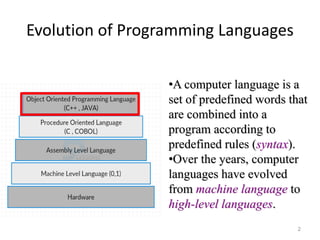
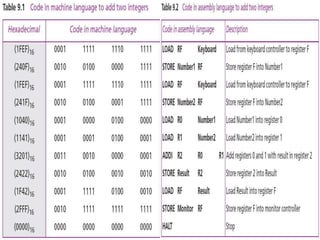
Evolution of Programming Languages
2
•A computer language is a
set of predefined words that
are combined into a
program according to
predefined rules (syntax).
•Over the years, computer
languages have evolved
from machine language to
high-level languages.
3
Evolution of Programming Languages -
Paradigm
4
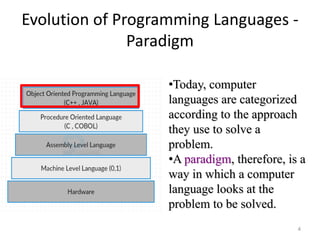
•Today, computer
languages are categorized
according to the approach
they use to solve a
problem.
•A paradigm, therefore, is a
way in which a computer
language looks at the
problem to be solved.
Evolution of Programming Languages -
contd
5
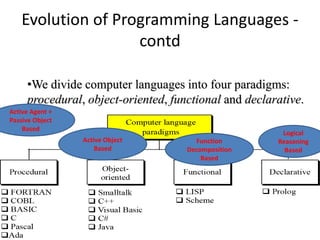
•We divide computer languages into four paradigms:
procedural, object-oriented, functional and declarative.
Logical
Reasoning
Based
Function
Decomposition
Based
Active Object
Based
Active Agent +
Passive Object
Based
Picture courtesy
CONCEPTS OF OBJECT ORIENTED
PROGRAMMING
By Grady Booch
By Ravi P Reddy
6
Sample C program
#include <stdlib.h>
#include <time.h>
#define SIZE 5
struct bot { int xpos; int ypos; };
struct bot initialize(struct bot b);
int main()
{
struct bot robots[SIZE];
int x;
srandom((unsigned)time(NULL));
for(x=0;x<SIZE;x++)
{ 7
robots[x] = initialize(robots[x]);
printf("Robot %d: Coordinates:
%d,%dn", x+1,robots[x].
xpos,robots[x].ypos);
}
return(0);
}
struct bot initialize(struct bot b)
{
int x,y;
x = random();
y = random();
x%=20;
y%=20;
b.xpos = x;
b.ypos = y;
return(b); }
Problems with Procedural Languages
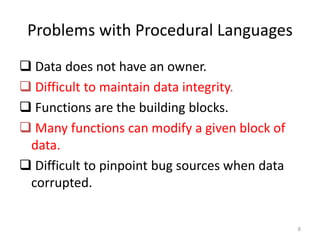
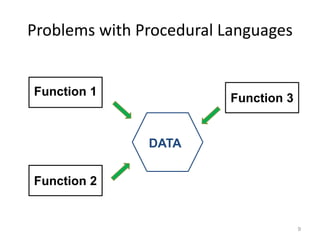
 Data does not have an owner.
 Difficult to maintain data integrity.
 Functions are the building blocks.
 Many functions can modify a given block of
data.
 Difficult to pinpoint bug sources when data
corrupted.
8
Problems with Procedural Languages
9
Function 1
Function 2
Function 3
DATA
Problems with Procedural Languages
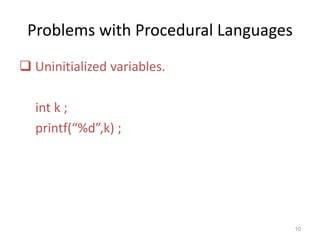
 Uninitialized variables.
int k ;
printf(“%d”,k) ;
10
Problems with Procedural Languages
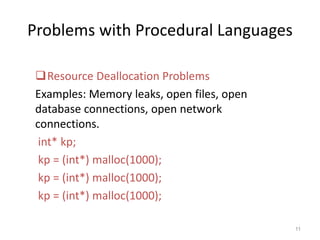
Resource Deallocation Problems
Examples: Memory leaks, open files, open
database connections, open network
connections.
int* kp;
kp = (int*) malloc(1000);
11
Problems with Procedural Languages
12
Insufficient support for abstraction
ADT = data + functions
data: modelled as structures
functions: global, not related to structure
Next Session will be
OO Concepts
13

1_PP_vs_OO.ppt

  • 1.
    19CSE204 Object OrientedProgramming Lecture 1 Overview of different programming paradigms
  • 2.
    Evolution of ProgrammingLanguages 2 •A computer language is a set of predefined words that are combined into a program according to predefined rules (syntax). •Over the years, computer languages have evolved from machine language to high-level languages.
  • 3.
  • 4.
    Evolution of ProgrammingLanguages - Paradigm 4 •Today, computer languages are categorized according to the approach they use to solve a problem. •A paradigm, therefore, is a way in which a computer language looks at the problem to be solved.
  • 5.
    Evolution of ProgrammingLanguages - contd 5 •We divide computer languages into four paradigms: procedural, object-oriented, functional and declarative. Logical Reasoning Based Function Decomposition Based Active Object Based Active Agent + Passive Object Based
  • 6.
    Picture courtesy CONCEPTS OFOBJECT ORIENTED PROGRAMMING By Grady Booch By Ravi P Reddy 6
  • 7.
    Sample C program #include<stdlib.h> #include <time.h> #define SIZE 5 struct bot { int xpos; int ypos; }; struct bot initialize(struct bot b); int main() { struct bot robots[SIZE]; int x; srandom((unsigned)time(NULL)); for(x=0;x<SIZE;x++) { 7 robots[x] = initialize(robots[x]); printf("Robot %d: Coordinates: %d,%dn", x+1,robots[x]. xpos,robots[x].ypos); } return(0); } struct bot initialize(struct bot b) { int x,y; x = random(); y = random(); x%=20; y%=20; b.xpos = x; b.ypos = y; return(b); }
  • 8.
    Problems with ProceduralLanguages  Data does not have an owner.  Difficult to maintain data integrity.  Functions are the building blocks.  Many functions can modify a given block of data.  Difficult to pinpoint bug sources when data corrupted. 8
  • 9.
    Problems with ProceduralLanguages 9 Function 1 Function 2 Function 3 DATA
  • 10.
    Problems with ProceduralLanguages  Uninitialized variables. int k ; printf(“%d”,k) ; 10
  • 11.
    Problems with ProceduralLanguages Resource Deallocation Problems Examples: Memory leaks, open files, open database connections, open network connections. int* kp; kp = (int*) malloc(1000); kp = (int*) malloc(1000); kp = (int*) malloc(1000); 11
  • 12.
    Problems with ProceduralLanguages 12 Insufficient support for abstraction ADT = data + functions data: modelled as structures functions: global, not related to structure
  • 13.
    Next Session willbe OO Concepts 13