↓
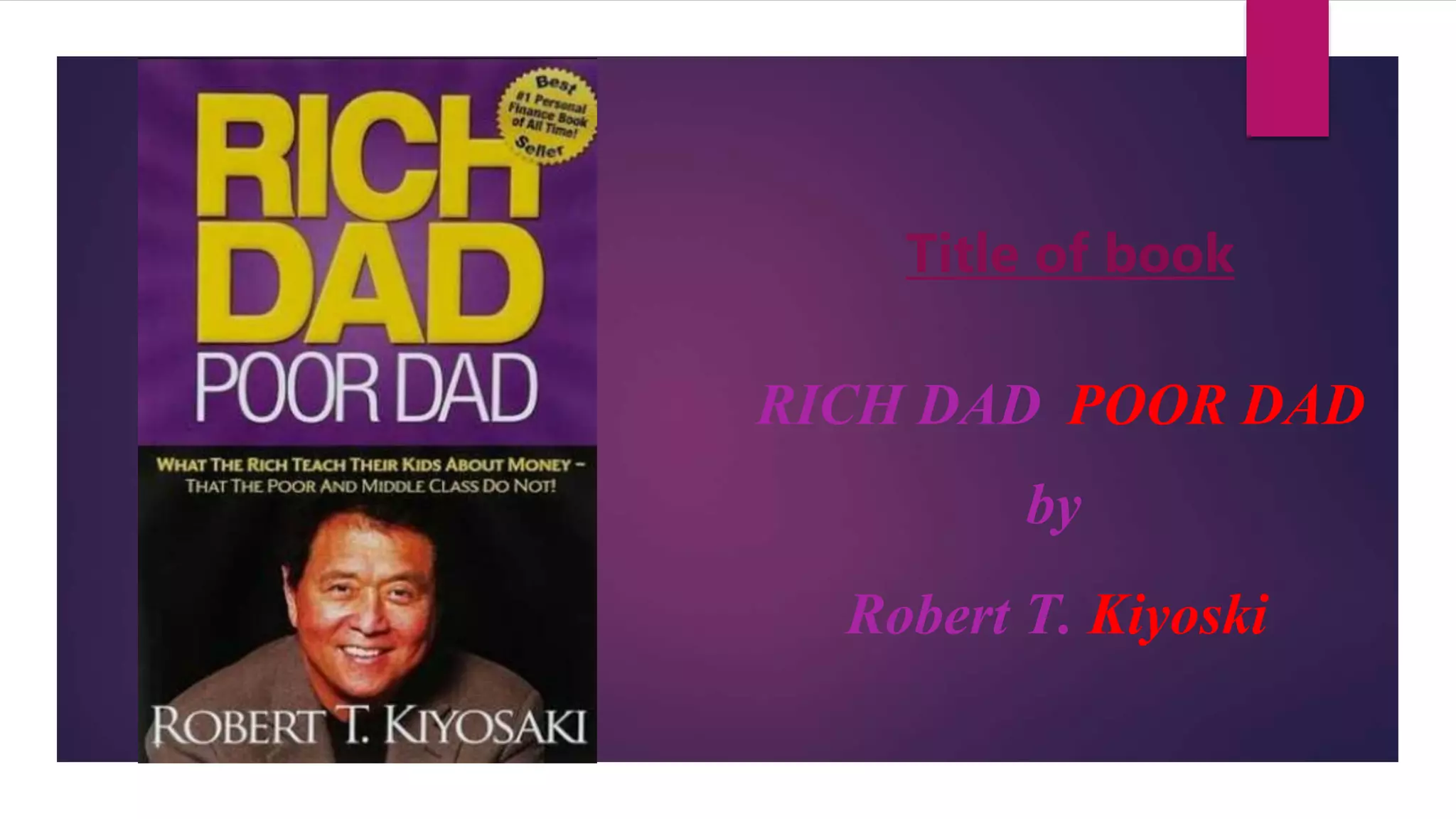
RICH DAD POOR DAD
by
Robert T. Kiyoski
Title of book
 Introduction of author
 ROBERT TORU KIYOSAKI WAS BORN ON APRIL 8, 1947.
 AN AMERICAN INVESTOR, BUSINESSMAN, SELF-HELP
AUTHOR, MOTIVATIONAL SPEAKER, FINANCIAL LITERACY
ACTIVIST, AND OCCASIONAL FINANCIAL COMMENTATOR
 KIYOSAKI IS THE FOUNDER OF THE RICH DAD COMPANY, A
PRIVATE FINANCIAL EDUCATION COMPANY THAT PROVIDES
PERSONAL FINANCE AND BUSINESS EDUCATION TO PEOPLE
THROUGH BOOKS.
 Detail of Publication
Publisher :- Warner Books Ed
Date :- April 1, 2000
LESSONS
 Chapter One Rich Dad, Poor Dad
 Chapter Two The Rich Don’t Work for money
 Chapter Three Why Teach Financial Literacy?
 Chapter Four Mind Your Own Business
 Chapter Five The History of Taxes and the power of Corporations
 Chapter Six The Rich Invent Money
 Chapter Seven Work to Learn – Don’t Work for money
1. Rich Dad, Poor Dad
 “The Lack of money is root
Of all evil.”
 How can I afford it?
 Study hard so you can find a
good company to
buy.
 Learn To Manage Risks
 Money works for me.
 Simply created investments.
 “The Love of money is root
Of all evil.”
 I Can’t afford it.
 Study hard so that you can
find a good company to
work for.
 When it comes to money,
Play it safe, don’t take risks.
 I Work for money.
 Struggled to save dollars.
2. The Rich Don’t Work For Money
 Life is the best teacher of all.
 The poor and the middle class work for money ,the
rich have money to work for them.
 Avoiding one of life's biggest traps –fear and greed.
 School not the end but the beginning.
 Ignorance about money causes so much greed and
so much fear.
 Seeing what others missed.
3. Why teach Financial Literacy?
 The rich acquire assets, while the poor and the middle class
acquire liabilities, which they think are assets.
 Assets are things that create a cash flow.
 Liabilities are things that result in expenses.
 Being Rich vs. Being Wealthy
 How long can you survive without ever having to work?
4. Mind Your Own Business
 People confuse their profession with
their business.
 Ray Kroc is a salesman by profession but
is in the Business of Real Estate.
 When you do a job, you work for
everyone except yourself.
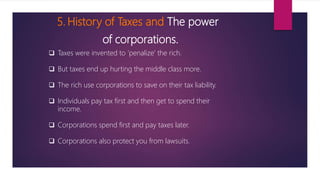
5. History of Taxes and The power
of corporations.
 Taxes were invented to ‘penalize’ the rich.
 But taxes end up hurting the middle class more.
 The rich use corporations to save on their tax liability.
 Individuals pay tax first and then get to spend their
income.
 Corporations spend first and pay taxes later.
 Corporations also protect you from lawsuits.
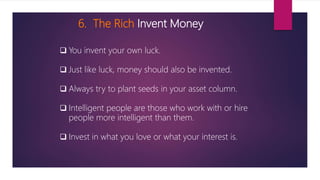
6. The Rich Invent Money
 You invent your own luck.
 Just like luck, money should also be invented.
 Always try to plant seeds in your asset column.
 Intelligent people are those who work with or hire
people more intelligent than them.
 Invest in what you love or what your interest is.
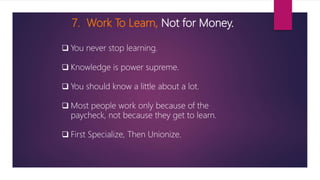
7. Work To Learn, Not for Money.
 You never stop learning.
 Knowledge is power supreme.
 You should know a little about a lot.
 Most people work only because of the
paycheck, not because they get to learn.
 First Specialize, Then Unionize.
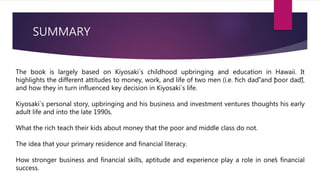
SUMMARY
The book is largely based on Kiyosaki`s childhood upbringing and education in Hawaii. It
highlights the different attitudes to money, work, and life of two men (i.e. “rich dad”and “poor dad”),
and how they in turn influenced key decision in Kiyosaki`s life.
Kiyosaki`s personal story, upbringing and his business and investment ventures thoughts his early
adult life and into the late 1990s.
What the rich teach their kids about money that the poor and middle class do not.
The idea that your primary residence and financial literacy.
How stronger business and financial skills, aptitude and experience play a role in one’s financial
success.
Critical Appreciation and Conclusion
 Some chapter of this book focuses on tips to create and build
personal wealth. The author says to find a motivator grater than
reality and to empower the mind. He says people need to have a
strange purpose for living.
 The next tip he gives is to feed the mind. He also says to choose
friend carefully. The author also says to have heroes because they
can be inspiring. He also preaches generosity and to pay your
broker well. He also says to drop what you’re doing if it’s no longer
working.
THANK YOU

Book review rich dad poor dad

  • 1.
    ↓ RICH DAD POORDAD by Robert T. Kiyoski Title of book
  • 2.
     Introduction ofauthor  ROBERT TORU KIYOSAKI WAS BORN ON APRIL 8, 1947.  AN AMERICAN INVESTOR, BUSINESSMAN, SELF-HELP AUTHOR, MOTIVATIONAL SPEAKER, FINANCIAL LITERACY ACTIVIST, AND OCCASIONAL FINANCIAL COMMENTATOR  KIYOSAKI IS THE FOUNDER OF THE RICH DAD COMPANY, A PRIVATE FINANCIAL EDUCATION COMPANY THAT PROVIDES PERSONAL FINANCE AND BUSINESS EDUCATION TO PEOPLE THROUGH BOOKS.
  • 3.
     Detail ofPublication Publisher :- Warner Books Ed Date :- April 1, 2000
  • 4.
    LESSONS  Chapter OneRich Dad, Poor Dad  Chapter Two The Rich Don’t Work for money  Chapter Three Why Teach Financial Literacy?  Chapter Four Mind Your Own Business  Chapter Five The History of Taxes and the power of Corporations  Chapter Six The Rich Invent Money  Chapter Seven Work to Learn – Don’t Work for money
  • 5.
    1. Rich Dad,Poor Dad  “The Lack of money is root Of all evil.”  How can I afford it?  Study hard so you can find a good company to buy.  Learn To Manage Risks  Money works for me.  Simply created investments.  “The Love of money is root Of all evil.”  I Can’t afford it.  Study hard so that you can find a good company to work for.  When it comes to money, Play it safe, don’t take risks.  I Work for money.  Struggled to save dollars.
  • 6.
    2. The RichDon’t Work For Money  Life is the best teacher of all.  The poor and the middle class work for money ,the rich have money to work for them.  Avoiding one of life's biggest traps –fear and greed.  School not the end but the beginning.  Ignorance about money causes so much greed and so much fear.  Seeing what others missed.
  • 7.
    3. Why teachFinancial Literacy?  The rich acquire assets, while the poor and the middle class acquire liabilities, which they think are assets.  Assets are things that create a cash flow.  Liabilities are things that result in expenses.  Being Rich vs. Being Wealthy  How long can you survive without ever having to work?
  • 8.
    4. Mind YourOwn Business  People confuse their profession with their business.  Ray Kroc is a salesman by profession but is in the Business of Real Estate.  When you do a job, you work for everyone except yourself.
  • 9.
    5. History ofTaxes and The power of corporations.  Taxes were invented to ‘penalize’ the rich.  But taxes end up hurting the middle class more.  The rich use corporations to save on their tax liability.  Individuals pay tax first and then get to spend their income.  Corporations spend first and pay taxes later.  Corporations also protect you from lawsuits.
  • 10.
    6. The RichInvent Money  You invent your own luck.  Just like luck, money should also be invented.  Always try to plant seeds in your asset column.  Intelligent people are those who work with or hire people more intelligent than them.  Invest in what you love or what your interest is.
  • 11.
    7. Work ToLearn, Not for Money.  You never stop learning.  Knowledge is power supreme.  You should know a little about a lot.  Most people work only because of the paycheck, not because they get to learn.  First Specialize, Then Unionize.
  • 12.
    SUMMARY The book islargely based on Kiyosaki`s childhood upbringing and education in Hawaii. It highlights the different attitudes to money, work, and life of two men (i.e. “rich dad”and “poor dad”), and how they in turn influenced key decision in Kiyosaki`s life. Kiyosaki`s personal story, upbringing and his business and investment ventures thoughts his early adult life and into the late 1990s. What the rich teach their kids about money that the poor and middle class do not. The idea that your primary residence and financial literacy. How stronger business and financial skills, aptitude and experience play a role in one’s financial success.
  • 13.
    Critical Appreciation andConclusion  Some chapter of this book focuses on tips to create and build personal wealth. The author says to find a motivator grater than reality and to empower the mind. He says people need to have a strange purpose for living.  The next tip he gives is to feed the mind. He also says to choose friend carefully. The author also says to have heroes because they can be inspiring. He also preaches generosity and to pay your broker well. He also says to drop what you’re doing if it’s no longer working.
  • 14.