Download to read offline





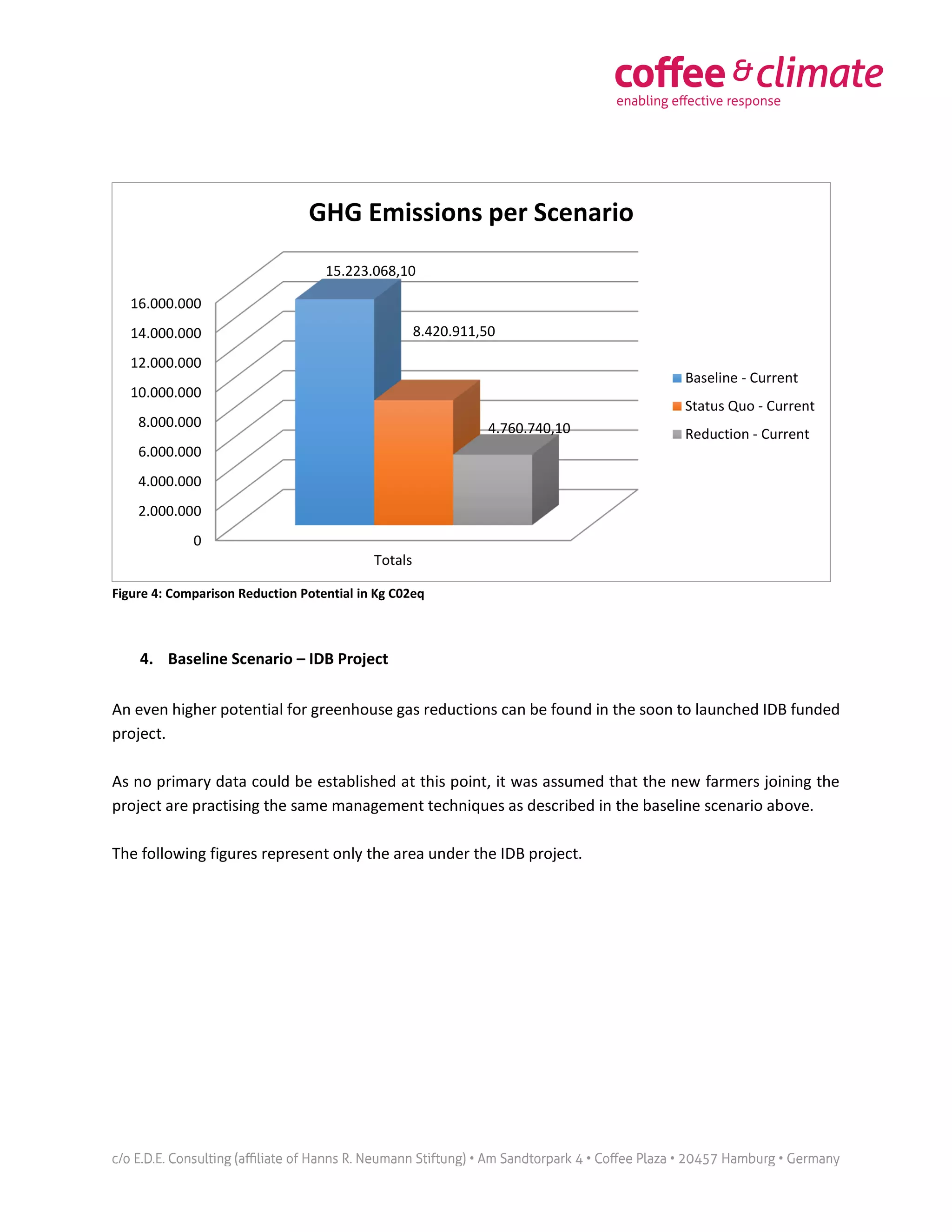


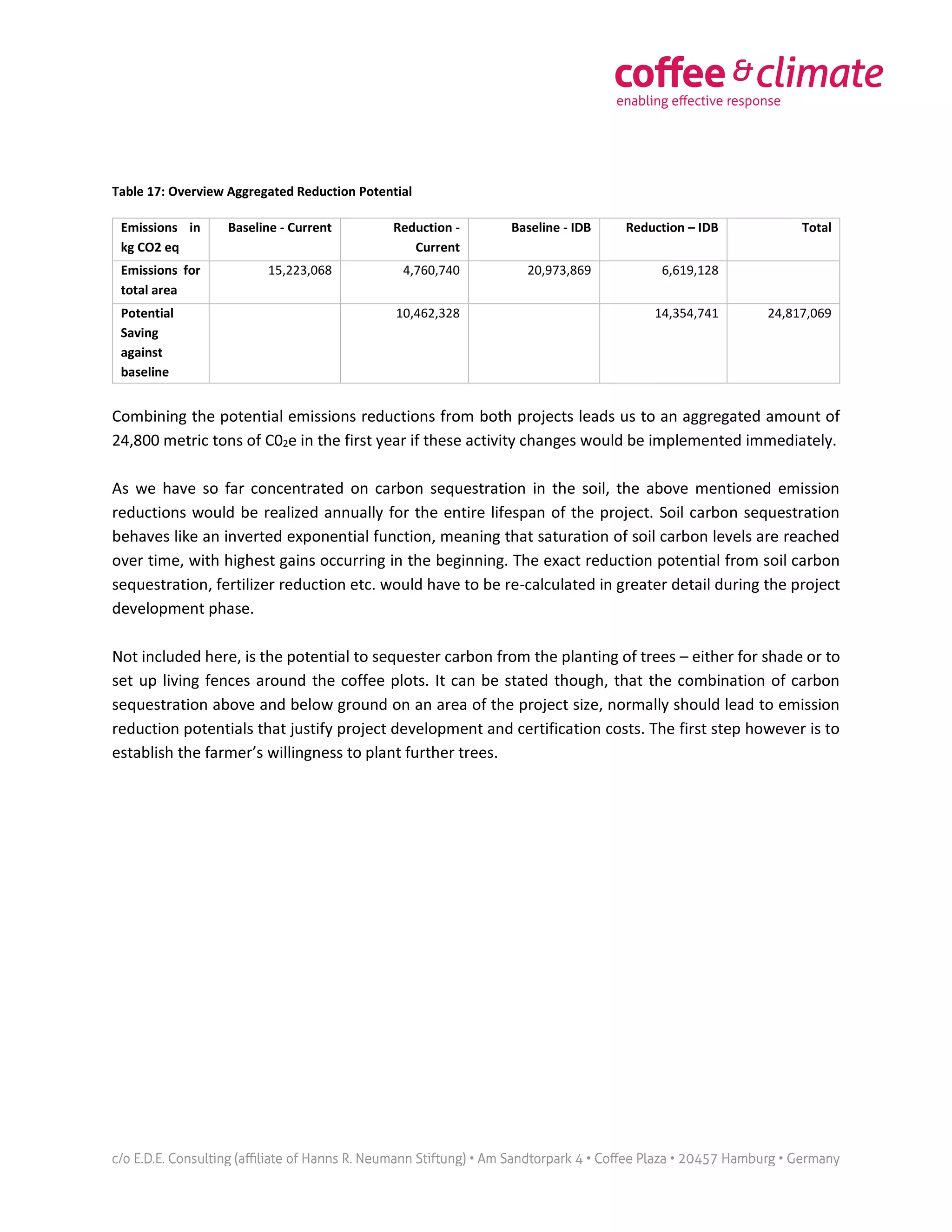











This document provides a feasibility study and business plan for implementing composting projects and related emission reduction options for coffee farmers in Brazil. It analyzes both centralized and decentralized composting options. Under the decentralized approach, it assesses the baseline practices and emissions of existing projects working with 1,698 farmers and 16,930 hectares of land. It also models reduction scenarios. For a new Inter-American Development Bank project expanding to an estimated 4,000 farmers and 39,883 hectares, it analyzes baseline and reduction scenarios. The study concludes the projects are technically and financially feasible and would provide economic and environmental benefits to participating farmers through improved soil health and reduced emissions.


