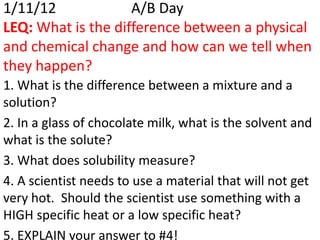
1/11/12             A/B Day
LEQ: What is the difference between a physical
and chemical change and how can we tell when
they happen?
1. What is the difference between a mixture and a
solution?
2. In a glass of chocolate milk, what is the solvent and
what is the solute?
3. What does solubility measure?
4. A scientist needs to use a material that will not get
very hot. Should the scientist use something with a
HIGH specific heat or a low specific heat?
5. EXPLAIN your answer to #4!
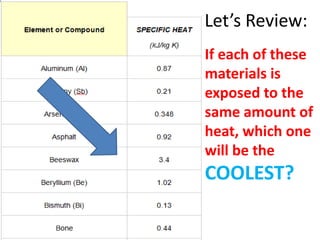
Let’s Review:
If each of these
materials is
exposed to the
same amount of
heat, which one
will be the
COOLEST?
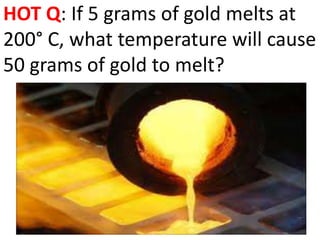
HOT Q: If 5 grams of gold melts at
200° C, what temperature will cause
50 grams of gold to melt?
HOT Q: Which pure substance is
composed of more that one
element?
  a.Carbon
  b.Gold
  c.Water
  d.Sodium
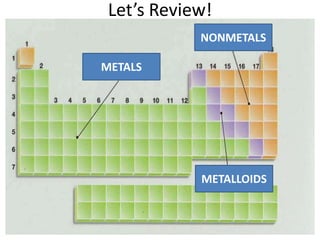
Let’s Review!
            NONMETALS

METALS


            METALLOIDS
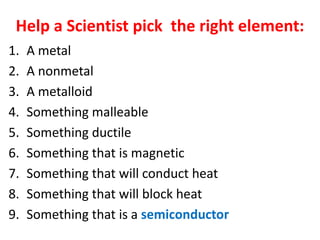
Help a Scientist pick the right element:
1.   A metal
2.   A nonmetal
3.   A metalloid
4.   Something malleable
5.   Something ductile
6.   Something that is magnetic
7.   Something that will conduct heat
8.   Something that will block heat
9.   Something that is a semiconductor
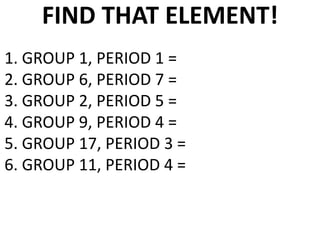
FIND THAT ELEMENT!
1. GROUP 1, PERIOD 1 =
2. GROUP 6, PERIOD 7 =
3. GROUP 2, PERIOD 5 =
4. GROUP 9, PERIOD 4 =
5. GROUP 17, PERIOD 3 =
6. GROUP 11, PERIOD 4 =
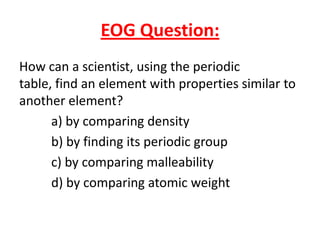
EOG Question:
How can a scientist, using the periodic
table, find an element with properties similar to
another element?
      a) by comparing density
      b) by finding its periodic group
      c) by comparing malleability
      d) by comparing atomic weight
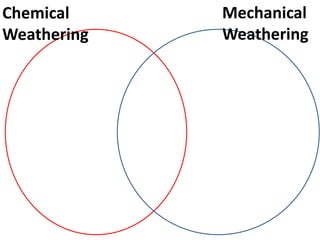
Chemical     Mechanical
Weathering   Weathering
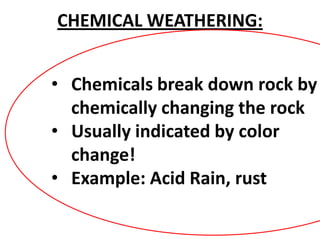
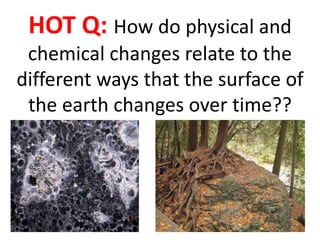
CHEMICAL WEATHERING:


• Chemicals break down rock by
  chemically changing the rock
• Usually indicated by color
  change!
• Example: Acid Rain, rust
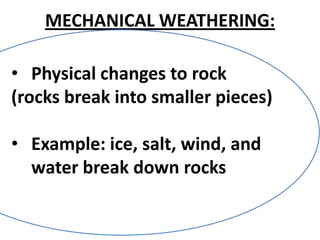
MECHANICAL WEATHERING:

• Physical changes to rock
(rocks break into smaller pieces)

• Example: ice, salt, wind, and
  water break down rocks
Today’s LEQ: What is the difference
 between a physical and chemical change
 and how can we tell when they happen?
By the end of today, you should be able to…

1. Describe the difference between an physical
   and chemical change.

2. Use observable evidence to decide if a
  change is chemical or physical
FOCUS VOCABULARY:

87. Chemical Change
88. Physical Change
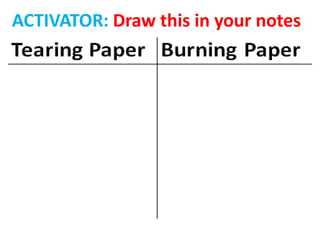
ACTIVATOR: Draw this in your notes
Record 3-5 observations you
   have about the paper

How does the paper look
different?
What changed about the
paper?

What happened to the
paper?
Record 3-5 observations you
   have about the paper

How does the paper look
different?
What changed about the
paper?

What happened to the
paper?
Demo: Tearing Paper, Burning Paper


How are the two
demos different?
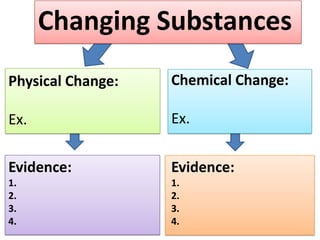
Changing Substances
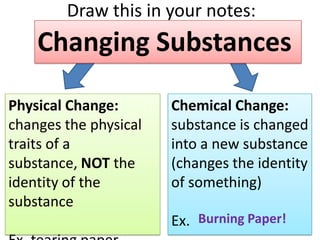
Physical Change:   Chemical Change:

Ex.                Ex.


Evidence:          Evidence:
1.                 1.
2.                 2.
3.                 3.
4.                 4.
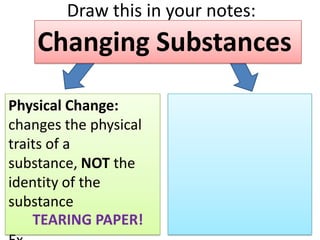
Draw this in your notes:
    Changing Substances

Physical Change:
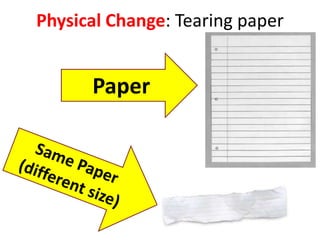
changes the physical
traits of a
substance, NOT the
identity of the
substance
    TEARING PAPER!
Physical Change: Tearing paper


      Paper
Draw this in your notes:
    Changing Substances

Physical Change:       Chemical Change:
changes the physical   substance is changed
traits of a            into a new substance
substance, NOT the     (changes the identity
identity of the        of something)
substance
                       Ex. Burning Paper!
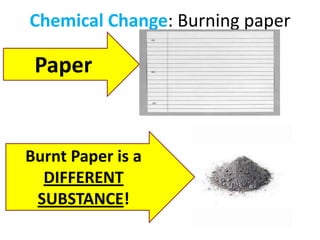
Chemical Change: Burning paper

 Paper


Burnt Paper is a
  DIFFERENT
 SUBSTANCE!
BrainPop: Changing Properties
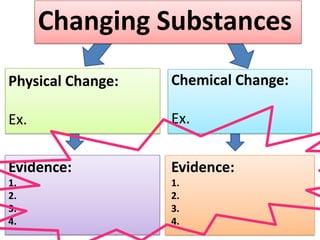
Changing Substances
Physical Change:   Chemical Change:

Ex.                Ex.


Evidence:          Evidence:
1.                 1.
2.                 2.
3.                 3.
4.                 4.
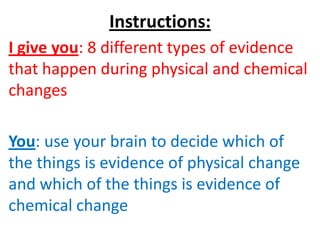
Instructions:
I give you: 8 different types of evidence
that happen during physical and chemical
changes

You: use your brain to decide which of
the things is evidence of physical change
and which of the things is evidence of
chemical change
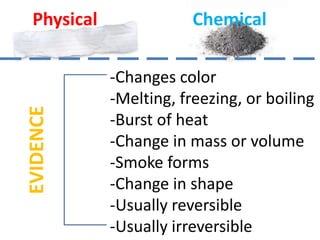
Physical               Chemical

             -Changes color
             -Melting, freezing, or boiling
EVIDENCE


             -Burst of heat
             -Change in mass or volume
             -Smoke forms
             -Change in shape
             -Usually reversible
             -Usually irreversible
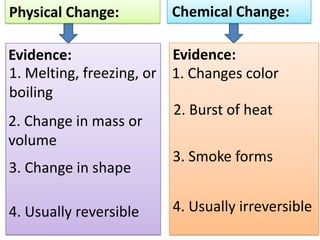
Physical Change:        Chemical Change:

Evidence:                Evidence:
1. Melting, freezing, or 1. Changes color
boiling
                         2. Burst of heat
2. Change in mass or
volume
                         3. Smoke forms
3. Change in shape

4. Usually reversible   4. Usually irreversible
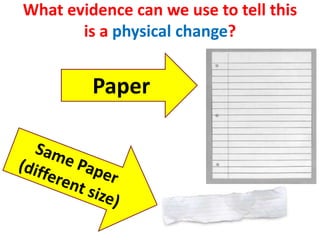
What evidence can we use to tell this
       is a physical change?


         Paper
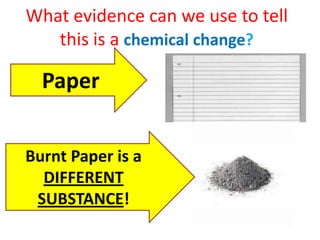
What evidence can we use to tell
   this is a chemical change?

  Paper


Burnt Paper is a
  DIFFERENT
 SUBSTANCE!
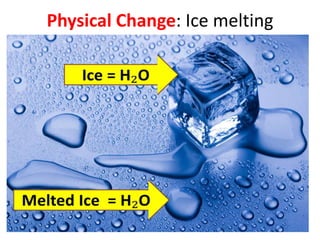
Physical Change: Ice melting
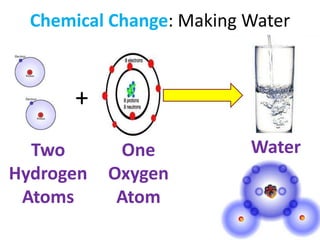
Chemical Change: Making Water


       +
  Two       One           Water
Hydrogen   Oxygen
 Atoms      Atom
Chemical
   or
Physical?
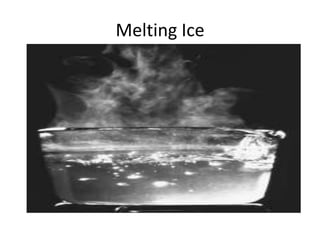
Melting Ice
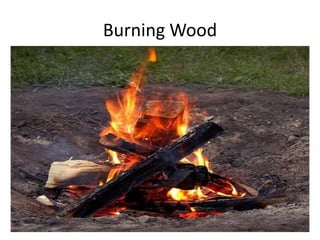
Burning Wood
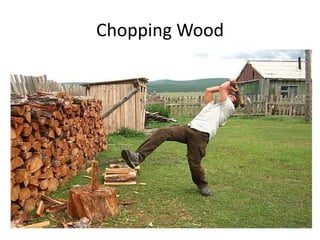
Chopping Wood
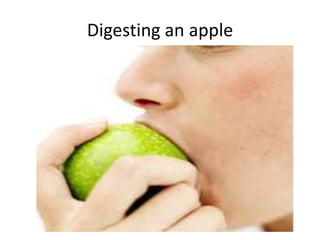
Digesting an apple
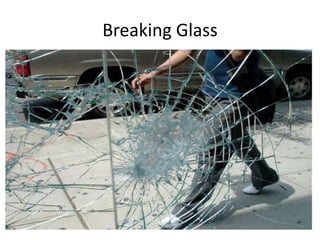
Breaking Glass
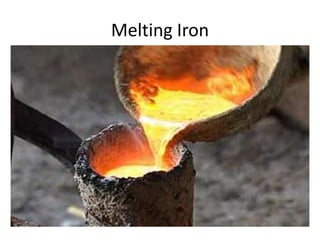
Melting Iron
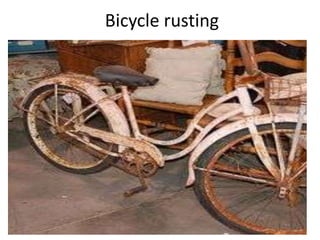
Bicycle rusting
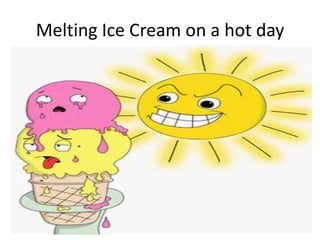
Melting Ice Cream on a hot day
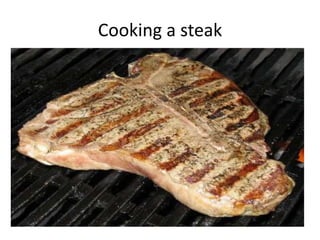
Cooking a steak
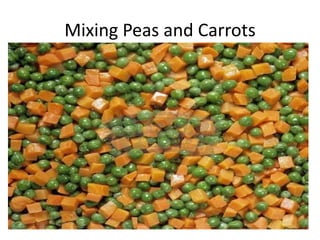
Mixing Peas and Carrots
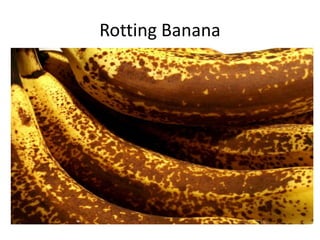
Rotting Banana
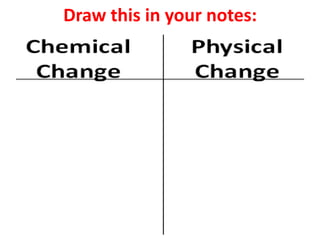
Draw this in your notes:
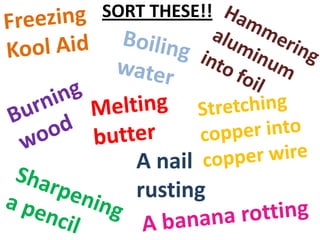
SORT THESE!!


   A nail
   rusting
HOT Q: How do physical and
 chemical changes relate to the
different ways that the surface of
 the earth changes over time??
Key Points:
1. A _________ changes the physical
   characteristics of a substance.
2. A __________ changes something into a new
   substance.
3. Changing color is evidence of a ___________.
4. Changing phases or states of matter is
   evidence of a __________________.
Summarizer:
1. What is the difference between a chemical
   change and physical change?
2. Is melting copper an example of a physical or
   chemical change?
3. How can you tell the answer to #2?
4. Is a rusting nail an example of a physical or
   chemical change?
5. How can you tell the answer to #4?

1/11/12

  • 1.
    1/11/12 A/B Day LEQ: What is the difference between a physical and chemical change and how can we tell when they happen? 1. What is the difference between a mixture and a solution? 2. In a glass of chocolate milk, what is the solvent and what is the solute? 3. What does solubility measure? 4. A scientist needs to use a material that will not get very hot. Should the scientist use something with a HIGH specific heat or a low specific heat? 5. EXPLAIN your answer to #4!
  • 2.
    Let’s Review: If eachof these materials is exposed to the same amount of heat, which one will be the COOLEST?
  • 3.
    HOT Q: If5 grams of gold melts at 200° C, what temperature will cause 50 grams of gold to melt?
  • 4.
    HOT Q: Whichpure substance is composed of more that one element? a.Carbon b.Gold c.Water d.Sodium
  • 5.
    Let’s Review! NONMETALS METALS METALLOIDS
  • 6.
    Help a Scientistpick the right element: 1. A metal 2. A nonmetal 3. A metalloid 4. Something malleable 5. Something ductile 6. Something that is magnetic 7. Something that will conduct heat 8. Something that will block heat 9. Something that is a semiconductor
  • 7.
    FIND THAT ELEMENT! 1.GROUP 1, PERIOD 1 = 2. GROUP 6, PERIOD 7 = 3. GROUP 2, PERIOD 5 = 4. GROUP 9, PERIOD 4 = 5. GROUP 17, PERIOD 3 = 6. GROUP 11, PERIOD 4 =
  • 8.
    EOG Question: How cana scientist, using the periodic table, find an element with properties similar to another element? a) by comparing density b) by finding its periodic group c) by comparing malleability d) by comparing atomic weight
  • 9.
    Chemical Mechanical Weathering Weathering
  • 10.
    CHEMICAL WEATHERING: • Chemicalsbreak down rock by chemically changing the rock • Usually indicated by color change! • Example: Acid Rain, rust
  • 11.
    MECHANICAL WEATHERING: • Physicalchanges to rock (rocks break into smaller pieces) • Example: ice, salt, wind, and water break down rocks
  • 12.
    Today’s LEQ: Whatis the difference between a physical and chemical change and how can we tell when they happen? By the end of today, you should be able to… 1. Describe the difference between an physical and chemical change. 2. Use observable evidence to decide if a change is chemical or physical
  • 13.
    FOCUS VOCABULARY: 87. ChemicalChange 88. Physical Change
  • 14.
    ACTIVATOR: Draw thisin your notes
  • 15.
    Record 3-5 observationsyou have about the paper How does the paper look different? What changed about the paper? What happened to the paper?
  • 16.
    Record 3-5 observationsyou have about the paper How does the paper look different? What changed about the paper? What happened to the paper?
  • 17.
    Demo: Tearing Paper,Burning Paper How are the two demos different?
  • 18.
    Changing Substances Physical Change: Chemical Change: Ex. Ex. Evidence: Evidence: 1. 1. 2. 2. 3. 3. 4. 4.
  • 19.
    Draw this inyour notes: Changing Substances Physical Change: changes the physical traits of a substance, NOT the identity of the substance TEARING PAPER!
  • 20.
  • 21.
    Draw this inyour notes: Changing Substances Physical Change: Chemical Change: changes the physical substance is changed traits of a into a new substance substance, NOT the (changes the identity identity of the of something) substance Ex. Burning Paper!
  • 22.
    Chemical Change: Burningpaper Paper Burnt Paper is a DIFFERENT SUBSTANCE!
  • 23.
  • 24.
    Changing Substances Physical Change: Chemical Change: Ex. Ex. Evidence: Evidence: 1. 1. 2. 2. 3. 3. 4. 4.
  • 25.
    Instructions: I give you:8 different types of evidence that happen during physical and chemical changes You: use your brain to decide which of the things is evidence of physical change and which of the things is evidence of chemical change
  • 26.
    Physical Chemical -Changes color -Melting, freezing, or boiling EVIDENCE -Burst of heat -Change in mass or volume -Smoke forms -Change in shape -Usually reversible -Usually irreversible
  • 27.
    Physical Change: Chemical Change: Evidence: Evidence: 1. Melting, freezing, or 1. Changes color boiling 2. Burst of heat 2. Change in mass or volume 3. Smoke forms 3. Change in shape 4. Usually reversible 4. Usually irreversible
  • 28.
    What evidence canwe use to tell this is a physical change? Paper
  • 29.
    What evidence canwe use to tell this is a chemical change? Paper Burnt Paper is a DIFFERENT SUBSTANCE!
  • 30.
  • 31.
    Chemical Change: MakingWater + Two One Water Hydrogen Oxygen Atoms Atom
  • 32.
    Chemical or Physical?
  • 33.
  • 34.
  • 35.
  • 36.
  • 37.
  • 38.
  • 39.
  • 40.
    Melting Ice Creamon a hot day
  • 41.
  • 42.
  • 43.
  • 44.
    Draw this inyour notes:
  • 45.
    SORT THESE!! A nail rusting
  • 46.
    HOT Q: Howdo physical and chemical changes relate to the different ways that the surface of the earth changes over time??
  • 47.
    Key Points: 1. A_________ changes the physical characteristics of a substance. 2. A __________ changes something into a new substance. 3. Changing color is evidence of a ___________. 4. Changing phases or states of matter is evidence of a __________________.
  • 48.
    Summarizer: 1. What isthe difference between a chemical change and physical change? 2. Is melting copper an example of a physical or chemical change? 3. How can you tell the answer to #2? 4. Is a rusting nail an example of a physical or chemical change? 5. How can you tell the answer to #4?