This document provides contact information for Presentation Studio, a company that designs presentations, and Jim Harvey, a public speaker. It lists their websites and acknowledges that some images were sourced from Shutterstock.
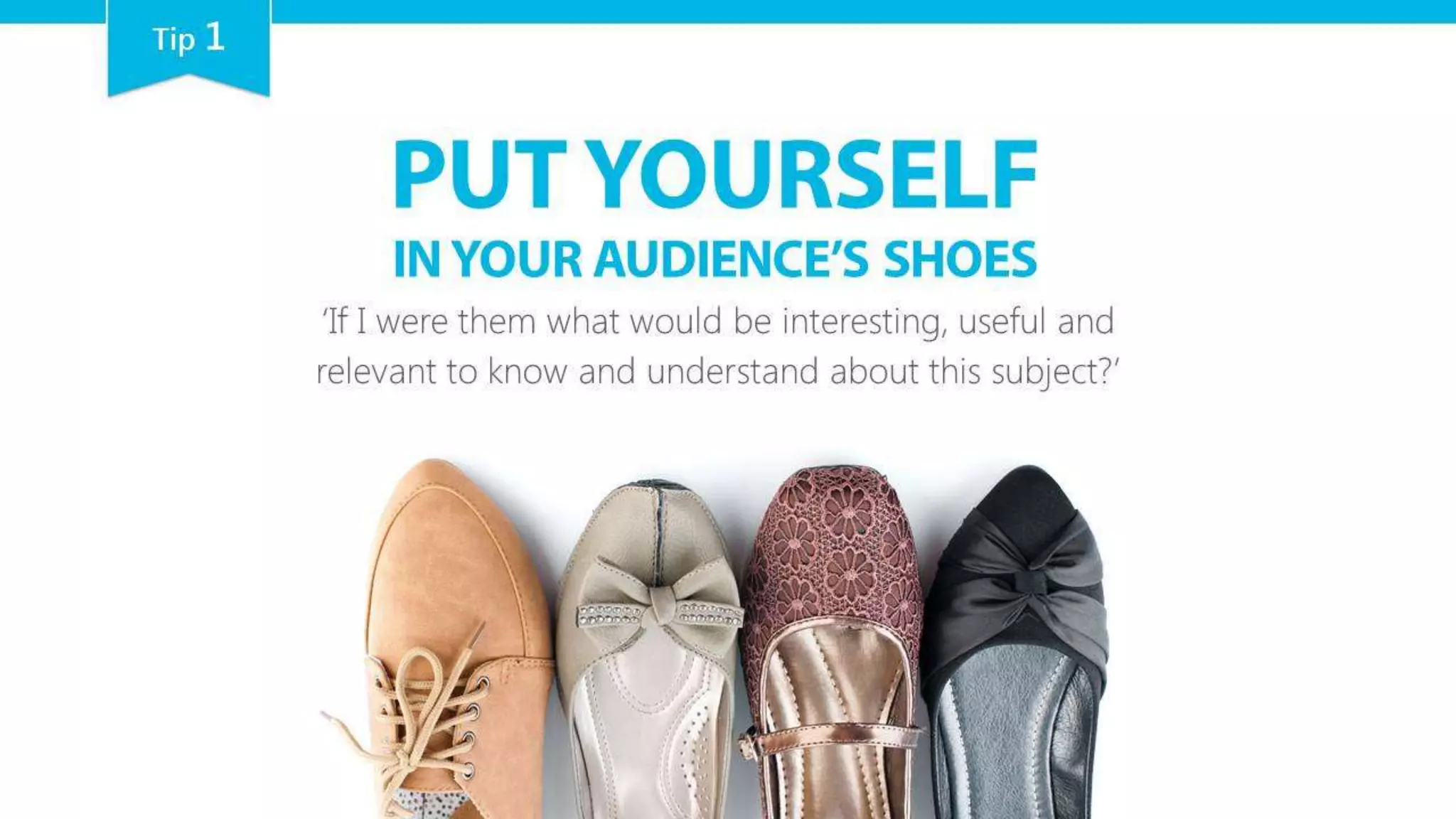
#3 Put yourself in your audience’s shoes and ask ‘if I were them what would be interesting, useful and relevant to know and understand about this subject?’
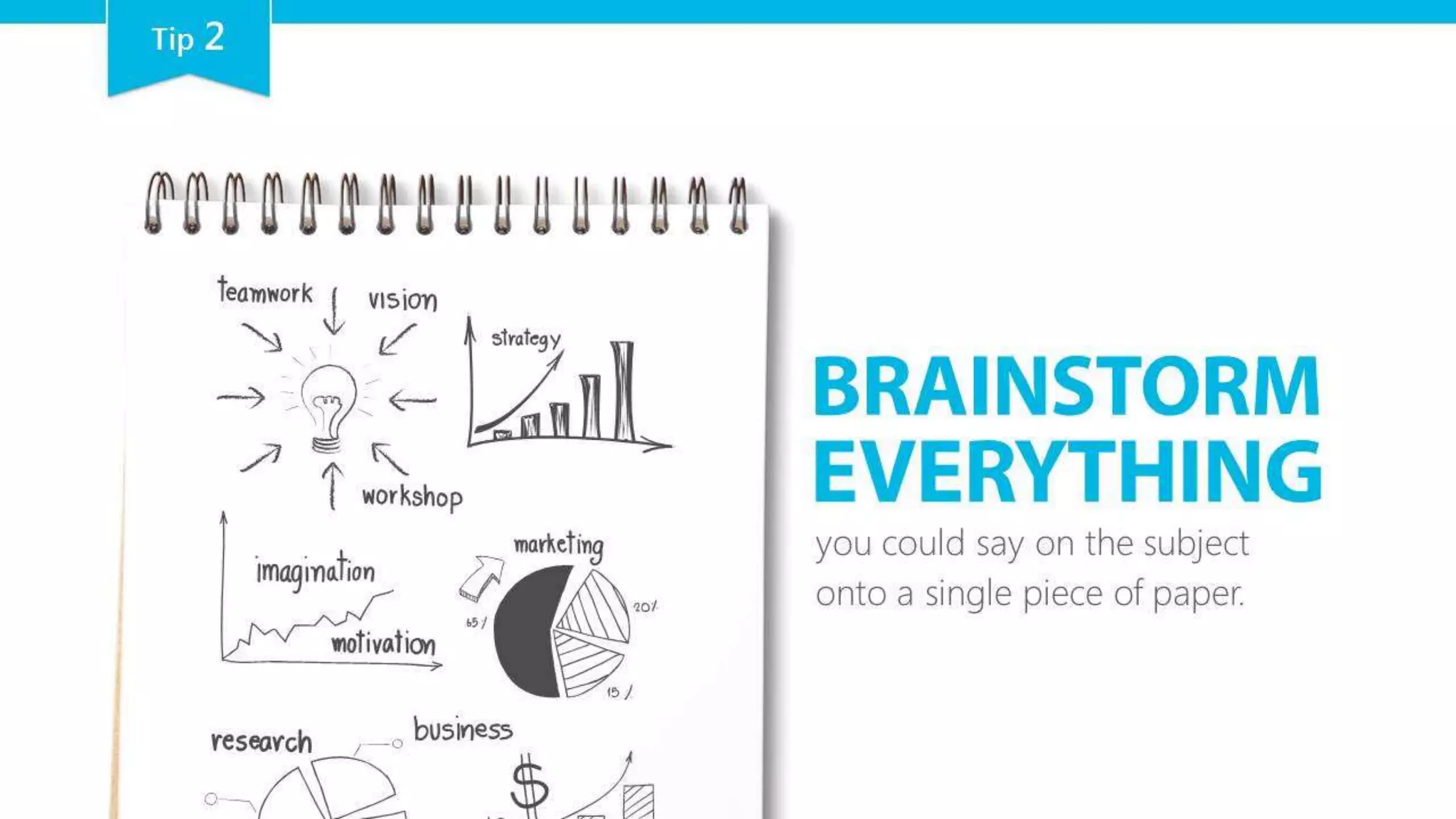
#4 Brainstorm everything you could say on the subject onto a single piece of paper.
#5 Consult with key members of the audience about what it is they want to know, don’t want to know. Then decide what you absolutely have to tell them.
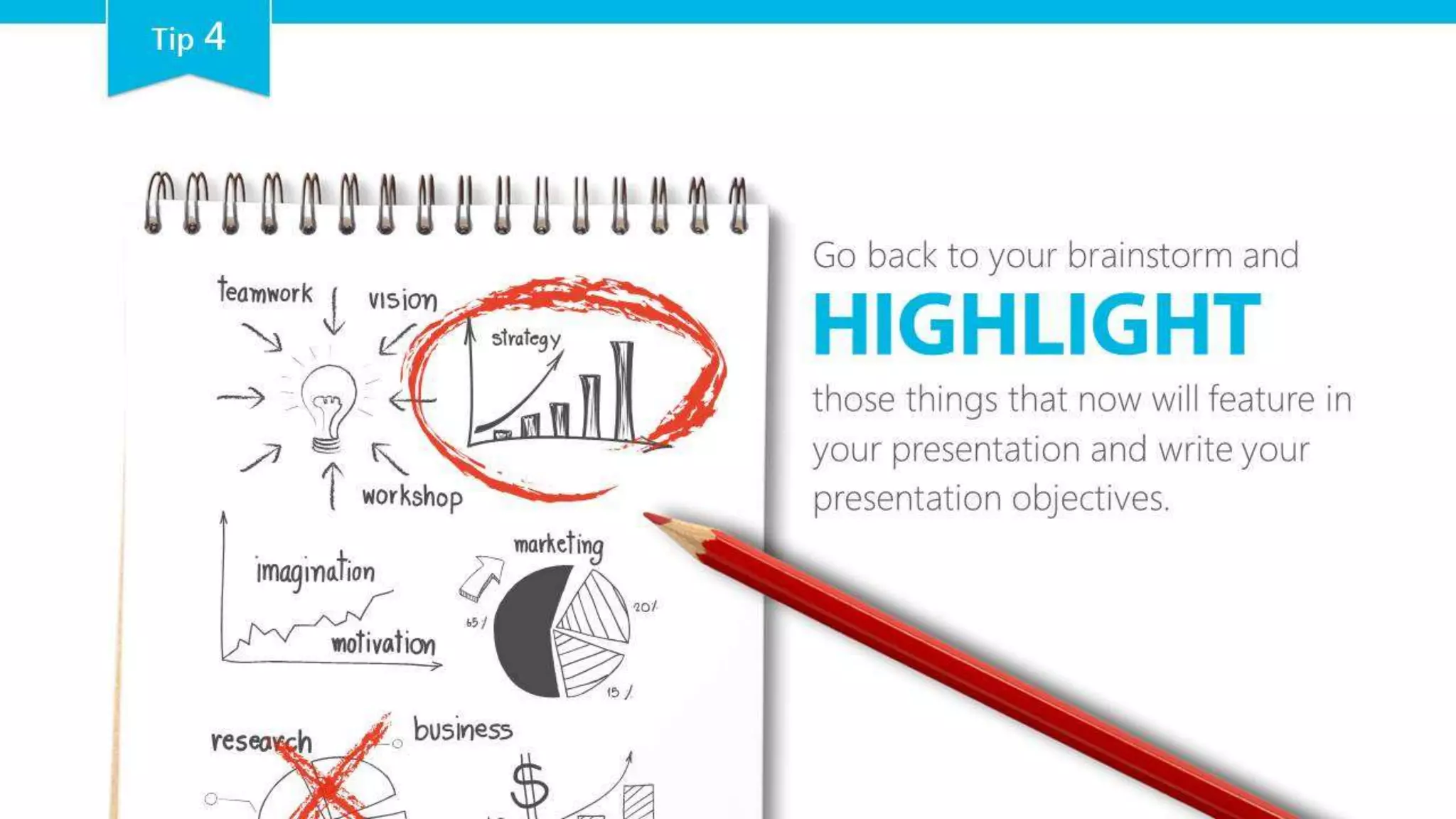
#6 Go back to your brainstorm and highlight those things that now will feature in your presentation and write your presentation objectives- In this presentation I will show X, Y and Z, and explain how we came to this decision. Then I will tell them exactly what I think they need to do and by when, to make the most of their investment.
#7 Build the storyboard- Act by act and keep on grinding until there’s a real rational, logical path through the presentation.
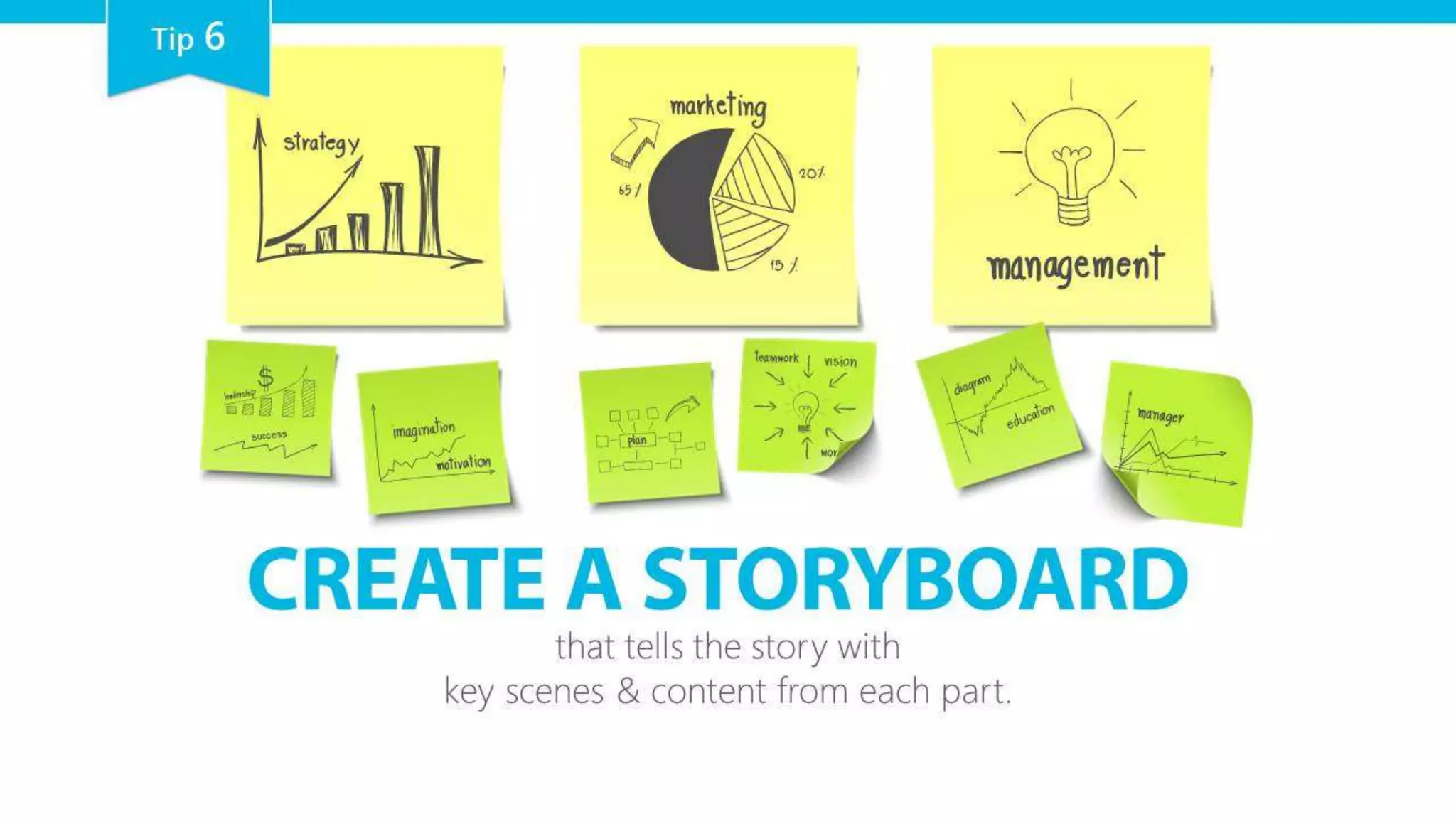
#8 Create a storyboard that tells the story with key scenes & content from each part.
#10 Add a high impact prologue (introduction) and epilogue (conclusion).
#11 Build your ‘script’ through rehearsal and repetition out loud rather than writing it out.
#12 Write your script to the level you require (bullet points are best but in some very important or sensitive presentations you have to be scripted word for word).