10 Fun Ways to Teach Character
Development to Children
05/12/2024 by Kristan Vihaan
Introduction:-
10 Fun Ways to Teach Character Development to Children
Teaching children good character is essential for their personal growth and success. When
kids develop traits like honesty, empathy, and resilience, they learn to navigate life’s
challenges with integrity and confidence. The best part? Teaching character development
doesn’t have to be dull! Here are 10 fun and effective ways to instill strong values in
children.
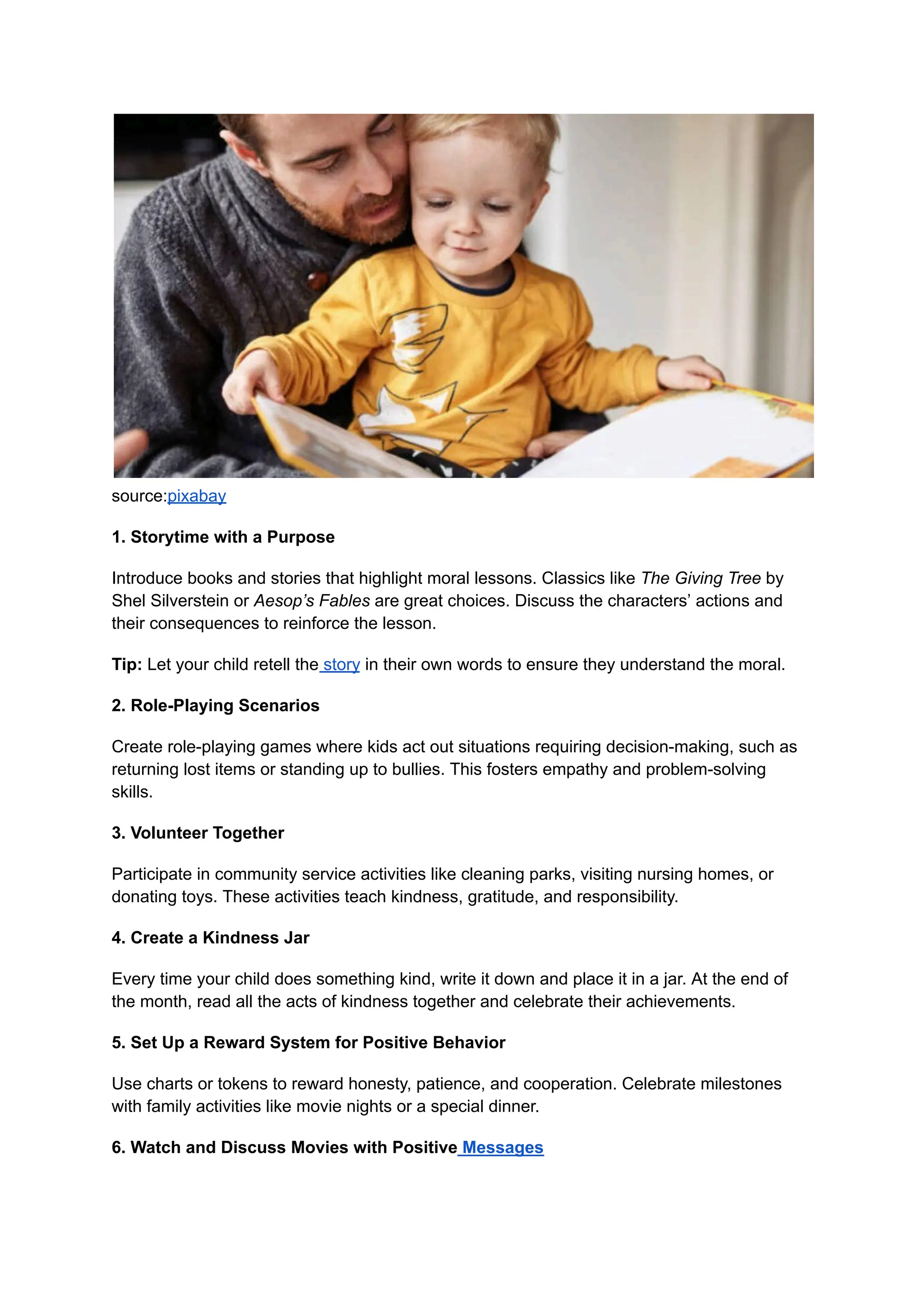
10 Fun Ways to Teach Character Development to Children
source:pixabay
1. Storytime with a Purpose
Introduce books and stories that highlight moral lessons. Classics like The Giving Tree by
Shel Silverstein or Aesop’s Fables are great choices. Discuss the characters’ actions and
their consequences to reinforce the lesson.
Tip: Let your child retell the story in their own words to ensure they understand the moral.
2. Role-Playing Scenarios
Create role-playing games where kids act out situations requiring decision-making, such as
returning lost items or standing up to bullies. This fosters empathy and problem-solving
skills.
3. Volunteer Together
Participate in community service activities like cleaning parks, visiting nursing homes, or
donating toys. These activities teach kindness, gratitude, and responsibility.
4. Create a Kindness Jar
Every time your child does something kind, write it down and place it in a jar. At the end of
the month, read all the acts of kindness together and celebrate their achievements.
5. Set Up a Reward System for Positive Behavior
Use charts or tokens to reward honesty, patience, and cooperation. Celebrate milestones
with family activities like movie nights or a special dinner.
6. Watch and Discuss Movies with Positive Messages
Movies like Inside Out and Wonder teach values such as understanding emotions and
accepting differences. After watching, discuss the lessons the characters learned.
7. Encourage Journaling
Provide your child with a journal to write about their feelings, challenges, and successes.
Reflecting on their experiences helps develop self-awareness and accountability.
8. Model Good Character
Children learn by observing. Be a role model by practicing kindness, honesty, and patience
in your daily interactions. Show them that actions speak louder than words.
9. Organize Team Activities
Games like relay races or group projects teach teamwork, communication, and leadership.
Encourage kids to reflect on what they learned from the activity.
10. Celebrate Failures as Learning Opportunities
Teach resilience by encouraging kids to see failures as chances to grow. Share stories of
famous individuals who overcame challenges, like Thomas Edison or J.K. Rowling, to inspire
them.
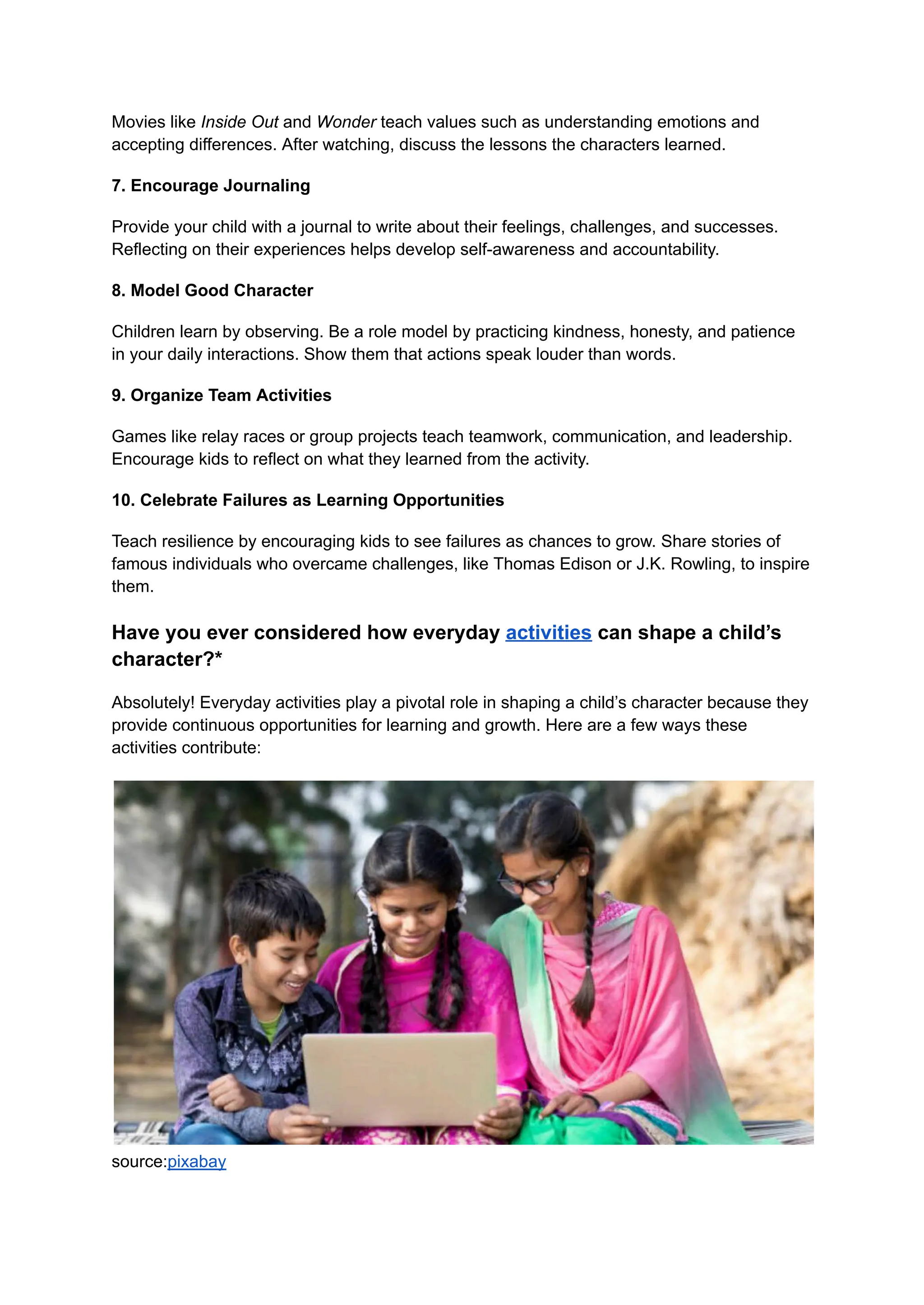
Have you ever considered how everyday activities can shape a child’s
character?*
Absolutely! Everyday activities play a pivotal role in shaping a child’s character because they
provide continuous opportunities for learning and growth. Here are a few ways these
activities contribute:
source:pixabay
1. Responsibility through Chores
Simple tasks like making the bed or feeding a pet teach children accountability and
the value of contributing to a household.
2. Social Skills through Interaction
Engaging in conversations, sharing toys, or playing games with others fosters
empathy, patience, and teamwork.
3. Problem-Solving through Play
Activities like puzzles, building blocks, or even navigating playground challenges
develop resilience and critical thinking.
4. Values through Storytelling
Reading books or sharing stories with moral lessons can instill virtues such as
honesty, kindness, and respect.
5. Faith through Daily Devotionals
Including spiritual activities like prayer or Bible stories can help children build a strong
moral foundation and understanding of forgiveness and gratitude.
Do you have any specific activities in mind for character-building?
How can acting out real-life scenarios help your child practice
problem-solving?
Acting out real-life scenarios is a powerful way for children to practice problem-solving
because it engages them in active learning. Here’s how it works:
1. Simulates Real Situations
Role-playing familiar situations, like resolving a disagreement with a friend or navigating a
tricky decision, allows children to explore potential solutions in a safe environment.
2. Encourages Empathy
When children take on different roles, they learn to see situations from another person’s
perspective, which is crucial for understanding and resolving conflicts.
3. Builds Confidence
Practicing how to respond in various scenarios helps children feel prepared and confident
when similar situations arise in real life.
4. Promotes Creative Thinking
Acting out scenarios requires children to think on their feet, exploring different approaches to
tackle a problem creatively.
5. Provides Parental Guidance
Role-playing gives parents the chance to gently guide children toward constructive
behaviors, reinforcing positive decision-making skills.
Examples of Scenarios:
● Social Challenges: How to handle being left out or sharing toys with others.
● Daily Life Decisions: Choosing what to do if they find something valuable that
doesn’t belong to them.
● Safety Situations: Knowing how to respond if approached by a stranger.
Would you like help designing specific scenarios to role-play with your child?
Can you think of a time when a failure turned into a valuable life lesson
for your child?
Failures often present the best opportunities for growth and learning in a child’s life. For
example:
source:pixabay
Learning to Persevere in Sports
A child may try out for a sports team and not make it. While the initial disappointment can be
tough, this experience teaches resilience and the importance of hard work. Encouraging the
child to practice more and try again next season reinforces that failure is a stepping stone to
improvement.
Facing the Consequences of Forgetting Homework
If a child forgets to do their homework and faces a lower grade or teacher feedback, they
learn the importance of responsibility and time management. This experience can motivate
them to establish better routines.
Making a Mistake in Friendships
Perhaps they said something hurtful in the heat of the moment and hurt a friend’s feelings.
Apologizing and making amends teaches accountability and empathy, shaping how they
handle relationships in the future.
Trying and Failing at a New Skill
Failing to ride a bike on the first try (or tenth!) teaches perseverance. Overcoming this
challenge eventually gives the child a sense of accomplishment and confidence.
Failures like these are opportunities to teach children that mistakes are not the end but a
chance to grow. Have your child experienced a specific failure that turned into a life lesson?
I’d be happy to explore how it could be framed positively!
What are some other creative ways you’ve used to teach character to
your children?
Teaching character creatively can make the lessons more engaging and memorable for
children. Here are some creative approaches:
1. Storytelling with a Twist
● Custom Stories: Create bedtime stories where the main character faces moral
dilemmas similar to what your child might encounter.
● Interactive Reading: Pause during storytime to ask, “What do you think the
character should do?”
2. Fun Role-Playing
● Act out scenarios like sharing toys, resolving a fight, or making decisions. For
example, play a “storekeeper and customer” game to practice honesty and kindness.
● Try switching roles so your child can act as the parent or teacher. This fosters
empathy and a better understanding of expectations.
3. Character-Themed Challenges
● Kindness Bingo: Create a bingo card with acts of kindness (e.g., help a sibling, say
thank you, share a snack).
● Bravery Jar: Add a token to a jar every time your child tries something new or faces
a fear.
4. Arts and Crafts with Values
● Gratitude Tree: Write things they’re thankful for on paper leaves and stick them to a
“tree” displayed at home.
● Kindness Cards: Have them draw or write encouraging notes to give to friends or
family.
5. Faith-Based Activities
● Memorize Bible verses that emphasize virtues like forgiveness, kindness, or patience
and discuss their meaning.
● Use parables as examples of how to live with integrity.
6. Outdoor Adventures
● Plan activities like nature cleanups or gardening to teach responsibility and care for
the environment.
● Hiking or camping trips can teach teamwork, perseverance, and adaptability.
7. Family Traditions
● Service Days: Dedicate a day to volunteering together as a family, such as visiting a
nursing home or helping at a food pantry.
● Gratitude Rituals: Share something you’re grateful for during family meals.
Would you like more ideas tailored to your family’s interests or daily routines?
Conclusion
Character development in children doesn’t have to be a chore. By integrating fun and
meaningful activities into their daily lives, you can help them build a strong moral foundation.
Remember, consistency and positive reinforcement are key to nurturing these traits.
References
● Davis, T. (2020). Raising Kids with Character: Building a Foundation of Integrity and
Respect. HarperOne.
● Berenstain, J. (2014). The Berenstain Bears and the Golden Rule. Zonderkidz.
● Focus on the Family. (2022). Teaching Kids About Character.
● National Association for the Education of Young Children. (2023). Supporting
Social-Emotional Development in Kids.
● read more

10 Fun Ways to Teach Character Development to Children

  • 1.
    10 Fun Waysto Teach Character Development to Children 05/12/2024 by Kristan Vihaan Introduction:- 10 Fun Ways to Teach Character Development to Children Teaching children good character is essential for their personal growth and success. When kids develop traits like honesty, empathy, and resilience, they learn to navigate life’s challenges with integrity and confidence. The best part? Teaching character development doesn’t have to be dull! Here are 10 fun and effective ways to instill strong values in children. 10 Fun Ways to Teach Character Development to Children
  • 2.
    source:pixabay 1. Storytime witha Purpose Introduce books and stories that highlight moral lessons. Classics like The Giving Tree by Shel Silverstein or Aesop’s Fables are great choices. Discuss the characters’ actions and their consequences to reinforce the lesson. Tip: Let your child retell the story in their own words to ensure they understand the moral. 2. Role-Playing Scenarios Create role-playing games where kids act out situations requiring decision-making, such as returning lost items or standing up to bullies. This fosters empathy and problem-solving skills. 3. Volunteer Together Participate in community service activities like cleaning parks, visiting nursing homes, or donating toys. These activities teach kindness, gratitude, and responsibility. 4. Create a Kindness Jar Every time your child does something kind, write it down and place it in a jar. At the end of the month, read all the acts of kindness together and celebrate their achievements. 5. Set Up a Reward System for Positive Behavior Use charts or tokens to reward honesty, patience, and cooperation. Celebrate milestones with family activities like movie nights or a special dinner. 6. Watch and Discuss Movies with Positive Messages
  • 3.
    Movies like InsideOut and Wonder teach values such as understanding emotions and accepting differences. After watching, discuss the lessons the characters learned. 7. Encourage Journaling Provide your child with a journal to write about their feelings, challenges, and successes. Reflecting on their experiences helps develop self-awareness and accountability. 8. Model Good Character Children learn by observing. Be a role model by practicing kindness, honesty, and patience in your daily interactions. Show them that actions speak louder than words. 9. Organize Team Activities Games like relay races or group projects teach teamwork, communication, and leadership. Encourage kids to reflect on what they learned from the activity. 10. Celebrate Failures as Learning Opportunities Teach resilience by encouraging kids to see failures as chances to grow. Share stories of famous individuals who overcame challenges, like Thomas Edison or J.K. Rowling, to inspire them. Have you ever considered how everyday activities can shape a child’s character?* Absolutely! Everyday activities play a pivotal role in shaping a child’s character because they provide continuous opportunities for learning and growth. Here are a few ways these activities contribute: source:pixabay
  • 4.
    1. Responsibility throughChores Simple tasks like making the bed or feeding a pet teach children accountability and the value of contributing to a household. 2. Social Skills through Interaction Engaging in conversations, sharing toys, or playing games with others fosters empathy, patience, and teamwork. 3. Problem-Solving through Play Activities like puzzles, building blocks, or even navigating playground challenges develop resilience and critical thinking. 4. Values through Storytelling Reading books or sharing stories with moral lessons can instill virtues such as honesty, kindness, and respect. 5. Faith through Daily Devotionals Including spiritual activities like prayer or Bible stories can help children build a strong moral foundation and understanding of forgiveness and gratitude. Do you have any specific activities in mind for character-building? How can acting out real-life scenarios help your child practice problem-solving? Acting out real-life scenarios is a powerful way for children to practice problem-solving because it engages them in active learning. Here’s how it works: 1. Simulates Real Situations Role-playing familiar situations, like resolving a disagreement with a friend or navigating a tricky decision, allows children to explore potential solutions in a safe environment. 2. Encourages Empathy When children take on different roles, they learn to see situations from another person’s perspective, which is crucial for understanding and resolving conflicts. 3. Builds Confidence Practicing how to respond in various scenarios helps children feel prepared and confident when similar situations arise in real life. 4. Promotes Creative Thinking Acting out scenarios requires children to think on their feet, exploring different approaches to tackle a problem creatively. 5. Provides Parental Guidance Role-playing gives parents the chance to gently guide children toward constructive behaviors, reinforcing positive decision-making skills. Examples of Scenarios:
  • 5.
    ● Social Challenges:How to handle being left out or sharing toys with others. ● Daily Life Decisions: Choosing what to do if they find something valuable that doesn’t belong to them. ● Safety Situations: Knowing how to respond if approached by a stranger. Would you like help designing specific scenarios to role-play with your child? Can you think of a time when a failure turned into a valuable life lesson for your child? Failures often present the best opportunities for growth and learning in a child’s life. For example: source:pixabay Learning to Persevere in Sports A child may try out for a sports team and not make it. While the initial disappointment can be tough, this experience teaches resilience and the importance of hard work. Encouraging the child to practice more and try again next season reinforces that failure is a stepping stone to improvement. Facing the Consequences of Forgetting Homework If a child forgets to do their homework and faces a lower grade or teacher feedback, they learn the importance of responsibility and time management. This experience can motivate them to establish better routines. Making a Mistake in Friendships
  • 6.
    Perhaps they saidsomething hurtful in the heat of the moment and hurt a friend’s feelings. Apologizing and making amends teaches accountability and empathy, shaping how they handle relationships in the future. Trying and Failing at a New Skill Failing to ride a bike on the first try (or tenth!) teaches perseverance. Overcoming this challenge eventually gives the child a sense of accomplishment and confidence. Failures like these are opportunities to teach children that mistakes are not the end but a chance to grow. Have your child experienced a specific failure that turned into a life lesson? I’d be happy to explore how it could be framed positively! What are some other creative ways you’ve used to teach character to your children? Teaching character creatively can make the lessons more engaging and memorable for children. Here are some creative approaches: 1. Storytelling with a Twist ● Custom Stories: Create bedtime stories where the main character faces moral dilemmas similar to what your child might encounter. ● Interactive Reading: Pause during storytime to ask, “What do you think the character should do?” 2. Fun Role-Playing ● Act out scenarios like sharing toys, resolving a fight, or making decisions. For example, play a “storekeeper and customer” game to practice honesty and kindness. ● Try switching roles so your child can act as the parent or teacher. This fosters empathy and a better understanding of expectations. 3. Character-Themed Challenges ● Kindness Bingo: Create a bingo card with acts of kindness (e.g., help a sibling, say thank you, share a snack). ● Bravery Jar: Add a token to a jar every time your child tries something new or faces a fear. 4. Arts and Crafts with Values ● Gratitude Tree: Write things they’re thankful for on paper leaves and stick them to a “tree” displayed at home. ● Kindness Cards: Have them draw or write encouraging notes to give to friends or family. 5. Faith-Based Activities
  • 7.
    ● Memorize Bibleverses that emphasize virtues like forgiveness, kindness, or patience and discuss their meaning. ● Use parables as examples of how to live with integrity. 6. Outdoor Adventures ● Plan activities like nature cleanups or gardening to teach responsibility and care for the environment. ● Hiking or camping trips can teach teamwork, perseverance, and adaptability. 7. Family Traditions ● Service Days: Dedicate a day to volunteering together as a family, such as visiting a nursing home or helping at a food pantry. ● Gratitude Rituals: Share something you’re grateful for during family meals. Would you like more ideas tailored to your family’s interests or daily routines? Conclusion Character development in children doesn’t have to be a chore. By integrating fun and meaningful activities into their daily lives, you can help them build a strong moral foundation. Remember, consistency and positive reinforcement are key to nurturing these traits. References ● Davis, T. (2020). Raising Kids with Character: Building a Foundation of Integrity and Respect. HarperOne. ● Berenstain, J. (2014). The Berenstain Bears and the Golden Rule. Zonderkidz. ● Focus on the Family. (2022). Teaching Kids About Character. ● National Association for the Education of Young Children. (2023). Supporting Social-Emotional Development in Kids. ● read more