1
Elder Interview: Assessing Perceptions of Aging—Implications for the Human Service
Professional
Overview:
This assignment is designed to enhance your interviewing skill set and to help you understand
the perspective of an elder (defined as someone who is 65 or older) on the aging process and how
they feel about getting older. The questions should increase your awareness of the aging process
as experienced by your respondent and help you learn how to build rapport with an elder, and
build the skill set you need if you work with an older population.
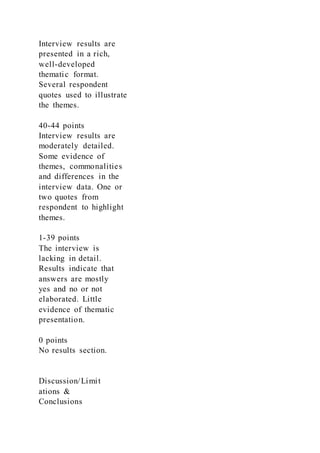
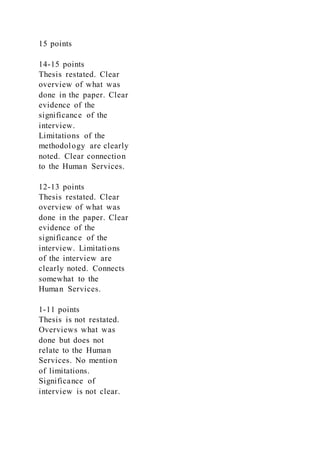
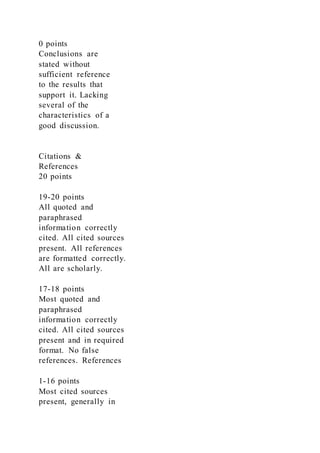
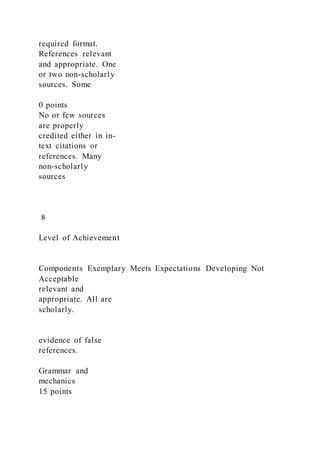
There are three required parts for this assignment for a total point of 200 points toward your final
grade. Carefully follow the instructions and requirements provided below.
Part 1: Interviewee Information (10 Points)
Instructions:
You will submit the information about your interviewee. Submit the following information:
• First name and initial of the last name (e.g., John S.)
• Date and time (when the interview will be conducted)
• Location (where you will be conducting the interview)
Grading:
This is no rubric for this stage. You must provide all the required information, and then you will
receive either Pass or Not pass grade. If you get a Pass, you will also get 10 points.
Submission:
Type your interviewee information through the online assignment submission.
Part 2: Interview and Transcription (40 Points)
Instruction:
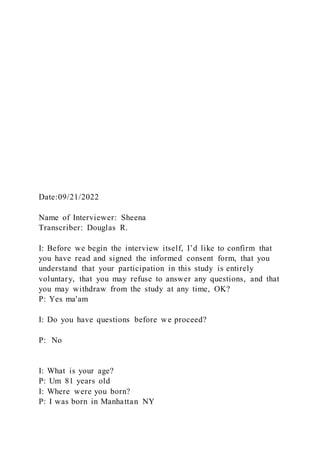
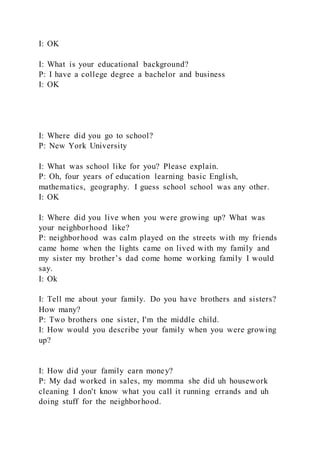
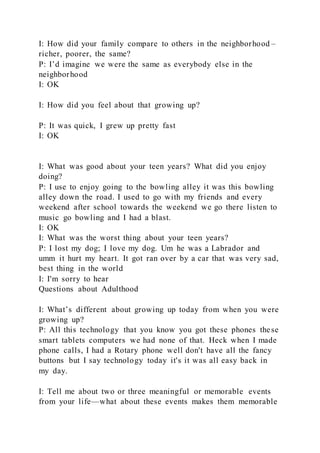
You must conduct this interview in person. Please do not interview a close relative. Ask to
make an audio recording of the interview (do not show the interviewee’s face). You will have
to transcribe the recording. Please see the transcription guide at the end of this document. Before
the interview, please have the interviewee sign the consent form, available at the end of this
document.
Conducting the Interview
Remember, review the questions before you start the interview. Start the interview by giving
your name, your affiliation, and that you want to learn from the interviewee how she or he feels
about their family and the aging process. Tell your respondent that you have a list of questions,
but that she or he can expand on a topic. Set a time limit for each question (2-3 minutes?) and
stay on schedule.
1. Be sure to write/print out all questions before the interview and review all questions
before you begin the interview. Think carefully about each one, and why you are asking
that particular question—that way, if a person does not respond as you think they might,
you can probe further by asking more questions.
2
2. You must be prepared to ask follow-up and probe questions if your respondent gives one
word or one sentence responses—these are not informative.
a. Example: Question—Do you consider yourself to be “old?” Answer: “No.” Be
prepared to ask some follow-up questions—for example, do you think others see
you as “old?” At what age do you think a person becomes old? Or, “Why did you
answer that way? or ...
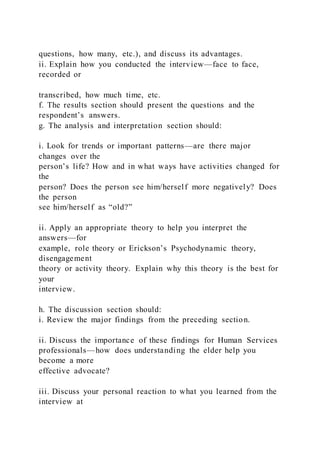
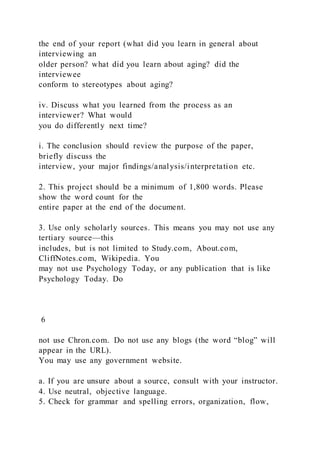
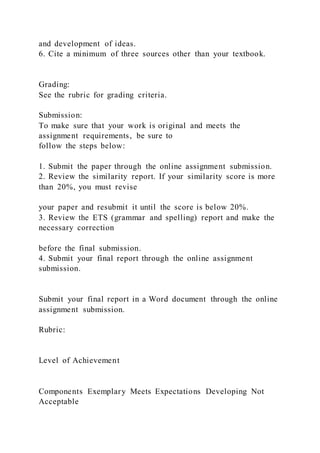
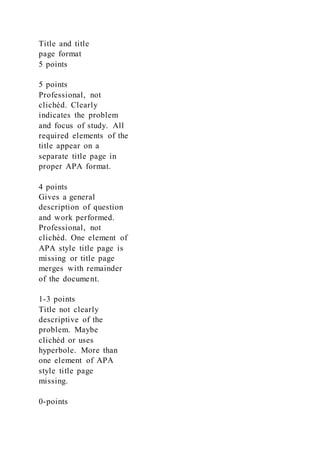
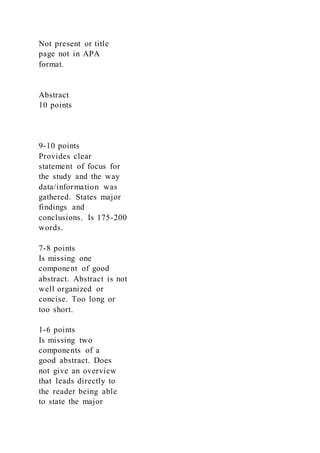
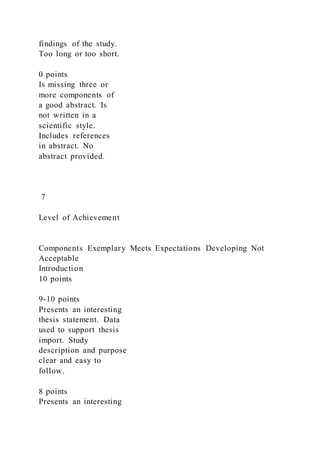
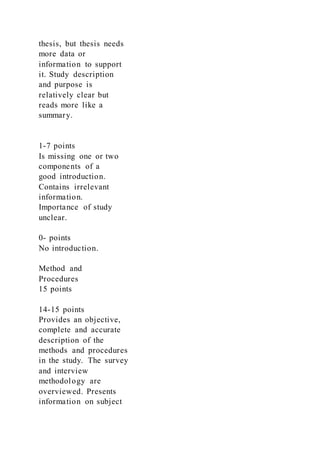
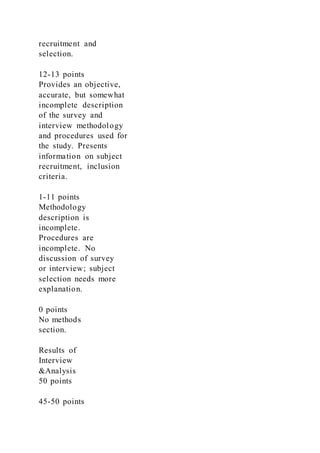

![http://www.legacyproject.org/guides/lifeintquestions.pdf;
MacNeil, R. (2008) “Aging Matters”
syllabi and Great Questions from Story Corps online at
https://storycorps.org/great-
questions/#grandparents
9
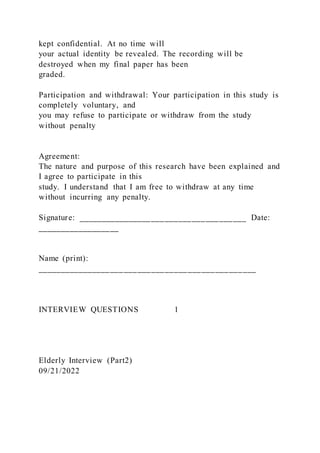
Consent Form for Interviews
Purpose of the research: To understand the experience of aging
What you will do in this research: If you agree, you will be
asked to participate in one
interview. You will be asked several questions about your
perceptions of the aging process. You
also will be asked some demographic background questions.
With your permission, I will audio record the interview so I
don't have to make so many notes.
You will not be asked to state your name on the recording.
Time required: The interview will take approximately [ ] hours.
Risks: No risks are anticipated.
Benefits: This is a chance for you to tell your story about your
experiences concerning aging.
Confidentiality: Your responses to interview questions will be](https://image.slidesharecdn.com/1elderinterviewassessingperceptionsofagingimplica-220929052100-e8360ee9/85/1-Elder-Interview-Assessing-Perceptions-of-Aging-Implica-28-320.jpg)