 The Bank Examination and Supervision is
done internally and externally.
› External Control: Government
› Internal Control: Within the Bank
Management
1) Conformity of Banks with banking laws
and that of rules and regulations of the
Central Bank and other Government
agencies.
 Non-compliance can lead to closure or a
reprimand from the supervisory agencies.
2) Determine how sound the bank is
financially.
 Unsound and unsafe practices of banks:
 Granting of loans with inadequate credit
information.
 Granting of big loans to a single interest.
 Receiving collaterals of inferior qualities.
 Laxity in collection of loans.
 Payment of excessive salaries or dividends.
 Keeping of incomplete or inaccurate records.
 Payment of unreasonably high rates on time
deposit.
 Supervision and Examination sector of
BSP
› Charged with the responsibility of
conducting spot and regular check on all
banking institutions.
› It is headed by the Deputy
Governor.
 Sec. 25: Supervision and Examination
 Sec. 26: Bank Deposits and Investments
 Sec. 27: Prohibition
 Sec. 28: Examination and Fees
 Sec. 29: Appointment of Conservator
 Sec. 30: Proceedings in Receivership and
Liquidation
 Sec. 31: Distribution of Assets
 Sec. 32: Disposition of Revenues and
Earnings
 Sec. 33: Disposition of Bank Franchise
 Sec. 34: Refusal to make reports or Permit
examination
 Sec. 35: False Statement
 Sec. 36: Proceedings upon violation of this
Act and other Banking laws, Rules, and
Regulations, Orders or Instructions.
 Sec. 37: Administrative Sanctions on Banks
and Quasi-Banks
 A committee on Examination and
Supervision is usually created to effect
internal control.
“The purpose of Internal audit and
controls is to shield the weak from being
tempted, to prevent the strong from
opportunism, and to protect the
innocent from being involved”.
 Embezzlement
 Means the taking of funds that belongs to depositors and
customers.
 Defalcation
 Refers to misappropriation of funds which belong to stockholders
such as interest incomes, fees, and commissions.
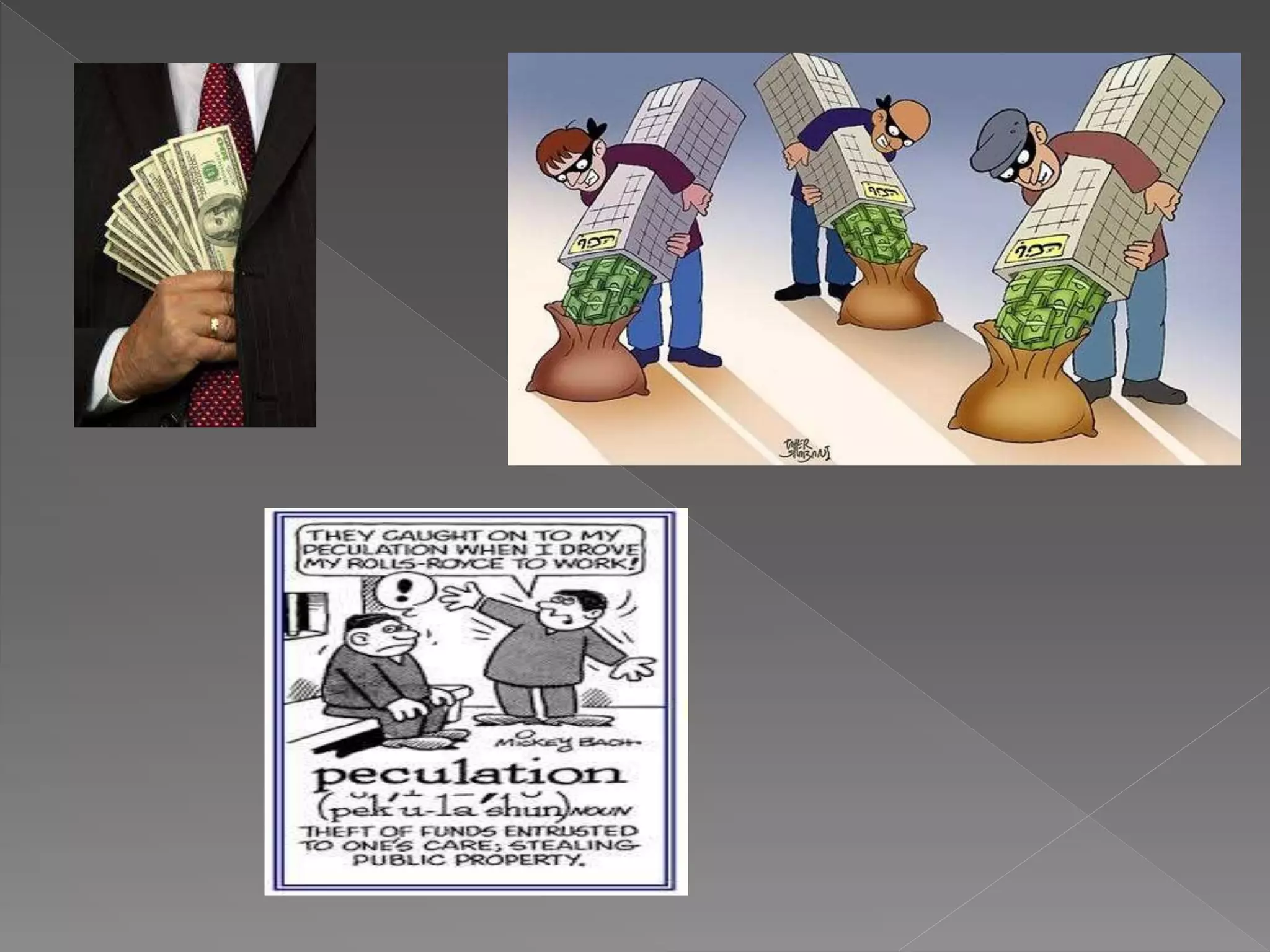
 Peculation
 Would mean all kinds of embezzlement, defalcation, or
misappropriation of funds.
 Peculator.
 Examination
 Refers to the review and analysis of the assets and liabilities of a
bank to determine their existence, values ad true ownership, and
to ascertain that everything in regard to said assets and liabilities
is in order.
a) Gambling
b) Pride and Envy
c) Living beyond one’s income
d) Unsound Salary practice
e) Poor employee relations
f) Immorality
 The most effective prevention against
peculation is the establishment of sound
and adequate internal controls.
1) Dual control
2) Procedures and routines
An ounce of prevention
is worth a pound of cure.

1 banking laws rules and regulations

  • 2.
     The BankExamination and Supervision is done internally and externally. › External Control: Government › Internal Control: Within the Bank Management
  • 3.
    1) Conformity ofBanks with banking laws and that of rules and regulations of the Central Bank and other Government agencies.  Non-compliance can lead to closure or a reprimand from the supervisory agencies.
  • 4.
    2) Determine howsound the bank is financially.  Unsound and unsafe practices of banks:  Granting of loans with inadequate credit information.  Granting of big loans to a single interest.  Receiving collaterals of inferior qualities.  Laxity in collection of loans.  Payment of excessive salaries or dividends.  Keeping of incomplete or inaccurate records.  Payment of unreasonably high rates on time deposit.
  • 6.
     Supervision andExamination sector of BSP › Charged with the responsibility of conducting spot and regular check on all banking institutions. › It is headed by the Deputy Governor.
  • 7.
     Sec. 25:Supervision and Examination  Sec. 26: Bank Deposits and Investments  Sec. 27: Prohibition  Sec. 28: Examination and Fees  Sec. 29: Appointment of Conservator  Sec. 30: Proceedings in Receivership and Liquidation  Sec. 31: Distribution of Assets
  • 8.
     Sec. 32:Disposition of Revenues and Earnings  Sec. 33: Disposition of Bank Franchise  Sec. 34: Refusal to make reports or Permit examination  Sec. 35: False Statement  Sec. 36: Proceedings upon violation of this Act and other Banking laws, Rules, and Regulations, Orders or Instructions.  Sec. 37: Administrative Sanctions on Banks and Quasi-Banks
  • 9.
     A committeeon Examination and Supervision is usually created to effect internal control.
  • 10.
    “The purpose ofInternal audit and controls is to shield the weak from being tempted, to prevent the strong from opportunism, and to protect the innocent from being involved”.
  • 11.
     Embezzlement  Meansthe taking of funds that belongs to depositors and customers.  Defalcation  Refers to misappropriation of funds which belong to stockholders such as interest incomes, fees, and commissions.  Peculation  Would mean all kinds of embezzlement, defalcation, or misappropriation of funds.  Peculator.  Examination  Refers to the review and analysis of the assets and liabilities of a bank to determine their existence, values ad true ownership, and to ascertain that everything in regard to said assets and liabilities is in order.
  • 13.
    a) Gambling b) Prideand Envy c) Living beyond one’s income d) Unsound Salary practice e) Poor employee relations f) Immorality
  • 14.
     The mosteffective prevention against peculation is the establishment of sound and adequate internal controls. 1) Dual control 2) Procedures and routines
  • 15.
    An ounce ofprevention is worth a pound of cure.