

NTNU-SJTU	
2016	SEniC
Summer	School
Amin	Moazami,	
Tuesday
19.07.2016
Building	Performance	Simulation	and	
Application	of	Climate	Change
Example	of	an	interdisciplinary	approach
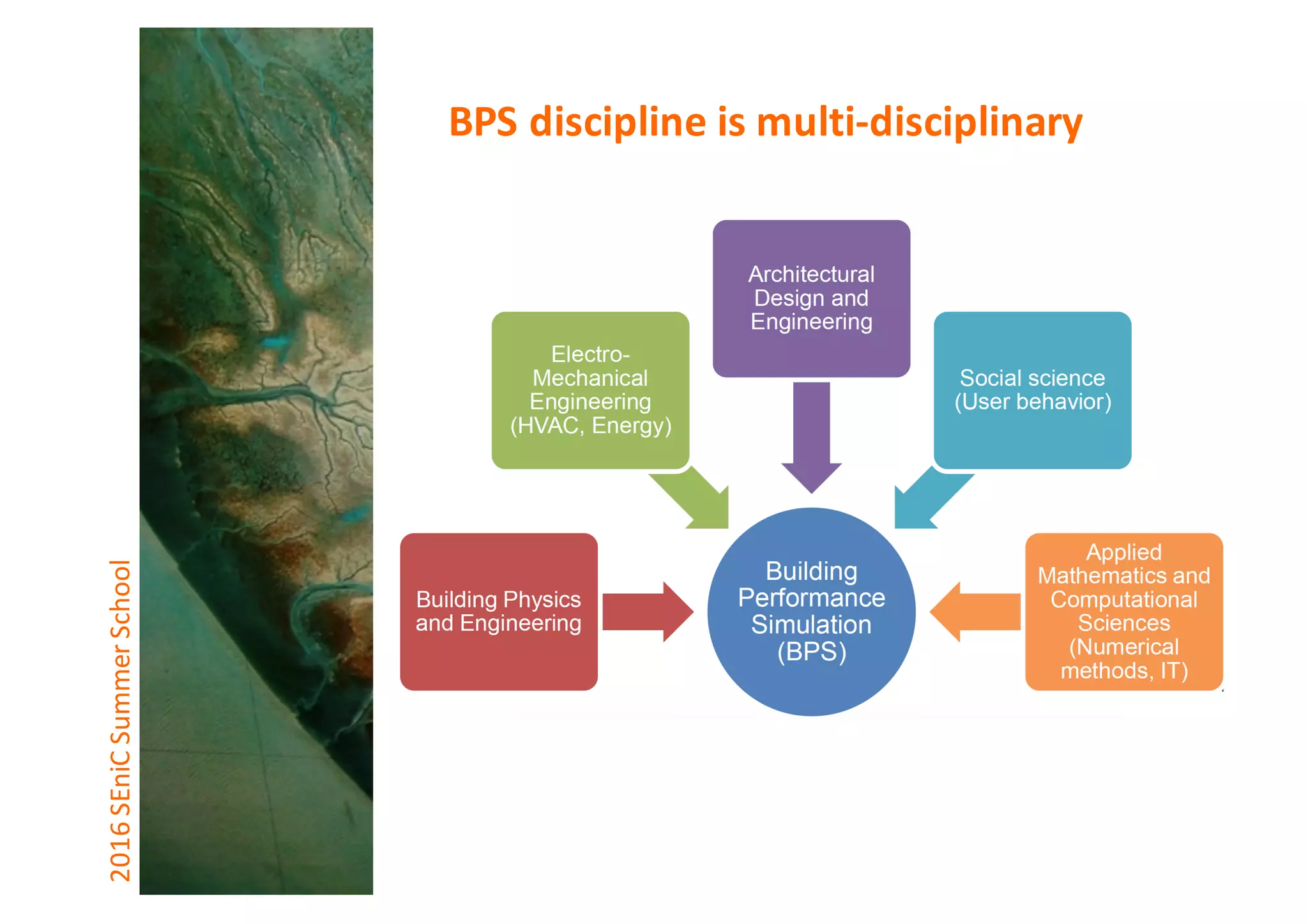
2016	SEniCSummer	School BPS	discipline	is	multi-disciplinary
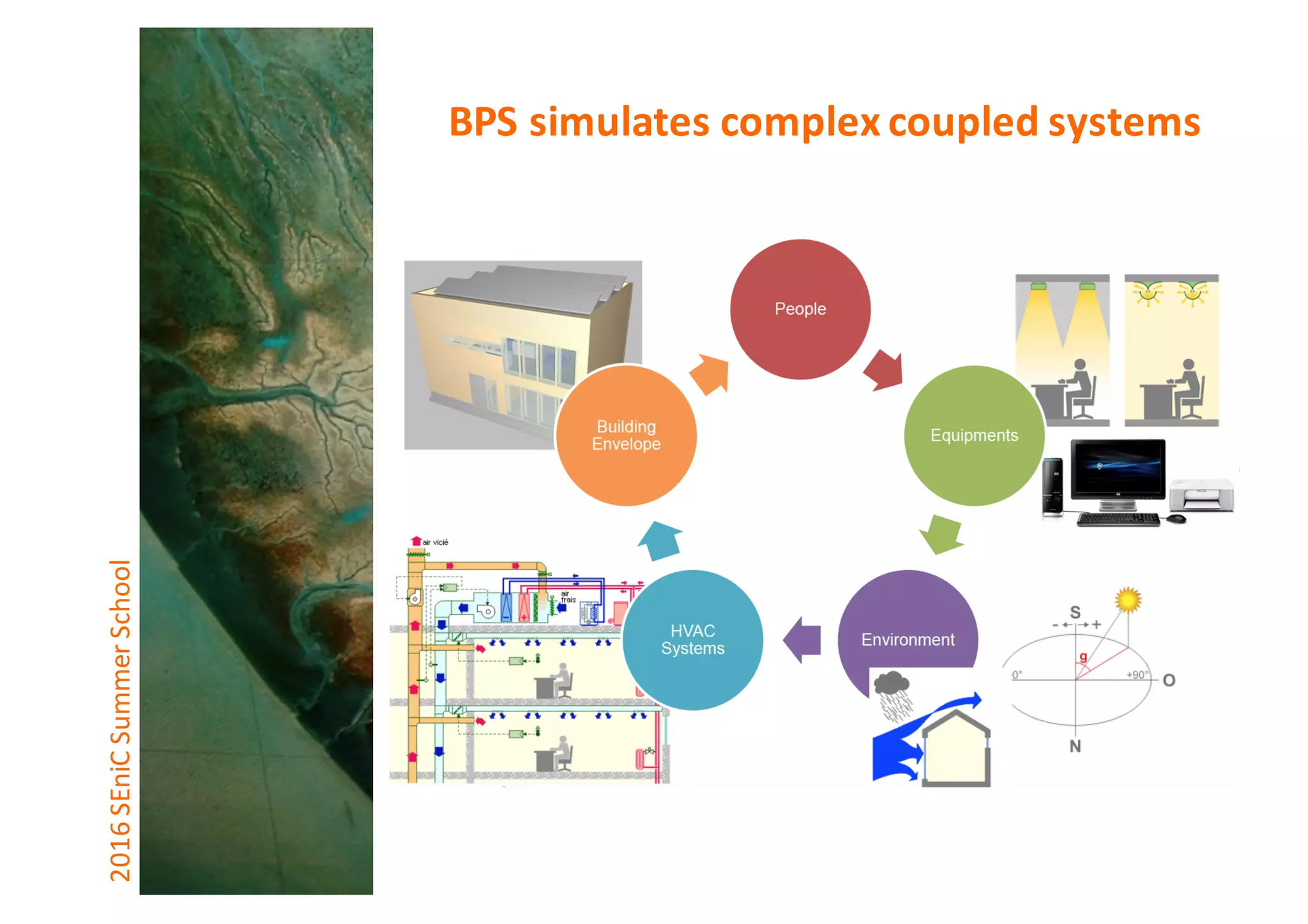
2016	SEniCSummer	School BPS	simulates	complex	coupled	systems
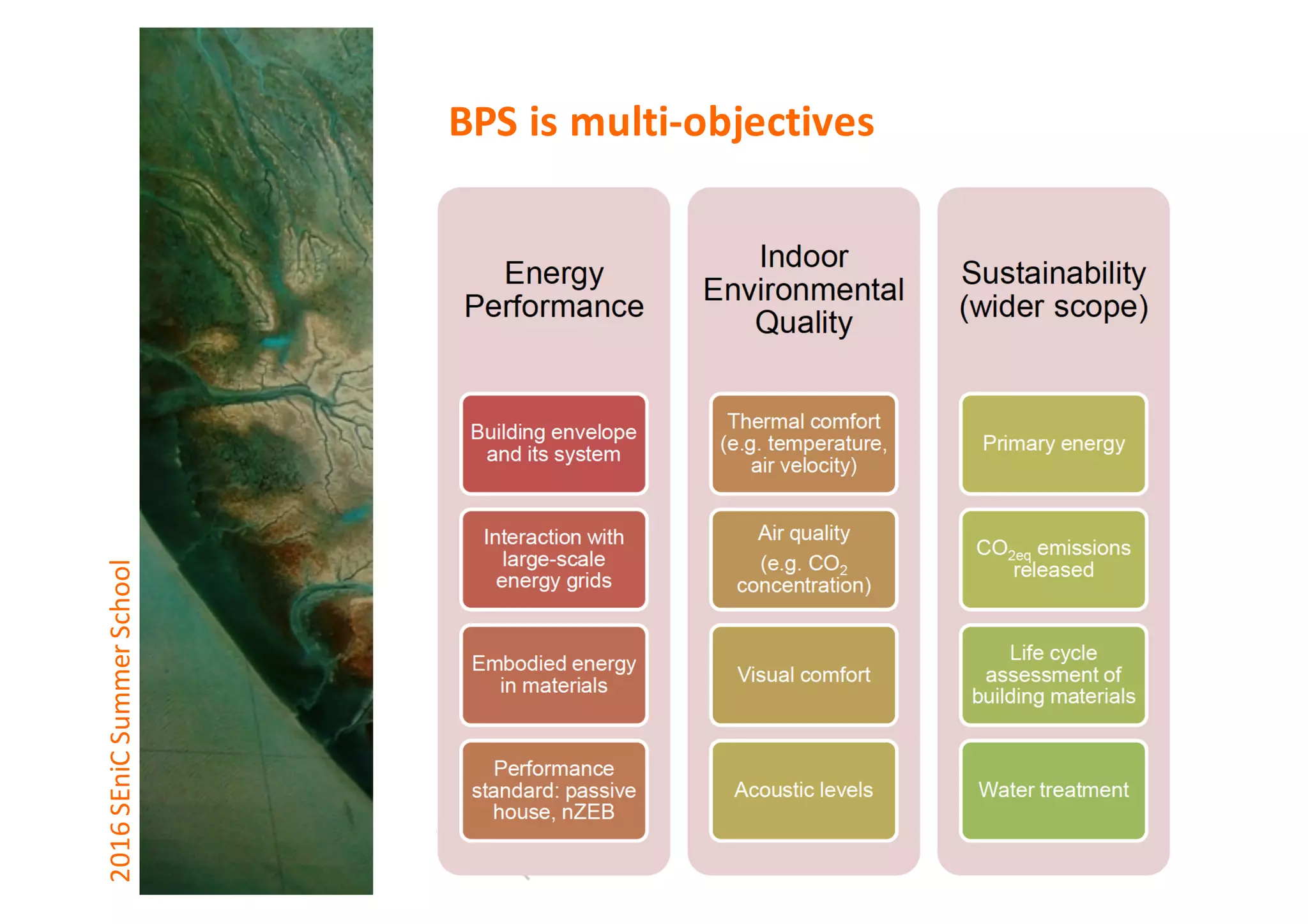
2016	SEniCSummer	School BPS	is	multi-objectives
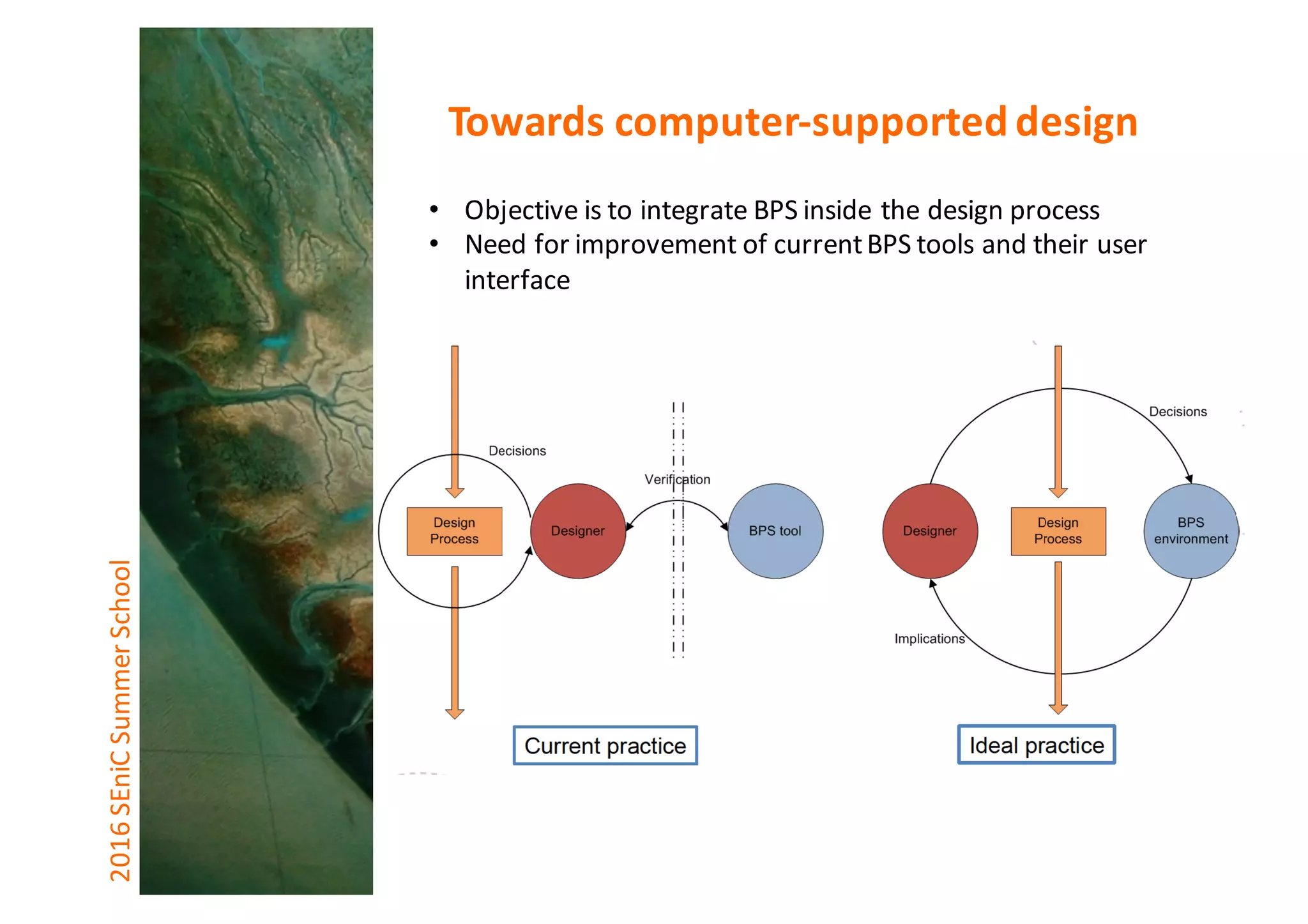
2016	SEniCSummer	School Towards	computer-supported	design
• Objective	is	to	integrate	BPS	inside	the	design	process	
• Need	for	improvement	of	current	BPS	tools	and	their	user	
interface
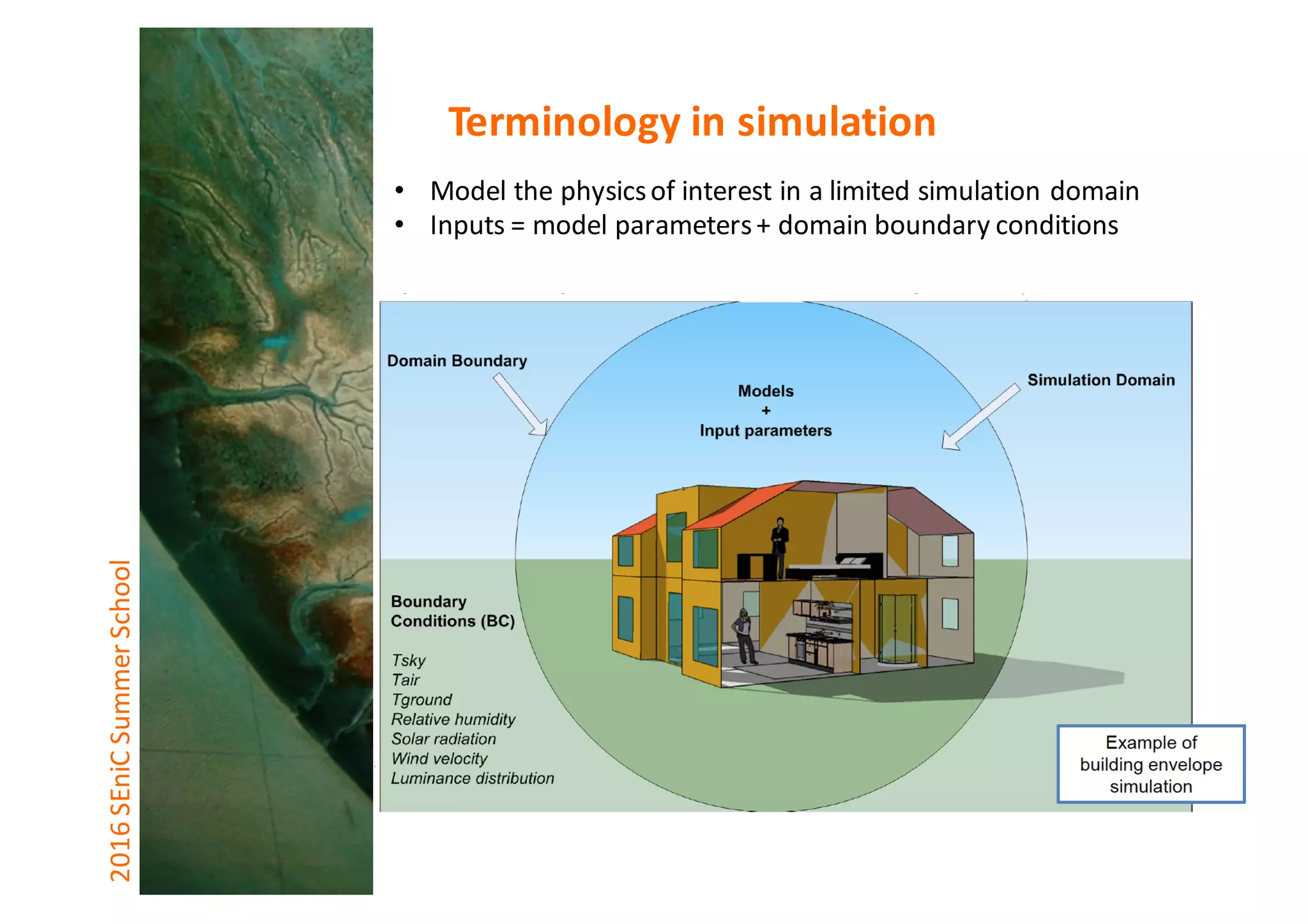
2016	SEniCSummer	School Terminology	in	simulation
• Model	the	physics	of	interest	in	a	limited	simulation	domain	
• Inputs	=	model	parameters	+	domain	boundary	conditions
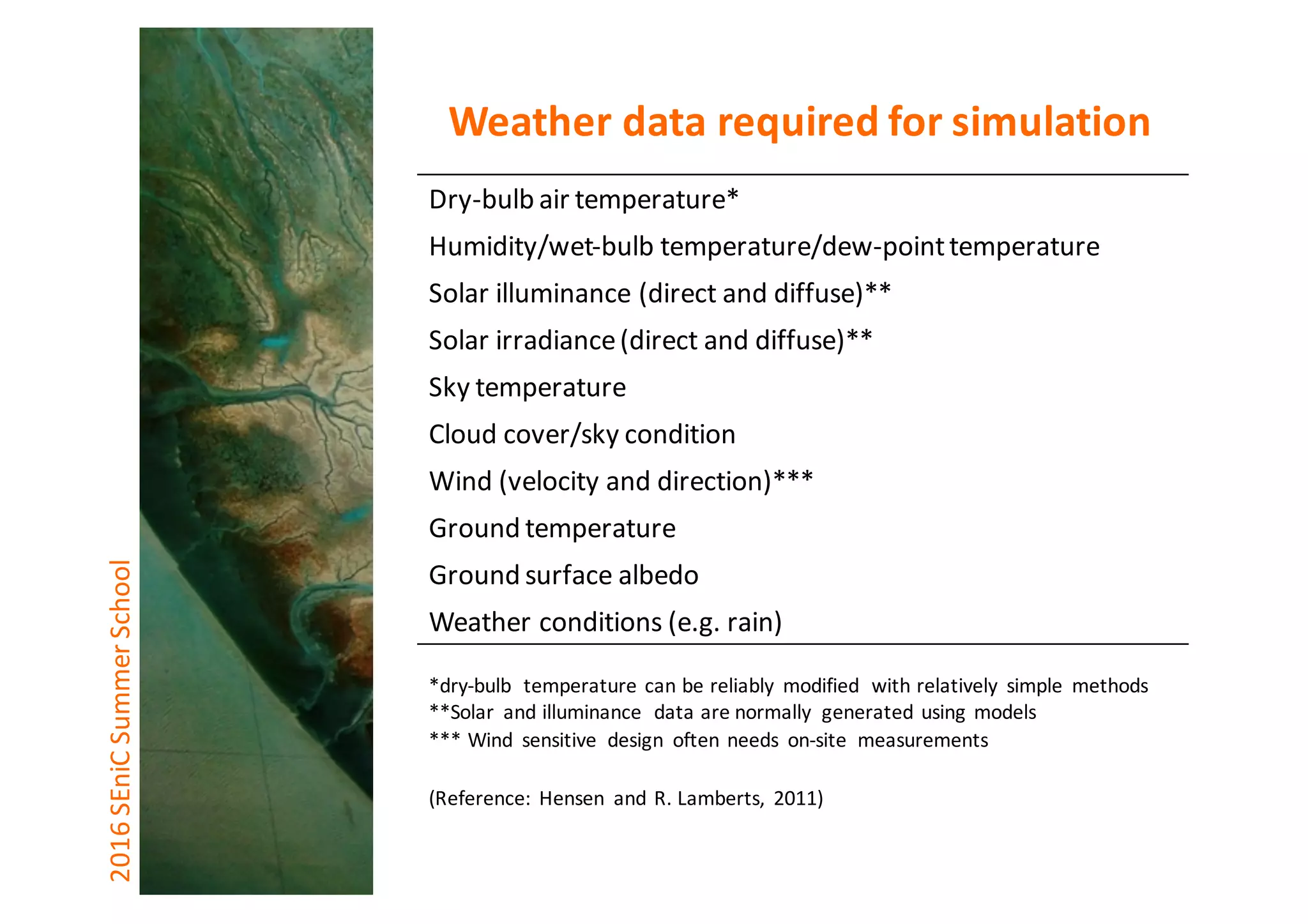
Dry-bulb air	temperature*
Humidity/wet-bulb temperature/dew-point	temperature
Solar	illuminance	(direct	and	diffuse)**
Solar	irradiance	(direct	and	diffuse)**
Sky	temperature
Cloud cover/sky	condition
Wind (velocity	and	direction)***
Ground	temperature
Ground	surface	albedo
Weather	conditions	(e.g.	rain)
*dry-bulb	 temperature	can	be	reliably	 modified	 with	relatively	 simple	 methods
**Solar	 and	illuminance	 data	are	normally	 generated	using	models
*** Wind	 sensitive	 design	 often	needs	 on-site	 measurements
2016	SEniCSummer	School Weather	data	required	for	simulation
(Reference:	Hensen and	R.	Lamberts,	 2011)
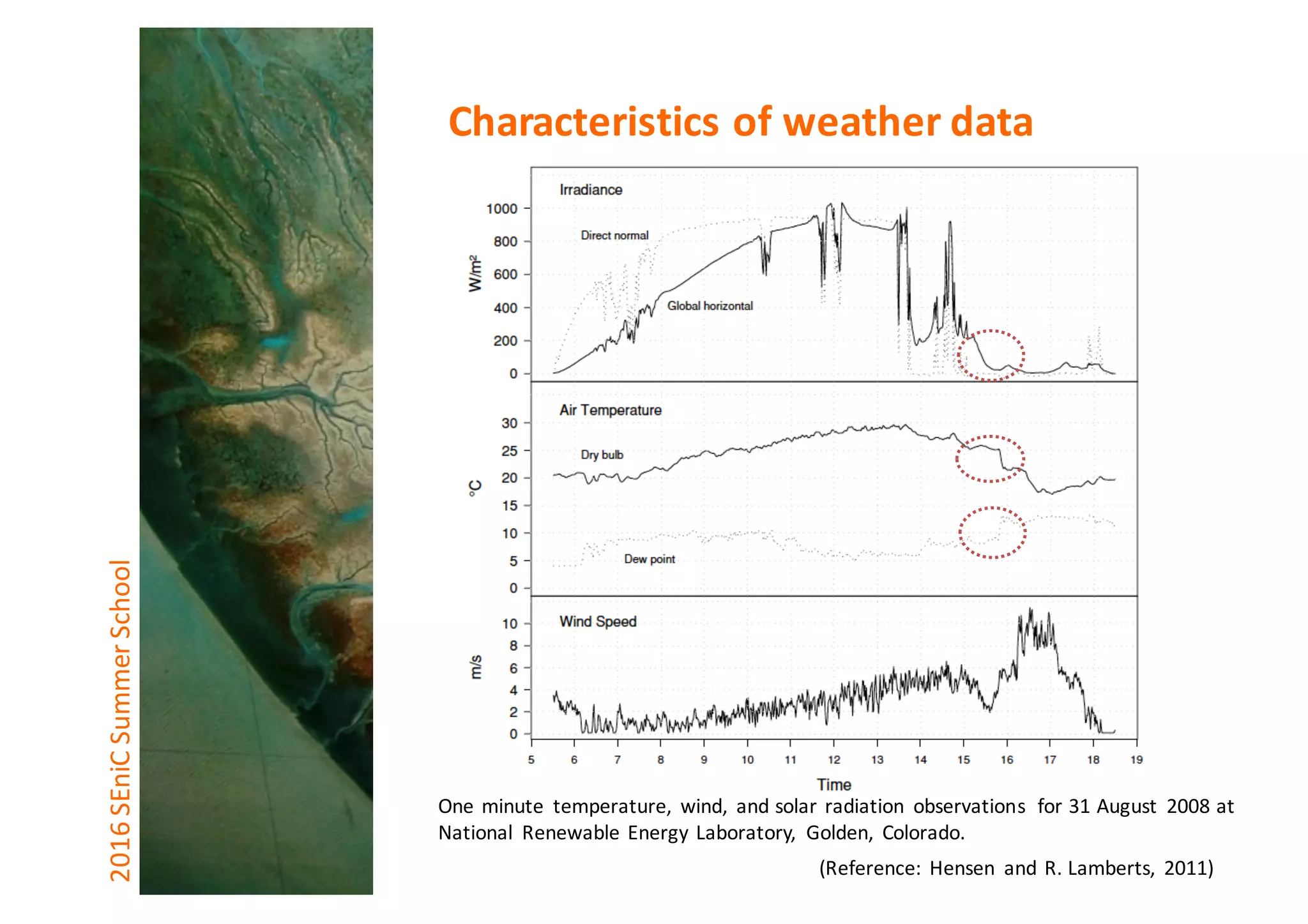
2016	SEniCSummer	School Characteristics	of	weather	data
(Reference:	Hensen and	R.	Lamberts,	 2011)
One	minute	 temperature,	 wind,	 and	solar	radiation	 observations	 for	31	August	 2008	at
National	 Renewable	Energy	Laboratory,	 Golden,	 Colorado.
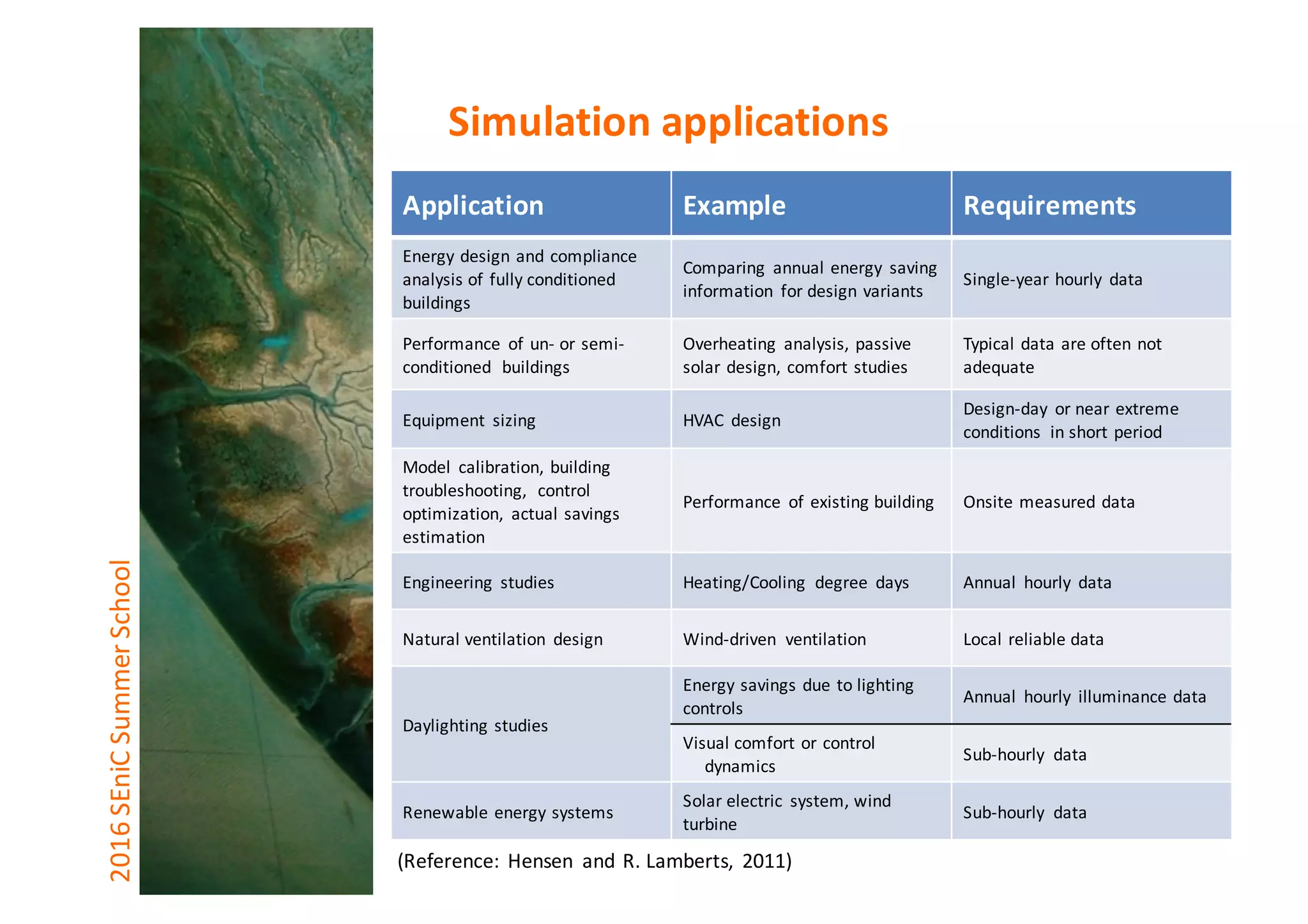
Application Example Requirements
Energy	design	and	compliance	
analysis	of	fully	conditioned	
buildings
Comparing	 annual	energy	 saving	
information	 for	design	variants
Single-year	hourly	 data
Performance	 of	un- or	semi-
conditioned	 buildings
Overheating	 analysis,	passive	
solar	design,	comfort	studies
Typical	data	are	often not	
adequate
Equipment	 sizing HVAC design
Design-day	 or	near	extreme	
conditions	 in	short	period
Model	 calibration,	building	
troubleshooting,	 control	
optimization,	 actual	savings	
estimation
Performance	 of	existing	building Onsite measured	data
Engineering	 studies Heating/Cooling degree	 days Annual	 hourly	 data
Natural	ventilation	 design Wind-driven ventilation Local	reliable data
Daylighting	studies
Energy savings	due	to	lighting	
controls
Annual hourly	 illuminance	data
Visual	comfort	or	control	
dynamics
Sub-hourly	 data
Renewable	energy	systems
Solar	electric	 system,	wind	
turbine
Sub-hourly data
2016	SEniCSummer	School Simulation	applications
(Reference:	Hensen and	R.	Lamberts,	 2011)
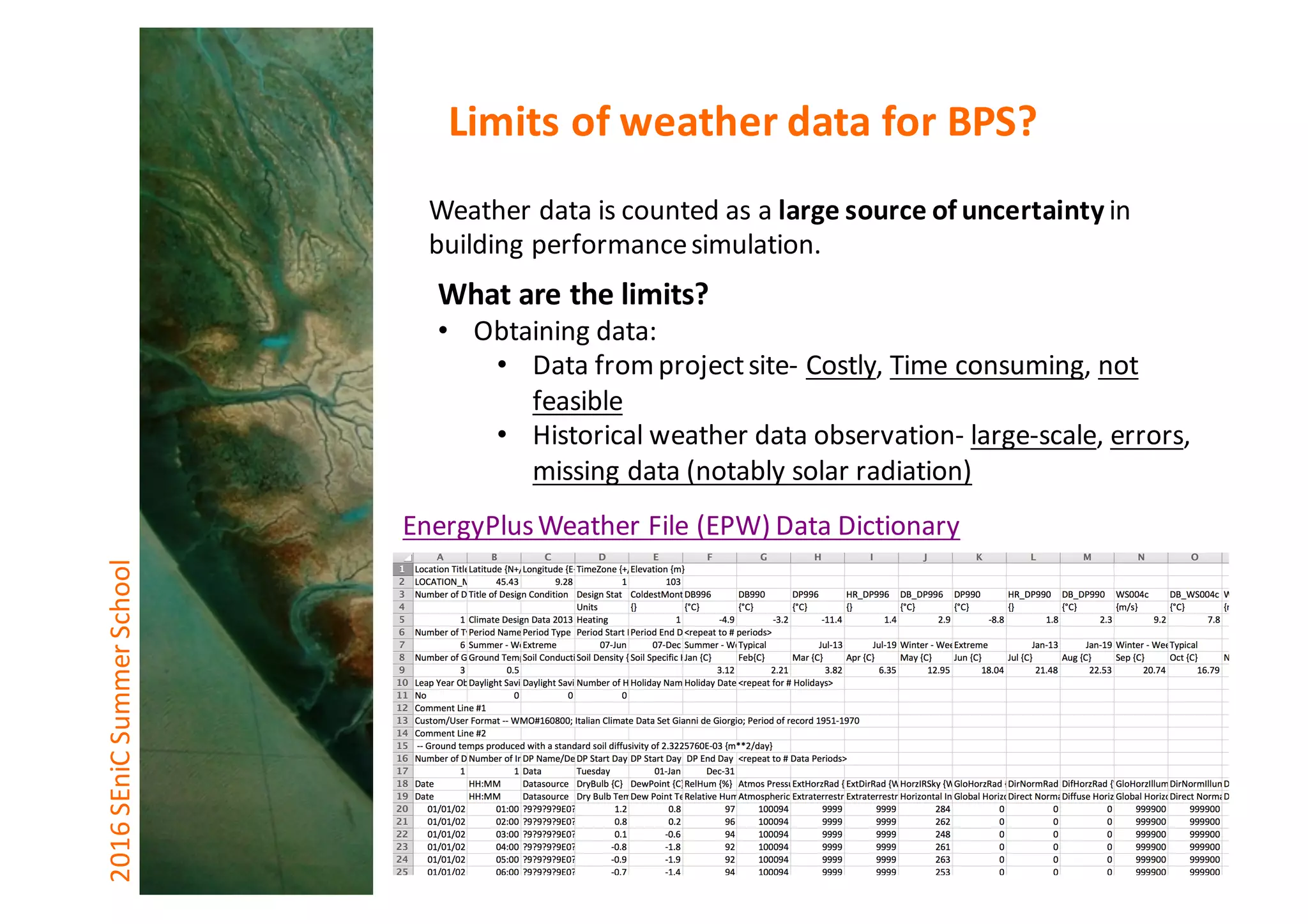
Weather	data	is	counted	as	a	large	source	of	uncertainty	in	
building	performance	simulation.
What	are	the	limits?
• Obtaining	data:
• Data	from	project	site- Costly,	Time	consuming,	not	
feasible
• Historical	weather	data	observation- large-scale,	errors,	
missing	data	(notably	solar	radiation)
2016	SEniCSummer	School Limits	of	weather	data	for	BPS?
EnergyPlus	Weather	File	(EPW)	Data	Dictionary
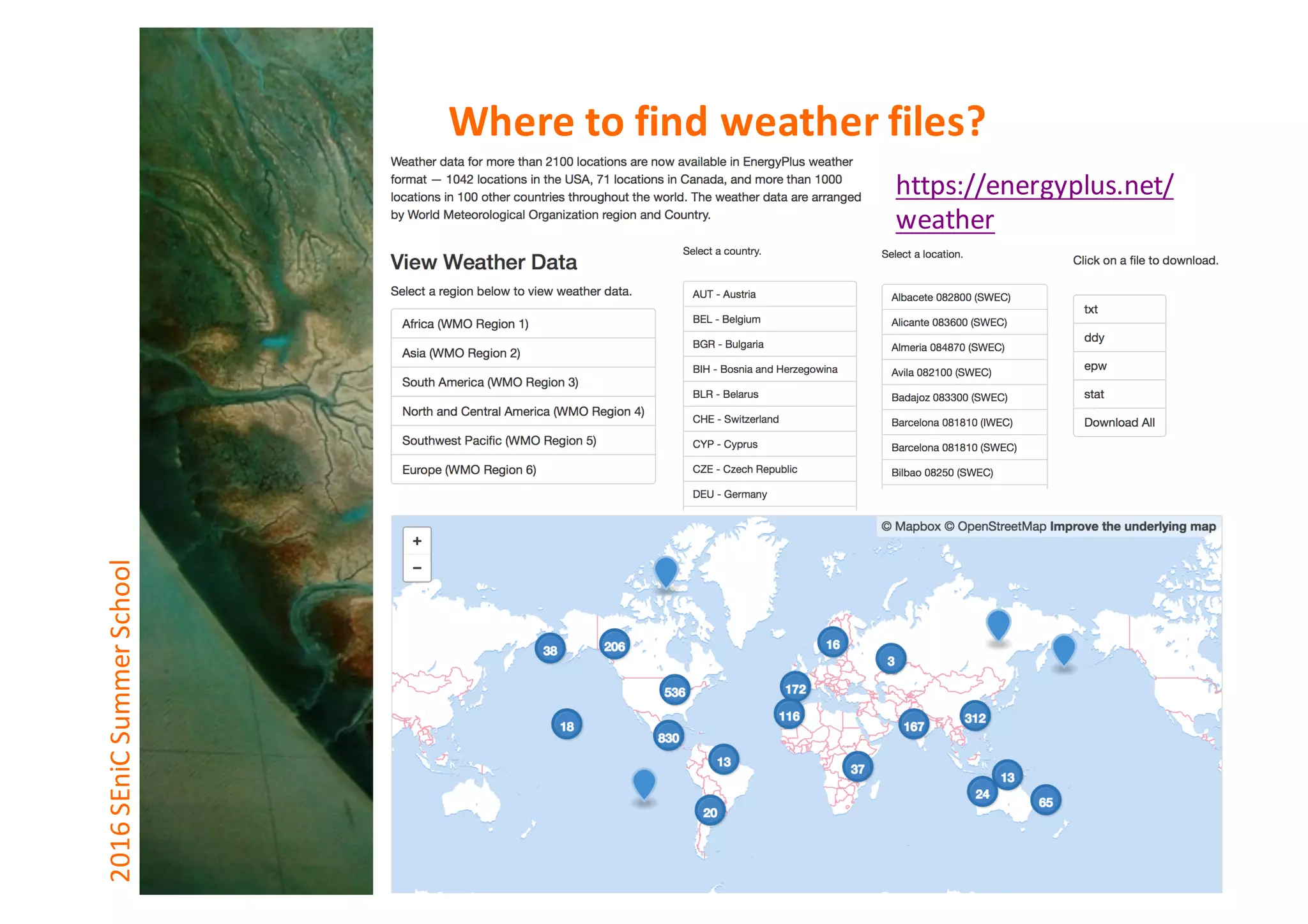
https://energyplus.net/
weather
2016	SEniCSummer	School Where	to	find	weather	files?
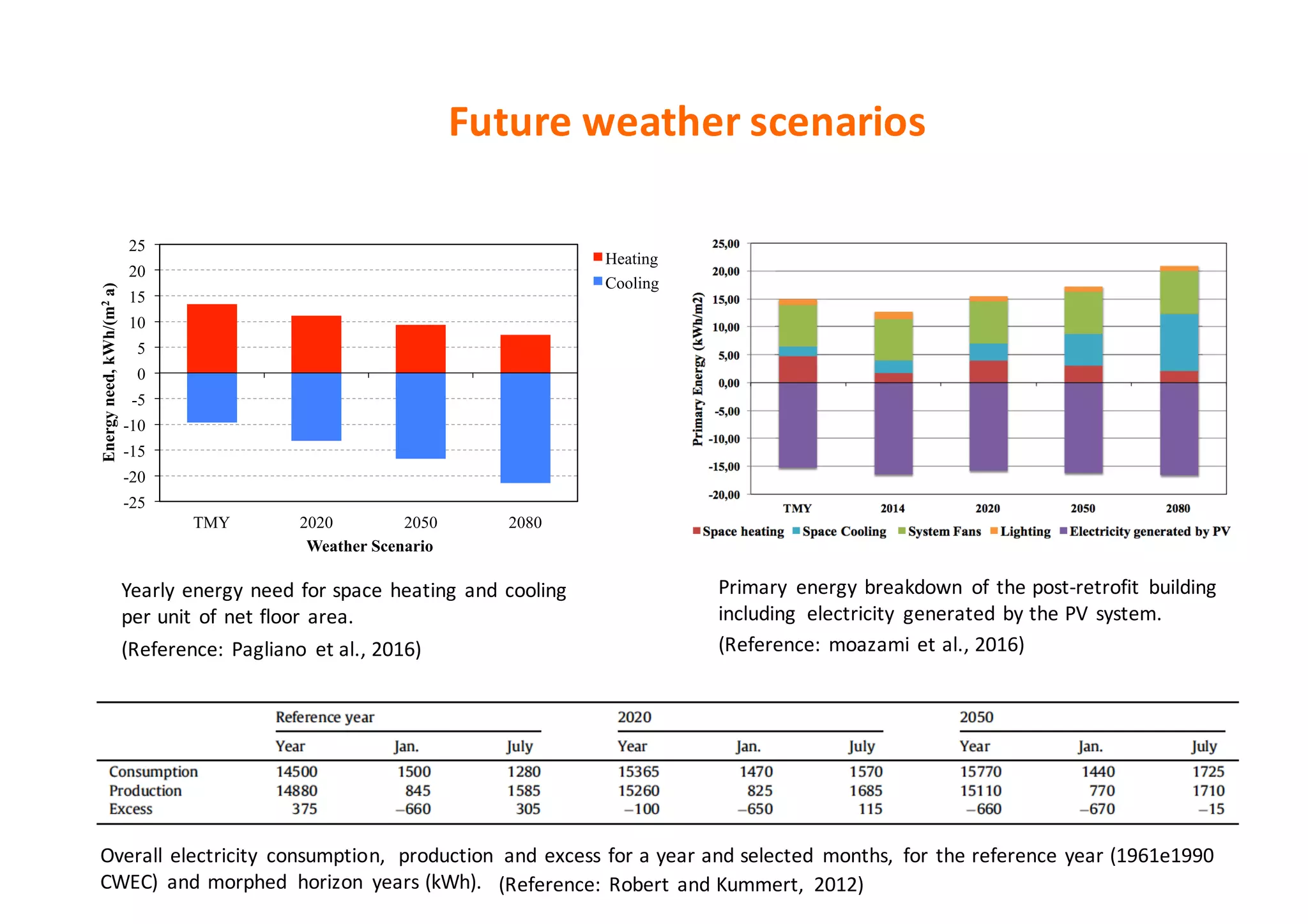
-25
-20
-15
-10
-5
0
5
10
15
20
25
TMY 2020 2050 2080
Energyneed,kWh/(m2a)
Weather Scenario
Heating
Cooling
Future	weather	scenarios
(Reference:	moazami et	al.,	2016)
Primary	 energy	breakdown	 of	the	post-retrofit	 building	
including	 electricity	 generated	by	the	PV	system.	
Overall	electricity	 consumption,	 production	 and	excess	for	a	year	and	selected	 months,	 for	the	reference	year	(1961e1990	
CWEC)	 and	morphed	 horizon	 years	(kWh).	 (Reference:	Robert	and	Kummert,	 2012)
Yearly	energy	need	for	space	heating	and	cooling	
per	unit	of	net	floor	area.
(Reference:	Pagliano et	al.,	2016)
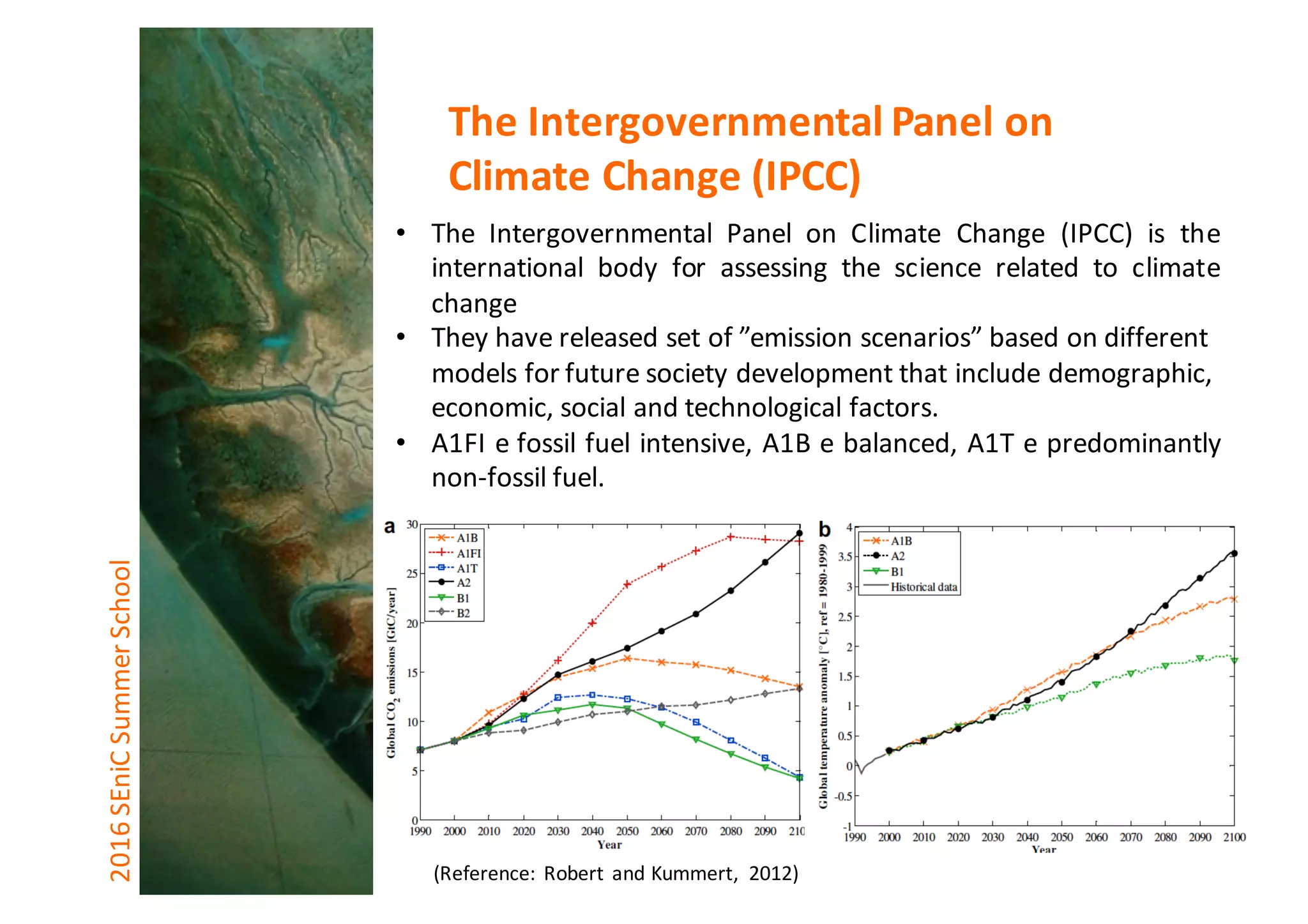
• The Intergovernmental Panel on Climate Change (IPCC) is the
international body for assessing the science related to climate
change
• They	have	released	set	of	”emission	scenarios”	based	on	different	
models	for	future	society	development	that	include	demographic,	
economic,	social	and	technological	factors.
• A1FI e fossil fuel intensive, A1B e balanced, A1T e predominantly
non-fossil fuel.
2016	SEniCSummer	School The	Intergovernmental	Panel	on	
Climate	Change	(IPCC)
(Reference:	Robert	and	Kummert,	 2012)
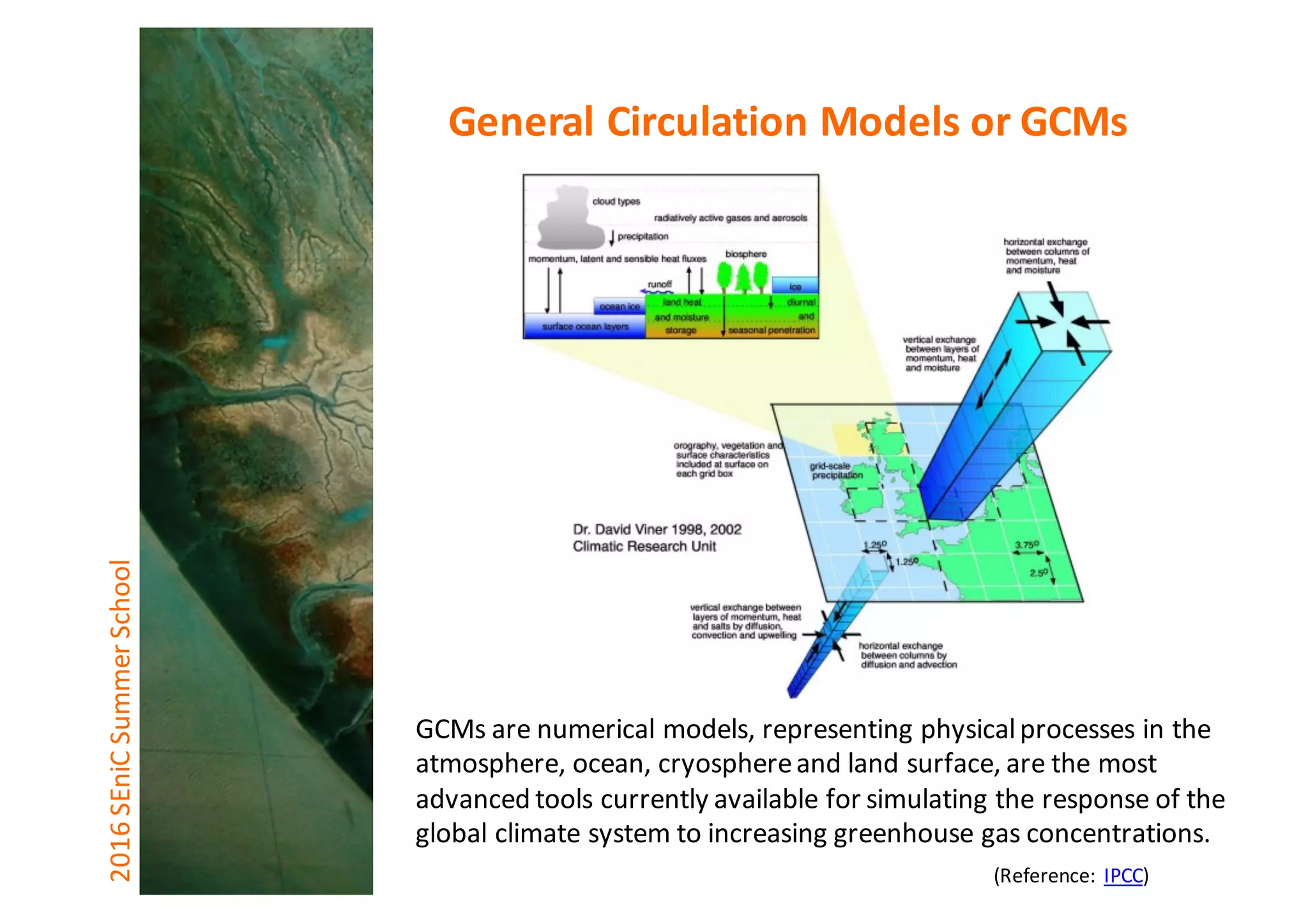
GCMs	are	numerical	models,	representing	physical	processes	in	the	
atmosphere,	ocean,	cryosphere	and	land	surface,	are	the	most	
advanced	tools	currently	available	for	simulating	the	response	of	the	
global	climate	system	to	increasing	greenhouse	gas	concentrations.
2016	SEniCSummer	School General	Circulation	Models	or	GCMs
(Reference:	IPCC)
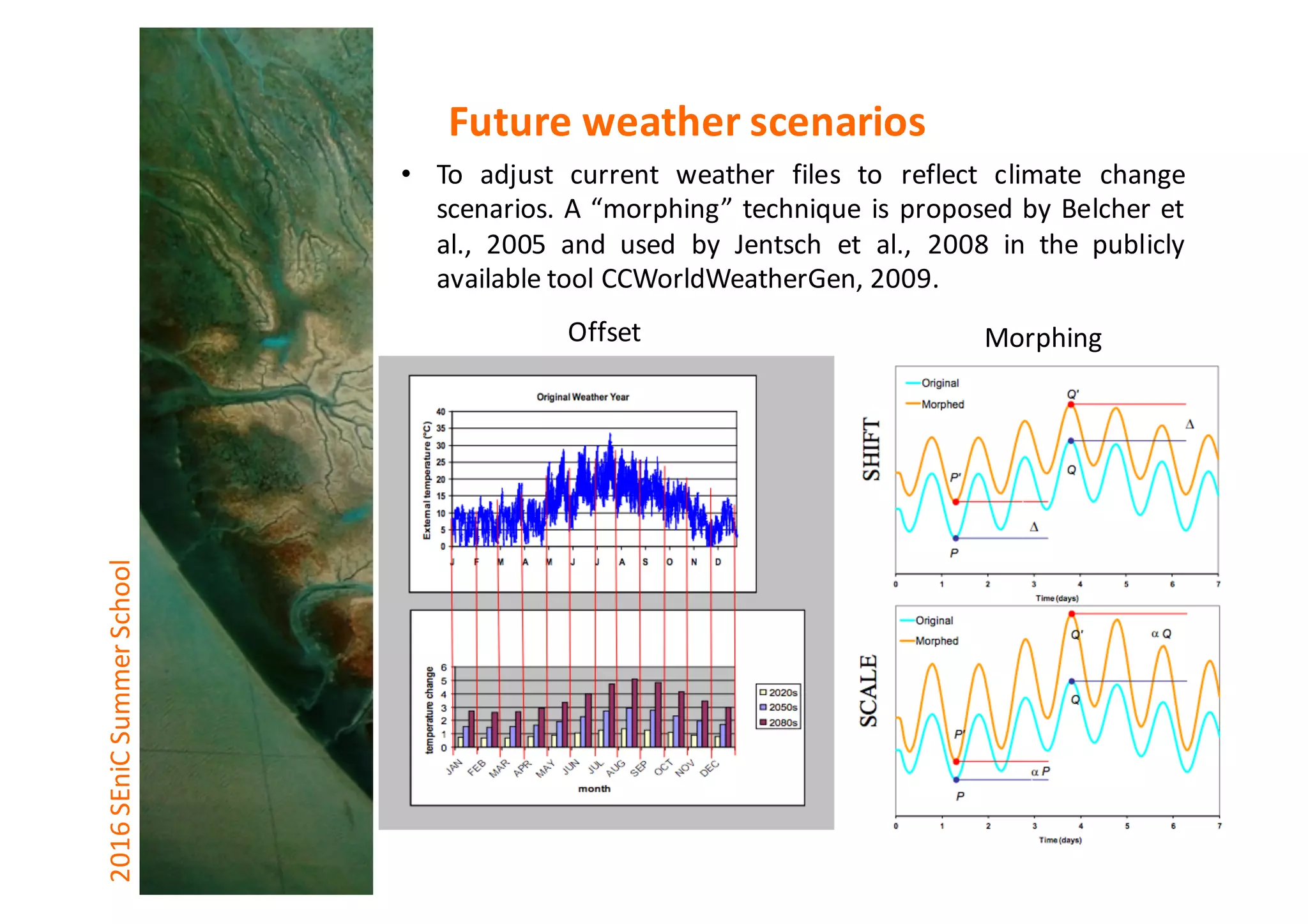
• To adjust current weather files to reflect climate change
scenarios. A “morphing” technique is proposed by Belcher et
al., 2005 and used by Jentsch et al., 2008 in the publicly
available tool CCWorldWeatherGen, 2009.
Offset Morphing
2016	SEniCSummer	School Future	weather	scenarios
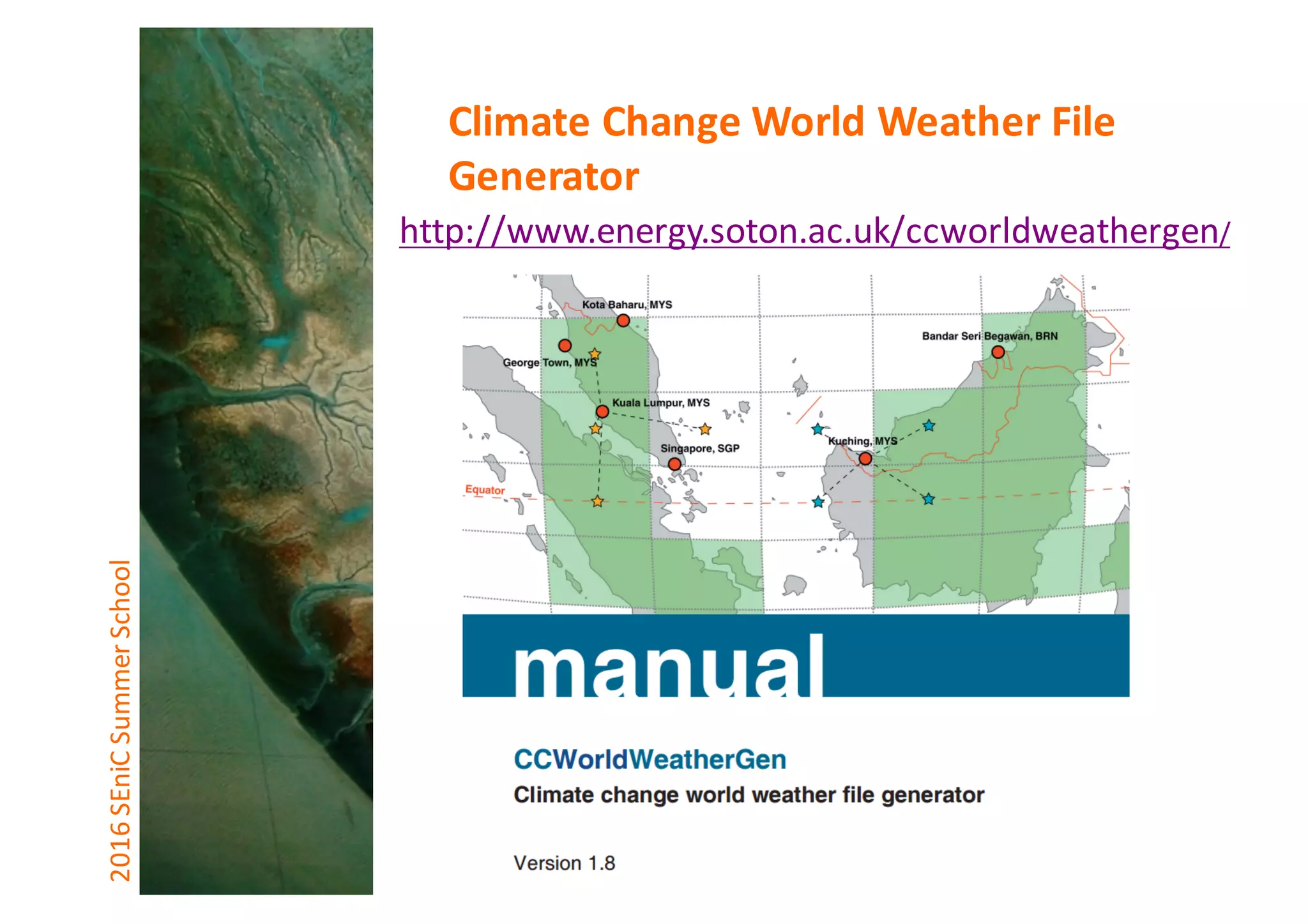
http://www.energy.soton.ac.uk/ccworldweathergen/
2016	SEniCSummer	School Climate	Change	World	Weather	File	
Generator
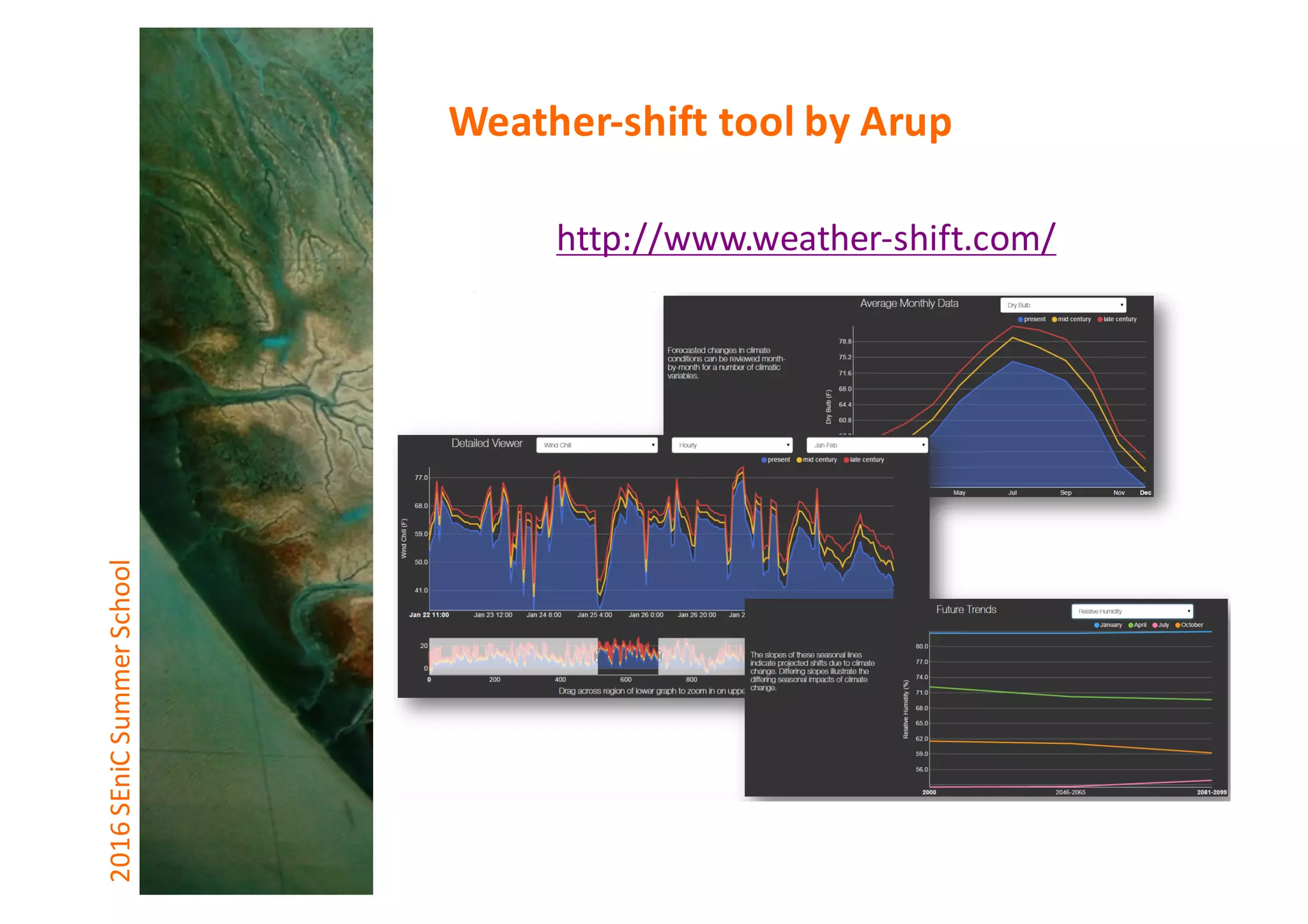
http://www.weather-shift.com/
2016	SEniCSummer	School Weather-shift	tool	by	Arup
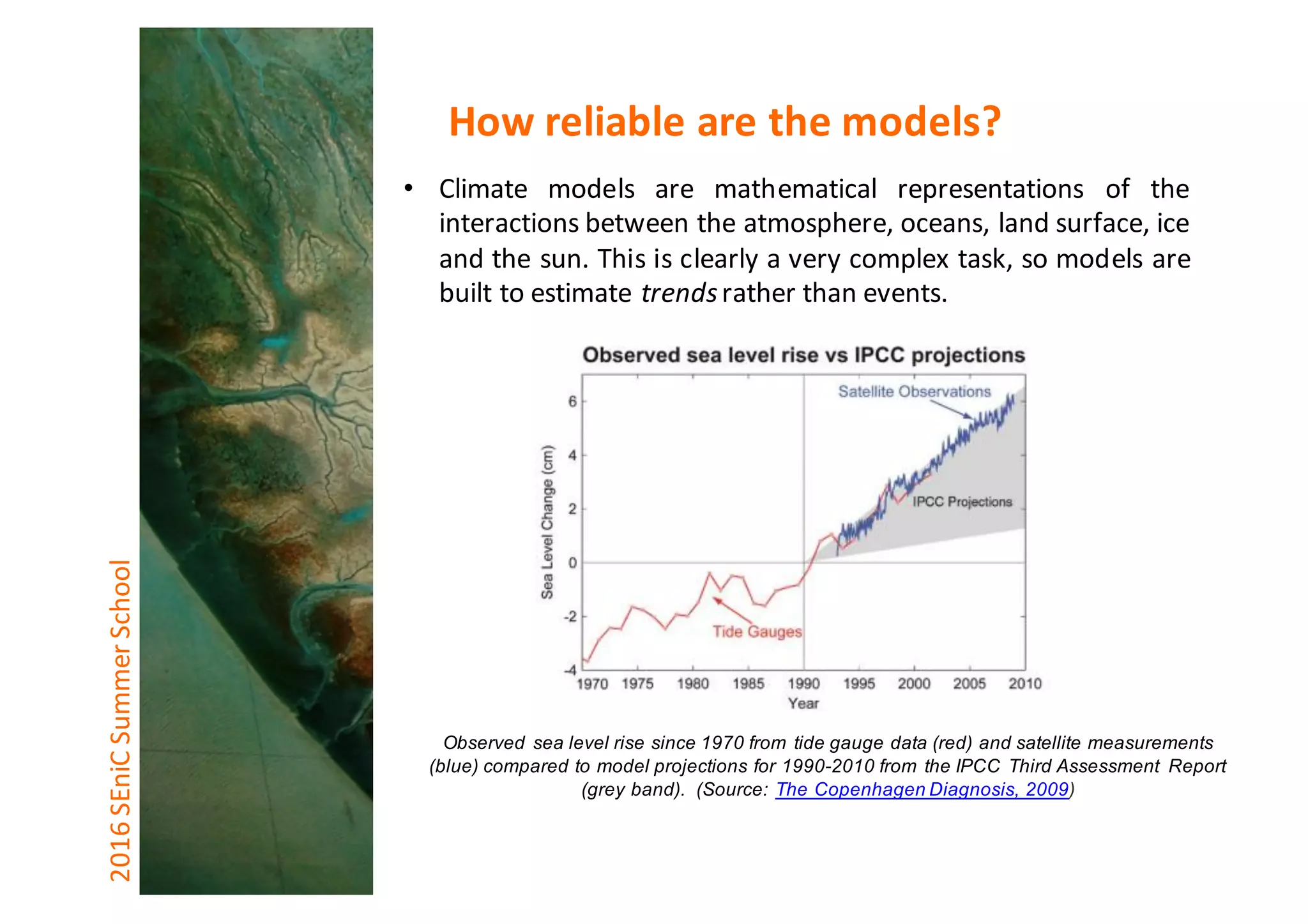
• Climate models are mathematical representations of the
interactions between the atmosphere, oceans, land surface, ice
and the sun. This is clearly a very complex task, so models are
built to estimate trendsrather than events.
Observed sea level rise since 1970 from tide gauge data (red) and satellite measurements
(blue) compared to model projections for 1990-2010 from the IPCC Third Assessment Report
(grey band). (Source: The Copenhagen Diagnosis, 2009)
2016	SEniCSummer	School How	reliable	are	the	models?
A.	Robert,	M.	Kummert,	Designing	net-zero	energy	buildings	for	the	
future	climate,	not	for	the	past,	Build.	Environ.	55	(2012)	150–158.	
doi:10.1016/j.buildenv.2011.12.014.
S.E.	Belcher,	J.N.	Hacker,	D.S.	Powell,	Constructing	design	weather	data	
for	future	climates,	Build.	Serv.	Eng.	Res.	Technol.	26	(2005)	49–61.	
doi:10.1191/0143624405bt112oa.
A.	Moazami,	S.	Carlucci,	F.	Causone,	L.	Pagliano,	Energy	Retrofit	of	a	
Day	Care	Center	for	Current	and	Future	Weather	Scenarios,	Procedia	
Eng.	145	(2016)	1330–1337.	doi:10.1016/j.proeng.2016.04.171.
L.	Pagliano,	S.	Carlucci,	F.	Causone,	A.	Moazami,	G.	Cattarin,	Energy	
retrofit	for	a	climate	resilient	child	care	centre,	Energy	Build.	127	
(2016)	1117–1132.	doi:10.1016/j.enbuild.2016.05.092.
M.F.	Jentsch,	P.A.B.	James,	L.	Bourikas,	A.S.	Bahaj,	Transforming	
existing	weather	data	for	worldwide	locations	to	enable	energy	and	
building	performance	simulation	under	future	climates,	Renew.	
Energy.	55	(2013)	514–524.	doi:10.1016/j.renene.2012.12.049.	
“Building	Performance	Simulation	for	Design	and	Operation”,	J.H.	
Hensen and	R.	Lamberts,	Spoon	Press,	2011	
2016	SEniCSummer	School References
2016	SEniCSummer	School
Comments/Questions?

007 160719 building performance simulation and application of climate changes