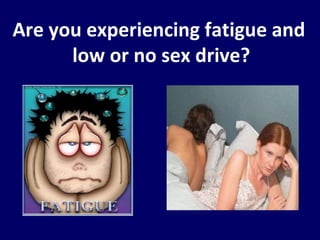
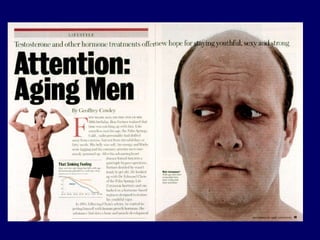
Are you experiencing fatigue and low or no sex drive?
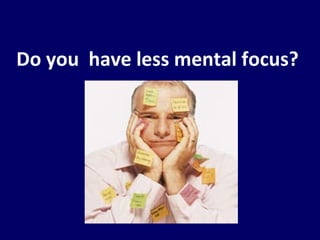
Do you  have less mental focus?
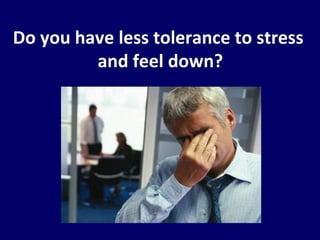
Do you have less tolerance to stress  and feel down?
Is your body getting softer while  you are gaining fat?
Have you been exercising  for months or years  without improvements in your body?
Do  you want to have healthy  testosterone  Levels but are afraid to use it?
You may be one of the 13 million men in the United States that are suffering from testosterone deficiency but who are suffering needlessly.  There is hope…
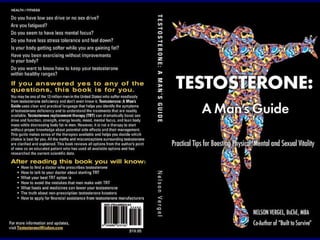
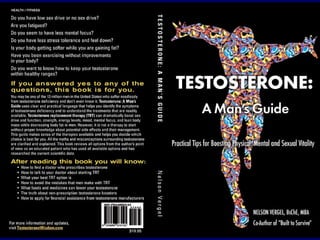
Read  “ Testosterone: A Man’s Guide” Available Here
 
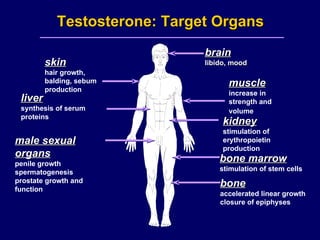
Testosterone: Target Organs brain libido, mood skin hair growth, balding, sebum production muscle increase in strength and volume   liver synthesis of serum proteins kidney stimulation of erythropoietin production male sexual organs penile growth spermatogenesis prostate growth and function bone marrow stimulation of stem cells bone accelerated linear growth closure of epiphyses
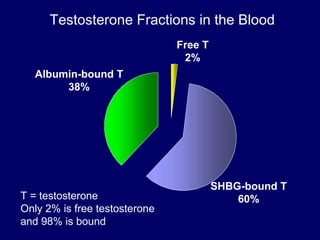
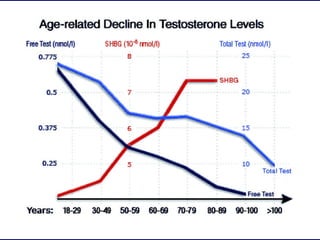
Albumin-bound T 38% Free T 2% SHBG-bound T 60% T = testosterone Only 2% is free testosterone and 98% is bound Testosterone Fractions in the Blood
 
 
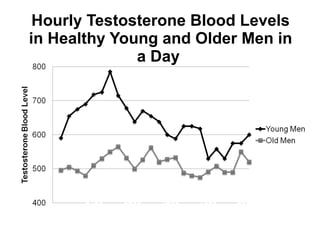
Hourly Testosterone Blood Levels in Healthy Young and Older Men in a Day  Source: Bremner WJ, Vitiello MV, Prinz PN.,  J Clin Endocrinol Metab  1983;56:1278-1281 0000 2000 1600 1200 0800 0400 0000
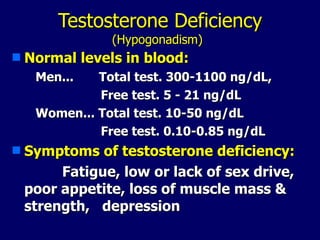
Testosterone Deficiency  (Hypogonadism) Normal levels in blood: Men...  Total test. 300-1100 ng/dL,  Free test. 5 - 21 ng/dL Women... Total test. 10-50 ng/dL Free test. 0.10-0.85 ng/dL Symptoms of testosterone deficiency: Fatigue, low or lack of sex drive, poor appetite, loss of muscle mass & strength,  depression
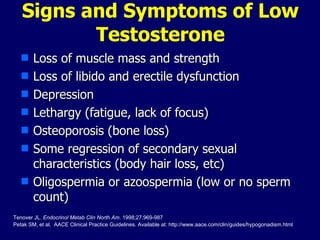
Signs and Symptoms of Low Testosterone Loss of muscle mass and strength  Loss of libido and erectile dysfunction Depression  Lethargy (fatigue, lack of focus) Osteoporosis (bone loss) Some regression of secondary sexual characteristics (body hair loss, etc) Oligospermia or azoospermia (low or no sperm count) Tenover JL.  Endocrinol Metab Clin North Am . 1998;27:969-987 Petak SM, et al.  AACE Clinical Practice Guidelines. Available at: http://www.aace.com/clin/guides/hypogonadism.html
 
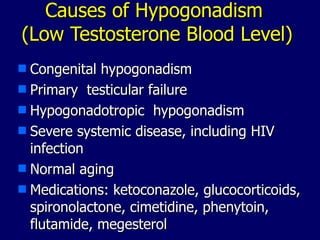
Causes of Hypogonadism  (Low Testosterone Blood Level) Congenital hypogonadism Primary  testicular failure Hypogonadotropic  hypogonadism Severe systemic disease, including HIV infection Normal aging Medications: ketoconazole, glucocorticoids, spironolactone, cimetidine, phenytoin, flutamide, megesterol
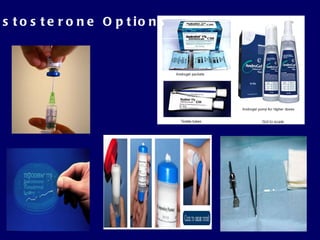
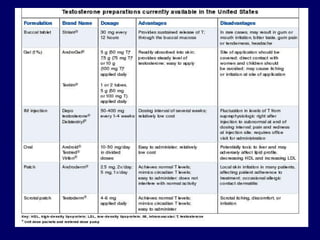
Testosterone Options
 
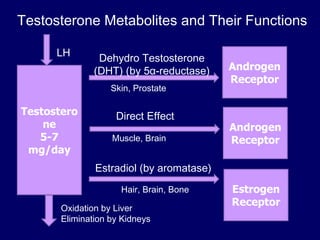
Testosterone Metabolites and Their Functions Testosterone 5-7 mg/day Androgen Receptor Androgen Receptor Estrogen Receptor Dehydro Testosterone (DHT) (by 5 α -reductase) Estradiol (by aromatase) Direct Effect LH Oxidation by Liver Elimination by Kidneys Skin, Prostate Hair, Brain, Bone Muscle, Brain
 
 
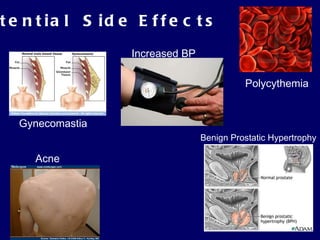
Potential  Side Effects Polycythemia Benign Prostatic Hypertrophy Acne Gynecomastia Increased BP
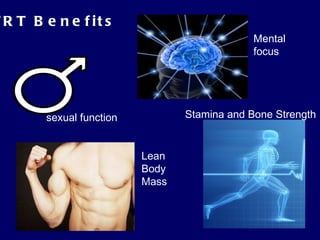
TRT Benefits sexual function Mental focus Stamina and Bone Strength Lean Body Mass
For More Information: TestosteroneWisdom.com
 

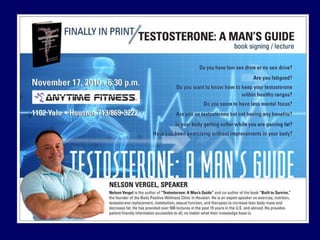
Testosterone Lecture by Author Nelson Vergel

  • 1.
  • 2.
    Are you experiencingfatigue and low or no sex drive?
  • 3.
    Do you have less mental focus?
  • 4.
    Do you haveless tolerance to stress and feel down?
  • 5.
    Is your bodygetting softer while you are gaining fat?
  • 6.
    Have you beenexercising for months or years without improvements in your body?
  • 7.
    Do youwant to have healthy testosterone Levels but are afraid to use it?
  • 8.
    You may beone of the 13 million men in the United States that are suffering from testosterone deficiency but who are suffering needlessly. There is hope…
  • 9.
    Read “Testosterone: A Man’s Guide” Available Here
  • 10.
  • 11.
    Testosterone: Target Organsbrain libido, mood skin hair growth, balding, sebum production muscle increase in strength and volume liver synthesis of serum proteins kidney stimulation of erythropoietin production male sexual organs penile growth spermatogenesis prostate growth and function bone marrow stimulation of stem cells bone accelerated linear growth closure of epiphyses
  • 12.
    Albumin-bound T 38%Free T 2% SHBG-bound T 60% T = testosterone Only 2% is free testosterone and 98% is bound Testosterone Fractions in the Blood
  • 13.
  • 14.
  • 15.
    Hourly Testosterone BloodLevels in Healthy Young and Older Men in a Day Source: Bremner WJ, Vitiello MV, Prinz PN., J Clin Endocrinol Metab 1983;56:1278-1281 0000 2000 1600 1200 0800 0400 0000
  • 16.
    Testosterone Deficiency (Hypogonadism) Normal levels in blood: Men... Total test. 300-1100 ng/dL, Free test. 5 - 21 ng/dL Women... Total test. 10-50 ng/dL Free test. 0.10-0.85 ng/dL Symptoms of testosterone deficiency: Fatigue, low or lack of sex drive, poor appetite, loss of muscle mass & strength, depression
  • 17.
    Signs and Symptomsof Low Testosterone Loss of muscle mass and strength Loss of libido and erectile dysfunction Depression Lethargy (fatigue, lack of focus) Osteoporosis (bone loss) Some regression of secondary sexual characteristics (body hair loss, etc) Oligospermia or azoospermia (low or no sperm count) Tenover JL. Endocrinol Metab Clin North Am . 1998;27:969-987 Petak SM, et al. AACE Clinical Practice Guidelines. Available at: http://www.aace.com/clin/guides/hypogonadism.html
  • 18.
  • 19.
    Causes of Hypogonadism (Low Testosterone Blood Level) Congenital hypogonadism Primary testicular failure Hypogonadotropic hypogonadism Severe systemic disease, including HIV infection Normal aging Medications: ketoconazole, glucocorticoids, spironolactone, cimetidine, phenytoin, flutamide, megesterol
  • 20.
  • 21.
  • 22.
    Testosterone Metabolites andTheir Functions Testosterone 5-7 mg/day Androgen Receptor Androgen Receptor Estrogen Receptor Dehydro Testosterone (DHT) (by 5 α -reductase) Estradiol (by aromatase) Direct Effect LH Oxidation by Liver Elimination by Kidneys Skin, Prostate Hair, Brain, Bone Muscle, Brain
  • 23.
  • 24.
  • 25.
    Potential SideEffects Polycythemia Benign Prostatic Hypertrophy Acne Gynecomastia Increased BP
  • 26.
    TRT Benefits sexualfunction Mental focus Stamina and Bone Strength Lean Body Mass
  • 27.
    For More Information:TestosteroneWisdom.com
  • 28.

Editor's Notes

  • #18 Low testosterone, or male hypogonadism, is associated with a number of signs and symptoms in the adult male. Loss of libido and erectile dysfunction are two hallmark symptoms of hypogonadism. 1,2 Mood and behavioral symptoms, namely depression, irritability, and loss of motivation, may also occur with low testosterone levels. Lethargy, or loss of energy, is also commonly seen in these men. 1 A deficiency of endogenous testosterone also has a deleterious effect on bone mass and is a risk factor for osteoporosis. Progressive decrease in muscle mass and muscle strength are also associated with low testosterone levels. 1,2 Some regression of secondary sexual characteristics, such as reduced ancillary and pubic hair, is observed, but voice, penis length, and prostate size remain unchanged. 2 Because hypogonadism is characterized by testicular dysfunction, production of sperm is impaired, resulting in oligospermia or even azoospermia, and many times hypogonadism is diagnosed as a result of fertility tests. 1,2 1.Tenover JL. Male hormone replacement therapy including "andropause." Endocrinol Metab Clin North Am. 1998;27:969-987. 2. Petak SM, Hypogonadism Task Force. AACE Clinical Practice Guidelines for the Evaluation and Treatment of Hypogonadism in Adult Male Patients. 1998. Available at: http://www/aace.com/clin/guides/ hypogonadism.html. Accessed June 23, 2000.
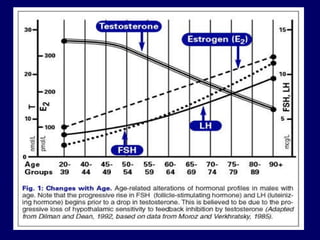
  • #20 Male hypogonadism occurs with a number of disorders, including primary testicular failure that is due to genetic or developmental abnormalities (for example, Klinefelter’s syndrome) or that is acquired (such as viral orchitis). 1 Testosterone deficiency also may occur with hypogonadotropic hypogonadism that either has a congenital basis (for example, Kallmann’s syndrome) or results from an acquired condition (such as pituitary adenoma). 1 Additionally, testosterone deficiency may result from other conditions such as obesity or severe systemic illnesses, including malnutrition, AIDS, uremia, sickle cell disease, and hepatic cirrhosis. 2 The use of ketoconazole, glucocorticoids, spironolactone, cimetidine, phenytoin, and flutamide may also result in hypogonadism. 2 Moreover, aging may contribute to low testosterone levels. Recent studies have shown that after age 30, men experience a 1% to 2% decrease of total and bioavailable testosterone levels each year—a slow, yet steady decline. 2 1. Winters SJ. Current status of testosterone replacement therapy in men. Arch Fam Med. 1999;8:257-263. 2. Tenover JL. Male hormone replacement therapy including “andropause.” Endocrinol Metab Clin North Am . 1998;27:969-987.