Privacy Policy for
Google AdSense
Google AdSense is a useful free service
that lets website and mobile app operators
make money by allowing Google to place
targeted ads on their websites or within
their apps.
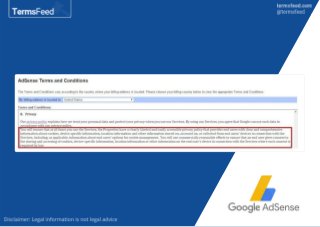
AdSense comes with Terms and
Conditions (1) (T&C) that you must
agree to before using the service.
(1) Link to https://termsfeed.com/terms-conditions/generator/
The T&C requires that you provide a Privacy Policy (2) to your users that
contains the following information:
That Google and third party vendors use cookies to show ads to your
website/app users,
That Google uses a DoubleClick cookie (3) to do this, and
That users may opt out of this by visiting Google’s Ads Settings (4) page
or by visiting Aboutads.info (5)
(2) Link to https://termsfeed.com/privacy-policy/generator/
(3) Link to https://support.google.com/adsense/answer/2839090?hl=en
(4) Link to https://adssettings.google.com/authenticated
(5) Link to http://www.aboutads.info/
In most cases, simply updating your current Privacy
Policy with a new clause to include this information
and making sure your Policy links are easily available
to users will keep you compliant with Google’s T&C.
However, some laws may have more specific
requirements when it comes to using cookies,
such as the EU Cookies Directive (6).
(6) Link to https://termsfeed.com/blog/eu-cookies-directive/
EU Requirements
for Google AdSense
If you do business in the EU, you have a few
additional requirements when using AdSense.
Google’s T&C requires that you make efforts to get consent for using
cookies and other information in connection with AdSense where
such consent is required by law.
This consent is required in the EU under the EU Cookies Directive.
The EU Cookies Directive
If your business is EU-based or directed towards EU citizens,
you must follow this Directive by:
Informing users about cookies, and
Obtaining consent before using cookies
Informing Users
About Cookies
You will need a separate Cookies Policy (7) where you let users know:
What cookies are being used by the website
How these cookies are used
What options users have over these cookies
(7) Link to https://termsfeed.com/cookies-policy/generator/
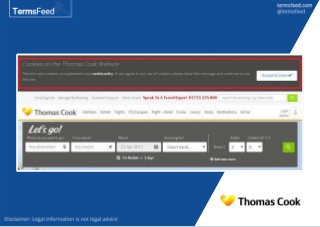
You will also need to give notice to users about your cookie usage
and your Cookies Policy.
This can be done through a pop-up or banner notification that links
to your Cookies Policy.
Obtaining Consent
for Using Cookies
Obtain consent by having a user click something to indicate that he’s
ok with your use of cookies, such as an “I Accept” or “Continue” button.
This active method of obtaining consent is known as clickwrap (8).
(8) Link to https://termsfeed.com/blog/browsewrap-clickwrap/
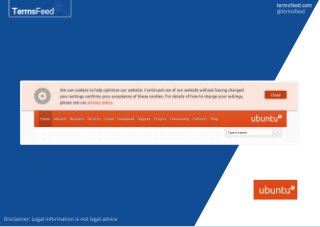
You can also obtain passive consent.
Let users know that by using your website/app after being notified
about Cookies being used, the user is agreeing to allow them.
This less recommended method is known as browsewrap.
If you use AdSense, comply with Google’s T&C by:
Updating your Privacy Policy to include the required
information about cookies usage
In the EU, create a Cookies Policy, give notice to users
and obtain consent before using cookies
Privacy Policy for Google AdSense

Privacy Policy for Google AdSense

  • 1.
  • 2.
    Google AdSense isa useful free service that lets website and mobile app operators make money by allowing Google to place targeted ads on their websites or within their apps.
  • 3.
    AdSense comes withTerms and Conditions (1) (T&C) that you must agree to before using the service. (1) Link to https://termsfeed.com/terms-conditions/generator/
  • 5.
    The T&C requiresthat you provide a Privacy Policy (2) to your users that contains the following information: That Google and third party vendors use cookies to show ads to your website/app users, That Google uses a DoubleClick cookie (3) to do this, and That users may opt out of this by visiting Google’s Ads Settings (4) page or by visiting Aboutads.info (5) (2) Link to https://termsfeed.com/privacy-policy/generator/ (3) Link to https://support.google.com/adsense/answer/2839090?hl=en (4) Link to https://adssettings.google.com/authenticated (5) Link to http://www.aboutads.info/
  • 6.
    In most cases,simply updating your current Privacy Policy with a new clause to include this information and making sure your Policy links are easily available to users will keep you compliant with Google’s T&C.
  • 8.
    However, some lawsmay have more specific requirements when it comes to using cookies, such as the EU Cookies Directive (6). (6) Link to https://termsfeed.com/blog/eu-cookies-directive/
  • 9.
  • 10.
    If you dobusiness in the EU, you have a few additional requirements when using AdSense.
  • 11.
    Google’s T&C requiresthat you make efforts to get consent for using cookies and other information in connection with AdSense where such consent is required by law. This consent is required in the EU under the EU Cookies Directive.
  • 12.
    The EU CookiesDirective
  • 13.
    If your businessis EU-based or directed towards EU citizens, you must follow this Directive by: Informing users about cookies, and Obtaining consent before using cookies
  • 14.
  • 15.
    You will needa separate Cookies Policy (7) where you let users know: What cookies are being used by the website How these cookies are used What options users have over these cookies (7) Link to https://termsfeed.com/cookies-policy/generator/
  • 16.
    You will alsoneed to give notice to users about your cookie usage and your Cookies Policy. This can be done through a pop-up or banner notification that links to your Cookies Policy.
  • 18.
  • 19.
    Obtain consent byhaving a user click something to indicate that he’s ok with your use of cookies, such as an “I Accept” or “Continue” button. This active method of obtaining consent is known as clickwrap (8). (8) Link to https://termsfeed.com/blog/browsewrap-clickwrap/
  • 21.
    You can alsoobtain passive consent. Let users know that by using your website/app after being notified about Cookies being used, the user is agreeing to allow them. This less recommended method is known as browsewrap.
  • 23.
    If you useAdSense, comply with Google’s T&C by: Updating your Privacy Policy to include the required information about cookies usage In the EU, create a Cookies Policy, give notice to users and obtain consent before using cookies