
Health 2.0 Tools for the elderly
Maneesh Juneja
Digital Health Futurist
Maneeshjuneja.com
Sunday 17th November 2013
The challenge & opportunity
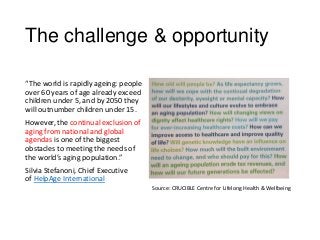
“The world is rapidly ageing: people
over 60 years of age already exceed
children under 5, and by 2050 they
will outnumber children under 15.
However, the continual exclusion of
aging from national and global
agendas is one of the biggest
obstacles to meeting the needs of
the world’s aging population.”
Silvia Stefanoni, Chief Executive
of HelpAge International
Source: CRUCIBLE Centre for Lifelong Health & Wellbeing
Europe – what’s happening?
• Life expectancy in UK
• In 1948 – Men 66 years, Women 71 years
• In 2013 – Men 79 years, Women 83 years

• Between 2008 and 2011, 17 out of the EU’s 28 member states have slashed
their public spending on healthcare due to austerity policies (Source: European Public
Health Alliance (EPHA) – 5TH September 2013)

• UK – £108.9bn budget for 2012-13. Increase for 2015-6 set at 0.1% and £30bn
funding gap by 2020 predicted
• Two countries with the world’s oldest populations, Japan and Germany, are
training geriatric nurses in Vietnam to help fill critical health care gaps at home
Loneliness of elderly as
national shame!
Not everyone has used the
internet!
• 80% of care homes in UK have no internet access
for residents
[Source: http://www.carehome.co.uk/news/article.cfm/id/1560123/care-homes-urged-to-get-residents-online-and-stop-the-digital-divide-becoming-a-digital-gulf]

• 15% of UK have never used the internet – many are
poor, disabled or elderly
[Source: http://www.theregister.co.uk/2013/03/28/national_audit_office_digital_by_default_them_and_us/]

• 100 million in the EU have never used the internet
• [Variations: 6% of Netherlands are in this category vs 65% of Greece]
• [Source: http://www.ibtimes.com/europeans-digital-world-how-european-commission-member-countries-use-internet-1307535]
Population growth
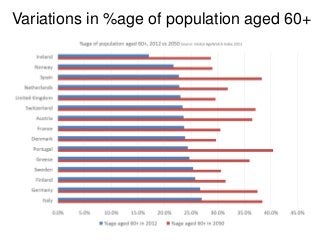
[Hint: Look at Germany vs UK]
Variations in %age of population aged 60+
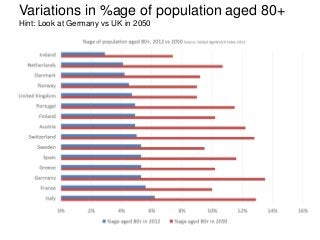
Variations in %age of population aged 80+
Hint: Look at Germany vs UK in 2050
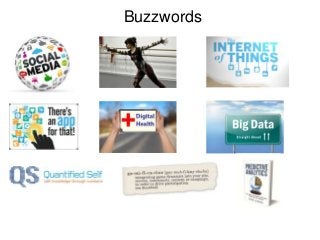
Buzzwords
Where do we look for
evidence?

Currently holds
4,400 records
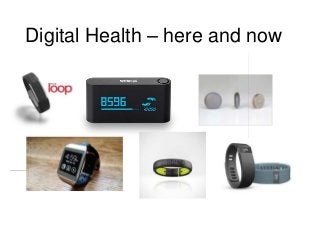
Digital Health – here and now
Digital Health – the next 12
months
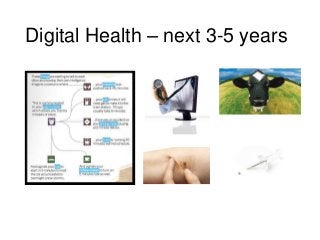
Digital Health – next 3-5 years
Globalisation
In 2014, China will replace Canada as 2nd largest market for
Starbucks
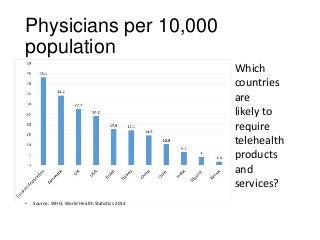
Physicians per 10,000
population
Which
countries
are
likely to
require
telehealth
products
and
services?
•

Source: WHO, World Health Statistics 2013
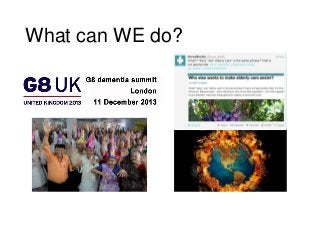
What can WE do?

Health 2.0 Tools for the Elderly

  • 1.
    Health 2.0 Toolsfor the elderly Maneesh Juneja Digital Health Futurist Maneeshjuneja.com Sunday 17th November 2013
  • 2.
    The challenge &opportunity “The world is rapidly ageing: people over 60 years of age already exceed children under 5, and by 2050 they will outnumber children under 15. However, the continual exclusion of aging from national and global agendas is one of the biggest obstacles to meeting the needs of the world’s aging population.” Silvia Stefanoni, Chief Executive of HelpAge International Source: CRUCIBLE Centre for Lifelong Health & Wellbeing
  • 3.
    Europe – what’shappening? • Life expectancy in UK • In 1948 – Men 66 years, Women 71 years • In 2013 – Men 79 years, Women 83 years • Between 2008 and 2011, 17 out of the EU’s 28 member states have slashed their public spending on healthcare due to austerity policies (Source: European Public Health Alliance (EPHA) – 5TH September 2013) • UK – £108.9bn budget for 2012-13. Increase for 2015-6 set at 0.1% and £30bn funding gap by 2020 predicted • Two countries with the world’s oldest populations, Japan and Germany, are training geriatric nurses in Vietnam to help fill critical health care gaps at home
  • 4.
    Loneliness of elderlyas national shame!
  • 5.
    Not everyone hasused the internet! • 80% of care homes in UK have no internet access for residents [Source: http://www.carehome.co.uk/news/article.cfm/id/1560123/care-homes-urged-to-get-residents-online-and-stop-the-digital-divide-becoming-a-digital-gulf] • 15% of UK have never used the internet – many are poor, disabled or elderly [Source: http://www.theregister.co.uk/2013/03/28/national_audit_office_digital_by_default_them_and_us/] • 100 million in the EU have never used the internet • [Variations: 6% of Netherlands are in this category vs 65% of Greece] • [Source: http://www.ibtimes.com/europeans-digital-world-how-european-commission-member-countries-use-internet-1307535]
  • 6.
  • 7.
    Variations in %ageof population aged 60+
  • 8.
    Variations in %ageof population aged 80+ Hint: Look at Germany vs UK in 2050
  • 9.
  • 11.
    Where do welook for evidence? Currently holds 4,400 records
  • 12.
    Digital Health –here and now
  • 13.
    Digital Health –the next 12 months
  • 14.
    Digital Health –next 3-5 years
  • 15.
    Globalisation In 2014, Chinawill replace Canada as 2nd largest market for Starbucks
  • 16.
    Physicians per 10,000 population Which countries are likelyto require telehealth products and services? • Source: WHO, World Health Statistics 2013
  • 17.

Editor's Notes

  • #2 We forget two facts in life. We will get old, and we will die. We are afraid to talk about old and death at the dinner table. I’m afraid of growing old and dying. How will I cope if I can’t remember? What are the options for end of life care? Who will I care for when they are old? Unpaid carers.We are all touched. Many of the innovators are doing this because of personal experience. We should applaud Health 2.0 for running this workshop, and to ask – how can technology help older people? We are creating history today. The aging population should be seen not just as a burden, but as a resource. Wisdom, talent life skills
  • #3 Two fac
  • #4 We forget two facts in life. We will get old, and we will die. We are afraid to talk about old and death at the dinner table. I’m afraid of growing old and dying. How will I cope if I can’t remember? What are the options for end of life care? Who will I care for when they are old? Unpaid carers.We are all touched. Many of the innovators are doing this because of personal experience. We should applaud Health 2.0 for running this workshop, and to ask – how can technology help older people? We are creating history today. The aging population should be seen not just as a burden, but as a resource. Wisdom, talent life skills
  • #5 China new law – elderly parents can sue their children if they do not visit frequently enough – 94 year old woman in the news 1000 GPs polled, 75% of GPs we spoke to said they were seeing between one and five lonely people a day.10% reported seeing between six and ten lonely patients a day.GPs see 30-40 patients a day – 1 out of 10 people they see every day are not sick, just lonely – strain on GP resources
  • #6 80% of care homes in UK have no internet access for residents15% of UK adults have never used internet – 7 millionMany are poor, disabled or elderly – the biggest users of healthcare 100m in EU have never used the internet
  • #12 Give example of ‘science driven’ startups – Toronto wearable technology as leading hub
  • #15 Helping older people live independently in their homes – sensors etcKeeping them OUT of hospital
  • #16 In 2014, China replaces Canada as 2nd largest market [tea came from China!]Now views China as biggest growth market Unlike USA, where 70% of coffee is sold before 10am, in China it’s opposite, afternoon and eveningThe startups in this room may be household global names in 5 years time
  • #18 Aging in 21st century is a celebration and a challenge.Victor Wang from GeriJoy - We need to make Aging as ‘sexy’ as Global WarmingImagine what we can do