Integrating AI
Functionalities in
your Flutter App
Mobile Track
Who am I?
Senior Flutter Developer, Jesta IS
CTO and Cofounder, Fertitude.co
7+ years experience as a
Developer.
Founder, Code Clan Nigeria.
Instructor, Teacher.
Agenda
1. Why AI in Flutter apps?
2. Key AI Functionalities for Flutter
3. Case Studies - Let’s build.
4. Challenges and Considerations
5. Q and A.
Why Flutter?
Flutter is an open-source UI software development
toolkit created by Google, known for its ability to
efficiently build natively compiled applications for
mobile, web, and desktop from a single codebase.
Why AI in Flutter
app?
Why AI in Flutter app?
Integrating AI into Flutter apps offers
benefits such as enhanced user
experience through personalization and
predictive analytics, increased efficiency
via automation and data analysis,
improved accessibility for users with
disabilities, and a competitive edge in the
market with cutting-edge features.
1. Enhanced User Experience
2. Competitive Advantage
3. Automation
4. Improved Accessibility
5. Data Driven insights
AI Functionalities in
Flutter
Al Functionalities in Flutter
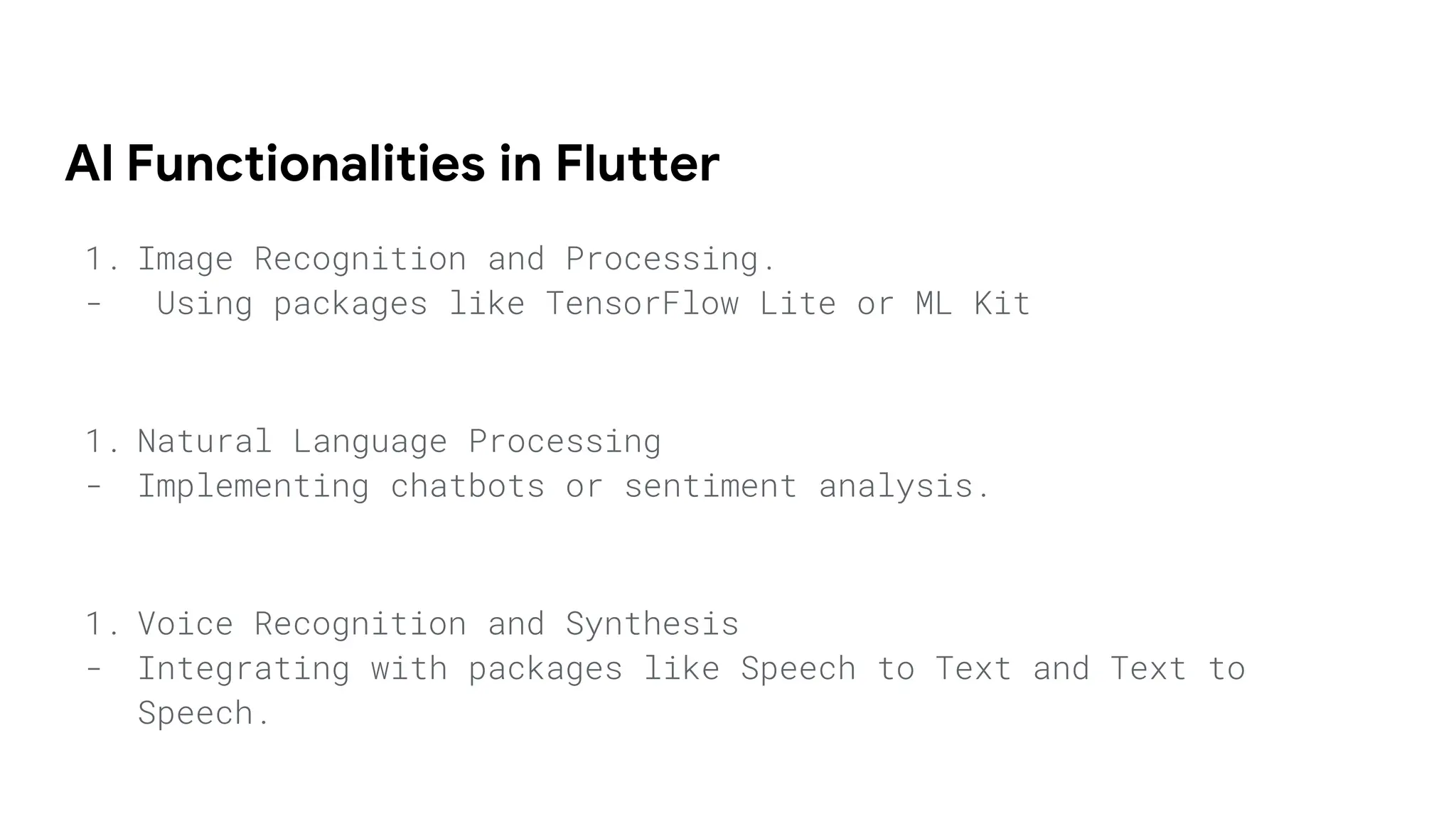
1. Image Recognition and Processing.
- Using packages like TensorFlow Lite or ML Kit
1. Natural Language Processing
- Implementing chatbots or sentiment analysis.
1. Voice Recognition and Synthesis
- Integrating with packages like Speech to Text and Text to
Speech.
Case Study
(Semantic search)
Semantic Search
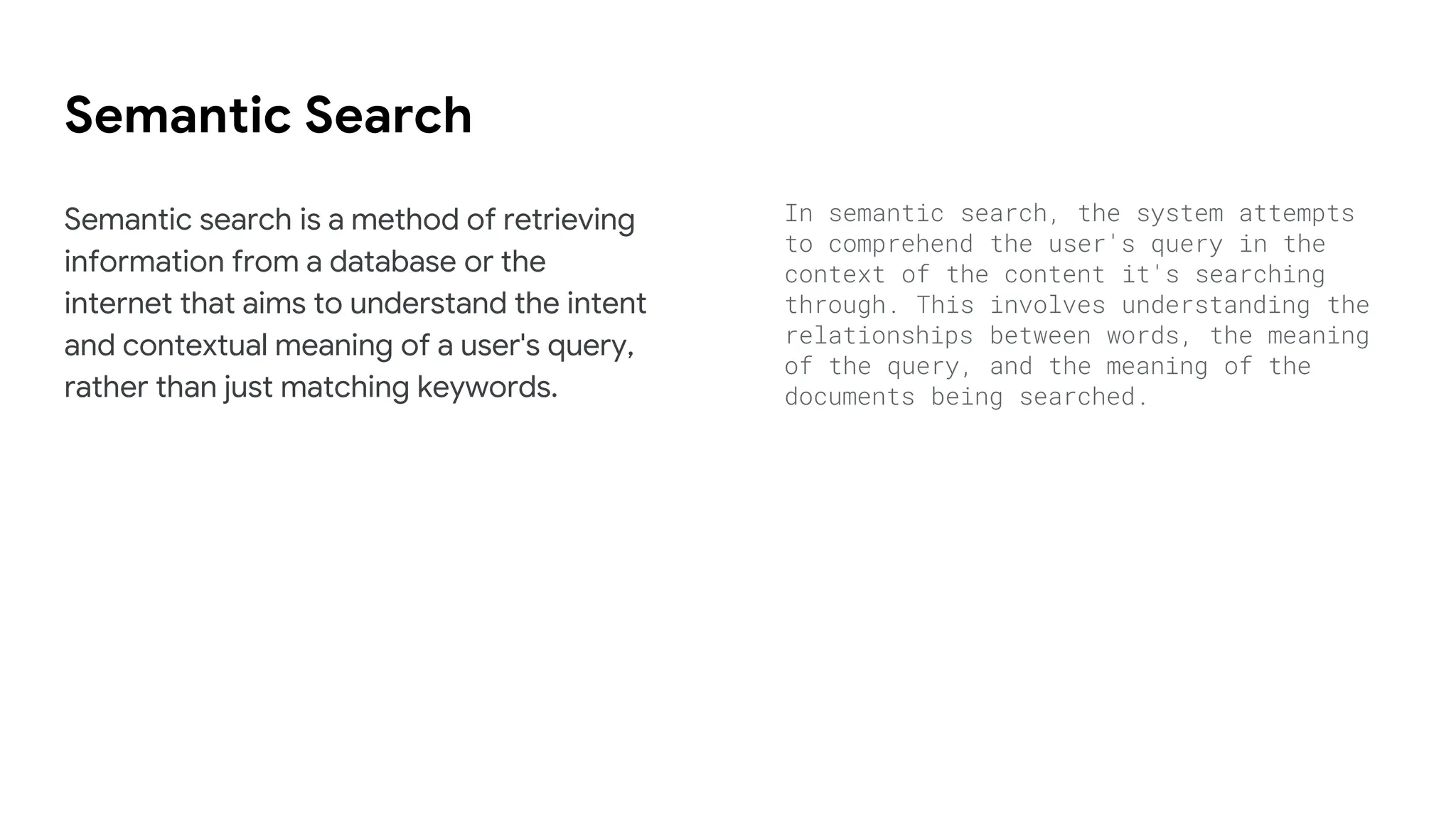
Semantic search is a method of retrieving
information from a database or the
internet that aims to understand the intent
and contextual meaning of a user's query,
rather than just matching keywords.
In semantic search, the system attempts
to comprehend the user's query in the
context of the content it's searching
through. This involves understanding the
relationships between words, the meaning
of the query, and the meaning of the
documents being searched.
Semantic Search
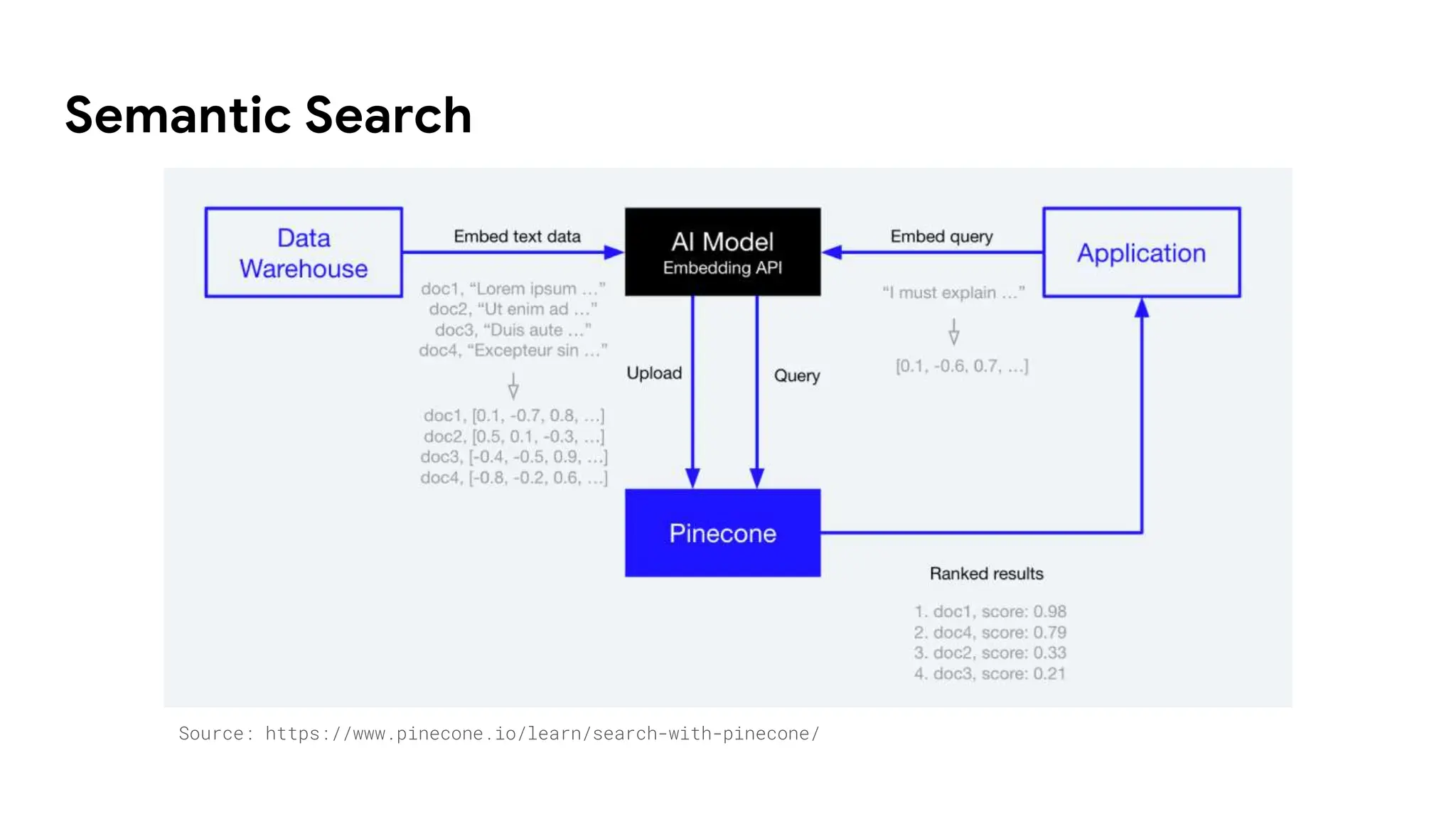
Source: https://www.pinecone.io/learn/search-with-pinecone/
Tools
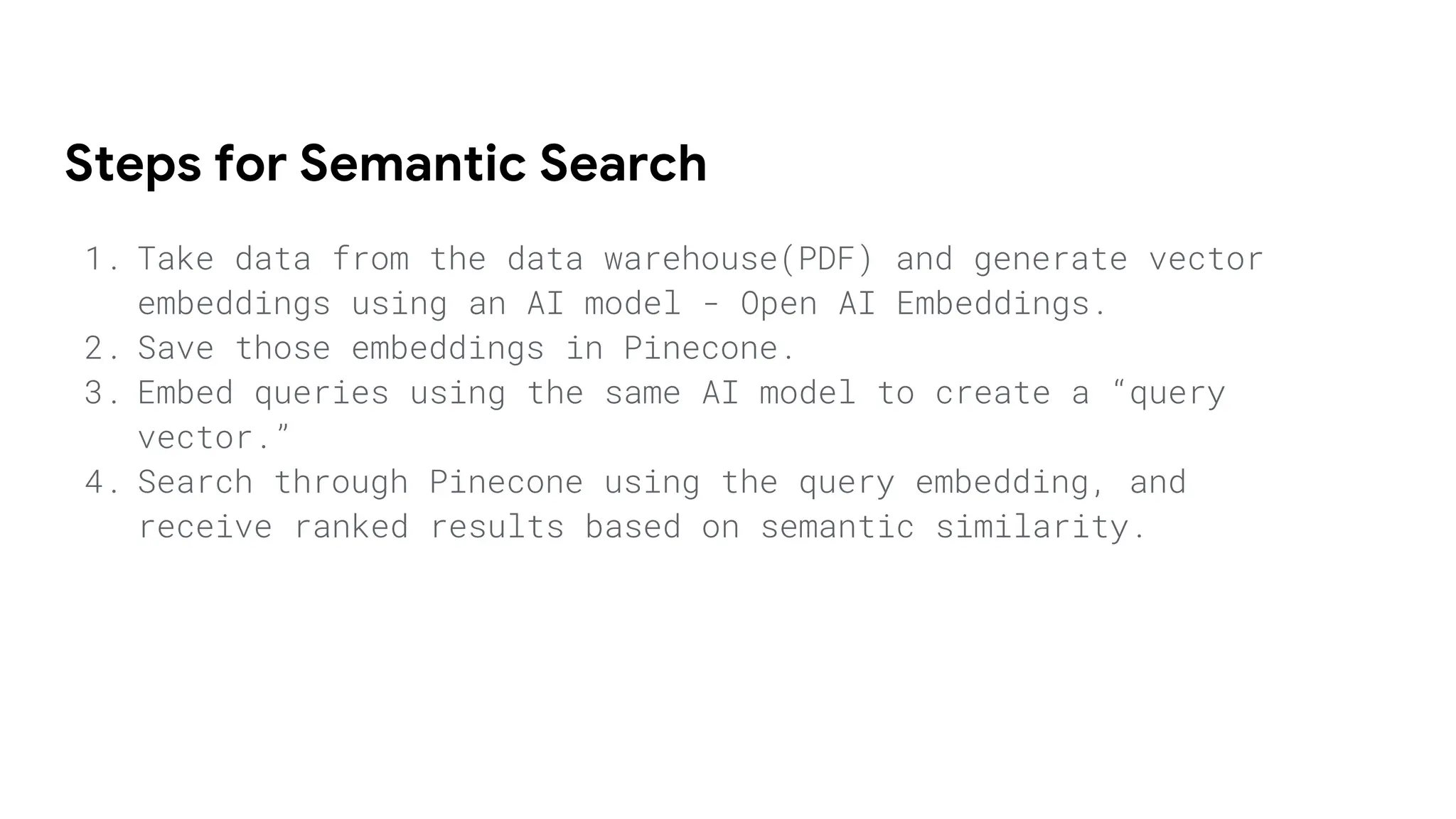
Steps for Semantic Search
1. Take data from the data warehouse(PDF) and generate vector
embeddings using an AI model - Open AI Embeddings.
2. Save those embeddings in Pinecone.
3. Embed queries using the same AI model to create a “query
vector.”
4. Search through Pinecone using the query embedding, and
receive ranked results based on semantic similarity.
OpenAI’s text embeddings
measure the relatedness of
text strings
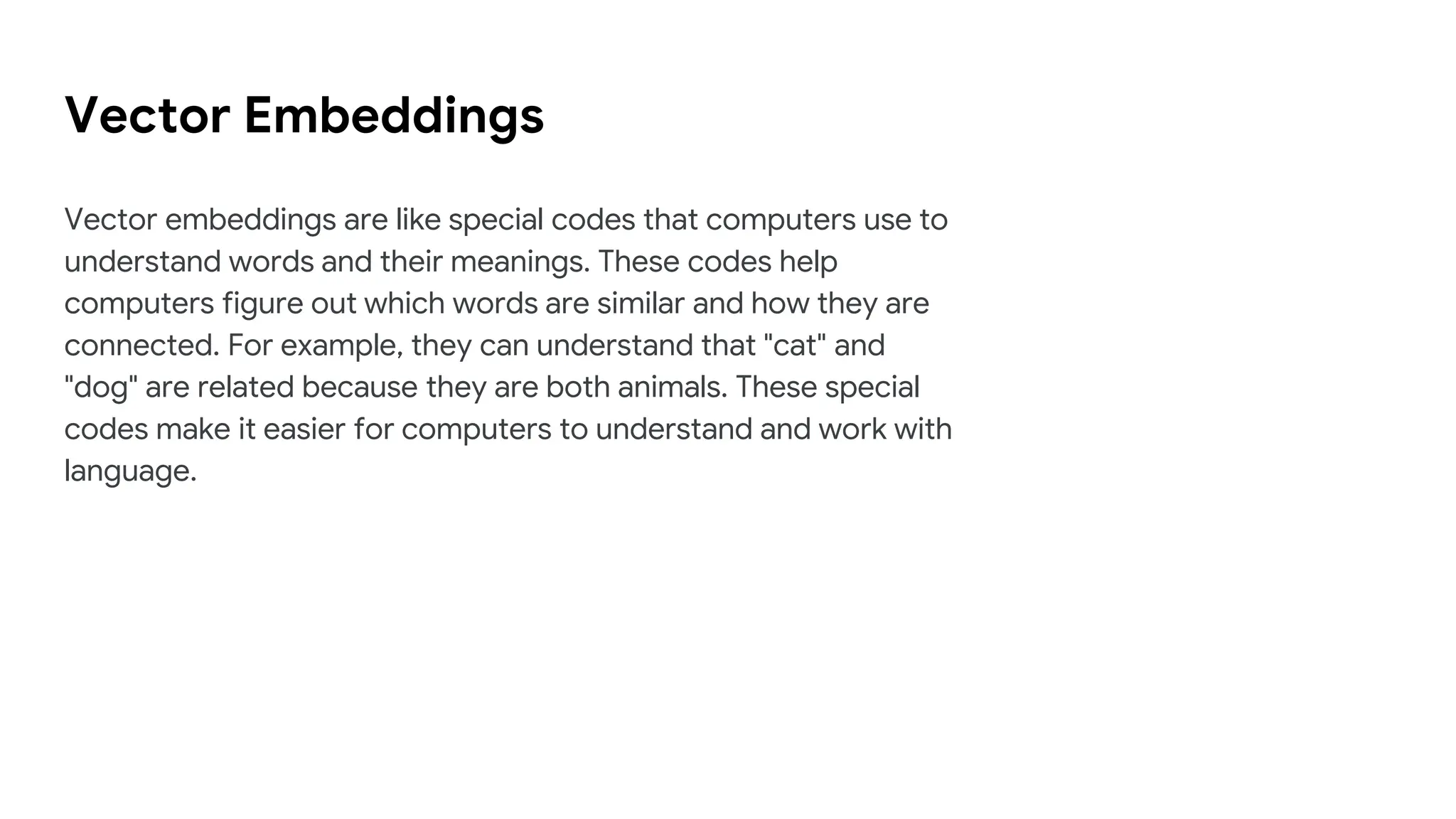
Vector Embeddings
Vector embeddings are like special codes that computers use to
understand words and their meanings. These codes help
computers figure out which words are similar and how they are
connected. For example, they can understand that "cat" and
"dog" are related because they are both animals. These special
codes make it easier for computers to understand and work with
language.
"The key to artificial
intelligence has always
been the representation." -
Jeff Hawkins
Let’s see
some code
Challenges and
considerations
Some Considerations
1. Start with a well-defined problem
2. Choose the right AI model
3. Optimize for mobile devices
4. Continuously update and improve
5. Can it scale?
Resources
https://langchaindart.com/
https://youtube.com/temicodes
Thanks for listening

Integrating AI Functionalities in your Flutter App.pptx

  • 1.
  • 2.
    Who am I? SeniorFlutter Developer, Jesta IS CTO and Cofounder, Fertitude.co 7+ years experience as a Developer. Founder, Code Clan Nigeria. Instructor, Teacher.
  • 3.
    Agenda 1. Why AIin Flutter apps? 2. Key AI Functionalities for Flutter 3. Case Studies - Let’s build. 4. Challenges and Considerations 5. Q and A.
  • 4.
  • 5.
    Flutter is anopen-source UI software development toolkit created by Google, known for its ability to efficiently build natively compiled applications for mobile, web, and desktop from a single codebase.
  • 6.
    Why AI inFlutter app?
  • 7.
    Why AI inFlutter app? Integrating AI into Flutter apps offers benefits such as enhanced user experience through personalization and predictive analytics, increased efficiency via automation and data analysis, improved accessibility for users with disabilities, and a competitive edge in the market with cutting-edge features. 1. Enhanced User Experience 2. Competitive Advantage 3. Automation 4. Improved Accessibility 5. Data Driven insights
  • 8.
  • 9.
    Al Functionalities inFlutter 1. Image Recognition and Processing. - Using packages like TensorFlow Lite or ML Kit 1. Natural Language Processing - Implementing chatbots or sentiment analysis. 1. Voice Recognition and Synthesis - Integrating with packages like Speech to Text and Text to Speech.
  • 10.
  • 11.
    Semantic Search Semantic searchis a method of retrieving information from a database or the internet that aims to understand the intent and contextual meaning of a user's query, rather than just matching keywords. In semantic search, the system attempts to comprehend the user's query in the context of the content it's searching through. This involves understanding the relationships between words, the meaning of the query, and the meaning of the documents being searched.
  • 12.
  • 13.
  • 14.
    Steps for SemanticSearch 1. Take data from the data warehouse(PDF) and generate vector embeddings using an AI model - Open AI Embeddings. 2. Save those embeddings in Pinecone. 3. Embed queries using the same AI model to create a “query vector.” 4. Search through Pinecone using the query embedding, and receive ranked results based on semantic similarity.
  • 15.
    OpenAI’s text embeddings measurethe relatedness of text strings
  • 16.
    Vector Embeddings Vector embeddingsare like special codes that computers use to understand words and their meanings. These codes help computers figure out which words are similar and how they are connected. For example, they can understand that "cat" and "dog" are related because they are both animals. These special codes make it easier for computers to understand and work with language.
  • 17.
    "The key toartificial intelligence has always been the representation." - Jeff Hawkins
  • 18.
  • 19.
  • 20.
    Some Considerations 1. Startwith a well-defined problem 2. Choose the right AI model 3. Optimize for mobile devices 4. Continuously update and improve 5. Can it scale?
  • 21.
  • 22.