I N T R O D U C T I O N
A N D
C O N C L U S I O N
Essay
Introductory and concluding paragraphs
 Introductory and concluding paragraphs function together as the
frame around the argument of your essay.
 It is important to write the introduction and the conclusion in one
sitting, so that they match in mirror image to create a complete
framework.
Introduction – What is it for?
 Introduces the topic of your essay,
 ‘Welcomes’ the reader with a general statement that engages their interest
or that they can agree with,
 Sets the scene for the discussion in the body of the essay,
 Builds up to the thesis statement,
 Prepares the reader for the thesis statement and your argument or case, but
does not introduce points of argument,
 Concludes with the thesis statement.
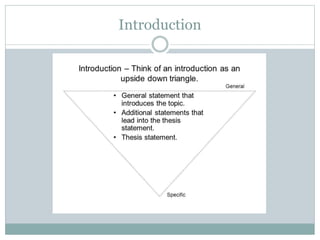
Introduction
EXAMPLE
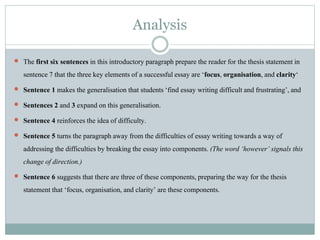
Analysis
 The first six sentences in this introductory paragraphprepare the reader for the thesis statementin
sentence7 that the three key elementsof a successfulessay are ‘focus, organisation, and clarity‘
 Sentence 1 makes the generalisation that students‘find essay writing difficultand frustrating’, and
 Sentences 2 and 3 expand on this generalisation.
 Sentence 4 reinforces the idea of difficulty.
 Sentence 5 turns the paragraphaway from the difficultiesof essay writing towards a way of
addressing the difficulties by breaking the essay into components. (The word ‘however’ signals this
change of direction.)
 Sentence 6 suggests that there are three of these components, preparingthe way for the thesis
statementthat ‘focus, organisation, and clarity’ are these components.
Concluding Paragraph – What is it for?
 The concluding paragraph completes the frame around the essay’s argument,
which was opened in the introductory paragraph.
The conclusion
 Begins by restating the thesis,
 Should be a mirror image of the first paragraph,
 Sums up the essay as a whole,
 Contextualises the argument in a wider scope, but does not introduce new
points,
 Leaves the reader with a sense of completion.
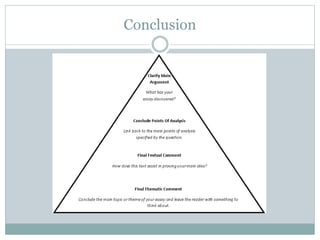
Conclusion
EXAMPLE
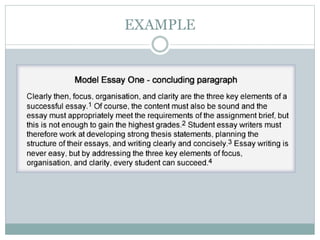
Analysis
 Sentence 1 restates the thesis that focus, organisation, and clarity are the key
elements of a successful essay. The phrase ‘Clearly then’ implies that, having read
the case for focus, organisation, and clarity being identified as the ‘key elements’, the
reader agrees with the thesis.
 Sentence 2 acknowledges the importance of the essay’s content but asserts that
sound content isn’t enough for success.
 Sentence 3 sums up the points made in the middle three paragraphs.
 Sentence 4 restates the generalisation the essay started with – that students find
essay writing difficult – but then ends on a high note with the prediction that
addressing the key elements discussed in the middle paragraphs will ensure success.

Essay intro and conclusion

  • 1.
    I N TR O D U C T I O N A N D C O N C L U S I O N Essay
  • 2.
    Introductory and concludingparagraphs  Introductory and concluding paragraphs function together as the frame around the argument of your essay.  It is important to write the introduction and the conclusion in one sitting, so that they match in mirror image to create a complete framework.
  • 3.
    Introduction – Whatis it for?  Introduces the topic of your essay,  ‘Welcomes’ the reader with a general statement that engages their interest or that they can agree with,  Sets the scene for the discussion in the body of the essay,  Builds up to the thesis statement,  Prepares the reader for the thesis statement and your argument or case, but does not introduce points of argument,  Concludes with the thesis statement.
  • 4.
  • 5.
  • 6.
    Analysis  The firstsix sentences in this introductory paragraphprepare the reader for the thesis statementin sentence7 that the three key elementsof a successfulessay are ‘focus, organisation, and clarity‘  Sentence 1 makes the generalisation that students‘find essay writing difficultand frustrating’, and  Sentences 2 and 3 expand on this generalisation.  Sentence 4 reinforces the idea of difficulty.  Sentence 5 turns the paragraphaway from the difficultiesof essay writing towards a way of addressing the difficulties by breaking the essay into components. (The word ‘however’ signals this change of direction.)  Sentence 6 suggests that there are three of these components, preparingthe way for the thesis statementthat ‘focus, organisation, and clarity’ are these components.
  • 7.
    Concluding Paragraph –What is it for?  The concluding paragraph completes the frame around the essay’s argument, which was opened in the introductory paragraph. The conclusion  Begins by restating the thesis,  Should be a mirror image of the first paragraph,  Sums up the essay as a whole,  Contextualises the argument in a wider scope, but does not introduce new points,  Leaves the reader with a sense of completion.
  • 8.
  • 9.
  • 10.
    Analysis  Sentence 1restates the thesis that focus, organisation, and clarity are the key elements of a successful essay. The phrase ‘Clearly then’ implies that, having read the case for focus, organisation, and clarity being identified as the ‘key elements’, the reader agrees with the thesis.  Sentence 2 acknowledges the importance of the essay’s content but asserts that sound content isn’t enough for success.  Sentence 3 sums up the points made in the middle three paragraphs.  Sentence 4 restates the generalisation the essay started with – that students find essay writing difficult – but then ends on a high note with the prediction that addressing the key elements discussed in the middle paragraphs will ensure success.