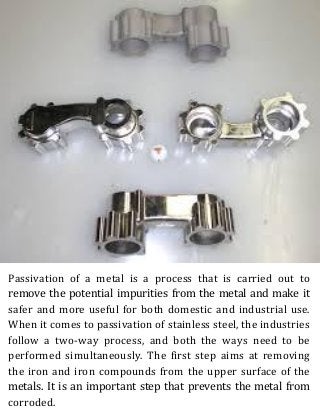
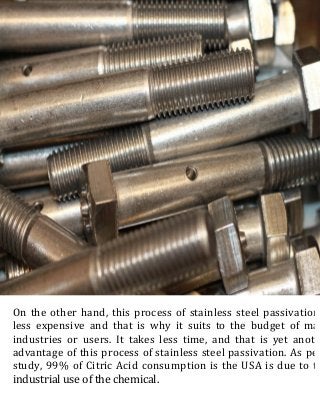
Passivation of a metal is a process that is carried out to remove the potential impurities from the metal and make it safer and more useful for both domestic and industrial use.
Passivation of ametal is a process that is carried out to
remove the potential impurities from the metal and make it
safer and more useful for both domestic and industrial use.
When it comes to passivation of stainless steel, the industries
follow a two-way process, and both the ways need to be
performed simultaneously. The first step aims at removing
the iron and iron compounds from the upper surface of the
metals. It is an important step that prevents the metal from
corroded.
3.
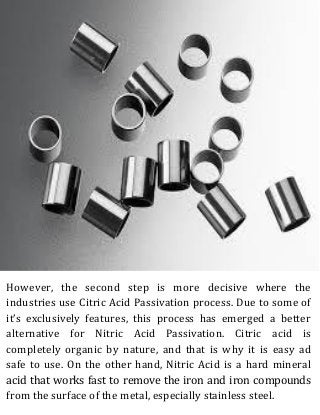
However, the secondstep is more decisive where the
industries use Citric Acid Passivation process. Due to some of
it’s exclusively features, this process has emerged a better
alternative for Nitric Acid Passivation. Citric acid is
completely organic by nature, and that is why it is easy ad
safe to use. On the other hand, Nitric Acid is a hard mineral
acid that works fast to remove the iron and iron compounds
from the surface of the metal, especially stainless steel.
4.
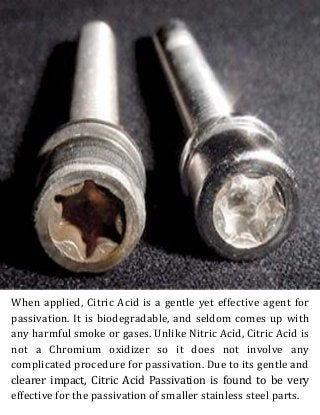
When applied, CitricAcid is a gentle yet effective agent for
passivation. It is biodegradable, and seldom comes up with
any harmful smoke or gases. Unlike Nitric Acid, Citric Acid is
not a Chromium oxidizer so it does not involve any
complicated procedure for passivation. Due to its gentle and
clearer impact, Citric Acid Passivation is found to be very
effective for the passivation of smaller stainless steel parts.
5.
On the otherhand, this process of stainless steel passivation
less expensive and that is why it suits to the budget of man
industries or users. It takes less time, and that is yet anoth
advantage of this process of stainless steel passivation. As per
study, 99% of Citric Acid consumption is the USA is due to th
industrial use of the chemical.