Download to read offline


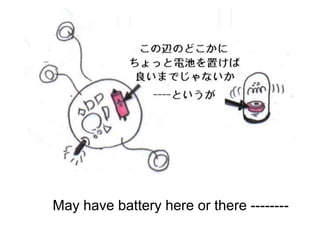
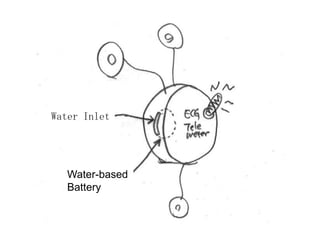
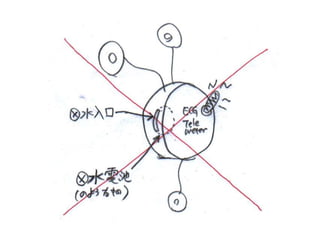











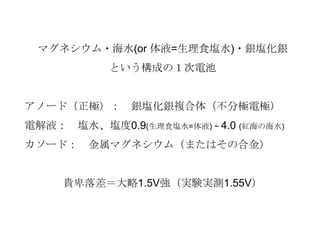
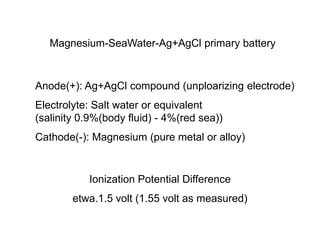

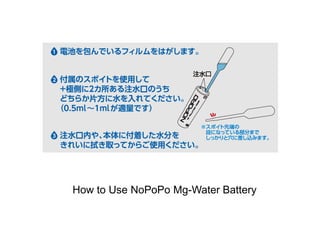
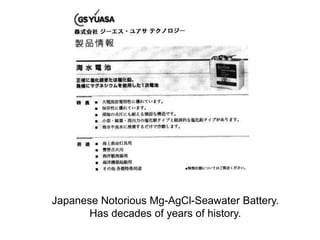
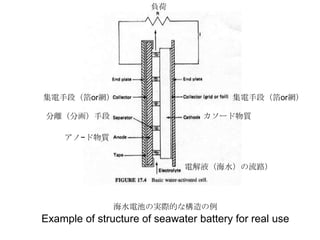
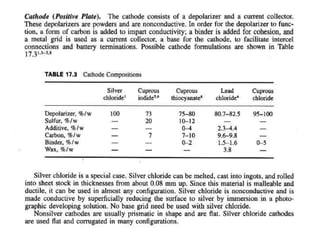
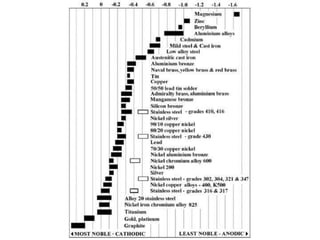
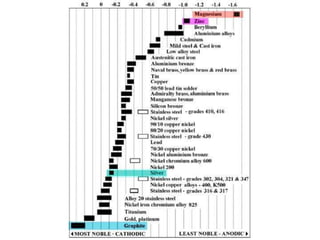
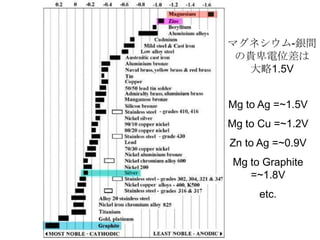
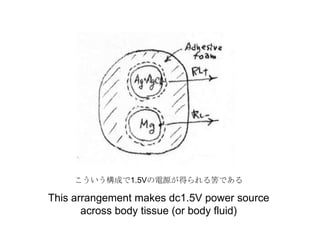
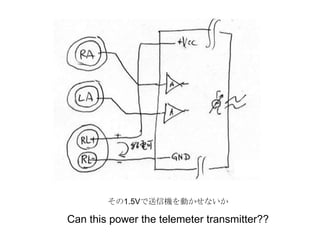
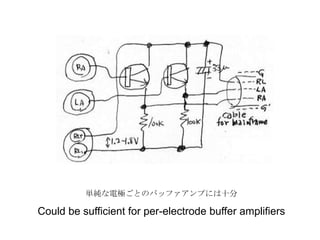
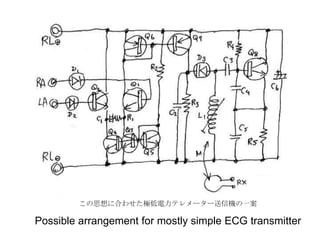
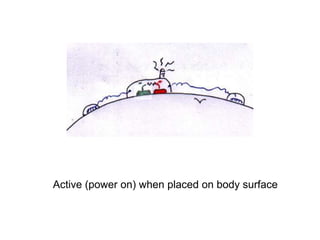
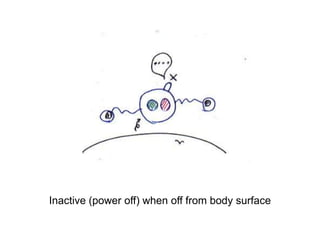
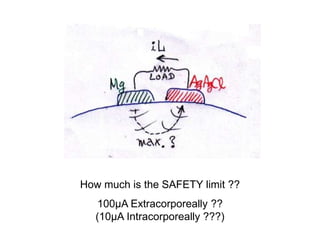
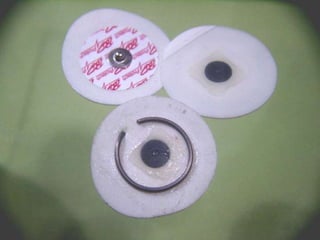
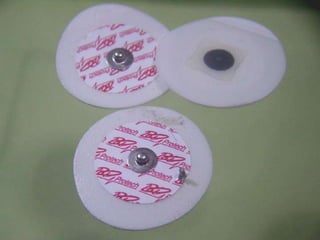
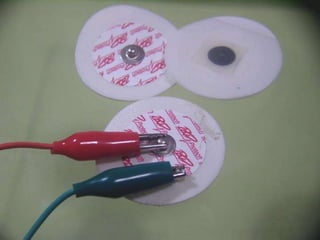
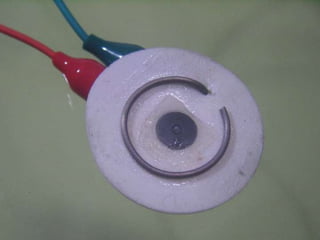
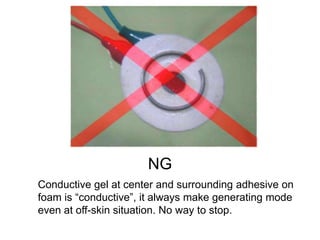
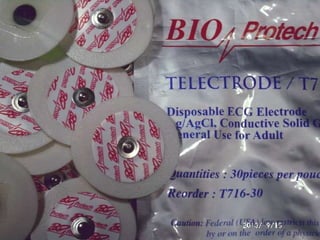
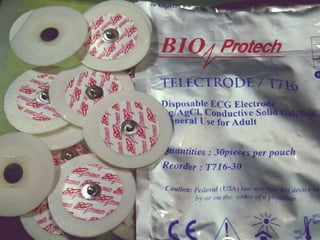
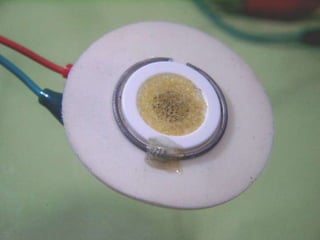
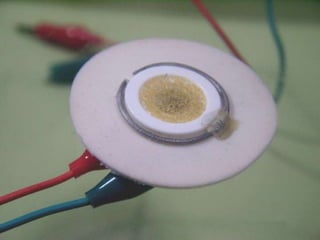
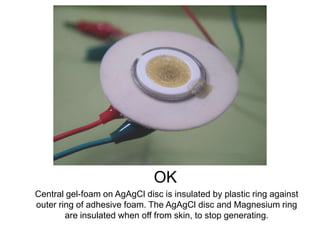
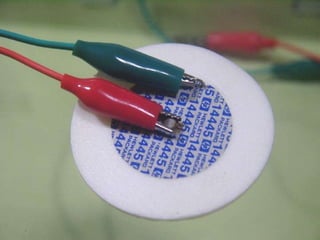
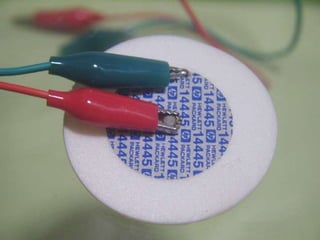
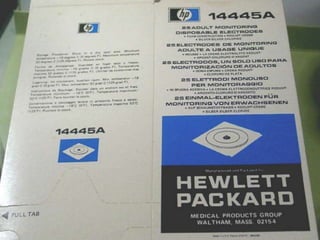
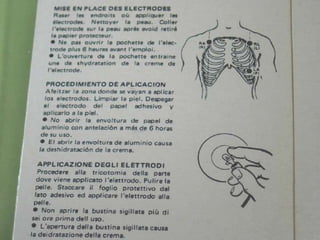
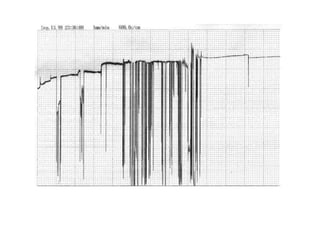
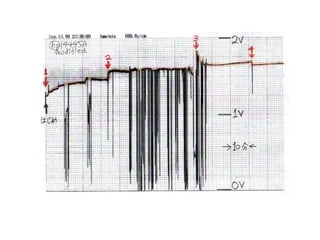
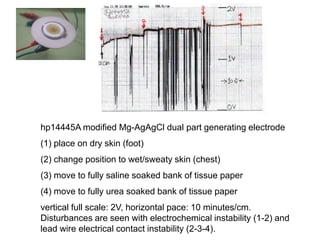
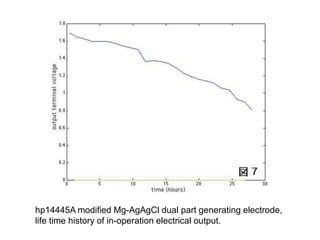
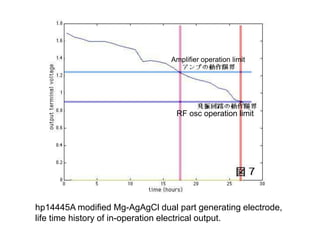
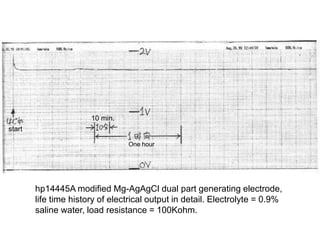
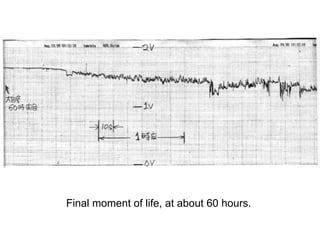
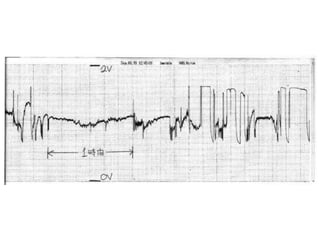
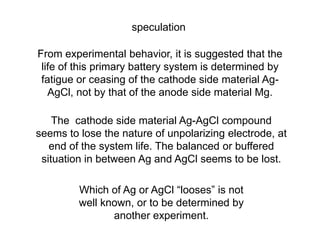
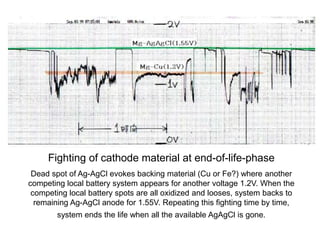
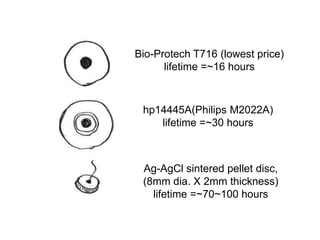
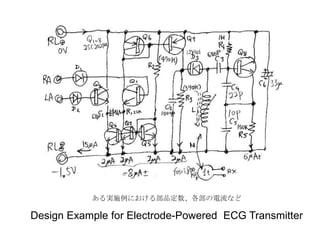
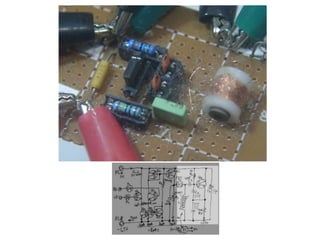
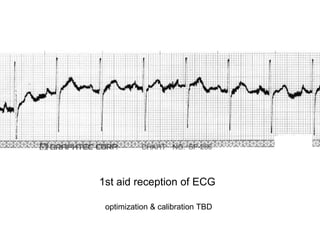
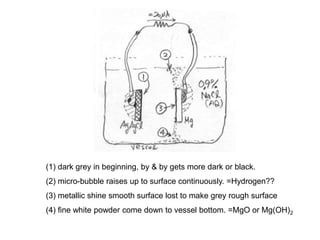
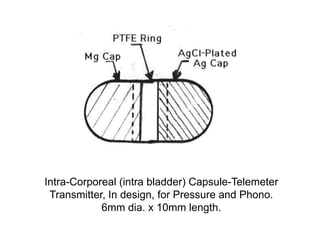
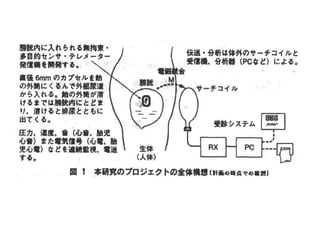
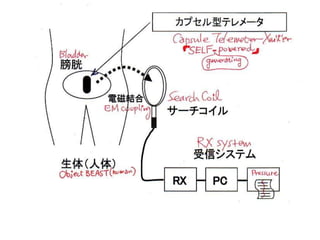
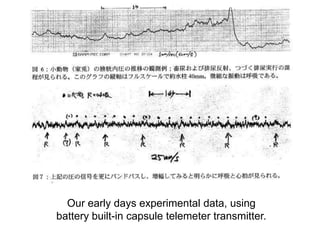
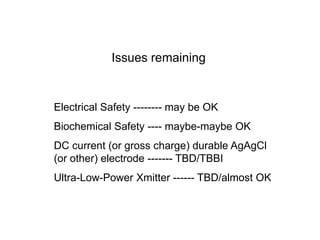




This document describes research into developing bio-signal electrodes that have the capability to generate electrical power through electrochemical processes, with the aim of powering intra-corporeal capsule transmitters. The researchers are developing a magnesium-silver chloride-seawater primary battery that can generate around 1.5 volts of power through interactions between the magnesium anode and silver chloride cathode in a saline electrolyte similar to body fluids. Experimental prototypes have shown the ability to power simple circuits for tens of hours. Further work is needed to improve safety and optimize the design of ultra-low power transmitters that could be powered by such electrodes placed on or inside the body.


