FAIRsharing and the FAIR Cookbook:
Helping you choose and use metadata standards
Susanna-Assunta Sansone, PhD
Group: datareadiness.eng.ox.ac.uk
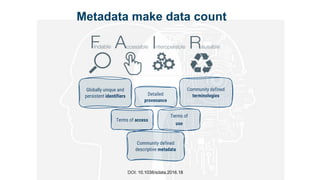
ORCiD: 0000-0001-5306-5690
Twitter: @SusannaASansone
Professor of Data Readiness
Associate Director, Oxford e-Research Centre
ELIXIR
Interoperability Platform Co-Lead
elixir-europe.org
Founding
Academic Editor
nature.com/sdata
What is metadata? Common standards and properties. EHP Workshop, November 9, 2022
Slides: https://www.slideshare.net/SusannaSansone
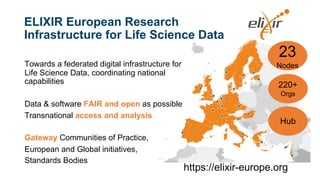
ELIXIR European Research
Infrastructure for Life Science Data
23
Nodes
220+
Orgs
Towards a federated digital infrastructure for
Life Science Data, coordinating national
capabilities
Data & software FAIR and open as possible
Transnational access and analysis
Gateway Communities of Practice,
European and Global initiatives,
Standards Bodies
Hub
https://elixir-europe.org
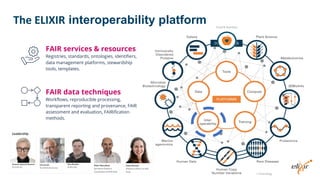
The ELIXIR interoperability platform Food & Nutrition
+ Toxicology
FAIR services & resources
Registries, standards, ontologies, identifiers,
data management platforms, stewardship
tools, templates.
FAIR data techniques
Workflows, reproducible processing,
transparent reporting and provenance, FAIR
assessment and evaluation, FAIRification
methods.
Globally unique and
persistent identifiers
Community defined
descriptive metadata
Community defined
terminologies
Detailed
provenance
Terms of access
Terms of
use
Metadata make data count
DOI: 10.1038/sdata.2016.18
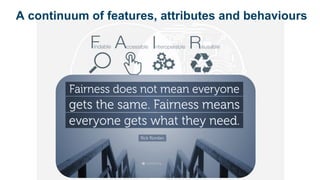
Globally unique and
persistent identifiers
Community defined
descriptive metadata
Community defined
terminologies
Detailed
provenance
Terms of access
Terms of
use
DOI: 10.1038/sdata.2016.18
A continuum of features, attributes and behaviours
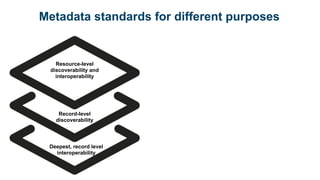
Record-level
discoverability
Resource-level
discoverability and
interoperability
Deepest, record level
interoperability
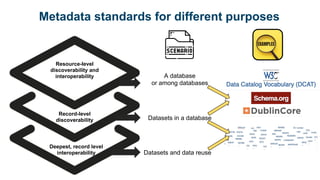
Metadata standards for different purposes
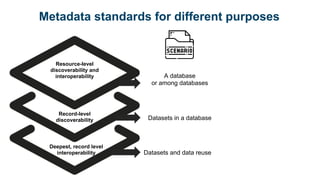
Record-level
discoverability
Resource-level
discoverability and
interoperability
Deepest, record level
interoperability
Metadata standards for different purposes
A database
or among databases
Datasets in a database
Datasets and data reuse
Record-level
discoverability
Resource-level
discoverability and
interoperability
Deepest, record level
interoperability
Metadata standards for different purposes
A database
or among databases
Datasets in a database
Datasets and data reuse
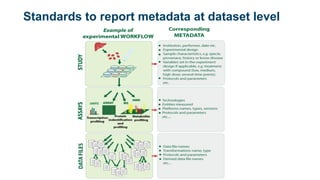
Standards to report metadata at dataset level
Identifiers
Terminologies Guidelines
Formats
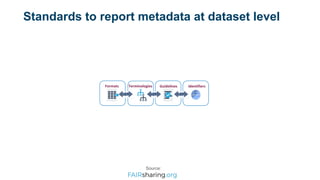
Standards to report metadata at dataset level
Source:
Identifiers
Terminologies Guidelines
Formats
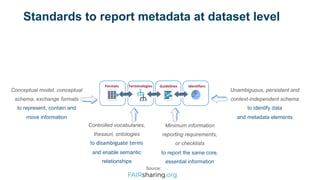
Conceptual model, conceptual
schema, exchange formats
to represent, contain and
move information
Controlled vocabularies,
thesauri, ontologies
to disambiguate terms
and enable semantic
relationships
Minimum information
reporting requirements,
or checklists
to report the same core,
essential information
Unambiguous, persistent and
context-independent schema
to identify data
and metadata elements
Standards to report metadata at dataset level
Source:
Identifiers
Terminologies Guidelines
Formats
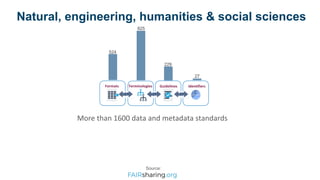
Natural, engineering, humanities & social sciences
825
524
229
27
More than 1600 data and metadata standards
Source:
MIAME
MIRIAM
MIQAS
MIX
MIGEN
ARRIVE
…
MIAPE
MIASE
…
MISFISHIE
….
REMARK
CONSORT
SRAxml
SDTM FASTA
DICOM
OMOP
…
SBRML
SEDML
…
CDASH
ISA CML
MITAB
…
AAO
CHEBI
OBI
PATO ENVO
MOD
BTO
IDO
…
TEDDY
PRO
…
XAO
DO
…
VO EC number
URL PURL
LSID
Handle
ORCID
RRID
…
InChI
…
IVOA ID
…
DOI
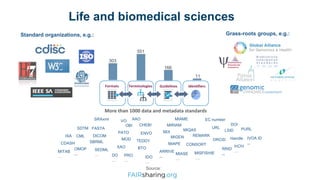
Standard organizations, e.g.: Grass-roots groups, e.g.:
Life and biomedical sciences
Identifiers
Terminologies Guidelines
Formats
551
303
166
11
More than 1000 data and metadata standards
Source:
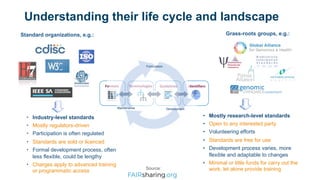
Standard organizations, e.g.: Grass-roots groups, e.g.:
• Industry-level standards
• Mostly regulators-driven
• Participation is often regulated
• Standards are sold or licenced
• Formal development process, often
less flexible, could be lengthy
• Charges apply to advanced training
or programmatic access
• Mostly research-level standards
• Open to any interested party
• Volunteering efforts
• Standards are free for use
• Development process varies, more
flexible and adaptable to changes
• Minimal or little funds for carry out the
work, let alone provide training
Understanding their life cycle and landscape
Identifiers
Terminologies Guidelines
Formats
Source:
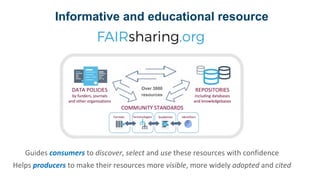
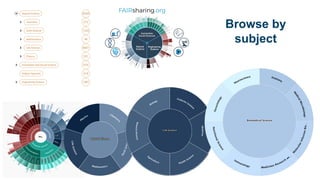
Guides consumers to discover, select and use these resources with confidence
Helps producers to make their resources more visible, more widely adopted and cited
Over 3800
resources
Informative and educational resource
Browse by
subject
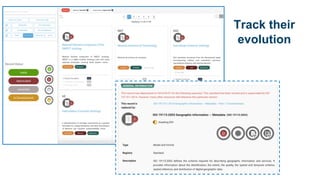
Track their
evolution
URL: https://fairsharing.org/3533
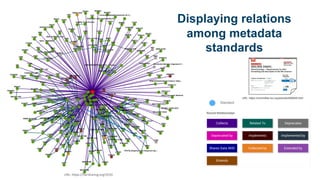
Displaying relations
among metadata
standards
URL: https://committee.iso.org/standard/68848.html
Translational Medicine
Clinical Developments
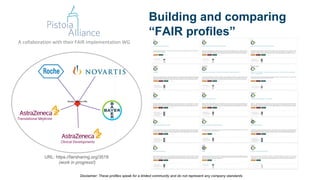
URL: https://fairsharing.org/3519
(work in progress!)
A collaboration with their FAIR Implementation WG
Disclaimer: These profiles speak for a limited community and do not represent any company standards
Building and comparing
“FAIR profiles”
Clinical Developments
Disclaimer: These profiles speak for a limited community and do not represent any company standards
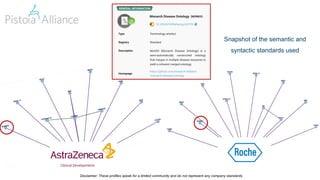
Snapshot of the semantic and
syntactic standards used
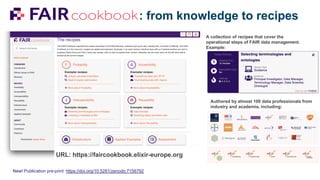
: from knowledge to recipes
URL: https://faircookbook.elixir-europe.org
Authored by almost 100 data professionals from
industry and academia, including:
A collection of recipes that cover the
operational steps of FAIR data management.
Example:
New! Publication pre-print: https://doi.org/10.5281/zenodo.7156792
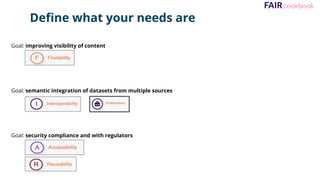
Define what your needs are
Goal: improving visibility of content
Goal: semantic integration of datasets from multiple sources
Goal: security compliance and with regulators
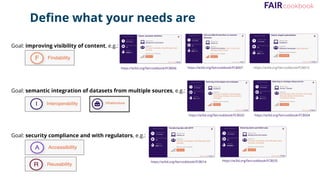
Define what your needs are
Goal: improving visibility of content, e.g.:
Goal: semantic integration of datasets from multiple sources, e.g.:
Goal: security compliance and with regulators, e.g.:
https://w3id.org/faircookbook/FCB010
https://w3id.org/faircookbook/FCB007
https://w3id.org/faircookbook/FCB006
https://w3id.org/faircookbook/FCB020 https://w3id.org/faircookbook/FCB004
https://w3id.org/faircookbook/FCB014 https://w3id.org/faircookbook/FCB035
24
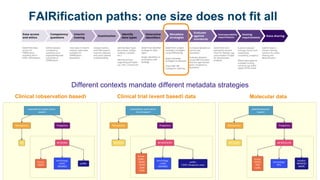
Different contexts mandate different metadata strategies
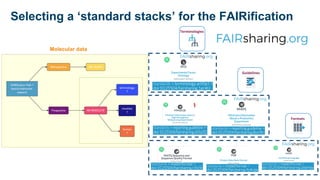
Molecular data
Clinical (observation based)
data
Clinical trial (event based) data
FAIRification paths: one size does not fit all
Molecular data
Selecting a ‘standard stacks’ for the FAIRification
Terminologies
Guidelines
Formats
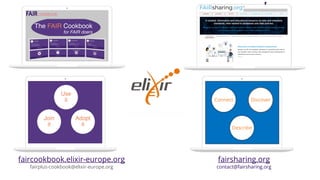
faircookbook.elixir-europe.org
fairplus-cookbook@elixir-europe.org
Connect Discover
Describe
fairsharing.org
contact@fairsharing.org

Metadata Standards

  • 1.
    FAIRsharing and theFAIR Cookbook: Helping you choose and use metadata standards Susanna-Assunta Sansone, PhD Group: datareadiness.eng.ox.ac.uk ORCiD: 0000-0001-5306-5690 Twitter: @SusannaASansone Professor of Data Readiness Associate Director, Oxford e-Research Centre ELIXIR Interoperability Platform Co-Lead elixir-europe.org Founding Academic Editor nature.com/sdata What is metadata? Common standards and properties. EHP Workshop, November 9, 2022 Slides: https://www.slideshare.net/SusannaSansone
  • 2.
    ELIXIR European Research Infrastructurefor Life Science Data 23 Nodes 220+ Orgs Towards a federated digital infrastructure for Life Science Data, coordinating national capabilities Data & software FAIR and open as possible Transnational access and analysis Gateway Communities of Practice, European and Global initiatives, Standards Bodies Hub https://elixir-europe.org
  • 3.
    The ELIXIR interoperabilityplatform Food & Nutrition + Toxicology FAIR services & resources Registries, standards, ontologies, identifiers, data management platforms, stewardship tools, templates. FAIR data techniques Workflows, reproducible processing, transparent reporting and provenance, FAIR assessment and evaluation, FAIRification methods.
  • 4.
    Globally unique and persistentidentifiers Community defined descriptive metadata Community defined terminologies Detailed provenance Terms of access Terms of use Metadata make data count DOI: 10.1038/sdata.2016.18
  • 5.
    Globally unique and persistentidentifiers Community defined descriptive metadata Community defined terminologies Detailed provenance Terms of access Terms of use DOI: 10.1038/sdata.2016.18 A continuum of features, attributes and behaviours
  • 6.
    Record-level discoverability Resource-level discoverability and interoperability Deepest, recordlevel interoperability Metadata standards for different purposes
  • 7.
    Record-level discoverability Resource-level discoverability and interoperability Deepest, recordlevel interoperability Metadata standards for different purposes A database or among databases Datasets in a database Datasets and data reuse
  • 8.
    Record-level discoverability Resource-level discoverability and interoperability Deepest, recordlevel interoperability Metadata standards for different purposes A database or among databases Datasets in a database Datasets and data reuse
  • 9.
    Standards to reportmetadata at dataset level
  • 10.
    Identifiers Terminologies Guidelines Formats Standards toreport metadata at dataset level Source:
  • 11.
    Identifiers Terminologies Guidelines Formats Conceptual model,conceptual schema, exchange formats to represent, contain and move information Controlled vocabularies, thesauri, ontologies to disambiguate terms and enable semantic relationships Minimum information reporting requirements, or checklists to report the same core, essential information Unambiguous, persistent and context-independent schema to identify data and metadata elements Standards to report metadata at dataset level Source:
  • 12.
    Identifiers Terminologies Guidelines Formats Natural, engineering,humanities & social sciences 825 524 229 27 More than 1600 data and metadata standards Source:
  • 13.
    MIAME MIRIAM MIQAS MIX MIGEN ARRIVE … MIAPE MIASE … MISFISHIE …. REMARK CONSORT SRAxml SDTM FASTA DICOM OMOP … SBRML SEDML … CDASH ISA CML MITAB … AAO CHEBI OBI PATOENVO MOD BTO IDO … TEDDY PRO … XAO DO … VO EC number URL PURL LSID Handle ORCID RRID … InChI … IVOA ID … DOI Standard organizations, e.g.: Grass-roots groups, e.g.: Life and biomedical sciences Identifiers Terminologies Guidelines Formats 551 303 166 11 More than 1000 data and metadata standards Source:
  • 14.
    Standard organizations, e.g.:Grass-roots groups, e.g.: • Industry-level standards • Mostly regulators-driven • Participation is often regulated • Standards are sold or licenced • Formal development process, often less flexible, could be lengthy • Charges apply to advanced training or programmatic access • Mostly research-level standards • Open to any interested party • Volunteering efforts • Standards are free for use • Development process varies, more flexible and adaptable to changes • Minimal or little funds for carry out the work, let alone provide training Understanding their life cycle and landscape Identifiers Terminologies Guidelines Formats Source:
  • 15.
    Guides consumers todiscover, select and use these resources with confidence Helps producers to make their resources more visible, more widely adopted and cited Over 3800 resources Informative and educational resource
  • 16.
  • 17.
  • 18.
    URL: https://fairsharing.org/3533 Displaying relations amongmetadata standards URL: https://committee.iso.org/standard/68848.html
  • 19.
    Translational Medicine Clinical Developments URL:https://fairsharing.org/3519 (work in progress!) A collaboration with their FAIR Implementation WG Disclaimer: These profiles speak for a limited community and do not represent any company standards Building and comparing “FAIR profiles”
  • 20.
    Clinical Developments Disclaimer: Theseprofiles speak for a limited community and do not represent any company standards Snapshot of the semantic and syntactic standards used
  • 21.
    : from knowledgeto recipes URL: https://faircookbook.elixir-europe.org Authored by almost 100 data professionals from industry and academia, including: A collection of recipes that cover the operational steps of FAIR data management. Example: New! Publication pre-print: https://doi.org/10.5281/zenodo.7156792
  • 22.
    Define what yourneeds are Goal: improving visibility of content Goal: semantic integration of datasets from multiple sources Goal: security compliance and with regulators
  • 23.
    Define what yourneeds are Goal: improving visibility of content, e.g.: Goal: semantic integration of datasets from multiple sources, e.g.: Goal: security compliance and with regulators, e.g.: https://w3id.org/faircookbook/FCB010 https://w3id.org/faircookbook/FCB007 https://w3id.org/faircookbook/FCB006 https://w3id.org/faircookbook/FCB020 https://w3id.org/faircookbook/FCB004 https://w3id.org/faircookbook/FCB014 https://w3id.org/faircookbook/FCB035
  • 24.
    24 Different contexts mandatedifferent metadata strategies Molecular data Clinical (observation based) data Clinical trial (event based) data FAIRification paths: one size does not fit all
  • 25.
    Molecular data Selecting a‘standard stacks’ for the FAIRification Terminologies Guidelines Formats
  • 26.