DCCS Interim Management View this email in your browser
Orchestrate Success in Your Organization
By Steve Selzer
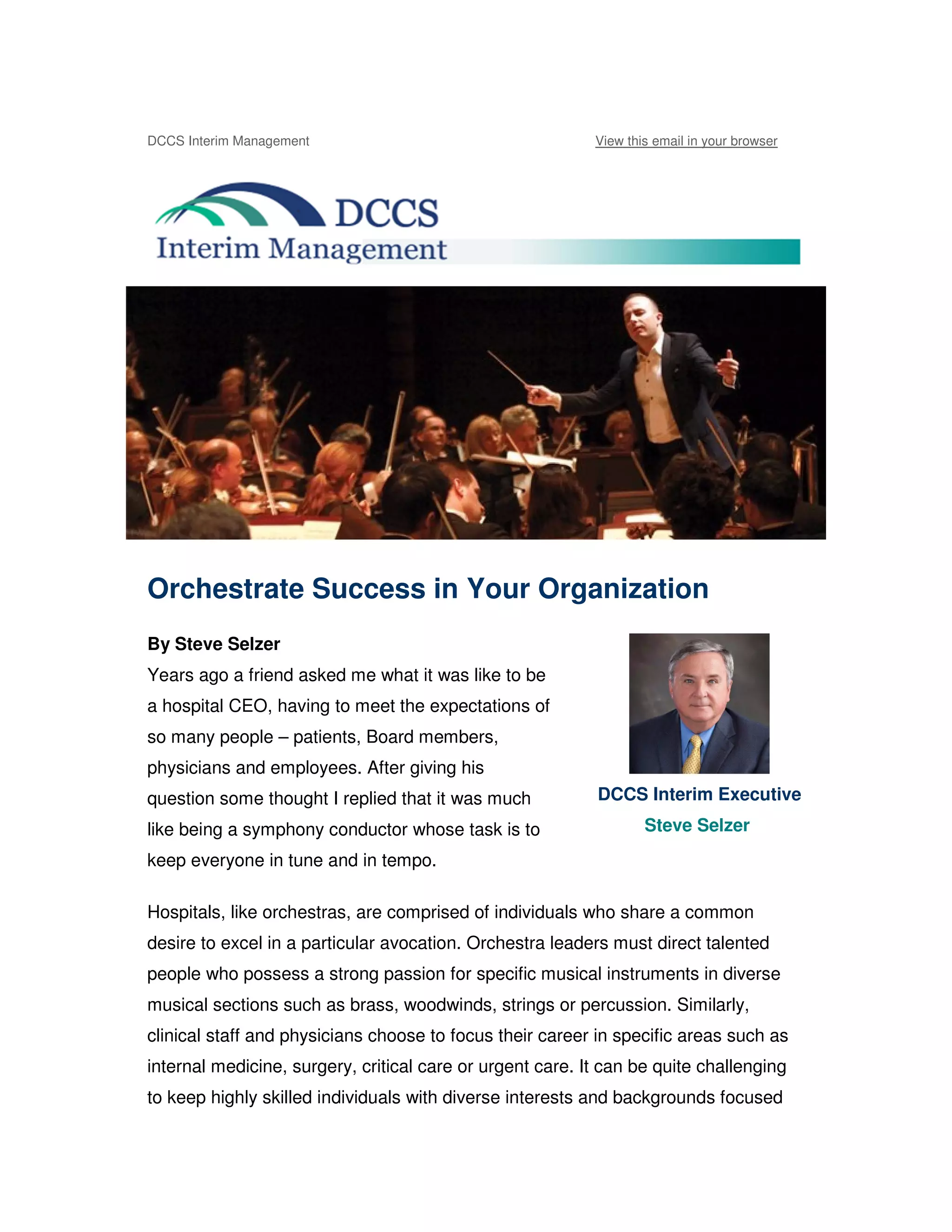
Years ago a friend asked me what it was like to be
a hospital CEO, having to meet the expectations of
so many people – patients, Board members,
physicians and employees. After giving his
question some thought I replied that it was much
like being a symphony conductor whose task is to
keep everyone in tune and in tempo.
DCCS Interim Executive
Steve Selzer
Hospitals, like orchestras, are comprised of individuals who share a common
desire to excel in a particular avocation. Orchestra leaders must direct talented
people who possess a strong passion for specific musical instruments in diverse
musical sections such as brass, woodwinds, strings or percussion. Similarly,
clinical staff and physicians choose to focus their career in specific areas such as
internal medicine, surgery, critical care or urgent care. It can be quite challenging
to keep highly skilled individuals with diverse interests and backgrounds focused
beyond their particular area of interest and attentive to a broader organizational
goal.
As an Interim CEO I often walk into hospitals where the CEO
became lost or confused during the never ending task of leading
a hospital. The telltale signs of this often begin with the CEO
withdrawing into his or her office, losing touch with one or more
groups, all of whom are vital to the hospital’s success. I frequently find hospitals
that are out of tune and off tempo in some but not all areas. This discrepancy, no
matter how minor, can have a profound impact on the hospital’s overall
performance.
So, how does a CEO keep the organization in tune and on course?
• Make sure your stakeholders, board, medical staff and employees know the
organization’s mission statement, its vision and its values along with the
year’s quality, patient safety, operational and financial goals. More
importantly, each needs to understand their role in meeting those goals.
• Develop strong leadership within stakeholder groups to demonstrate
commitment to the hospital’s mission and goals reaches beyond the CEO’s
office. These leaders can be very effective in communicating a common
message throughout the organization.
• Remember to celebrate success along the way and take a personal, active
interest in areas having difficulty.
• Regular contact with stakeholders through routine rounding, standing
meetings and town hall sessions provide opportunities to share current
feedback to all of those looking to the CEO as the hospital’s leader.
• Make necessary corrections in real time rather than monthly or quarterly
intervals or at annual performance reviews. Do not shy away from having
what I know can be difficult discussions with sub optimal performers or
those having an adverse impact within the organization.
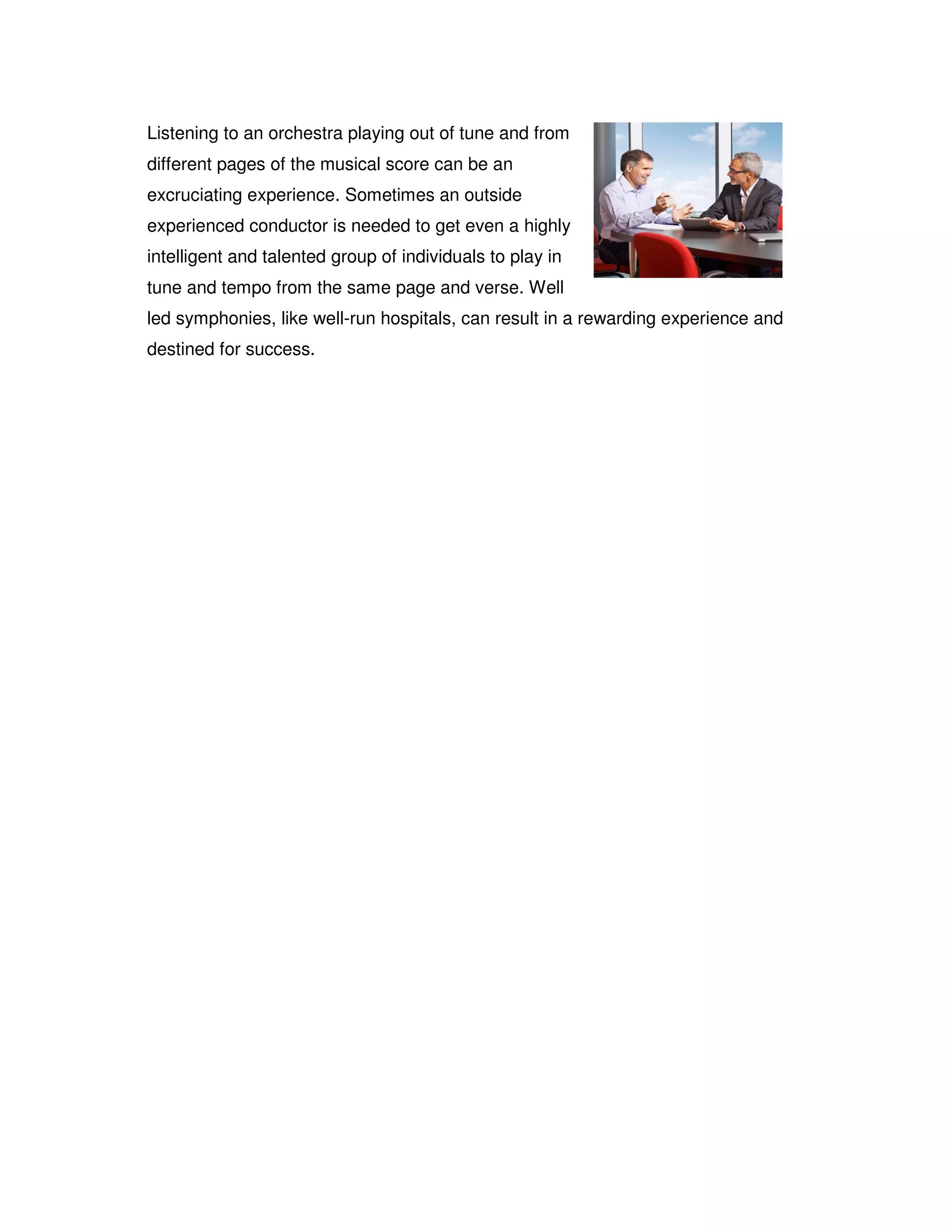
Listening to an orchestra playing out of tune and from
different pages of the musical score can be an
excruciating experience. Sometimes an outside
experienced conductor is needed to get even a highly
intelligent and talented group of individuals to play in
tune and tempo from the same page and verse. Well
led symphonies, like well-run hospitals, can result in a rewarding experience and
destined for success.

srs_DCCSArticle2

  • 1.
    DCCS Interim ManagementView this email in your browser Orchestrate Success in Your Organization By Steve Selzer Years ago a friend asked me what it was like to be a hospital CEO, having to meet the expectations of so many people – patients, Board members, physicians and employees. After giving his question some thought I replied that it was much like being a symphony conductor whose task is to keep everyone in tune and in tempo. DCCS Interim Executive Steve Selzer Hospitals, like orchestras, are comprised of individuals who share a common desire to excel in a particular avocation. Orchestra leaders must direct talented people who possess a strong passion for specific musical instruments in diverse musical sections such as brass, woodwinds, strings or percussion. Similarly, clinical staff and physicians choose to focus their career in specific areas such as internal medicine, surgery, critical care or urgent care. It can be quite challenging to keep highly skilled individuals with diverse interests and backgrounds focused
  • 2.
    beyond their particulararea of interest and attentive to a broader organizational goal. As an Interim CEO I often walk into hospitals where the CEO became lost or confused during the never ending task of leading a hospital. The telltale signs of this often begin with the CEO withdrawing into his or her office, losing touch with one or more groups, all of whom are vital to the hospital’s success. I frequently find hospitals that are out of tune and off tempo in some but not all areas. This discrepancy, no matter how minor, can have a profound impact on the hospital’s overall performance. So, how does a CEO keep the organization in tune and on course? • Make sure your stakeholders, board, medical staff and employees know the organization’s mission statement, its vision and its values along with the year’s quality, patient safety, operational and financial goals. More importantly, each needs to understand their role in meeting those goals. • Develop strong leadership within stakeholder groups to demonstrate commitment to the hospital’s mission and goals reaches beyond the CEO’s office. These leaders can be very effective in communicating a common message throughout the organization. • Remember to celebrate success along the way and take a personal, active interest in areas having difficulty. • Regular contact with stakeholders through routine rounding, standing meetings and town hall sessions provide opportunities to share current feedback to all of those looking to the CEO as the hospital’s leader. • Make necessary corrections in real time rather than monthly or quarterly intervals or at annual performance reviews. Do not shy away from having what I know can be difficult discussions with sub optimal performers or those having an adverse impact within the organization.
  • 3.
    Listening to anorchestra playing out of tune and from different pages of the musical score can be an excruciating experience. Sometimes an outside experienced conductor is needed to get even a highly intelligent and talented group of individuals to play in tune and tempo from the same page and verse. Well led symphonies, like well-run hospitals, can result in a rewarding experience and destined for success.