Chapter 2: Central Banking
Meaning
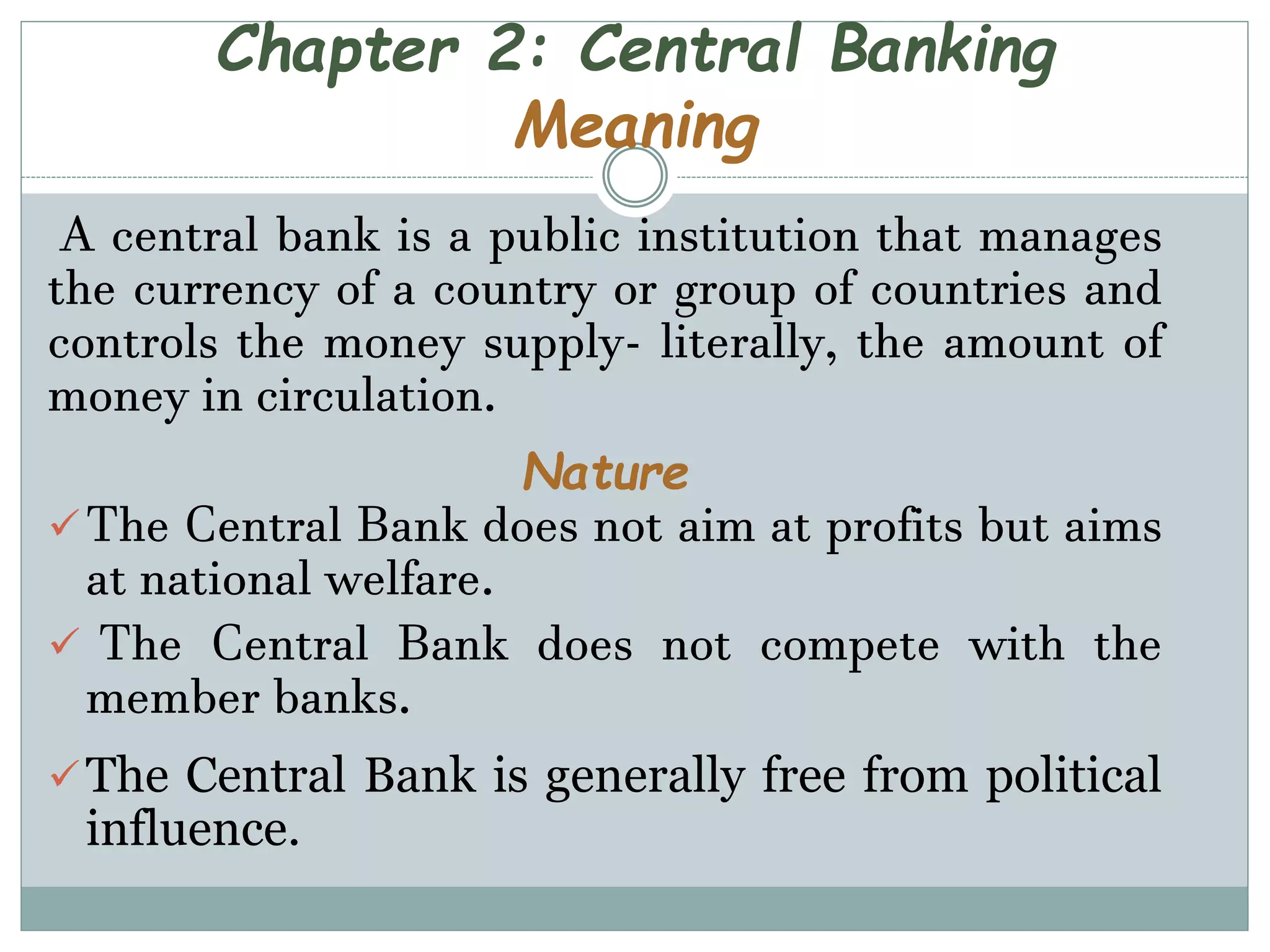
A central bank is a public institution that manages
the currency of a country or group of countries and
controls the money supply- literally, the amount of
money in circulation.
Nature
๏ƒผThe Central Bank does not aim at profits but aims
at national welfare.
๏ƒผ The Central Bank does not compete with the
member banks.
๏ƒผThe Central Bank is generally free from political
influence.
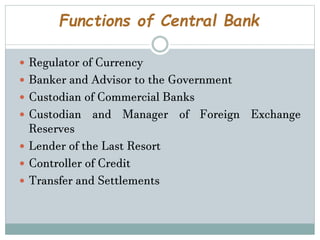
Functions of Central Bank
๏‚— Regulator of Currency
๏‚— Banker and Advisor to the Government
๏‚— Custodian of Commercial Banks
๏‚— Custodian and Manager of Foreign Exchange
Reserves
๏‚— Lender of the Last Resort
๏‚— Controller of Credit
๏‚— Transfer and Settlements
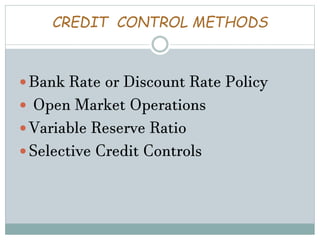
CREDIT CONTROL METHODS
๏‚— Bank Rate or Discount Rate Policy
๏‚— Open Market Operations
๏‚— Variable Reserve Ratio
๏‚— Selective Credit Controls
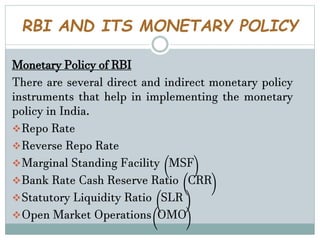
RBI AND ITS MONETARY POLICY
Monetary Policy of RBI
There are several direct and indirect monetary policy
instruments that help in implementing the monetary
policy in India.
๏ถRepo Rate
๏ถReverse Repo Rate
๏ถMarginal Standing Facility (MSF)
๏ถBank Rate Cash Reserve Ratio (CRR)
๏ถStatutory Liquidity Ratio (SLR )
๏ถOpen Market Operations(OMO)
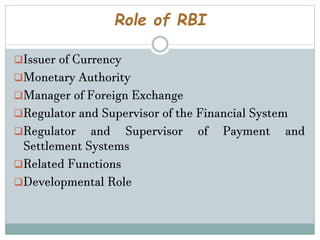
Role of RBI
๏ฑIssuer of Currency
๏ฑMonetary Authority
๏ฑManager of Foreign Exchange
๏ฑRegulator and Supervisor of the Financial System
๏ฑRegulator and Supervisor of Payment and
Settlement Systems
๏ฑRelated Functions
๏ฑDevelopmental Role
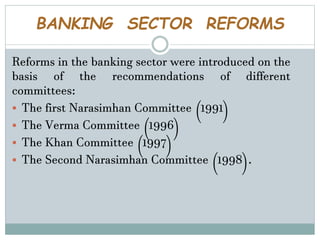
BANKING SECTOR REFORMS
Reforms in the banking sector were introduced on the
basis of the recommendations of different
committees:
๏‚ง The first Narasimhan Committee (1991)
๏‚ง The Verma Committee (1996)
๏‚ง The Khan Committee (1997)
๏‚ง The Second Narasimhan Committee (1998).
References
๏‚— https://centralbankofindia.co.in/en
๏‚— https://www.investopedia.com/terms/c/centralba
nk.asp
๏‚— https://inb.centralbank.net.in/#/
๏‚— https://www.yourarticlelibrary.com/banking/imp
ortant-methods-adapted-by-rbi-to-control-credit-
creation/23490
๏‚— rbi.org.in

Central Banking

  • 1.
    Chapter 2: CentralBanking Meaning A central bank is a public institution that manages the currency of a country or group of countries and controls the money supply- literally, the amount of money in circulation. Nature ๏ƒผThe Central Bank does not aim at profits but aims at national welfare. ๏ƒผ The Central Bank does not compete with the member banks. ๏ƒผThe Central Bank is generally free from political influence.
  • 2.
    Functions of CentralBank ๏‚— Regulator of Currency ๏‚— Banker and Advisor to the Government ๏‚— Custodian of Commercial Banks ๏‚— Custodian and Manager of Foreign Exchange Reserves ๏‚— Lender of the Last Resort ๏‚— Controller of Credit ๏‚— Transfer and Settlements
  • 3.
    CREDIT CONTROL METHODS ๏‚—Bank Rate or Discount Rate Policy ๏‚— Open Market Operations ๏‚— Variable Reserve Ratio ๏‚— Selective Credit Controls
  • 4.
    RBI AND ITSMONETARY POLICY Monetary Policy of RBI There are several direct and indirect monetary policy instruments that help in implementing the monetary policy in India. ๏ถRepo Rate ๏ถReverse Repo Rate ๏ถMarginal Standing Facility (MSF) ๏ถBank Rate Cash Reserve Ratio (CRR) ๏ถStatutory Liquidity Ratio (SLR ) ๏ถOpen Market Operations(OMO)
  • 5.
    Role of RBI ๏ฑIssuerof Currency ๏ฑMonetary Authority ๏ฑManager of Foreign Exchange ๏ฑRegulator and Supervisor of the Financial System ๏ฑRegulator and Supervisor of Payment and Settlement Systems ๏ฑRelated Functions ๏ฑDevelopmental Role
  • 6.
    BANKING SECTOR REFORMS Reformsin the banking sector were introduced on the basis of the recommendations of different committees: ๏‚ง The first Narasimhan Committee (1991) ๏‚ง The Verma Committee (1996) ๏‚ง The Khan Committee (1997) ๏‚ง The Second Narasimhan Committee (1998).
  • 7.
    References ๏‚— https://centralbankofindia.co.in/en ๏‚— https://www.investopedia.com/terms/c/centralba nk.asp ๏‚—https://inb.centralbank.net.in/#/ ๏‚— https://www.yourarticlelibrary.com/banking/imp ortant-methods-adapted-by-rbi-to-control-credit- creation/23490 ๏‚— rbi.org.in