The
Neo-Classical
Period
English Literature
FKIP-UNIQBU
Neo-Classicism
Neo-classicism was a literary and artistic movement that
lasted from approximately the early 1600s until the late
1700s, and it significantly influenced culture during this
time.
Neo-classicism focused on taking aspects of Ancient
Greek and Roman art and literature and imitating them.
These original Ancient Greek and Roman texts were
called classical works. Neo-classicism reworked these
forms from antiquity for the modern day.
 Neo-classicism differed from the
previous Renaissance period
significantly.
 Neo-classicism also coincided with
the Age of Enlightenment.
Three definable
periods of Neo-
Classical period
The Restoration period
This lasted from the mid-1600s to the early
1700s. The period is particularly marked by
the reign of King Charles II (1630-1685).
The Restoration era can be defined by its
frivolity and relaxing of social rules and
norms. This came as a reaction to the
repressive Puritan era that had come
before under Oliver Cromwell (1599-1658).
The Augustan period
This covered the first half of the
eighteenth century. This period is
named after the Ancient Roman
emperor Augustus (63 BC-14
AD), signalling an Ancient Roman
influence in the art and literature
of the time.
The Age of Johnson
This final period of the neo-classical
movement covered the second half of
the eighteenth century. It was named
after the prolific English writer Samuel
Johnson (1709-1784). The writing of
this time was somewhat less formal
and more progressive than the earlier
neo-classical stages.
Characteristics
of neo-classical
writing
Neo-classical texts tended to have a
strict formal structure
Order and
structure
Discussion of
social issues
In comparison to the previous period
of the Renaissance which focused on
the individual, social issues were
frequently explored in neo-classicism.
Flawed
characters
Renaissance literature viewed humans
as inherently morally good, whereas
neo-classical works saw humans as
much more flawed and nuanced, just
as capable of doing bad as doing good.
A defining feature of neo-classicism is
its borrowing from the works of
Ancient Greece and Rome. Genres,
techniques, and themes were all
taken from this period and used in
neo-classicism in a modern context.
Borrowing
from antiquity
An emphasis on
logic and
rationality
Thematically, neo-classical literature
focused heavily on portraying logical
and sensible viewpoints.
Literary Works
Gulliver's Travels
Jonathan Swift
The story revolves around Lemuel
Gulliver, a surgeon and seafarer, who
travels the world, discovering new
countries and their species. Gulliver
ends up in multiple countries, each
inhabited by different kinds of non-
human creatures.
hmmmm
Any Question?
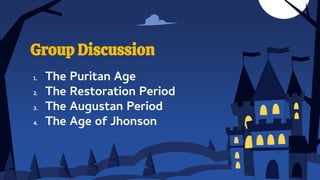
1. The Puritan Age
2. The Restoration Period
3. The Augustan Period
4. The Age of Jhonson
Group Discussion
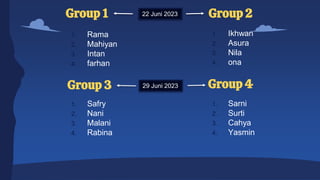
Group 1
1. Rama
2. Mahiyan
3. Intan
4. farhan
Group 2
1. Ikhwan
2. Asura
3. Nila
4. ona
Group 3
1. Safry
2. Nani
3. Malani
4. Rabina
Group 4
1. Sarni
2. Surti
3. Cahya
4. Yasmin
22 Juni 2023
29 Juni 2023

The Neo-classical Period.pptx

  • 1.
  • 2.
    Neo-Classicism Neo-classicism was aliterary and artistic movement that lasted from approximately the early 1600s until the late 1700s, and it significantly influenced culture during this time. Neo-classicism focused on taking aspects of Ancient Greek and Roman art and literature and imitating them. These original Ancient Greek and Roman texts were called classical works. Neo-classicism reworked these forms from antiquity for the modern day.
  • 3.
     Neo-classicism differedfrom the previous Renaissance period significantly.  Neo-classicism also coincided with the Age of Enlightenment.
  • 4.
    Three definable periods ofNeo- Classical period
  • 5.
    The Restoration period Thislasted from the mid-1600s to the early 1700s. The period is particularly marked by the reign of King Charles II (1630-1685). The Restoration era can be defined by its frivolity and relaxing of social rules and norms. This came as a reaction to the repressive Puritan era that had come before under Oliver Cromwell (1599-1658).
  • 6.
    The Augustan period Thiscovered the first half of the eighteenth century. This period is named after the Ancient Roman emperor Augustus (63 BC-14 AD), signalling an Ancient Roman influence in the art and literature of the time.
  • 7.
    The Age ofJohnson This final period of the neo-classical movement covered the second half of the eighteenth century. It was named after the prolific English writer Samuel Johnson (1709-1784). The writing of this time was somewhat less formal and more progressive than the earlier neo-classical stages.
  • 8.
  • 9.
    Neo-classical texts tendedto have a strict formal structure Order and structure Discussion of social issues In comparison to the previous period of the Renaissance which focused on the individual, social issues were frequently explored in neo-classicism. Flawed characters Renaissance literature viewed humans as inherently morally good, whereas neo-classical works saw humans as much more flawed and nuanced, just as capable of doing bad as doing good.
  • 10.
    A defining featureof neo-classicism is its borrowing from the works of Ancient Greece and Rome. Genres, techniques, and themes were all taken from this period and used in neo-classicism in a modern context. Borrowing from antiquity An emphasis on logic and rationality Thematically, neo-classical literature focused heavily on portraying logical and sensible viewpoints.
  • 11.
  • 12.
    Gulliver's Travels Jonathan Swift Thestory revolves around Lemuel Gulliver, a surgeon and seafarer, who travels the world, discovering new countries and their species. Gulliver ends up in multiple countries, each inhabited by different kinds of non- human creatures.
  • 13.
  • 14.
    1. The PuritanAge 2. The Restoration Period 3. The Augustan Period 4. The Age of Jhonson Group Discussion
  • 15.
    Group 1 1. Rama 2.Mahiyan 3. Intan 4. farhan Group 2 1. Ikhwan 2. Asura 3. Nila 4. ona Group 3 1. Safry 2. Nani 3. Malani 4. Rabina Group 4 1. Sarni 2. Surti 3. Cahya 4. Yasmin 22 Juni 2023 29 Juni 2023