1
Introduction to Intellectual Property
Thomas Dickson
August 9, 2011
Types of Intellectual Property
Types of Patents
Patent Rights
When to file a Patent Application
Patent Prosecution Timeline
Introduction to Intellectual
Property
© 2011 Patterson Thuente Christensen Pedersen, P.A., some rights reserved - www.ptslaw.com
RIGHT TO USE: This presentation may be freely distributed, used and/or modified, so long as appropriate attribution is made that includes retention of the firm name in connection
with any materials from this presentation.
DISCLAIMER: This presentation and any information contained herein is intended for informational purposes only and should not be construed as legal advice. Seek competent
legal counsel for advice on any legal matter.
August 9, 2011
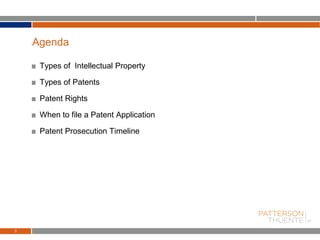
Types of Intellectual Property
Types of Patents
Patent Rights
When to file a Patent Application
Patent Prosecution Timeline
3
Agenda
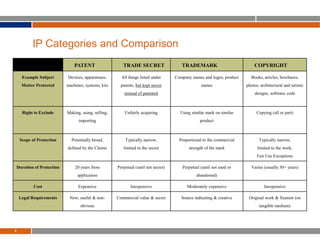
PATENT TRADE SECRET TRADEMARK COPYRIGHT
Example Subject
Matter Protected
Devices, apparatuses,
machines, systems, kits
All things listed under
patents, but kept secret
instead of patented
Company names and logos, product
names
Books, articles, brochures,
photos, architectural and artistic
designs, software code
Right to Exclude Making, using, selling,
importing
Unfairly acquiring Using similar mark on similar
product
Copying (all or part)
Scope of Protection Potentially broad,
defined by the Claims
Typically narrow,
limited to the secret
Proportional to the commercial
strength of the mark
Typically narrow,
limited to the work,
Fair Use Exceptions
Duration of Protection 20 years from
application
Perpetual (until not secret) Perpetual (until not used or
abandoned)
Varies (usually 50+ years)
Cost Expensive Inexpensive Moderately expensive Inexpensive
Legal Requirements New, useful & non-
obvious
Commercial value & secret Source indicating & creative Original work & fixation (on
tangible medium)
IP Categories and Comparison
4
Protects consumers from confusion
If in continuous use, a trademark can last forever
Distinctive sign or indicator of some kind used by an individual, business organization or other legal
entity to uniquely identify the source of its products and/or services to consumers, and to
distinguish its products or services from those of other entities.
Typically a name, word, phrase, logo, symbol, design, image, or combination of these elements.
Trademarks can be regional or national.
“®” means the mark is registered with the USPTO
“™” means you assert rights to the mark
5
Trademarks
Protects creative works of authorship
Must be original and fixed in tangible medium
Does not protect the underlying idea, process, etc.—only the expression
Protected by Federal Copyright Acts
Established at the exact moment author records the work
Lasts for the life of the author plus 70 years
Registration not required to acquire basic rights, but required to bring a
copyright infringement lawsuit
6
Copyright Summary
Trade secret defined:
Information that derives independent economic value by not being readily
ascertainable by competitors
Reasonable efforts to maintain secrecy
Term of protection: As long as it is kept secret
Protect trade secrets by controlling access
7
Trade Secrets
A grant from the U.S. Government to exclude others from:
• Making
• Using
• Selling/offering to sell
• Importing
Protection 20 years from the patent application’s filing date
Alternative to trade secret protection
Rights are territorial, must file in each country for protection
Not a license to use
8
What is a Patent?
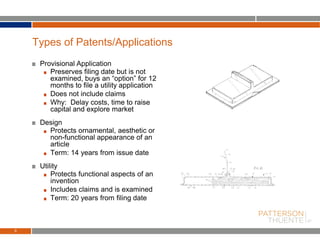
Provisional Application
Preserves filing date but is not
examined, buys an “option” for 12
months to file a utility application
Does not include claims
Why: Delay costs, time to raise
capital and explore market
Design
Protects ornamental, aesthetic or
non-functional appearance of an
article
Term: 14 years from issue date
Utility
Protects functional aspects of an
invention
Includes claims and is examined
Term: 20 years from filing date
9
Types of Patents/Applications
A patent does grant:
Right to exclude others from making, using, selling, offering for sale
Right to sue an infringer for money damages and an injunction
Right to assign or license in exchange for payment
A patent does NOT grant:
Government-enforced monopoly on the invention
Protection from being sued for infringement (may still infringe other’s
patent)
Guarantees (patent may be found invalid or not infringed)
Ability to stop competitive R&D (stops “commercial” activity only)
10
What Rights Does a Patent Grant?
Does your idea address a long, unresolved need?
Is your idea the only solution?
Does your idea result in something that is better, faster, or cheaper?
Is the invention important to your company?
Did your idea produce surprising or unexpected results?
Are other companies likely pursuing parallel development?
11
Considerations in Determining Whether to Seek a Patent
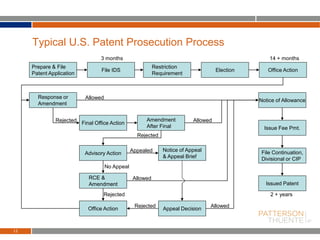
Prepare & File
Patent Application
File IDS
Restriction
Requirement
Election Office Action
Response or
Amendment
Final Office Action
Amendment
After Final
Advisory Action
RCE &
Amendment
Notice of Appeal
& Appeal Brief
Notice of Allowance
Issue Fee Pmt.
File Continuation,
Divisional or CIP
Appeal Decision
Issued Patent
Allowed
Rejected
Rejected
Allowed
Office Action
Appealed
Rejected
Allowed
Rejected Allowed
3 months 14 + months
2 + years
No Appeal
12
Typical U.S. Patent Prosecution Process
Thank You!
Thomas Dickson | dickson@ptslaw.com | 612.349.3004
13

Introduction to Intellectual Property

  • 1.
    1 Introduction to IntellectualProperty Thomas Dickson August 9, 2011 Types of Intellectual Property Types of Patents Patent Rights When to file a Patent Application Patent Prosecution Timeline
  • 2.
    Introduction to Intellectual Property ©2011 Patterson Thuente Christensen Pedersen, P.A., some rights reserved - www.ptslaw.com RIGHT TO USE: This presentation may be freely distributed, used and/or modified, so long as appropriate attribution is made that includes retention of the firm name in connection with any materials from this presentation. DISCLAIMER: This presentation and any information contained herein is intended for informational purposes only and should not be construed as legal advice. Seek competent legal counsel for advice on any legal matter. August 9, 2011
  • 3.
    Types of IntellectualProperty Types of Patents Patent Rights When to file a Patent Application Patent Prosecution Timeline 3 Agenda
  • 4.
    PATENT TRADE SECRETTRADEMARK COPYRIGHT Example Subject Matter Protected Devices, apparatuses, machines, systems, kits All things listed under patents, but kept secret instead of patented Company names and logos, product names Books, articles, brochures, photos, architectural and artistic designs, software code Right to Exclude Making, using, selling, importing Unfairly acquiring Using similar mark on similar product Copying (all or part) Scope of Protection Potentially broad, defined by the Claims Typically narrow, limited to the secret Proportional to the commercial strength of the mark Typically narrow, limited to the work, Fair Use Exceptions Duration of Protection 20 years from application Perpetual (until not secret) Perpetual (until not used or abandoned) Varies (usually 50+ years) Cost Expensive Inexpensive Moderately expensive Inexpensive Legal Requirements New, useful & non- obvious Commercial value & secret Source indicating & creative Original work & fixation (on tangible medium) IP Categories and Comparison 4
  • 5.
    Protects consumers fromconfusion If in continuous use, a trademark can last forever Distinctive sign or indicator of some kind used by an individual, business organization or other legal entity to uniquely identify the source of its products and/or services to consumers, and to distinguish its products or services from those of other entities. Typically a name, word, phrase, logo, symbol, design, image, or combination of these elements. Trademarks can be regional or national. “®” means the mark is registered with the USPTO “™” means you assert rights to the mark 5 Trademarks
  • 6.
    Protects creative worksof authorship Must be original and fixed in tangible medium Does not protect the underlying idea, process, etc.—only the expression Protected by Federal Copyright Acts Established at the exact moment author records the work Lasts for the life of the author plus 70 years Registration not required to acquire basic rights, but required to bring a copyright infringement lawsuit 6 Copyright Summary
  • 7.
    Trade secret defined: Informationthat derives independent economic value by not being readily ascertainable by competitors Reasonable efforts to maintain secrecy Term of protection: As long as it is kept secret Protect trade secrets by controlling access 7 Trade Secrets
  • 8.
    A grant fromthe U.S. Government to exclude others from: • Making • Using • Selling/offering to sell • Importing Protection 20 years from the patent application’s filing date Alternative to trade secret protection Rights are territorial, must file in each country for protection Not a license to use 8 What is a Patent?
  • 9.
    Provisional Application Preserves filingdate but is not examined, buys an “option” for 12 months to file a utility application Does not include claims Why: Delay costs, time to raise capital and explore market Design Protects ornamental, aesthetic or non-functional appearance of an article Term: 14 years from issue date Utility Protects functional aspects of an invention Includes claims and is examined Term: 20 years from filing date 9 Types of Patents/Applications
  • 10.
    A patent doesgrant: Right to exclude others from making, using, selling, offering for sale Right to sue an infringer for money damages and an injunction Right to assign or license in exchange for payment A patent does NOT grant: Government-enforced monopoly on the invention Protection from being sued for infringement (may still infringe other’s patent) Guarantees (patent may be found invalid or not infringed) Ability to stop competitive R&D (stops “commercial” activity only) 10 What Rights Does a Patent Grant?
  • 11.
    Does your ideaaddress a long, unresolved need? Is your idea the only solution? Does your idea result in something that is better, faster, or cheaper? Is the invention important to your company? Did your idea produce surprising or unexpected results? Are other companies likely pursuing parallel development? 11 Considerations in Determining Whether to Seek a Patent
  • 12.
    Prepare & File PatentApplication File IDS Restriction Requirement Election Office Action Response or Amendment Final Office Action Amendment After Final Advisory Action RCE & Amendment Notice of Appeal & Appeal Brief Notice of Allowance Issue Fee Pmt. File Continuation, Divisional or CIP Appeal Decision Issued Patent Allowed Rejected Rejected Allowed Office Action Appealed Rejected Allowed Rejected Allowed 3 months 14 + months 2 + years No Appeal 12 Typical U.S. Patent Prosecution Process
  • 13.
    Thank You! Thomas Dickson| dickson@ptslaw.com | 612.349.3004 13