DEGREE OF 
CONSCIOUS 
INVOLVEMENT 
KNOWLEDGE 
RULE 
SKILL 
NOVEL 
SITUATIONS 
PERFORMED 
COMPLETELY 
CONSCIOUSLY 
ROUTINE 
TASK 
PERFORMED 
BY SOMEONE 
HIGHLY 
PRACTISED 
WITH NO 
CONSCIOUS 
MONITORING 
SPEED 
OF TASK 
EXECUTION 
SLOW 
FAST 
AMOUNT 
OF EFFORT 
REQUIRED 
EFFORTFUL 
EFFORTLESS 
TYPES 
OF 
ERROR 
OVERLOAD DUE TO AMOUNT 
OF INFORMATION 
TO BE PROCESSED 
LACK OF KNOWLEDGE 
LACK OF AWARENESS 
ERRORS OF INTENTION IF 
AN INCORRECT DIAGNOSTIC 
IS APPLIED 
SLIPS WHERE THE INTENTION 
IS CORRECT BUT FAILURE 
OCCURS PERFORMING 
THE TASK 
ATTENTION DIVERTED BY 
DISTRACTIONS 
UNFAMILIAR ACTIVITIES 
ARE EMBEDDED IN 
A FAMILAR CONTEXT 
BIOPROCESS 
SITUATION 
WHERE 
AUTOMATION 
MAY HELP 
RIGHT 
FIRST TIME 
MANUFACTURE 
WHEN 
BIOPROCESSES 
ARE BEING 
TRANSFERRED 
INTO 
THE FACILITY 
COMMERCIAL 
MANUFACTURE 
WHERE 
DEVIATIONS 
ARE BEING 
ATTRIBUTED TO 
‘HUMAN-ERROR’ 
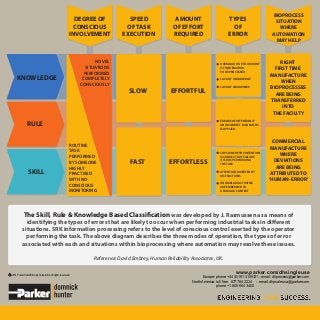
The Skill, Rule & Knowledge Based Classication was developed by J. Rasmussen as a means of 
identifying the types of errors that are likely to occur when performing industrial tasks in dierent 
situations. SRK information processing refers to the level of conscious control exerted by the operator 
performing the task. The above diagram describes the three modes of operation, the types of error 
associated with each and situations within bioprocessing where automation may resolve these issues. 
Reference: David Embrey, Human Reliability Associates, UK. 
C 2014 Parker Hannifin Group Corporation. All rights resereved. www.parker.com/dhsingleuse 
Europe: phone +44 (0)191 4105121 - email: dhprocess@parker.com 
North America: toll free 877 784 2234 - email: dhpsales.na@parker.com 
phone +1 805 604 3400

Skill, Rule and Knowledge Based Classification Infographic | Parker domnick hunter

  • 1.
    DEGREE OF CONSCIOUS INVOLVEMENT KNOWLEDGE RULE SKILL NOVEL SITUATIONS PERFORMED COMPLETELY CONSCIOUSLY ROUTINE TASK PERFORMED BY SOMEONE HIGHLY PRACTISED WITH NO CONSCIOUS MONITORING SPEED OF TASK EXECUTION SLOW FAST AMOUNT OF EFFORT REQUIRED EFFORTFUL EFFORTLESS TYPES OF ERROR OVERLOAD DUE TO AMOUNT OF INFORMATION TO BE PROCESSED LACK OF KNOWLEDGE LACK OF AWARENESS ERRORS OF INTENTION IF AN INCORRECT DIAGNOSTIC IS APPLIED SLIPS WHERE THE INTENTION IS CORRECT BUT FAILURE OCCURS PERFORMING THE TASK ATTENTION DIVERTED BY DISTRACTIONS UNFAMILIAR ACTIVITIES ARE EMBEDDED IN A FAMILAR CONTEXT BIOPROCESS SITUATION WHERE AUTOMATION MAY HELP RIGHT FIRST TIME MANUFACTURE WHEN BIOPROCESSES ARE BEING TRANSFERRED INTO THE FACILITY COMMERCIAL MANUFACTURE WHERE DEVIATIONS ARE BEING ATTRIBUTED TO ‘HUMAN-ERROR’ The Skill, Rule & Knowledge Based Classication was developed by J. Rasmussen as a means of identifying the types of errors that are likely to occur when performing industrial tasks in dierent situations. SRK information processing refers to the level of conscious control exerted by the operator performing the task. The above diagram describes the three modes of operation, the types of error associated with each and situations within bioprocessing where automation may resolve these issues. Reference: David Embrey, Human Reliability Associates, UK. C 2014 Parker Hannifin Group Corporation. All rights resereved. www.parker.com/dhsingleuse Europe: phone +44 (0)191 4105121 - email: dhprocess@parker.com North America: toll free 877 784 2234 - email: dhpsales.na@parker.com phone +1 805 604 3400