COPPER NICKEL ORIFICE FLANGES
An orifice flange is a type of flange used in piping systems to
measure the flow rate of fluids. It consists of a flange with a
concentric or eccentric hole (known as an orifice plate) drilled in
the center. The orifice plate creates a restriction in the flow of
fluid, which causes a pressure drop across the plate. This pressure
drop can be measured using a pressure gauge or a differential
pressure transmitter, and it is proportional to the flow rate of the
fluid.
Orifice flanges are commonly used in industrial processes to
measure the flow of liquids, gases, and steam. They are often used
in conjunction with flow meters, which use the pressure drop
across the orifice plate to calculate the flow rate of the fluid.
There are two types of orifice flanges: concentric and eccentric.
Concentric orifice flanges have the orifice plate located at the
center of the flange, while eccentric orifice flanges have the orifice
plate offset from the center. Eccentric orifice flanges are used
when it is necessary to prevent the accumulation of solids or
liquids on the downstream side of the orifice plate.
Copper nickel orifice flanges are flanges that are made from a
copper nickel alloy. They are used in applications where high
resistance to corrosion is required, particularly in seawater
environments. Orifice flanges are used in pipelines for measuring
the flow of liquids or gases, and they have a small hole, or orifice,
drilled in the center. This orifice is used to measure the rate of
flow of the fluid passing through the pipeline.
Copper nickel orifice flanges are popular in marine and offshore
applications, as they have excellent resistance to corrosion in
seawater. They are also used in chemical processing, power
generation, and other industries where corrosion resistance is
essential.
When selecting a copper nickel orifice flange, it is important to
consider the size of the orifice, the pressure rating, and the
temperature rating. These factors will depend on the specific
application and the requirements of the pipeline. It is also
important to ensure that the flange meets all relevant industry
standards, such as ASME B16.36, which covers orifice flanges for
use with raised-face flanges.

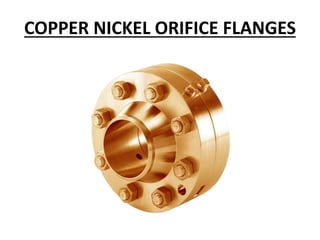
COPPER NICKEL ORIFICE FLANGES

  • 1.
  • 2.
    An orifice flangeis a type of flange used in piping systems to measure the flow rate of fluids. It consists of a flange with a concentric or eccentric hole (known as an orifice plate) drilled in the center. The orifice plate creates a restriction in the flow of fluid, which causes a pressure drop across the plate. This pressure drop can be measured using a pressure gauge or a differential pressure transmitter, and it is proportional to the flow rate of the fluid. Orifice flanges are commonly used in industrial processes to measure the flow of liquids, gases, and steam. They are often used in conjunction with flow meters, which use the pressure drop across the orifice plate to calculate the flow rate of the fluid.
  • 3.
    There are twotypes of orifice flanges: concentric and eccentric. Concentric orifice flanges have the orifice plate located at the center of the flange, while eccentric orifice flanges have the orifice plate offset from the center. Eccentric orifice flanges are used when it is necessary to prevent the accumulation of solids or liquids on the downstream side of the orifice plate. Copper nickel orifice flanges are flanges that are made from a copper nickel alloy. They are used in applications where high resistance to corrosion is required, particularly in seawater environments. Orifice flanges are used in pipelines for measuring the flow of liquids or gases, and they have a small hole, or orifice, drilled in the center. This orifice is used to measure the rate of flow of the fluid passing through the pipeline.
  • 4.
    Copper nickel orificeflanges are popular in marine and offshore applications, as they have excellent resistance to corrosion in seawater. They are also used in chemical processing, power generation, and other industries where corrosion resistance is essential. When selecting a copper nickel orifice flange, it is important to consider the size of the orifice, the pressure rating, and the temperature rating. These factors will depend on the specific application and the requirements of the pipeline. It is also important to ensure that the flange meets all relevant industry standards, such as ASME B16.36, which covers orifice flanges for use with raised-face flanges.