
RIVER'S TALE
ENVIRONMENTAL STUDIES
CLASS-IV
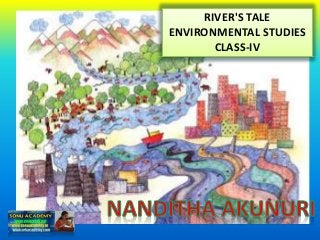
Look carefully at the picture of the river. Read the words given below.
Use these words to make a story. Give a title to your story also. Boat,
flowing water, blue, fish, water-plants, river, foul smell, big ship,
oil, river banks, factories, washing clothes, animals, other work,
change, city.
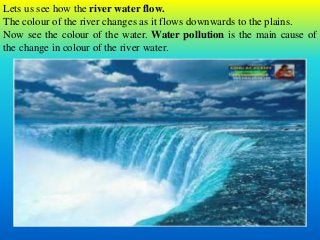
Lets us see how the river water flow.
The colour of the river changes as it flows downwards to the plains.
Now see the colour of the water. Water pollution is the main cause of
the change in colour of the river water.
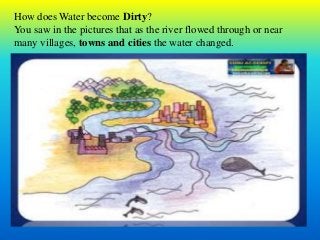
How does Water become Dirty?
You saw in the pictures that as the river flowed through or near
many villages, towns and cities the water changed.
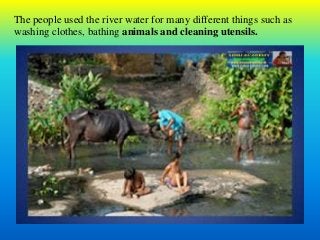
The people used the river water for many different things such as
washing clothes, bathing animals and cleaning utensils.
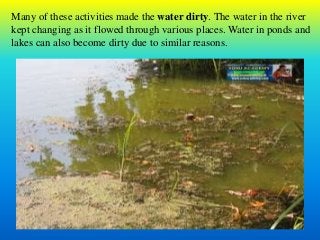
Many of these activities made the water dirty. The water in the river
kept changing as it flowed through various places. Water in ponds and
lakes can also become dirty due to similar reasons.
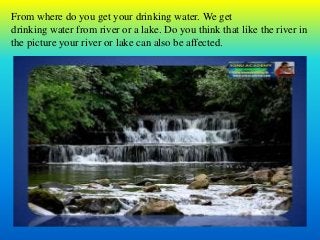
From where do you get your drinking water. We get
drinking water from river or a lake. Do you think that like the river in
the picture your river or lake can also be affected.
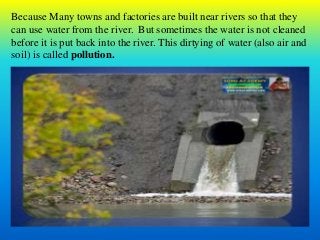
Because Many towns and factories are built near rivers so that they
can use water from the river. But sometimes the water is not cleaned
before it is put back into the river. This dirtying of water (also air and
soil) is called pollution.
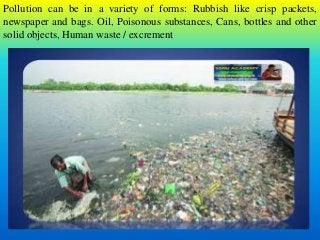
Pollution can be in a variety of forms: Rubbish like crisp packets,
newspaper and bags. Oil, Poisonous substances, Cans, bottles and other
solid objects, Human waste / excrement
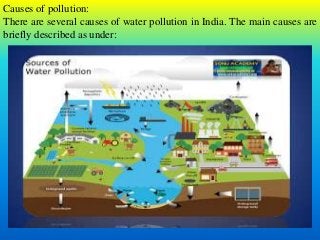
Causes of pollution:
There are several causes of water pollution in India. The main causes are
briefly described as under:
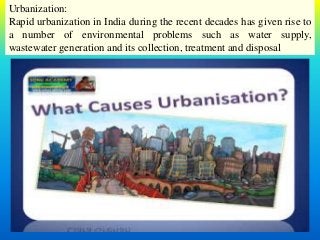
Urbanization:
Rapid urbanization in India during the recent decades has given rise to
a number of environmental problems such as water supply,
wastewater generation and its collection, treatment and disposal
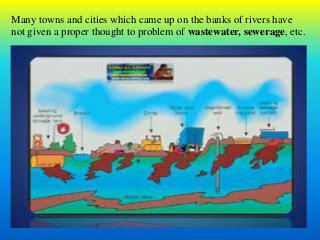
Many towns and cities which came up on the banks of rivers have
not given a proper thought to problem of wastewater, sewerage, etc.
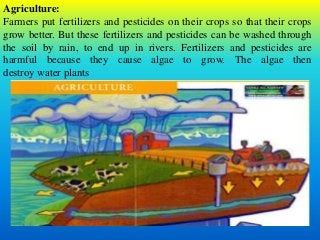
Agriculture:
Farmers put fertilizers and pesticides on their crops so that their crops
grow better. But these fertilizers and pesticides can be washed through
the soil by rain, to end up in rivers. Fertilizers and pesticides are
harmful because they cause algae to grow. The algae then
destroy water plants
Factories:
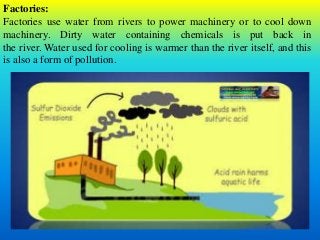
Factories use water from rivers to power machinery or to cool down
machinery. Dirty water containing chemicals is put back in
the river. Water used for cooling is warmer than the river itself, and this
is also a form of pollution.
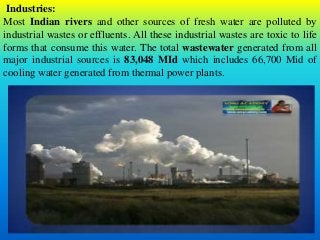
Industries:
Most Indian rivers and other sources of fresh water are polluted by
industrial wastes or effluents. All these industrial wastes are toxic to life
forms that consume this water. The total wastewater generated from all
major industrial sources is 83,048 MId which includes 66,700 Mid of
cooling water generated from thermal power plants.
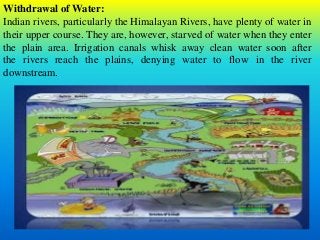
Withdrawal of Water:
Indian rivers, particularly the Himalayan Rivers, have plenty of water in
their upper course. They are, however, starved of water when they enter
the plain area. Irrigation canals whisk away clean water soon after
the rivers reach the plains, denying water to flow in the river
downstream.
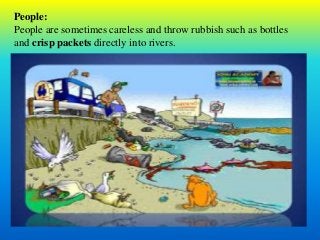
People:
People are sometimes careless and throw rubbish such as bottles
and crisp packets directly into rivers.
Effects of water pollution:
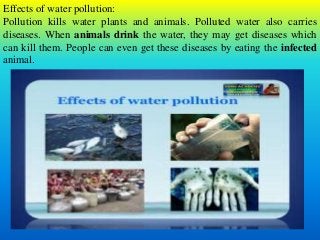
Pollution kills water plants and animals. Polluted water also carries
diseases. When animals drink the water, they may get diseases which
can kill them. People can even get these diseases by eating the infected
animal.
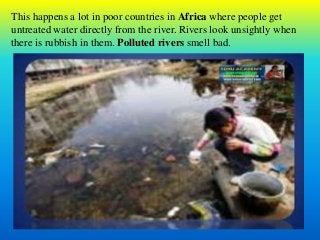
This happens a lot in poor countries in Africa where people get
untreated water directly from the river. Rivers look unsightly when
there is rubbish in them. Polluted rivers smell bad.
Solutions:
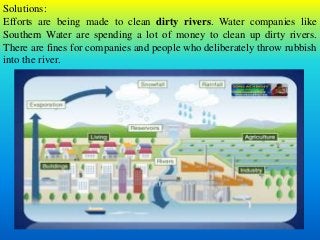
Efforts are being made to clean dirty rivers. Water companies like
Southern Water are spending a lot of money to clean up dirty rivers.
There are fines for companies and people who deliberately throw rubbish
into the river.
We can’t drink sea water because Seawater is toxic because your
body fails eventually when it has to try to get rid of the salt that comes
from sea water.
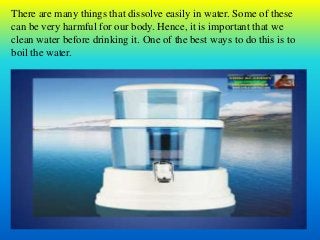
There are many things that dissolve easily in water. Some of these
can be very harmful for our body. Hence, it is important that we
clean water before drinking it. One of the best ways to do this is to
boil the water.
RIVER'S TALE ENVIRONMENTAL STUDIES  CLASS-IV

RIVER'S TALE ENVIRONMENTAL STUDIES CLASS-IV

  • 1.
  • 2.
    Look carefully atthe picture of the river. Read the words given below. Use these words to make a story. Give a title to your story also. Boat, flowing water, blue, fish, water-plants, river, foul smell, big ship, oil, river banks, factories, washing clothes, animals, other work, change, city.
  • 3.
    Lets us seehow the river water flow. The colour of the river changes as it flows downwards to the plains. Now see the colour of the water. Water pollution is the main cause of the change in colour of the river water.
  • 4.
    How does Waterbecome Dirty? You saw in the pictures that as the river flowed through or near many villages, towns and cities the water changed.
  • 5.
    The people usedthe river water for many different things such as washing clothes, bathing animals and cleaning utensils.
  • 6.
    Many of theseactivities made the water dirty. The water in the river kept changing as it flowed through various places. Water in ponds and lakes can also become dirty due to similar reasons.
  • 7.
    From where doyou get your drinking water. We get drinking water from river or a lake. Do you think that like the river in the picture your river or lake can also be affected.
  • 8.
    Because Many townsand factories are built near rivers so that they can use water from the river. But sometimes the water is not cleaned before it is put back into the river. This dirtying of water (also air and soil) is called pollution.
  • 9.
    Pollution can bein a variety of forms: Rubbish like crisp packets, newspaper and bags. Oil, Poisonous substances, Cans, bottles and other solid objects, Human waste / excrement
  • 10.
    Causes of pollution: Thereare several causes of water pollution in India. The main causes are briefly described as under:
  • 11.
    Urbanization: Rapid urbanization inIndia during the recent decades has given rise to a number of environmental problems such as water supply, wastewater generation and its collection, treatment and disposal
  • 12.
    Many towns andcities which came up on the banks of rivers have not given a proper thought to problem of wastewater, sewerage, etc.
  • 13.
    Agriculture: Farmers put fertilizersand pesticides on their crops so that their crops grow better. But these fertilizers and pesticides can be washed through the soil by rain, to end up in rivers. Fertilizers and pesticides are harmful because they cause algae to grow. The algae then destroy water plants
  • 14.
    Factories: Factories use waterfrom rivers to power machinery or to cool down machinery. Dirty water containing chemicals is put back in the river. Water used for cooling is warmer than the river itself, and this is also a form of pollution.
  • 15.
    Industries: Most Indian riversand other sources of fresh water are polluted by industrial wastes or effluents. All these industrial wastes are toxic to life forms that consume this water. The total wastewater generated from all major industrial sources is 83,048 MId which includes 66,700 Mid of cooling water generated from thermal power plants.
  • 16.
    Withdrawal of Water: Indianrivers, particularly the Himalayan Rivers, have plenty of water in their upper course. They are, however, starved of water when they enter the plain area. Irrigation canals whisk away clean water soon after the rivers reach the plains, denying water to flow in the river downstream.
  • 17.
    People: People are sometimescareless and throw rubbish such as bottles and crisp packets directly into rivers.
  • 18.
    Effects of waterpollution: Pollution kills water plants and animals. Polluted water also carries diseases. When animals drink the water, they may get diseases which can kill them. People can even get these diseases by eating the infected animal.
  • 19.
    This happens alot in poor countries in Africa where people get untreated water directly from the river. Rivers look unsightly when there is rubbish in them. Polluted rivers smell bad.
  • 20.
    Solutions: Efforts are beingmade to clean dirty rivers. Water companies like Southern Water are spending a lot of money to clean up dirty rivers. There are fines for companies and people who deliberately throw rubbish into the river.
  • 21.
    We can’t drinksea water because Seawater is toxic because your body fails eventually when it has to try to get rid of the salt that comes from sea water.
  • 22.
    There are manythings that dissolve easily in water. Some of these can be very harmful for our body. Hence, it is important that we clean water before drinking it. One of the best ways to do this is to boil the water.