参考文献
はじめに
中村敏枝 (1997). “間”の解明, 辻三郎(編),感性の科学-感性情報処理へのアプローチ, pp.83–87.
感性とはなにか?
Berlyne, D. E.(1971) Aesthetics and psychobiology. Appleton-Century-Crofts.
Gibson, J. J. (1979). The Ecological Approach to Visual Perception (ギブソン, ジェームズ, 1986.『生態学的視覚論─ ヒトの知覚世界を探る』. 古崎
行場次朗. (1991). 図と地の知覚--視覚の心理 (視覚と画像工学--見る・見せる< 特集>)--(視覚の基礎理論). 電子情報通信学会誌, 74(4), p315-
p315-320.
Hess, E. H. (1975). The role of pupil size in communication. Scientific American, 233(5), 110-119.
Humphrey, N. K. (1972). ‘Interest’and ‘pleasure’: two determinants of a monkey's visual preferences. Perception, 1(4), 395-416.
395-416.
Judd, D. B., Wyszecki, G., & Wintringham, W. T. (1963). Color in business, science, and industry. Physics Today, 16, 74.
74.
Klymenko, V., & Weisstein, N. (1986). Spatial frequency differences can determine figure-ground organization. Journal of Experimental Psychology:
Experimental Psychology: human perception and performance, 12(3), 324.
三浦佳世. (2010). 感性認知-アイステーシスの実証科学として. 三浦佳世(編). 知覚と感性. 北大路書房, 2-27.
Moon, P., & Spencer, D. E. (1944). Aesthetic measure applied to color harmony. Journal of the Optical Society of America, 34(4), 234-242.
America, 34(4), 234-242.
Moon, P., & Spencer, D. E. (1944). Area in color harmony. Journal of the Optical Society of America, 34(2), 93-103.
Moon, P., & Spencer, D. E. (1944). Geometric formulation of classical color harmony. Journal of the Optical Society of America, 34(1), 46-59.
America, 34(1), 46-59.
長町三生. (1989). 感性工学: 感性をデザインに活かすテクノロジー. 海文堂出版.
長町三生. (1993). 感性商品学. 感性工学の基礎と応用. 海文堂出版
Ramachandran, V. S., & Hubbard, E. M. (2001). Synaesthesia--a window into perception, thought and language. Journal of consciousness
of consciousness studies, 8(12), 3-34.
Rood, O. N. (1879). Modern chromatics: With applications to art and industry (Vol. 26). D. Appleton.
椎塚久雄, 原田昭. (2009). 感性とは何か: 感性の由来とそのフレームワーク. 電子情報通信学会誌, 92(11), 912-914.
Weigend, A. (2017). Data for the people: how to make our post-privacy economy work for you. Basic Books.
渡辺茂(2016)美の起源:アートの行動生物学, 共立出版
82
83.
感性の文化差
Corbusier, L. (2004).The Modulor and Modulor 2 (Vol. 1). Springer Science & Business Media.
Kim, H., & Markus, H. R. (1999). Deviance or uniqueness, harmony or conformity? A cultural analysis. Journal of personality and social
personality and social psychology, 77(4), 785.
Masataka, N. (2006). Preference for consonance over dissonance by hearing newborns of deaf parents and of hearing parents. Developmental
parents. Developmental science, 9(1), 46-50.
Masuda, T., Gonzalez, R., Kwan, L., & Nisbett, R. E. (2008). Culture and aesthetic preference: Comparing the attention to context of East Asians and
attention to context of East Asians and Americans. Personality and Social Psychology Bulletin, 34(9), 1260-1275.
McDermott, J. H., Schultz, A. F., Undurraga, E. A., & Godoy, R. A. (2016). Indifference to dissonance in native Amazonians reveals cultural variation in
Amazonians reveals cultural variation in music perception. Nature, 535(7613), 547.
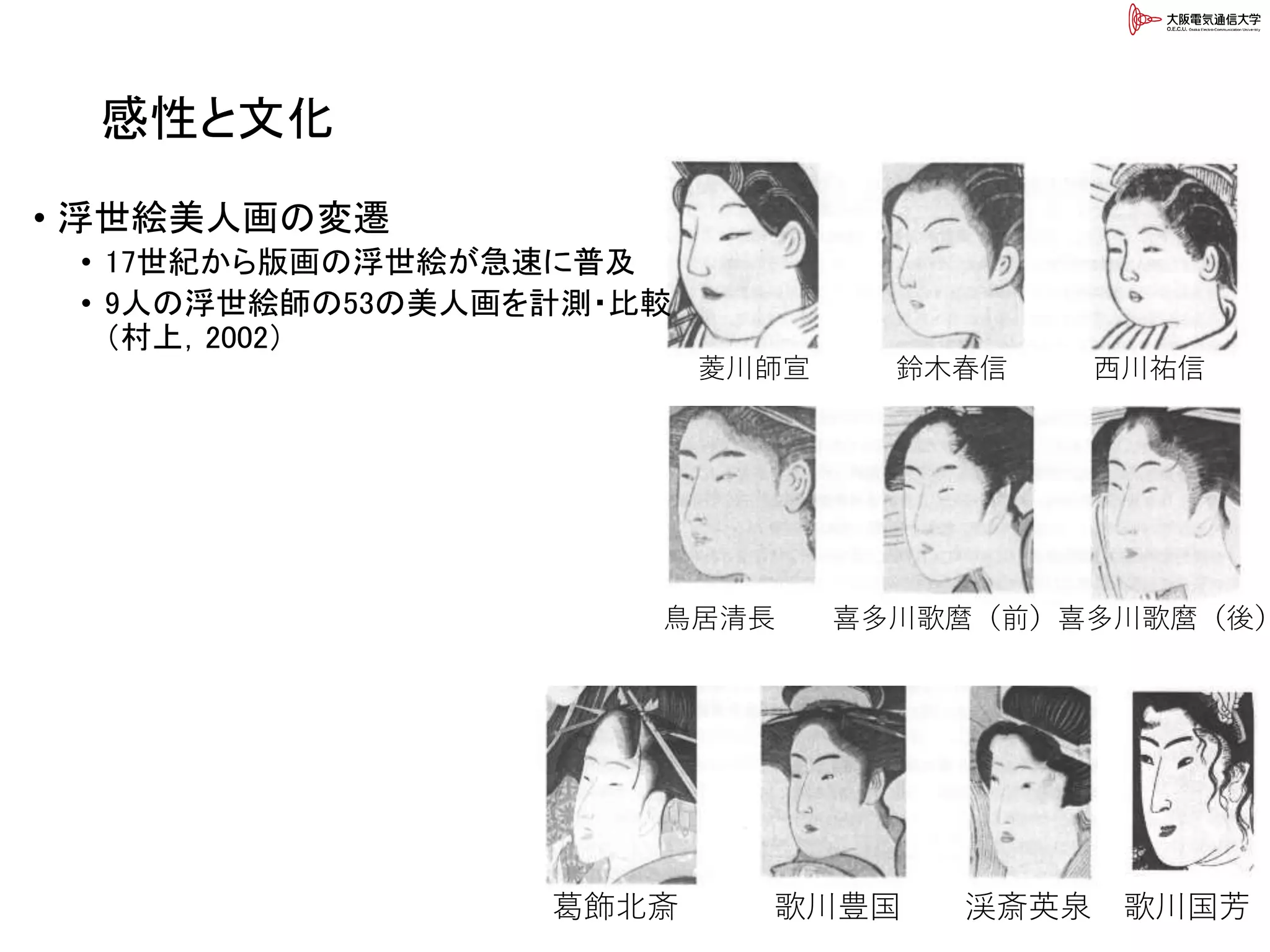
村上征勝(2002). 文化を計る 文化計量学序説,朝倉書店
Nisbett, R. (2004). The geography of thought: How Asians and Westerners think differently... and why. Simon and Schuster.
Schuster.
Nisbett, R. E., & Masuda, T. (2003). Culture and point of view. Proceedings of the National Academy of Sciences, 100(19), 11163-11170.
Sciences, 100(19), 11163-11170.
Plug, C. (1980). The golden section hypothesis. The American journal of psychology, 467-487.
Schellenberg, E. G., & Trainor, L. J. (1996). Sensory consonance and the perceptual similarity of complex‐tone harmonic intervals: Tests of adult and
harmonic intervals: Tests of adult and infant listeners. The Journal of the Acoustical Society of America, 100(5), 3321-3328.
3328.
山本由紀子, 仁科エミ, 大西仁. (2015). 協和感研究の動向と課題. 認知科学, 22(2), 282-296.
Yuki, M., Maddux, W. W., & Masuda, T. (2007). Are the windows to the soul the same in the East and West? Cultural differences in using the eyes and
Cultural differences in using the eyes and mouth as cues to recognize emotions in Japan and the United States. Journal of Experimental Social
States. Journal of Experimental Social Psychology, 43(2), 303-311.
83
Editor's Notes
#6 Hess, E. H. (1975). The role of pupil size in communication. Scientific American, 233(5), 110-119.
#10 Klymenko, V., & Weisstein, N. (1986). Spatial frequency differences can determine figure-ground organization. Journal of Experimental Psychology: human perception and performance, 12(3), 324.
#12 Ramachandran, V. S., & Hubbard, E. M. (2001). Synaesthesia--a window into perception, thought and language. Journal of consciousness studies, 8(12), 3-34.
#23 Gibson, J. J. (1979). The Ecological Approach to Visual Perception (ギブソン, ジェームズ, 1986.『生態 学 的 視覚 論─ ヒト の 知覚世界 を 探る』. 古崎 敬 訳, 東京: サイエンス 社).
#25 Berlyne, D. E.(1971) Aesthetics and psychobiology .Appleton-Century-Crofts.
渡辺茂(2016)『美の起源:アートの行動生物学』共立出版
#26 Humphrey, N. K. (1972). ‘Interest’and ‘pleasure’: two determinants of a monkey's visual preferences. Perception, 1(4), 395-416.
Weigend, A. (2017). Data for the people: how to make our post-privacy economy work for you. Basic Books.
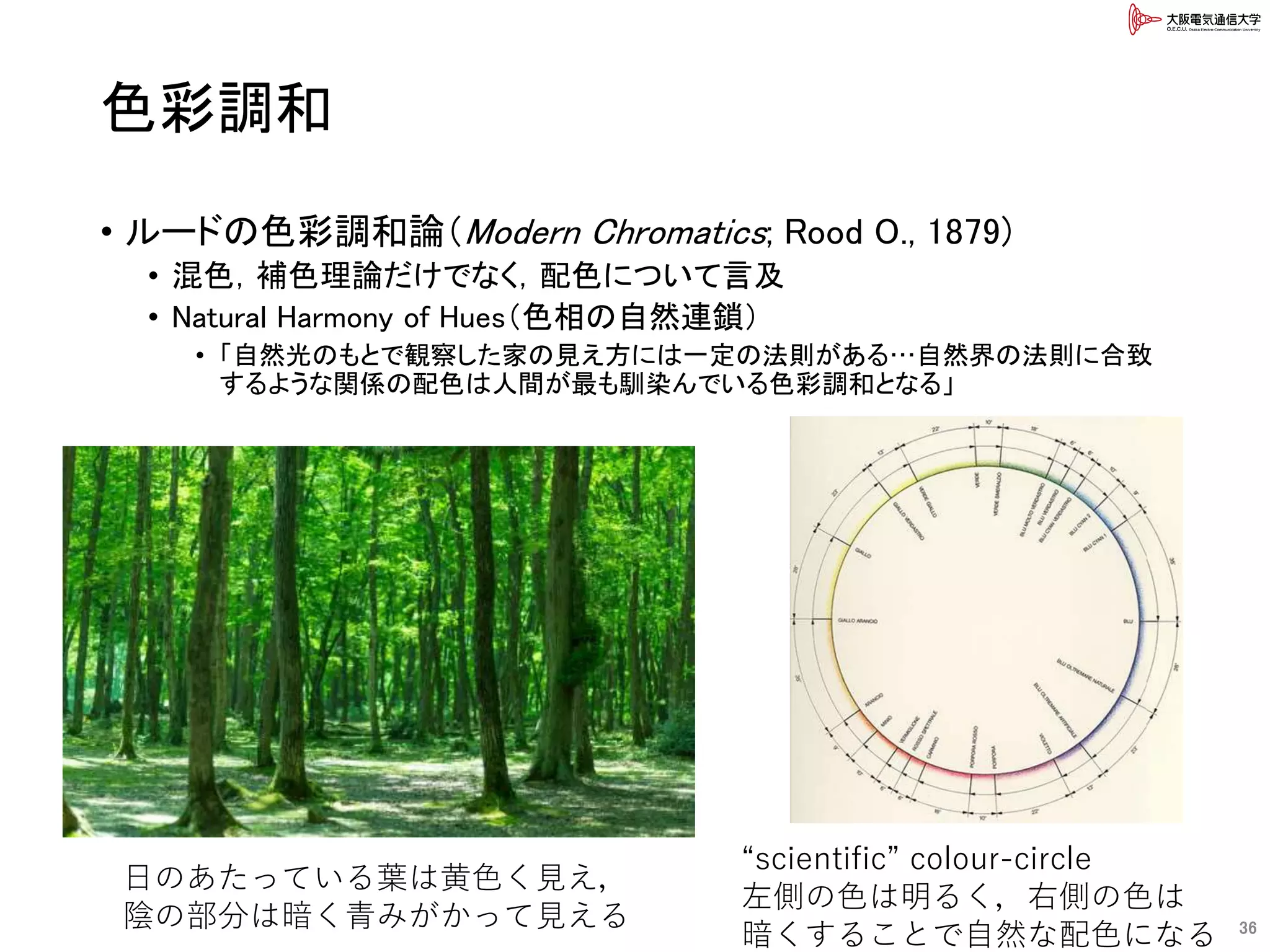
#37 Rood, O. N. (1879). Modern chromatics: With applications to art and industry (Vol. 26). D. Appleton.
#39 Moon, P., & Spencer, D. E. (1944). Geometric formulation of classical color harmony. Journal of the Optical Society of America, 34(1), 46-59.
Moon, P., & Spencer, D. E. (1944). Area in color harmony. Journal of the Optical Society of America, 34(2), 93-103.
Moon, P., & Spencer, D. E. (1944). Aesthetic measure applied to color harmony. Journal of the Optical Society of America, 34(4), 234-242.
#40 Judd, D. B., Wyszecki, G., & Wintringham, W. T. (1963). Color in business, science, and industry. Physics Today, 16, 74.
#59 Masataka, N. (2006). Preference for consonance over dissonance by hearing newborns of deaf parents and of hearing parents. Developmental science, 9(1), 46-50.
Schellenberg, E. G., & Trainor, L. J. (1996). Sensory consonance and the perceptual similarity of complex‐tone harmonic intervals: Tests of adult and infant listeners. The Journal of the Acoustical Society of America, 100(5), 3321-3328.
#60 McDermott, J. H., Schultz, A. F., Undurraga, E. A., & Godoy, R. A. (2016). Indifference to dissonance in native Amazonians reveals cultural variation in music perception. Nature, 535(7613), 547.
#74 Yuki, M., Maddux, W. W., & Masuda, T. (2007). Are the windows to the soul the same in the East and West? Cultural differences in using the eyes and mouth as cues to recognize emotions in Japan and the United States. Journal of Experimental Social Psychology, 43(2), 303-311.
#77 Masuda, T., Gonzalez, R., Kwan, L., & Nisbett, R. E. (2008). Culture and aesthetic preference: Comparing the attention to context of East Asians and Americans. Personality and Social Psychology Bulletin, 34(9), 1260-1275.
Nisbett, R. E., & Masuda, T. (2003). Culture and point of view. Proceedings of the National Academy of Sciences, 100(19), 11163-11170.
#79 Kim, H., & Markus, H. R. (1999). Deviance or uniqueness, harmony or conformity? A cultural analysis. Journal of personality and social psychology, 77(4), 785.
#81 Nisbett, R. (2004). The geography of thought: How Asians and Westerners think differently... and why. Simon and Schuster.






![ブーバ/キキ効果
• /i/の第2フォルマントは
/u/や/o/のそれよりも高い
12
女性
男性
F1 [Hz]
F2[Hz]
0 200 400 600 800 1000 1200 1400
3000
2000
1000
0
きちんと物理量を見れば感性のルールは見えてくる](https://image.slidesharecdn.com/kanseipsychology1-180906233902/75/1-4-12-2048.jpg)

























![[DL輪読会]Scalable Training of Inference Networks for Gaussian-Process Models](https://cdn.slidesharecdn.com/ss_thumbnails/mainslideshare1-190927025239-thumbnail.jpg?width=640&height=640&fit=bounds)