Short ppt on 3 d printing telling you about the history principals and models of 3d printing it is one of the newest production techniques used to produce product
What is 3DPrinting?
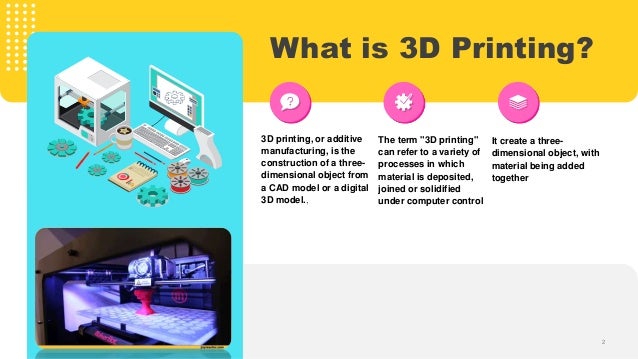
The term "3D printing"
can refer to a variety of
processes in which
material is deposited,
joined or solidified
under computer control
3D printing, or additive
manufacturing, is the
construction of a three-
dimensional object from
a CAD model or a digital
3D model.,
It create a three-
dimensional object, with
material being added
together
2
3.
History of 3DPrinting
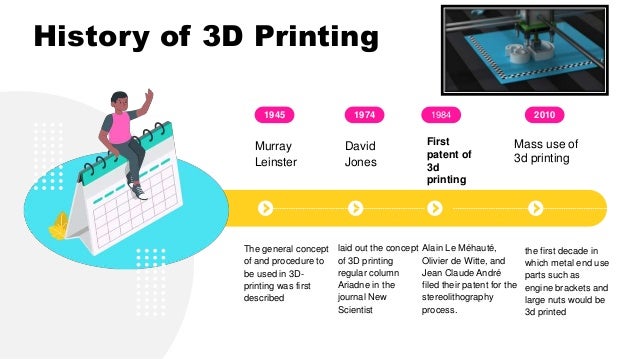
Murray
Leinster
The general concept
of and procedure to
be used in 3D-
printing was first
described
1945
David
Jones
laid out the concept
of 3D printing
regular column
Ariadne in the
journal New
Scientist
1974
Alain Le Méhauté,
Olivier de Witte, and
Jean Claude André
filed their patent for the
stereolithography
process.
1984
First
patent of
3d
printing
the first decade in
which metal end use
parts such as
engine brackets and
large nuts would be
3d printed
2010
Mass use of
3d printing
4.
Principles in 3DPrinting
4
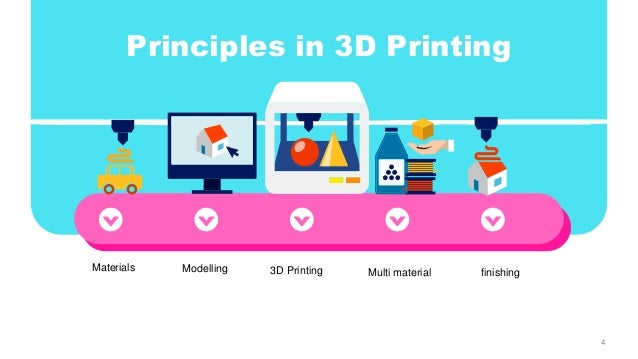
Materials Modelling 3D Printing Multi material finishing
5.
5
E-Commerce Marketing Plan
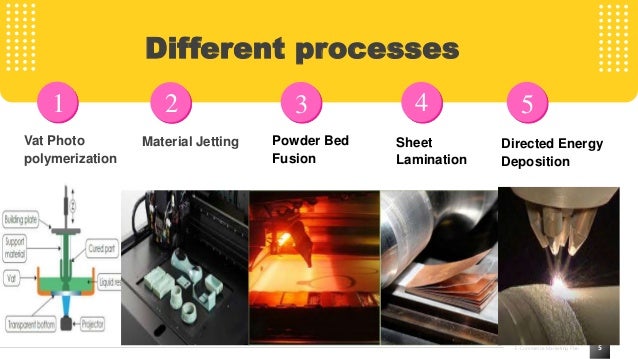
Differentprocesses
Vat Photo
polymerization
1
Material Jetting
2
Powder Bed
Fusion
3
Sheet
Lamination
4
Directed Energy
Deposition
5
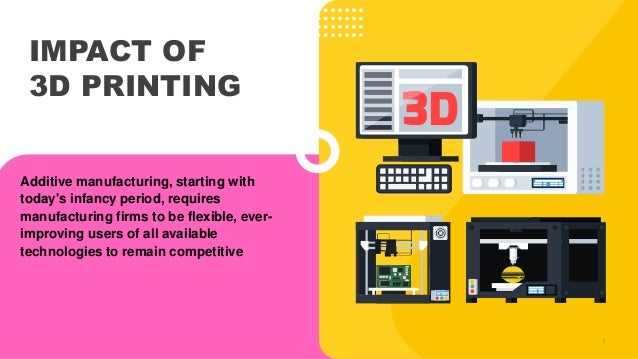
IMPACT OF
3D PRINTING
Additivemanufacturing, starting with
today's infancy period, requires
manufacturing firms to be flexible, ever-
improving users of all available
technologies to remain competitive
7
8.
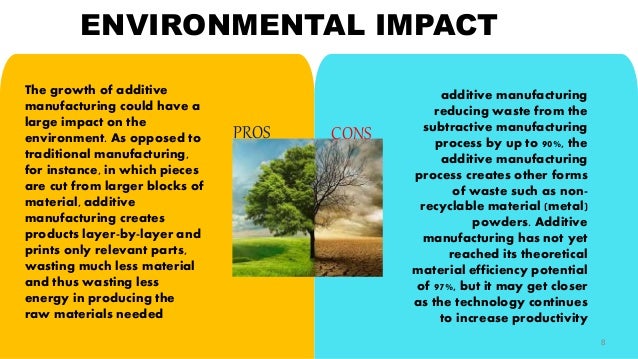
ENVIRONMENTAL IMPACT
8
PROS CONS
Thegrowth of additive
manufacturing could have a
large impact on the
environment. As opposed to
traditional manufacturing,
for instance, in which pieces
are cut from larger blocks of
material, additive
manufacturing creates
products layer-by-layer and
prints only relevant parts,
wasting much less material
and thus wasting less
energy in producing the
raw materials needed
additive manufacturing
reducing waste from the
subtractive manufacturing
process by up to 90%, the
additive manufacturing
process creates other forms
of waste such as non-
recyclable material (metal)
powders. Additive
manufacturing has not yet
reached its theoretical
material efficiency potential
of 97%, but it may get closer
as the technology continues
to increase productivity
9.
Conclusion
9
3D Printing technology
couldrevolutionize and
re-shape the world.
Advances in 3D
printing technology
can significantly
change and improve
the way we
manufacture products
and produce goods
worldwide