Karl Kjer: Tips for Aquarium
Beginners
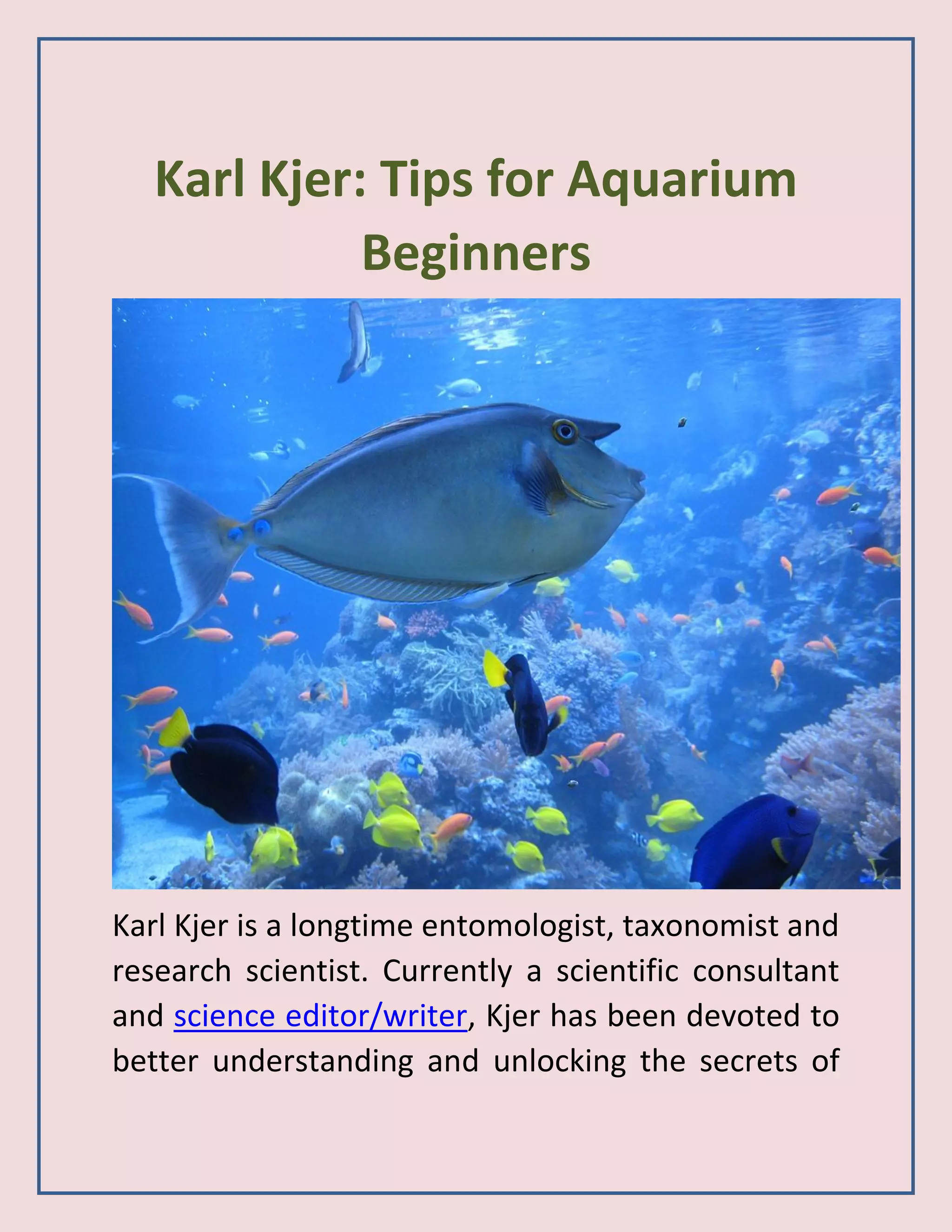
Karl Kjer is a longtime entomologist, taxonomist and
research scientist. Currently a scientific consultant
and science editor/writer, Kjer has been devoted to
better understanding and unlocking the secrets of
insects, insect phylogeny and biodiversity his entire
career; a quality evident in his many contributions
to the field over the past 20 years (1KITE,
Trichoptera Barcode of Life Database, numerous
publications, etc.).
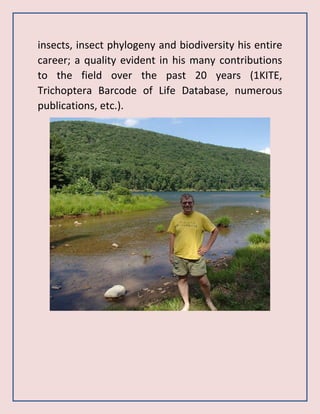
When Karl Kjer isn’t engaged in scientific pursuit,
however, he can often be found enjoying his
aquarium; a hobby he has maintained and remained
devoted to throughout the course of his life.
As Karl Kjer knows, maintaining an aquarium, an
enclosed, often delicately-balanced underwater
ecosystem, can be a challenge, particularly for those
new to the craft. For those interested in starting a
new aquarium in their home, yet don’t have much
experience at doing so, the following steps may
help make your initiation into aquarium
maintenance just a bit easier.
Cycle the Tank Beforehand
Before adding fish to your aquarium, it’s important
to “cycle the tank,” an activity that involves
cultivating the growth of healthy micro-organisms
in the aquarium to create the healthiest
environment possible for your fish. This process
may sometimes take a week or so, though it is
absolutely essential to ensuring the environment is
safe and livable.
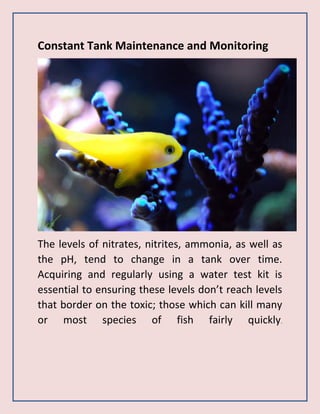
Constant Tank Maintenance and Monitoring
The levels of nitrates, nitrites, ammonia, as well as
the pH, tend to change in a tank over time.
Acquiring and regularly using a water test kit is
essential to ensuring these levels don’t reach levels
that border on the toxic; those which can kill many
or most species of fish fairly quickly.

Karl Kjer: Tips for Aquarium Beginners

  • 1.
    Karl Kjer: Tipsfor Aquarium Beginners Karl Kjer is a longtime entomologist, taxonomist and research scientist. Currently a scientific consultant and science editor/writer, Kjer has been devoted to better understanding and unlocking the secrets of
  • 2.
    insects, insect phylogenyand biodiversity his entire career; a quality evident in his many contributions to the field over the past 20 years (1KITE, Trichoptera Barcode of Life Database, numerous publications, etc.).
  • 3.
    When Karl Kjerisn’t engaged in scientific pursuit, however, he can often be found enjoying his aquarium; a hobby he has maintained and remained devoted to throughout the course of his life.
  • 4.
    As Karl Kjerknows, maintaining an aquarium, an enclosed, often delicately-balanced underwater ecosystem, can be a challenge, particularly for those new to the craft. For those interested in starting a new aquarium in their home, yet don’t have much experience at doing so, the following steps may help make your initiation into aquarium maintenance just a bit easier.
  • 5.
    Cycle the TankBeforehand Before adding fish to your aquarium, it’s important to “cycle the tank,” an activity that involves cultivating the growth of healthy micro-organisms in the aquarium to create the healthiest environment possible for your fish. This process may sometimes take a week or so, though it is absolutely essential to ensuring the environment is safe and livable.
  • 6.
    Constant Tank Maintenanceand Monitoring The levels of nitrates, nitrites, ammonia, as well as the pH, tend to change in a tank over time. Acquiring and regularly using a water test kit is essential to ensuring these levels don’t reach levels that border on the toxic; those which can kill many or most species of fish fairly quickly.