Sustainable Analytics
Implementations
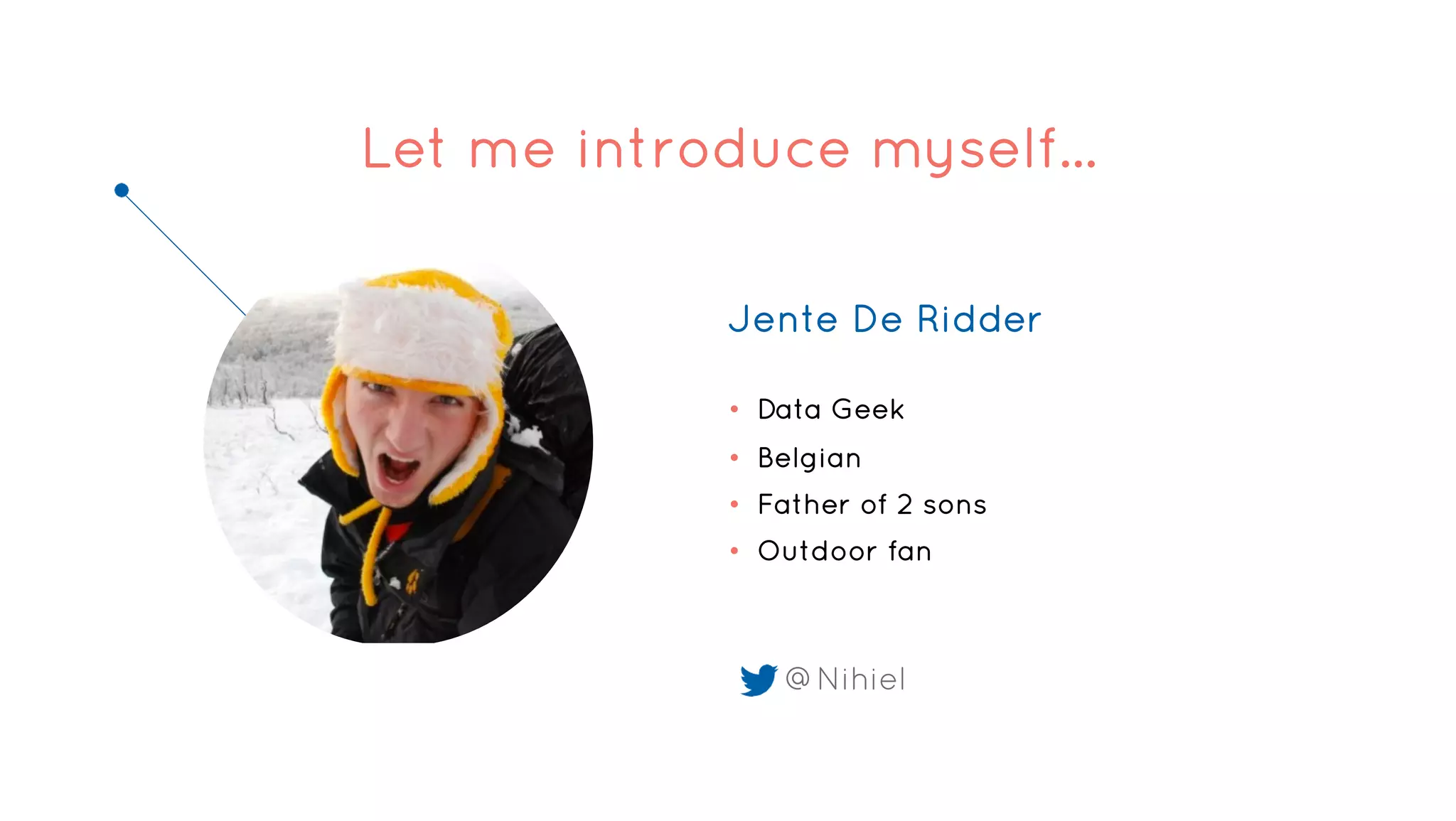
Jente De Ridder
• Data Geek
• Belgian
• Father of 2 sons
• Outdoor fan
@Nihiel
Let me introduce myself…
Your company’s ambitions
“We will deliver relevant one-to-one
marketing experiences, fueled by A.I. „
Your CEO, January 2020
Bad news: you’re not ready
“Data quality is earned, not acquired. „
Simo Ahava, Superweek 2019
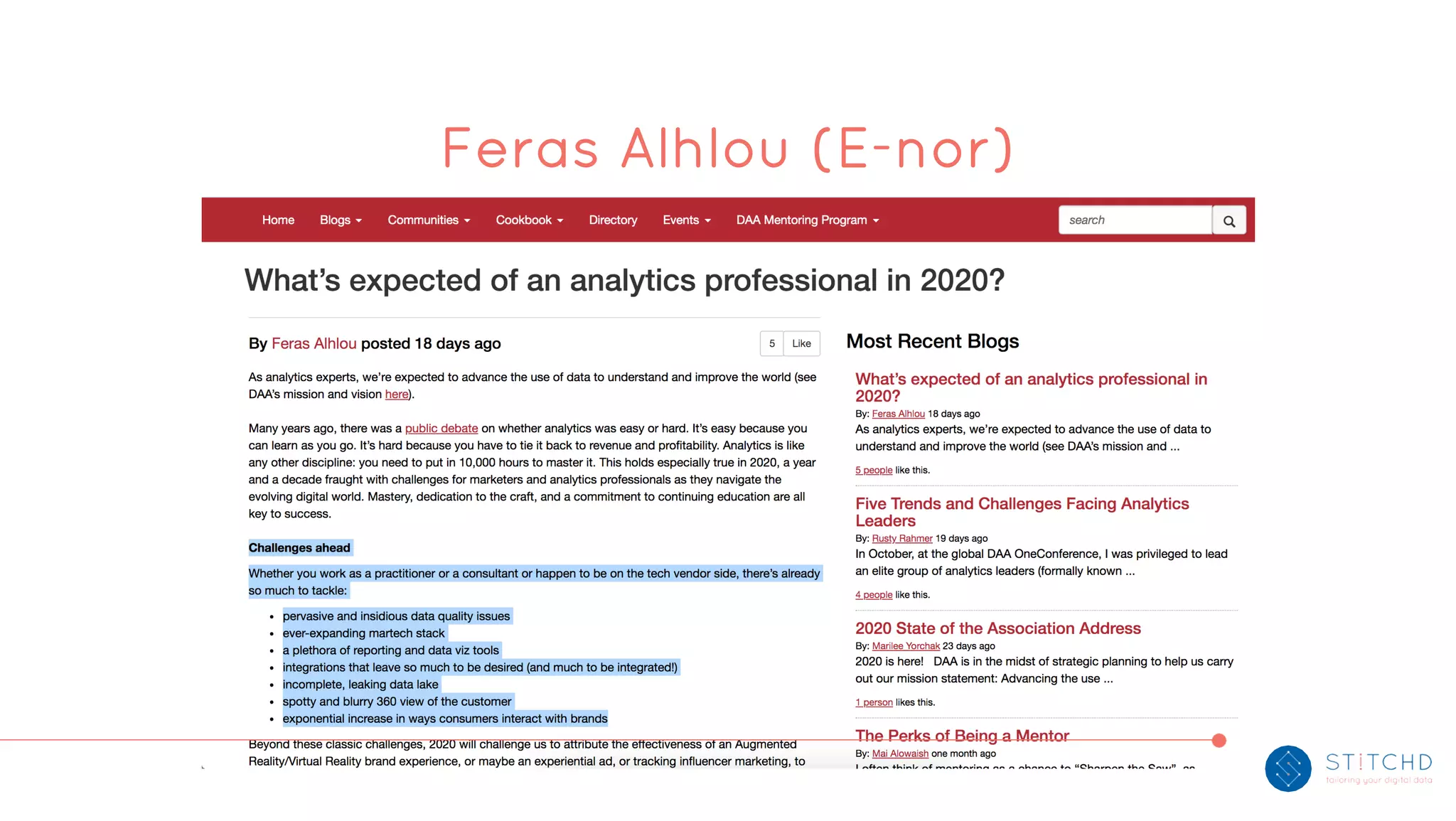
Feras Alhlou (E-nor)
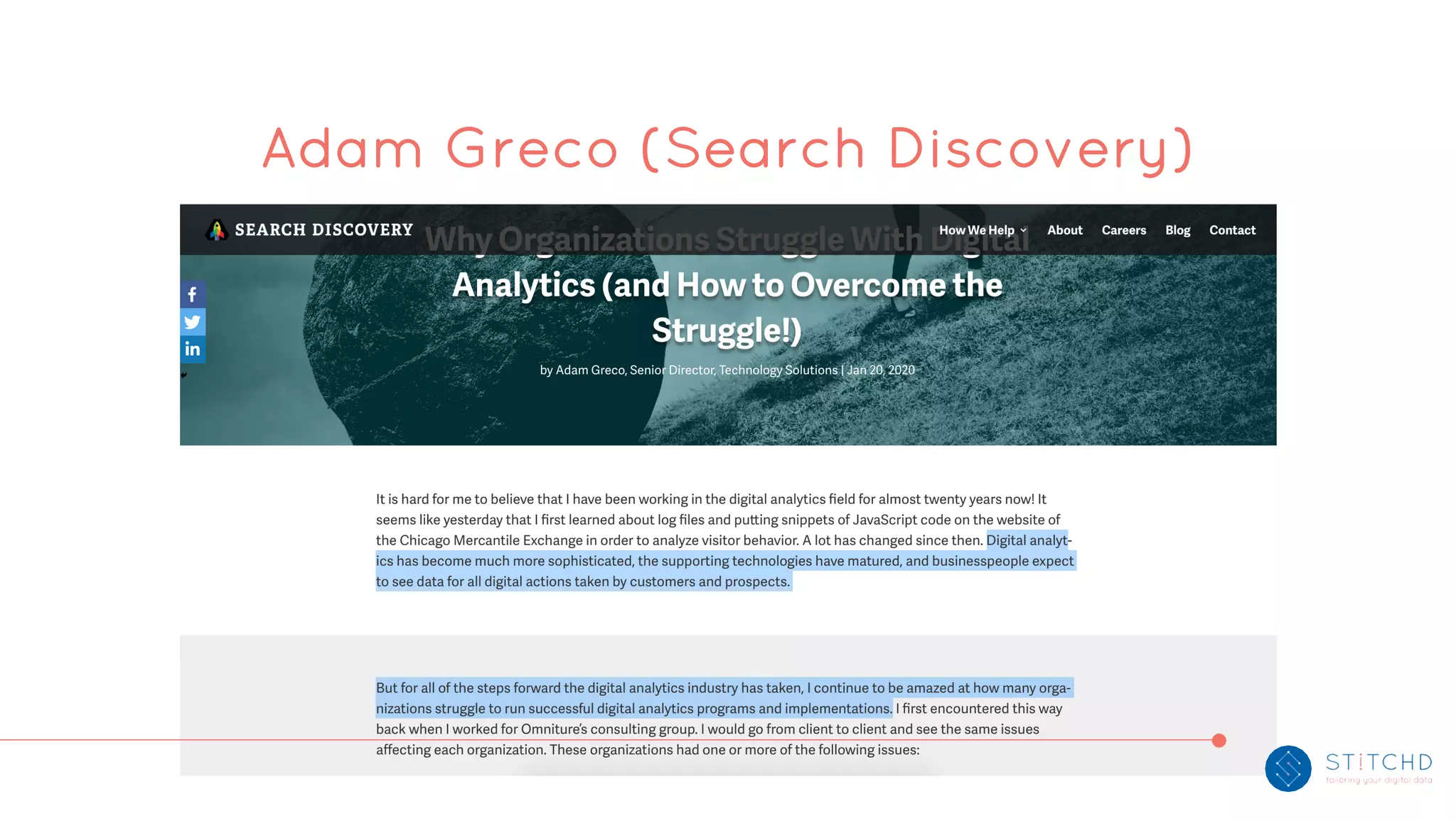
Adam Greco (Search Discovery)
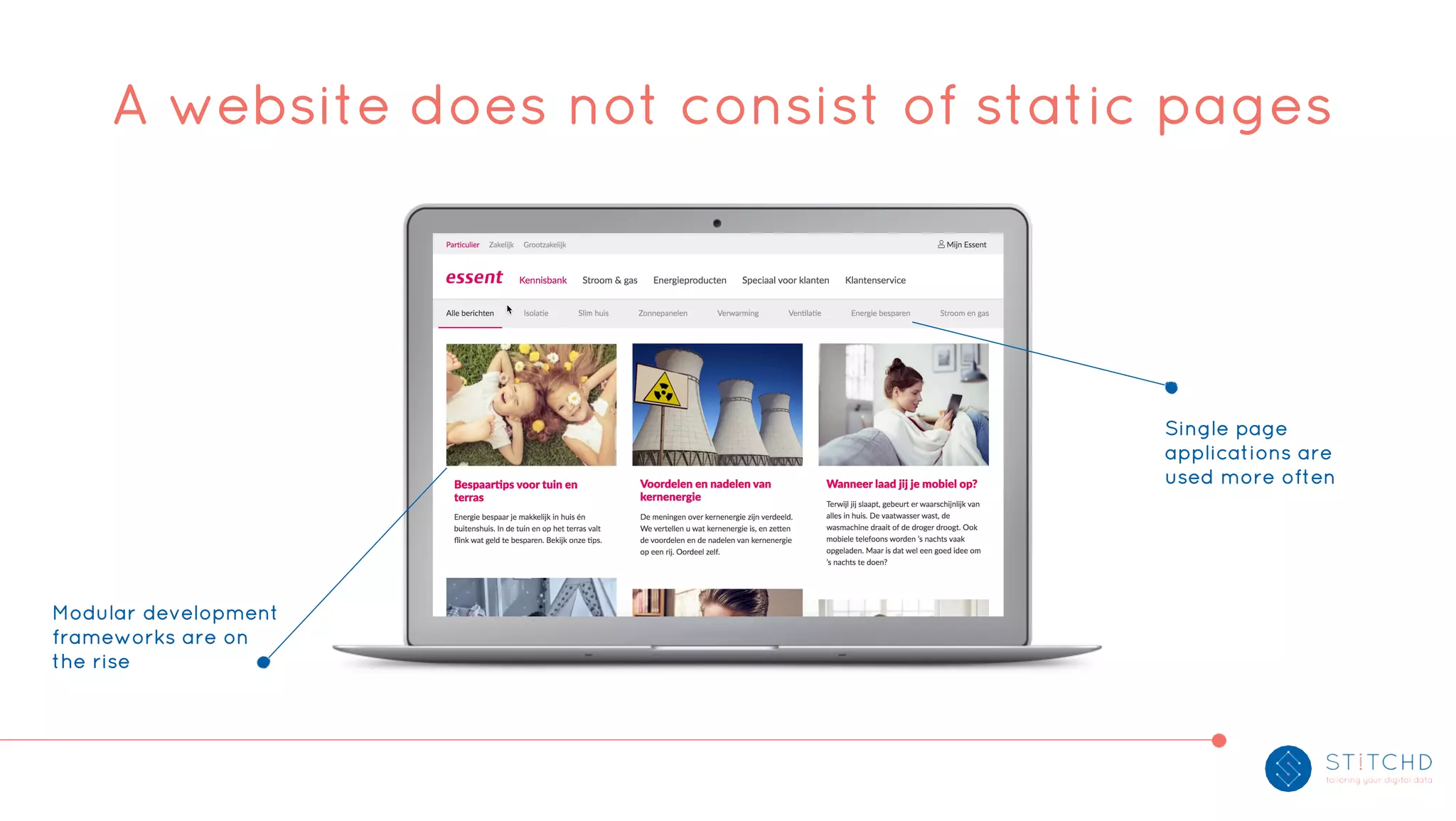
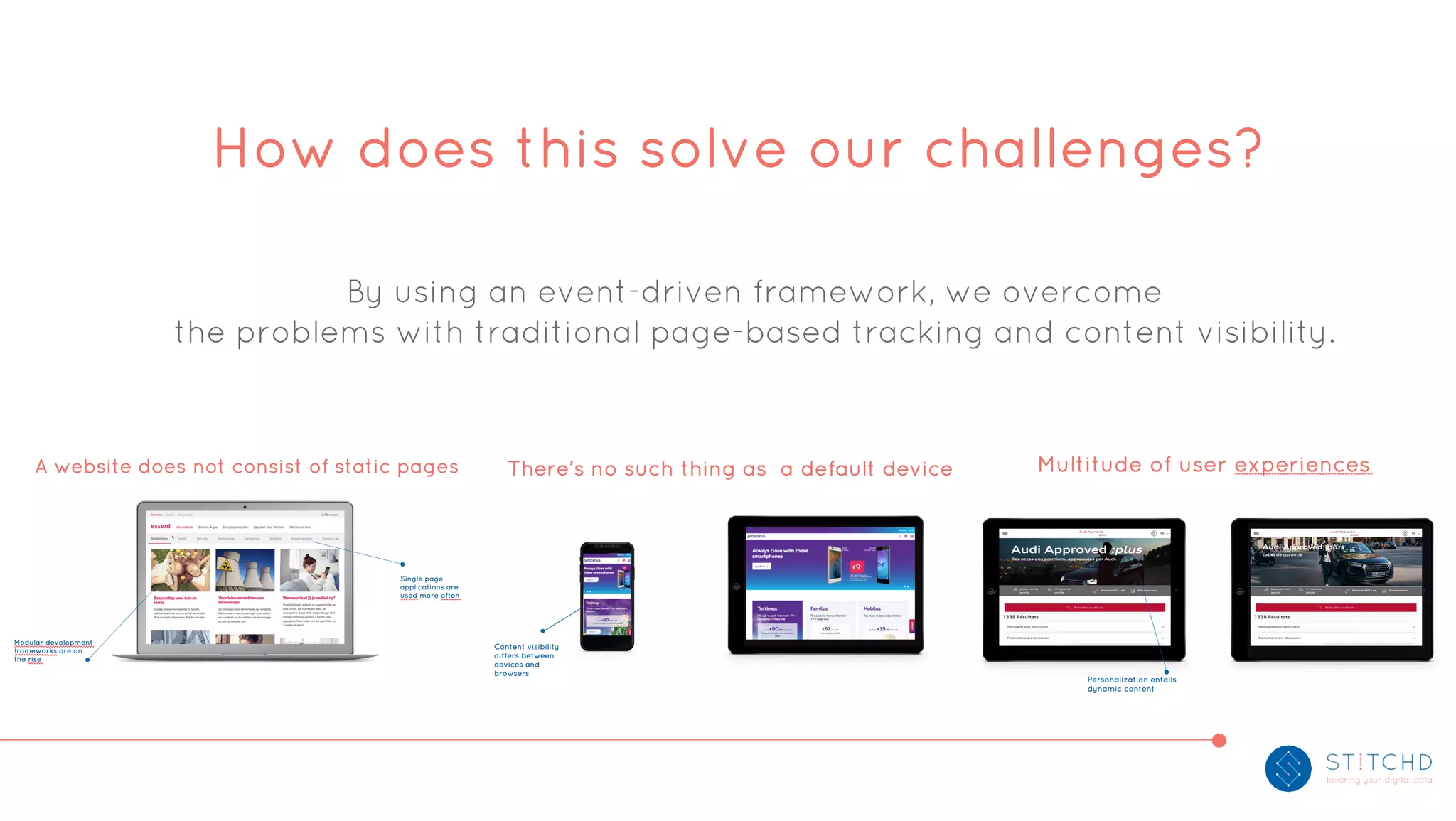
A website does not consist of static pages
Modular development
frameworks are on
the rise
Single page
applications are
used more often
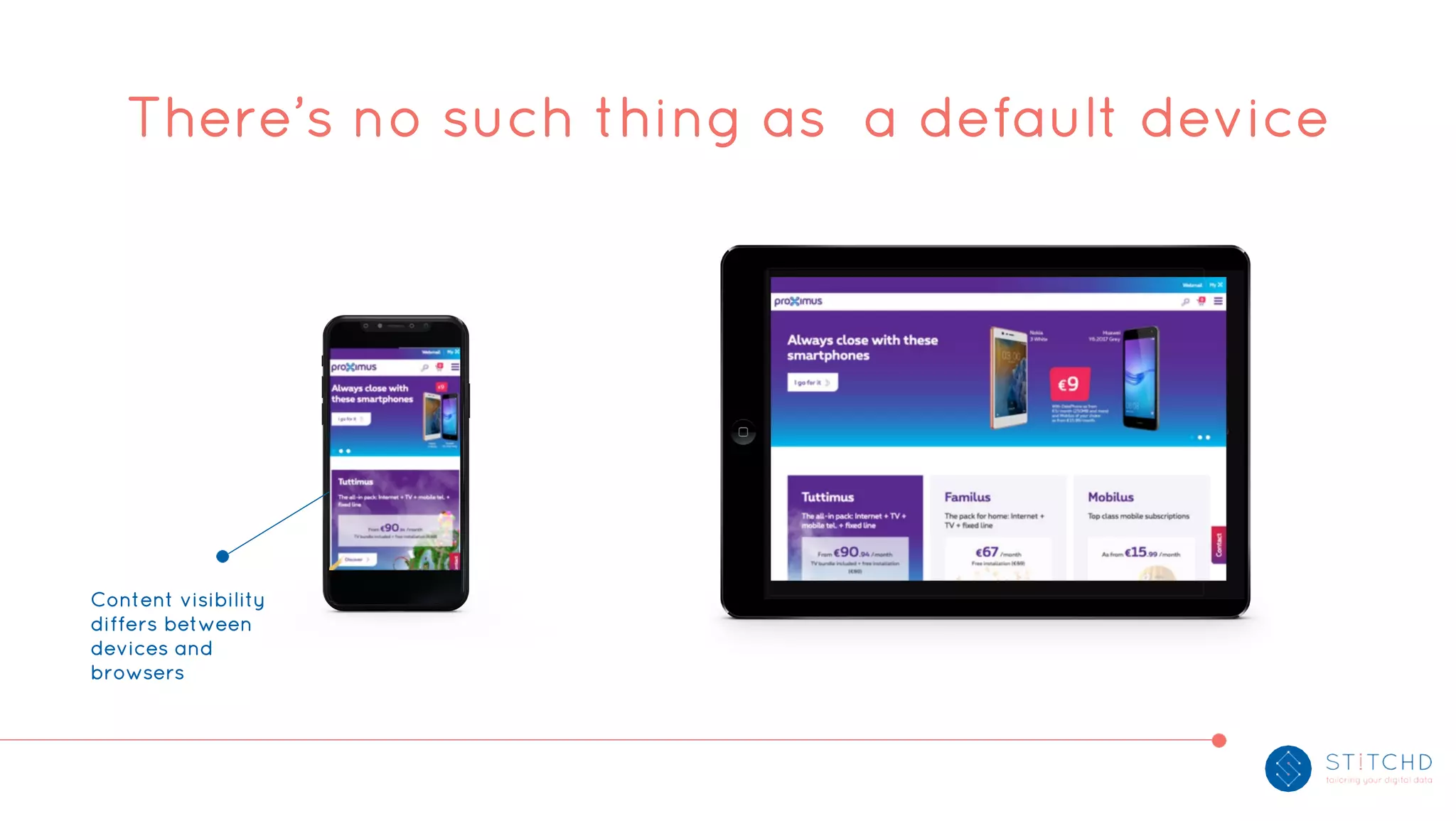
There’s no such thing as a default device
Content visibility
differs between
devices and
browsers
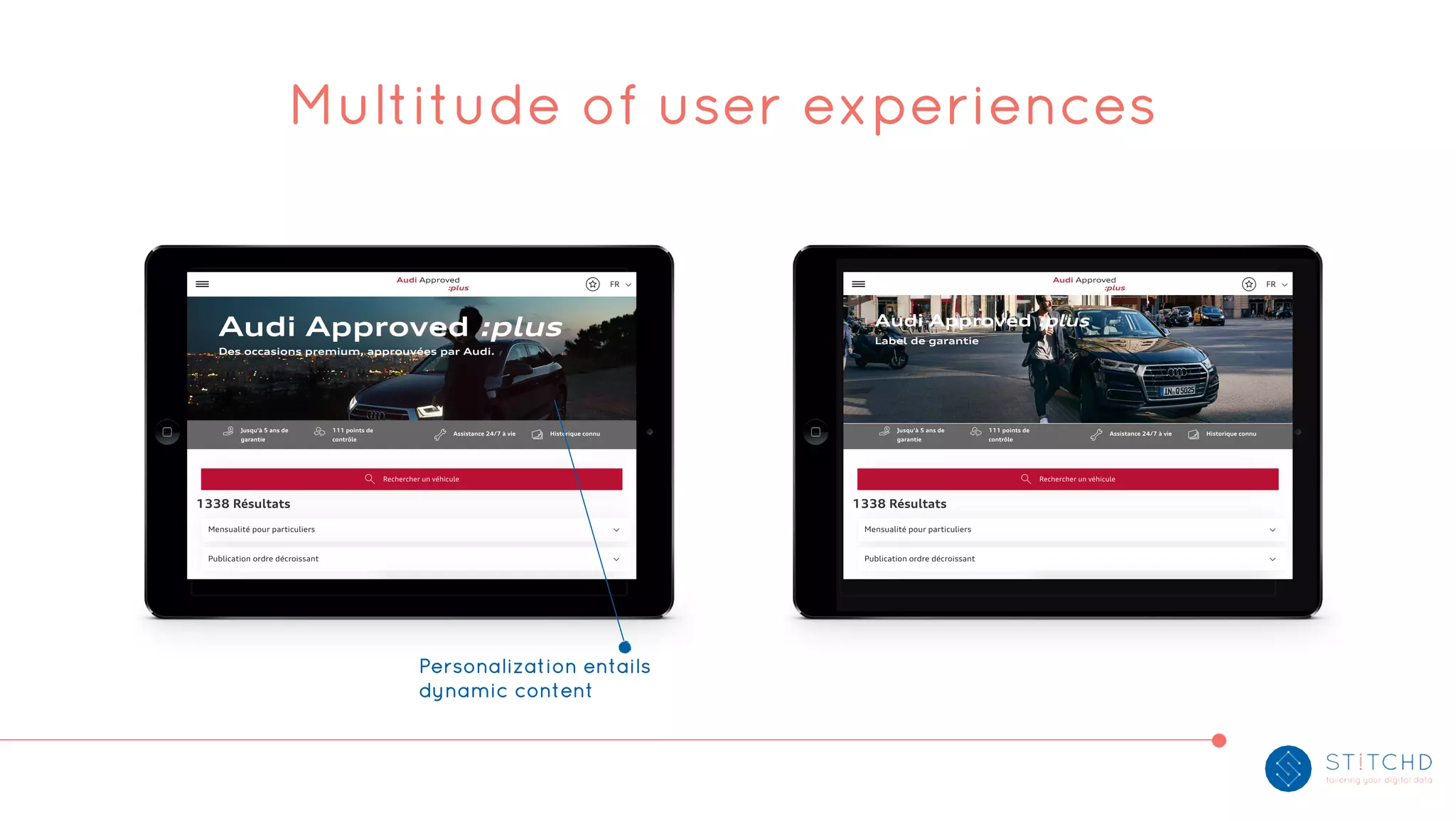
Multitude of user experiences
Personalization entails
dynamic content
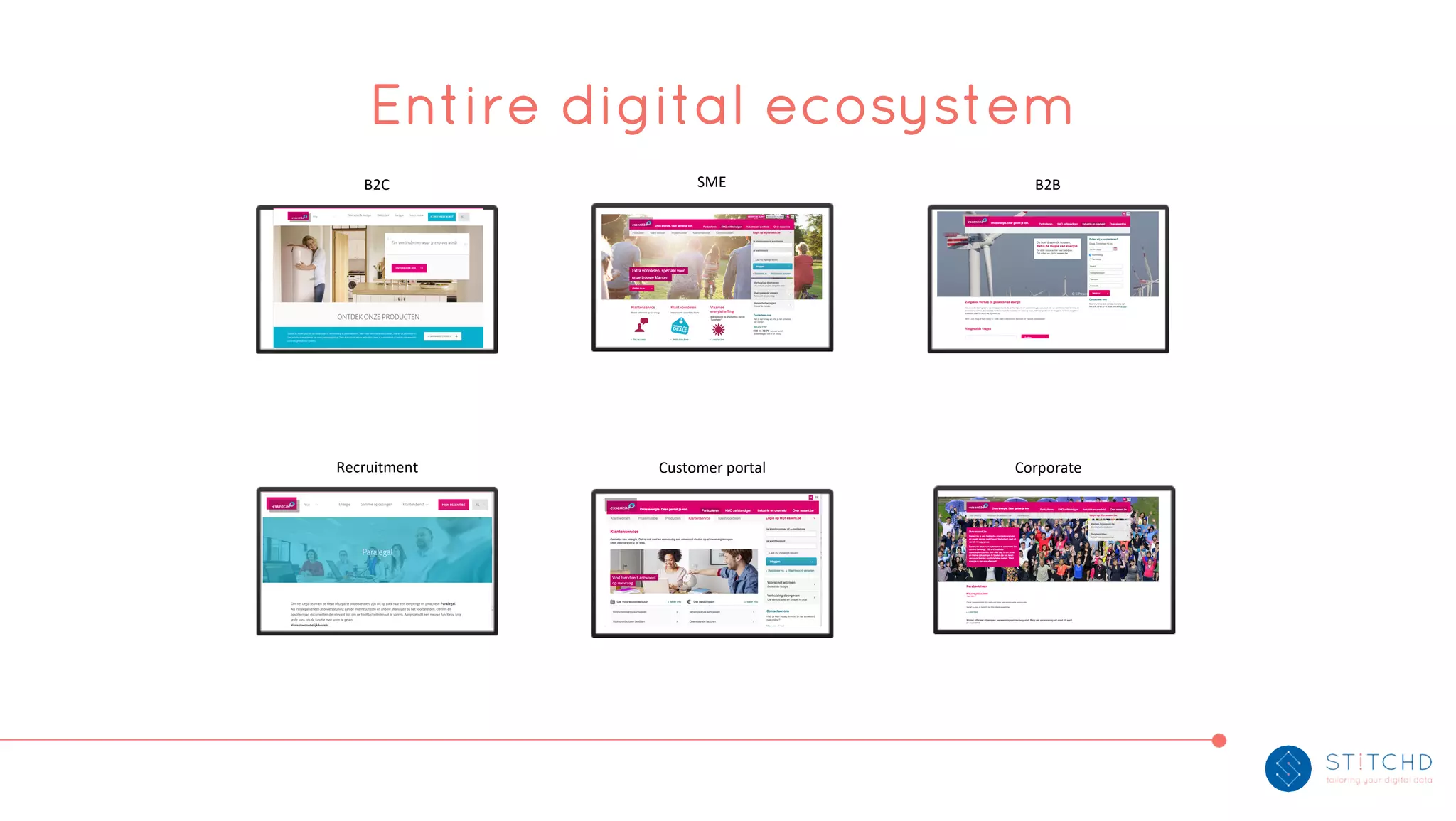
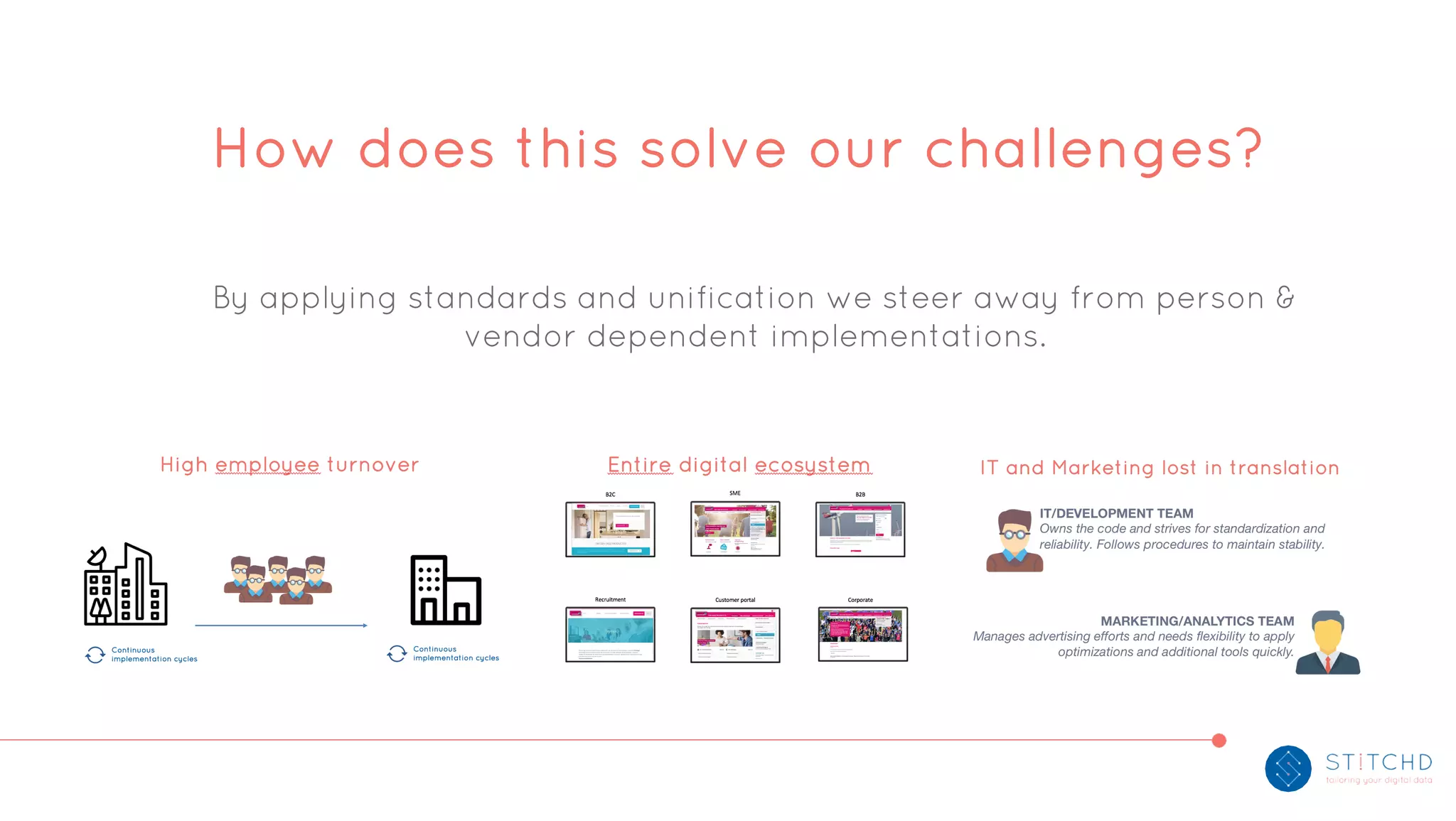
Entire digital ecosystem
B2C
Customer portal
SME B2B
Recruitment Corporate
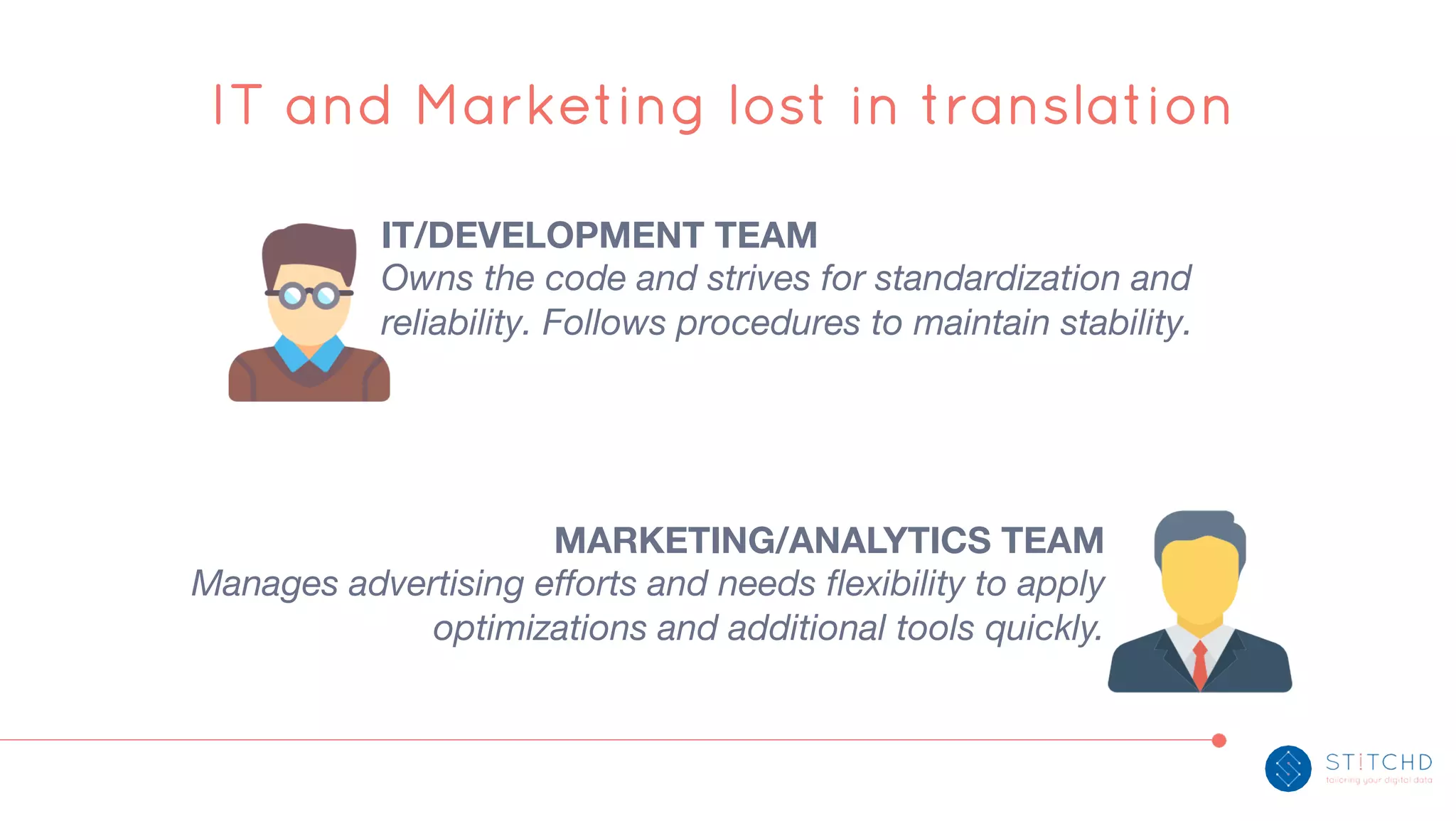
IT and Marketing lost in translation
IT/DEVELOPMENT TEAM
Owns the code and strives for standardization and
reliability. Follows procedures to maintain stability.
MARKETING/ANALYTICS TEAM
Manages advertising efforts and needs flexibility to apply
optimizations and additional tools quickly.
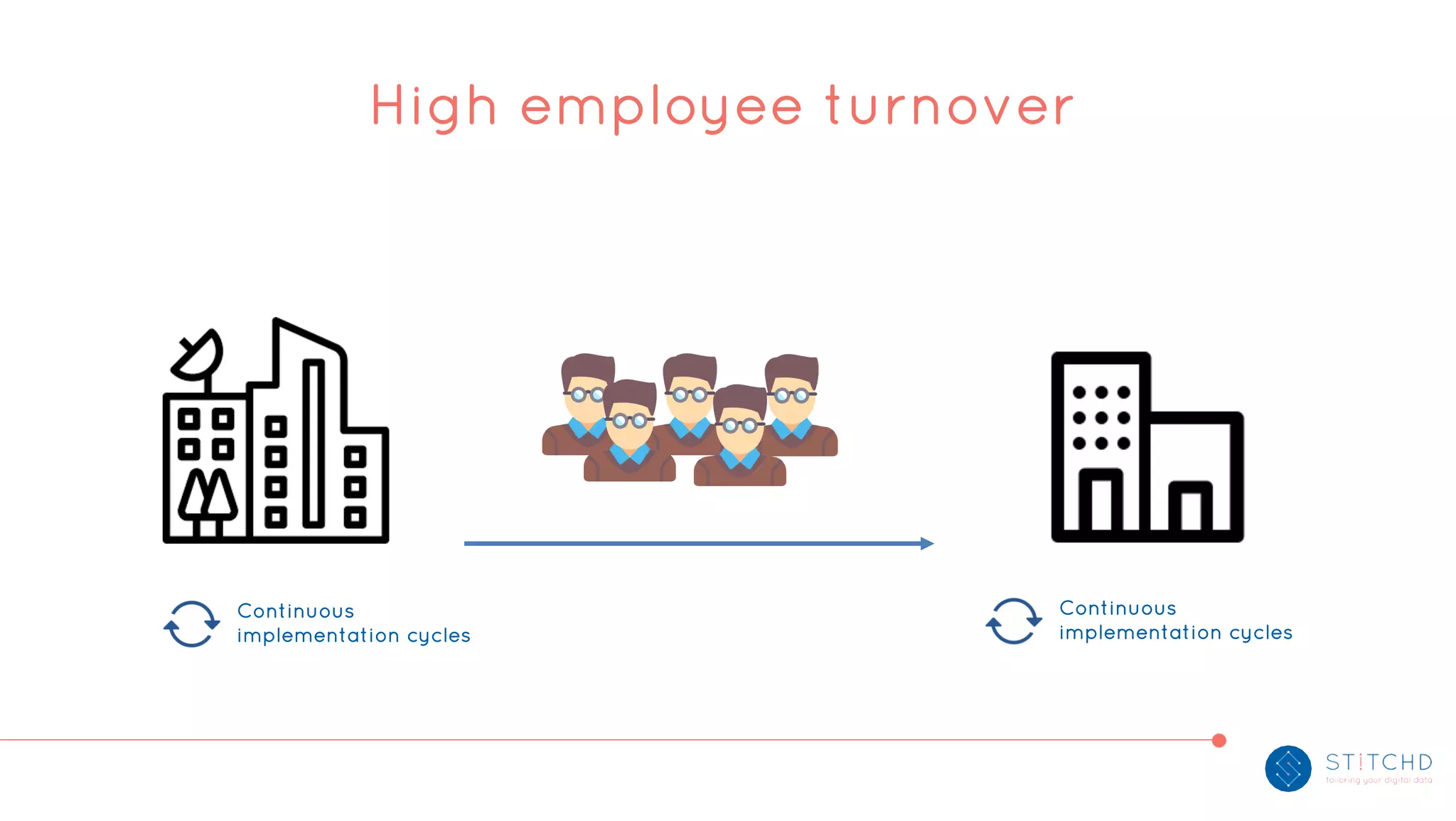
High employee turnover
Continuous
implementation cycles
Continuous
implementation cycles
New project: migrate s-code towards a TMS
• Analysts did not trust the data
• Legacy implementation
• Everyone involved left the organisation
• Business asked for a cross-brand view
• Much ETL work involved
• IT was investigating a new CMS
• Angular front-end
• Parent company was talking to Google
• Switch from Adobe to 360 in the near future?
3 years ago
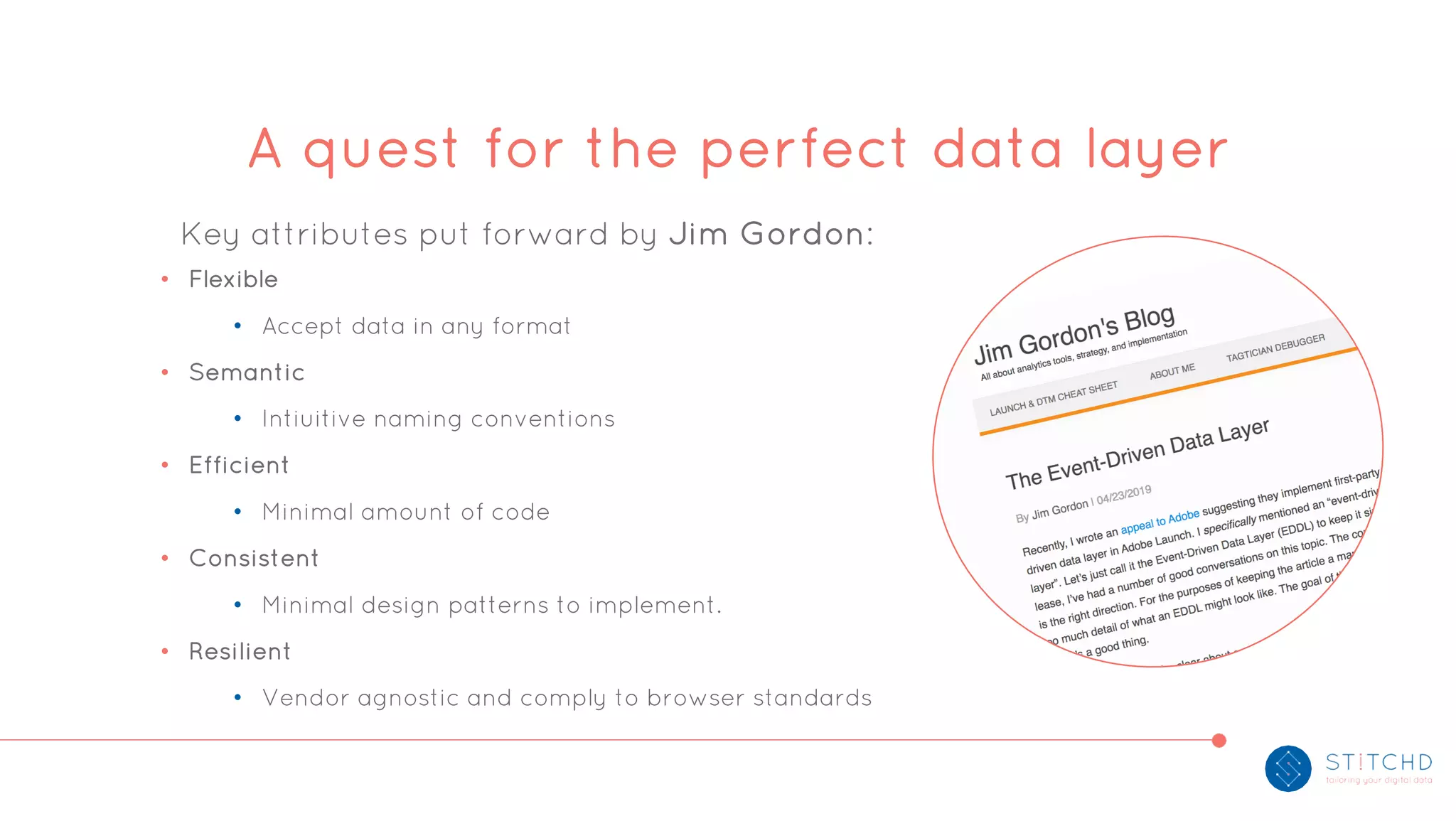
Key attributes put forward by Jim Gordon:
• Flexible
• Accept data in any format
• Semantic
• Intiuitive naming conventions
• Efficient
• Minimal amount of code
• Consistent
• Minimal design patterns to implement.
• Resilient
• Vendor agnostic and comply to browser standards
A quest for the perfect data layer
The Generic Digital Data Layer,
an event-driven, asynchronous
data layer.
Introducing: GDDL
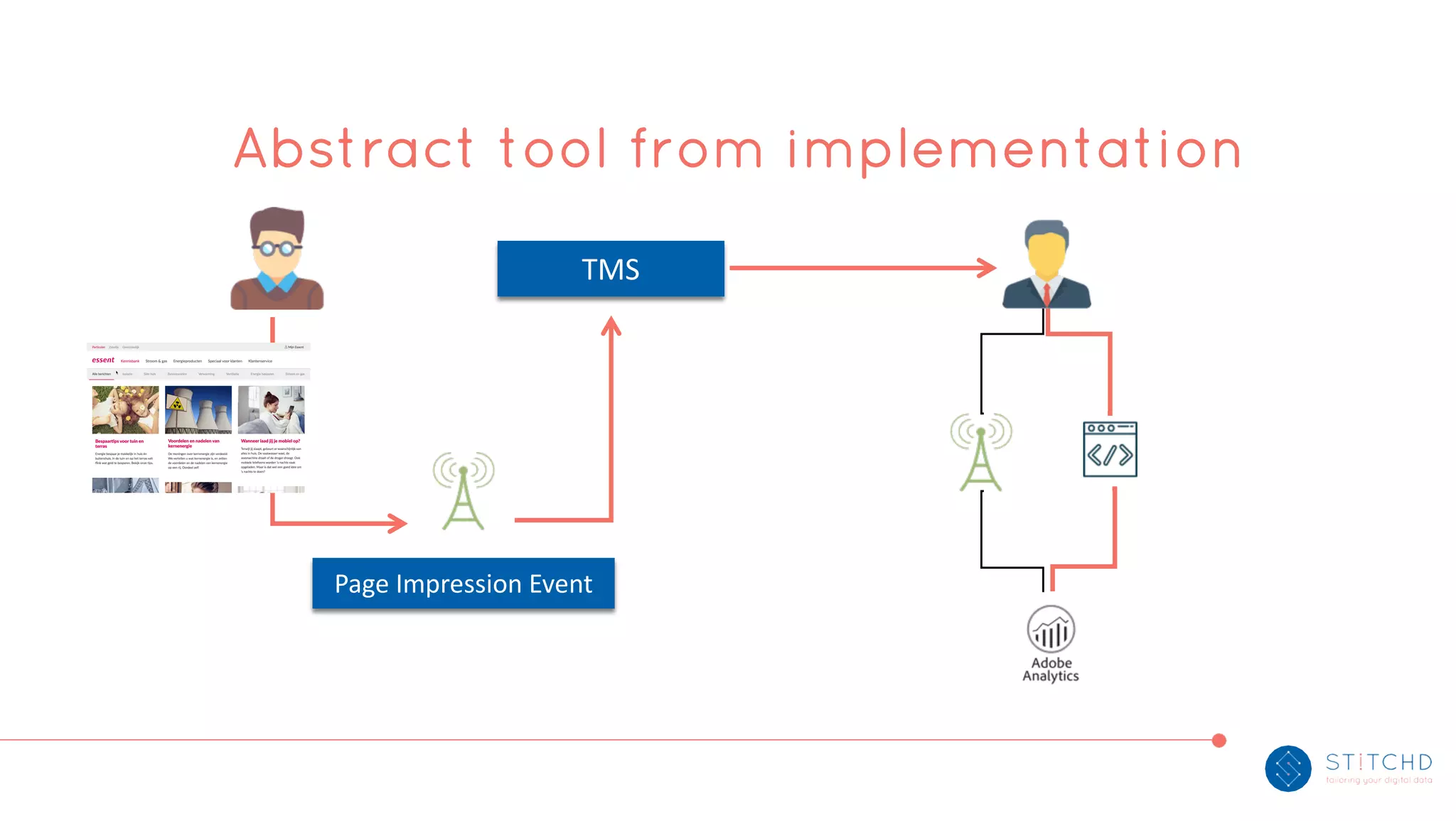
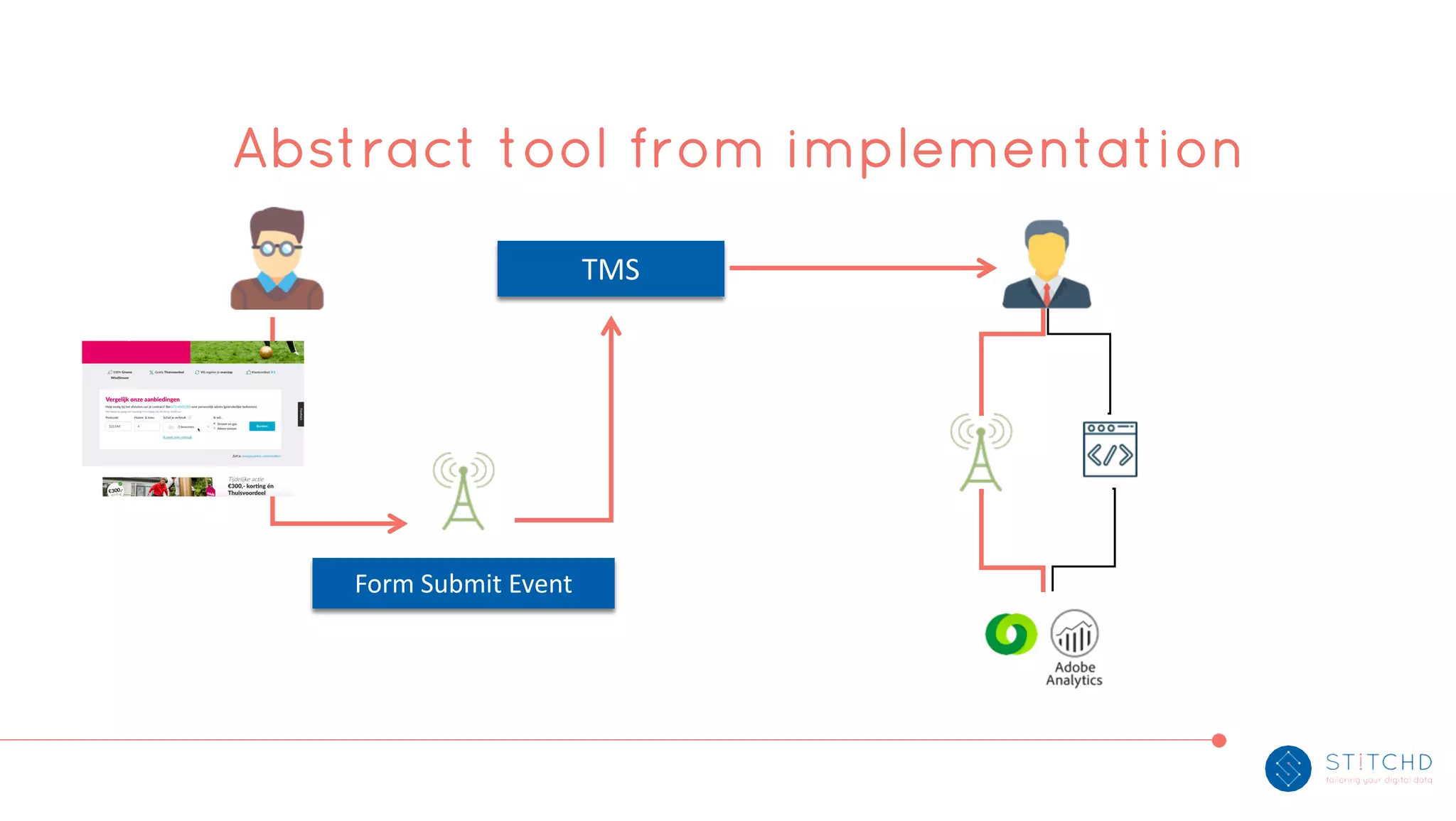
Abstract tool from implementation
TMS
Page Impression Event
Abstract tool from implementation
TMS
Form Submit Event
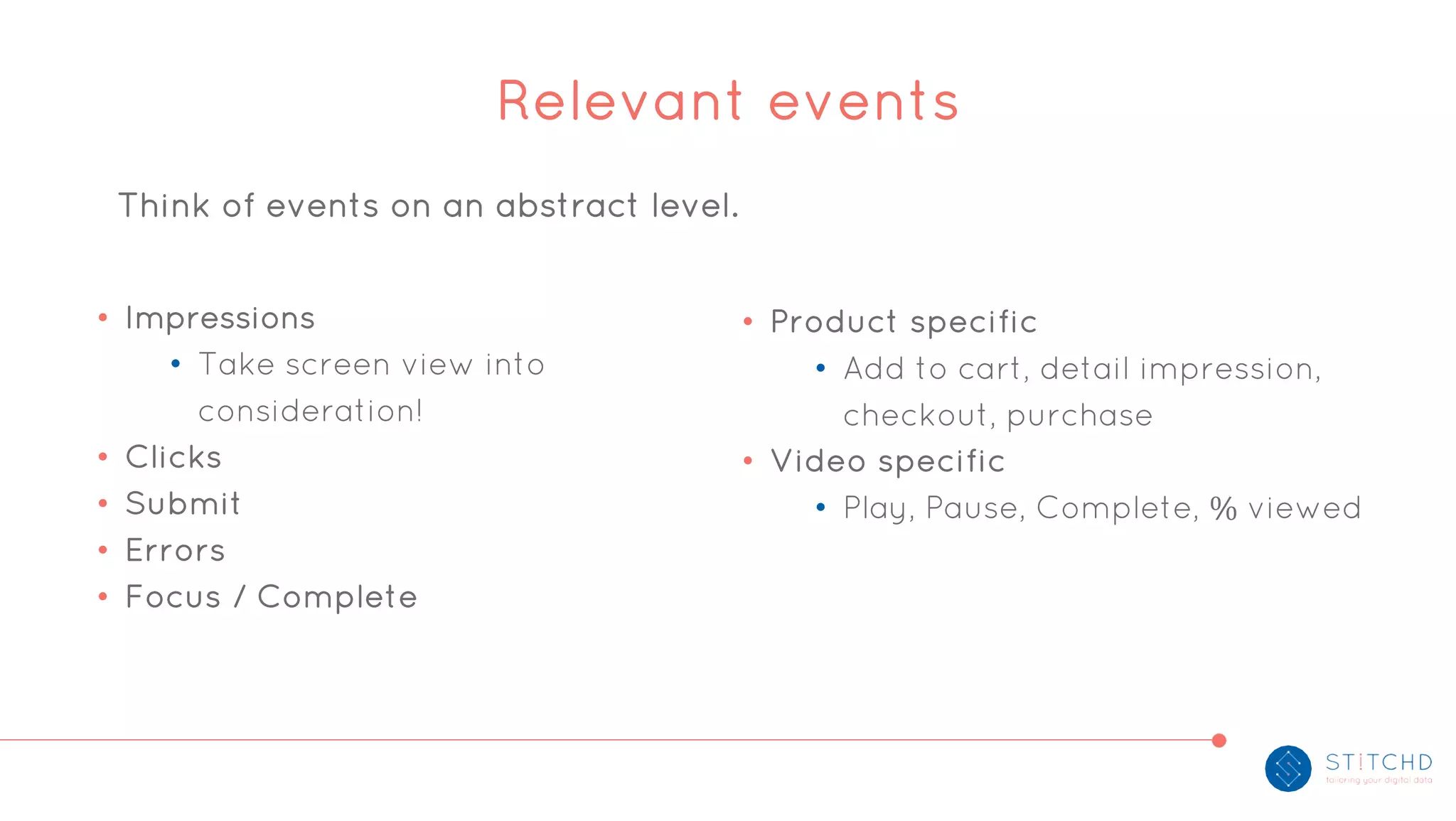
• Impressions
• Take screen view into
consideration!
• Clicks
• Submit
• Errors
• Focus / Complete
• Product specific
• Add to cart, detail impression,
checkout, purchase
• Video specific
• Play, Pause, Complete, % viewed
Relevant events
Think of events on an abstract level.
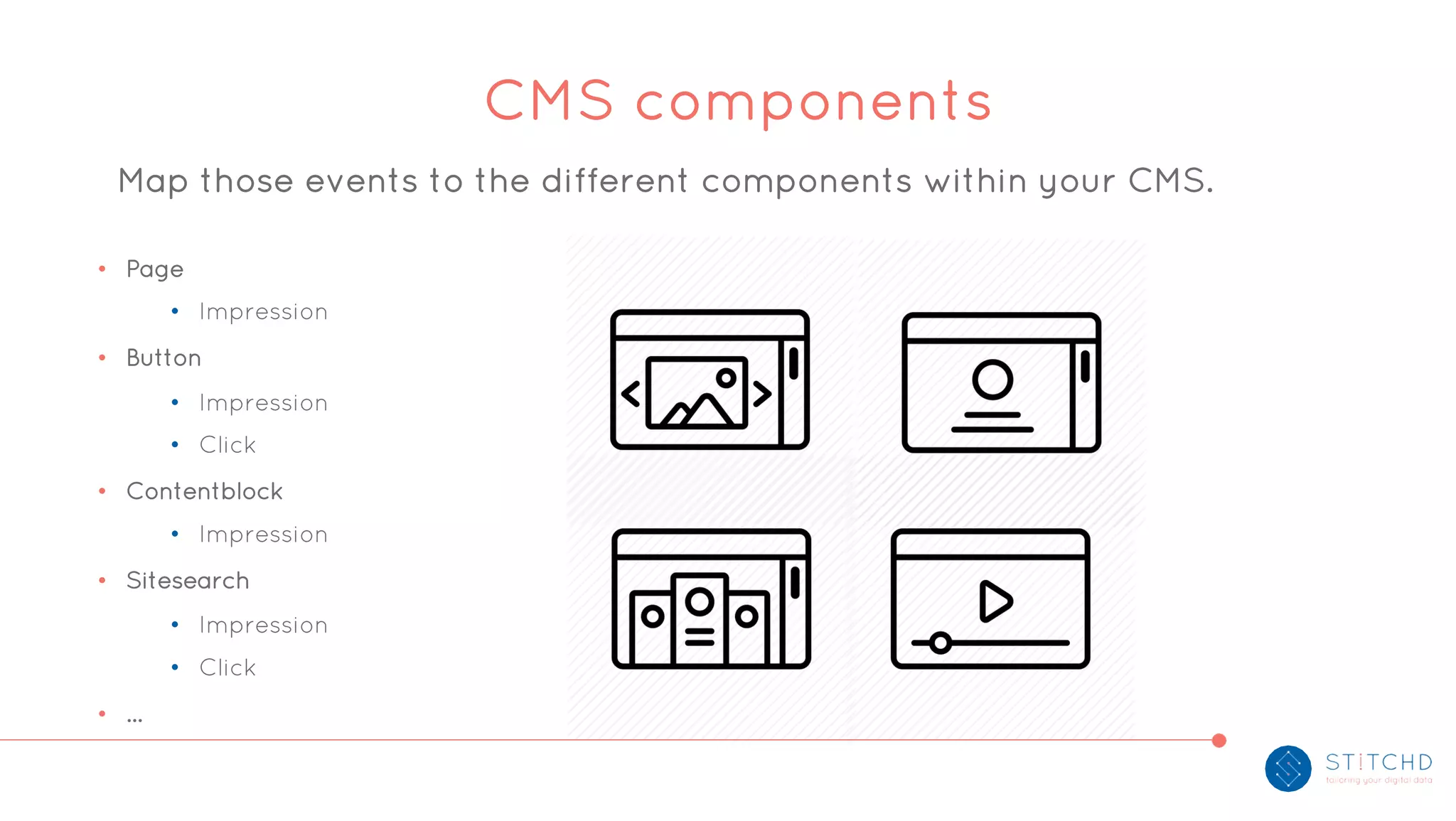
Map those events to the different components within your CMS.
• Page
• Impression
• Button
• Impression
• Click
• Contentblock
• Impression
• Sitesearch
• Impression
• Click
• …
CMS components
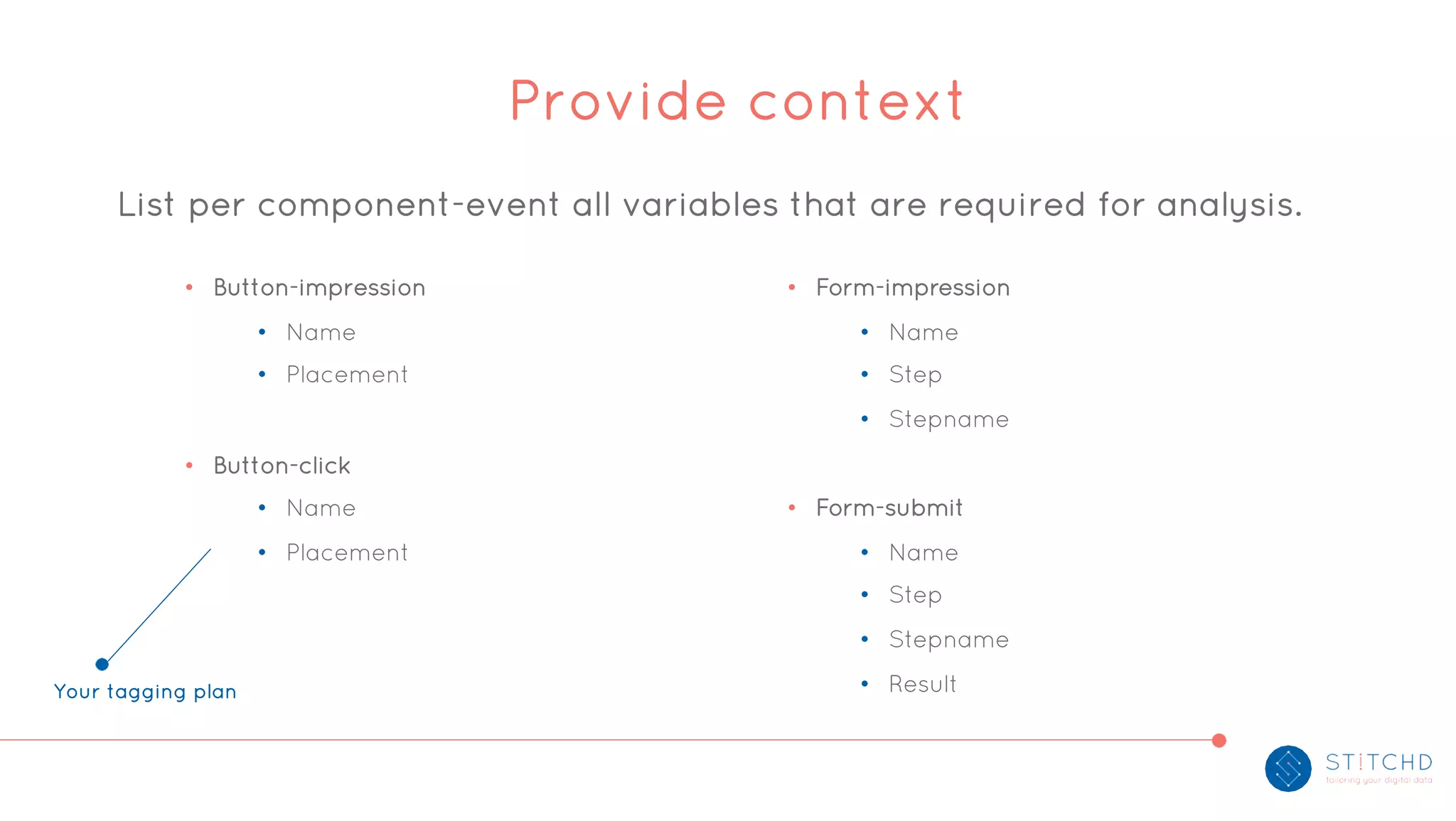
List per component-event all variables that are required for analysis.
Provide context
• Button-impression
• Name
• Placement
• Button-click
• Name
• Placement
• Form-impression
• Name
• Step
• Stepname
• Form-submit
• Name
• Step
• Stepname
• ResultYour tagging plan
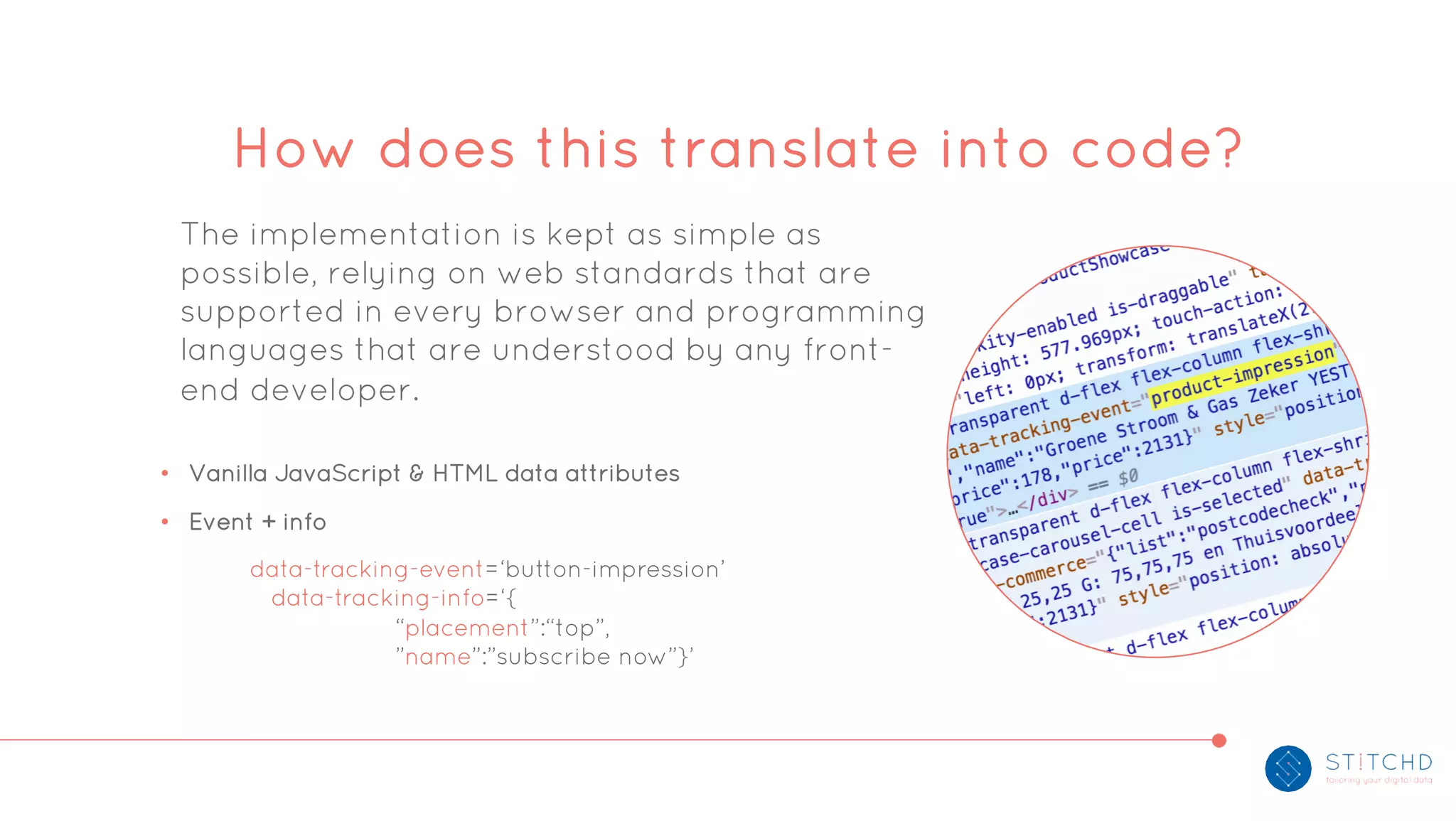
The implementation is kept as simple as
possible, relying on web standards that are
supported in every browser and programming
languages that are understood by any front-
end developer.
• Vanilla JavaScript & HTML data attributes
• Event + info
How does this translate into code?
data-tracking-event=‘button-impression’
data-tracking-info=‘{
“placement”:“top”,
”name”:”subscribe now”}’
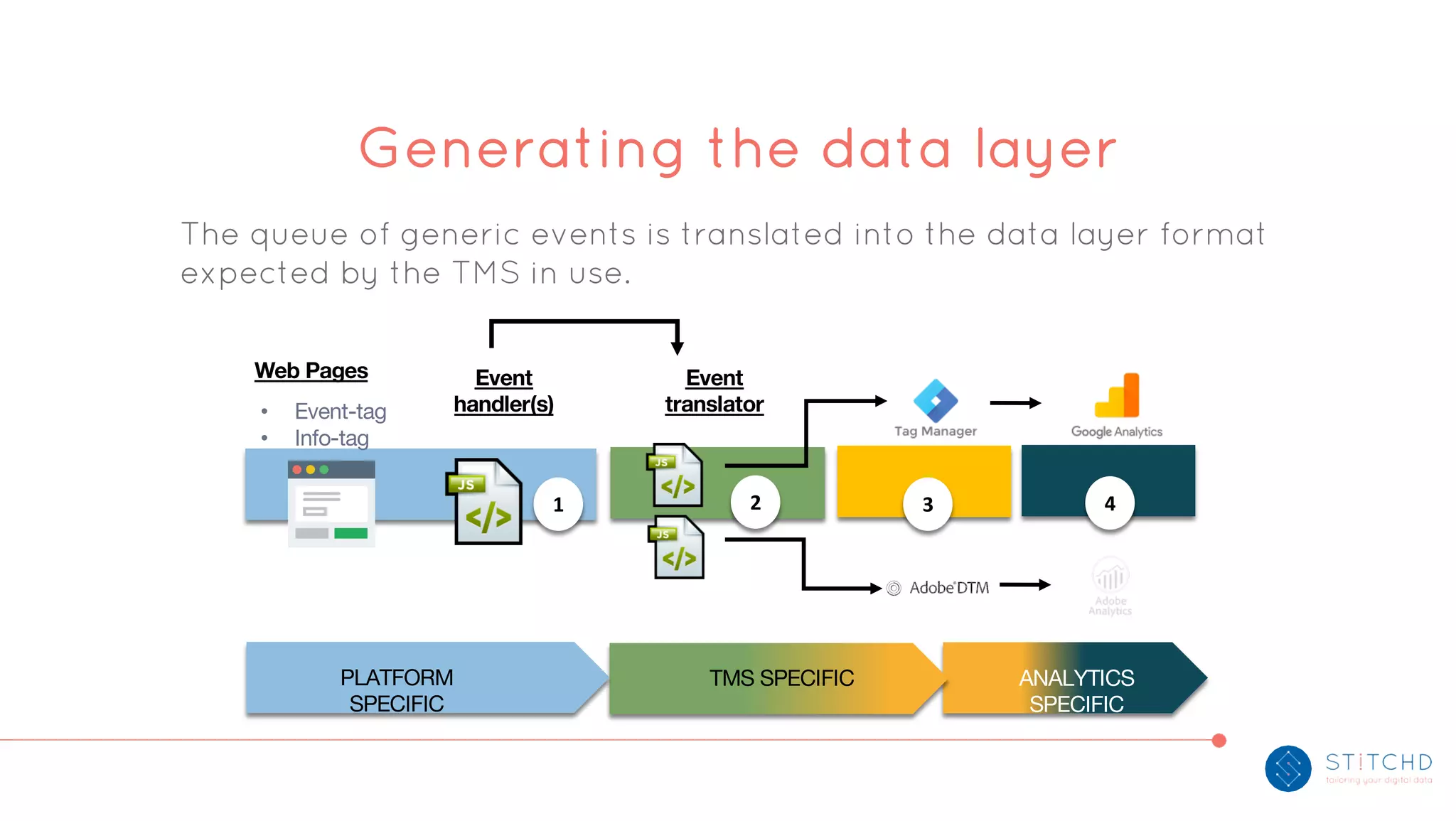
The queue of generic events is translated into the data layer format
expected by the TMS in use.
Generating the data layer
Web Pages Event
handler(s)• Event-tag
• Info-tag
Event
translator
TMS SPECIFIC ANALYTICS
SPECIFIC
PLATFORM
SPECIFIC
1 2 3 4
By using an event-driven framework, we overcome
the problems with traditional page-based tracking and content visibility.
How does this solve our challenges?
By applying standards and unification we steer away from person &
vendor dependent implementations.
How does this solve our challenges?
• Tool independent
• Prevent vendor lock-in
• Reduced implementation & maintenance costs
• No specific briefings required
• Data quality assurance and trust
• Enables automated testing
• Implementation tailored to the business needs
• No predefined syntax that you must adapt you
• Flexibel for other data integrations
• Event queue can be used for all kind of applications
Tested & Proven framework
Try it yourself!
The GDDL is an open source framework.
We welcome feedback and suggestions for improvements.
https://bitbucket.org/xploregroup/xploregroup-webanalytics-demo
Questions? Contact us.
www.stitchd.be | www.stitchd.nl
info@stitchd.be
@We_Are_Stitchd

A vision for sustainable analytics implementations - Superweek 2020

  • 1.
  • 2.
    Jente De Ridder •Data Geek • Belgian • Father of 2 sons • Outdoor fan @Nihiel Let me introduce myself…
  • 3.
    Your company’s ambitions “Wewill deliver relevant one-to-one marketing experiences, fueled by A.I. „ Your CEO, January 2020
  • 4.
    Bad news: you’renot ready “Data quality is earned, not acquired. „ Simo Ahava, Superweek 2019
  • 5.
  • 6.
  • 7.
    A website doesnot consist of static pages Modular development frameworks are on the rise Single page applications are used more often
  • 8.
    There’s no suchthing as a default device Content visibility differs between devices and browsers
  • 9.
    Multitude of userexperiences Personalization entails dynamic content
  • 10.
    Entire digital ecosystem B2C Customerportal SME B2B Recruitment Corporate
  • 11.
    IT and Marketinglost in translation IT/DEVELOPMENT TEAM Owns the code and strives for standardization and reliability. Follows procedures to maintain stability. MARKETING/ANALYTICS TEAM Manages advertising efforts and needs flexibility to apply optimizations and additional tools quickly.
  • 12.
    High employee turnover Continuous implementationcycles Continuous implementation cycles
  • 13.
    New project: migrates-code towards a TMS • Analysts did not trust the data • Legacy implementation • Everyone involved left the organisation • Business asked for a cross-brand view • Much ETL work involved • IT was investigating a new CMS • Angular front-end • Parent company was talking to Google • Switch from Adobe to 360 in the near future? 3 years ago
  • 14.
    Key attributes putforward by Jim Gordon: • Flexible • Accept data in any format • Semantic • Intiuitive naming conventions • Efficient • Minimal amount of code • Consistent • Minimal design patterns to implement. • Resilient • Vendor agnostic and comply to browser standards A quest for the perfect data layer
  • 15.
    The Generic DigitalData Layer, an event-driven, asynchronous data layer. Introducing: GDDL
  • 16.
    Abstract tool fromimplementation TMS Page Impression Event
  • 17.
    Abstract tool fromimplementation TMS Form Submit Event
  • 18.
    • Impressions • Takescreen view into consideration! • Clicks • Submit • Errors • Focus / Complete • Product specific • Add to cart, detail impression, checkout, purchase • Video specific • Play, Pause, Complete, % viewed Relevant events Think of events on an abstract level.
  • 19.
    Map those eventsto the different components within your CMS. • Page • Impression • Button • Impression • Click • Contentblock • Impression • Sitesearch • Impression • Click • … CMS components
  • 20.
    List per component-eventall variables that are required for analysis. Provide context • Button-impression • Name • Placement • Button-click • Name • Placement • Form-impression • Name • Step • Stepname • Form-submit • Name • Step • Stepname • ResultYour tagging plan
  • 21.
    The implementation iskept as simple as possible, relying on web standards that are supported in every browser and programming languages that are understood by any front- end developer. • Vanilla JavaScript & HTML data attributes • Event + info How does this translate into code? data-tracking-event=‘button-impression’ data-tracking-info=‘{ “placement”:“top”, ”name”:”subscribe now”}’
  • 22.
    The queue ofgeneric events is translated into the data layer format expected by the TMS in use. Generating the data layer Web Pages Event handler(s)• Event-tag • Info-tag Event translator TMS SPECIFIC ANALYTICS SPECIFIC PLATFORM SPECIFIC 1 2 3 4
  • 23.
    By using anevent-driven framework, we overcome the problems with traditional page-based tracking and content visibility. How does this solve our challenges?
  • 24.
    By applying standardsand unification we steer away from person & vendor dependent implementations. How does this solve our challenges?
  • 25.
    • Tool independent •Prevent vendor lock-in • Reduced implementation & maintenance costs • No specific briefings required • Data quality assurance and trust • Enables automated testing • Implementation tailored to the business needs • No predefined syntax that you must adapt you • Flexibel for other data integrations • Event queue can be used for all kind of applications Tested & Proven framework
  • 26.
    Try it yourself! TheGDDL is an open source framework. We welcome feedback and suggestions for improvements. https://bitbucket.org/xploregroup/xploregroup-webanalytics-demo
  • 27.
    Questions? Contact us. www.stitchd.be| www.stitchd.nl info@stitchd.be @We_Are_Stitchd