IAP2 code
of ethics
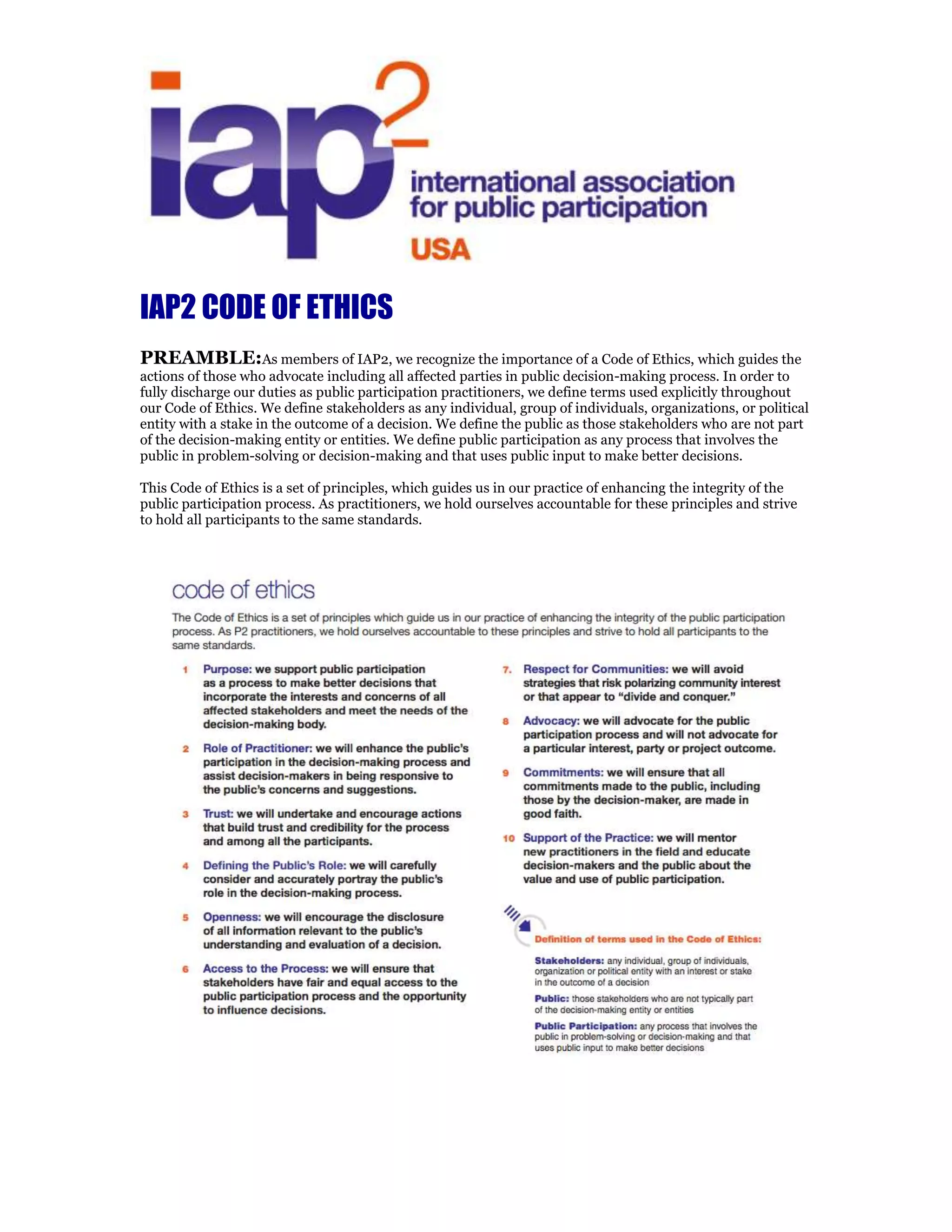
The Code of Ethics is a set of principles, which guide us in our practice of enhancing the integrity of the public
participation process. As P2 practitioners, we hold ourselves accountable to these principles and strive to hold all
participants to the same standards.
1 Purpose: we support public participation
as a process to make better decisions that
incorporate the interests and concerns of all
affected stakeholders and meet the needs of
the decision-making body.
2 Role of Practitioner: we will enhance the
public’s participation in the decision-making
process and assist decision-makers in being
responsive to the public’s concerns and
suggestions.
3 Trust: we will undertake and encourage
actions that build trust and credibility for the
process and among all the participants.
4 Defining the Public’s Role: we will carefully
consider and accurately portray the public’s
role in the decision-making process.
5 Openness: we will encourage the disclosure
of all information relevant to the public’s
understanding and evaluation of a decision.
6 Access to the Process: we will ensure that
stakeholders have fair and equal access to
the public participation process and the
opportunity to influence decisions.
Definition of terms used in Code of Ethics:
Stakeholders: any individual, group of individuals,
organization or political entity with an interest or stake
in the outcome of a decision
Public: those stakeholders who are not typically part
of the decision-making entity or entities
Public Participation: any process that involves the
public in problem-solving or decision-making and that
uses public input to make better decisions
7 Respect for Communities: we will avoid
strategies that risk polarizing community
interest or that appear to “divide and
conquer.”
8 Advocacy: we will advocate for the public
participation process and will not advocate
for a particular interest, party or project
outcome.
9 Commitments: we will ensure that all
commitments made to the public, including
those by the decision-maker, are made in
good faith
10 Support of the Practice: we will mentor new
practitioners in the field and educate
decision-makers and the public about the
value and use of public participation.

IAP2 Code of Ethics

  • 1.
    IAP2 code of ethics TheCode of Ethics is a set of principles, which guide us in our practice of enhancing the integrity of the public participation process. As P2 practitioners, we hold ourselves accountable to these principles and strive to hold all participants to the same standards. 1 Purpose: we support public participation as a process to make better decisions that incorporate the interests and concerns of all affected stakeholders and meet the needs of the decision-making body. 2 Role of Practitioner: we will enhance the public’s participation in the decision-making process and assist decision-makers in being responsive to the public’s concerns and suggestions. 3 Trust: we will undertake and encourage actions that build trust and credibility for the process and among all the participants. 4 Defining the Public’s Role: we will carefully consider and accurately portray the public’s role in the decision-making process. 5 Openness: we will encourage the disclosure of all information relevant to the public’s understanding and evaluation of a decision. 6 Access to the Process: we will ensure that stakeholders have fair and equal access to the public participation process and the opportunity to influence decisions. Definition of terms used in Code of Ethics: Stakeholders: any individual, group of individuals, organization or political entity with an interest or stake in the outcome of a decision Public: those stakeholders who are not typically part of the decision-making entity or entities Public Participation: any process that involves the public in problem-solving or decision-making and that uses public input to make better decisions 7 Respect for Communities: we will avoid strategies that risk polarizing community interest or that appear to “divide and conquer.” 8 Advocacy: we will advocate for the public participation process and will not advocate for a particular interest, party or project outcome. 9 Commitments: we will ensure that all commitments made to the public, including those by the decision-maker, are made in good faith 10 Support of the Practice: we will mentor new practitioners in the field and educate decision-makers and the public about the value and use of public participation.