









Second year Lab Medicine (Females)
     1433- 1434 A.H. / 2012- 2013
  Microbiology Practical (Course I)


.Mrs. Hibah Abdul-Wahab I
       Abu-Sulaiman
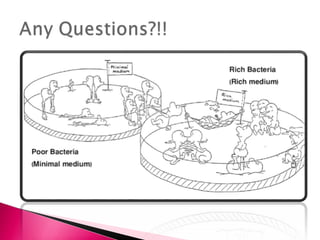
Who will be her groom??!
Royal Dining   Royal Atmosphere
 Bacterial nutritional requirements.
 Composition of culture media.

 Categories of culture media.

 Solidifying agents.

 Types of media.

 Media Quality control.

 Culturing techniques.

 Condition of incubation.
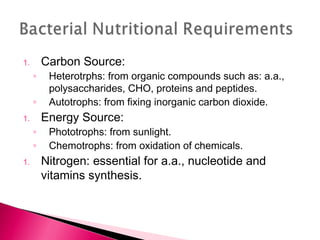
1.       Carbon Source:
     ◦    Heterotrphs: from organic compounds such as: a.a.,
          polysaccharides, CHO, proteins and peptides.
     ◦    Autotrophs: from fixing inorganic carbon dioxide.
1.       Energy Source:
     ◦    Phototrophs: from sunlight.
     ◦    Chemotrophs: from oxidation of chemicals.
1.       Nitrogen: essential for a.a., nucleotide and
         vitamins synthesis.
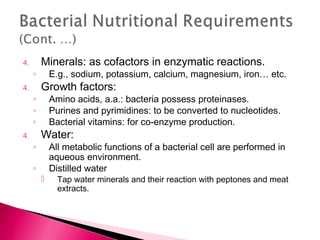
4.       Minerals: as cofactors in enzymatic reactions.
     ◦       E.g., sodium, potassium, calcium, magnesium, iron… etc.
4.       Growth factors:
     ◦       Amino acids, a.a.: bacteria possess proteinases.
     ◦       Purines and pyrimidines: to be converted to nucleotides.
     ◦       Bacterial vitamins: for co-enzyme production.
4.       Water:
     ◦       All metabolic functions of a bacterial cell are performed in
             aqueous environment.
     ◦       Distilled water
              Tap water minerals and their reaction with peptones and meat
               extracts.
1.       Water.
2.       Peptone: product of protein hydrolysis.
     ◦    From animal proteins: source of nitrogen.
     ◦    From soya bean (plant) protein: source of carbohydrates,
          CHO.
1.       Meat extracts: as source of a.a. and other essential
         vitamins and elements.
2.       Yeast extract: as a stimulant for bacterial growth in
         the media.
3.       Mineral salts: for bacterial enzymes activity.
4.       Carbohydrates: as source of carbon and energy.
   Agar:
    ◦ Is a complex polysaccharide (polymer of galactose) that
      is extracted from the cell wall of seaweed (red algae).
    ◦ It has no nutritional value in agar cultures.
   Gelatin:
    ◦ A protein which is derived from collagen of skin and
      bone.
    ◦ It has no nutritional value in agar cultures.
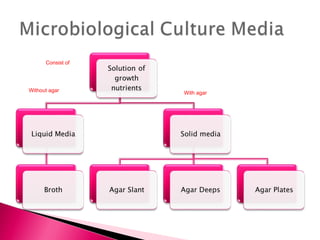
Consist of


Without agar       With agar
Agar Slant   Agar Deep
                            Agar Plates
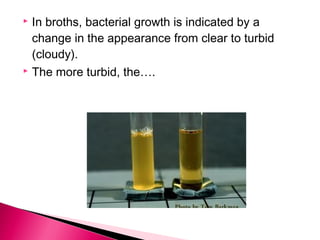
 In broths, bacterial growth is indicated by a
  change in the appearance from clear to turbid
  (cloudy).
 The more turbid, the….
   Basal Media:
    ◦ Simple media that will support the growth of most bacteria that
      do not require special nutrient. E.g., Nutrient broth.
    ◦ Nutrient broth+ agar= Nutrient agar
   Enriched media:
    ◦ Culture media that are enriched with whole or lysed blood,
      serum, special extracts or nutrient to support the growth of
      those bacteria that cannot grow on the basal media.
    ◦ Nutrient agar+ blood= Blood agar
    ◦ Blood agar+ heat= chocolate agar
   Selective media:
    ◦ Solid media which contain substances that inhibit the growth of
      some bacteria and letting the others grow.
   Enrichment media:
    ◦ These are liquid media that are similar in function to ...
    ◦ The only difference is that…
   Differential media:
    ◦ Contains indicators that will differentiate one organism
      from another
   Transport media:
    ◦ Contain substances that can prevent overgrowth of
      commensals and prevent bacteria from dying as a result
      of change in pH or enzyme action.
   Media should be tested for:
    1. Sterility.
    2. Each medium must be tested with organisms expected
       to grow or give a positive reaction as well as with
       organisms expected not to grow.
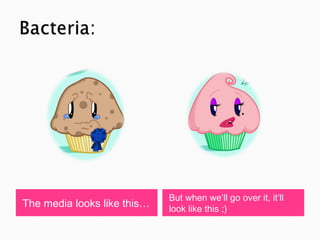
But when we’ll go over it, it’ll
The media looks like this…   look like this ;)
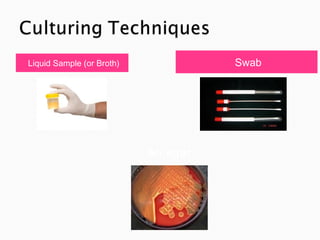
Liquid Sample (or Broth)             Swab


                           An agar
 Temperature.
 Hydrogen ion concentration (pH).

 Gaseous requirements.
 Too high temperature will denature bacterial
  ezymes. While too low temperature….
 Types of bacteria according to their growth

  temperature:
    1. Psychrophiles: bacteria that grow between 0-20oC.
    2. Mesophiles: those that grow between 21oC and 50oC.
    3. Thermophiles: the ones that grow between 50oC and
       100oC.
 Acidophiles: bacteria that grow in acidic pH.
 Neutrophiles: those that grow in between 4-9.
 Alkalophiles: ones that grow in alkaline pH.
Bacteria differ in their need to molecular oxygen for
  growth:
 Obligatory (strict)aerobes: require free oxygen for

  growth.
 Obligatory (strict) anaerobes: grow only in the

  absence of free oxygen.
 Facultative anaerobes: multiply either in the

  presence or absence of free oxygen.
 Carboxyphilic (capnophilic): these bacteria require

  raised level of carbon dioxide (5-10%).
Nut3 bacterial cultivation

Nut3 bacterial cultivation

  • 1.
    Second year LabMedicine (Females) 1433- 1434 A.H. / 2012- 2013 Microbiology Practical (Course I) .Mrs. Hibah Abdul-Wahab I Abu-Sulaiman
  • 2.
    Who will beher groom??!
  • 3.
    Royal Dining Royal Atmosphere
  • 6.
     Bacterial nutritionalrequirements.  Composition of culture media.  Categories of culture media.  Solidifying agents.  Types of media.  Media Quality control.  Culturing techniques.  Condition of incubation.
  • 7.
    1. Carbon Source: ◦ Heterotrphs: from organic compounds such as: a.a., polysaccharides, CHO, proteins and peptides. ◦ Autotrophs: from fixing inorganic carbon dioxide. 1. Energy Source: ◦ Phototrophs: from sunlight. ◦ Chemotrophs: from oxidation of chemicals. 1. Nitrogen: essential for a.a., nucleotide and vitamins synthesis.
  • 8.
    4. Minerals: as cofactors in enzymatic reactions. ◦ E.g., sodium, potassium, calcium, magnesium, iron… etc. 4. Growth factors: ◦ Amino acids, a.a.: bacteria possess proteinases. ◦ Purines and pyrimidines: to be converted to nucleotides. ◦ Bacterial vitamins: for co-enzyme production. 4. Water: ◦ All metabolic functions of a bacterial cell are performed in aqueous environment. ◦ Distilled water  Tap water minerals and their reaction with peptones and meat extracts.
  • 9.
    1. Water. 2. Peptone: product of protein hydrolysis. ◦ From animal proteins: source of nitrogen. ◦ From soya bean (plant) protein: source of carbohydrates, CHO. 1. Meat extracts: as source of a.a. and other essential vitamins and elements. 2. Yeast extract: as a stimulant for bacterial growth in the media. 3. Mineral salts: for bacterial enzymes activity. 4. Carbohydrates: as source of carbon and energy.
  • 10.
    Agar: ◦ Is a complex polysaccharide (polymer of galactose) that is extracted from the cell wall of seaweed (red algae). ◦ It has no nutritional value in agar cultures.  Gelatin: ◦ A protein which is derived from collagen of skin and bone. ◦ It has no nutritional value in agar cultures.
  • 11.
  • 12.
    Agar Slant Agar Deep  Agar Plates
  • 13.
     In broths,bacterial growth is indicated by a change in the appearance from clear to turbid (cloudy).  The more turbid, the….
  • 14.
    Basal Media: ◦ Simple media that will support the growth of most bacteria that do not require special nutrient. E.g., Nutrient broth. ◦ Nutrient broth+ agar= Nutrient agar  Enriched media: ◦ Culture media that are enriched with whole or lysed blood, serum, special extracts or nutrient to support the growth of those bacteria that cannot grow on the basal media. ◦ Nutrient agar+ blood= Blood agar ◦ Blood agar+ heat= chocolate agar  Selective media: ◦ Solid media which contain substances that inhibit the growth of some bacteria and letting the others grow.
  • 15.
    Enrichment media: ◦ These are liquid media that are similar in function to ... ◦ The only difference is that…  Differential media: ◦ Contains indicators that will differentiate one organism from another  Transport media: ◦ Contain substances that can prevent overgrowth of commensals and prevent bacteria from dying as a result of change in pH or enzyme action.
  • 16.
    Media should be tested for: 1. Sterility. 2. Each medium must be tested with organisms expected to grow or give a positive reaction as well as with organisms expected not to grow.
  • 18.
    But when we’llgo over it, it’ll The media looks like this… look like this ;)
  • 20.
    Liquid Sample (orBroth) Swab An agar
  • 24.
     Temperature.  Hydrogenion concentration (pH).  Gaseous requirements.
  • 25.
     Too hightemperature will denature bacterial ezymes. While too low temperature….  Types of bacteria according to their growth temperature: 1. Psychrophiles: bacteria that grow between 0-20oC. 2. Mesophiles: those that grow between 21oC and 50oC. 3. Thermophiles: the ones that grow between 50oC and 100oC.
  • 26.
     Acidophiles: bacteriathat grow in acidic pH.  Neutrophiles: those that grow in between 4-9.  Alkalophiles: ones that grow in alkaline pH.
  • 27.
    Bacteria differ intheir need to molecular oxygen for growth:  Obligatory (strict)aerobes: require free oxygen for growth.  Obligatory (strict) anaerobes: grow only in the absence of free oxygen.  Facultative anaerobes: multiply either in the presence or absence of free oxygen.  Carboxyphilic (capnophilic): these bacteria require raised level of carbon dioxide (5-10%).