WALTHAM FOREST
MINI-HOLLAND TOUR
September 2016
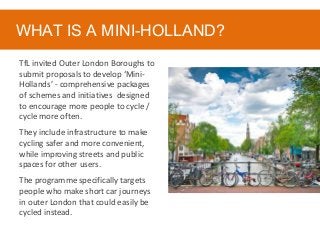
WHAT IS A MINI-HOLLAND?
TfL invited Outer London Boroughs to
submit proposals to develop ‘Mini-
Hollands’ - comprehensive packages
of schemes and initiatives designed
to encourage more people to cycle /
cycle more often.
They include infrastructure to make
cycling safer and more convenient,
while improving streets and public
spaces for other users.
The programme specifically targets
people who make short car journeys
in outer London that could easily be
cycled instead.
WALTHAM FOREST MINI-HOLLAND
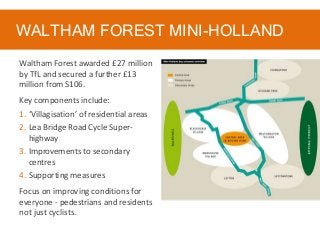
Waltham Forest awarded £27 million
by TfL and secured a further £13
million from S106.
Key components include:
1. ‘Villagisation’ of residential areas
2. Lea Bridge Road Cycle Super-
highway
3. Improvements to secondary
centres
4. Supporting measures
Focus on improving conditions for
everyone - pedestrians and residents
not just cyclists.
‘VILLAGISATION’
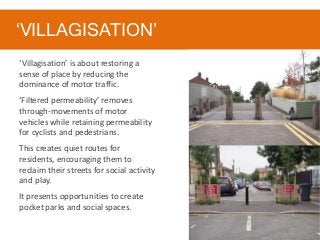
‘Villagisation’ is about restoring a
sense of place by reducing the
dominance of motor traffic.
‘Filtered permeability’ removes
through-movements of motor
vehicles while retaining permeability
for cyclists and pedestrians.
This creates quiet routes for
residents, encouraging them to
reclaim their streets for social activity
and play.
It presents opportunities to create
pocket parks and social spaces.
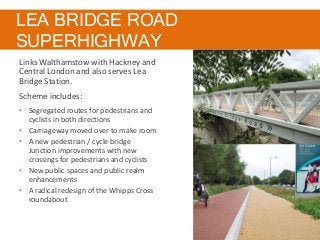
LEA BRIDGE ROAD
SUPERHIGHWAY
Links Walthamstow with Hackney and
Central London and also serves Lea
Bridge Station.
Scheme includes:
• Segregated routes for pedestrians and
cyclists in both directions
• Carriageway moved over to make room
• A new pedestrian / cycle bridge
Junction improvements with new
crossings for pedestrians and cyclists
• New public spaces and public realm
enhancements
• A radical redesign of the Whipps Cross
roundabout
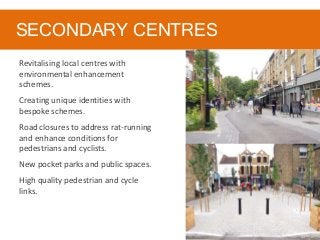
SECONDARY CENTRES
Revitalising local centres with
environmental enhancement
schemes.
Creating unique identities with
bespoke schemes.
Road closures to address rat-running
and enhance conditions for
pedestrians and cyclists.
New pocket parks and public spaces.
High quality pedestrian and cycle
links.
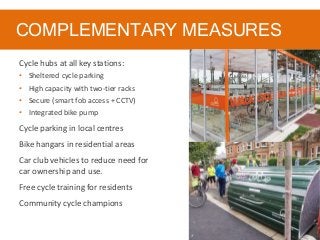
COMPLEMENTARY MEASURES
Cycle hubs at all key stations:
• Sheltered cycle parking
• High capacity with two-tier racks
• Secure (smart fob access + CCTV)
• Integrated bike pump
Cycle parking in local centres
Bike hangars in residential areas
Car club vehicles to reduce need for
car ownership and use.
Free cycle training for residents
Community cycle champions
EXPERIMENTATION
Engineers trial new ideas to see if
they work and amend / refine designs
in response to feedback.
Funding, strong political leadership
and a collaborative approach with
campaigners makes this possible.
For example:
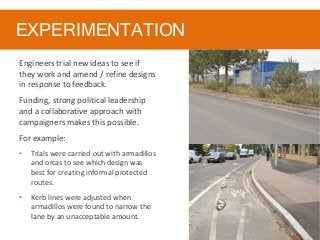
• Trials were carried out with armadillos
and orcas to see which design was
best for creating informal protected
routes.
• Kerb lines were adjusted when
armadillos were found to narrow the
lane by an unacceptable amount.
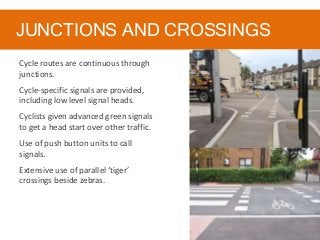
JUNCTIONS AND CROSSINGS
Cycle routes are continuous through
junctions.
Cycle-specific signals are provided,
including low level signal heads.
Cyclists given advanced green signals
to get a head start over other traffic.
Use of push button units to call
signals.
Extensive use of parallel ‘tiger’
crossings beside zebras.
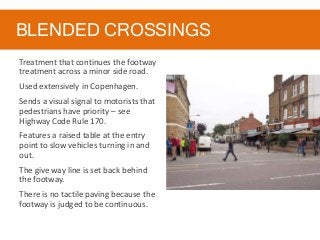
BLENDED CROSSINGS
Treatment that continues the footway
treatment across a minor side road.
Used extensively in Copenhagen.
Sends a visual signal to motorists that
pedestrians have priority – see
Highway Code Rule 170.
Features a raised table at the entry
point to slow vehicles turning in and
out.
The give way line is set back behind
the footway.
There is no tactile paving because the
footway is judged to be continuous.
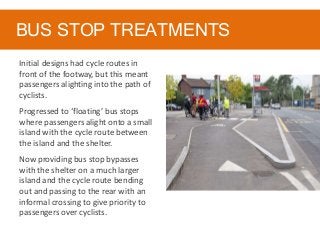
BUS STOP TREATMENTS
Initial designs had cycle routes in
front of the footway, but this meant
passengers alighting into the path of
cyclists.
Progressed to ‘floating’ bus stops
where passengers alight onto a small
island with the cycle route between
the island and the shelter.
Now providing bus stop bypasses
with the shelter on a much larger
island and the cycle route bending
out and passing to the rear with an
informal crossing to give priority to
passengers over cyclists.
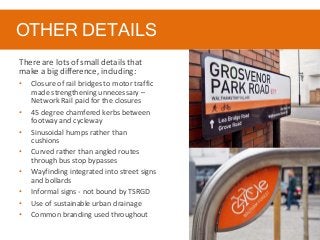
OTHER DETAILS
There are lots of small details that
make a big difference, including:
• Closure of rail bridges to motor traffic
made strengthening unnecessary –
Network Rail paid for the closures
• 45 degree chamfered kerbs between
footway and cycleway
• Sinusoidal humps rather than
cushions
• Curved rather than angled routes
through bus stop bypasses
• Wayfinding integrated into street signs
and bollards
• Informal signs - not bound by TSRGD
• Use of sustainable urban drainage
• Common branding used throughout
CONSULT AND ENGAGE
Consultation and engagement critical
to getting community buy-in.
Use of Commonplace – easy to use,
transparent tool with great reports.
Residents’ views are seen to directly
influence designs.
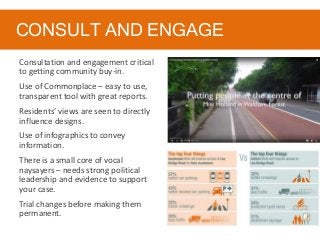
Use of infographics to convey
information.
There is a small core of vocal
naysayers – needs strong political
leadership and evidence to support
your case.
Trial changes before making them
permanent.
FURTHER INFORMATION
For further information on the Waltham Forest Mini-Holland scheme, visit:
• http://www.enjoywalthamforest.co.uk
• https://wesupportmh.wordpress.com/myths
• https://wfcycling.wordpress.com/mini-holland/evidence

Waltham forest Mini-Holland

  • 1.
  • 2.
    WHAT IS AMINI-HOLLAND? TfL invited Outer London Boroughs to submit proposals to develop ‘Mini- Hollands’ - comprehensive packages of schemes and initiatives designed to encourage more people to cycle / cycle more often. They include infrastructure to make cycling safer and more convenient, while improving streets and public spaces for other users. The programme specifically targets people who make short car journeys in outer London that could easily be cycled instead.
  • 3.
    WALTHAM FOREST MINI-HOLLAND WalthamForest awarded £27 million by TfL and secured a further £13 million from S106. Key components include: 1. ‘Villagisation’ of residential areas 2. Lea Bridge Road Cycle Super- highway 3. Improvements to secondary centres 4. Supporting measures Focus on improving conditions for everyone - pedestrians and residents not just cyclists.
  • 4.
    ‘VILLAGISATION’ ‘Villagisation’ is aboutrestoring a sense of place by reducing the dominance of motor traffic. ‘Filtered permeability’ removes through-movements of motor vehicles while retaining permeability for cyclists and pedestrians. This creates quiet routes for residents, encouraging them to reclaim their streets for social activity and play. It presents opportunities to create pocket parks and social spaces.
  • 5.
    LEA BRIDGE ROAD SUPERHIGHWAY LinksWalthamstow with Hackney and Central London and also serves Lea Bridge Station. Scheme includes: • Segregated routes for pedestrians and cyclists in both directions • Carriageway moved over to make room • A new pedestrian / cycle bridge Junction improvements with new crossings for pedestrians and cyclists • New public spaces and public realm enhancements • A radical redesign of the Whipps Cross roundabout
  • 6.
    SECONDARY CENTRES Revitalising localcentres with environmental enhancement schemes. Creating unique identities with bespoke schemes. Road closures to address rat-running and enhance conditions for pedestrians and cyclists. New pocket parks and public spaces. High quality pedestrian and cycle links.
  • 7.
    COMPLEMENTARY MEASURES Cycle hubsat all key stations: • Sheltered cycle parking • High capacity with two-tier racks • Secure (smart fob access + CCTV) • Integrated bike pump Cycle parking in local centres Bike hangars in residential areas Car club vehicles to reduce need for car ownership and use. Free cycle training for residents Community cycle champions
  • 8.
    EXPERIMENTATION Engineers trial newideas to see if they work and amend / refine designs in response to feedback. Funding, strong political leadership and a collaborative approach with campaigners makes this possible. For example: • Trials were carried out with armadillos and orcas to see which design was best for creating informal protected routes. • Kerb lines were adjusted when armadillos were found to narrow the lane by an unacceptable amount.
  • 9.
    JUNCTIONS AND CROSSINGS Cycleroutes are continuous through junctions. Cycle-specific signals are provided, including low level signal heads. Cyclists given advanced green signals to get a head start over other traffic. Use of push button units to call signals. Extensive use of parallel ‘tiger’ crossings beside zebras.
  • 10.
    BLENDED CROSSINGS Treatment thatcontinues the footway treatment across a minor side road. Used extensively in Copenhagen. Sends a visual signal to motorists that pedestrians have priority – see Highway Code Rule 170. Features a raised table at the entry point to slow vehicles turning in and out. The give way line is set back behind the footway. There is no tactile paving because the footway is judged to be continuous.
  • 11.
    BUS STOP TREATMENTS Initialdesigns had cycle routes in front of the footway, but this meant passengers alighting into the path of cyclists. Progressed to ‘floating’ bus stops where passengers alight onto a small island with the cycle route between the island and the shelter. Now providing bus stop bypasses with the shelter on a much larger island and the cycle route bending out and passing to the rear with an informal crossing to give priority to passengers over cyclists.
  • 12.
    OTHER DETAILS There arelots of small details that make a big difference, including: • Closure of rail bridges to motor traffic made strengthening unnecessary – Network Rail paid for the closures • 45 degree chamfered kerbs between footway and cycleway • Sinusoidal humps rather than cushions • Curved rather than angled routes through bus stop bypasses • Wayfinding integrated into street signs and bollards • Informal signs - not bound by TSRGD • Use of sustainable urban drainage • Common branding used throughout
  • 13.
    CONSULT AND ENGAGE Consultationand engagement critical to getting community buy-in. Use of Commonplace – easy to use, transparent tool with great reports. Residents’ views are seen to directly influence designs. Use of infographics to convey information. There is a small core of vocal naysayers – needs strong political leadership and evidence to support your case. Trial changes before making them permanent.
  • 14.
    FURTHER INFORMATION For furtherinformation on the Waltham Forest Mini-Holland scheme, visit: • http://www.enjoywalthamforest.co.uk • https://wesupportmh.wordpress.com/myths • https://wfcycling.wordpress.com/mini-holland/evidence