Joint Centre for Scottish
               Housing Research


 Access Barriers to Health Services
       for Homeless People
    Conference Wroclaw, Poland


             Bill Edgar
European Observatory on Homelessness
Overview of Presentation


   Health Service Needs and Use

   Barriers to Access

   Policy Responses

   Differences across Europe

   Factors or Drivers of change
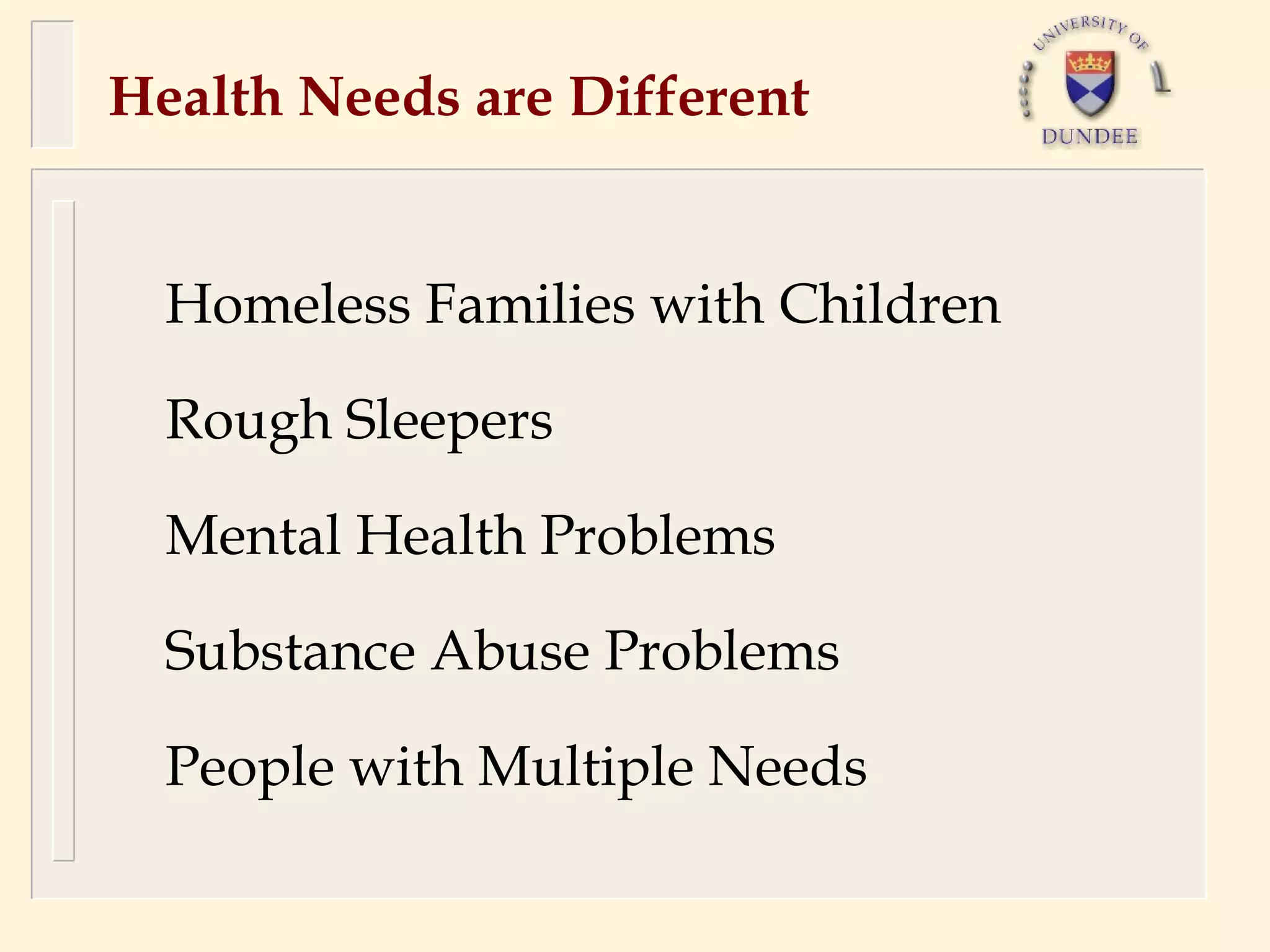
Health Needs are Different


  Homeless Families with Children

  Rough Sleepers

  Mental Health Problems

  Substance Abuse Problems

  People with Multiple Needs
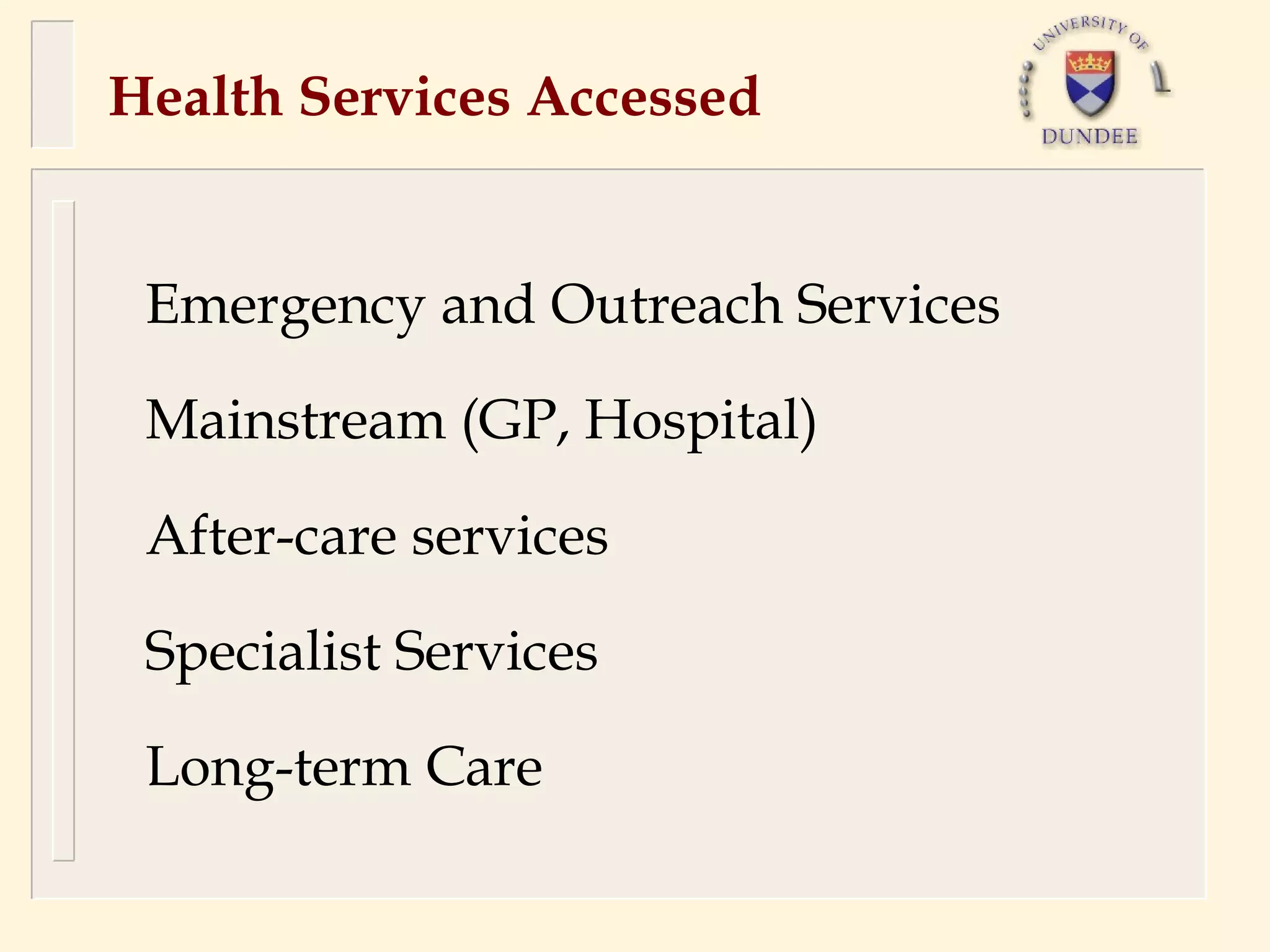
Health Services Accessed


 Emergency and Outreach Services

 Mainstream (GP, Hospital)

 After-care services

 Specialist Services

 Long-term Care
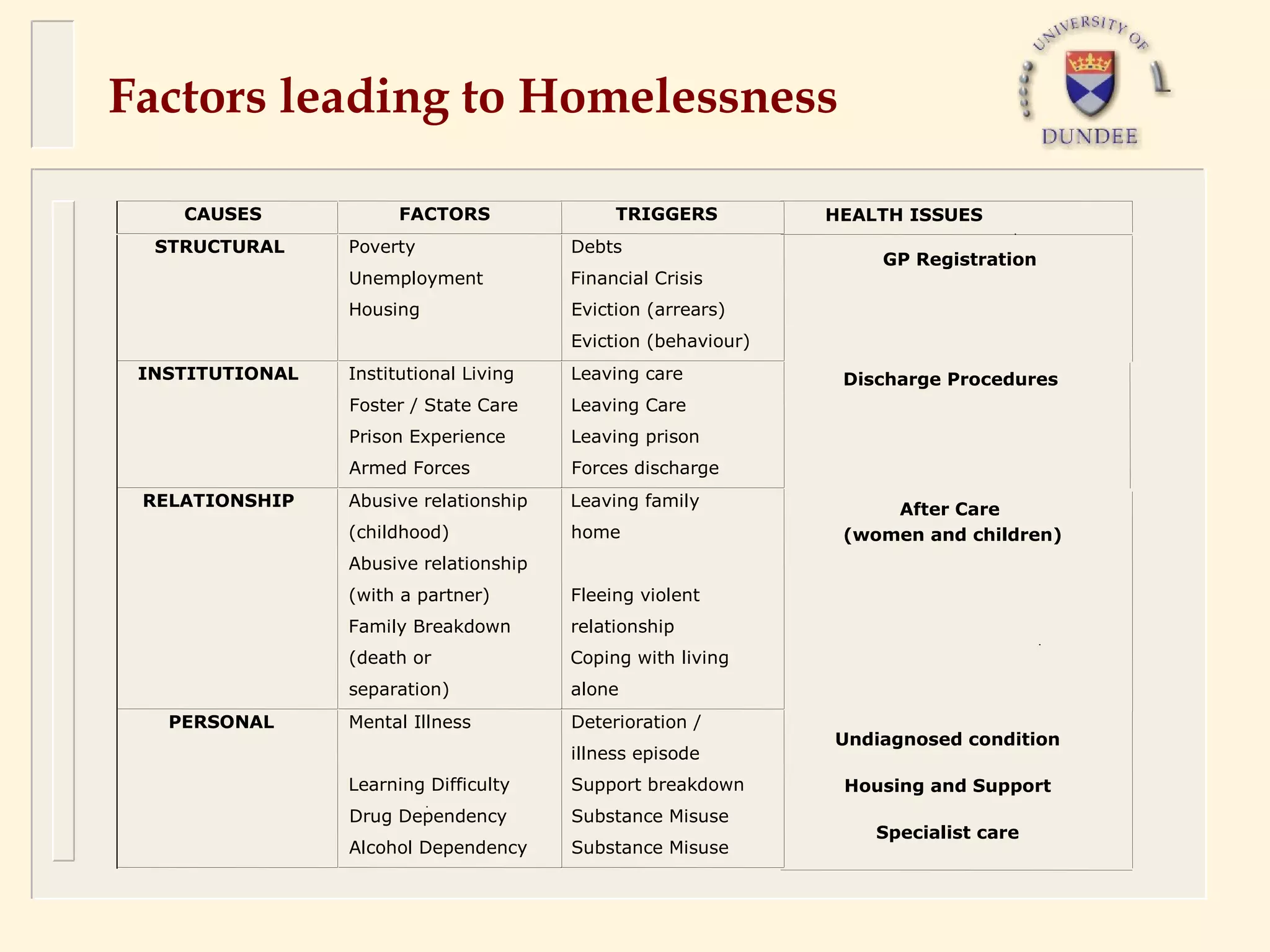
Factors leading to Homelessness

    CAUSES             FACTORS               TRIGGERS          HEALTH ISSUES
  STRUCTURAL     Poverty                Debts
                                                                   GP Registration
                 Unemployment           Financial Crisis
                 Housing                Eviction (arrears)
                                        Eviction (behaviour)
 INSTITUTIONAL   Institutional Living   Leaving care            Discharge Procedures
                 Foster / State Care    Leaving Care
                 Prison Experience      Leaving prison
                 Armed Forces           Forces discharge
 RELATIONSHIP    Abusive relationship   Leaving family              After Care
                 (childhood)            home                    (women and children)
                 Abusive relationship
                 (with a partner)       Fleeing violent
                 Family Breakdown       relationship
                 (death or              Coping with living
                 separation)            alone
   PERSONAL      Mental Illness         Deterioration /
                                                               Undiagnosed condition
                                        illness episode
                 Learning Difficulty    Support breakdown       Housing and Support
                 Drug Dependency        Substance Misuse
                                                                   Specialist care
                 Alcohol Dependency     Substance Misuse
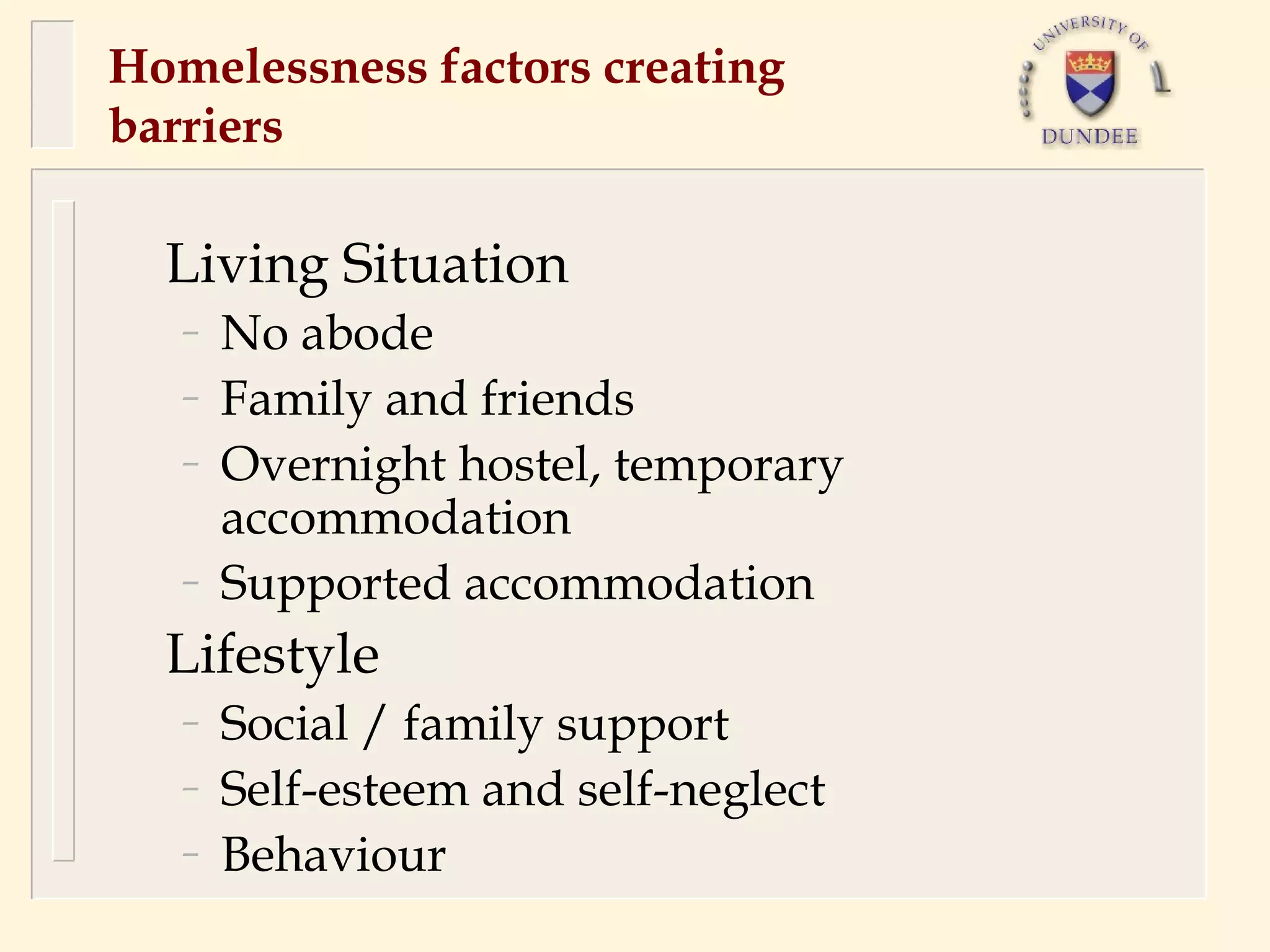
Homelessness factors creating
barriers

  Living Situation
   –   No abode
   –   Family and friends
   –   Overnight hostel, temporary
       accommodation
   –   Supported accommodation
  Lifestyle
   –   Social / family support
   –   Self-esteem and self-neglect
   –   Behaviour
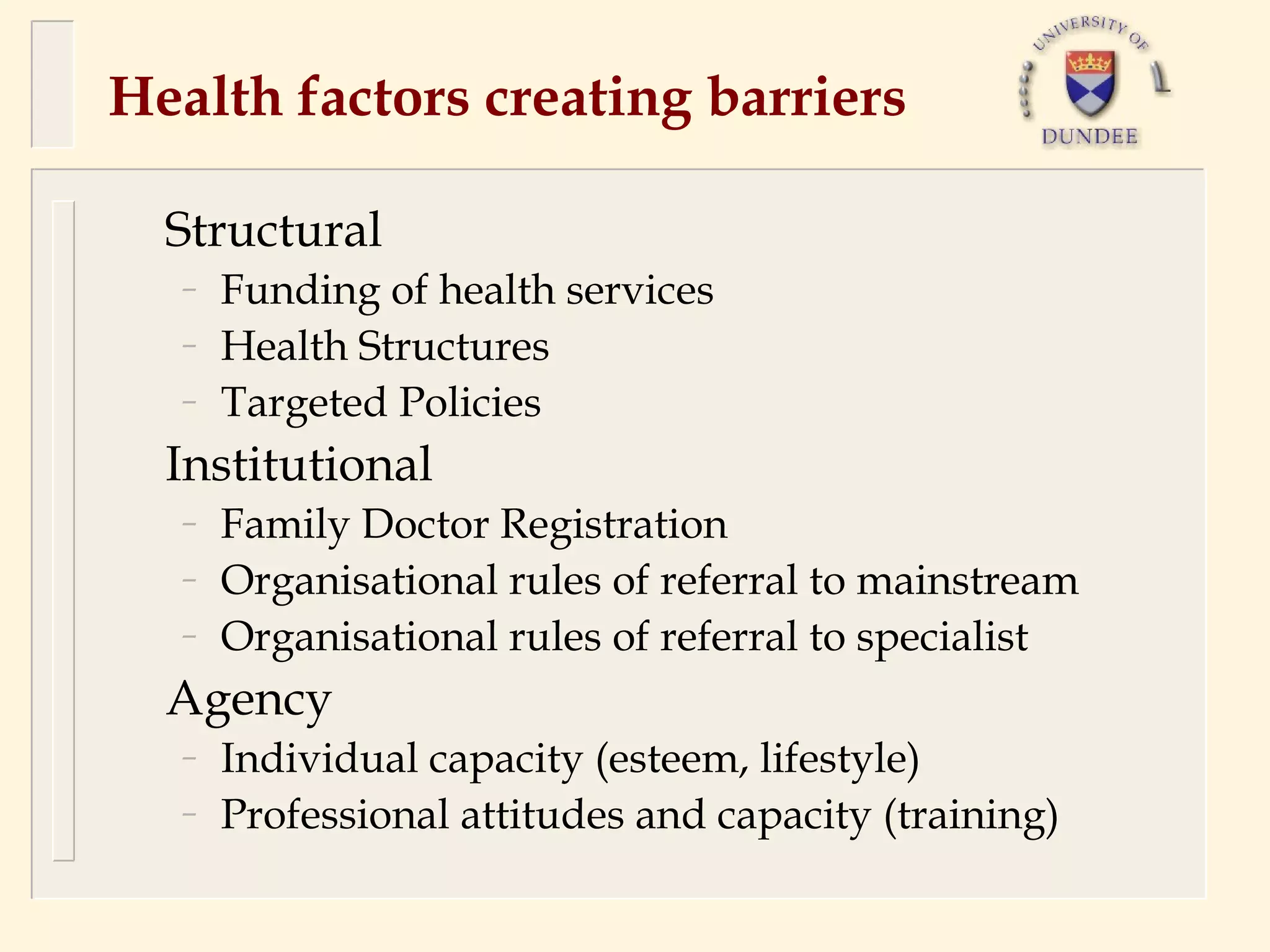
Health factors creating barriers

  Structural
  –   Funding of health services
  –   Health Structures
  –   Targeted Policies
  Institutional
  –   Family Doctor Registration
  –   Organisational rules of referral to mainstream
  –   Organisational rules of referral to specialist
  Agency
  –   Individual capacity (esteem, lifestyle)
  –   Professional attitudes and capacity (training)
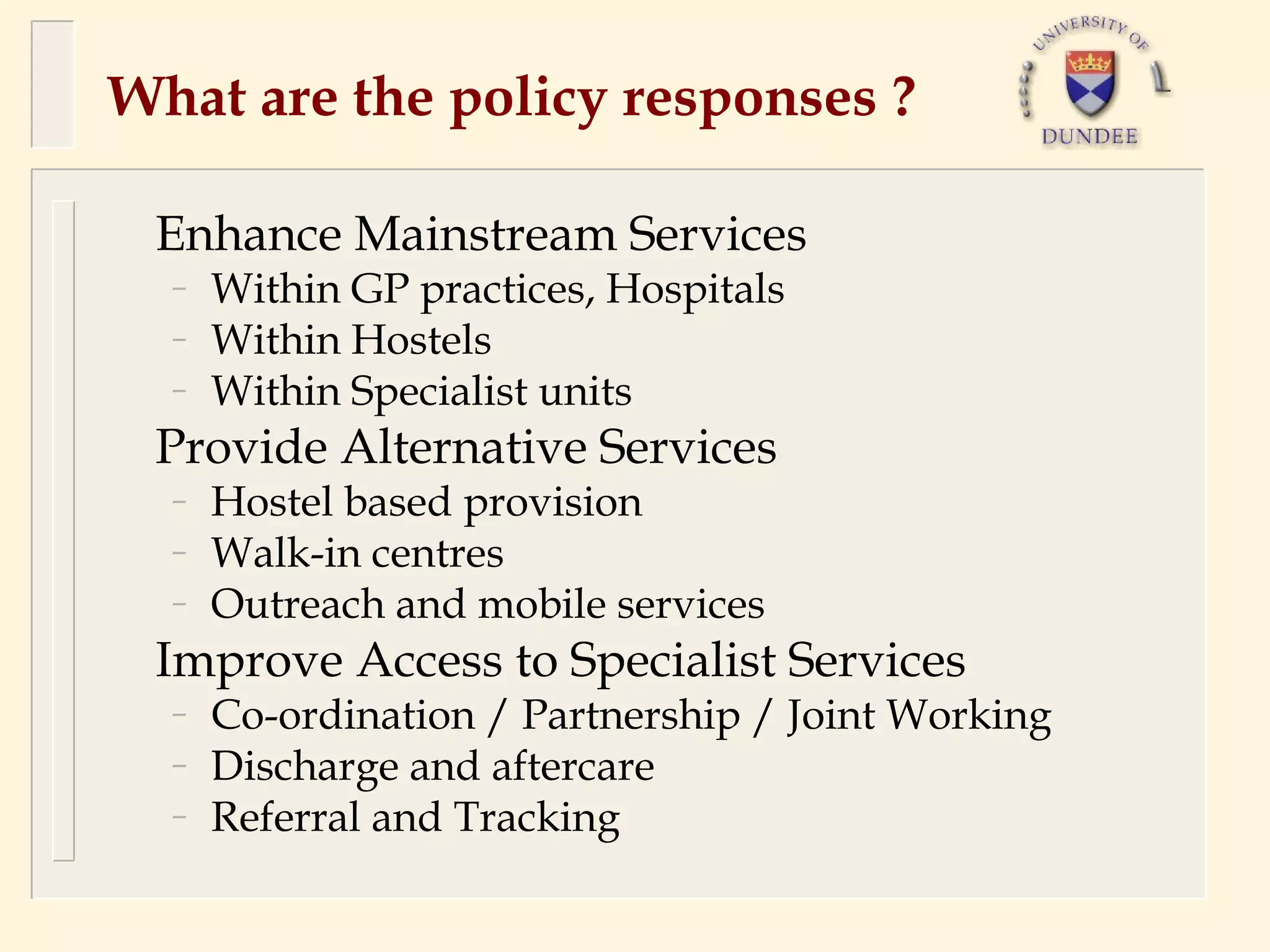
What are the policy responses ?

 Enhance Mainstream Services
  –   Within GP practices, Hospitals
  –   Within Hostels
  –   Within Specialist units
 Provide Alternative Services
  –   Hostel based provision
  –   Walk-in centres
  –   Outreach and mobile services
 Improve Access to Specialist Services
  –   Co-ordination / Partnership / Joint Working
  –   Discharge and aftercare
  –   Referral and Tracking
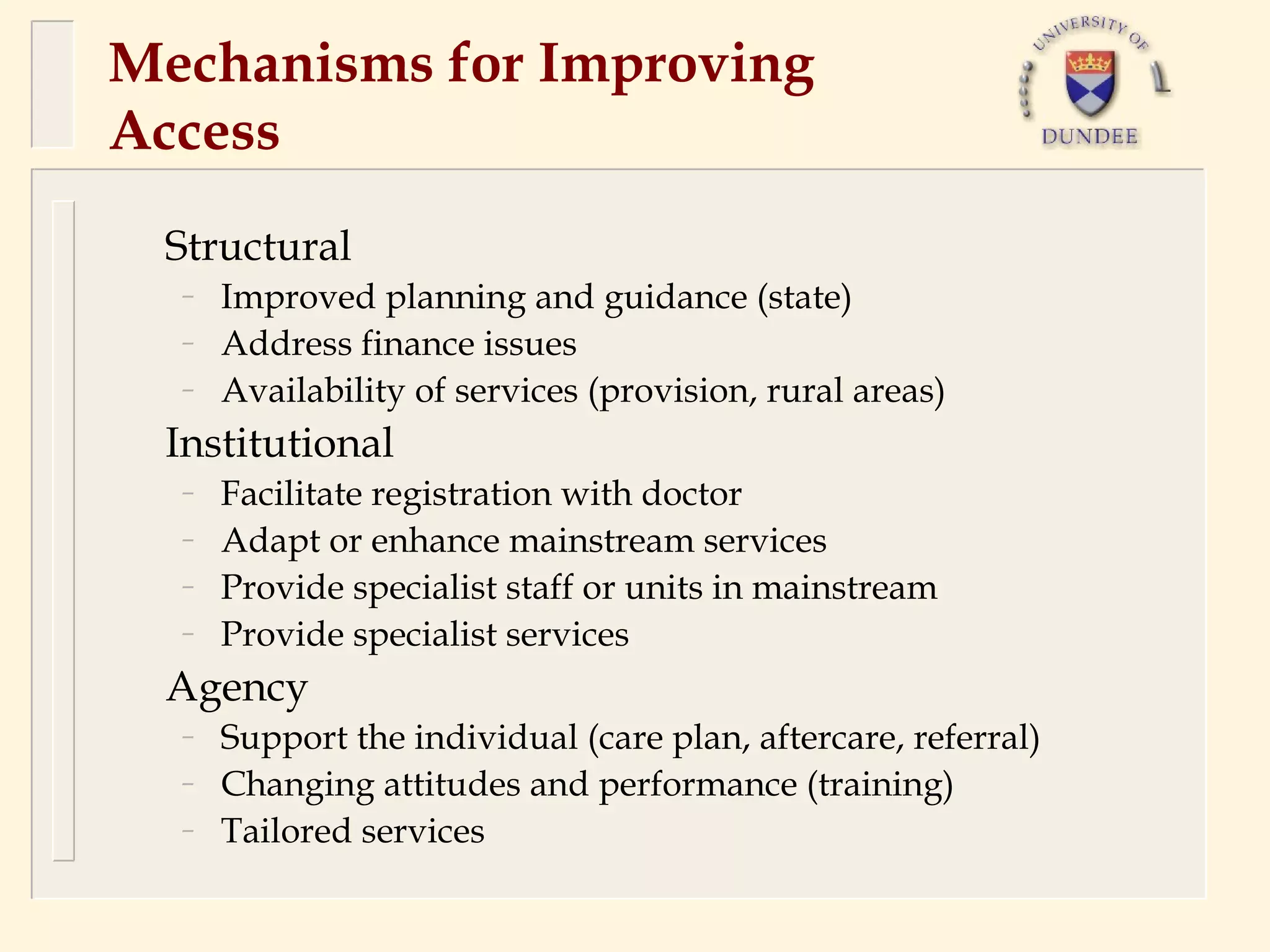
Mechanisms for Improving
Access
 Structural
  –   Improved planning and guidance (state)
  –   Address finance issues
  –   Availability of services (provision, rural areas)
 Institutional
  –   Facilitate registration with doctor
  –   Adapt or enhance mainstream services
  –   Provide specialist staff or units in mainstream
  –   Provide specialist services
 Agency
  –   Support the individual (care plan, aftercare, referral)
  –   Changing attitudes and performance (training)
  –   Tailored services
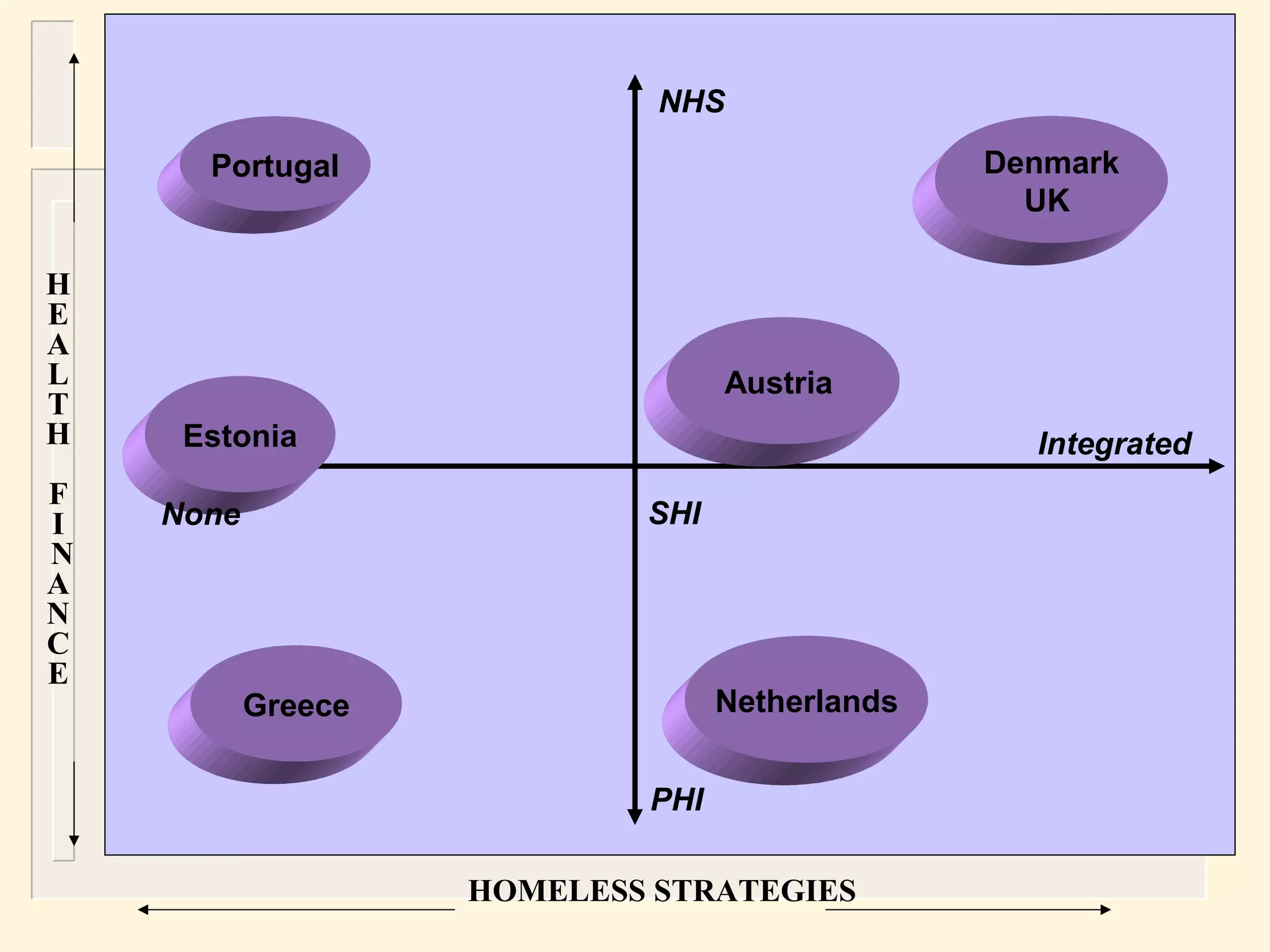
NHS

      Portugal                                  Denmark
                                                  UK

H
E
A
L                                 Austria
T
H    Estonia                                      Integrated
F
I   None                    SHI
N
A
N
C
E
           Greece                 Netherlands


                            PHI

                    HOMELESS STRATEGIES
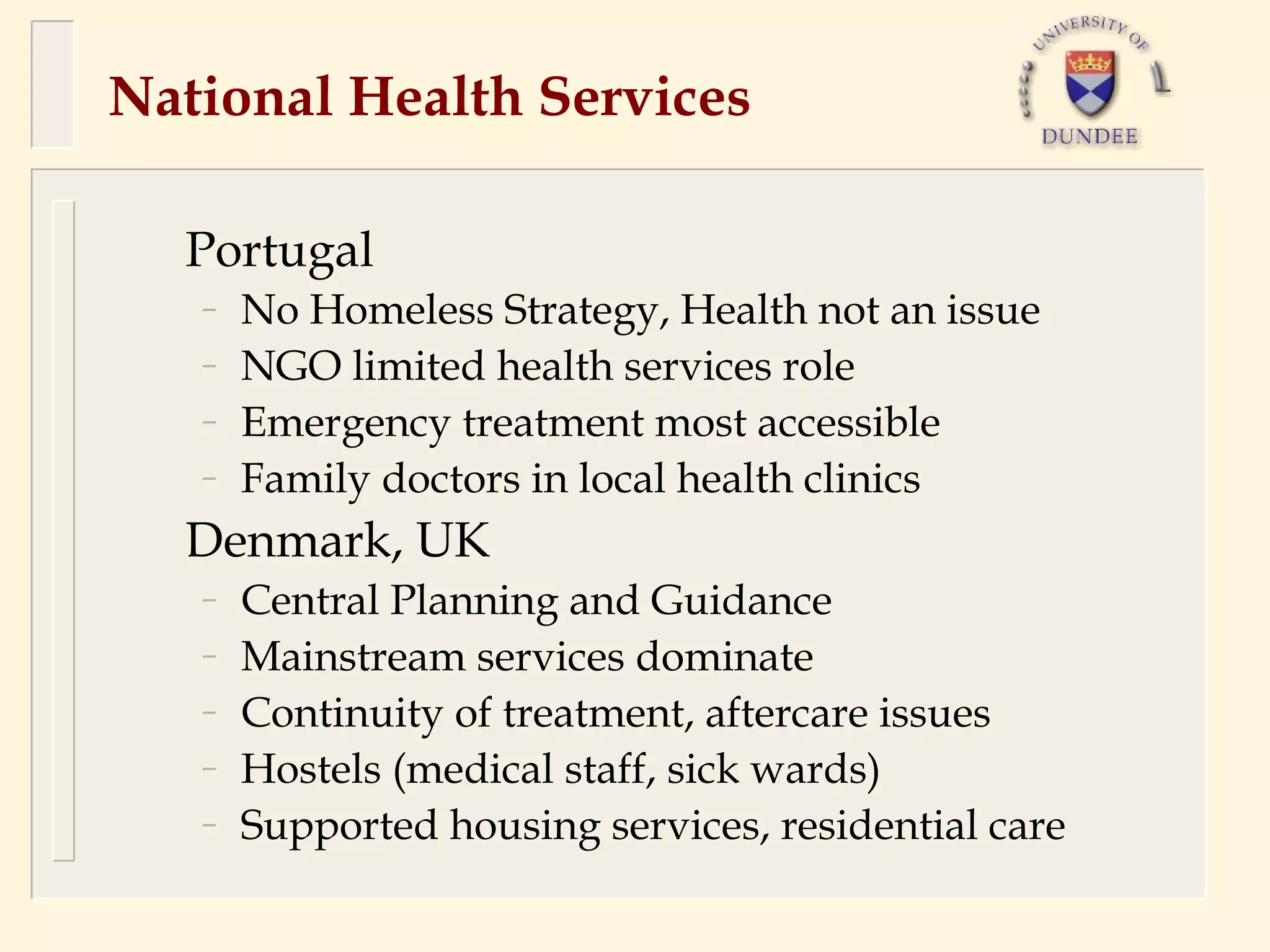
National Health Services

  Portugal
   –   No Homeless Strategy, Health not an issue
   –   NGO limited health services role
   –   Emergency treatment most accessible
   –   Family doctors in local health clinics
  Denmark, UK
   –   Central Planning and Guidance
   –   Mainstream services dominate
   –   Continuity of treatment, aftercare issues
   –   Hostels (medical staff, sick wards)
   –   Supported housing services, residential care
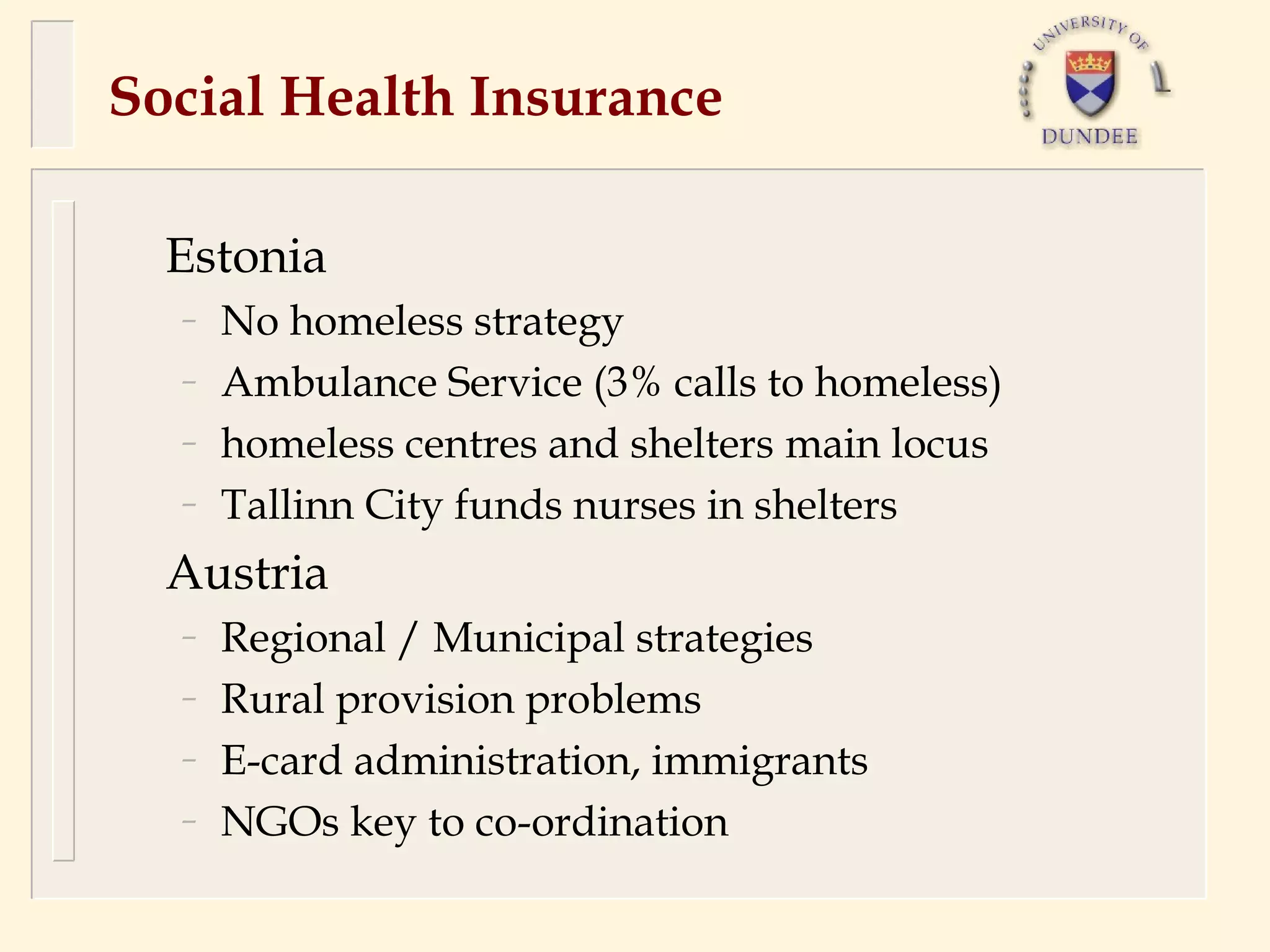
Social Health Insurance

  Estonia
  –   No homeless strategy
  –   Ambulance Service (3% calls to homeless)
  –   homeless centres and shelters main locus
  –   Tallinn City funds nurses in shelters
  Austria
  –   Regional / Municipal strategies
  –   Rural provision problems
  –   E-card administration, immigrants
  –   NGOs key to co-ordination
Results of a Survey of Services


   Improved planning, research and
   tracking
   Improved coordination
   Resources for servicing the uninsured
   persons
   Medical workers specialised in
   homeless needs
   More finances
Private Health Insurance

 Netherlands
  –   Homeless strategies in main cities
  –   Medical Expenses Act funds homeless services
  –   Enhanced care, sick bays, nursing homes (since
      1993)
  –   Health Care Insurance Legislation (2006)
  –   Non-insured, debt recovery, what is necessary care
 Greece
  –   No homeless strategies
  –   Psychargos discharge (EU funded)
  –   NGO services (psychiatric in origin – Klimaka)
What are the Factors Driving
change?

  Developments in Policy
   –   Positive : health and homeless action plans
   –   Negative : insurance debt and recovery
  Improvements in Service Provision
   –   NGOs : in hostels services
   –   Support Finance: long term care
  Improvements in Delivery of Services
   –   Targets : family doctors
   –   Local Projects: innovation, coordination
   –   Improved Training and attitudes
ARE HOMELESS SERVICES

A SERVICE OF LAST RESORT

    FOR PEOPLE WHO

     ARE FAILED BY

 THE HEALTH SERVICES ?

Access Barriers to Health for Homeless People

  • 1.
    Joint Centre forScottish Housing Research Access Barriers to Health Services for Homeless People Conference Wroclaw, Poland Bill Edgar European Observatory on Homelessness
  • 2.
    Overview of Presentation Health Service Needs and Use Barriers to Access Policy Responses Differences across Europe Factors or Drivers of change
  • 3.
    Health Needs areDifferent Homeless Families with Children Rough Sleepers Mental Health Problems Substance Abuse Problems People with Multiple Needs
  • 4.
    Health Services Accessed Emergency and Outreach Services Mainstream (GP, Hospital) After-care services Specialist Services Long-term Care
  • 5.
    Factors leading toHomelessness CAUSES FACTORS TRIGGERS HEALTH ISSUES STRUCTURAL Poverty Debts GP Registration Unemployment Financial Crisis Housing Eviction (arrears) Eviction (behaviour) INSTITUTIONAL Institutional Living Leaving care Discharge Procedures Foster / State Care Leaving Care Prison Experience Leaving prison Armed Forces Forces discharge RELATIONSHIP Abusive relationship Leaving family After Care (childhood) home (women and children) Abusive relationship (with a partner) Fleeing violent Family Breakdown relationship (death or Coping with living separation) alone PERSONAL Mental Illness Deterioration / Undiagnosed condition illness episode Learning Difficulty Support breakdown Housing and Support Drug Dependency Substance Misuse Specialist care Alcohol Dependency Substance Misuse
  • 6.
    Homelessness factors creating barriers Living Situation – No abode – Family and friends – Overnight hostel, temporary accommodation – Supported accommodation Lifestyle – Social / family support – Self-esteem and self-neglect – Behaviour
  • 7.
    Health factors creatingbarriers Structural – Funding of health services – Health Structures – Targeted Policies Institutional – Family Doctor Registration – Organisational rules of referral to mainstream – Organisational rules of referral to specialist Agency – Individual capacity (esteem, lifestyle) – Professional attitudes and capacity (training)
  • 8.
    What are thepolicy responses ? Enhance Mainstream Services – Within GP practices, Hospitals – Within Hostels – Within Specialist units Provide Alternative Services – Hostel based provision – Walk-in centres – Outreach and mobile services Improve Access to Specialist Services – Co-ordination / Partnership / Joint Working – Discharge and aftercare – Referral and Tracking
  • 9.
    Mechanisms for Improving Access Structural – Improved planning and guidance (state) – Address finance issues – Availability of services (provision, rural areas) Institutional – Facilitate registration with doctor – Adapt or enhance mainstream services – Provide specialist staff or units in mainstream – Provide specialist services Agency – Support the individual (care plan, aftercare, referral) – Changing attitudes and performance (training) – Tailored services
  • 10.
    NHS Portugal Denmark UK H E A L Austria T H Estonia Integrated F I None SHI N A N C E Greece Netherlands PHI HOMELESS STRATEGIES
  • 11.
    National Health Services Portugal – No Homeless Strategy, Health not an issue – NGO limited health services role – Emergency treatment most accessible – Family doctors in local health clinics Denmark, UK – Central Planning and Guidance – Mainstream services dominate – Continuity of treatment, aftercare issues – Hostels (medical staff, sick wards) – Supported housing services, residential care
  • 12.
    Social Health Insurance Estonia – No homeless strategy – Ambulance Service (3% calls to homeless) – homeless centres and shelters main locus – Tallinn City funds nurses in shelters Austria – Regional / Municipal strategies – Rural provision problems – E-card administration, immigrants – NGOs key to co-ordination
  • 13.
    Results of aSurvey of Services Improved planning, research and tracking Improved coordination Resources for servicing the uninsured persons Medical workers specialised in homeless needs More finances
  • 14.
    Private Health Insurance Netherlands – Homeless strategies in main cities – Medical Expenses Act funds homeless services – Enhanced care, sick bays, nursing homes (since 1993) – Health Care Insurance Legislation (2006) – Non-insured, debt recovery, what is necessary care Greece – No homeless strategies – Psychargos discharge (EU funded) – NGO services (psychiatric in origin – Klimaka)
  • 15.
    What are theFactors Driving change? Developments in Policy – Positive : health and homeless action plans – Negative : insurance debt and recovery Improvements in Service Provision – NGOs : in hostels services – Support Finance: long term care Improvements in Delivery of Services – Targets : family doctors – Local Projects: innovation, coordination – Improved Training and attitudes
  • 16.
    ARE HOMELESS SERVICES ASERVICE OF LAST RESORT FOR PEOPLE WHO ARE FAILED BY THE HEALTH SERVICES ?