When  ‘soft’ is hard -  Measuring  outcomes
Outcomes are the  changes  or  differences  that  ‘come out’  of your activities
If you’re lucky, some of these will be nice and measurable…
Increased employment Reduced truancy Less debt Fewer hospital admissions For example:
We call these  ‘hard’ outcomes  – they are fairly concrete and easy to measure
But  hard outcomes  don’t always reflect the  heart and soul  of your work
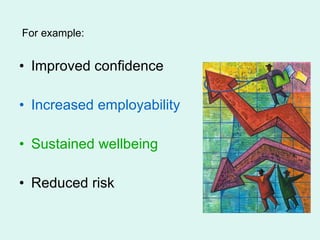
Improved confidence Increased employability   Sustained wellbeing Reduced risk For example:
These are examples of  ‘soft’ outcomes.   Although they are hard to measure,  ignoring them is a mistake.
We just need a little imagination…
Imagine  what will happen when you have achieved your outcomes.  What would that  look like?
The answers to this question will give you useful  indicators  for measuring  soft outcomes
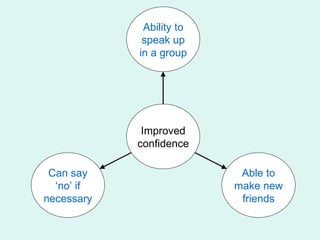
Improved confidence  (soft outcome) might  look like… For example:
Can say ‘no’ if necessary Able to make new friends Ability to speak up in a group Improved confidence
These are potential  outcome indicators. Indicators should be as  specific  to your context as possible, so that they reflect your work and the people you work with.
Two or three good  indicators  for each outcome will make them more  measurable.
They will  save you time  by doing away with ineffective measures. (This is one of  our outcomes  at Evaluation Support Scotland!)
They will make evaluation more  valid … and  valuable
Contact us For help to make soft outcomes easier to measure, contact Evaluation Support Scotland [email_address]   0131 243 2770  www.evaluationsupportscotland.org.uk

Measuring soft outcomes

  • 1.
    When ‘soft’is hard - Measuring outcomes
  • 2.
    Outcomes are the changes or differences that ‘come out’ of your activities
  • 3.
    If you’re lucky,some of these will be nice and measurable…
  • 4.
    Increased employment Reducedtruancy Less debt Fewer hospital admissions For example:
  • 5.
    We call these ‘hard’ outcomes – they are fairly concrete and easy to measure
  • 6.
    But hardoutcomes don’t always reflect the heart and soul of your work
  • 7.
    Improved confidence Increasedemployability Sustained wellbeing Reduced risk For example:
  • 8.
    These are examplesof ‘soft’ outcomes. Although they are hard to measure, ignoring them is a mistake.
  • 9.
    We just needa little imagination…
  • 10.
    Imagine whatwill happen when you have achieved your outcomes. What would that look like?
  • 11.
    The answers tothis question will give you useful indicators for measuring soft outcomes
  • 12.
    Improved confidence (soft outcome) might look like… For example:
  • 13.
    Can say ‘no’if necessary Able to make new friends Ability to speak up in a group Improved confidence
  • 14.
    These are potential outcome indicators. Indicators should be as specific to your context as possible, so that they reflect your work and the people you work with.
  • 15.
    Two or threegood indicators for each outcome will make them more measurable.
  • 16.
    They will save you time by doing away with ineffective measures. (This is one of our outcomes at Evaluation Support Scotland!)
  • 17.
    They will makeevaluation more valid … and valuable
  • 18.
    Contact us Forhelp to make soft outcomes easier to measure, contact Evaluation Support Scotland [email_address] 0131 243 2770 www.evaluationsupportscotland.org.uk