The Water Mills of Rome


   20 April 2011
Roman Topography
  Jonathan Chu
 Katie Langenfeld
 Lindsey Mazurek
 Mackenzie Zalin
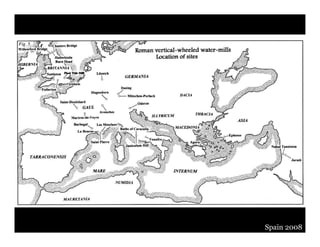
Spain 2008
Sources
•!   Frontinus
•!   Vitruvius
•!   4th century Regionary catalogues
•!   Procopius
•!   Various Edicts of 4th and 5th centuries
•!   Prudentius
•!   Cassiodorus
•!   Archaeological and Art Historical
     Materials
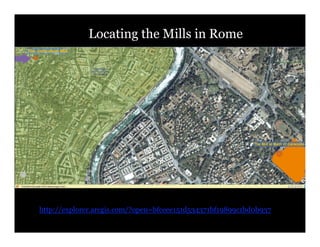
Locating the Mills in Rome


http://explorer.arcgis.com/?open=bfceee151d534371bf19899c1bd0b937
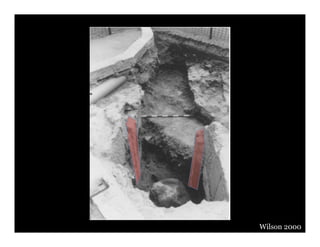
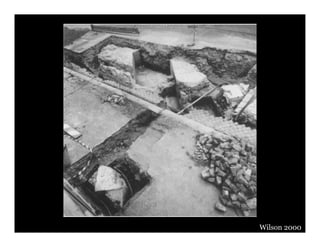
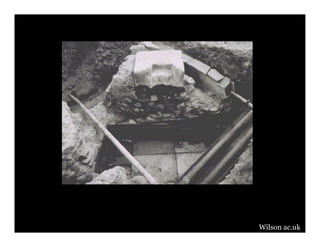
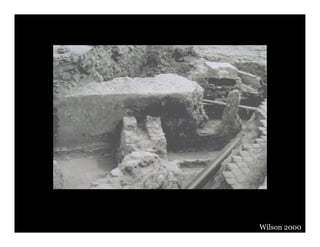
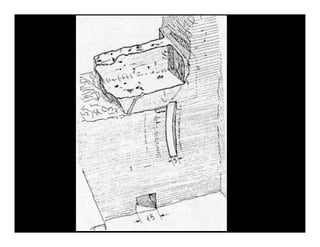
ARCHITECTURE AND
ARCHAEOLOGY OF THE
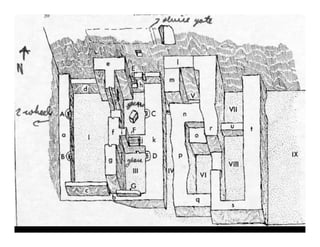
  JANICULUM MILL
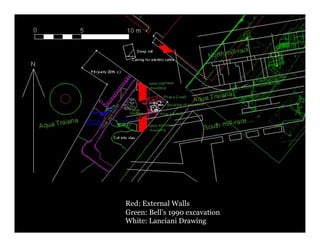
Red: External Walls
Green: Bell’s 1990 excavation
White: Lanciani Drawing
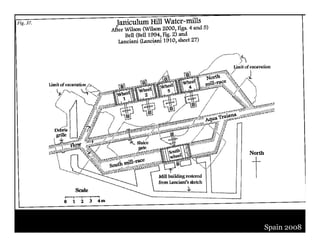
Spain 2008
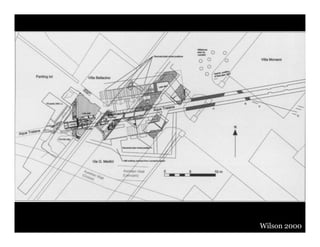
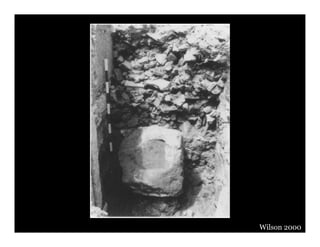
Wilson 2000
Wilson 2000
Wilson 2000
Wilson ac.uk
Wilson 2000
Wilson 2000
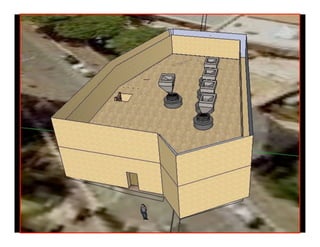
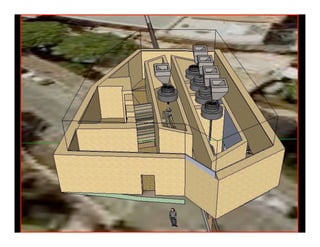
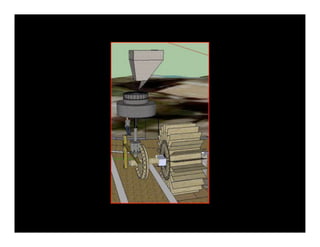
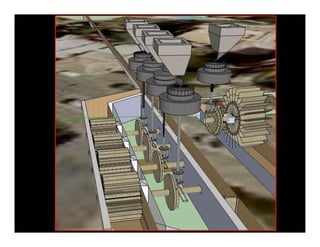
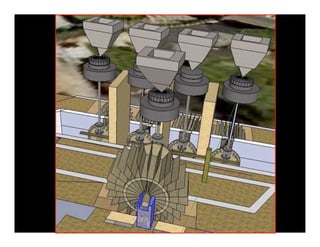
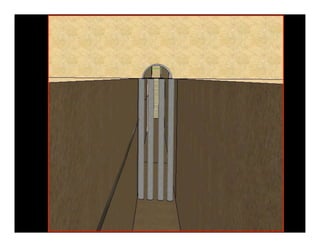
DIGITAL VISUALIZATION
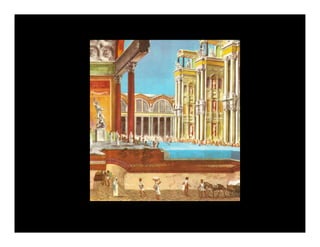
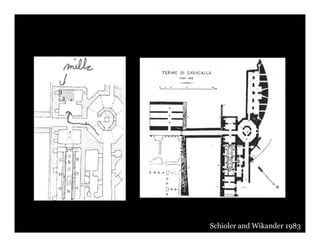
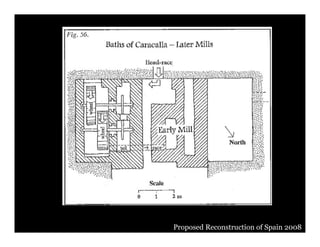
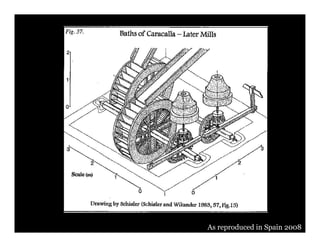
THE MILL AT THE BATHS OF
       CARACALLA
Schioler and Wikander 1983
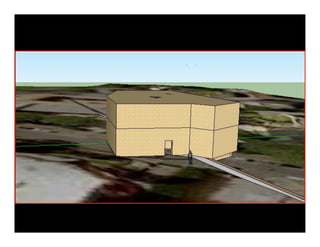
Proposed Reconstruction of Spain 2008
As reproduced in Spain 2008
TECHNOLOGY OF THE
ROMAN WATER MILL
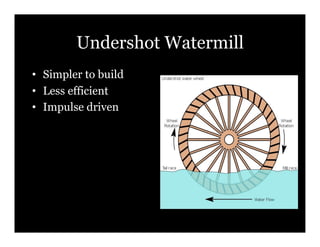
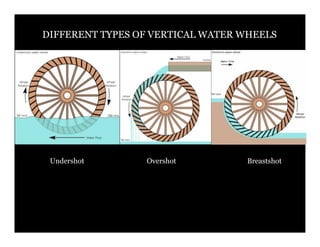
Undershot Watermill
•! Simpler to build
•! Less efficient
•! Impulse driven
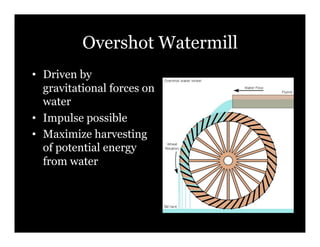
Overshot Watermill
•! Driven by
   gravitational forces on
   water
•! Impulse possible
•! Maximize harvesting
   of potential energy
   from water
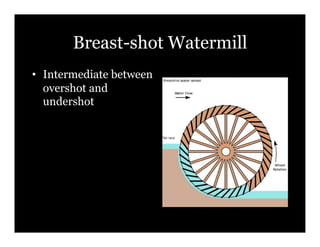
Breast-shot Watermill
•! Intermediate between
   overshot and
   undershot
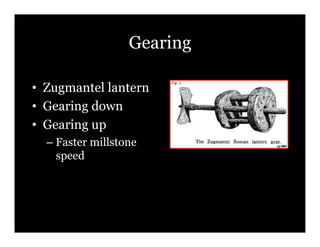
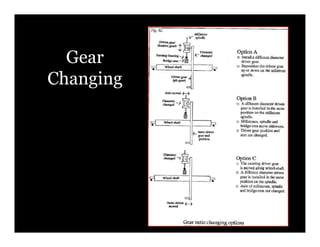
Gearing

•! Zugmantel lantern
•! Gearing down
•! Gearing up
  –! Faster millstone
     speed
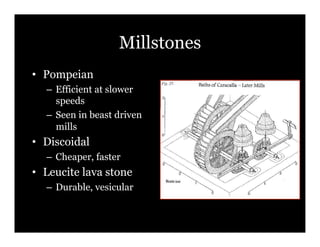
Millstones
•! Pompeian
   –! Efficient at slower
      speeds
   –! Seen in beast driven
      mills
•! Discoidal
   –! Cheaper, faster
•! Leucite lava stone
   –! Durable, vesicular
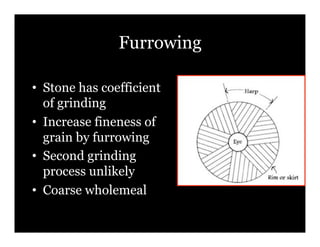
Furrowing

•! Stone has coefficient
   of grinding
•! Increase fineness of
   grain by furrowing
•! Second grinding
   process unlikely
•! Coarse wholemeal
Wear and Tear
Top millstones wear down
  –! Carving greater rhynd cavity
  –! Decreasing weight = faster rotation
Wooden cogs on driven wheel versus iron
 rungs in lantern pinion
Gear
Changing
Calculations for power generation
•! For water wheel
  –! rpm of wheel and torque it experiences from
     water
•! For mill stones
  –! Friction from bearing and gears
  –! Millstones driven by energy that isn’t lost
Production output
•! Westree experiment showed
   production:power ratio of 117 lbs/hr*hp
  –! 60 lbs/hr
  –! .51 hp
  –! Ratio can be used for other mills as well
     •! Assuming millstone material is the same
     •! Assuming mills use optimum flow rate
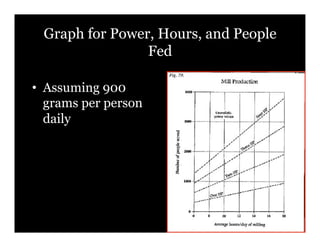
Graph for Power, Hours, and People
                 Fed

•! Assuming 900
   grams per person
   daily
Applying to Caracalla (early)
•! Assuming 7-9 hours a day
•! Using hydraulic and mechanical analysis
   to conclude millstones generated about
   2.05 hp
•! Using 117 lbs/hr*hp
•! Roughly 2160 lbs of grain/day
  –! 900 grams (1.98 lbs) per person
  –! About 1000-1100 people per day
Late Caracalla Mill
•! Less power to millstones
  –! Concluded from hydraulic analysis
  –! .728 hp for each
  –! Calculations suggest about 775 people
•! Wheels must have been weight and
   impulse driven
Janiculum Mills
•! Giant mess
  –! Hours unknown because of wheel series
  –! Calculations more complicated due to water
     turbulence
  –! Likely flow rate gives unlikely numbers
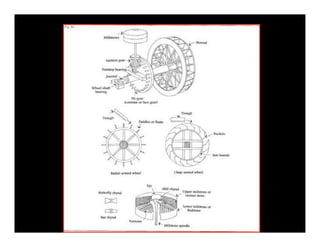
DIFFERENT TYPES OF VERTICAL WATER WHEELS


 Undershot       Overshot         Breastshot
AQUEDUCTS AND MILLS
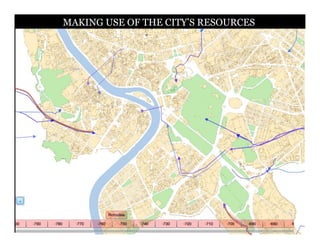
MAKING USE OF THE CITY’S RESOURCES
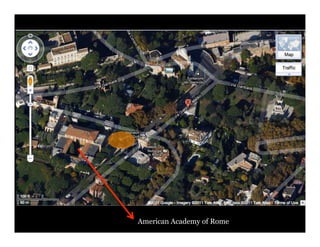
American Academy of Rome
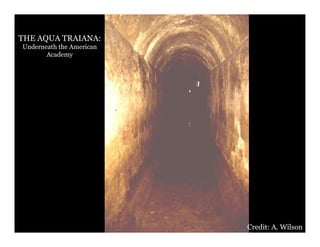
THE AQUA TRAIANA:
Underneath the American
       Academy


                          Credit: A. Wilson
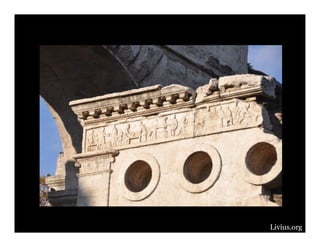
THE STATE AND THE MILL
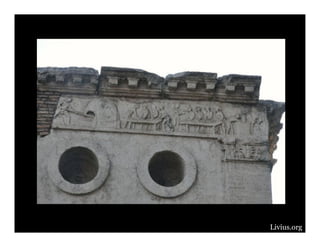
Livius.org
Livius.org
THE JANICULUM MILL AND
       INDUSTRY
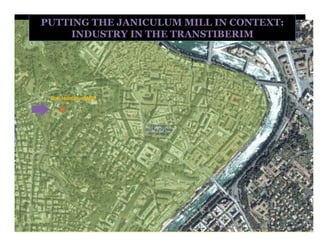
PUTTING THE JANICULUM MILL IN CONTEXT:
     INDUSTRY IN THE TRANSTIBERIM
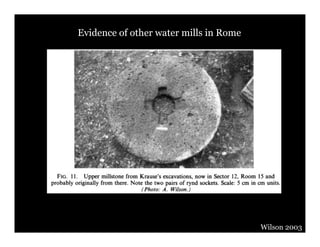
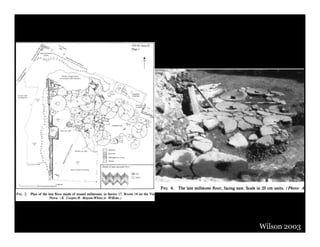
Evidence of other water mills in Rome


                                        Wilson 2003
Wilson 2003
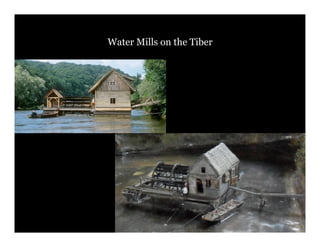
Water Mills on the Tiber
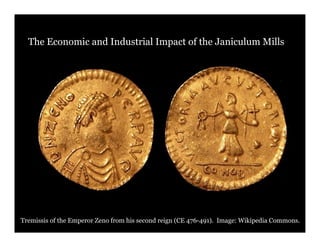
The Economic and Industrial Impact of the Janiculum Mills


Tremissis of the Emperor Zeno from his second reign (CE 476-491). Image: Wikipedia Commons.
http://romanwatermills.webs.com/

Watermills