© 2015 IHS. ALL RIGHTS RESERVED.
KNOWLEDGE ARCHITECTURE: IT’S
IMPORTANCE TO AN ORGANIZATION
Combining Strategy, Data Science and
Information Architecture to Transform Data to
Knowledge
David Meza
Chief Knowledge Architect
NASA Johnson Space Center
Connected Data London
July 12, 2016
AGENDA
• Why Connected Data
• Knowledge Architecture
• Opportunities
• Questions?
2
“The most important contribution
management needs to make in the
21st Century is to increase the
productivity of knowledge work and the
knowledge worker.”
PETER F. DRUCKER, 1999
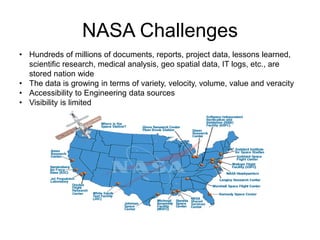
NASA Challenges
• Hundreds of millions of documents, reports, project data, lessons learned,
scientific research, medical analysis, geo spatial data, IT logs, etc., are
stored nation wide
• The data is growing in terms of variety, velocity, volume, value and veracity
• Accessibility to Engineering data sources
• Visibility is limited
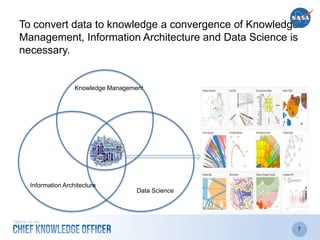
To convert data to knowledge a convergence of Knowledge
Management, Information Architecture and Data Science is
necessary.
7
Knowledge Management
Data Science
Information Architecture
Knowledge Architecture
• The people, processes, and technology of designing, implementing, and
applying the intellectual infrastructure of organizations.
• What is an intellectual infrastructure?
• The set of activities to create, capture, organize, analyze, visualize,
present, and utilize the information part of the information age..
• Information + Contexts = Knowledge
• Information Architecture + Knowledge Management + Data Science =
Knowledge Architecture
• KM without applications is empty (Strategy Only)
• Applications without KA are blind (IT based KM)
• Data Science transforms your data to knowledge
8
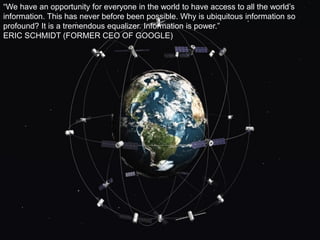
“We have an opportunity for everyone in the world to have access to all the world’s
information. This has never before been possible. Why is ubiquitous information so
profound? It is a tremendous equalizer. Information is power.”
ERIC SCHMIDT (FORMER CEO OF GOOGLE)
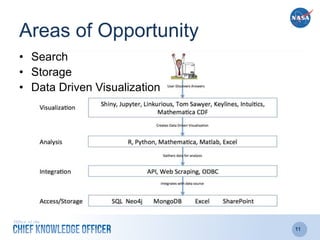
Areas of Opportunity
11
• Search
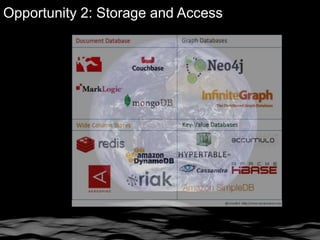
• Storage
• Data Driven Visualization
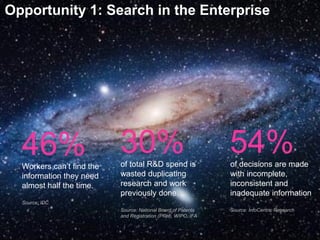
30%
of total R&D spend is
wasted duplicating
research and work
previously done.
Source: National Board of Patents
and Registration (PRH), WIPO, IFA
54%
of decisions are made
with incomplete,
inconsistent and
inadequate information
Source: InfoCentric Research
Opportunity 1: Search in the Enterprise
46%
Workers can’t find the
information they need
almost half the time.
Source: IDC
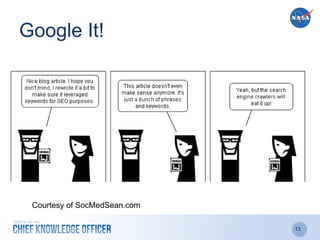
Google It!
13
Courtesy of SocMedSean.com
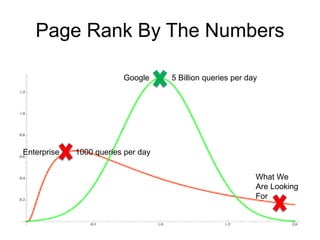
Page Rank By The Numbers
Google 5 Billion queries per day
Enterprise 1000 queries per day
What We
Are Looking
For
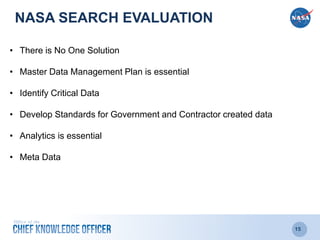
NASA SEARCH EVALUATION
15
• There is No One Solution
• Master Data Management Plan is essential
• Identify Critical Data
• Develop Standards for Government and Contractor created data
• Analytics is essential
• Meta Data
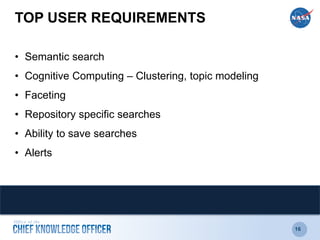
TOP USER REQUIREMENTS
16
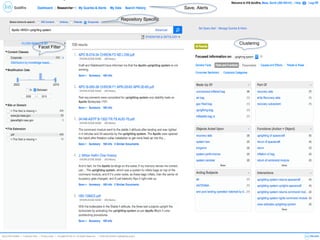
• Semantic search
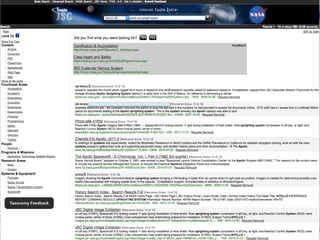
• Cognitive Computing – Clustering, topic modeling
• Faceting
• Repository specific searches
• Ability to save searches
• Alerts
There was a sad engineer…
Repository Specific
Clustering
Save, Alerts
Facet Filter
Opportunity 2: Storage and Access
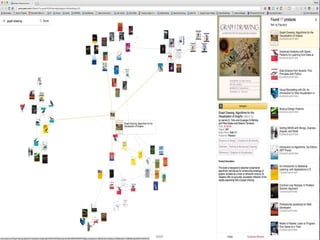
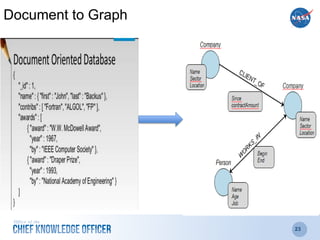
Document to Graph
23
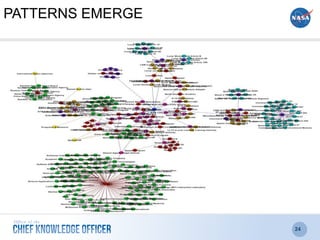
PATTERNS EMERGE
24
There was a inquisitive engineer…
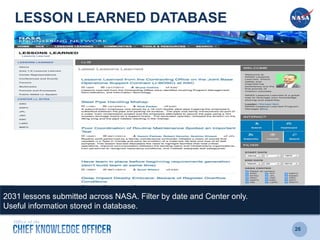
LESSON LEARNED DATABASE
26
2031 lessons submitted across NASA. Filter by date and Center only.
Useful information stored in database.
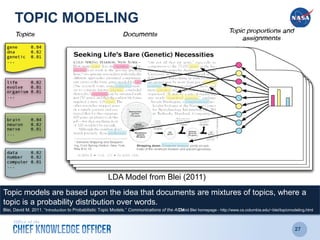
TOPIC MODELING
27
Topic models are based upon the idea that documents are mixtures of topics, where a
topic is a probability distribution over words.
LDA Model from Blei (2011)
David Blei homepage - http://www.cs.columbia.edu/~blei/topicmodeling.html
Blei, David M. 2011. “Introduction to Probabilistic Topic Models.” Communications of the ACM.
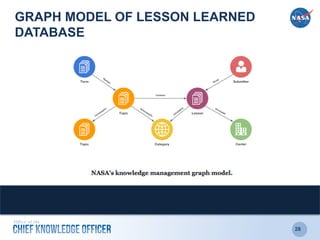
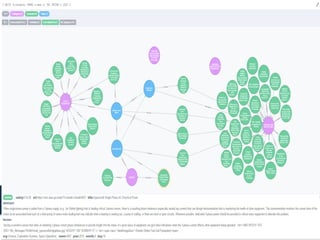
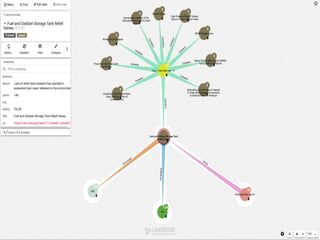
GRAPH MODEL OF LESSON LEARNED
DATABASE
28
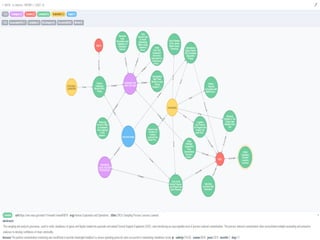
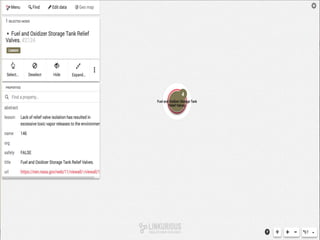
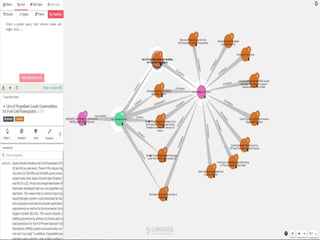
GRAPH MODEL OF LESSON LEARNED DATABASE
29
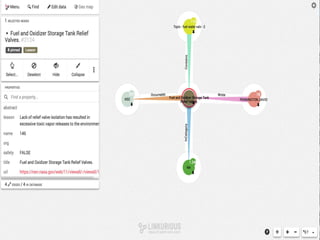
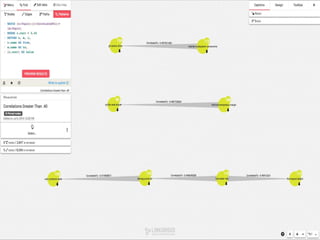
GRAPH MODEL OF LESSON LEARNED DATABASE
30
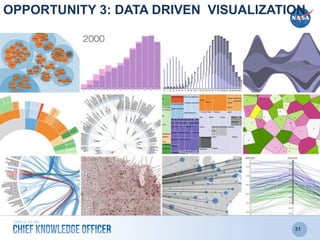
OPPORTUNITY 3: DATA DRIVEN VISUALIZATION
31
37
WHAT COULD YOU ACCOMPLISH IF YOU COULD:
• Empower faster and more informed decision-making
• Leverage lessons of the past to minimize waste,
rework, re-invention and redundancy
• Reduce the learning curve for new employees
• Enhance and extend existing content and document
management systems
Contact Information
David Meza – david.meza-1@nasa.gov
Twitter - @davidmeza1
Linkedin - https://www.linkedin.com/pub/david-meza/16/543/50b
Github – davidmeza1
Blog
davidmeza1.github.io
38
Contents
© 2015 IHS. ALL RIGHTS RESERVED. 39
Report Name / Month 2015
QUESTIONS?

Κnowledge Architecture: Combining Strategy, Data Science and Information Architecture to Transform Data to Knowledge at NASA

  • 1.
    © 2015 IHS.ALL RIGHTS RESERVED. KNOWLEDGE ARCHITECTURE: IT’S IMPORTANCE TO AN ORGANIZATION Combining Strategy, Data Science and Information Architecture to Transform Data to Knowledge David Meza Chief Knowledge Architect NASA Johnson Space Center Connected Data London July 12, 2016
  • 2.
    AGENDA • Why ConnectedData • Knowledge Architecture • Opportunities • Questions? 2
  • 5.
    “The most importantcontribution management needs to make in the 21st Century is to increase the productivity of knowledge work and the knowledge worker.” PETER F. DRUCKER, 1999
  • 6.
    NASA Challenges • Hundredsof millions of documents, reports, project data, lessons learned, scientific research, medical analysis, geo spatial data, IT logs, etc., are stored nation wide • The data is growing in terms of variety, velocity, volume, value and veracity • Accessibility to Engineering data sources • Visibility is limited
  • 7.
    To convert datato knowledge a convergence of Knowledge Management, Information Architecture and Data Science is necessary. 7 Knowledge Management Data Science Information Architecture
  • 8.
    Knowledge Architecture • Thepeople, processes, and technology of designing, implementing, and applying the intellectual infrastructure of organizations. • What is an intellectual infrastructure? • The set of activities to create, capture, organize, analyze, visualize, present, and utilize the information part of the information age.. • Information + Contexts = Knowledge • Information Architecture + Knowledge Management + Data Science = Knowledge Architecture • KM without applications is empty (Strategy Only) • Applications without KA are blind (IT based KM) • Data Science transforms your data to knowledge 8
  • 9.
    “We have anopportunity for everyone in the world to have access to all the world’s information. This has never before been possible. Why is ubiquitous information so profound? It is a tremendous equalizer. Information is power.” ERIC SCHMIDT (FORMER CEO OF GOOGLE)
  • 11.
    Areas of Opportunity 11 •Search • Storage • Data Driven Visualization
  • 12.
    30% of total R&Dspend is wasted duplicating research and work previously done. Source: National Board of Patents and Registration (PRH), WIPO, IFA 54% of decisions are made with incomplete, inconsistent and inadequate information Source: InfoCentric Research Opportunity 1: Search in the Enterprise 46% Workers can’t find the information they need almost half the time. Source: IDC
  • 13.
  • 14.
    Page Rank ByThe Numbers Google 5 Billion queries per day Enterprise 1000 queries per day What We Are Looking For
  • 15.
    NASA SEARCH EVALUATION 15 •There is No One Solution • Master Data Management Plan is essential • Identify Critical Data • Develop Standards for Government and Contractor created data • Analytics is essential • Meta Data
  • 16.
    TOP USER REQUIREMENTS 16 •Semantic search • Cognitive Computing – Clustering, topic modeling • Faceting • Repository specific searches • Ability to save searches • Alerts
  • 17.
    There was asad engineer…
  • 19.
  • 22.
  • 23.
  • 24.
  • 25.
    There was ainquisitive engineer…
  • 26.
    LESSON LEARNED DATABASE 26 2031lessons submitted across NASA. Filter by date and Center only. Useful information stored in database.
  • 27.
    TOPIC MODELING 27 Topic modelsare based upon the idea that documents are mixtures of topics, where a topic is a probability distribution over words. LDA Model from Blei (2011) David Blei homepage - http://www.cs.columbia.edu/~blei/topicmodeling.html Blei, David M. 2011. “Introduction to Probabilistic Topic Models.” Communications of the ACM.
  • 28.
    GRAPH MODEL OFLESSON LEARNED DATABASE 28
  • 29.
    GRAPH MODEL OFLESSON LEARNED DATABASE 29
  • 30.
    GRAPH MODEL OFLESSON LEARNED DATABASE 30
  • 31.
    OPPORTUNITY 3: DATADRIVEN VISUALIZATION 31
  • 37.
    37 WHAT COULD YOUACCOMPLISH IF YOU COULD: • Empower faster and more informed decision-making • Leverage lessons of the past to minimize waste, rework, re-invention and redundancy • Reduce the learning curve for new employees • Enhance and extend existing content and document management systems
  • 38.
    Contact Information David Meza– david.meza-1@nasa.gov Twitter - @davidmeza1 Linkedin - https://www.linkedin.com/pub/david-meza/16/543/50b Github – davidmeza1 Blog davidmeza1.github.io 38
  • 39.
    Contents © 2015 IHS.ALL RIGHTS RESERVED. 39 Report Name / Month 2015 QUESTIONS?