

What is Dry Ice Blasting?
Dry ice as a blasting medium
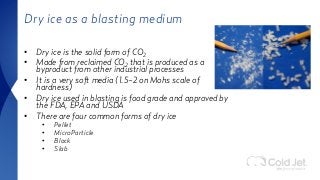
• Dry ice is the solid form of CO2
• Made from reclaimed CO2 that is produced as a
byproduct from other industrial processes
• It is a very soft media (1.5-2 on Mohs scale of
hardness)
• Dry ice used in blasting is food grade and approved by
the FDA, EPA and USDA
• There are four common forms of dry ice
• Pellet
• MicroParticle
• Block
• Slab
Dry ice blasting
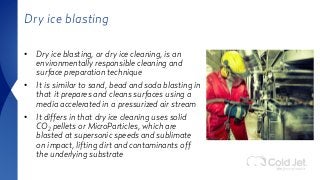
• Dry ice blasting, or dry ice cleaning, is an
environmentally responsible cleaning and
surface preparation technique
• It is similar to sand, bead and soda blasting in
that it prepares and cleans surfaces using a
media accelerated in a pressurized air stream
• It differs in that dry ice cleaning uses solid
CO2 pellets or MicroParticles, which are
blasted at supersonic speeds and sublimate
on impact, lifting dirt and contaminants off
the underlying substrate
How does it work?
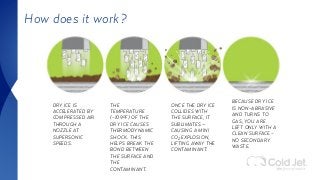
DRY ICE IS
ACCELERATED BY
COMPRESSED AIR
THROUGH A
NOZZLE AT
SUPERSONIC
SPEEDS.
THE
TEMPERATURE
(-109°F) OF THE
DRY ICE CAUSES
THERMODYNAMIC
SHOCK. THIS
HELPS BREAK THE
BOND BETWEEN
THE SURFACE AND
THE
CONTAMINANT.
ONCE THE DRY ICE
COLLIDES WITH
THE SURFACE, IT
SUBLIMATES –
CAUSING A MINI
CO2 EXPLOSION,
LIFTING AWAY THE
CONTAMINANT.
BECAUSE DRY ICE
IS NON-ABRASIVE
AND TURNS TO
GAS, YOU ARE
LEFT ONLY WITH A
CLEAN SURFACE -
NO SECONDARY
WASTE.
Why dry ice blasting?
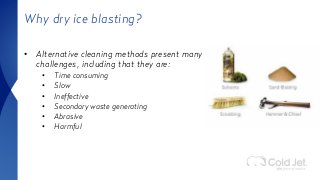
• Alternative cleaning methods present many
challenges, including that they are:
• Time consuming
• Slow
• Ineffective
• Secondary waste generating
• Abrasive
• Harmful
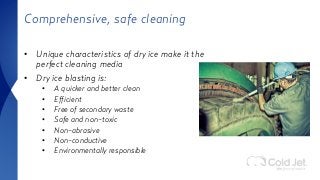
Comprehensive, safe cleaning
• Unique characteristics of dry ice make it the
perfect cleaning media
• Dry ice blasting is:
• A quicker and better clean
• Efficient
• Free of secondary waste
• Safe and non-toxic
• Non-abrasive
• Non-conductive
• Environmentally responsible
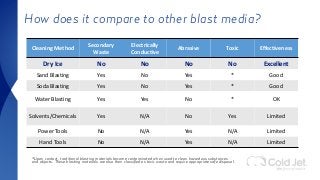
How does it compare to other blast media?
Cleaning Method
Secondary
Waste
Electrically
Conductive
Abrasive Toxic Effectiveness
Dry Ice No No No No Excellent
Sand Blasting Yes No Yes * Good
Soda Blasting Yes No Yes * Good
Water Blasting Yes Yes No * OK
Solvents/Chemicals Yes N/A No Yes Limited
Power Tools No N/A Yes N/A Limited
Hand Tools No N/A Yes N/A Limited
*Upon contact, traditional blasting materials become contaminated when used to clean hazardous substances
and objects. These blasting materials are also then classified as toxic waste and require appropriate safe disposal.
Environmentally responsible
• Dry ice is made of reclaimed CO2 and does
not produce more CO2 or add additional
greenhouse gasses to the atmosphere
• Dry ice blasting does not create secondary
waste, which eliminates the possibility of
downstream contamination
• The process reduces or eliminates the use of
harmful chemical cleaning solvents and toxic
waste
Who uses dry ice cleaning?
• Automotive
• Aerospace
• Contract Cleaning
• Fire Restoration
• Food and Beverage
• Foundry
• General Maintenance
• Historical Restoration
• Medical
• Mold Remediation
• Packaging
• Petrochemical
• Plastics
• Power Generation
• Printing
• Rubber
• Weld Lines
• Dry ice cleaning is used for many types of cleaning and surface
preparation applications in a wide and diverse range of industries
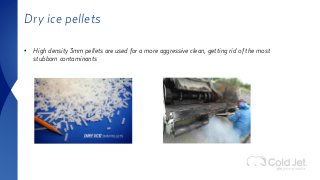
Dry ice pellets
• High density 3mm pellets are used for a more aggressive clean, getting rid of the most
stubborn contaminants
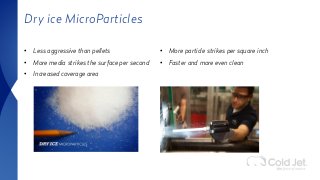
Dry ice MicroParticles
• Less aggressive than pellets
• More media strikes the surface per second
• Increased coverage area
• More particle strikes per square inch
• Faster and more even clean
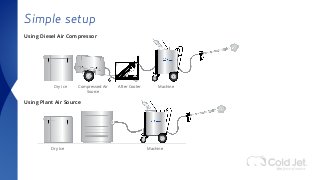
Simple setup
Using Diesel Air Compressor
Using Plant Air Source
Dry Ice Compressed Air
Source
After Cooler Machine
Dry Ice Machine
Have questions?
Call us at: +1 800-337-9423 or email us at: mktg@coldjet.com
Visit our website
www.coldjet.com
Connect with us
@ColdJetLLC
facebook.com/coldjetllc
@coldjet
twitter.com/coldjet
coldjetllc
#dryicecleaning
Cold Jet
linkedin.com/company/cold-jet
Watch our videos
youtube.com/dryiceblaster
vimeo.com/coldjet

What is Dry Ice Blasting?

  • 1.
    What is DryIce Blasting?
  • 2.
    Dry ice asa blasting medium • Dry ice is the solid form of CO2 • Made from reclaimed CO2 that is produced as a byproduct from other industrial processes • It is a very soft media (1.5-2 on Mohs scale of hardness) • Dry ice used in blasting is food grade and approved by the FDA, EPA and USDA • There are four common forms of dry ice • Pellet • MicroParticle • Block • Slab
  • 3.
    Dry ice blasting •Dry ice blasting, or dry ice cleaning, is an environmentally responsible cleaning and surface preparation technique • It is similar to sand, bead and soda blasting in that it prepares and cleans surfaces using a media accelerated in a pressurized air stream • It differs in that dry ice cleaning uses solid CO2 pellets or MicroParticles, which are blasted at supersonic speeds and sublimate on impact, lifting dirt and contaminants off the underlying substrate
  • 4.
    How does itwork? DRY ICE IS ACCELERATED BY COMPRESSED AIR THROUGH A NOZZLE AT SUPERSONIC SPEEDS. THE TEMPERATURE (-109°F) OF THE DRY ICE CAUSES THERMODYNAMIC SHOCK. THIS HELPS BREAK THE BOND BETWEEN THE SURFACE AND THE CONTAMINANT. ONCE THE DRY ICE COLLIDES WITH THE SURFACE, IT SUBLIMATES – CAUSING A MINI CO2 EXPLOSION, LIFTING AWAY THE CONTAMINANT. BECAUSE DRY ICE IS NON-ABRASIVE AND TURNS TO GAS, YOU ARE LEFT ONLY WITH A CLEAN SURFACE - NO SECONDARY WASTE.
  • 5.
    Why dry iceblasting? • Alternative cleaning methods present many challenges, including that they are: • Time consuming • Slow • Ineffective • Secondary waste generating • Abrasive • Harmful
  • 6.
    Comprehensive, safe cleaning •Unique characteristics of dry ice make it the perfect cleaning media • Dry ice blasting is: • A quicker and better clean • Efficient • Free of secondary waste • Safe and non-toxic • Non-abrasive • Non-conductive • Environmentally responsible
  • 7.
    How does itcompare to other blast media? Cleaning Method Secondary Waste Electrically Conductive Abrasive Toxic Effectiveness Dry Ice No No No No Excellent Sand Blasting Yes No Yes * Good Soda Blasting Yes No Yes * Good Water Blasting Yes Yes No * OK Solvents/Chemicals Yes N/A No Yes Limited Power Tools No N/A Yes N/A Limited Hand Tools No N/A Yes N/A Limited *Upon contact, traditional blasting materials become contaminated when used to clean hazardous substances and objects. These blasting materials are also then classified as toxic waste and require appropriate safe disposal.
  • 8.
    Environmentally responsible • Dryice is made of reclaimed CO2 and does not produce more CO2 or add additional greenhouse gasses to the atmosphere • Dry ice blasting does not create secondary waste, which eliminates the possibility of downstream contamination • The process reduces or eliminates the use of harmful chemical cleaning solvents and toxic waste
  • 9.
    Who uses dryice cleaning? • Automotive • Aerospace • Contract Cleaning • Fire Restoration • Food and Beverage • Foundry • General Maintenance • Historical Restoration • Medical • Mold Remediation • Packaging • Petrochemical • Plastics • Power Generation • Printing • Rubber • Weld Lines • Dry ice cleaning is used for many types of cleaning and surface preparation applications in a wide and diverse range of industries
  • 10.
    Dry ice pellets •High density 3mm pellets are used for a more aggressive clean, getting rid of the most stubborn contaminants
  • 11.
    Dry ice MicroParticles •Less aggressive than pellets • More media strikes the surface per second • Increased coverage area • More particle strikes per square inch • Faster and more even clean
  • 12.
    Simple setup Using DieselAir Compressor Using Plant Air Source Dry Ice Compressed Air Source After Cooler Machine Dry Ice Machine
  • 13.
    Have questions? Call usat: +1 800-337-9423 or email us at: mktg@coldjet.com Visit our website www.coldjet.com Connect with us @ColdJetLLC facebook.com/coldjetllc @coldjet twitter.com/coldjet coldjetllc #dryicecleaning Cold Jet linkedin.com/company/cold-jet Watch our videos youtube.com/dryiceblaster vimeo.com/coldjet