PARTICIPATORY RESEARCH:
EXTENDING OPEN SCIENCE
BEYOND THE IVORY TOWER
CLAUDIA GÖBEL
CLAUDIA.GOEBEL@MFN.BERLIN @CLAUGOBEL
MUSEUM FÜR NATURKUNDE BERLIN
EUROPEAN CITIZEN SCIENCE ASSOCIATION
18.03.2019, BERLIN, BARCAMP OPEN SCIENCE
CC BY
I PARTICIPATORY RESEARCH
II CALLENGES &
CURRENT DEVELOPMENTS
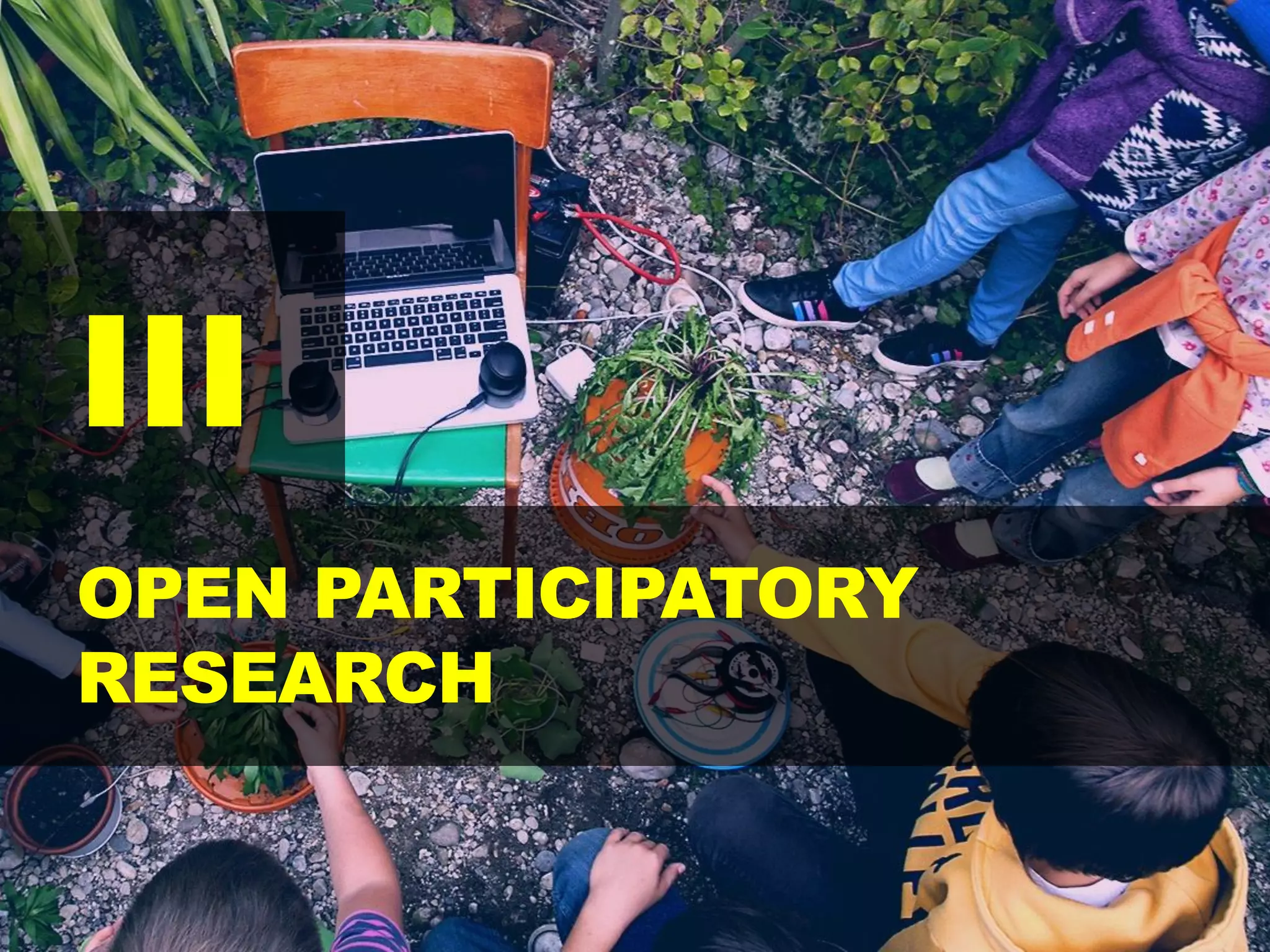
III OPEN PARTICIPATORY RESEARCH
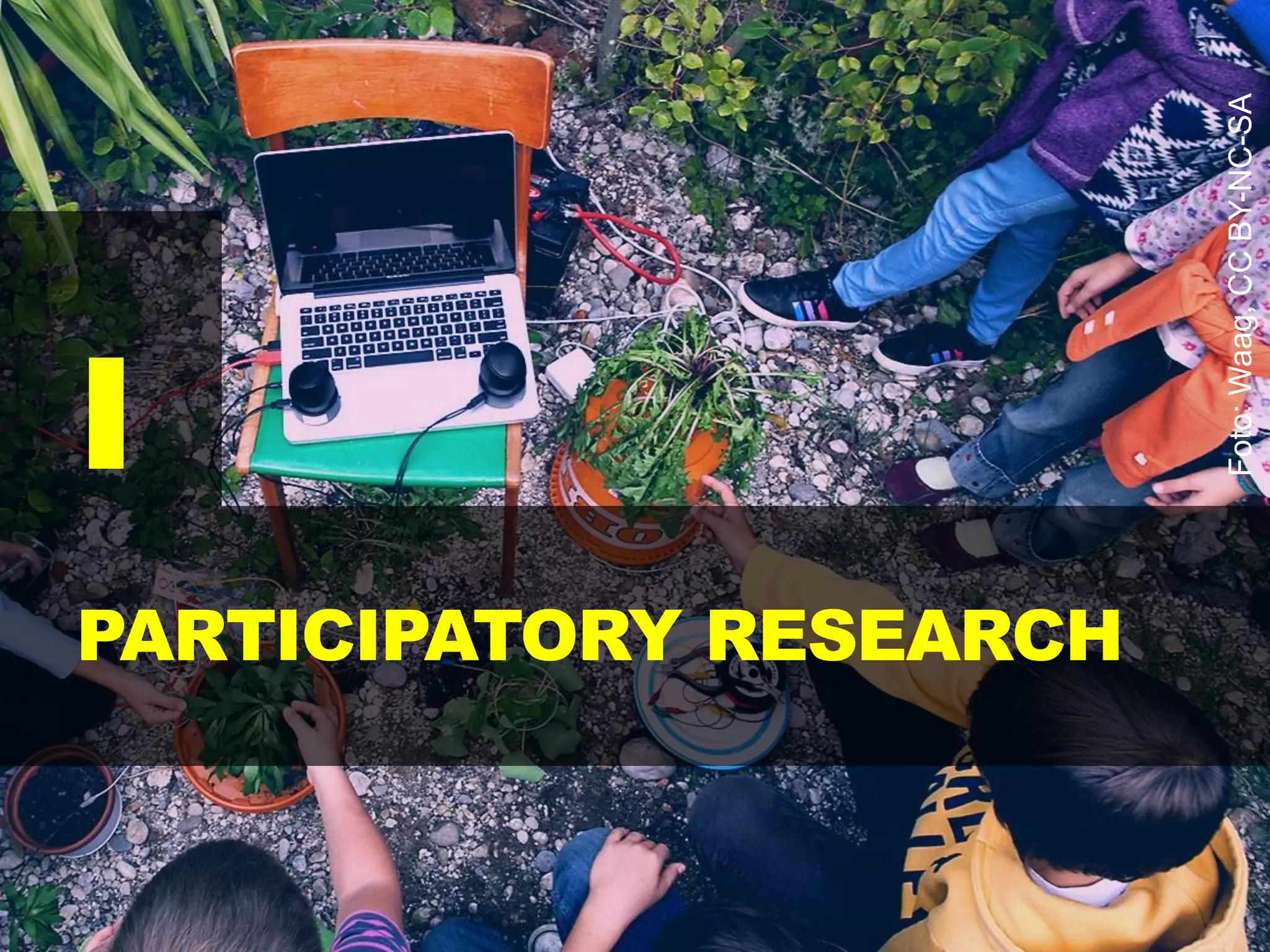
I
PARTICIPATORY RESEARCH
Foto:Waag,CCBY-NC-SA
PARTICIPATORY RESEARCH
“the many ways in which members of the public
have engaged and continue to engage in the
production of scientific knowledge” (15)
- Strasser et al., 2018
• Science (&) policy discourses
• 5 epistemic practices
4
DISCOURSE LINK
Epistemic practices of participatory research
are linked to science (and) policy discourses.
This involves umbrella terms (Rip & Voss, 2013)
– topical terms or labels associated with
scientific and societal promises, e.g.:
citizen science • community-based research • DIY science
participatory action research • transdisciplinary research
public engagement with science and technology
responsible research and innovation • open science
5
6
Photo: F. Heigl, BOKU Vienna
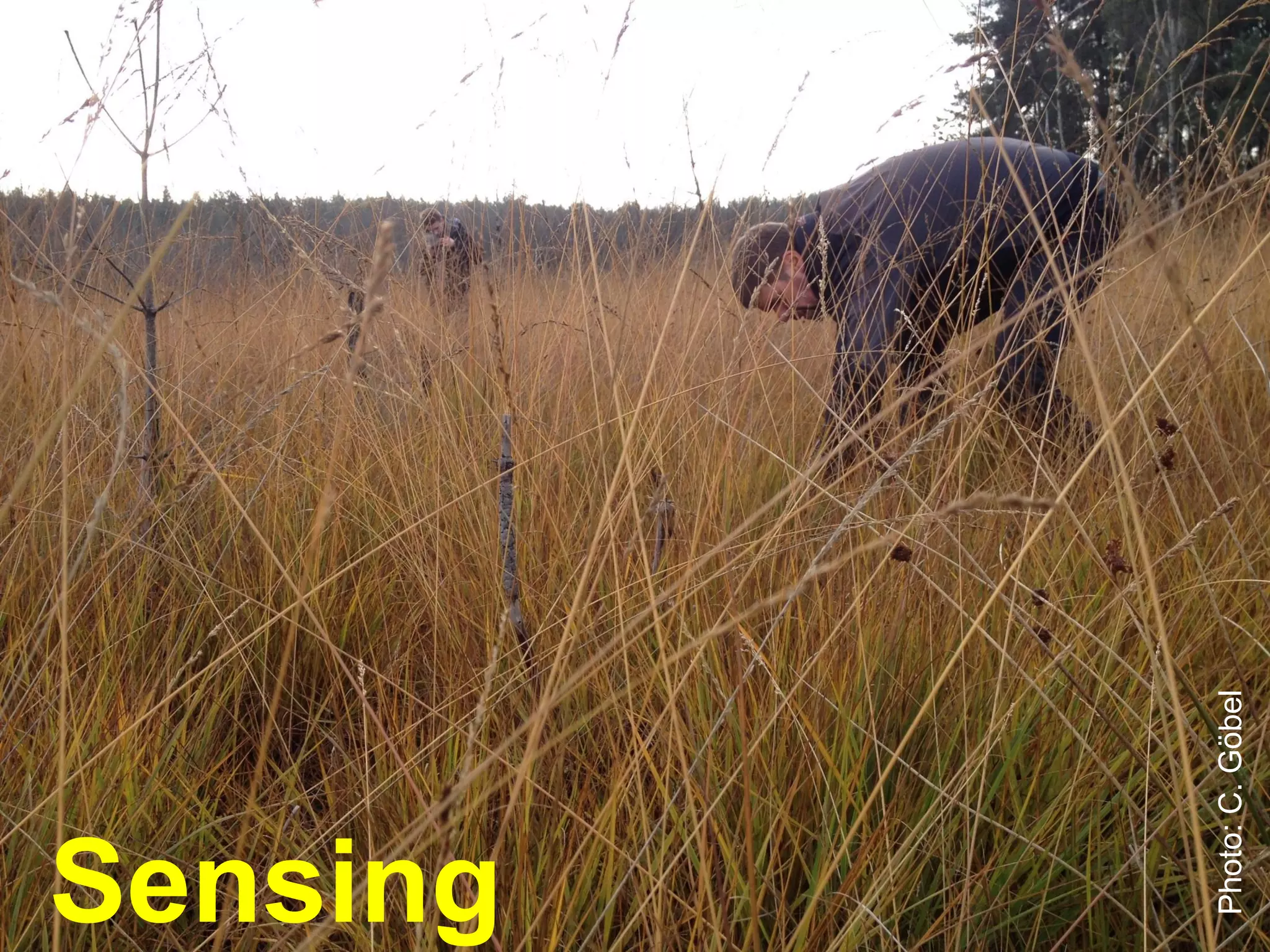
Photo:C.Göbel
Sensing
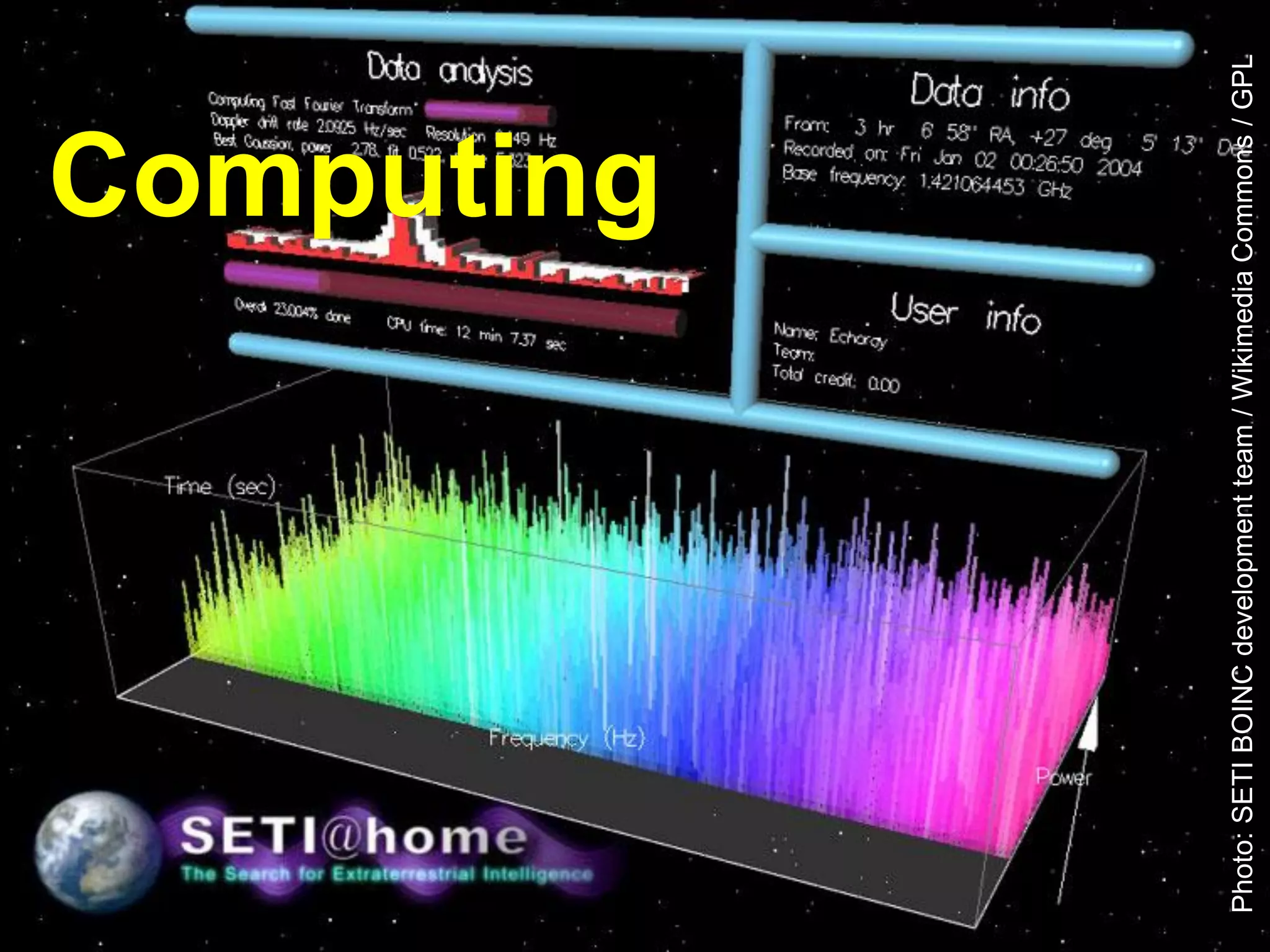
Computing
Photo:SETIBOINCdevelopmentteam/WikimediaCommons/GPL
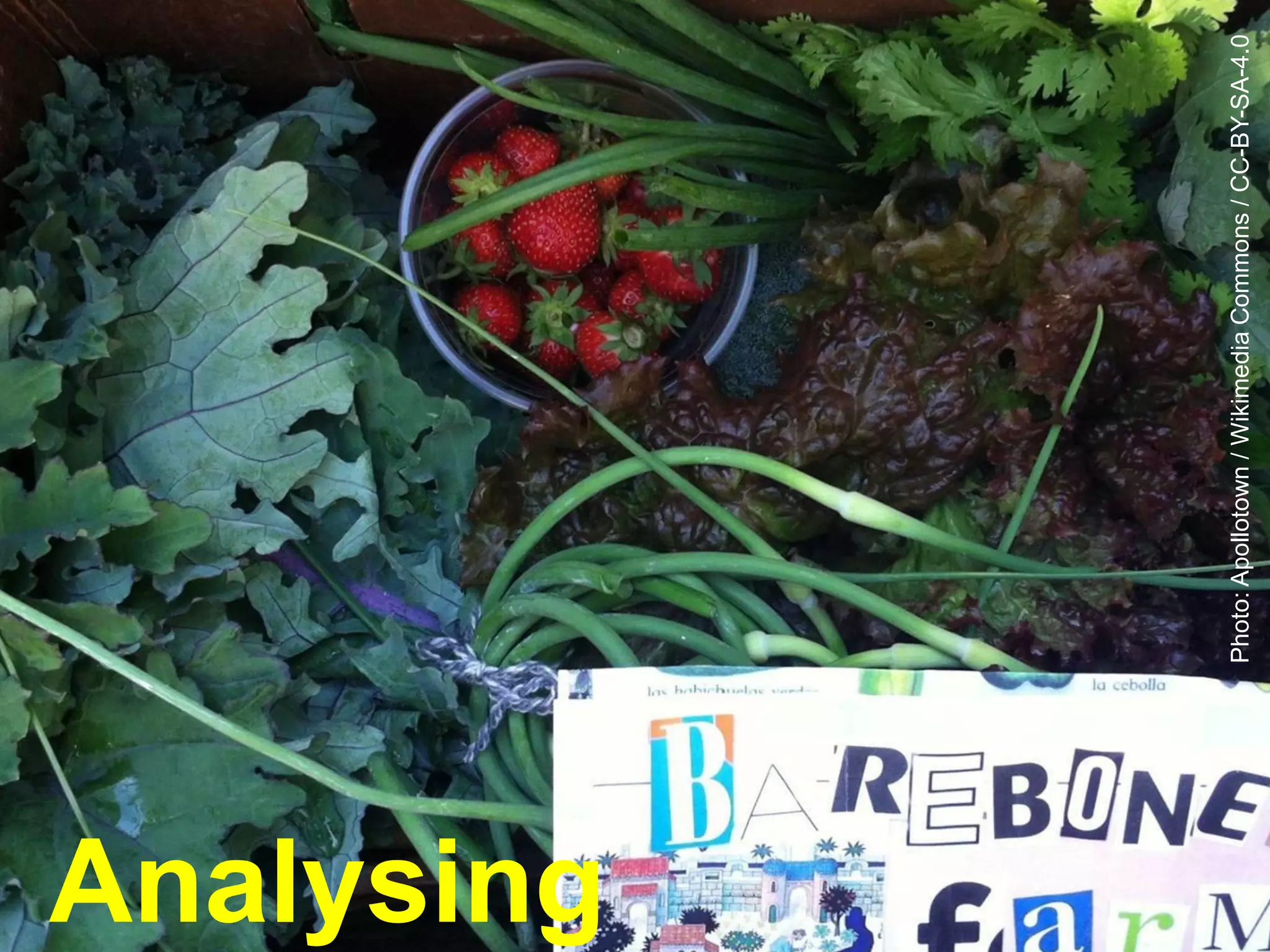
Photo:Apollotown/WikimediaCommons/CC-BY-SA-4.0
Analysing
Self-reporting
Screenshot:patientslikeme.com
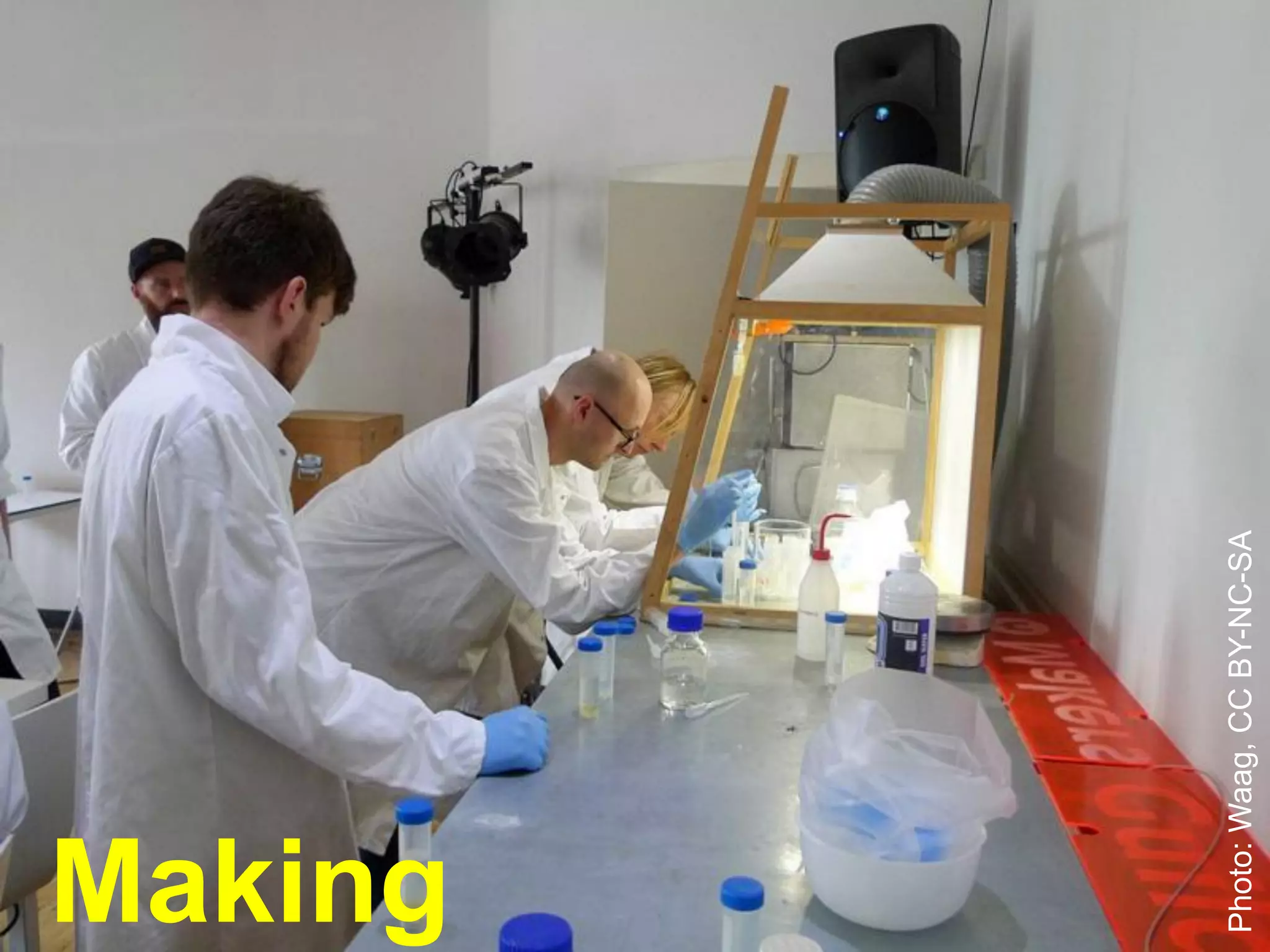
10Photo:Waag,CCBY-NC-SA
Making
WHY IS PARTICIPATORY
RESEARCH IMPORTANT?
“In many cases, participatory research projects
question who can produce legitimate scientific
knowledge, how it is produced, where it is
produced, and sometimes why it is produced.
Thus, participatory research is not necessarily
just ‘science by other means’, but could refocus
what parts of the natural and social worlds are
subject to scientific inquiry, thereby transforming
what we know about the world.”
- Strasser et al., 2018: 2
11
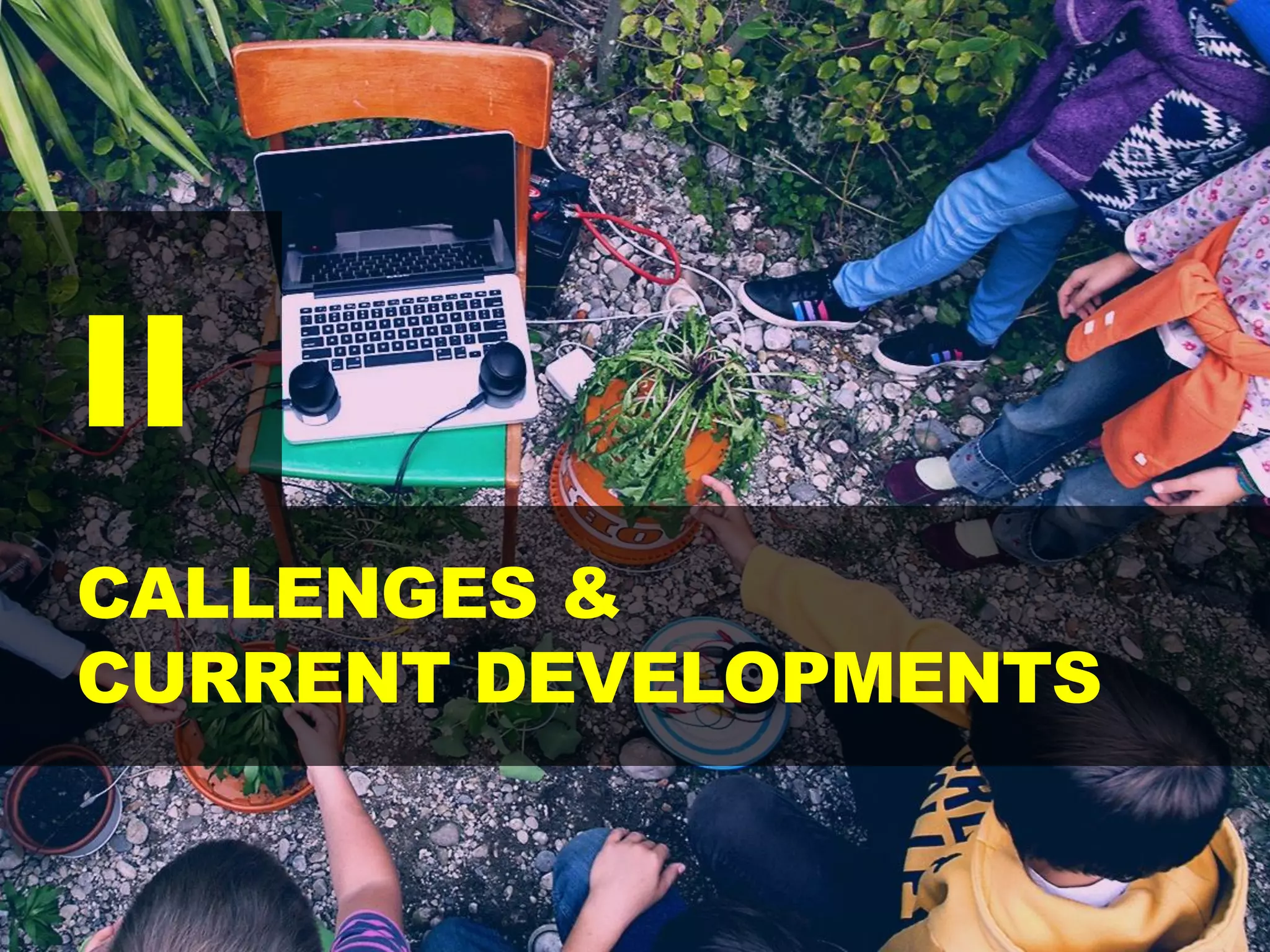
II
CALLENGES &
CURRENT DEVELOPMENTS
(1) OPENNESS & ICTS
• FAIR data
• International working group on CS data and metadata
• COST Action WG 5 data standardization & interoperability
• Uncertainties about legal status, privacy, intellectual
property and licensing
• EU Project PANELFIT - Participatory Approaches to a New
Ethical and Legal Framework for ICT
• BMBF project on genome editing
• Credit diverse types of contributions (data, software,
project platforms, etc.)
13
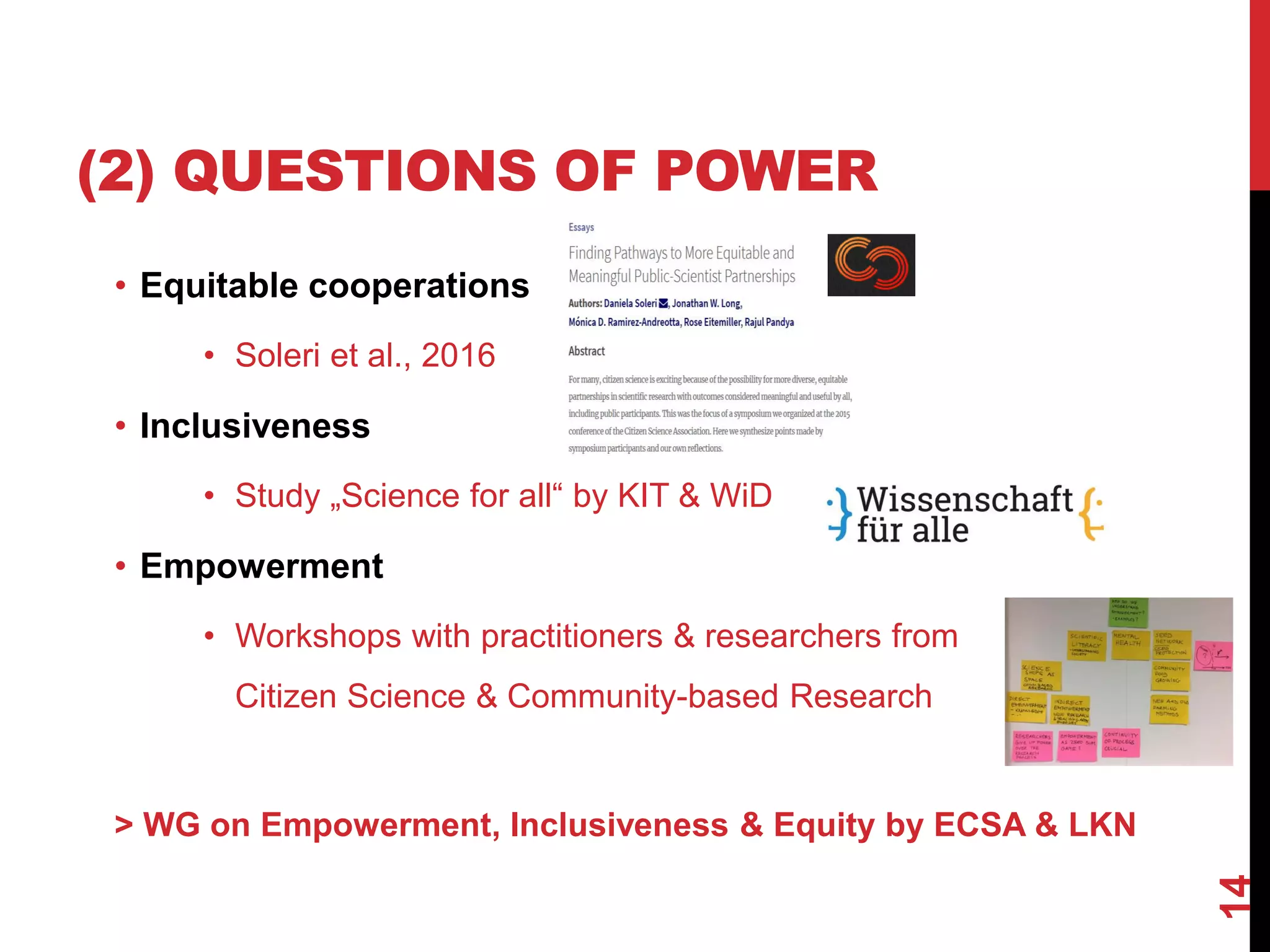
(2) QUESTIONS OF POWER
• Equitable cooperations
• Soleri et al., 2016
• Inclusiveness
• Study „Science for all“ by KIT & WiD
• Empowerment
• Workshops with practitioners & researchers from
Citizen Science & Community-based Research
> WG on Empowerment, Inclusiveness & Equity by ECSA & LKN
14
III
OPEN PARTICIPATORY
RESEARCH
• Participatory research can profoundly transform how & what we know.
• It is only reluctantly addressed as element of Open Science.
Concepts are usually not specified; if yes, ideas are often too narrow.
>> Need for a pluralistic concept of participatory research.
• It matters how participation & research are conceptualised & done.
>> Important challenges: openness & ICTs, questions of power,
infrastructures, institutionalisation of CS
• Addressing them needs transdisciplinary and transboundary efforts.
16
OPEN PARTICIPATORY RESEARCH
17
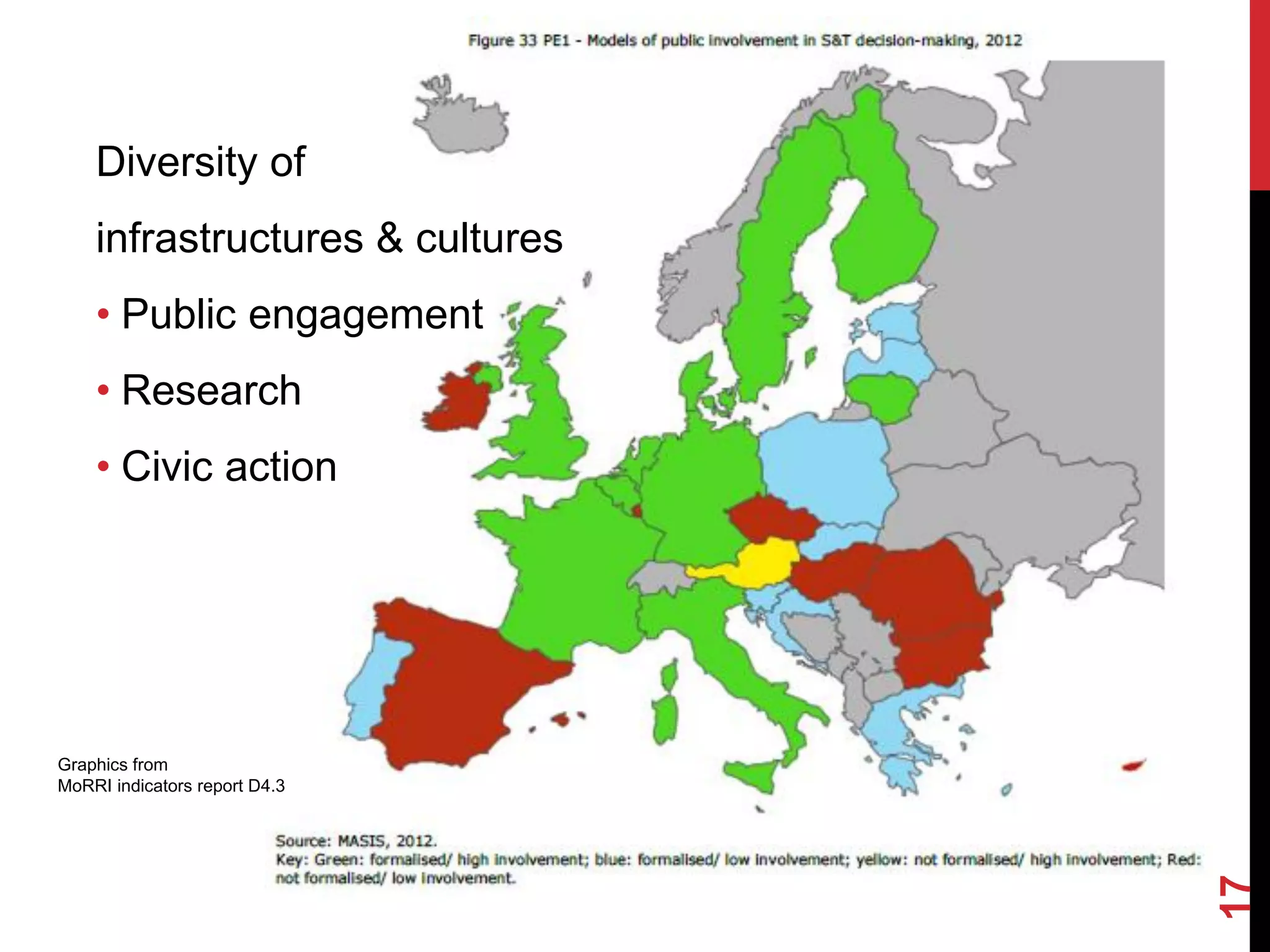
Graphics from
MoRRI indicators report D4.3
Diversity of
infrastructures & cultures
• Public engagement
• Research
• Civic action
THANK YOU!
CLAUDIA.GOEBEL@MFN.BERLIN
@CLAUGOBEL
References
STRASSER, Bruno J. et al. "Citizen Science"? Rethinking Science and Public Participation. Submitted to: Science and
Technology Studies, 2018. https://archive-ouverte.unige.ch/unige:100156
Orion Entomological Association Berlin: https://www.orion-berlin.de/
SETI@home project: http://setiathome.ssl.berkeley.edu/
Patients like me self-reporting project: https://www.patientslikeme.com/
Waag Open Wetlab: https://waag.org/nl/labs/open-wetlab
Rip, A., & Voß, J-P. (2013). Umbrella Terms as Mediators in the Governance of emerging Science and Technology.
Science, technology and innovation studies, 9(2), 39-59.
International working group on CS data and metadata: https://www.citizenscience.org/association/about/working-
groups/data-and-metadata-working-group/
COST Action on CS WG 5: https://www.cs-eu.net/wgs/wg5
EU Project PANELFIT: https://www.researchgate.net/project/PANELFIT-H2020-EU-Project
BMBF project on genome editing: https://kluth.jura.uni-halle.de/bmbf_genomelection/
Soleri et al. paper on equity: https://theoryandpractice.citizenscienceassociation.org/articles/10.5334/cstp.46/
Study „Science for all“ by KIT & WiD: http://www.geistsoz.kit.edu/germanistik/2943.php
Workshop „Empowering civil society through participatory investigation?“: https://ecsa.citizen-science.net/events/ecsa-
events/empowering-civil-society-through-participatory-investigation
Working Group on Empowerment, Inclusiveness & Equity by ECSA & LKN:
https://ecsa.citizen-science.net/empowerment-inclusiveness-equity
Networking and supporting grassroots citizen science initiatives by Lucy Patterson, DIYScience, How to get funding:
https://github.com/DIYScience/DIYScience/projects/4
DITOs policy brief „Making Citizen Science work“ - forthcoming through: http://togetherscience.eu/
Moocs – see:
https://docs.google.com/document/d/1gpexMhbU6eUkLXol3jHbmrZrlXSnI8ee_rxGqi__oa8/edit?usp=sharing
New project for European Citizen Science platform: http://eu-citizen.science/
ECSA: https://ecsa.citizen-science.net/
French report on participatory research (English summary available): http://www.sciences-participatives.com/Rapport
MoRRI. (2018). The evolution of Responsible Research and Innovation in Europe: The MoRRI indicators report
publication. D4.3. http://www.technopolis-group.com/report/evolution-responsible-research-inovation-europe-morri-
indicators-report-d4-3/
19

Participatory Research: Extending Open Science beyond the ivory tower - Open Science Barcamp 2019

  • 1.
    PARTICIPATORY RESEARCH: EXTENDING OPENSCIENCE BEYOND THE IVORY TOWER CLAUDIA GÖBEL CLAUDIA.GOEBEL@MFN.BERLIN @CLAUGOBEL MUSEUM FÜR NATURKUNDE BERLIN EUROPEAN CITIZEN SCIENCE ASSOCIATION 18.03.2019, BERLIN, BARCAMP OPEN SCIENCE CC BY
  • 2.
    I PARTICIPATORY RESEARCH IICALLENGES & CURRENT DEVELOPMENTS III OPEN PARTICIPATORY RESEARCH
  • 3.
  • 4.
    PARTICIPATORY RESEARCH “the manyways in which members of the public have engaged and continue to engage in the production of scientific knowledge” (15) - Strasser et al., 2018 • Science (&) policy discourses • 5 epistemic practices 4
  • 5.
    DISCOURSE LINK Epistemic practicesof participatory research are linked to science (and) policy discourses. This involves umbrella terms (Rip & Voss, 2013) – topical terms or labels associated with scientific and societal promises, e.g.: citizen science • community-based research • DIY science participatory action research • transdisciplinary research public engagement with science and technology responsible research and innovation • open science 5
  • 6.
    6 Photo: F. Heigl,BOKU Vienna Photo:C.Göbel Sensing
  • 7.
  • 8.
  • 9.
  • 10.
  • 11.
    WHY IS PARTICIPATORY RESEARCHIMPORTANT? “In many cases, participatory research projects question who can produce legitimate scientific knowledge, how it is produced, where it is produced, and sometimes why it is produced. Thus, participatory research is not necessarily just ‘science by other means’, but could refocus what parts of the natural and social worlds are subject to scientific inquiry, thereby transforming what we know about the world.” - Strasser et al., 2018: 2 11
  • 12.
  • 13.
    (1) OPENNESS &ICTS • FAIR data • International working group on CS data and metadata • COST Action WG 5 data standardization & interoperability • Uncertainties about legal status, privacy, intellectual property and licensing • EU Project PANELFIT - Participatory Approaches to a New Ethical and Legal Framework for ICT • BMBF project on genome editing • Credit diverse types of contributions (data, software, project platforms, etc.) 13
  • 14.
    (2) QUESTIONS OFPOWER • Equitable cooperations • Soleri et al., 2016 • Inclusiveness • Study „Science for all“ by KIT & WiD • Empowerment • Workshops with practitioners & researchers from Citizen Science & Community-based Research > WG on Empowerment, Inclusiveness & Equity by ECSA & LKN 14
  • 15.
  • 16.
    • Participatory researchcan profoundly transform how & what we know. • It is only reluctantly addressed as element of Open Science. Concepts are usually not specified; if yes, ideas are often too narrow. >> Need for a pluralistic concept of participatory research. • It matters how participation & research are conceptualised & done. >> Important challenges: openness & ICTs, questions of power, infrastructures, institutionalisation of CS • Addressing them needs transdisciplinary and transboundary efforts. 16 OPEN PARTICIPATORY RESEARCH
  • 17.
    17 Graphics from MoRRI indicatorsreport D4.3 Diversity of infrastructures & cultures • Public engagement • Research • Civic action
  • 18.
  • 19.
    References STRASSER, Bruno J.et al. "Citizen Science"? Rethinking Science and Public Participation. Submitted to: Science and Technology Studies, 2018. https://archive-ouverte.unige.ch/unige:100156 Orion Entomological Association Berlin: https://www.orion-berlin.de/ SETI@home project: http://setiathome.ssl.berkeley.edu/ Patients like me self-reporting project: https://www.patientslikeme.com/ Waag Open Wetlab: https://waag.org/nl/labs/open-wetlab Rip, A., & Voß, J-P. (2013). Umbrella Terms as Mediators in the Governance of emerging Science and Technology. Science, technology and innovation studies, 9(2), 39-59. International working group on CS data and metadata: https://www.citizenscience.org/association/about/working- groups/data-and-metadata-working-group/ COST Action on CS WG 5: https://www.cs-eu.net/wgs/wg5 EU Project PANELFIT: https://www.researchgate.net/project/PANELFIT-H2020-EU-Project BMBF project on genome editing: https://kluth.jura.uni-halle.de/bmbf_genomelection/ Soleri et al. paper on equity: https://theoryandpractice.citizenscienceassociation.org/articles/10.5334/cstp.46/ Study „Science for all“ by KIT & WiD: http://www.geistsoz.kit.edu/germanistik/2943.php Workshop „Empowering civil society through participatory investigation?“: https://ecsa.citizen-science.net/events/ecsa- events/empowering-civil-society-through-participatory-investigation Working Group on Empowerment, Inclusiveness & Equity by ECSA & LKN: https://ecsa.citizen-science.net/empowerment-inclusiveness-equity Networking and supporting grassroots citizen science initiatives by Lucy Patterson, DIYScience, How to get funding: https://github.com/DIYScience/DIYScience/projects/4 DITOs policy brief „Making Citizen Science work“ - forthcoming through: http://togetherscience.eu/ Moocs – see: https://docs.google.com/document/d/1gpexMhbU6eUkLXol3jHbmrZrlXSnI8ee_rxGqi__oa8/edit?usp=sharing New project for European Citizen Science platform: http://eu-citizen.science/ ECSA: https://ecsa.citizen-science.net/ French report on participatory research (English summary available): http://www.sciences-participatives.com/Rapport MoRRI. (2018). The evolution of Responsible Research and Innovation in Europe: The MoRRI indicators report publication. D4.3. http://www.technopolis-group.com/report/evolution-responsible-research-inovation-europe-morri- indicators-report-d4-3/ 19