HANDGRIP STRENGTH TEST
Purpose:The grip strength test is a simple and effective test to measure hand and
forearm strength using hand dynamometer.
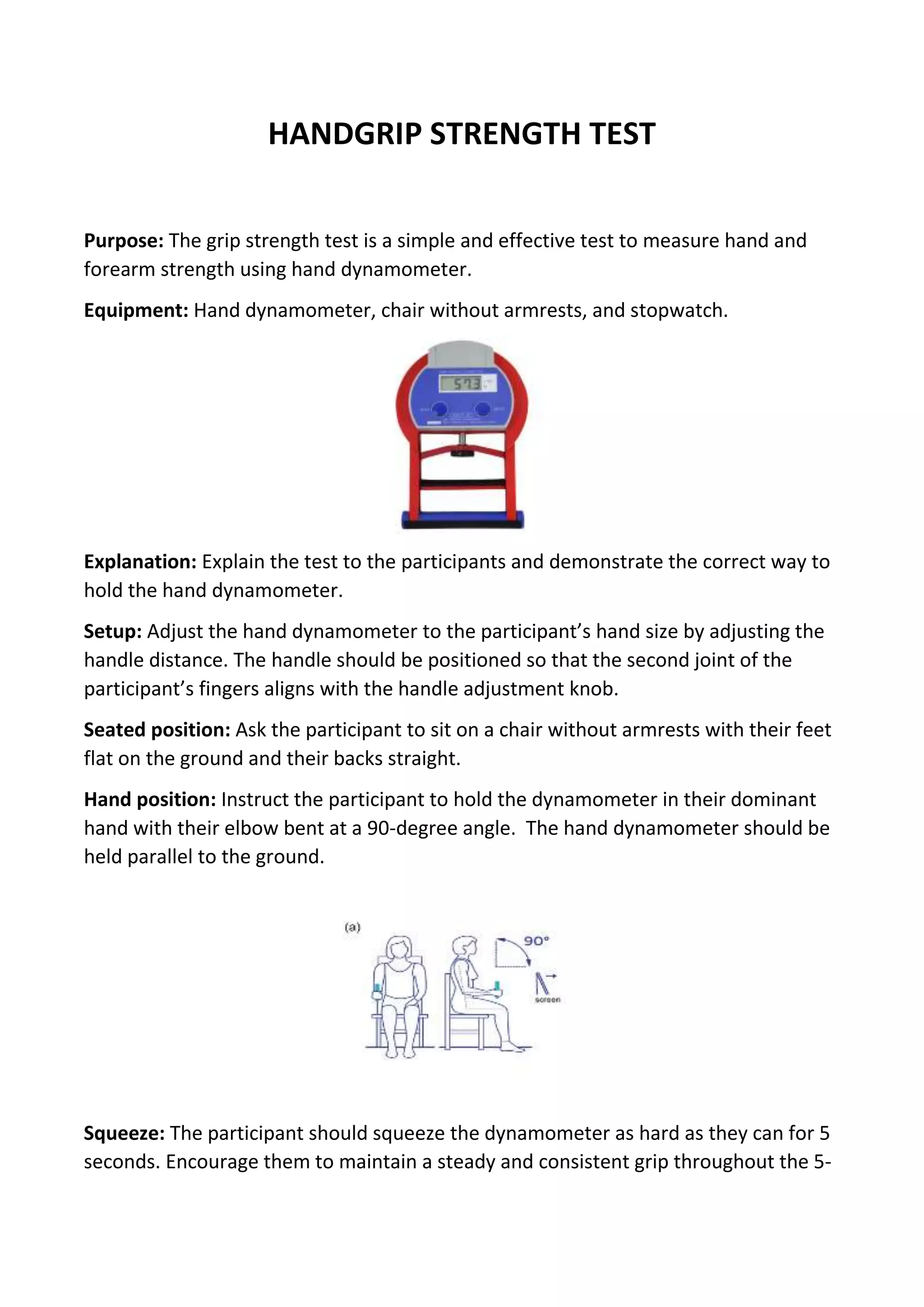
Equipment: Hand dynamometer, chair without armrests, and stopwatch.
Explanation: Explain the test to the participants and demonstrate the correct way to
hold the hand dynamometer.
Setup: Adjust the hand dynamometer to the participant’s hand size by adjusting the
handle distance. The handle should be positioned so that the second joint of the
participant’s fingers aligns with the handle adjustment knob.
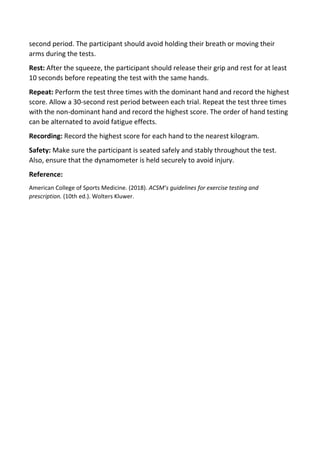
Seated position: Ask the participant to sit on a chair without armrests with their feet
flat on the ground and their backs straight.
Hand position: Instruct the participant to hold the dynamometer in their dominant
hand with their elbow bent at a 90-degree angle. The hand dynamometer should be
held parallel to the ground.
Squeeze: The participant should squeeze the dynamometer as hard as they can for 5
seconds. Encourage them to maintain a steady and consistent grip throughout the 5-
2.
second period. Theparticipant should avoid holding their breath or moving their
arms during the tests.
Rest: After the squeeze, the participant should release their grip and rest for at least
10 seconds before repeating the test with the same hands.
Repeat: Perform the test three times with the dominant hand and record the highest
score. Allow a 30-second rest period between each trial. Repeat the test three times
with the non-dominant hand and record the highest score. The order of hand testing
can be alternated to avoid fatigue effects.
Recording: Record the highest score for each hand to the nearest kilogram.
Safety: Make sure the participant is seated safely and stably throughout the test.
Also, ensure that the dynamometer is held securely to avoid injury.
Reference:
American College of Sports Medicine. (2018). ACSM’s guidelines for exercise testing and
prescription. (10th ed.). Wolters Kluwer.