Global
Perspectives
on
Leadership
Amanda Heard
HIED 5364
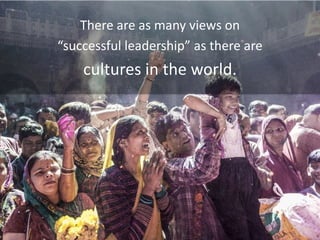
There are as many views on
“successful leadership” as there are
cultures in the world.
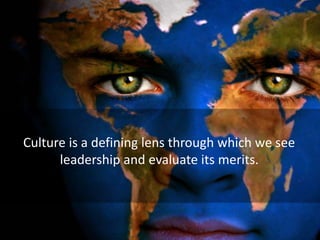
Culture is a defining lens through which we see
leadership and evaluate its merits.
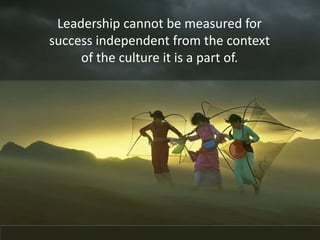
Leadership cannot be measured for
success independent from the context
of the culture it is a part of.
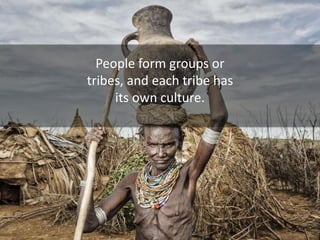
People form groups or
tribes, and each tribe has
its own culture.
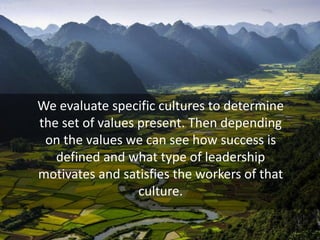
We evaluate specific cultures to determine
the set of values present. Then depending
on the values we can see how success is
defined and what type of leadership
motivates and satisfies the workers of that
culture.
The Western world has a tendency to
view leadership with an ethnocentricity
that places the values of the western
culture within organizational leadership
as the compass by which to judge
success or failure.
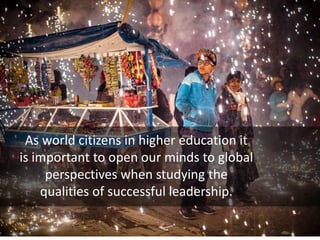
As world citizens in higher education it
is important to open our minds to global
perspectives when studying the
qualities of successful leadership.
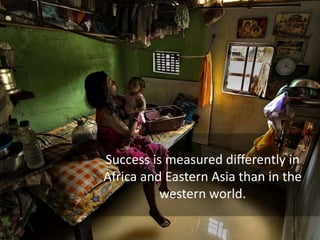
Success is measured differently in
Africa and Eastern Asia than in the
western world.
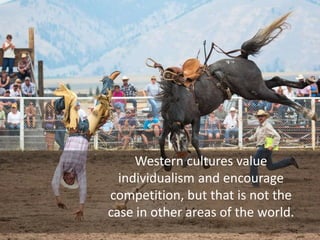
Western cultures value
individualism and encourage
competition, but that is not the
case in other areas of the world.
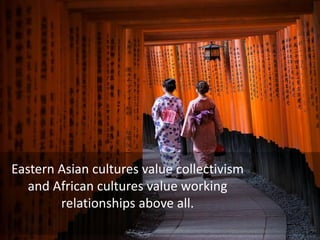
Eastern Asian cultures value collectivism
and African cultures value working
relationships above all.
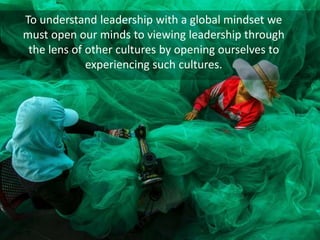
To understand leadership with a global mindset we
must open our minds to viewing leadership through
the lens of other cultures by opening ourselves to
experiencing such cultures.
We can achieve this
growth through travel to
foreign countries,
participating in study
abroad opportunities,
developing relationships
with faculty and
students of other
cultures, and learning
foreign languages.
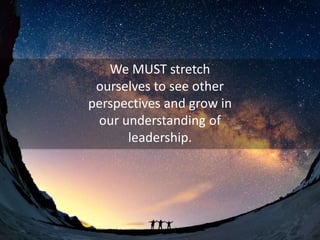
We MUST stretch
ourselves to see other
perspectives and grow in
our understanding of
leadership.
References
Love, P. G. & Estanek, S. M. (2004). Rethinking student affairs practice. San Francisco, CA: Jossey-Bass.
Swaniker, Fred (2014) The Leaders who Ruined Africa and the Generation that can fix it retrieved from
http://www.ted.com/talks/fred_swaniker_the_leaders_who_ruined_africa_and_the_generation_who_can_fix_it
Blunt,P. & Jones, M. (1997) Exploring the limits of western leadership theory in East Asia and Africa retrieved from
https://shsu.blackboard.com/bbcswebdav/pid-1705455-dt-content-rid-
8105748_1/courses/HIED536401815/Blunt%20%26%20Jones%20_1997_%20Limits%20of%20Western%20Leadership.pdf
Logan, David (2009) Tribal Leadership retrieved from http://www.ted.com/talks/david_logan_on_tribal_leadership
Phan Rang (2013) Rural Vietnam retrieved from http://www.smithsonianmag.com/photocontest/detail/people/rural-vietnam/?
David Martin Huamani Bedoya (2014) Orange Half retrieved from
http://www.smithsonianmag.com/photocontest/detail/travel/orange-half/
Joydeep Mukherjee (2014) Mother India retrieved from http://www.smithsonianmag.com/photocontest/detail/people/mother-india-
2/
Fowler, Carol (2013) Champion bronco bucks champion rider at Helmville, MT Rodeo retrieved from
http://www.smithsonianmag.com/photocontest/detail/american-experience/champion-bronco-bucks-champion-rider-at-helmville-mt-
rodeo/?
Pham Ty (2014) Sewing the fishing net retrieved from http://www.smithsonianmag.com/photocontest/detail/people/sewing-the-
fishing-net/
Pyiet Oo Aung (2012) retrieved from http://www.smithsonianmag.com/photocontest/detail/travel/photo-was-taken-at-innwa-1/?
Yankovyi, Anton (2015) Teamwork and Support retrieved from
http://www.smithsonianmag.com/photocontest/detail/travel/teamwork-and-support/?

Global Perspectives

  • 1.
  • 2.
    There are asmany views on “successful leadership” as there are cultures in the world.
  • 3.
    Culture is adefining lens through which we see leadership and evaluate its merits.
  • 4.
    Leadership cannot bemeasured for success independent from the context of the culture it is a part of.
  • 5.
    People form groupsor tribes, and each tribe has its own culture.
  • 6.
    We evaluate specificcultures to determine the set of values present. Then depending on the values we can see how success is defined and what type of leadership motivates and satisfies the workers of that culture.
  • 7.
    The Western worldhas a tendency to view leadership with an ethnocentricity that places the values of the western culture within organizational leadership as the compass by which to judge success or failure.
  • 8.
    As world citizensin higher education it is important to open our minds to global perspectives when studying the qualities of successful leadership.
  • 9.
    Success is measureddifferently in Africa and Eastern Asia than in the western world.
  • 10.
    Western cultures value individualismand encourage competition, but that is not the case in other areas of the world.
  • 11.
    Eastern Asian culturesvalue collectivism and African cultures value working relationships above all.
  • 12.
    To understand leadershipwith a global mindset we must open our minds to viewing leadership through the lens of other cultures by opening ourselves to experiencing such cultures.
  • 13.
    We can achievethis growth through travel to foreign countries, participating in study abroad opportunities, developing relationships with faculty and students of other cultures, and learning foreign languages.
  • 14.
    We MUST stretch ourselvesto see other perspectives and grow in our understanding of leadership.
  • 15.
    References Love, P. G.& Estanek, S. M. (2004). Rethinking student affairs practice. San Francisco, CA: Jossey-Bass. Swaniker, Fred (2014) The Leaders who Ruined Africa and the Generation that can fix it retrieved from http://www.ted.com/talks/fred_swaniker_the_leaders_who_ruined_africa_and_the_generation_who_can_fix_it Blunt,P. & Jones, M. (1997) Exploring the limits of western leadership theory in East Asia and Africa retrieved from https://shsu.blackboard.com/bbcswebdav/pid-1705455-dt-content-rid- 8105748_1/courses/HIED536401815/Blunt%20%26%20Jones%20_1997_%20Limits%20of%20Western%20Leadership.pdf Logan, David (2009) Tribal Leadership retrieved from http://www.ted.com/talks/david_logan_on_tribal_leadership Phan Rang (2013) Rural Vietnam retrieved from http://www.smithsonianmag.com/photocontest/detail/people/rural-vietnam/? David Martin Huamani Bedoya (2014) Orange Half retrieved from http://www.smithsonianmag.com/photocontest/detail/travel/orange-half/ Joydeep Mukherjee (2014) Mother India retrieved from http://www.smithsonianmag.com/photocontest/detail/people/mother-india- 2/ Fowler, Carol (2013) Champion bronco bucks champion rider at Helmville, MT Rodeo retrieved from http://www.smithsonianmag.com/photocontest/detail/american-experience/champion-bronco-bucks-champion-rider-at-helmville-mt- rodeo/? Pham Ty (2014) Sewing the fishing net retrieved from http://www.smithsonianmag.com/photocontest/detail/people/sewing-the- fishing-net/ Pyiet Oo Aung (2012) retrieved from http://www.smithsonianmag.com/photocontest/detail/travel/photo-was-taken-at-innwa-1/? Yankovyi, Anton (2015) Teamwork and Support retrieved from http://www.smithsonianmag.com/photocontest/detail/travel/teamwork-and-support/?