ICARDA, IWMI, CIMMYT, WorldFish
IFPRI, ABC, CIP, IRRI
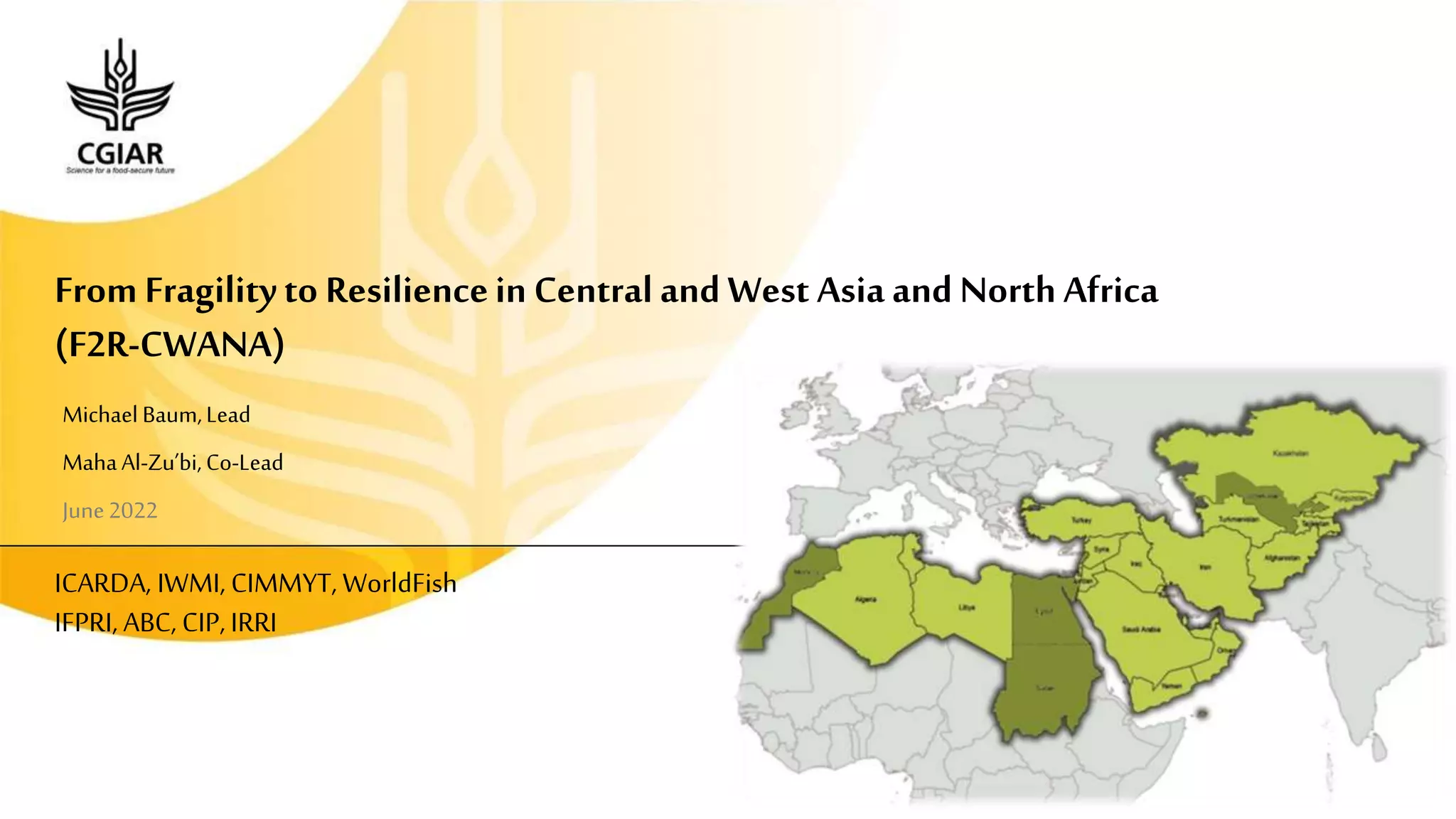
From Fragilityto Resiliencein Central and West Asia and North Africa
(F2R-CWANA)
Michael Baum,Lead
MahaAl-Zu’bi,Co-Lead
June2022
www.cgiar.org
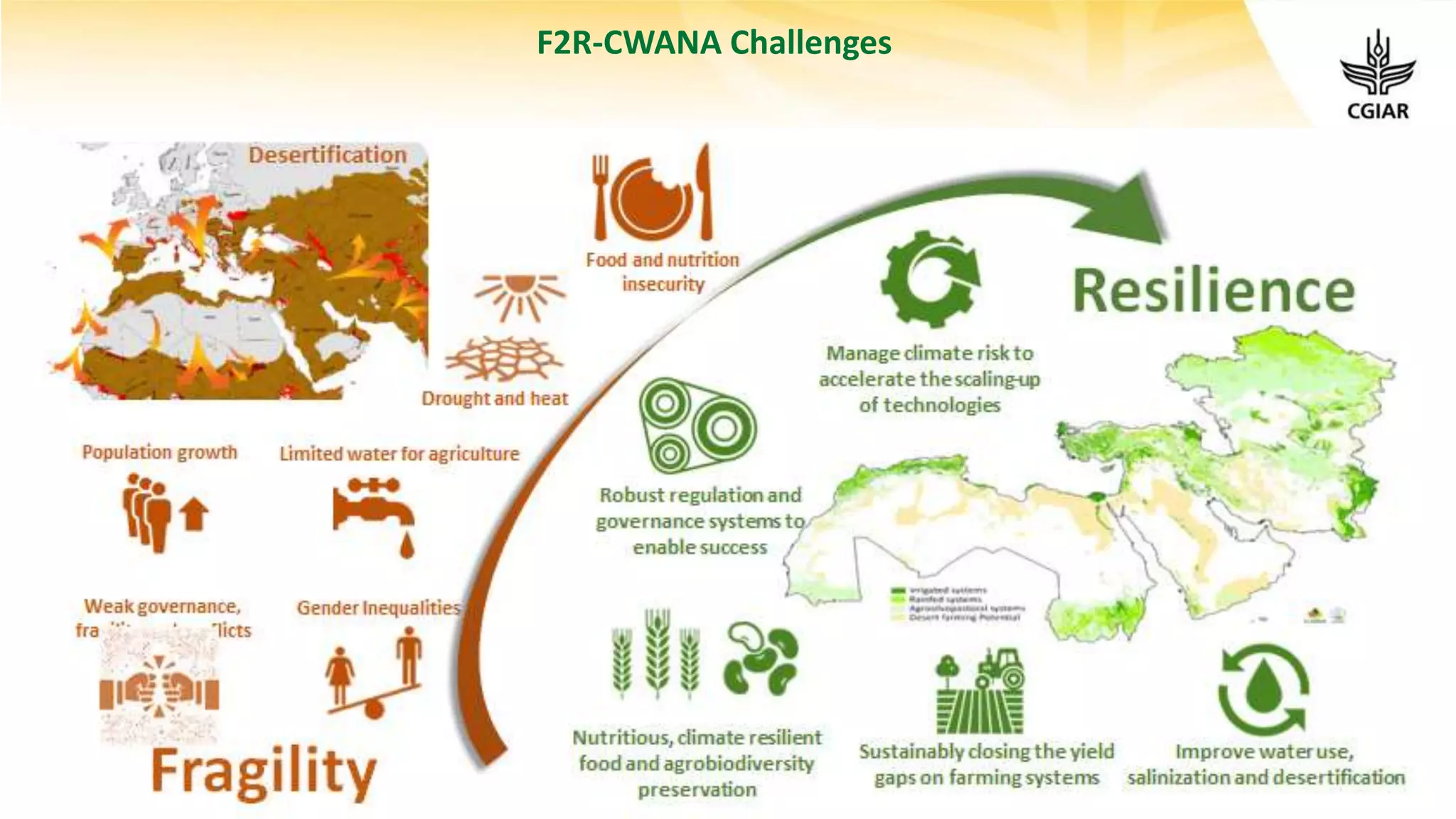
F2R-CWANA Challenges
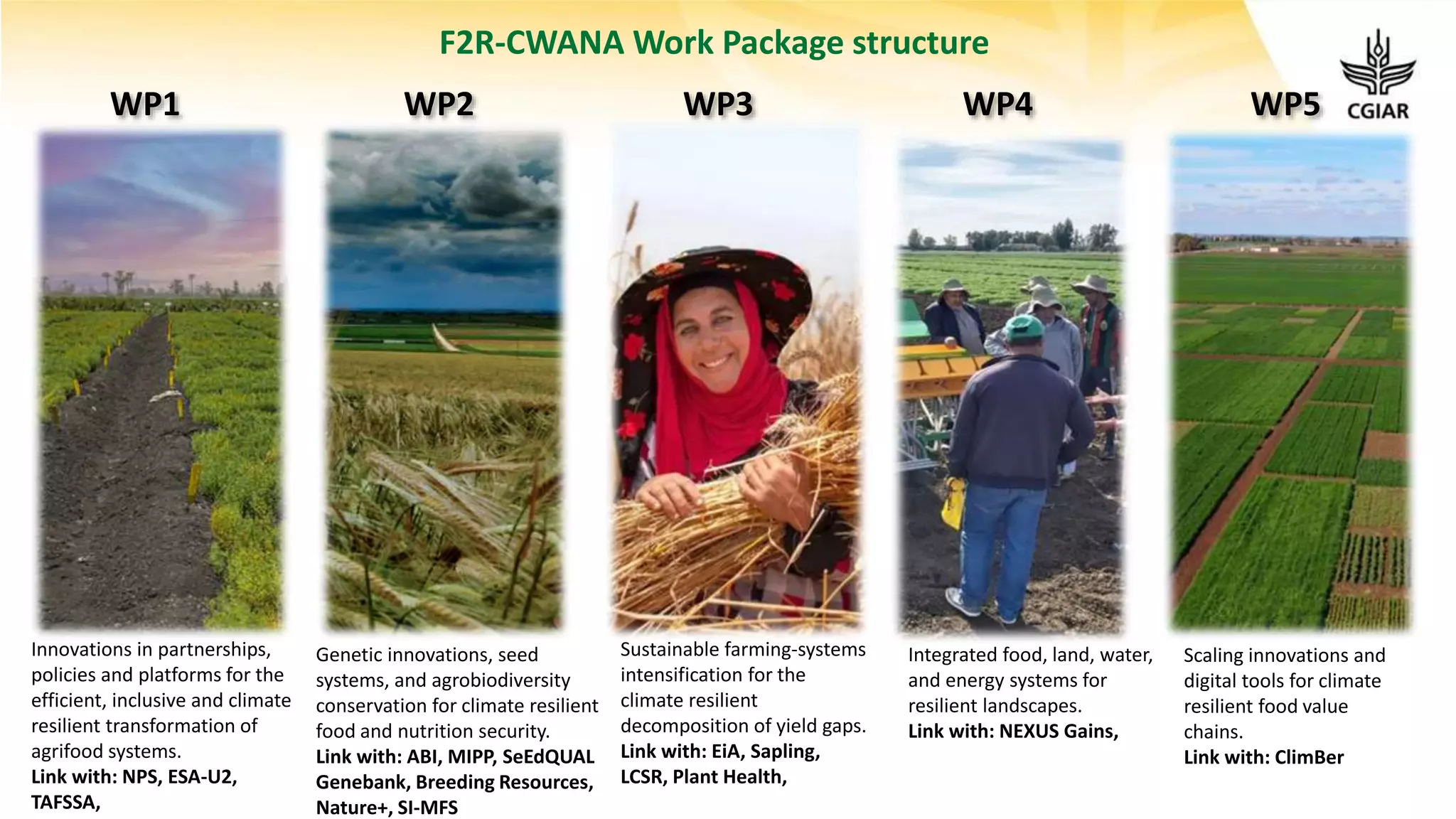
WP2 WP3 WP4 WP5
WP1
Genetic innovations, seed
systems, and agrobiodiversity
conservation for climate resilient
food and nutrition security.
Link with: ABI, MIPP, SeEdQUAL
Genebank, Breeding Resources,
Nature+, SI-MFS
Innovations in partnerships,
policies and platforms for the
efficient, inclusive and climate
resilient transformation of
agrifood systems.
Link with: NPS, ESA-U2,
TAFSSA,
Sustainable farming-systems
intensification for the
climate resilient
decomposition of yield gaps.
Link with: EiA, Sapling,
LCSR, Plant Health,
Integrated food, land, water,
and energy systems for
resilient landscapes.
Link with: NEXUS Gains,
Scaling innovations and
digital tools for climate
resilient food value
chains.
Link with: ClimBer
F2R-CWANA Work Package structure
www.cgiar.org
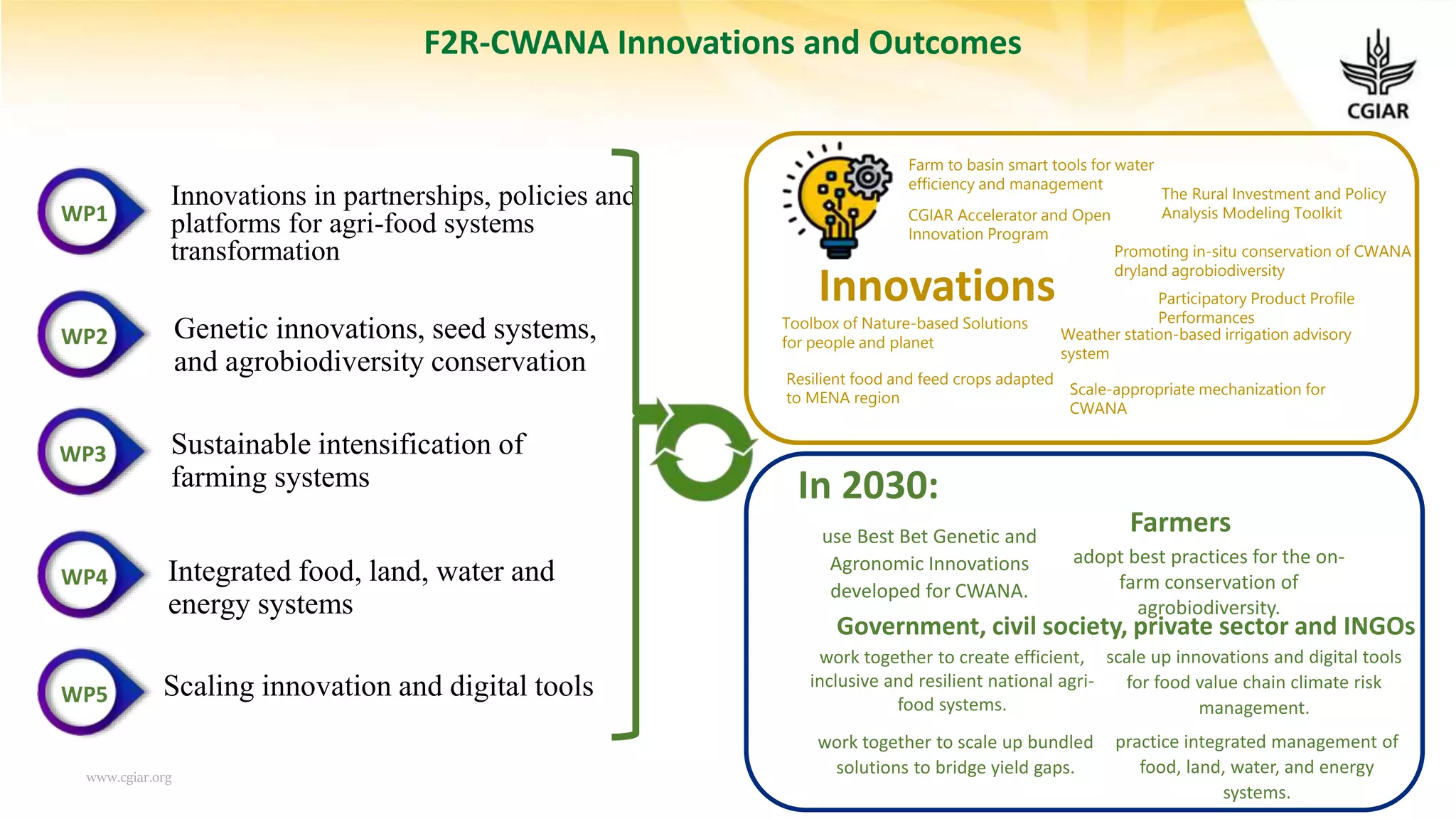
Innovations in partnerships, policies and
platforms for agri-food systems
transformation
Genetic innovations, seed systems,
and agrobiodiversity conservation
Sustainable intensification of
farming systems
Integrated food, land, water and
energy systems
Scaling innovation and digital tools
CGIAR Accelerator and Open
Innovation Program
The Rural Investment and Policy
Analysis Modeling Toolkit
Participatory Product Profile
Performances
Resilient food and feed crops adapted
to MENA region
Scale-appropriate mechanization for
CWANA
Toolbox of Nature-based Solutions
for people and planet
Farm to basin smart tools for water
efficiency and management
Weather station-based irrigation advisory
system
Promoting in-situ conservation of CWANA
dryland agrobiodiversity
Innovations
Government, civil society, private sector and INGOs
scale up innovations and digital tools
for food value chain climate risk
management.
work together to scale up bundled
solutions to bridge yield gaps.
practice integrated management of
food, land, water, and energy
systems.
use Best Bet Genetic and
Agronomic Innovations
developed for CWANA.
Farmers
work together to create efficient,
inclusive and resilient national agri-
food systems.
adopt best practices for the on-
farm conservation of
agrobiodiversity.
In 2030:
WP1
WP2
WP3
WP4
WP5
F2R-CWANA Innovations and Outcomes
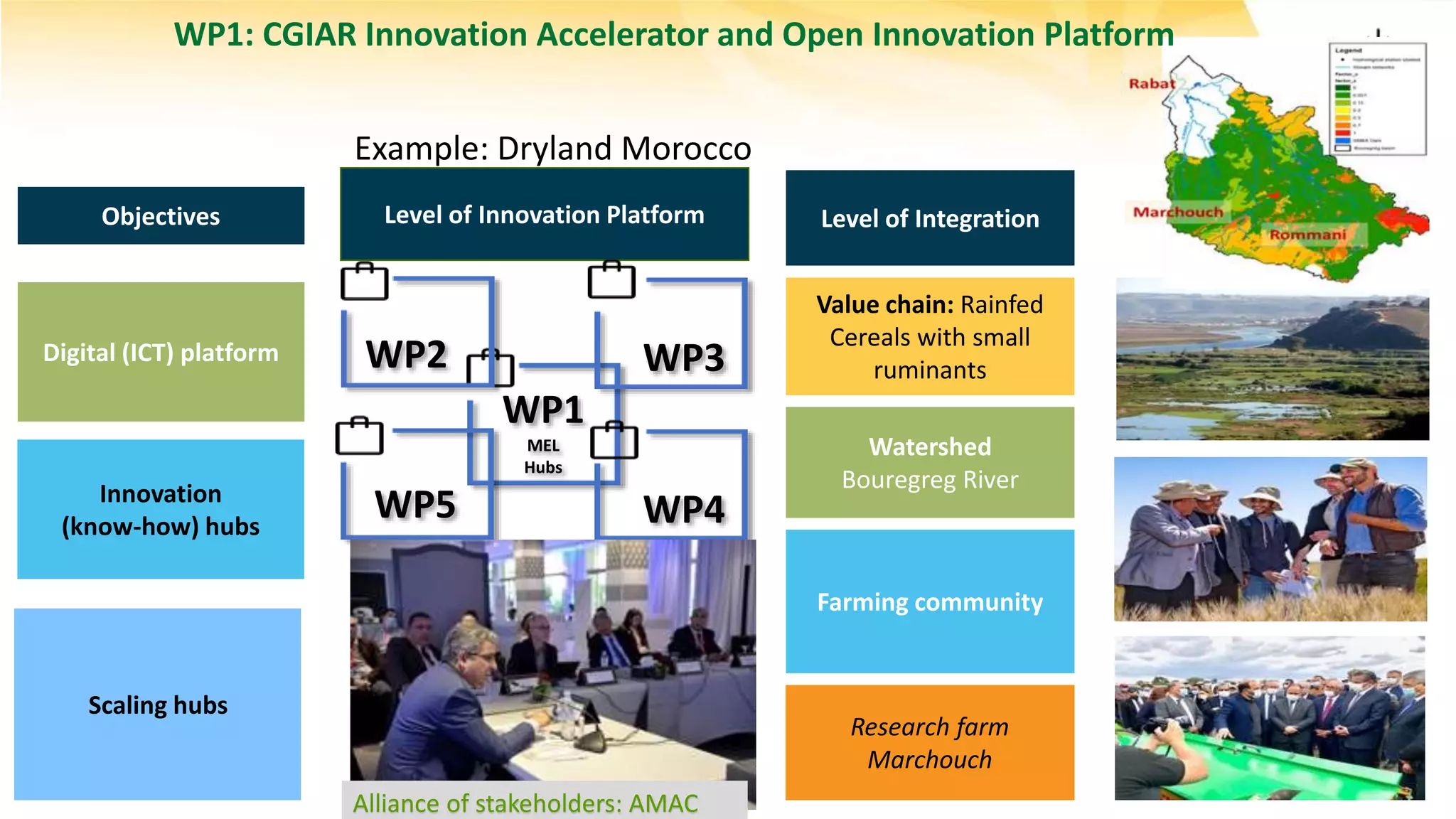
Example: Dryland Morocco
Level of Innovation Platform
Value chain: Rainfed
Cereals with small
ruminants
Watershed
Bouregreg River
Research farm
Marchouch
National
level
Farming community
Level of Integration
Digital (ICT) platform
Innovation
(know-how) hubs
Objectives
WP1
MEL
Hubs
WP3
WP4
WP2
WP5
Alliance of stakeholders: AMAC
Scaling hubs
WP1: CGIAR Innovation Accelerator and Open Innovation Platform
www.cgiar.org
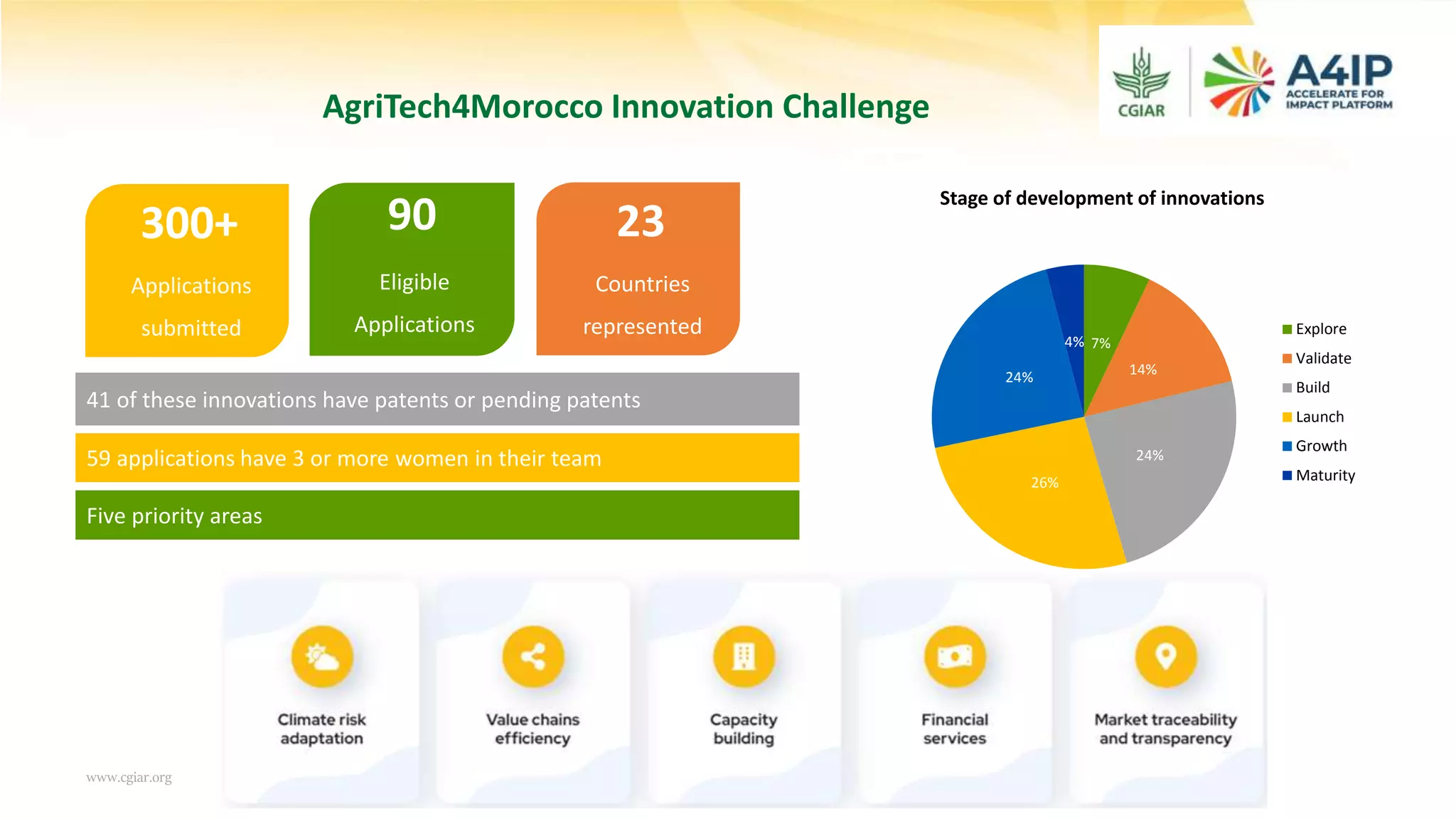
AgriTech4Morocco Innovation Challenge
90
Eligible
Applications
23
Countries
represented
7%
14%
24%
26%
24%
4%
Stage of development of innovations
Explore
Validate
Build
Launch
Growth
Maturity
41 of these innovations have patents or pending patents
59 applications have 3 or more women in their team
300+
Applications
submitted
Five priority areas
THANK YOU!

Michael Baum_CWANA donor ppt.pptx

  • 1.
    ICARDA, IWMI, CIMMYT,WorldFish IFPRI, ABC, CIP, IRRI From Fragilityto Resiliencein Central and West Asia and North Africa (F2R-CWANA) Michael Baum,Lead MahaAl-Zu’bi,Co-Lead June2022
  • 2.
  • 3.
    WP2 WP3 WP4WP5 WP1 Genetic innovations, seed systems, and agrobiodiversity conservation for climate resilient food and nutrition security. Link with: ABI, MIPP, SeEdQUAL Genebank, Breeding Resources, Nature+, SI-MFS Innovations in partnerships, policies and platforms for the efficient, inclusive and climate resilient transformation of agrifood systems. Link with: NPS, ESA-U2, TAFSSA, Sustainable farming-systems intensification for the climate resilient decomposition of yield gaps. Link with: EiA, Sapling, LCSR, Plant Health, Integrated food, land, water, and energy systems for resilient landscapes. Link with: NEXUS Gains, Scaling innovations and digital tools for climate resilient food value chains. Link with: ClimBer F2R-CWANA Work Package structure
  • 4.
    www.cgiar.org Innovations in partnerships,policies and platforms for agri-food systems transformation Genetic innovations, seed systems, and agrobiodiversity conservation Sustainable intensification of farming systems Integrated food, land, water and energy systems Scaling innovation and digital tools CGIAR Accelerator and Open Innovation Program The Rural Investment and Policy Analysis Modeling Toolkit Participatory Product Profile Performances Resilient food and feed crops adapted to MENA region Scale-appropriate mechanization for CWANA Toolbox of Nature-based Solutions for people and planet Farm to basin smart tools for water efficiency and management Weather station-based irrigation advisory system Promoting in-situ conservation of CWANA dryland agrobiodiversity Innovations Government, civil society, private sector and INGOs scale up innovations and digital tools for food value chain climate risk management. work together to scale up bundled solutions to bridge yield gaps. practice integrated management of food, land, water, and energy systems. use Best Bet Genetic and Agronomic Innovations developed for CWANA. Farmers work together to create efficient, inclusive and resilient national agri- food systems. adopt best practices for the on- farm conservation of agrobiodiversity. In 2030: WP1 WP2 WP3 WP4 WP5 F2R-CWANA Innovations and Outcomes
  • 5.
    Example: Dryland Morocco Levelof Innovation Platform Value chain: Rainfed Cereals with small ruminants Watershed Bouregreg River Research farm Marchouch National level Farming community Level of Integration Digital (ICT) platform Innovation (know-how) hubs Objectives WP1 MEL Hubs WP3 WP4 WP2 WP5 Alliance of stakeholders: AMAC Scaling hubs WP1: CGIAR Innovation Accelerator and Open Innovation Platform
  • 6.
    www.cgiar.org AgriTech4Morocco Innovation Challenge 90 Eligible Applications 23 Countries represented 7% 14% 24% 26% 24% 4% Stageof development of innovations Explore Validate Build Launch Growth Maturity 41 of these innovations have patents or pending patents 59 applications have 3 or more women in their team 300+ Applications submitted Five priority areas
  • 8.