Downloaded 174 times
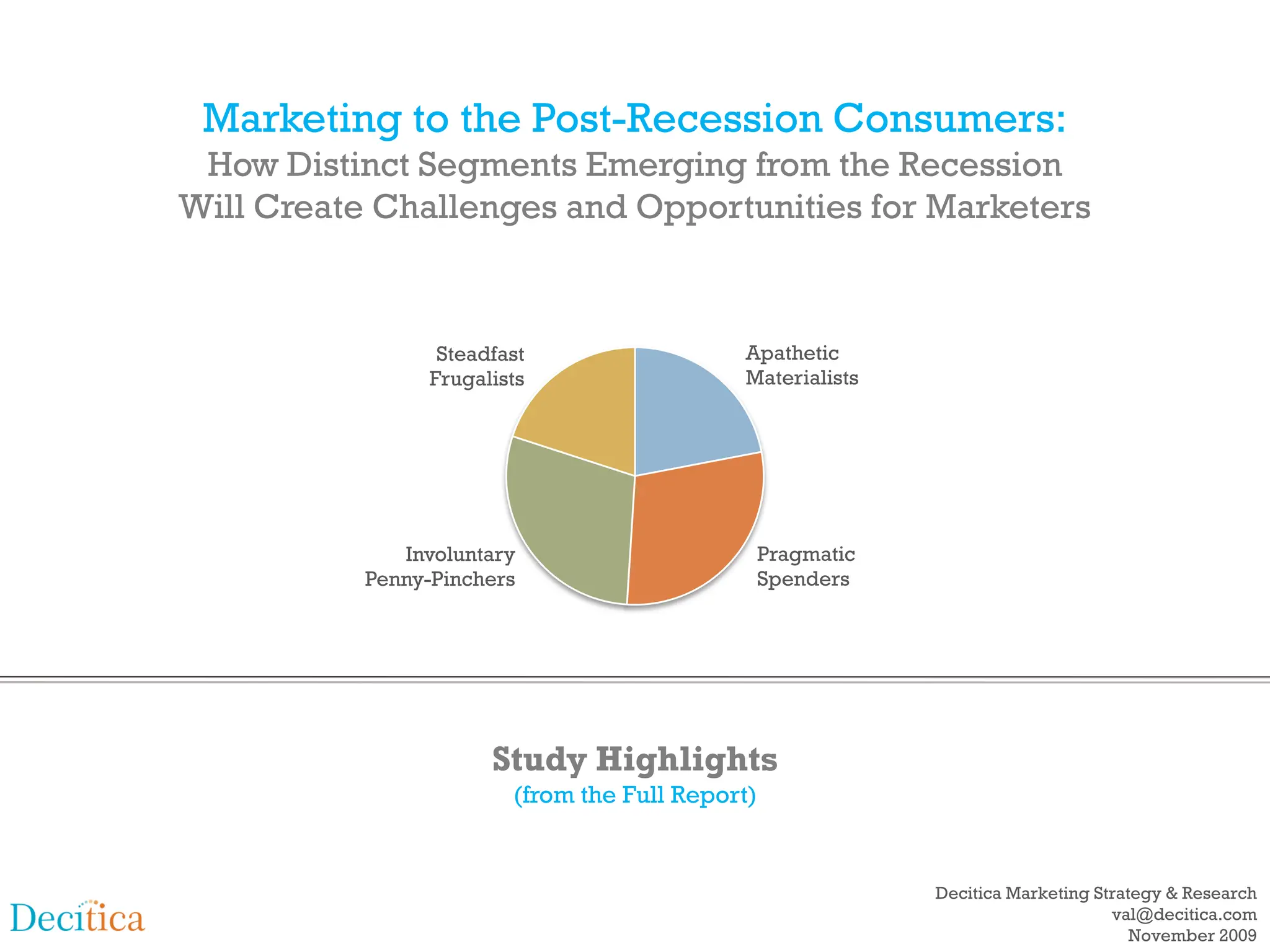
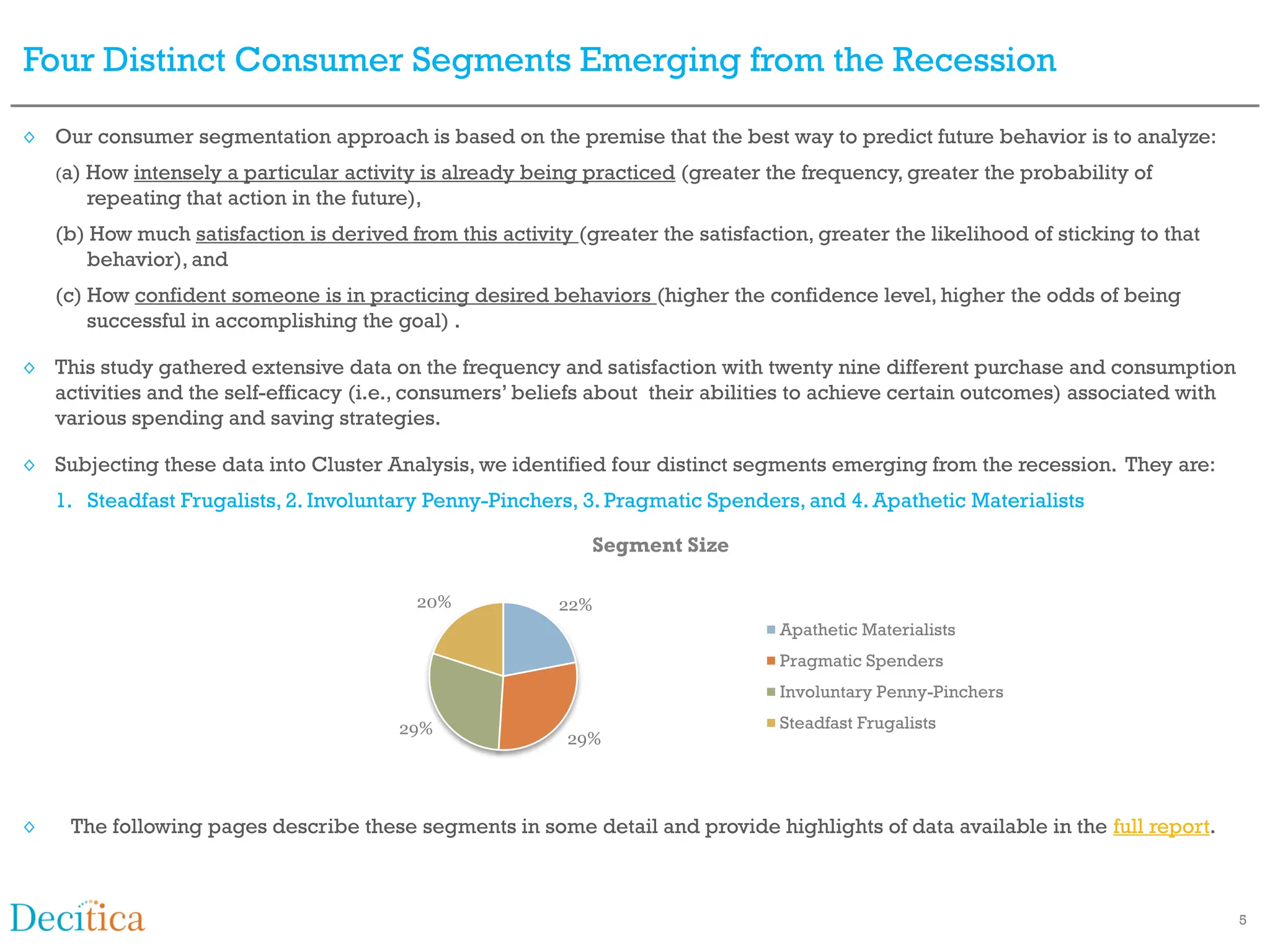
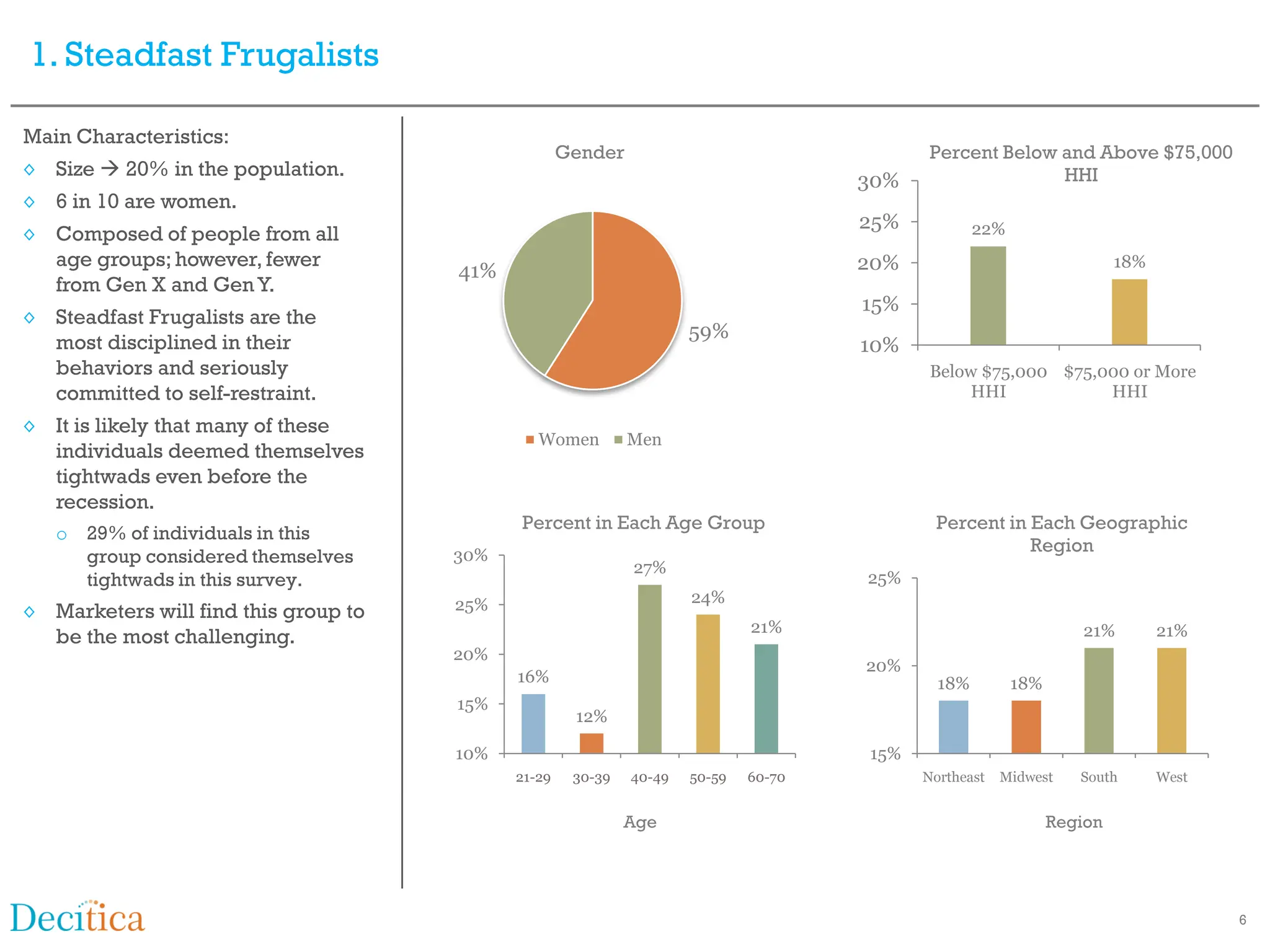
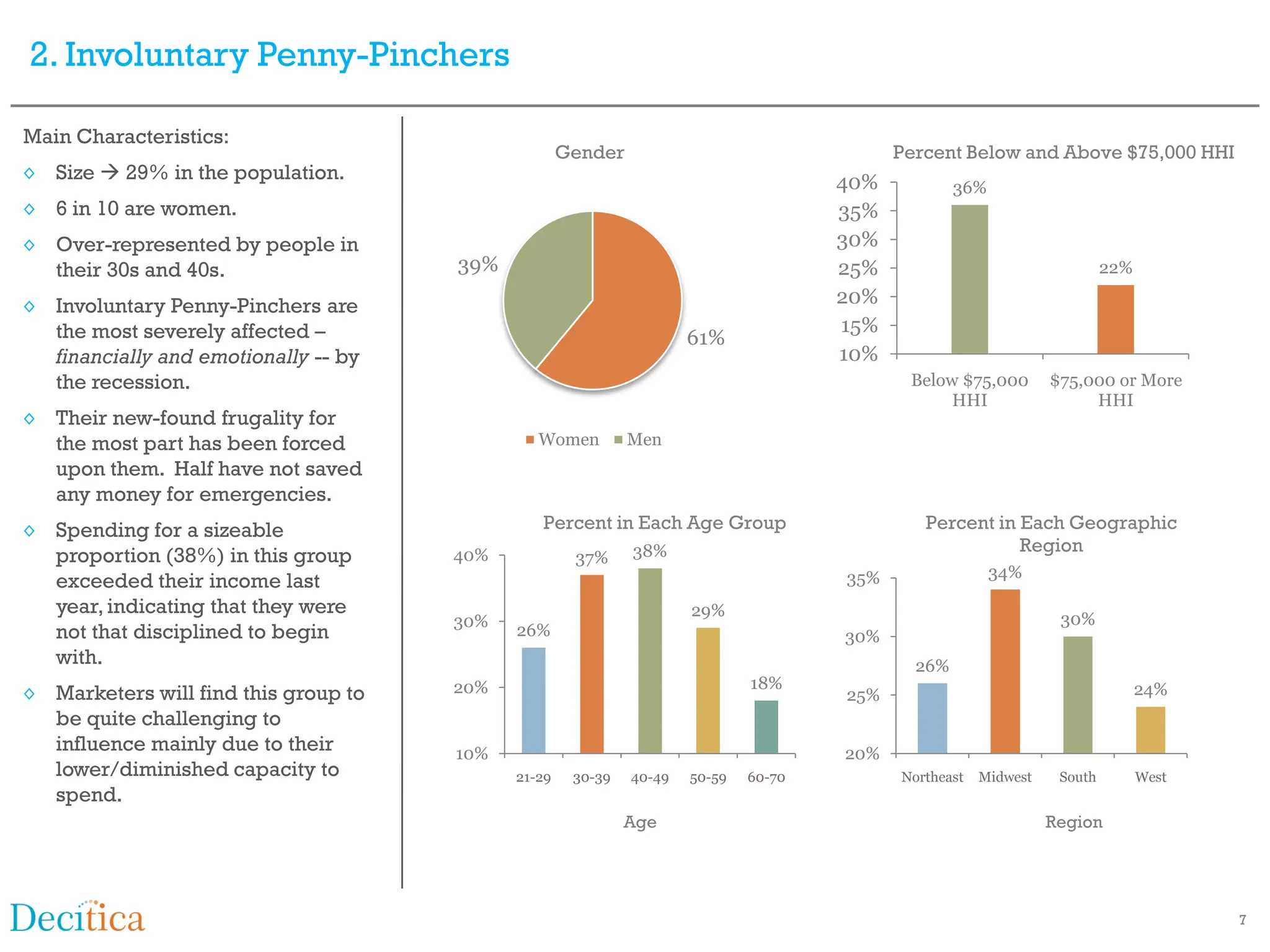
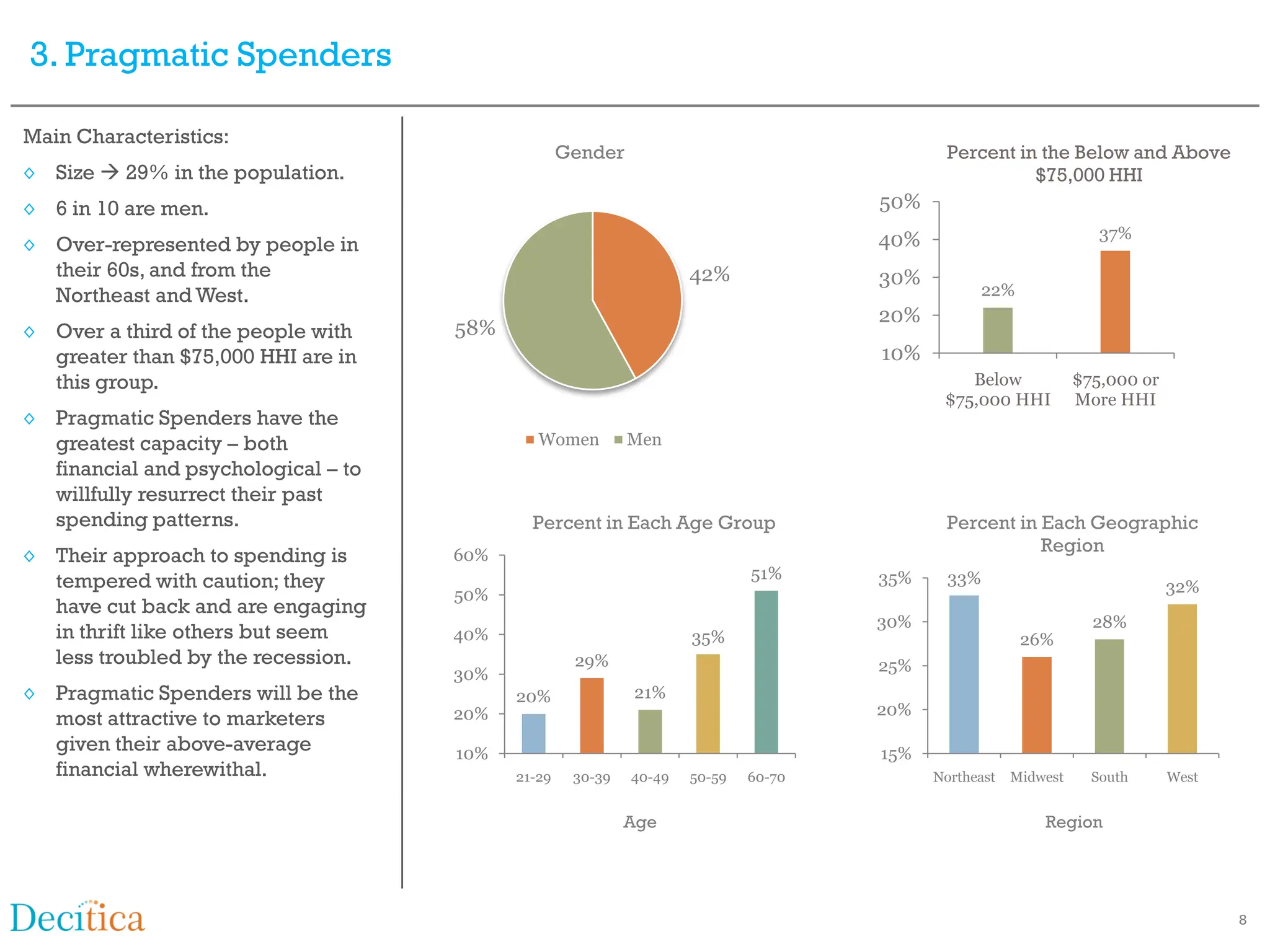
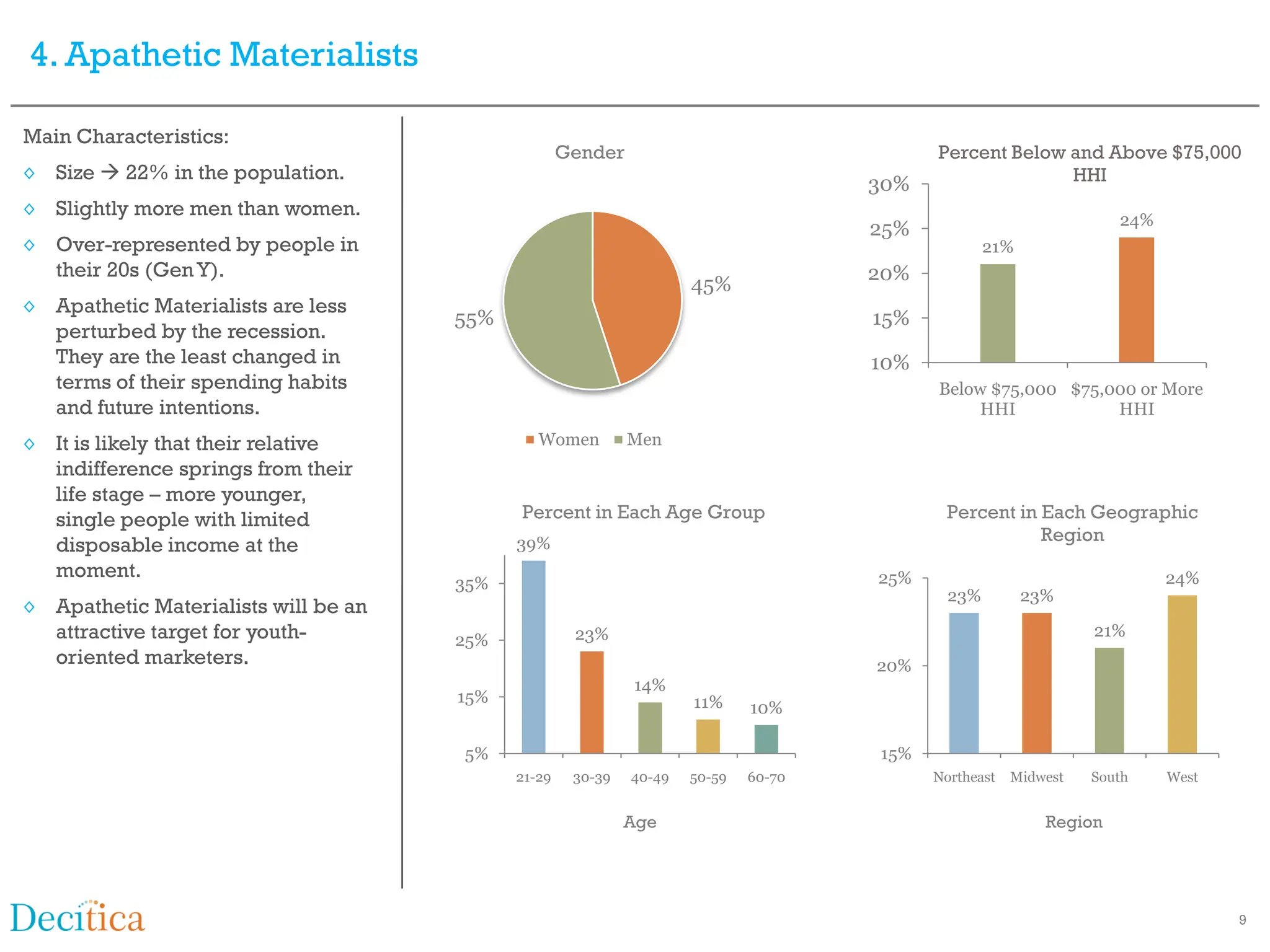
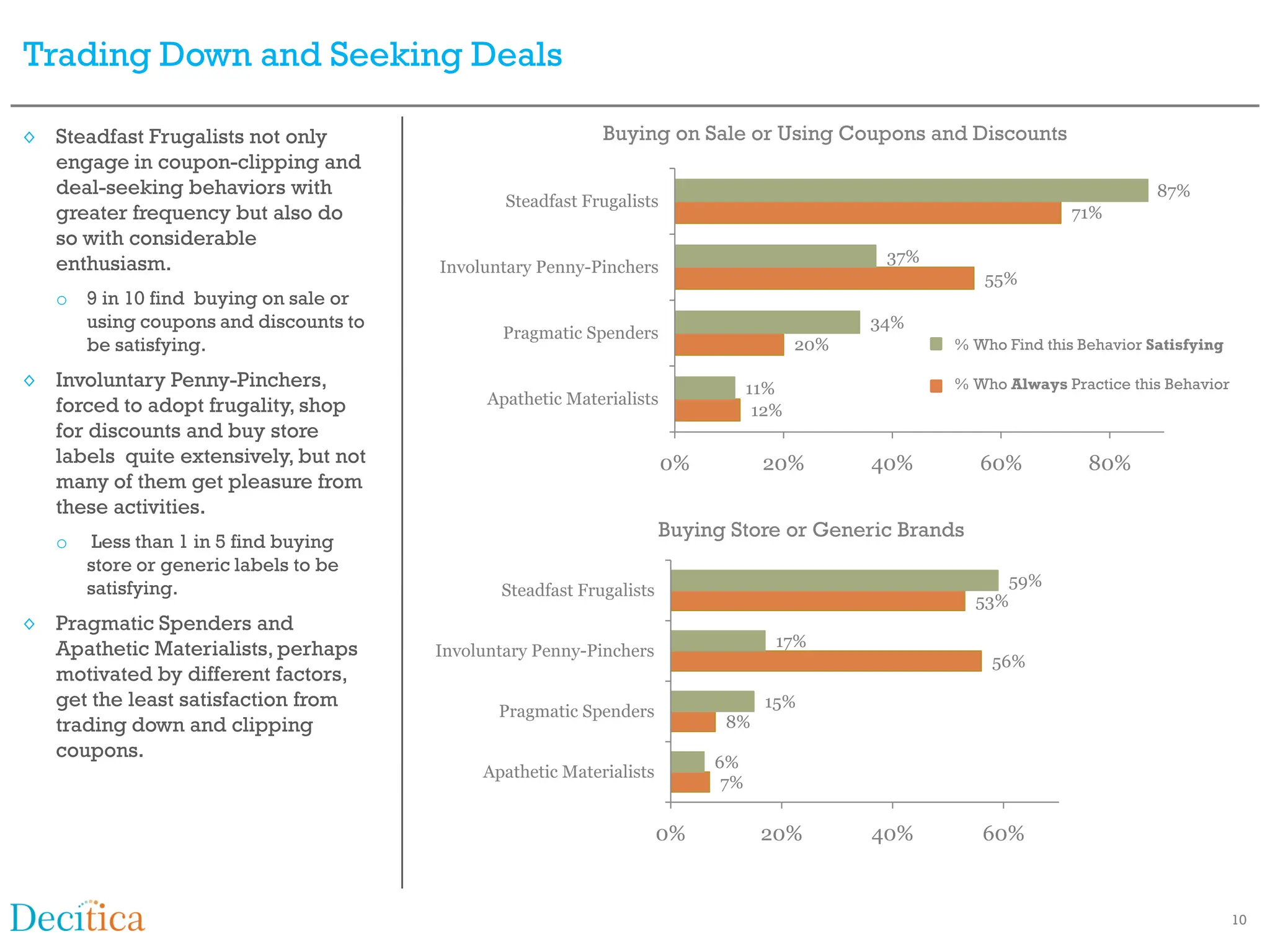
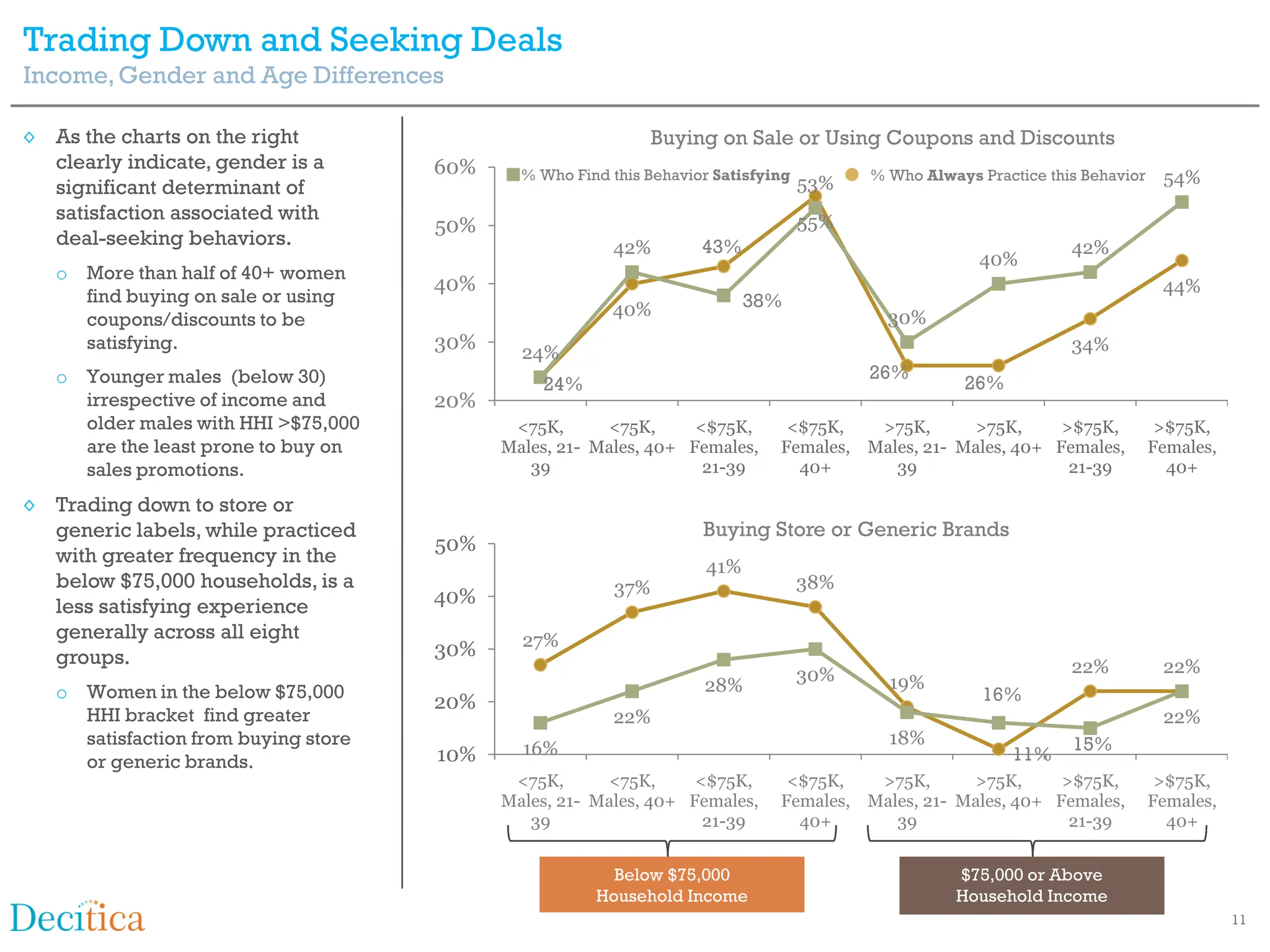
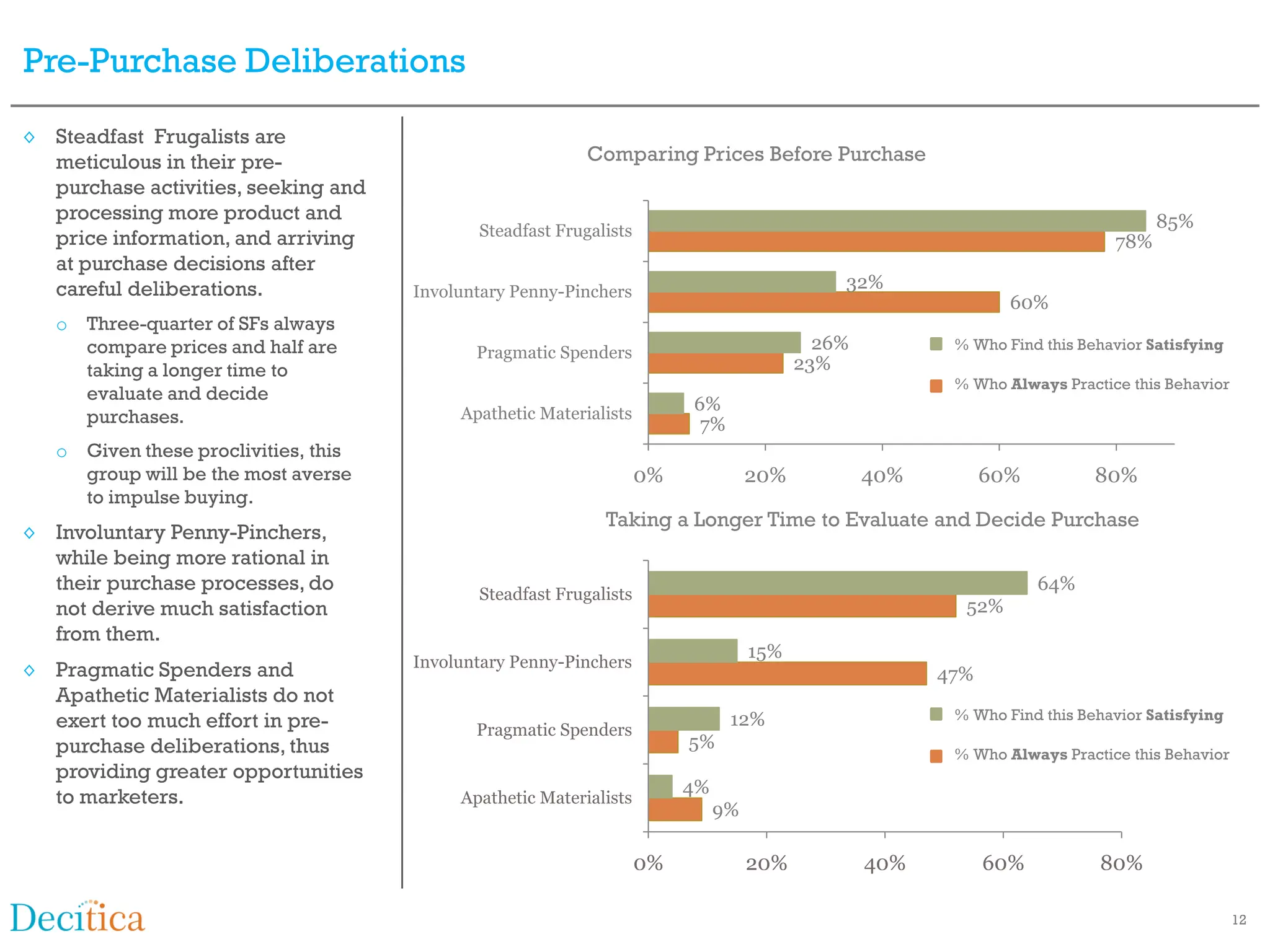
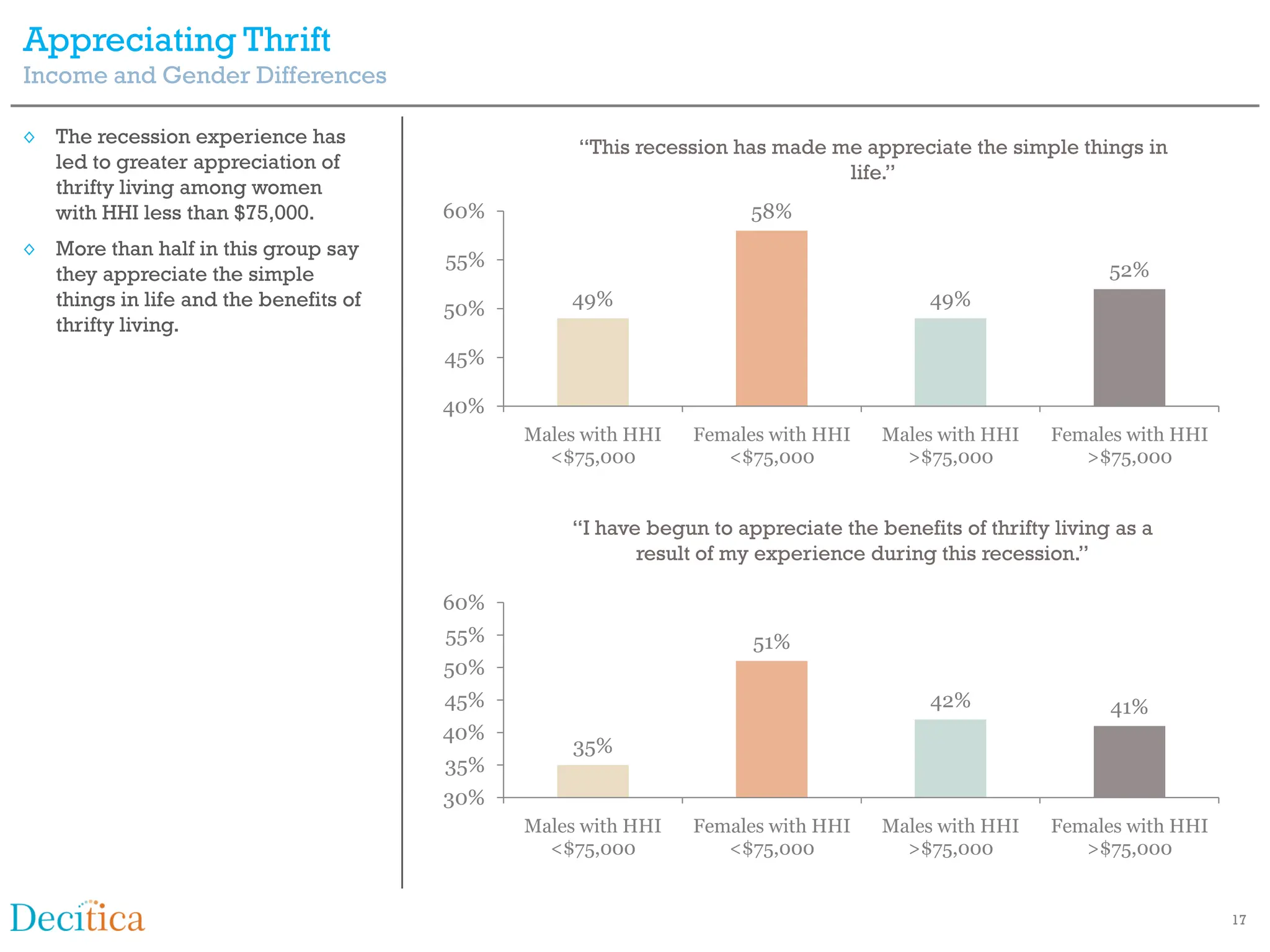
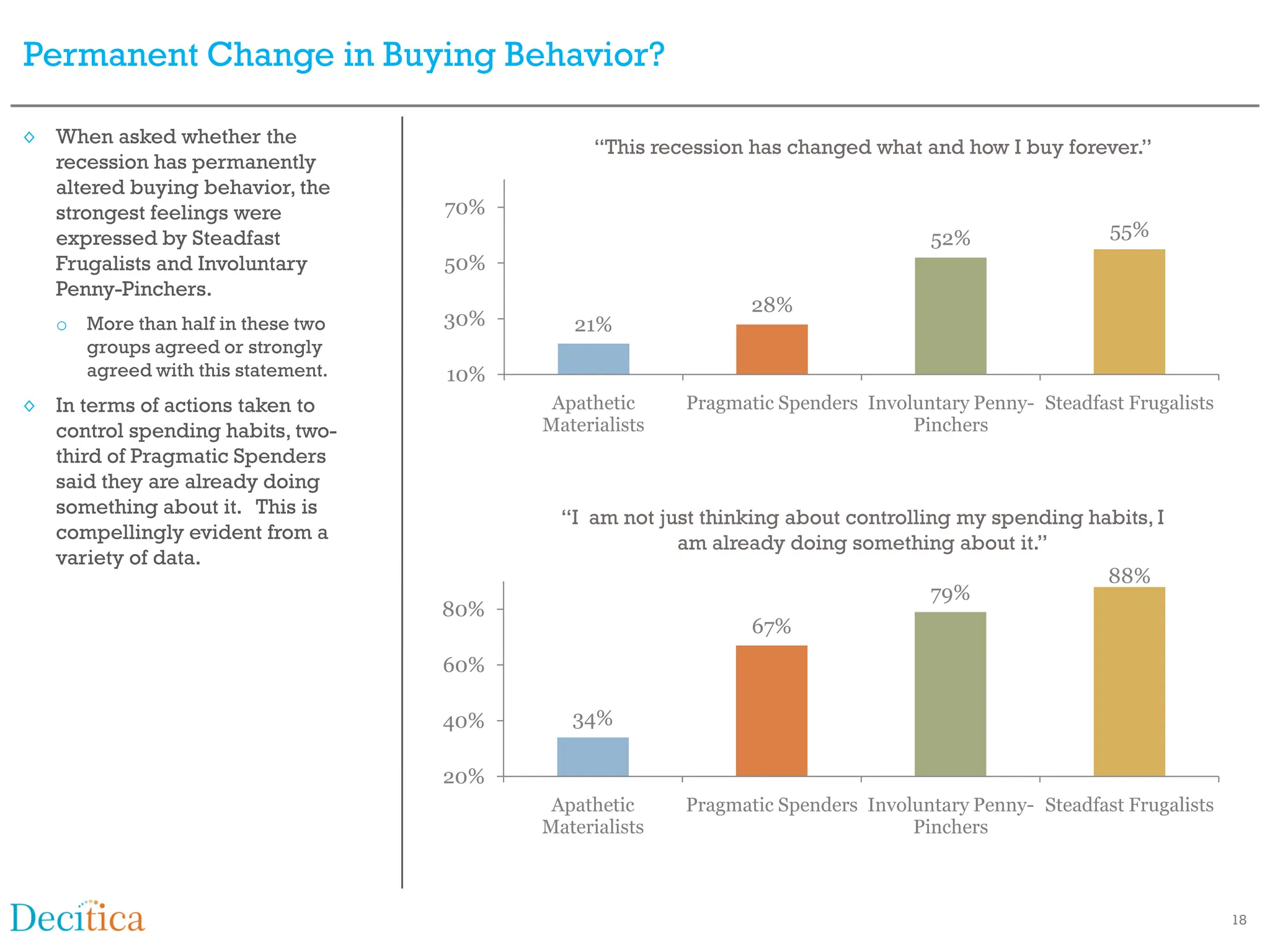
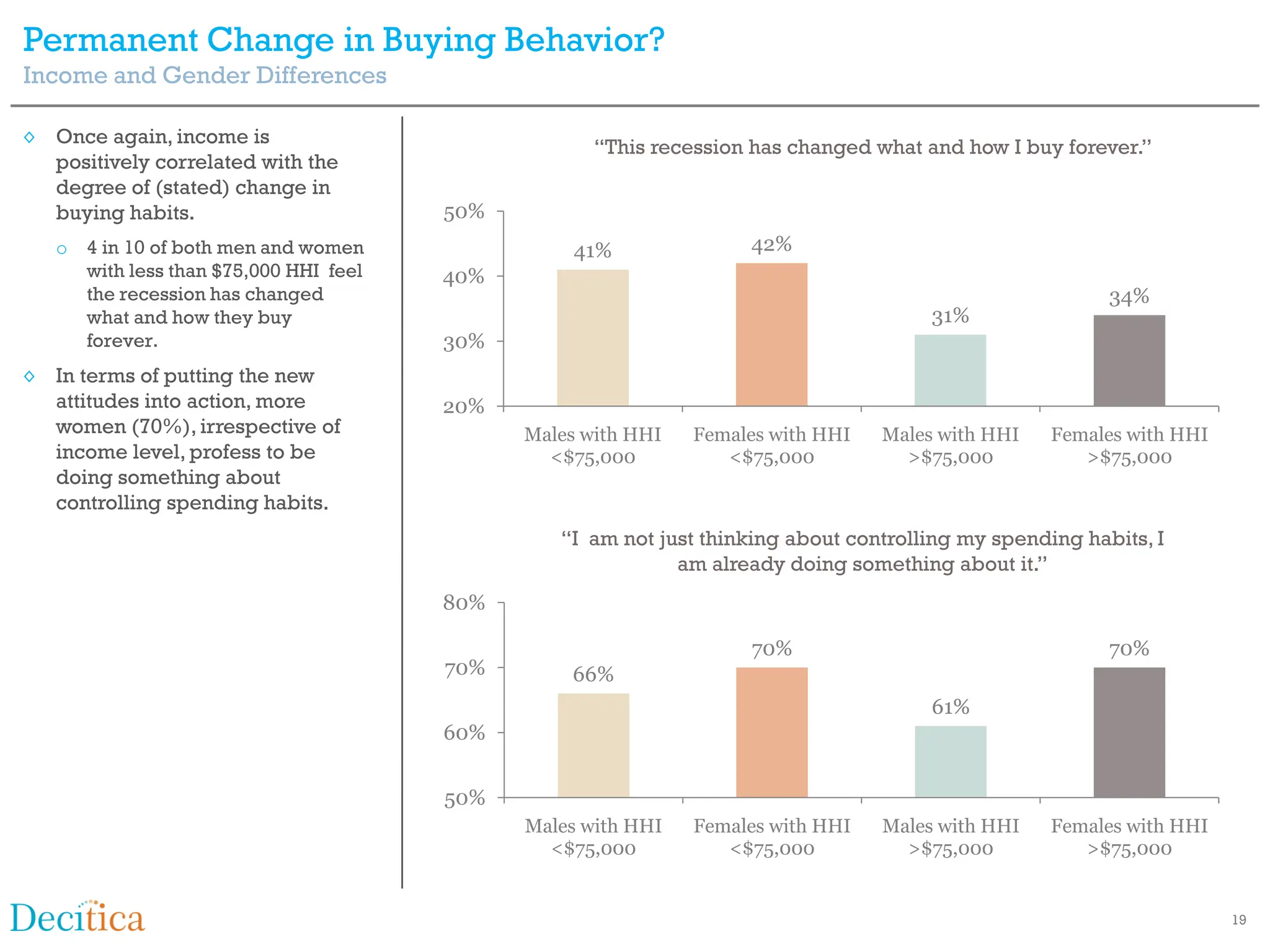
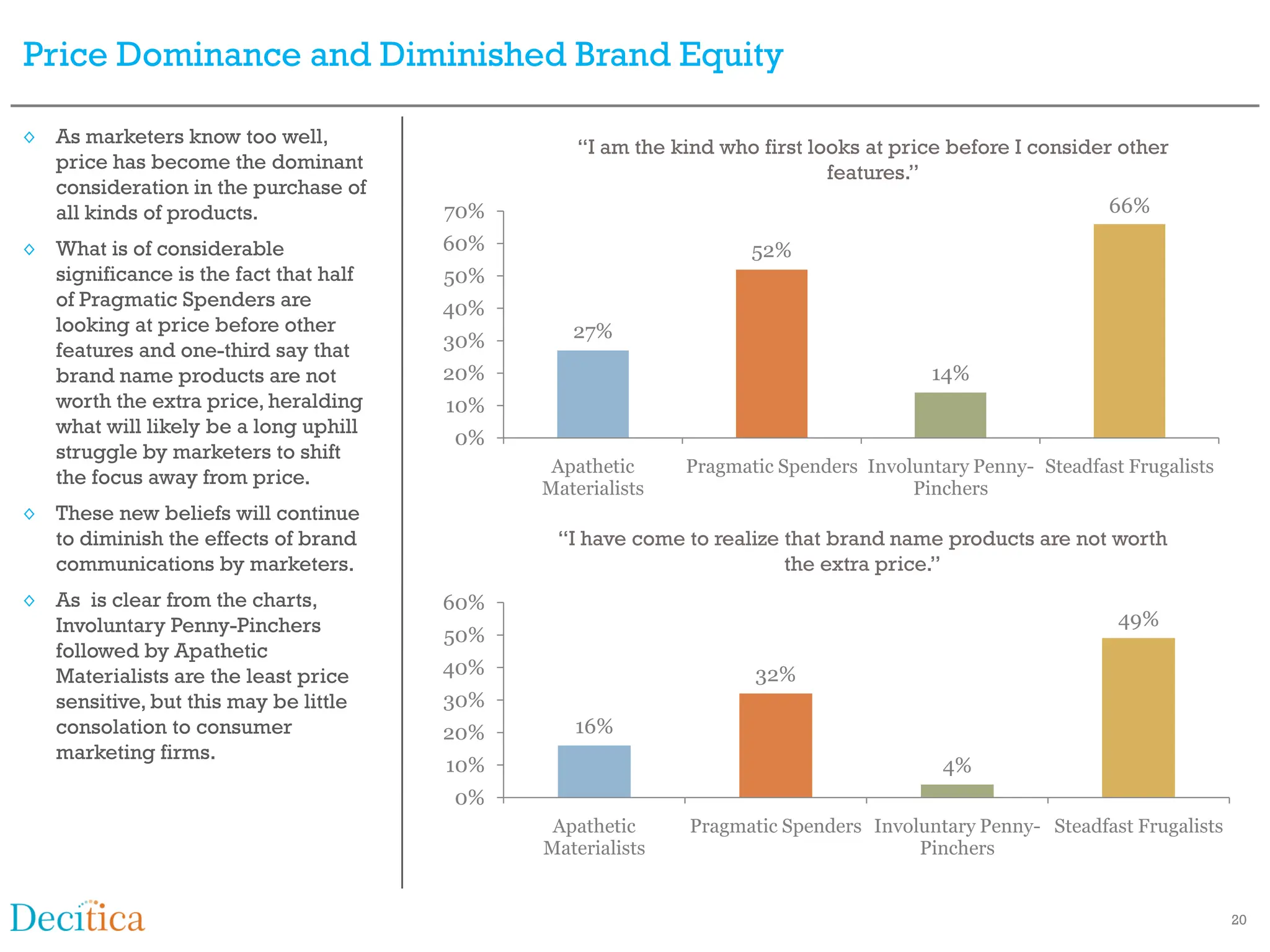
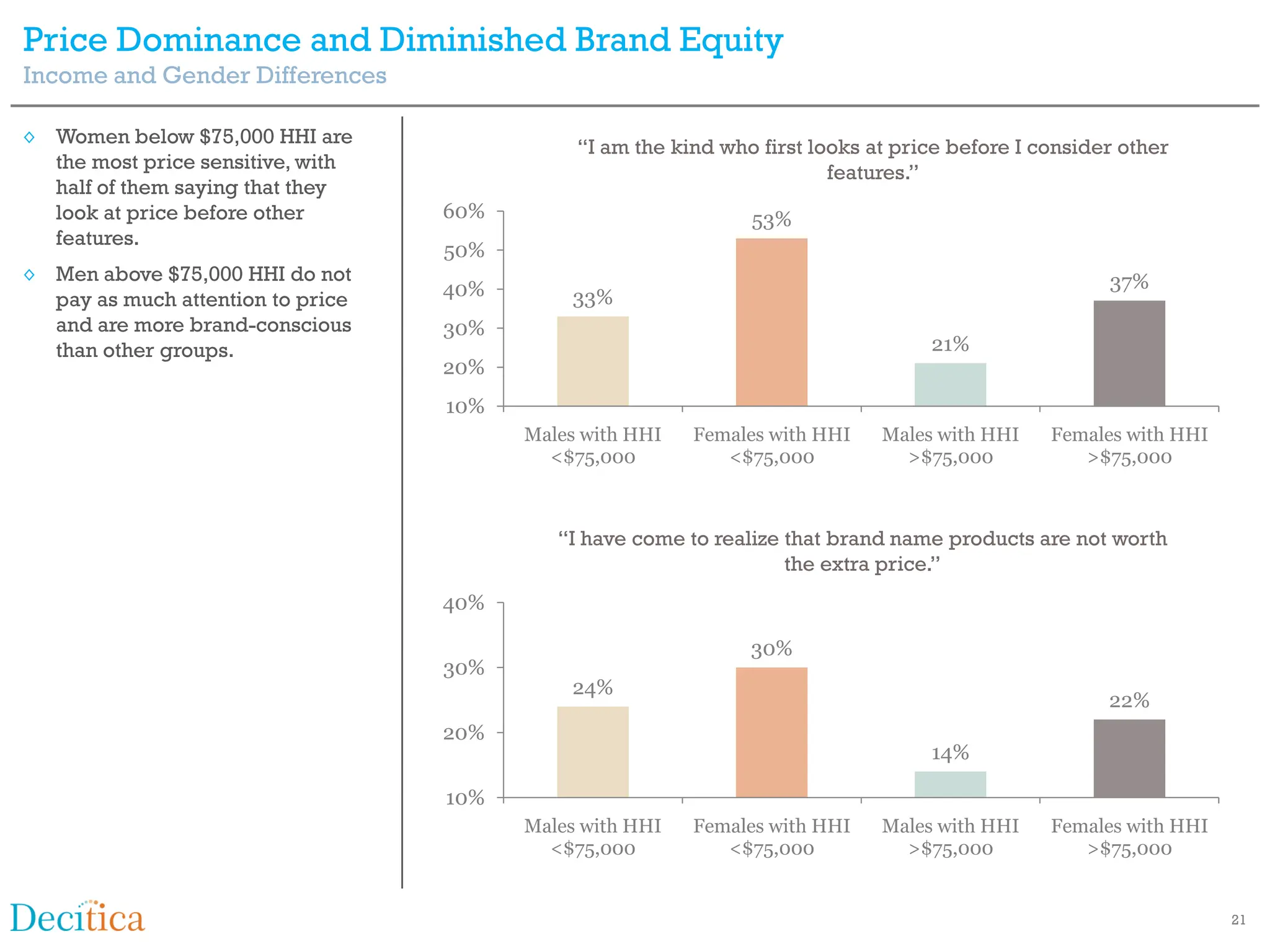
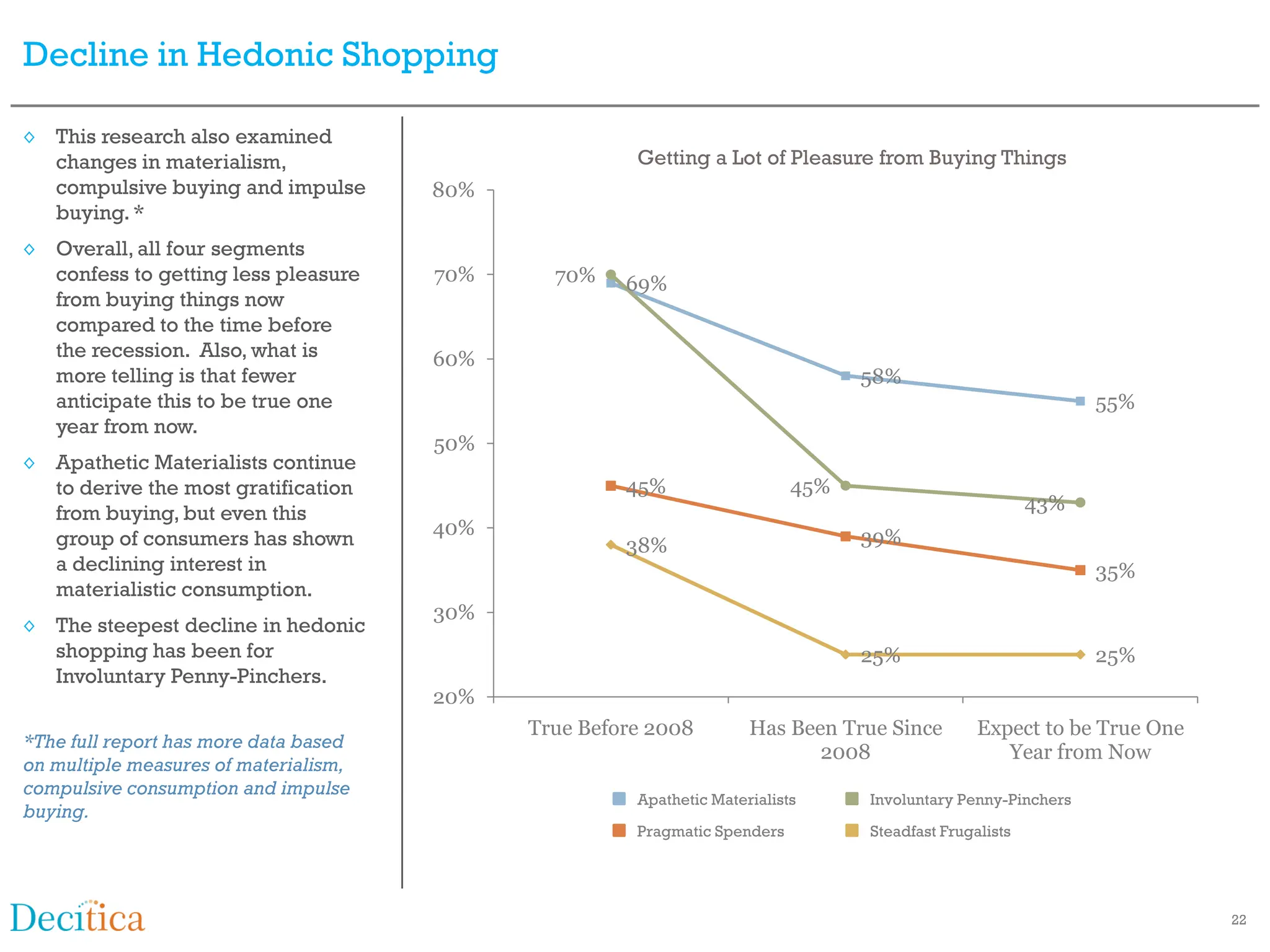
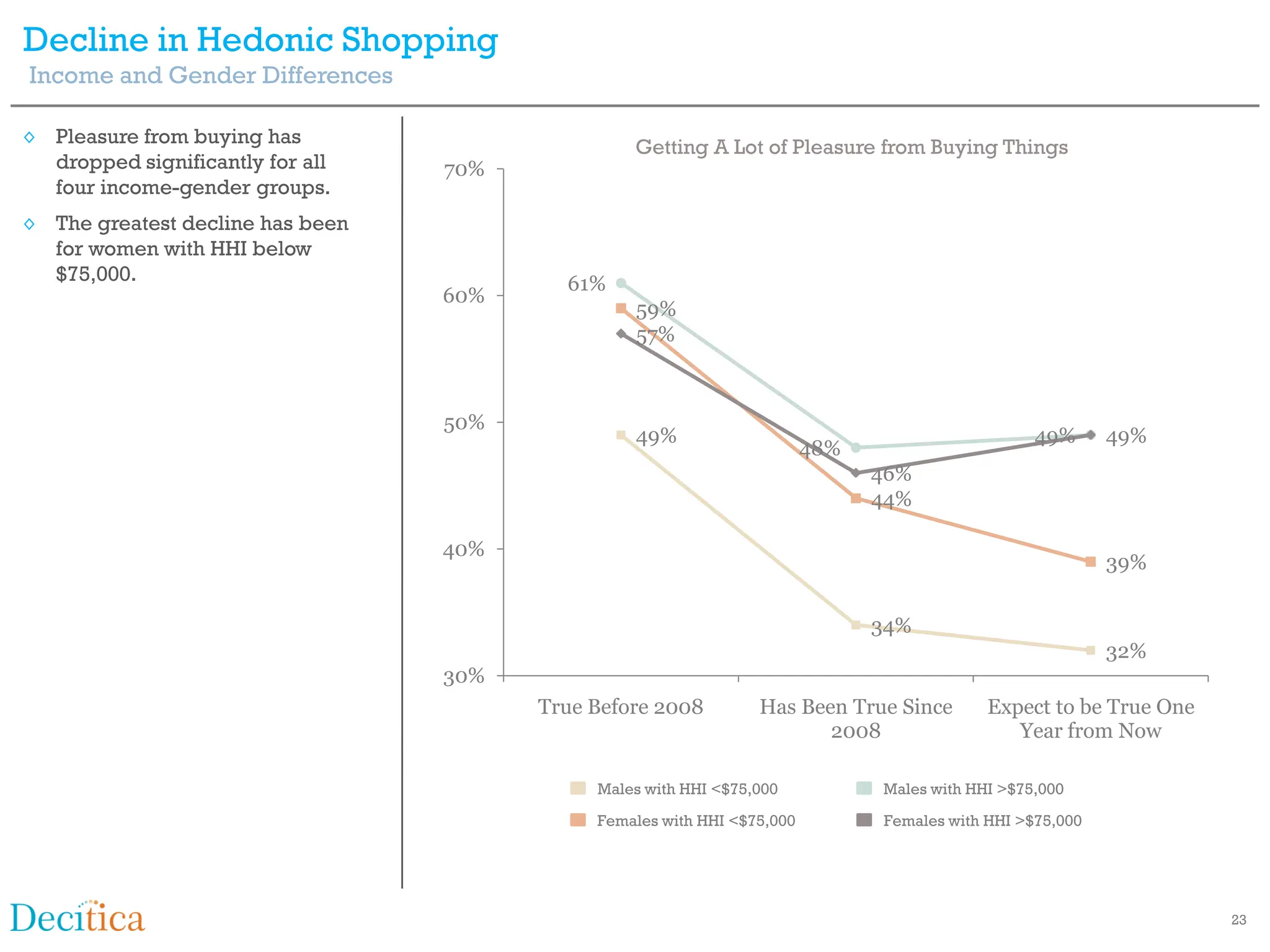
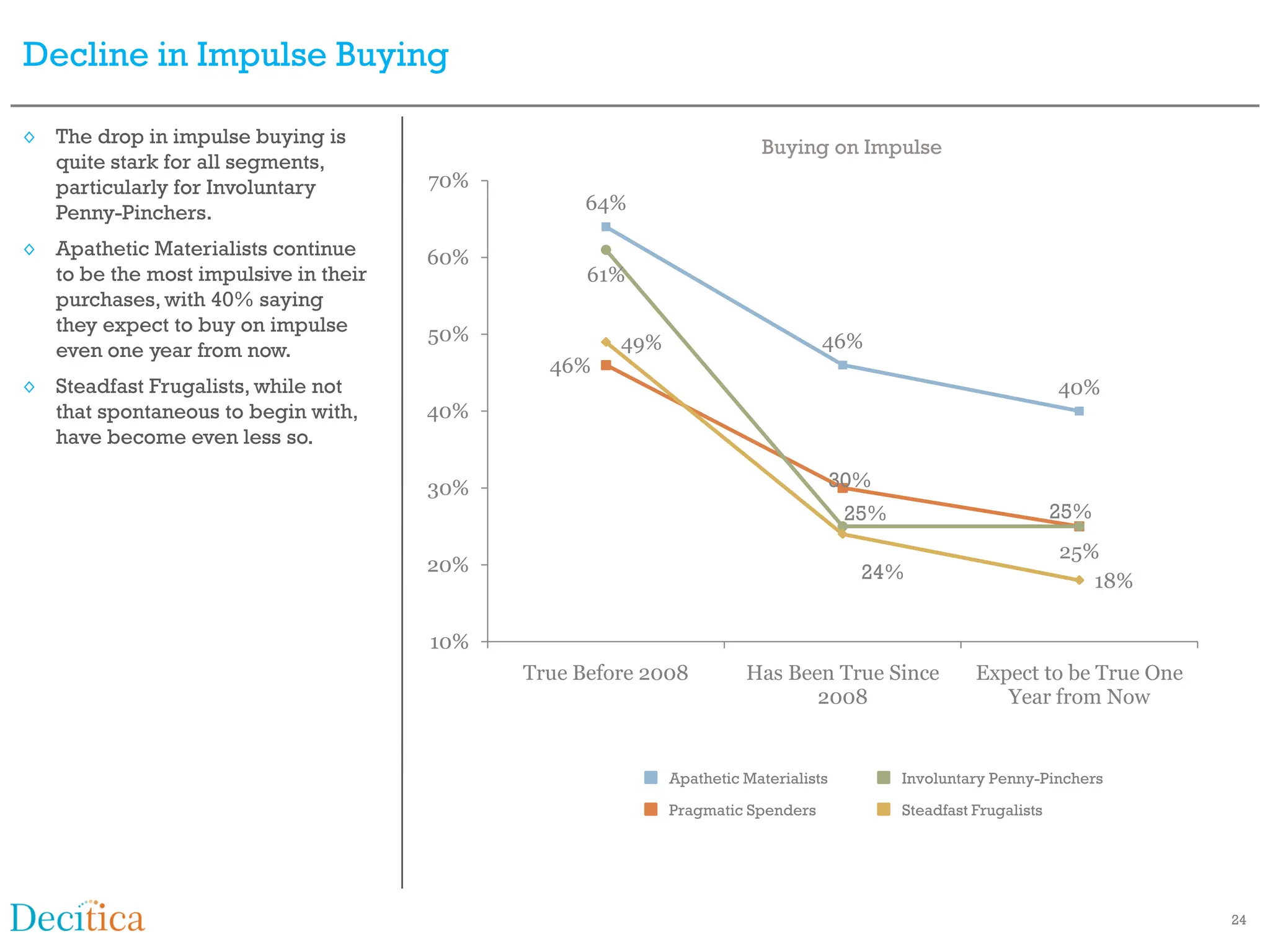
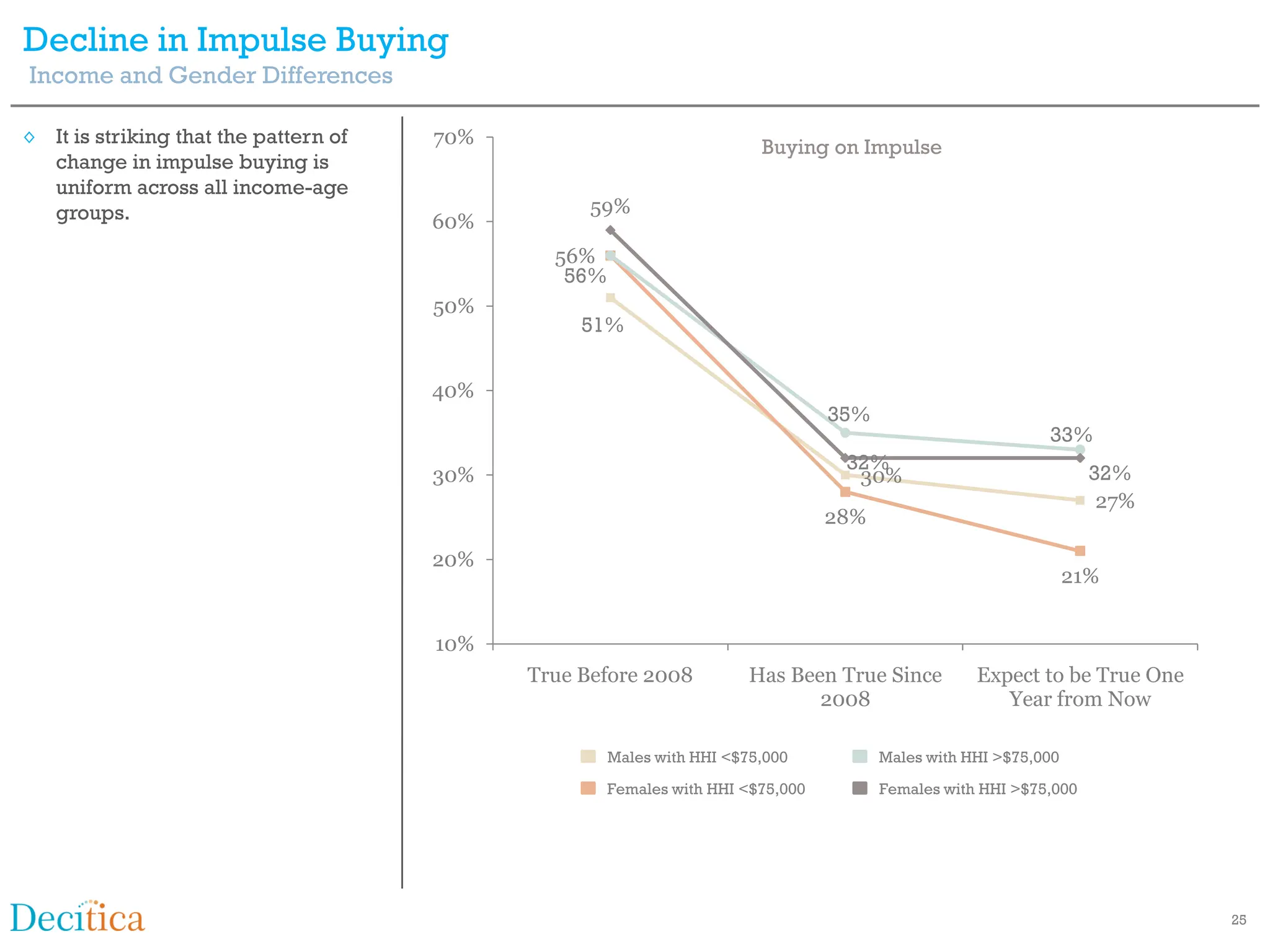
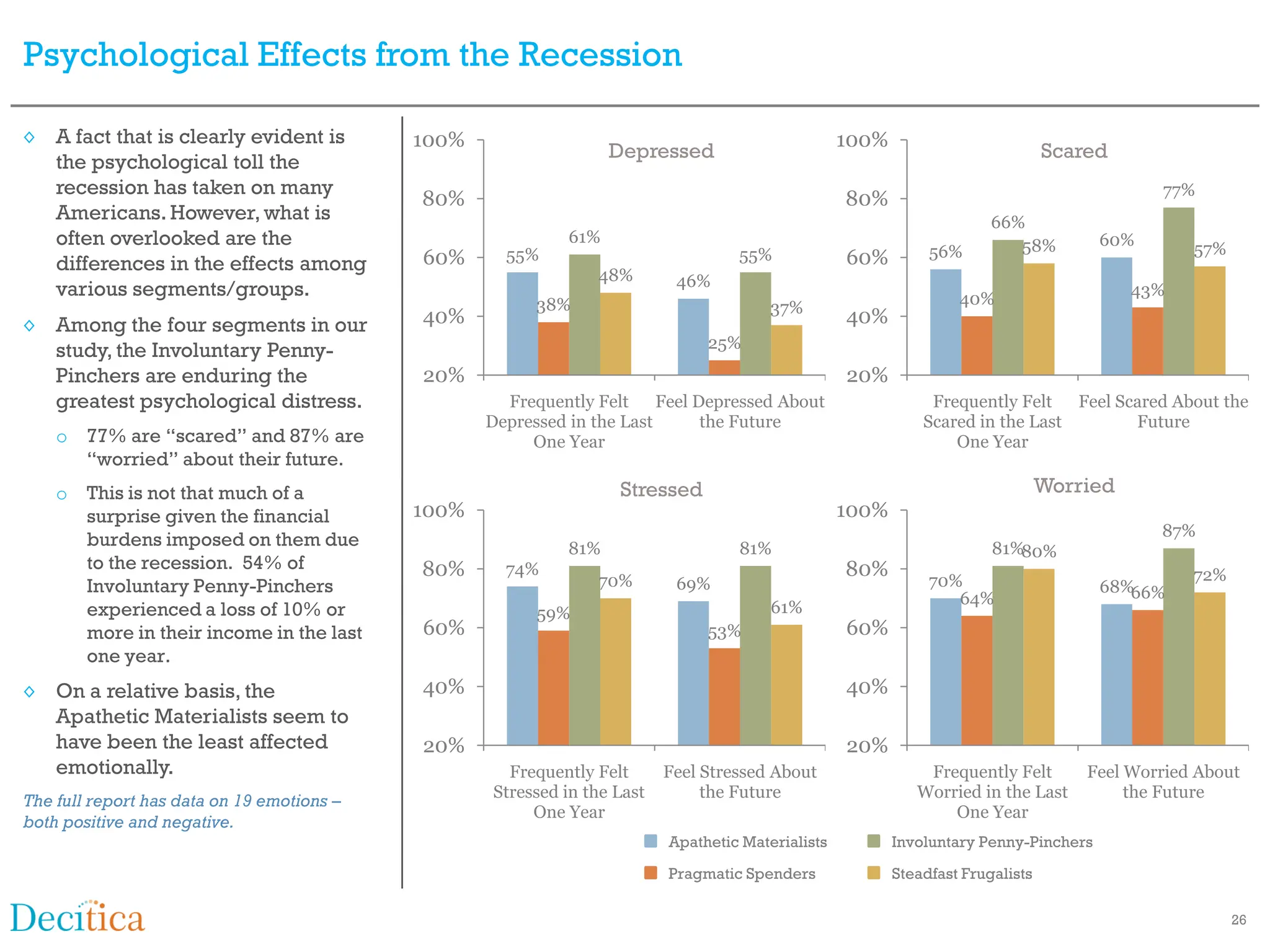
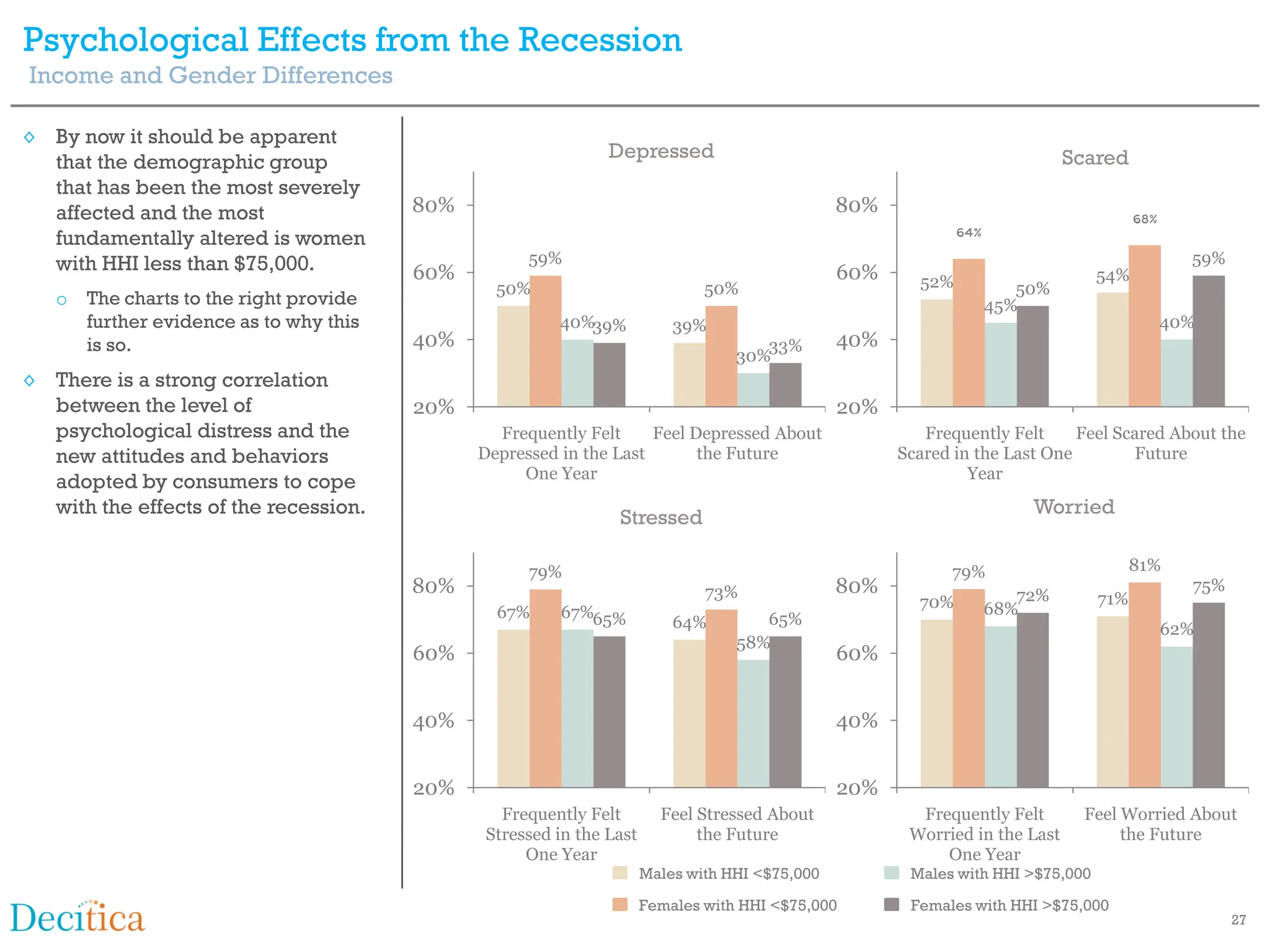

This study We identified four distinct segments emerging from the recession. They are: Steadfast Frugalists, 2. Involuntary Penny-Pinchers, 3. Pragmatic Spenders, and 4. Apathetic Materialists This research fills a major gap in marketers’ understanding of how the recession is shaping consumer behavior. We believe that marketing in the post-recession world needs a new lens to reflect the many differences in the way consumers have internalized the recession experience. Specifically, this research by Decitica concludes: The effects of the Great Recession on consumer behavior are so profound that many of the assumptions underpinning consumer segmentation are no longer valid; and Marketing strategies that do not fully recognize the diversity of consumers’ recession experiences won’t have the desired potency in the post-recession world. It is undeniable that this recession has shaken the bedrock of American consumerism. Many have accepted this radical change as the “new normal,” and not just a cyclical phenomenon. With consumer sentiment oscillating from mildly encouraging to disappointing, the trillion dollar question remains: When will the American consumer loosen the reins on restraint and ratchet up spending to meaningful levels? Experts posit that the household deleveraging process is far from complete. Adjustment of household balance sheets, which had begun in earnest in the thick of the recession, continues apace with nary a sign of ending anytime soon. With this backdrop, the debate continues whether the American consumers are so indelibly scarred by the recession that they have forever abandoned the profligate spending habits of the past in favor a more restrained approach. This study goes beyond superficial measures of consumer sentiment. Using data from a proprietary survey, this research not only concludes that the recession has caused a profound, deep-rooted change in consumers’ spending habits but also that there are four distinct consumer segments emerging from the recession. We provide highlights of our findings in the following pages. This study gathered extensive data on the frequency and satisfaction with twenty nine different purchase and consumption activities and the self-efficacy (i.e., consumers’ beliefs about their abilities to achieve certain outcomes) associated with various spending and saving strategies.


