What is adaptive
bitrate streaming
and how does it
work?
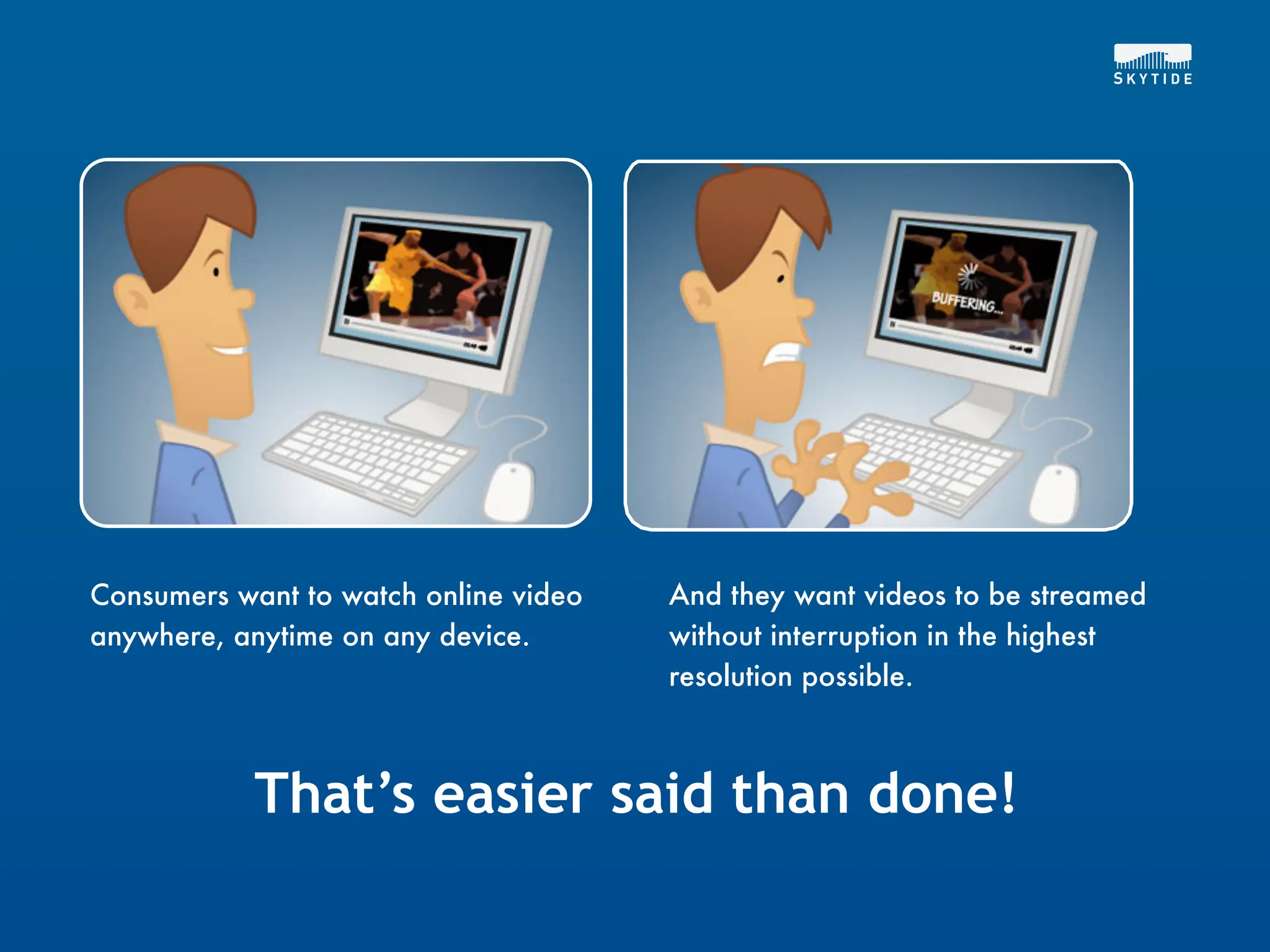
Consumers want to watch online video   And they want videos to be streamed
anywhere, anytime on any device.       without interruption in the highest
                                       resolution possible.


            That’s easier said than done!
Video looks great when streamed at the highest resolution but....
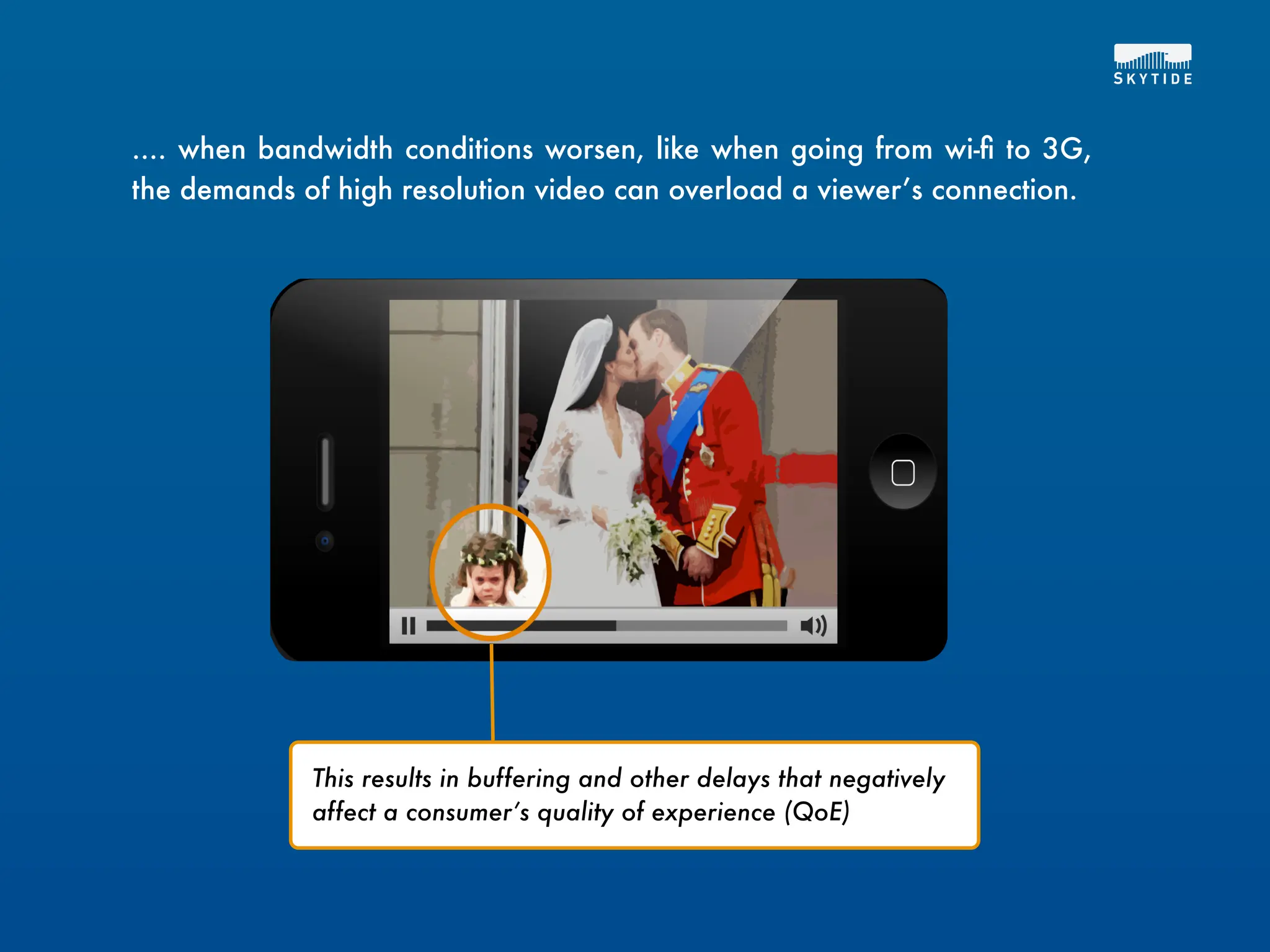
.... when bandwidth conditions worsen, like when going from wi-fi to 3G,
the demands of high resolution video can overload a viewer’s connection.


             This results in buffering and other delays that negatively
             affect a consumer’s quality of experience (QoE)
To address this problem, content delivery networks (CDNs) and
video providers are turning to Adaptive Bitrate (ABR) Streaming.
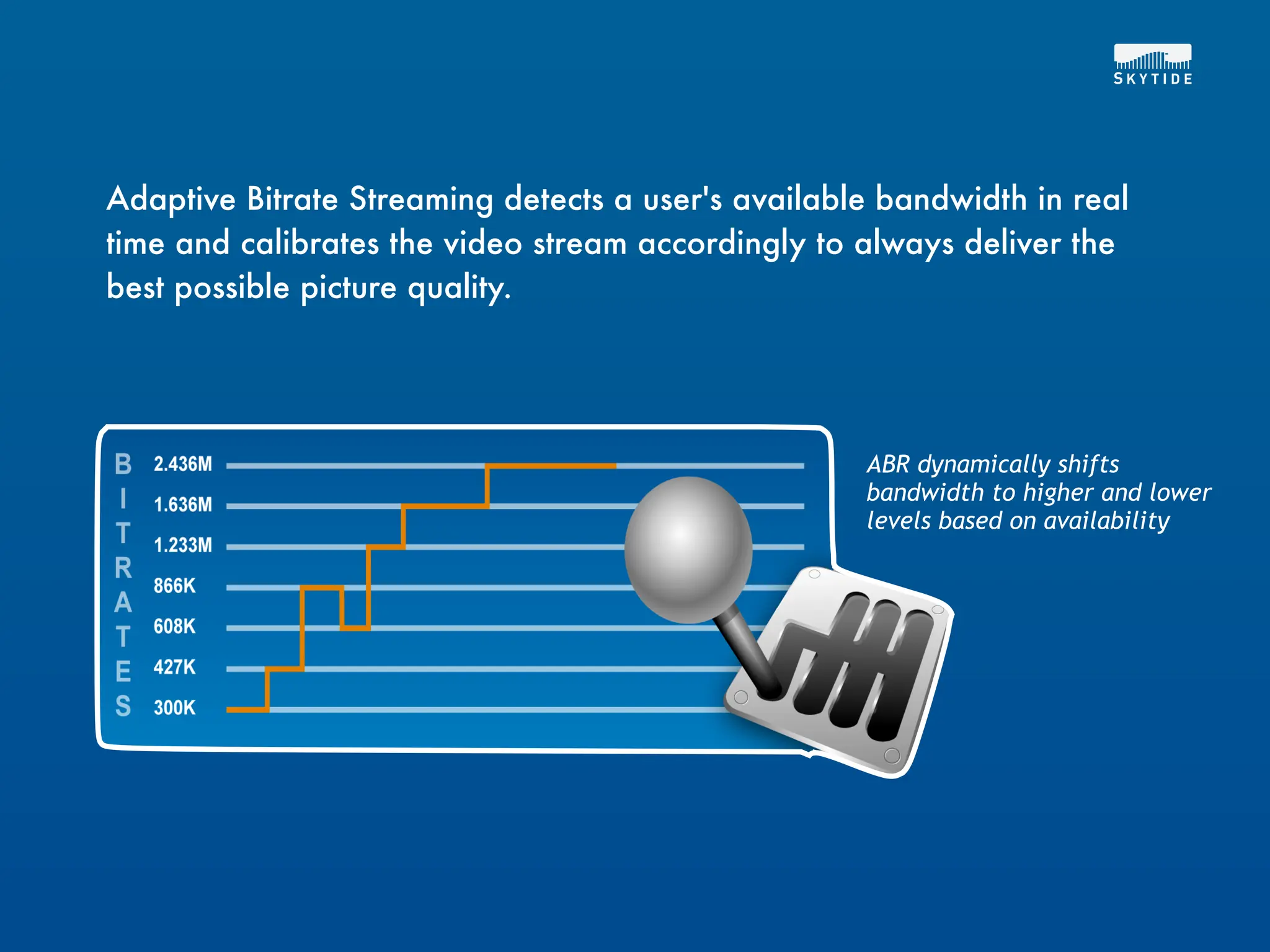
Adaptive Bitrate Streaming detects a user's available bandwidth in real
time and calibrates the video stream accordingly to always deliver the
best possible picture quality.


                                                    ABR dynamically shifts
                                                    bandwidth to higher and lower
                                                    levels based on availability
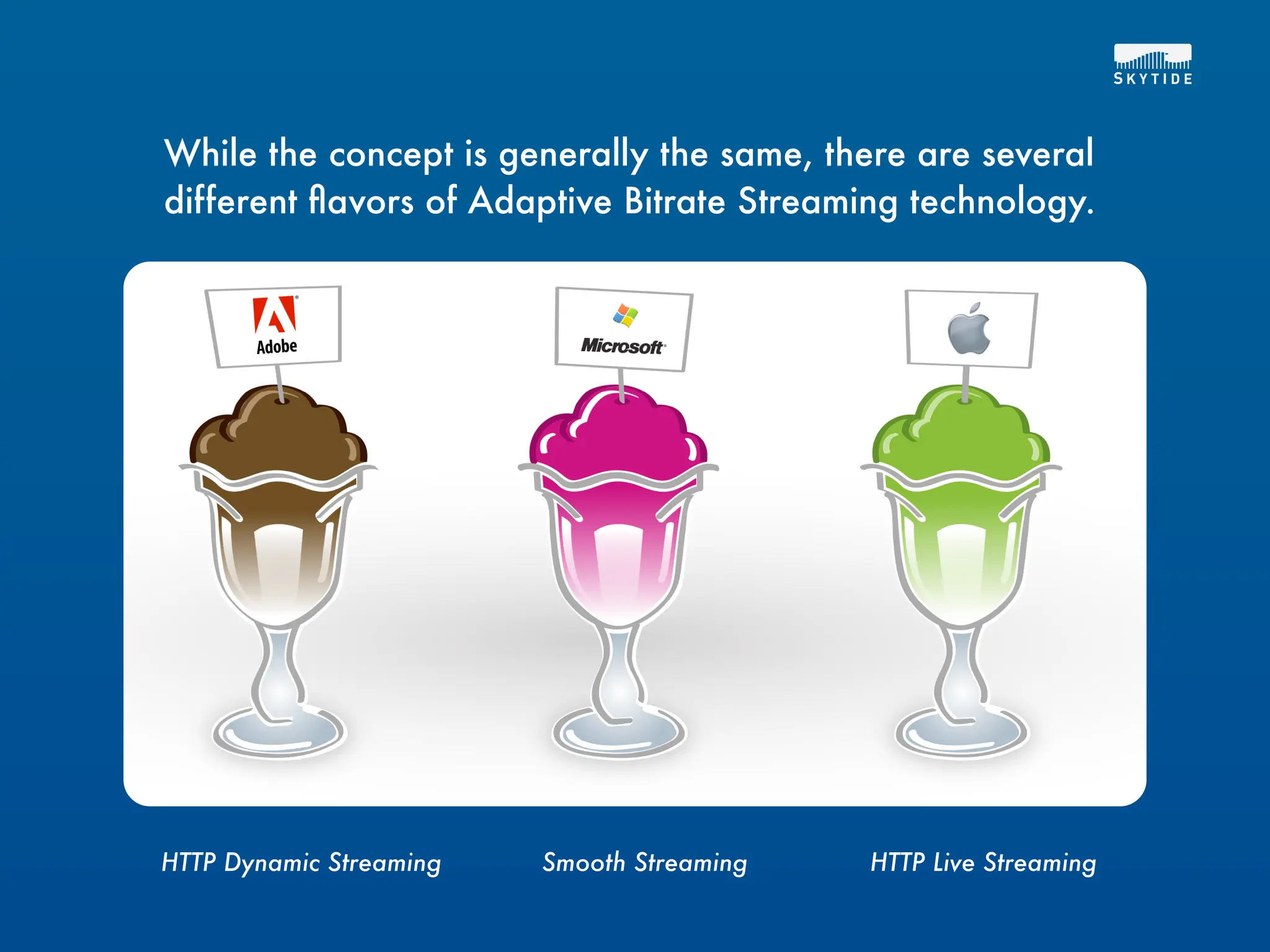
While the concept is generally the same, there are several
different flavors of Adaptive Bitrate Streaming technology.


HTTP Dynamic Streaming   Smooth Streaming   HTTP Live Streaming
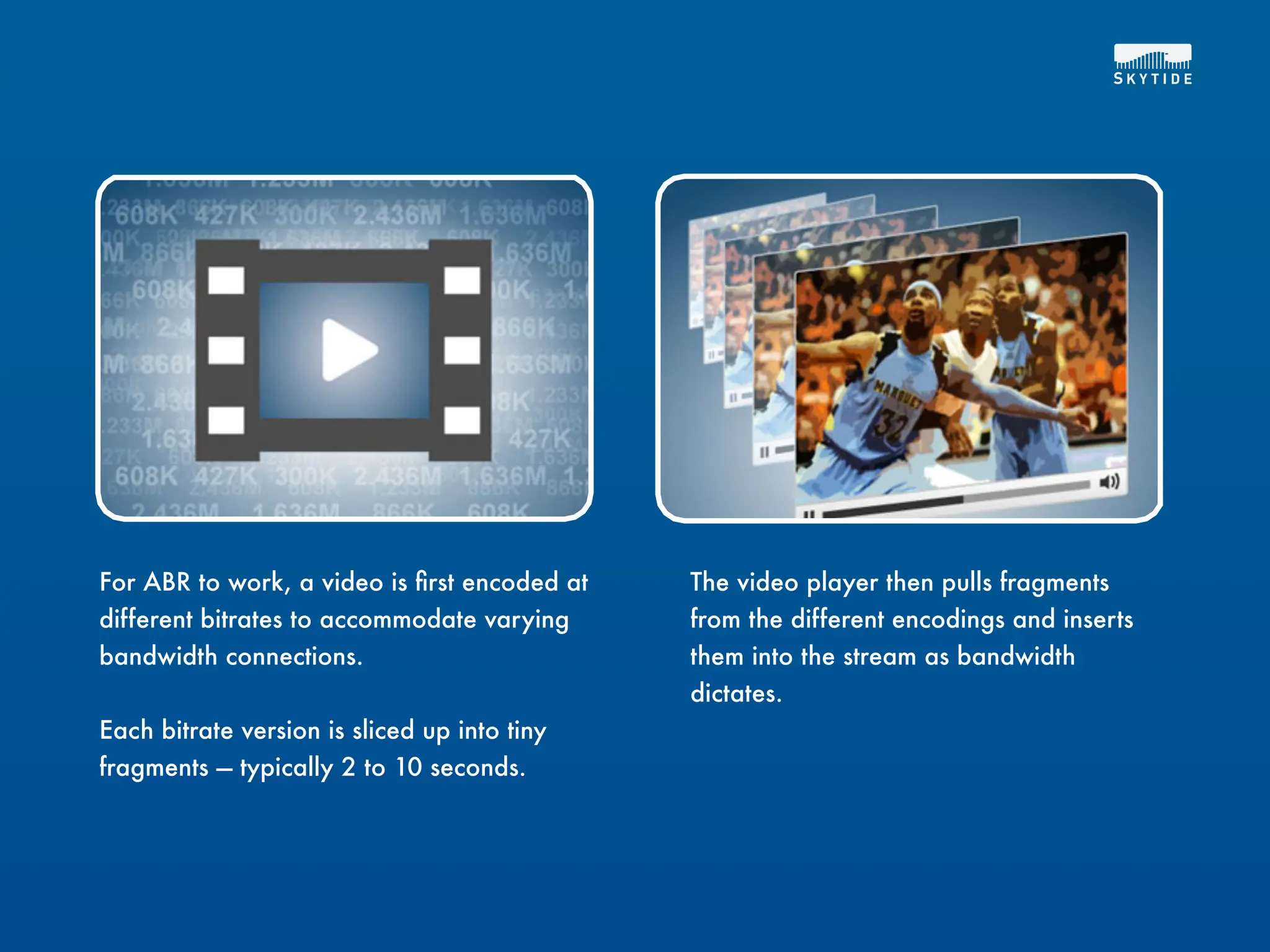
For ABR to work, a video is first encoded at   The video player then pulls fragments
different bitrates to accommodate varying     from the different encodings and inserts
bandwidth connections.                        them into the stream as bandwidth
                                              dictates.
Each bitrate version is sliced up into!tiny
fragments — typically 2 to 10 seconds.
This results in faster video start times
                 and a continuous, uninterrupted
                 video experience....

                 ...which makes for happier viewers
                 and content providers


 However, it also results in a
major measurement challenge
Not long ago, an entire movie could
be measured as a single file.
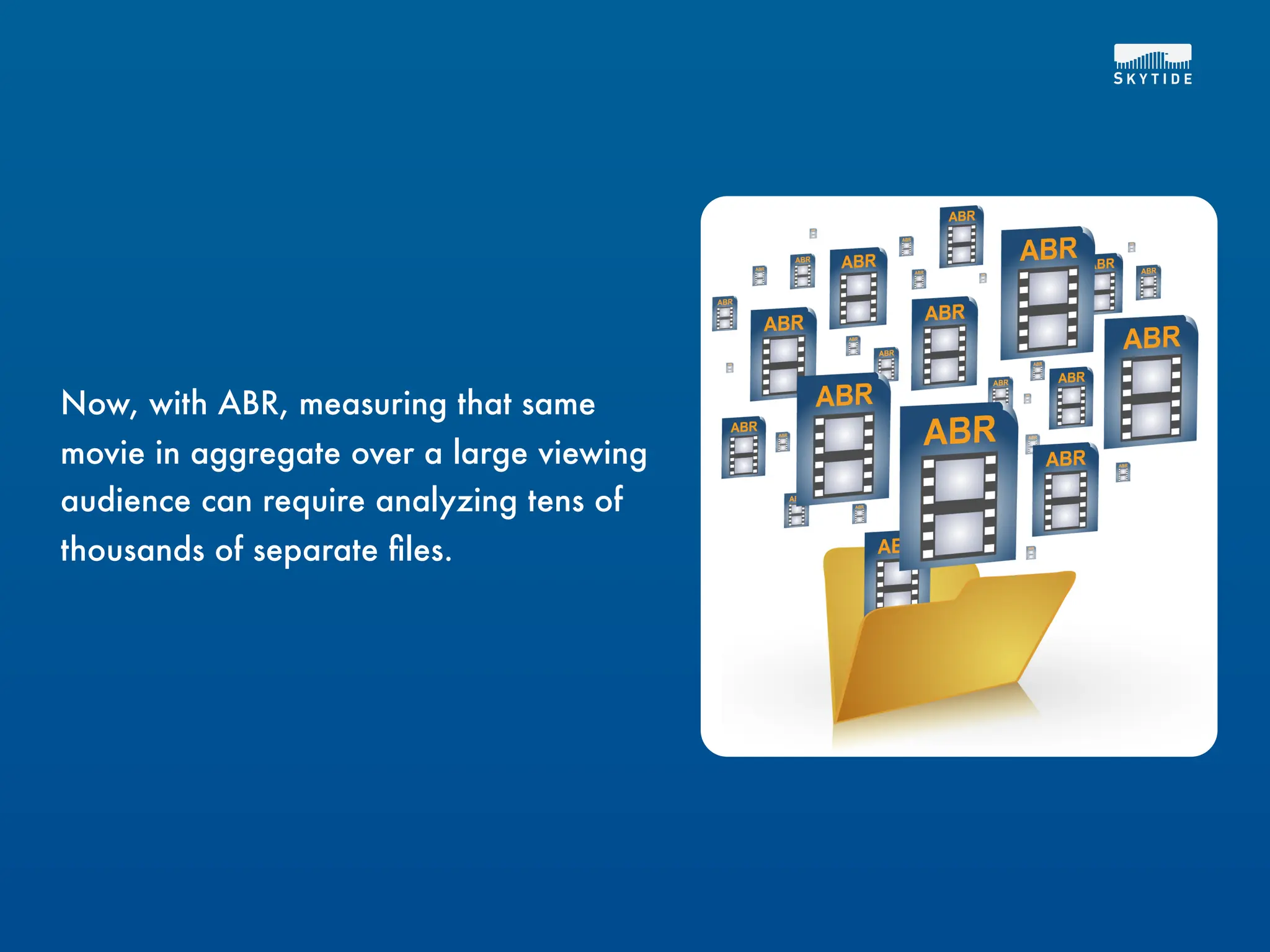
Now, with ABR, measuring that same
movie in aggregate over a large viewing
audience can require analyzing tens of
thousands of separate files.
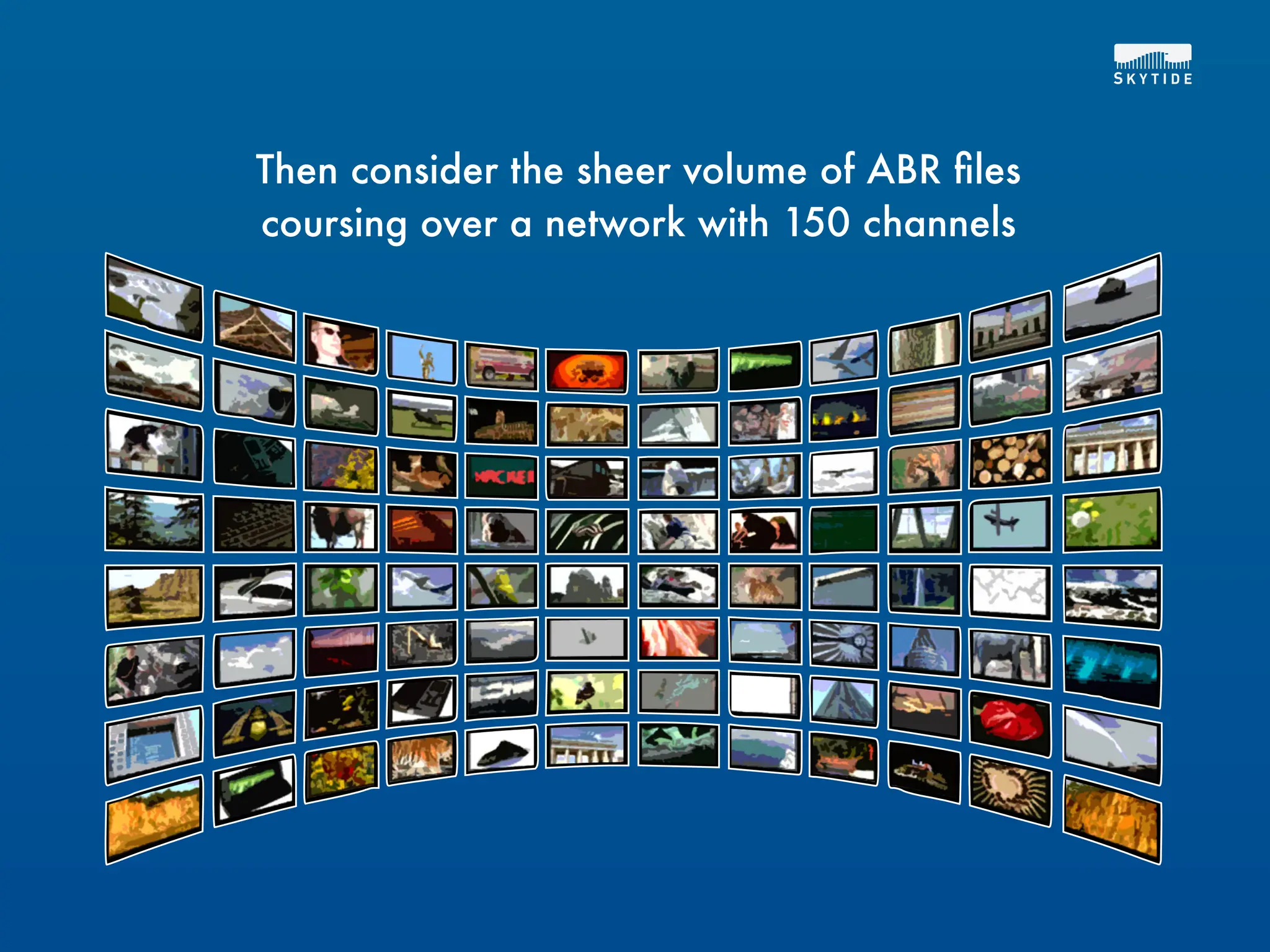
Then consider the sheer volume of ABR files
coursing over a network with 150 channels
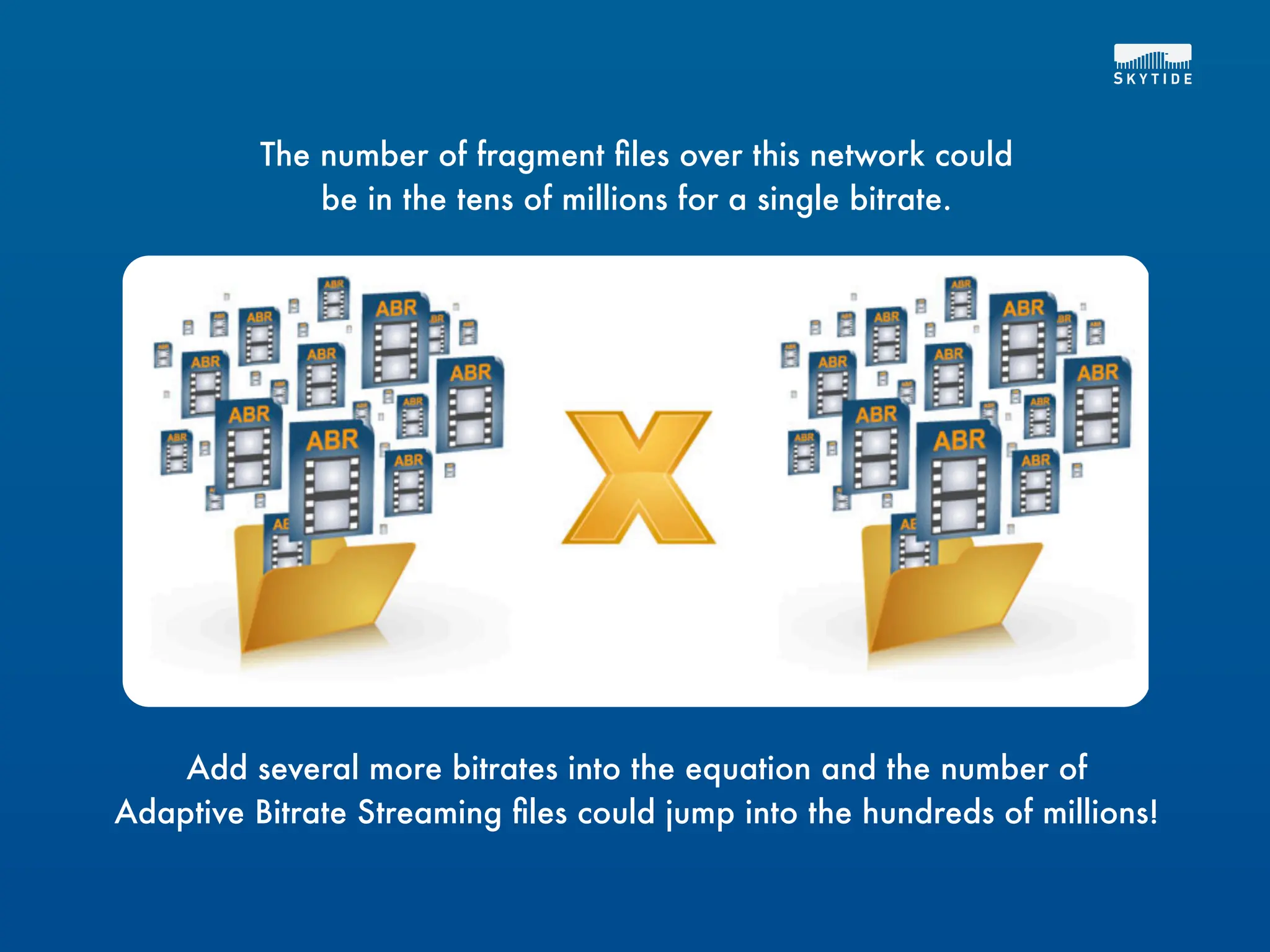
The number of fragment files over this network could
              be in the tens of millions for a single bitrate.


    Add several more bitrates into the equation and the number of
Adaptive Bitrate Streaming files could jump into the hundreds of millions!
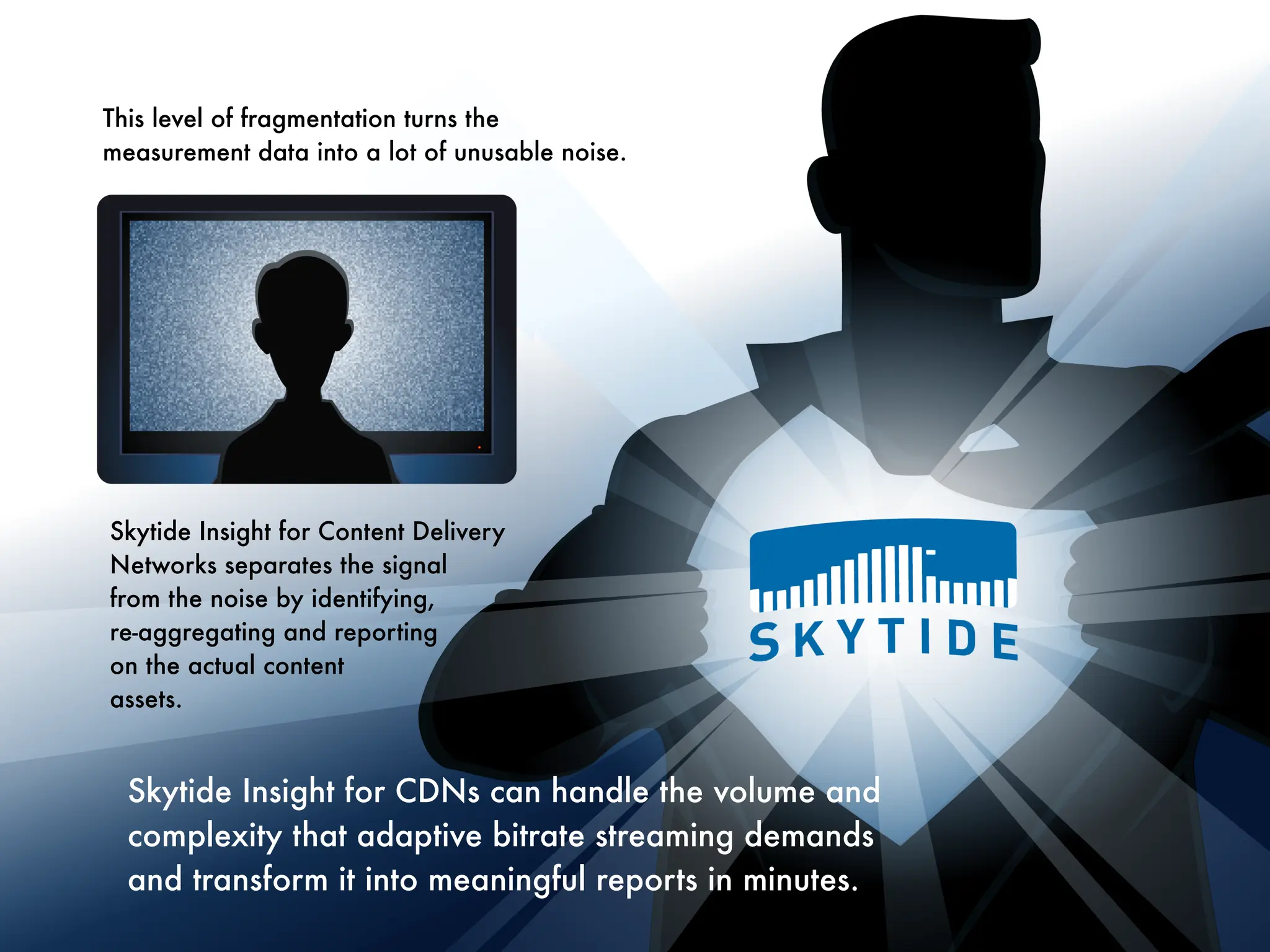
This level of fragmentation turns the
measurement data into a lot of unusable noise.


Skytide Insight for Content Delivery
Networks separates the signal
from the noise by identifying,
re-aggregating and reporting
on the actual content
assets.


  Skytide Insight for CDNs can handle the volume and
  complexity that adaptive bitrate streaming demands
  and transform it into meaningful reports in minutes.
For more information, visit www.skytide.com


     Or read these other Skytide reports


     Download now            Download now
What is Adaptive Bitrate Streaming?

  • 1.
    What is adaptive bitratestreaming and how does it work?
  • 2.
    Consumers want towatch online video And they want videos to be streamed anywhere, anytime on any device. without interruption in the highest resolution possible. That’s easier said than done!
  • 3.
    Video looks greatwhen streamed at the highest resolution but....
  • 4.
    .... when bandwidthconditions worsen, like when going from wi-fi to 3G, the demands of high resolution video can overload a viewer’s connection. This results in buffering and other delays that negatively affect a consumer’s quality of experience (QoE)
  • 5.
    To address thisproblem, content delivery networks (CDNs) and video providers are turning to Adaptive Bitrate (ABR) Streaming.
  • 6.
    Adaptive Bitrate Streamingdetects a user's available bandwidth in real time and calibrates the video stream accordingly to always deliver the best possible picture quality. ABR dynamically shifts bandwidth to higher and lower levels based on availability
  • 7.
    While the conceptis generally the same, there are several different flavors of Adaptive Bitrate Streaming technology. HTTP Dynamic Streaming Smooth Streaming HTTP Live Streaming
  • 8.
    For ABR towork, a video is first encoded at The video player then pulls fragments different bitrates to accommodate varying from the different encodings and inserts bandwidth connections. them into the stream as bandwidth dictates. Each bitrate version is sliced up into!tiny fragments — typically 2 to 10 seconds.
  • 9.
    This results infaster video start times and a continuous, uninterrupted video experience.... ...which makes for happier viewers and content providers However, it also results in a major measurement challenge
  • 10.
    Not long ago,an entire movie could be measured as a single file.
  • 11.
    Now, with ABR,measuring that same movie in aggregate over a large viewing audience can require analyzing tens of thousands of separate files.
  • 12.
    Then consider thesheer volume of ABR files coursing over a network with 150 channels
  • 13.
    The number offragment files over this network could be in the tens of millions for a single bitrate. Add several more bitrates into the equation and the number of Adaptive Bitrate Streaming files could jump into the hundreds of millions!
  • 14.
    This level offragmentation turns the measurement data into a lot of unusable noise. Skytide Insight for Content Delivery Networks separates the signal from the noise by identifying, re-aggregating and reporting on the actual content assets. Skytide Insight for CDNs can handle the volume and complexity that adaptive bitrate streaming demands and transform it into meaningful reports in minutes.
  • 15.
    For more information,visit www.skytide.com Or read these other Skytide reports Download now Download now