Functional
Programming in Java
Prem Chandrasekaran & Jorge Lee
ThoughtWorks Inc.
Jan 29th 2014
What is Functional
Programming?
An Inventory
Management Example
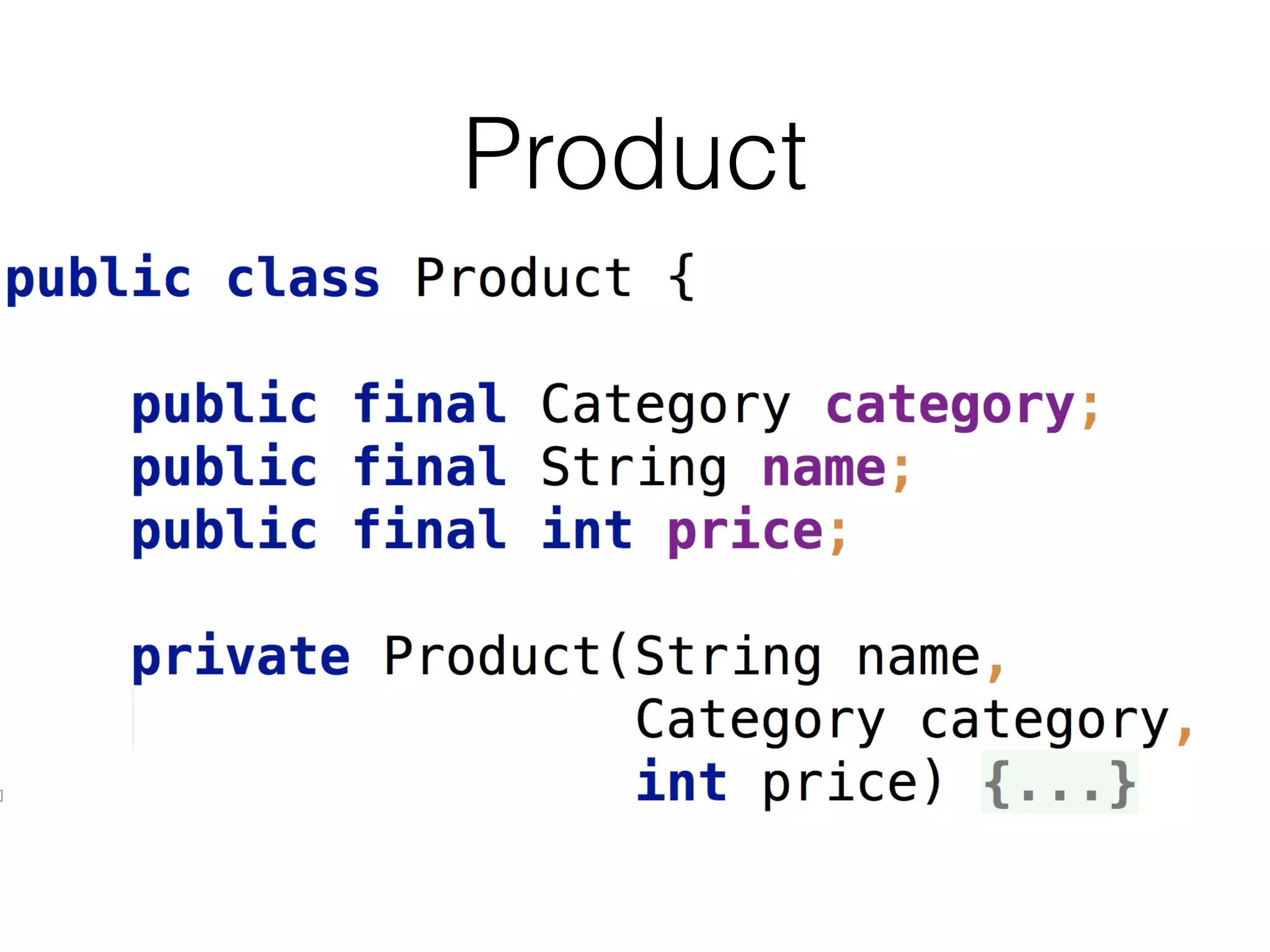
Product
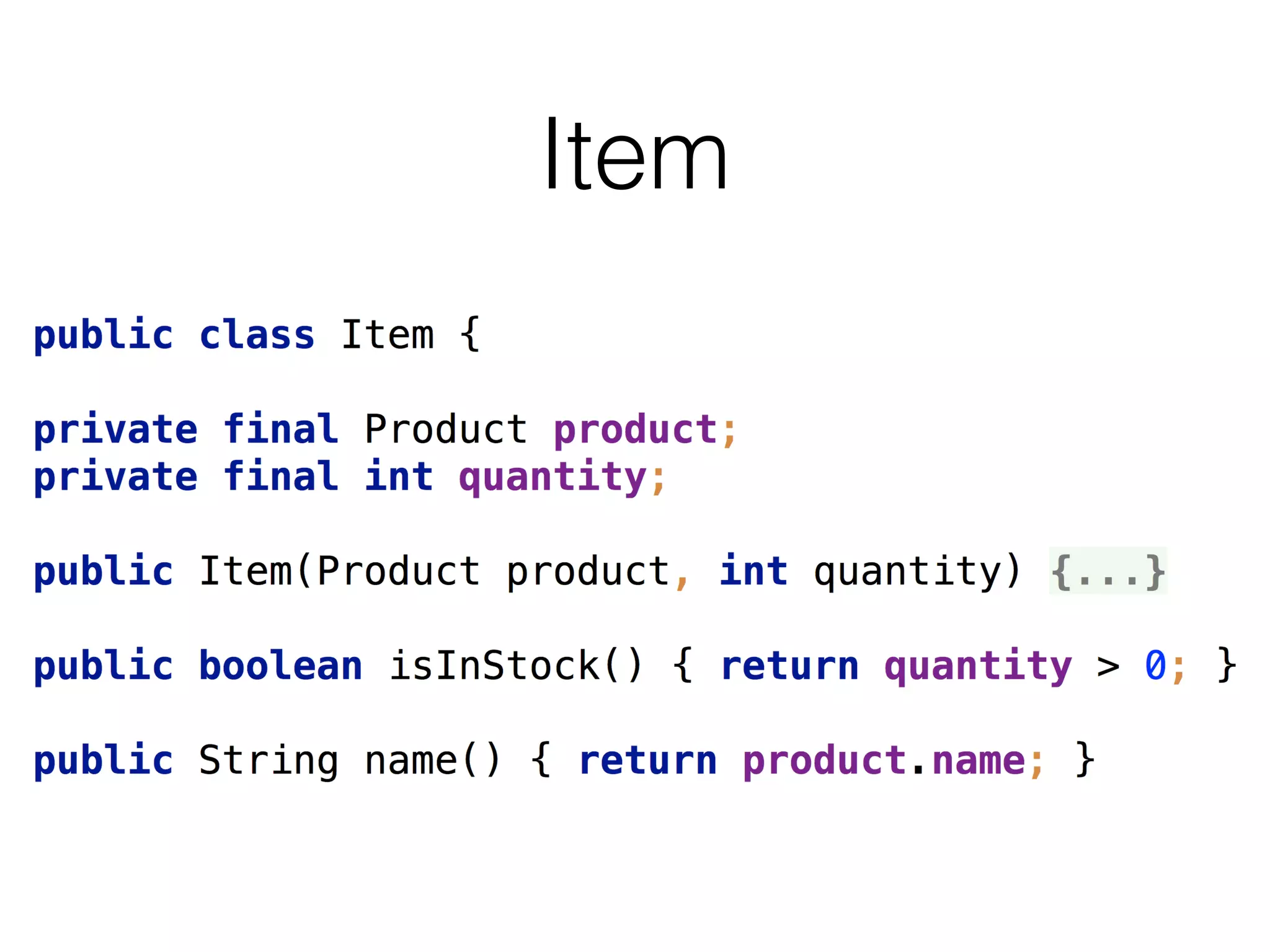
Item
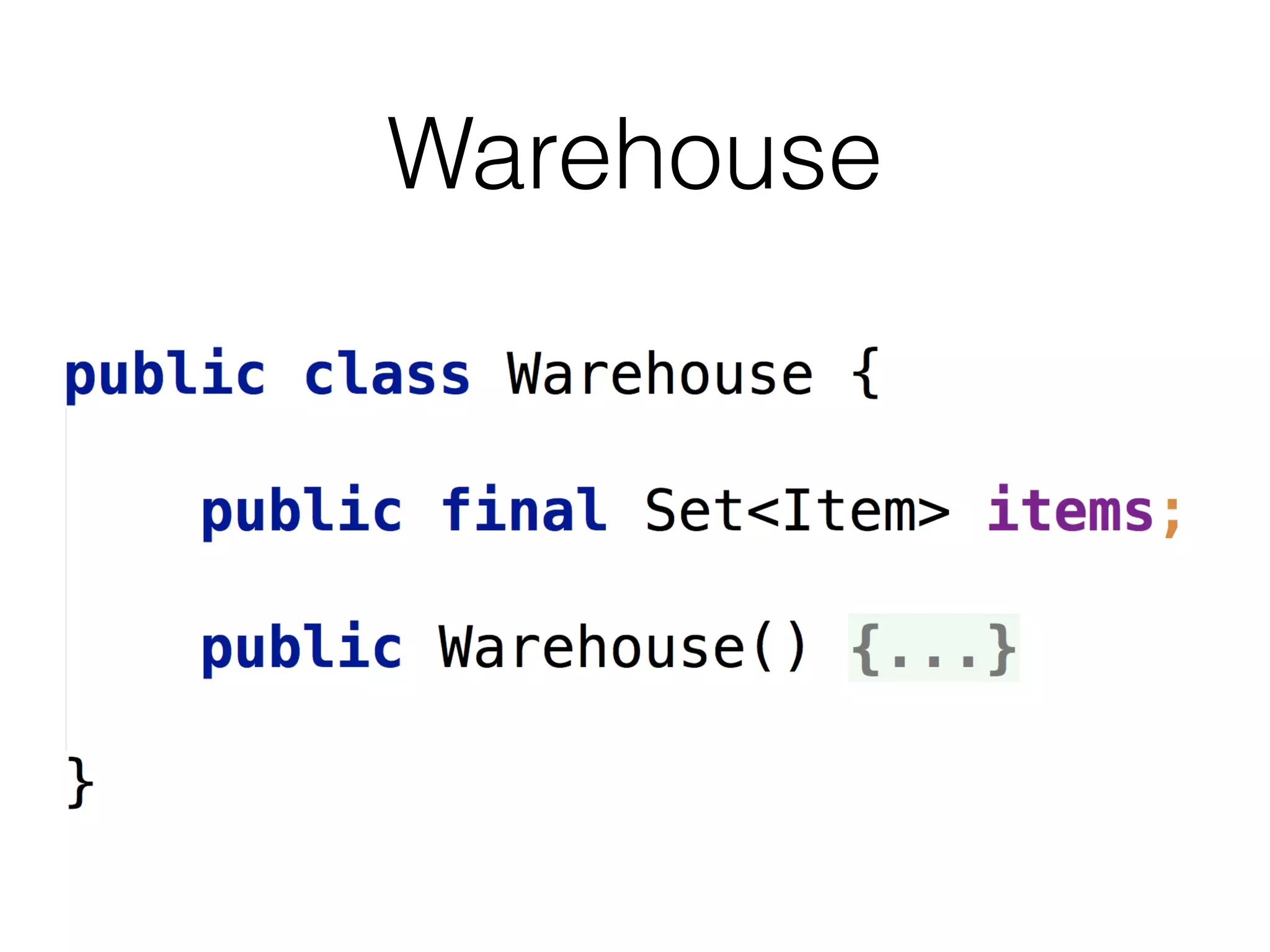
Warehouse
Task 1 - Print names of
all items in inventory
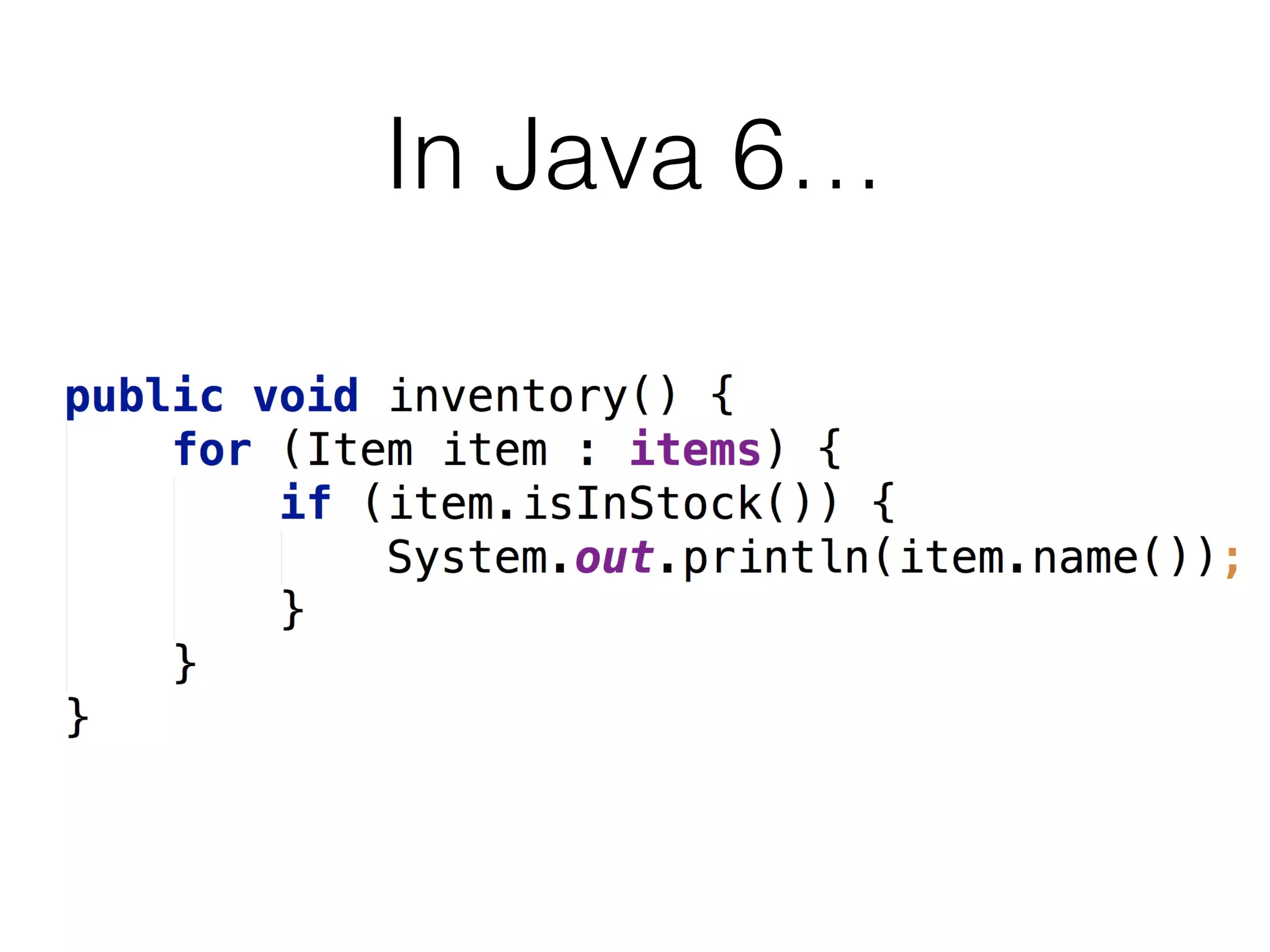
In Java 6…
Task 2 - Print names of all
in-stock items of a
category
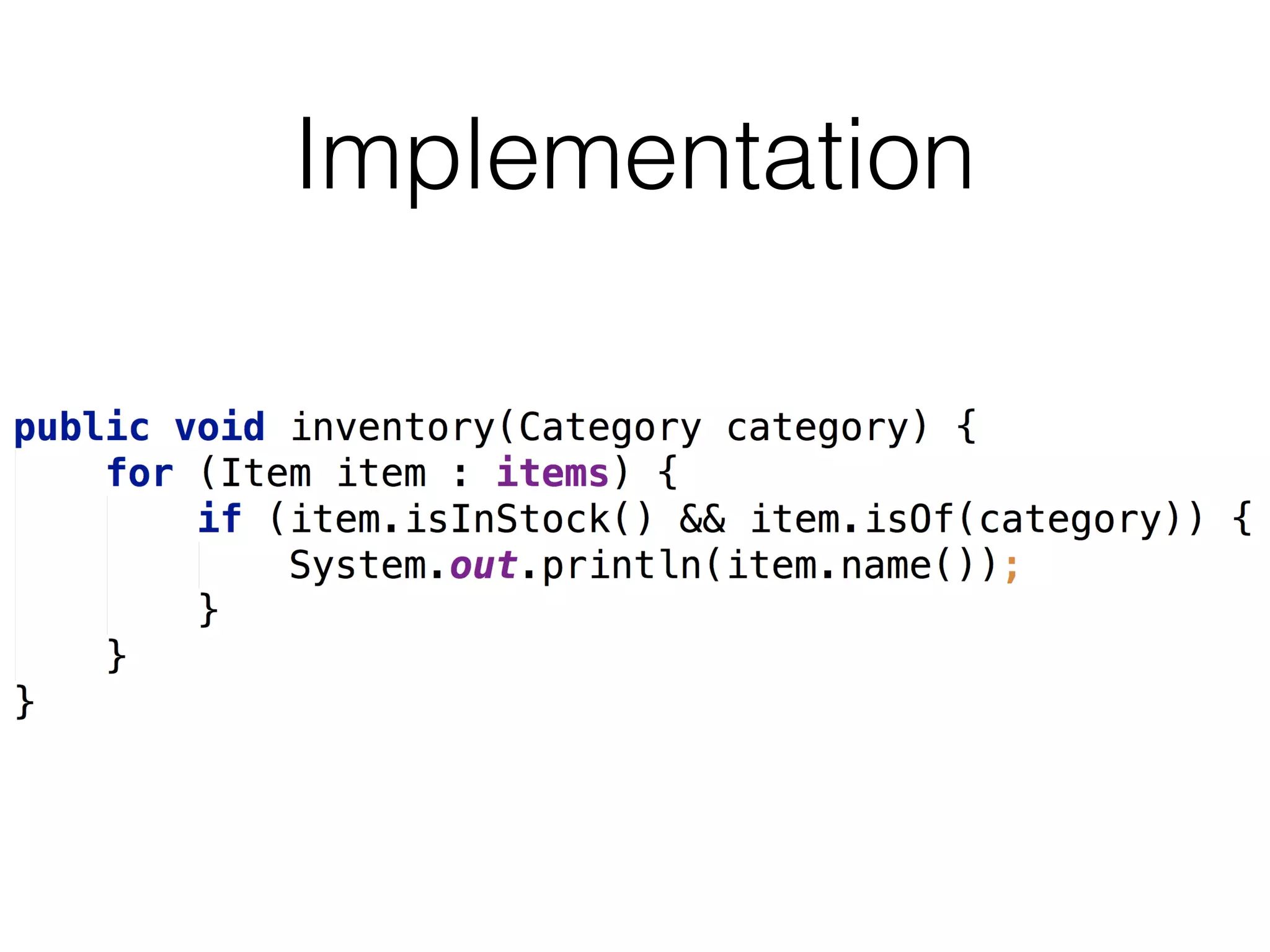
Implementation
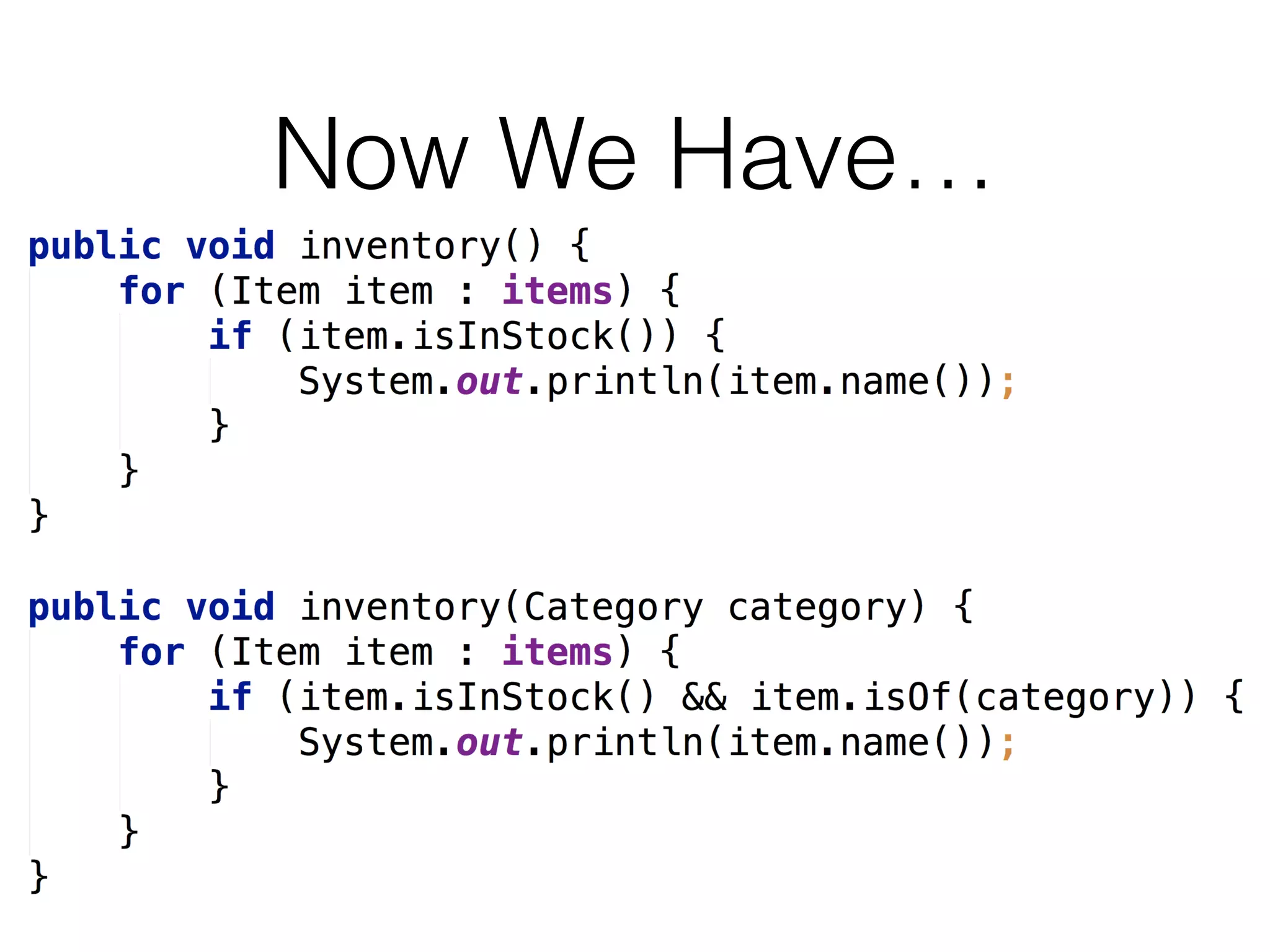
Now We Have…
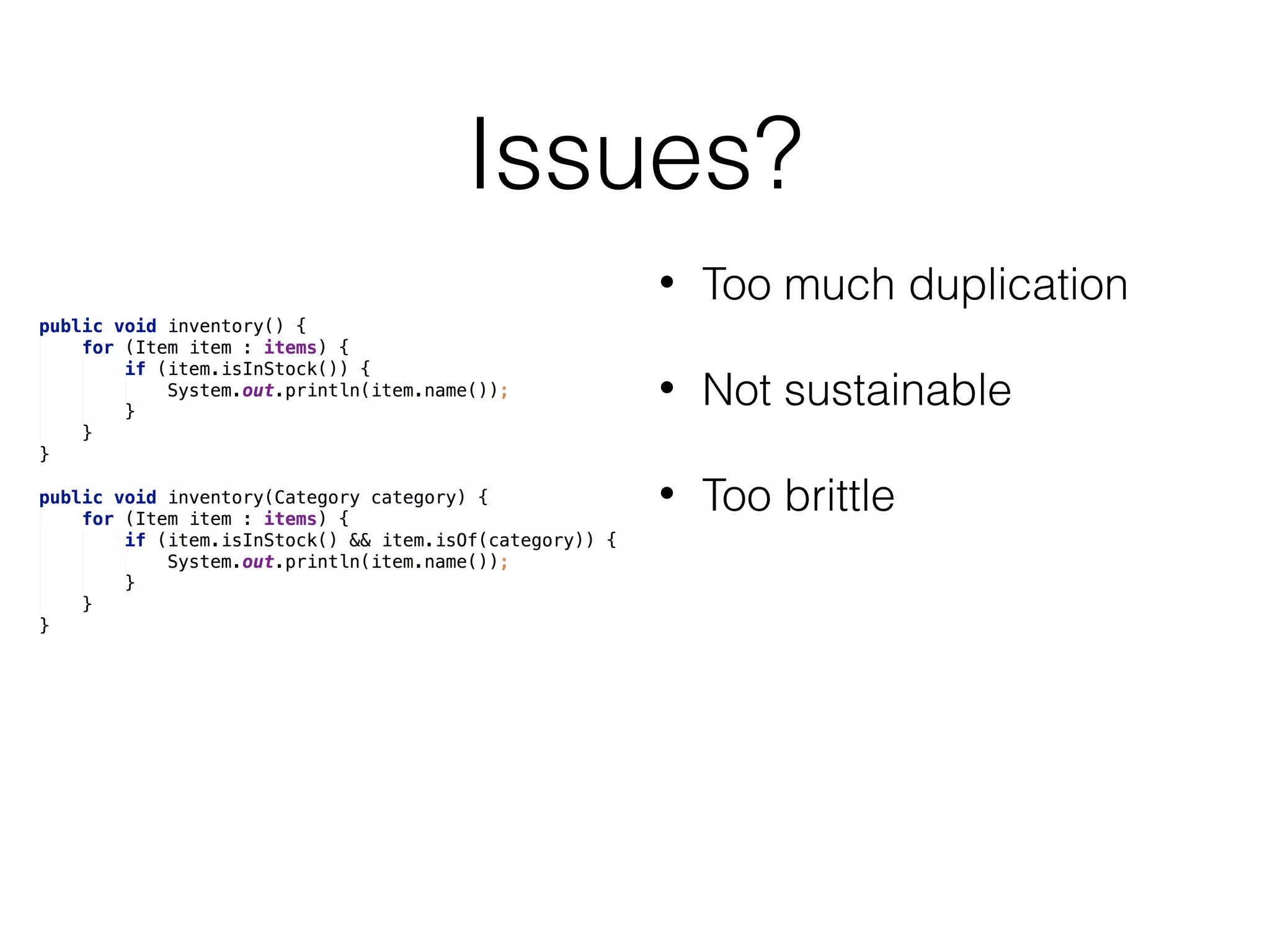
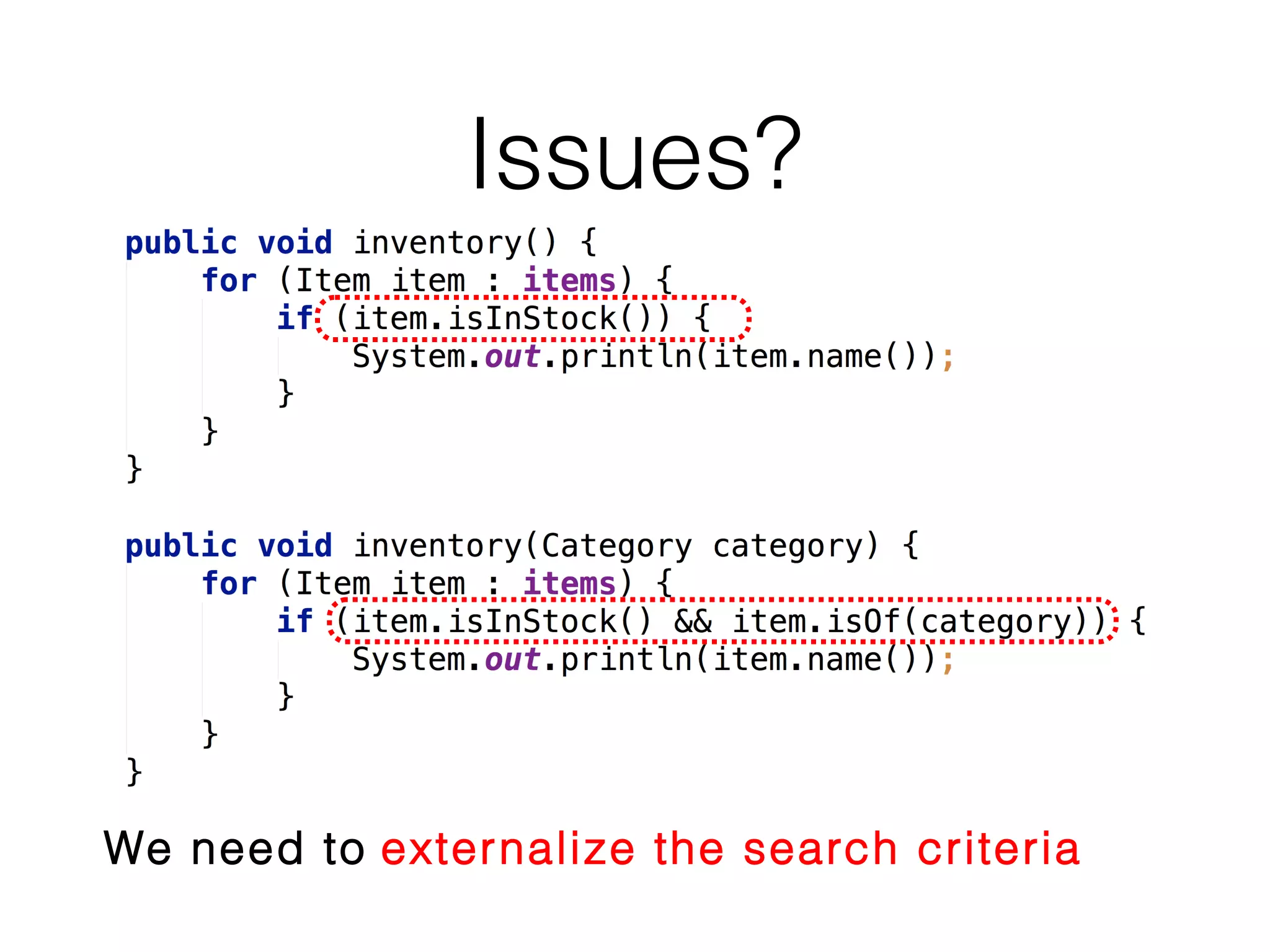
Issues?
•

Too much duplication

•

Not sustainable

•

Too brittle
Issues?

We need to externalize the search criteria
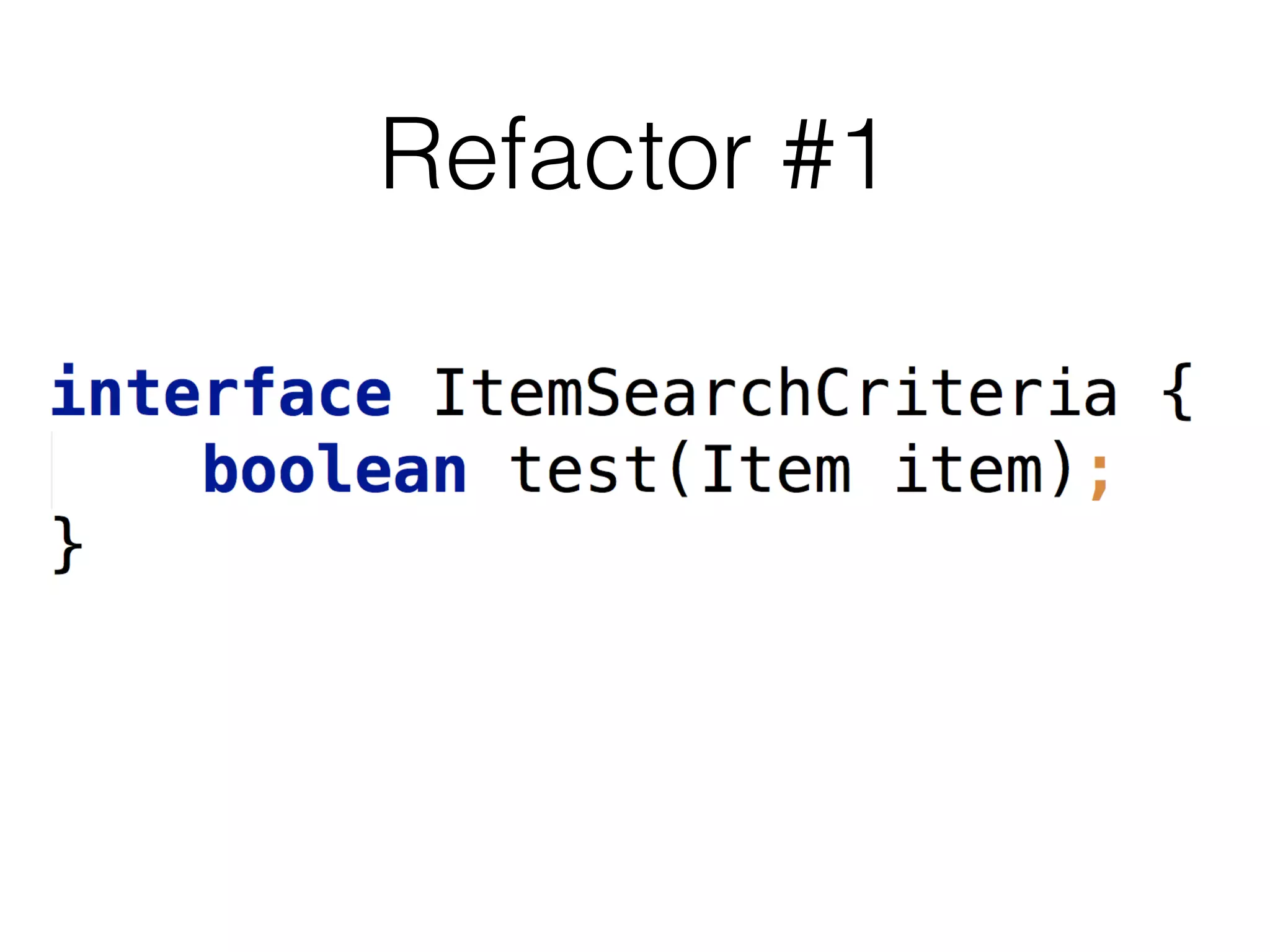
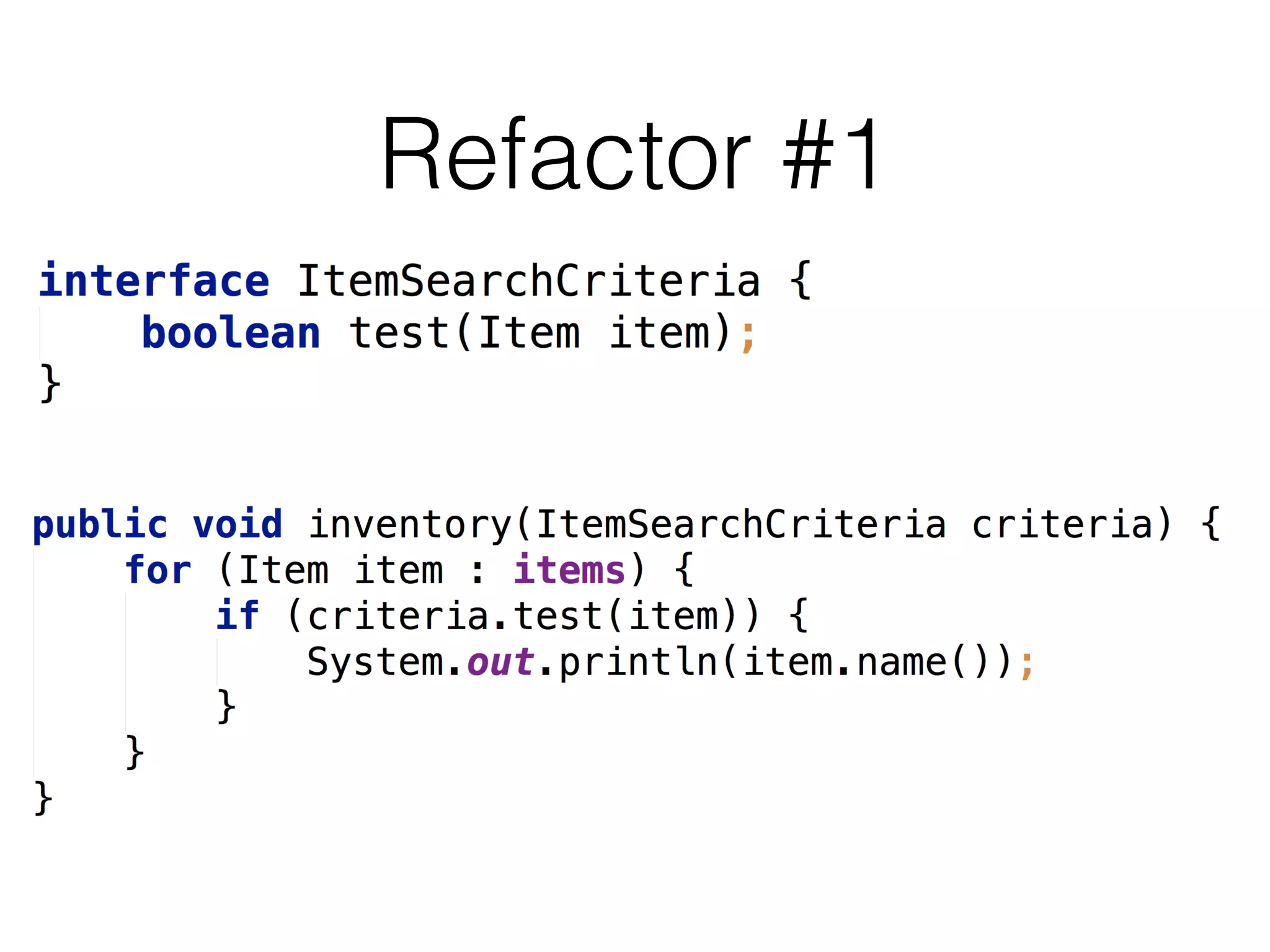
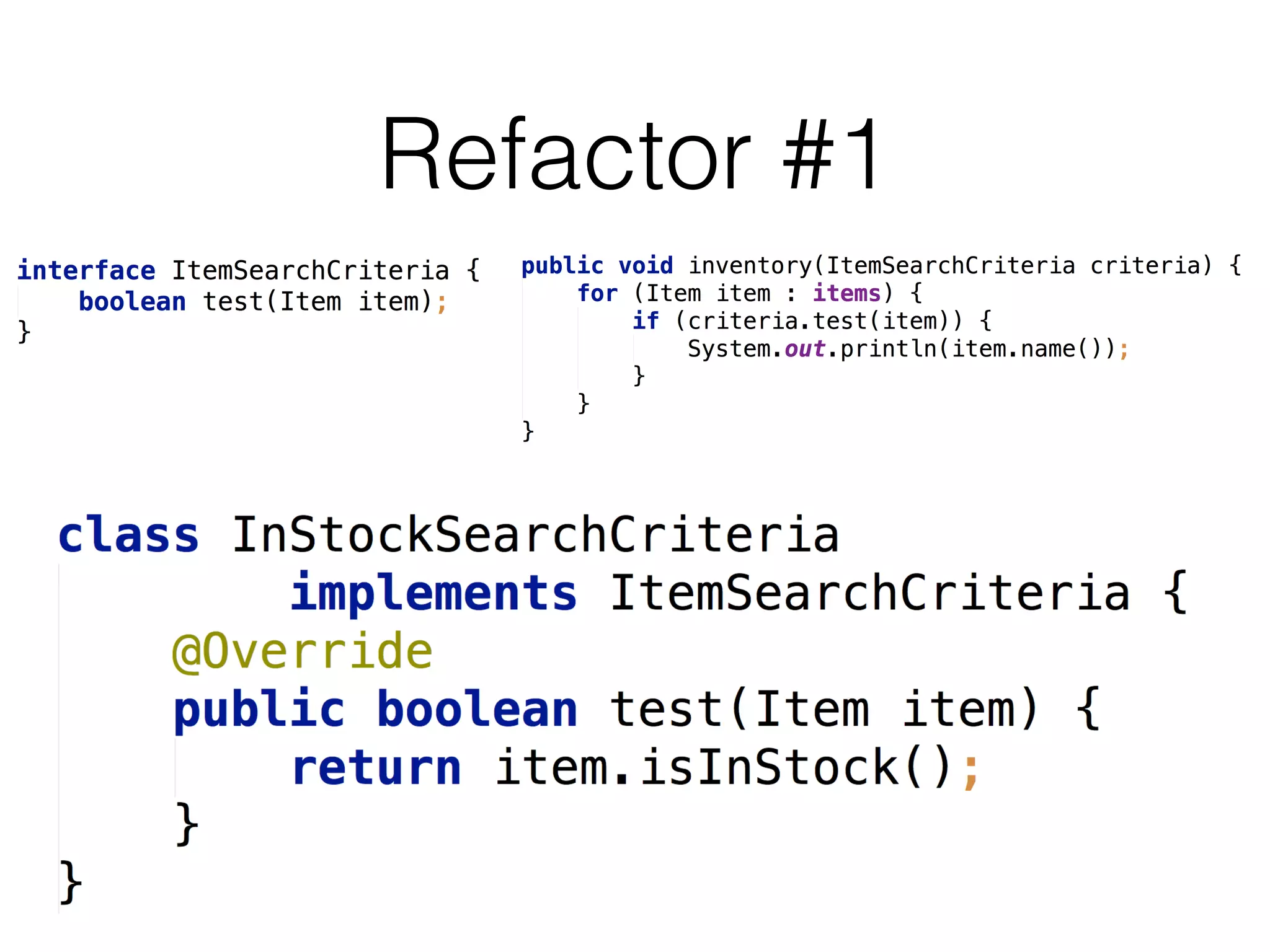
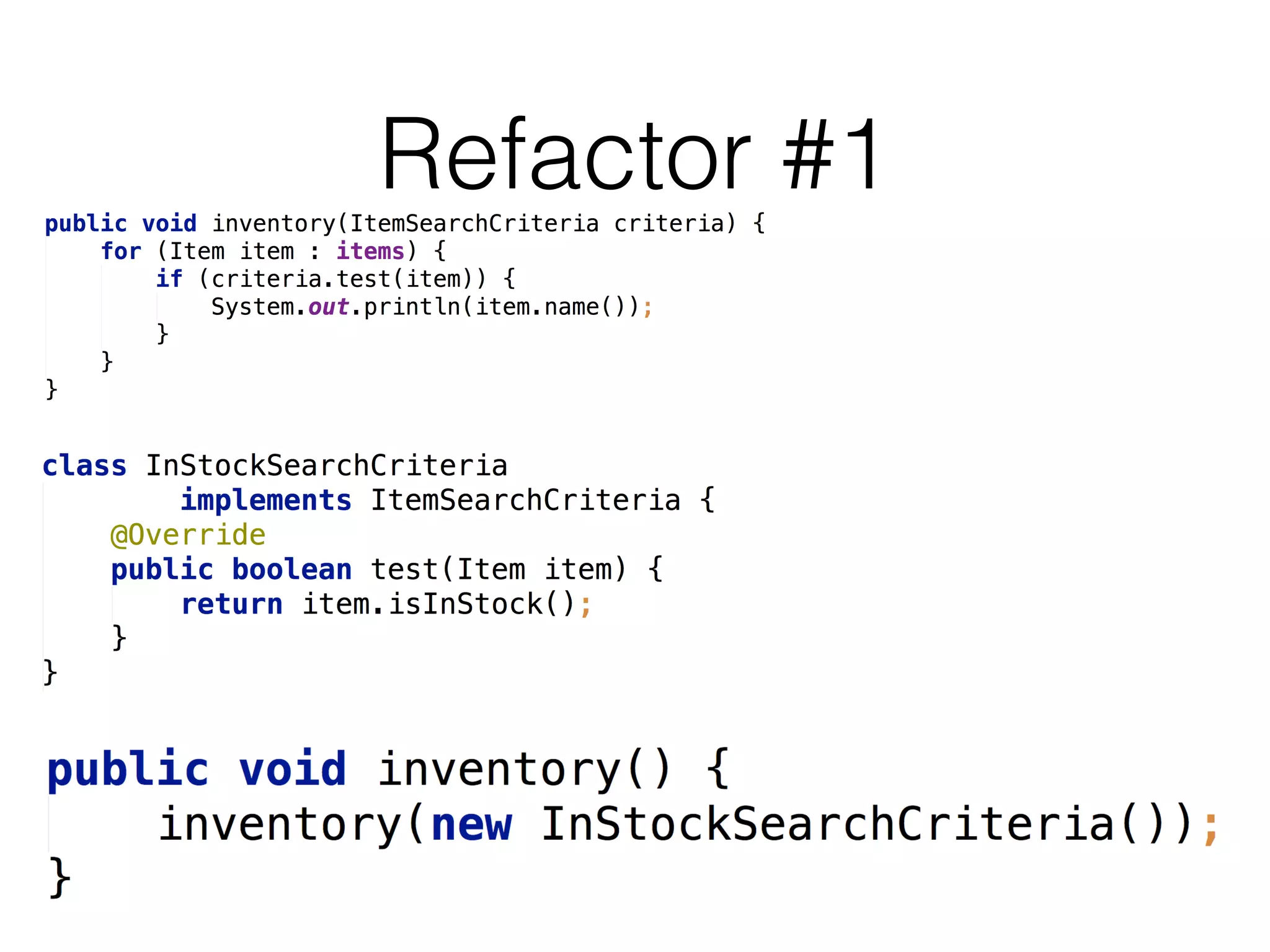
Refactor #1
Refactor #1
Refactor #1
Refactor #1
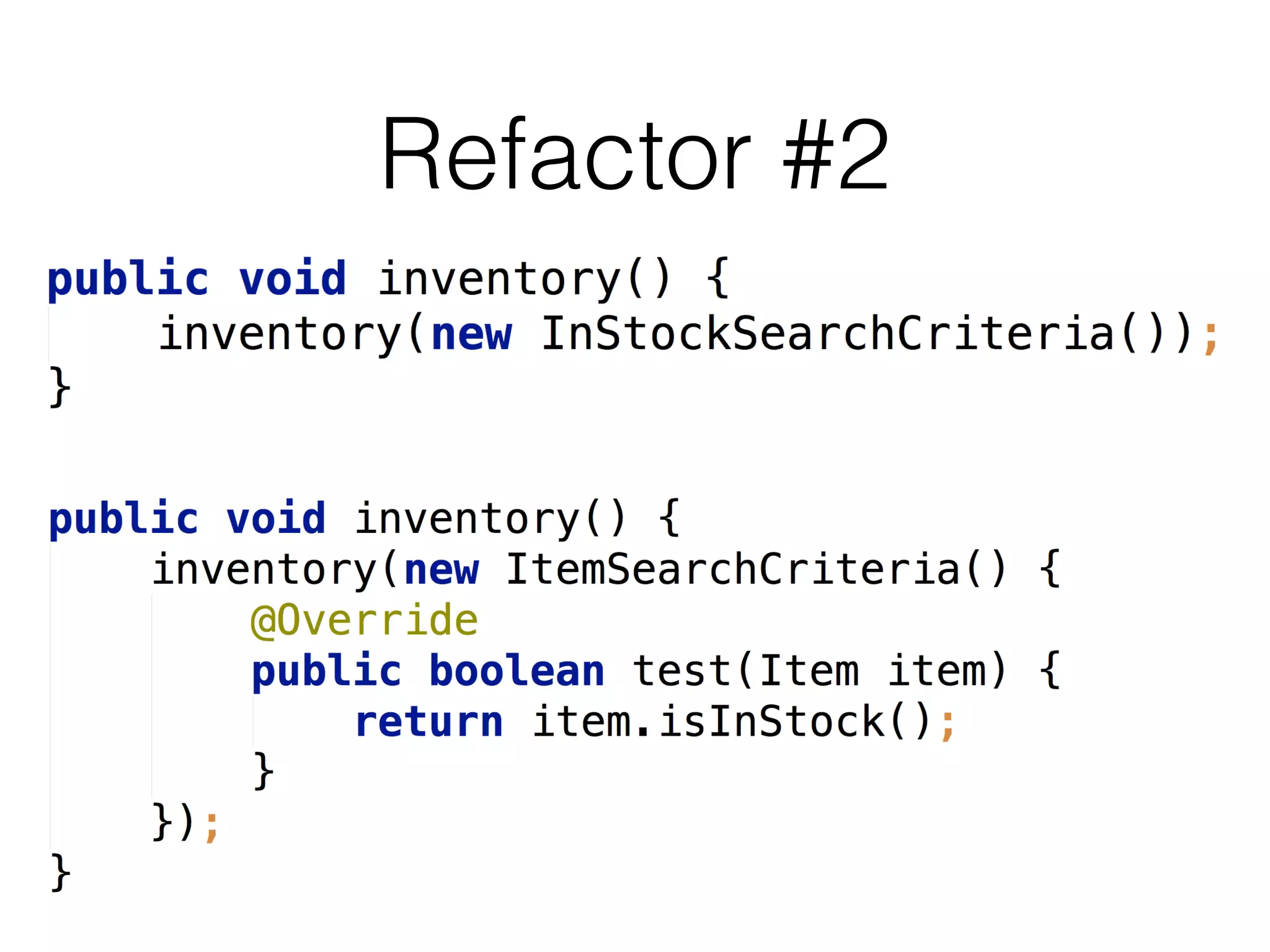
Refactor #2
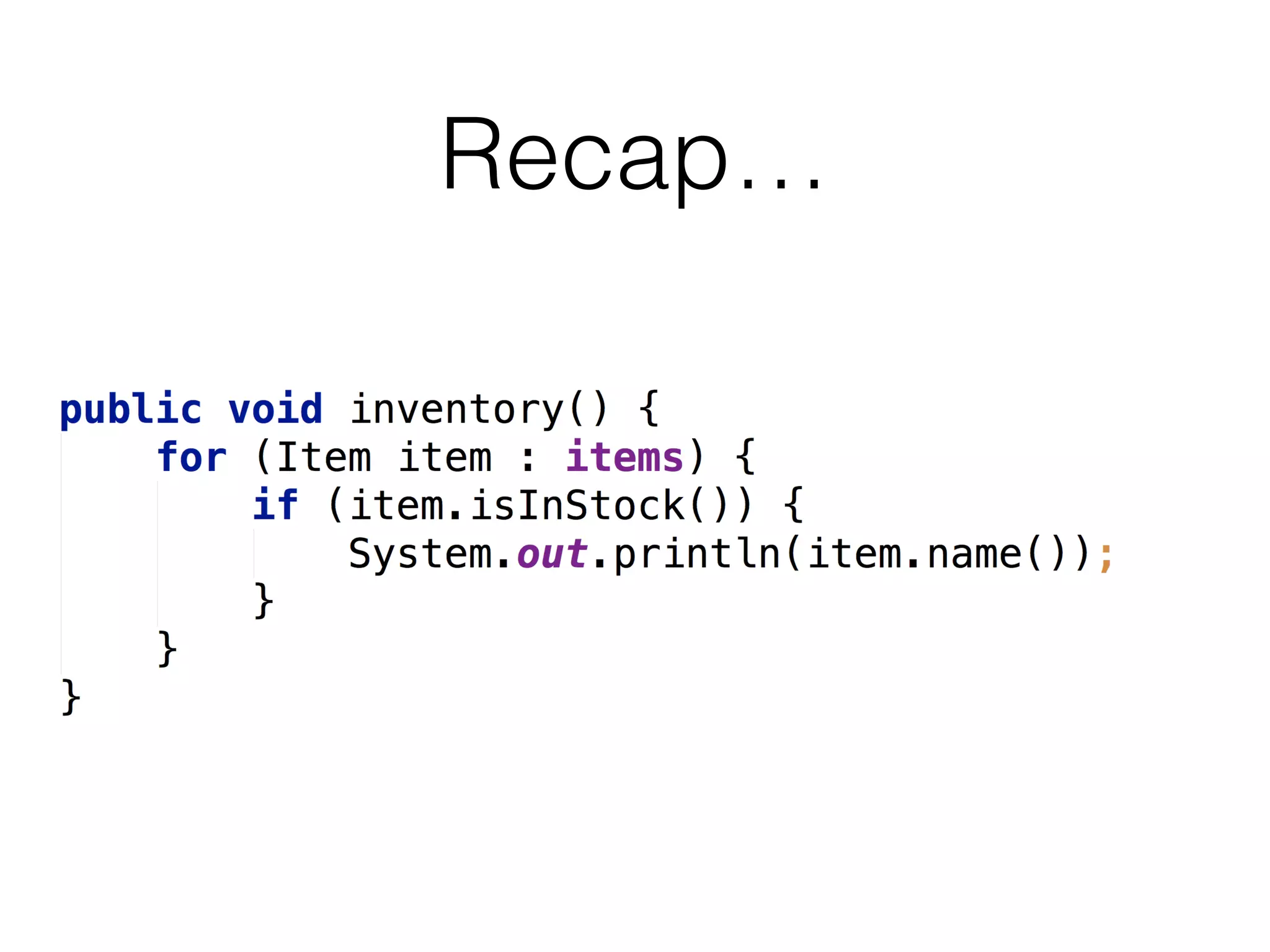
Recap…
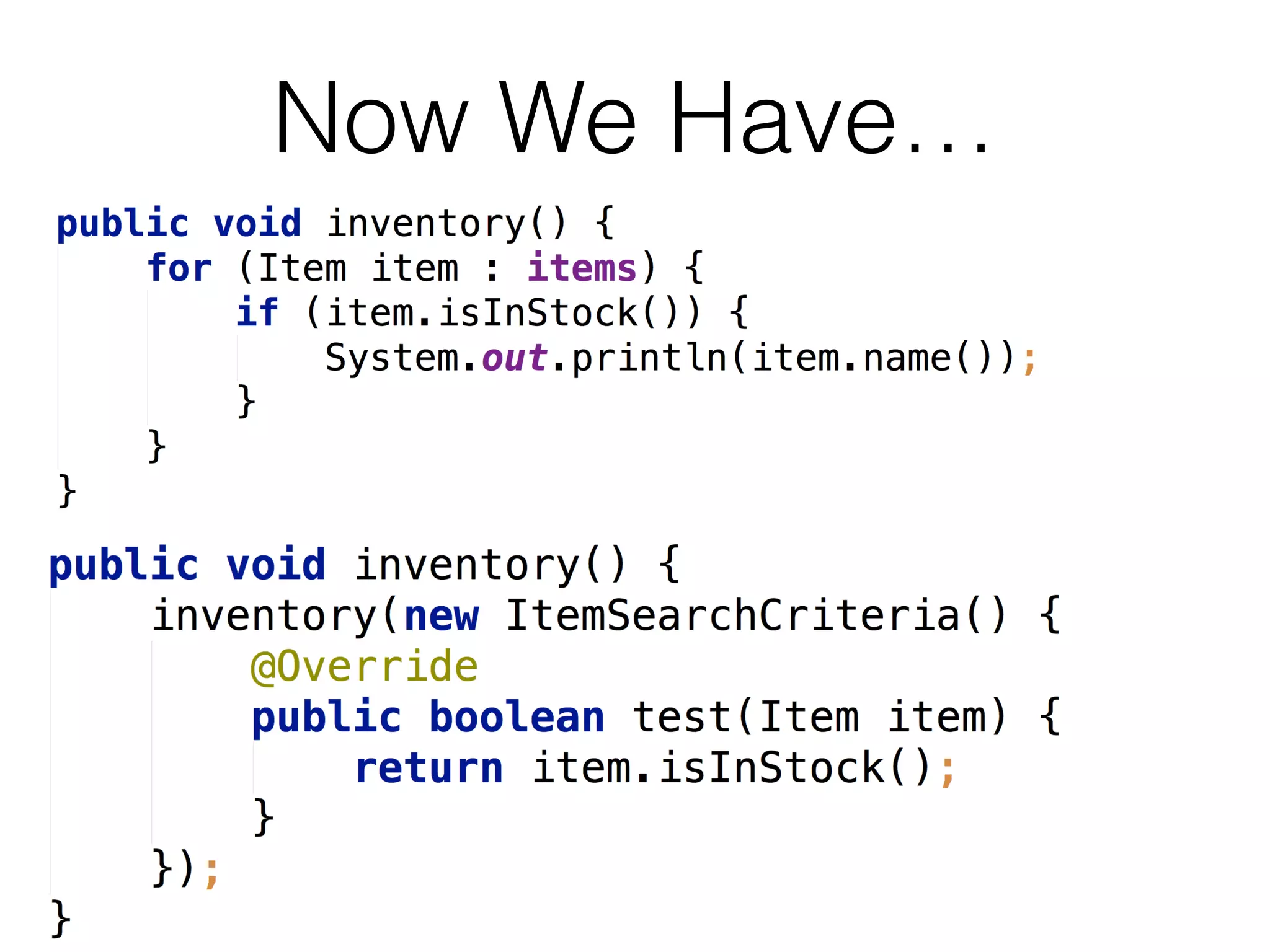
Now We Have…
Task 3 - Search for
Products by name
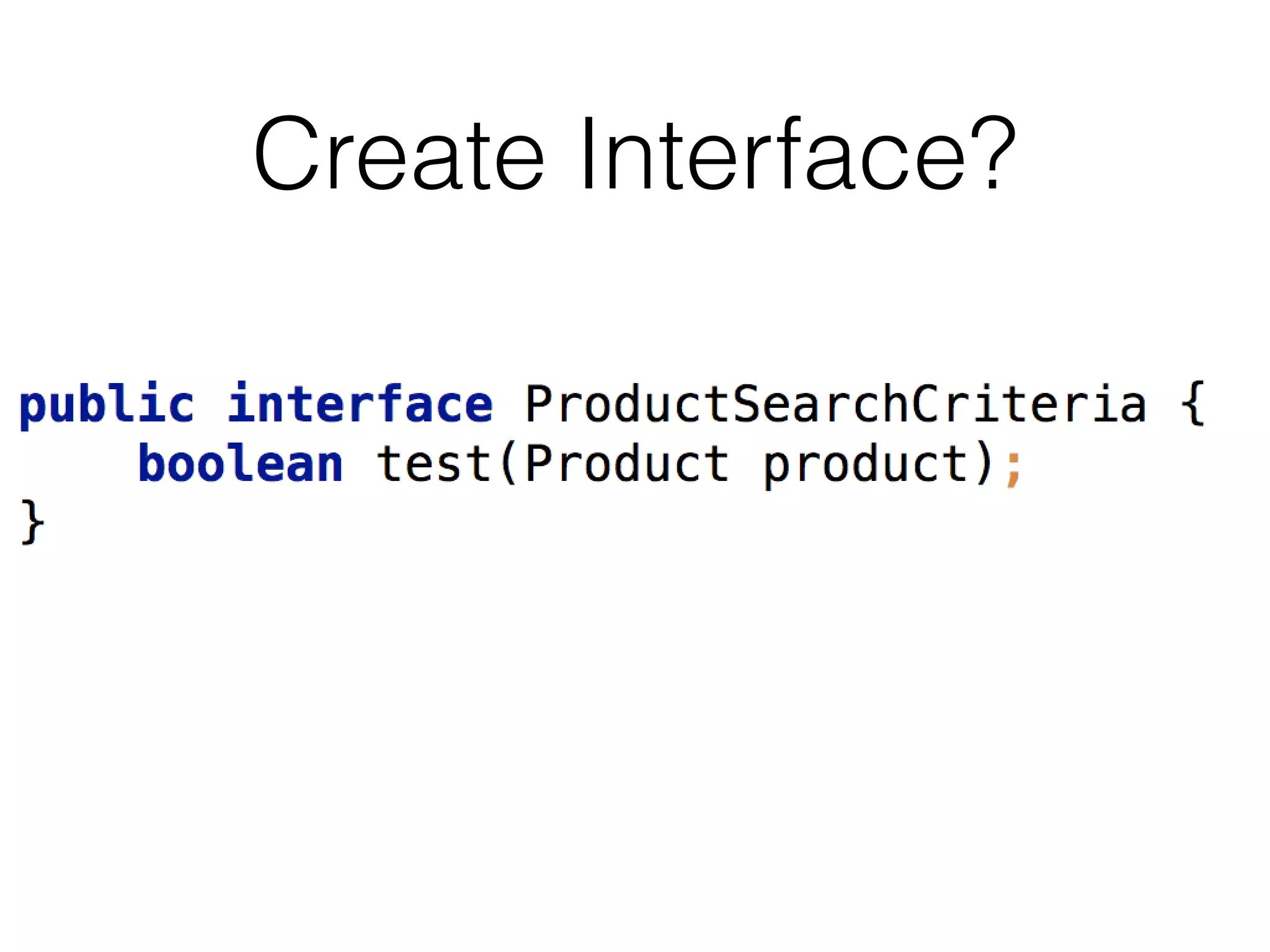
Create Interface?
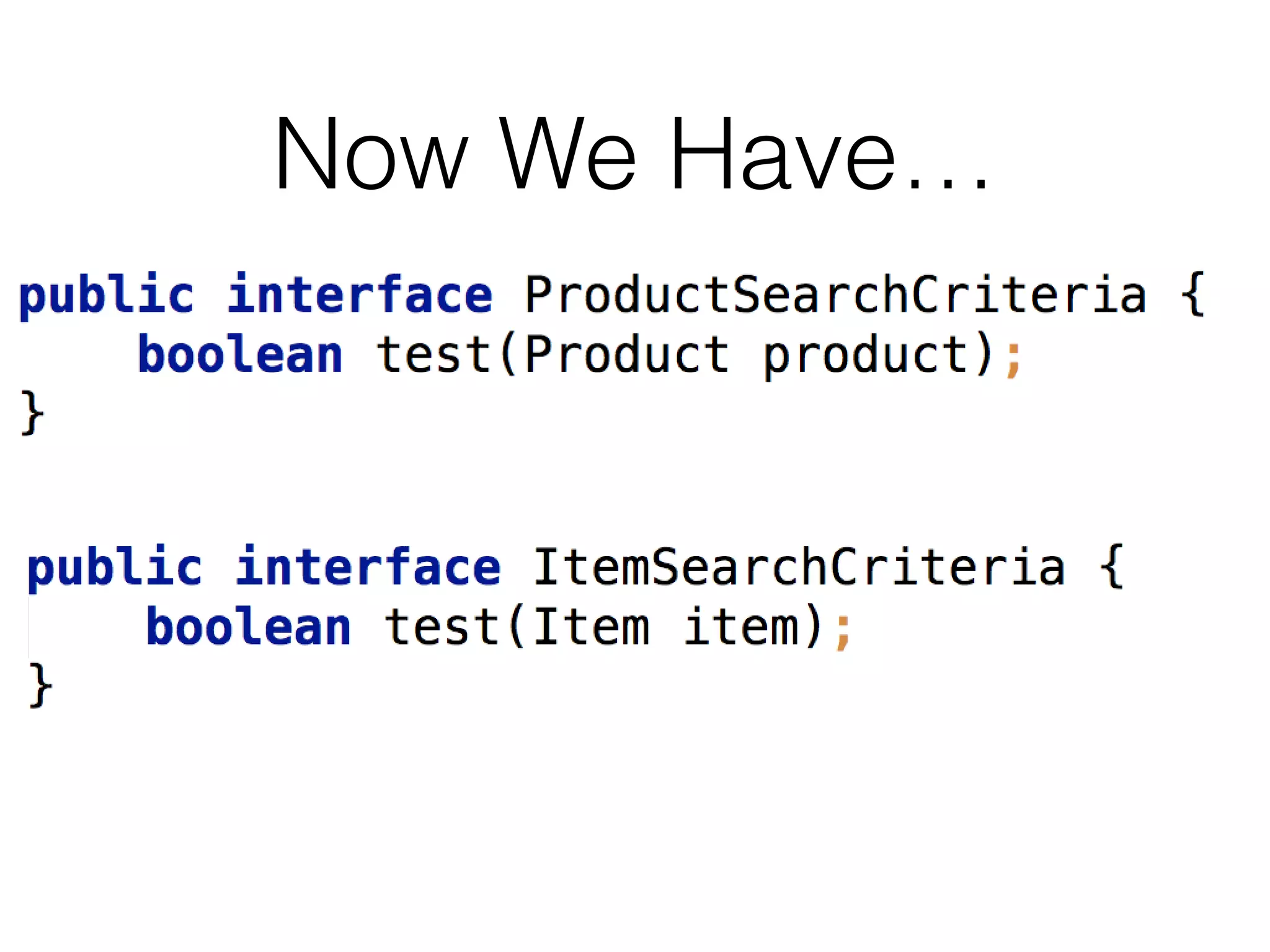
Now We Have…
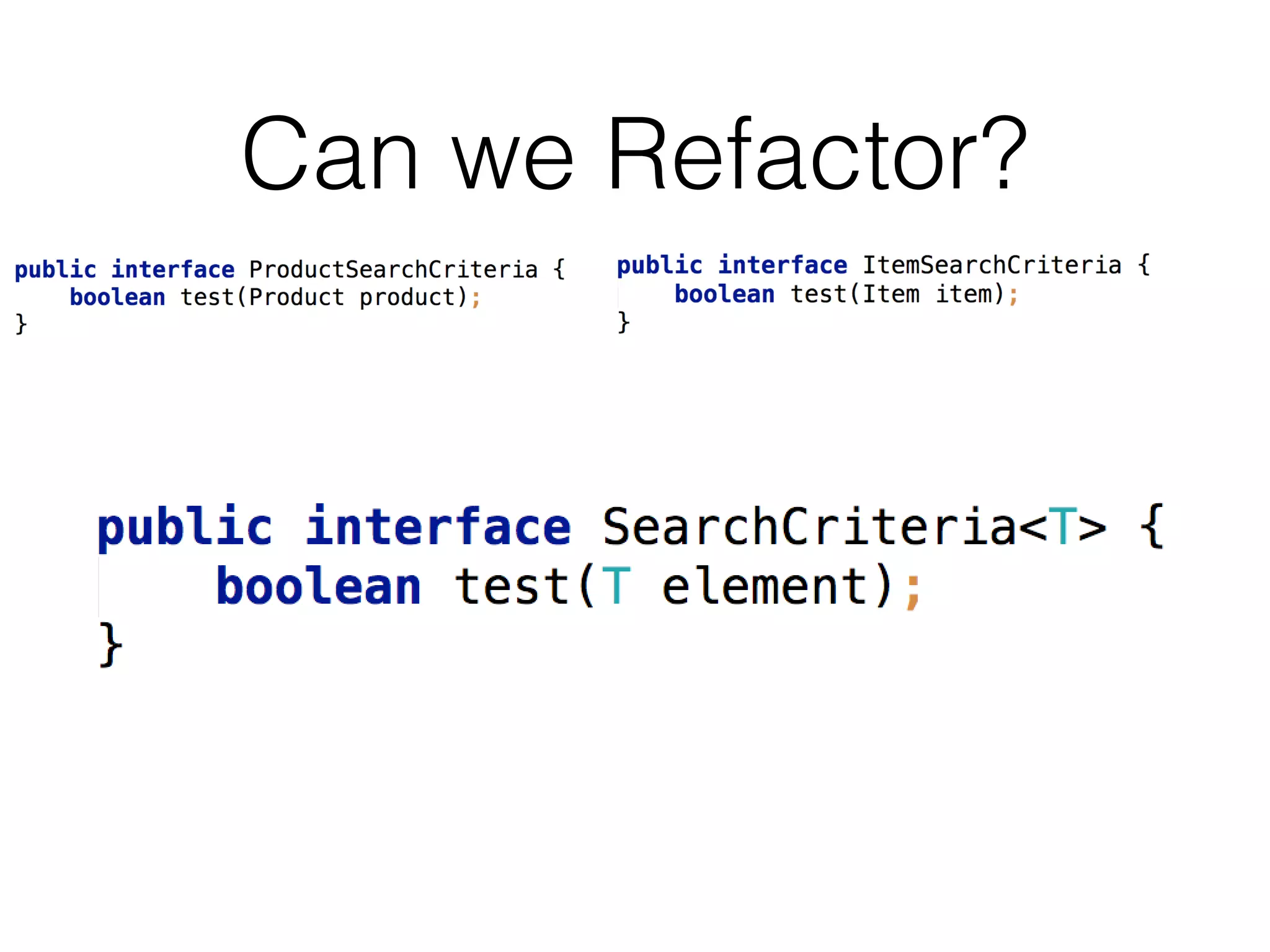
Can we Refactor?
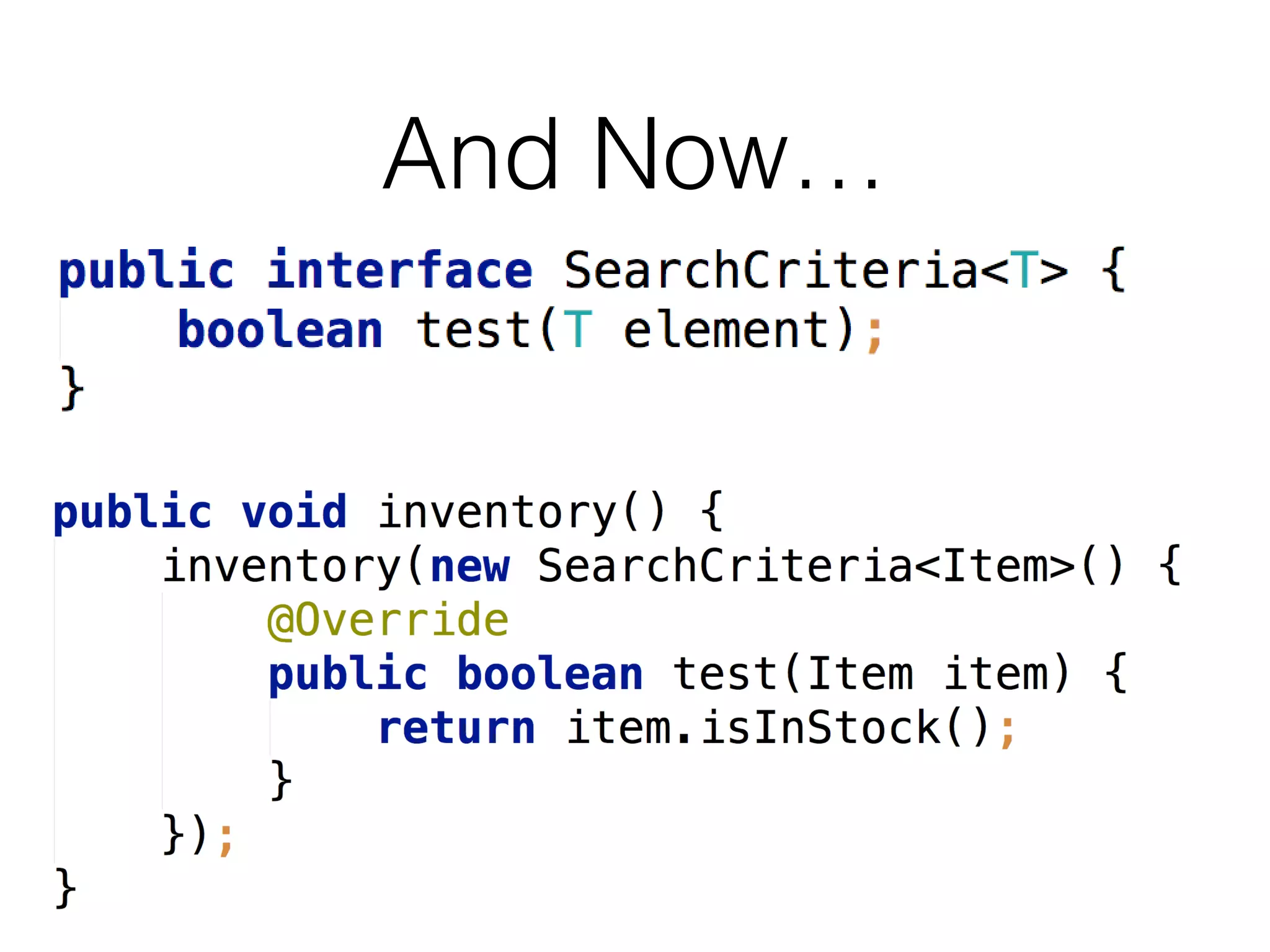
And Now…
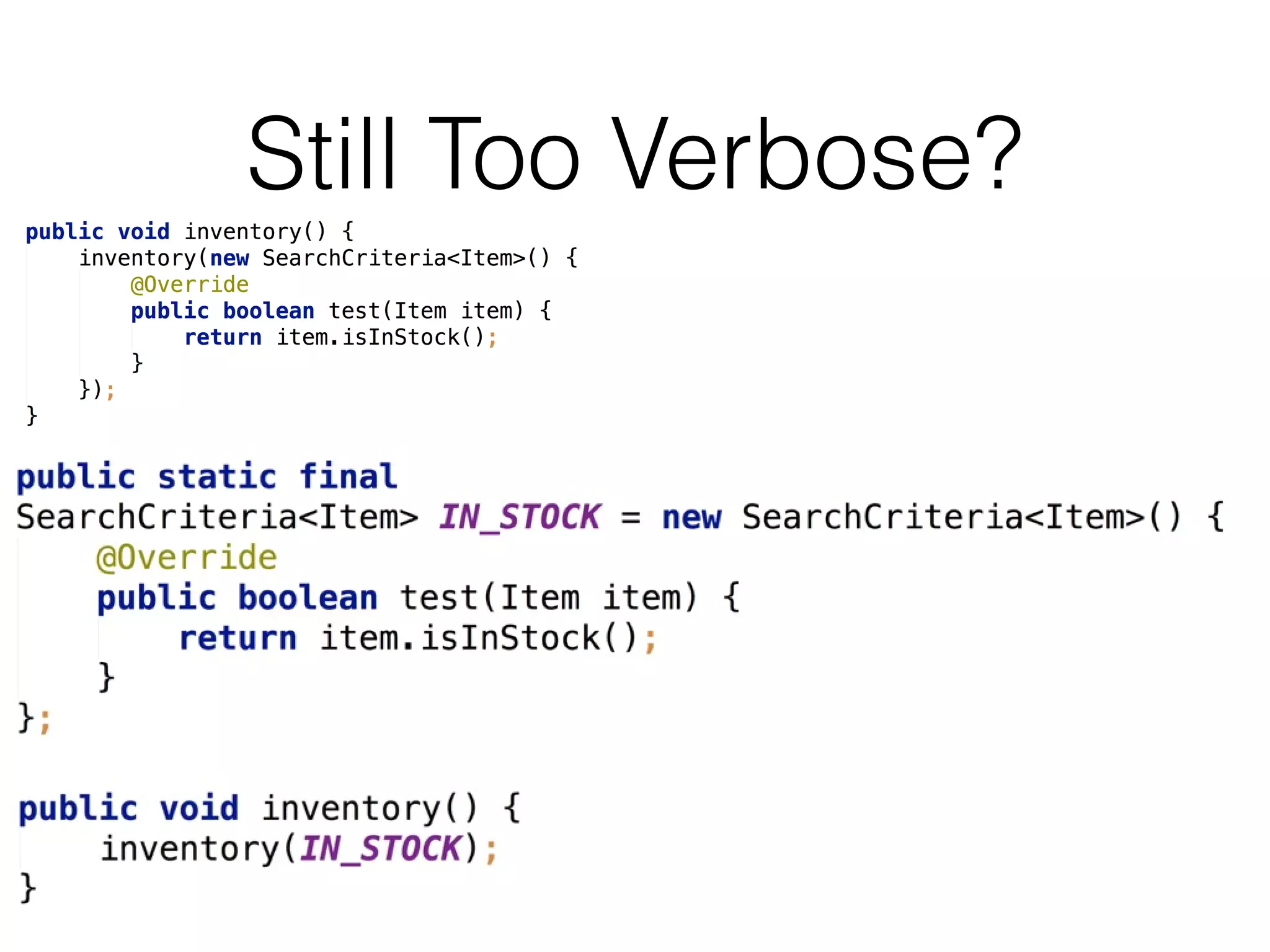
Still Too Verbose?
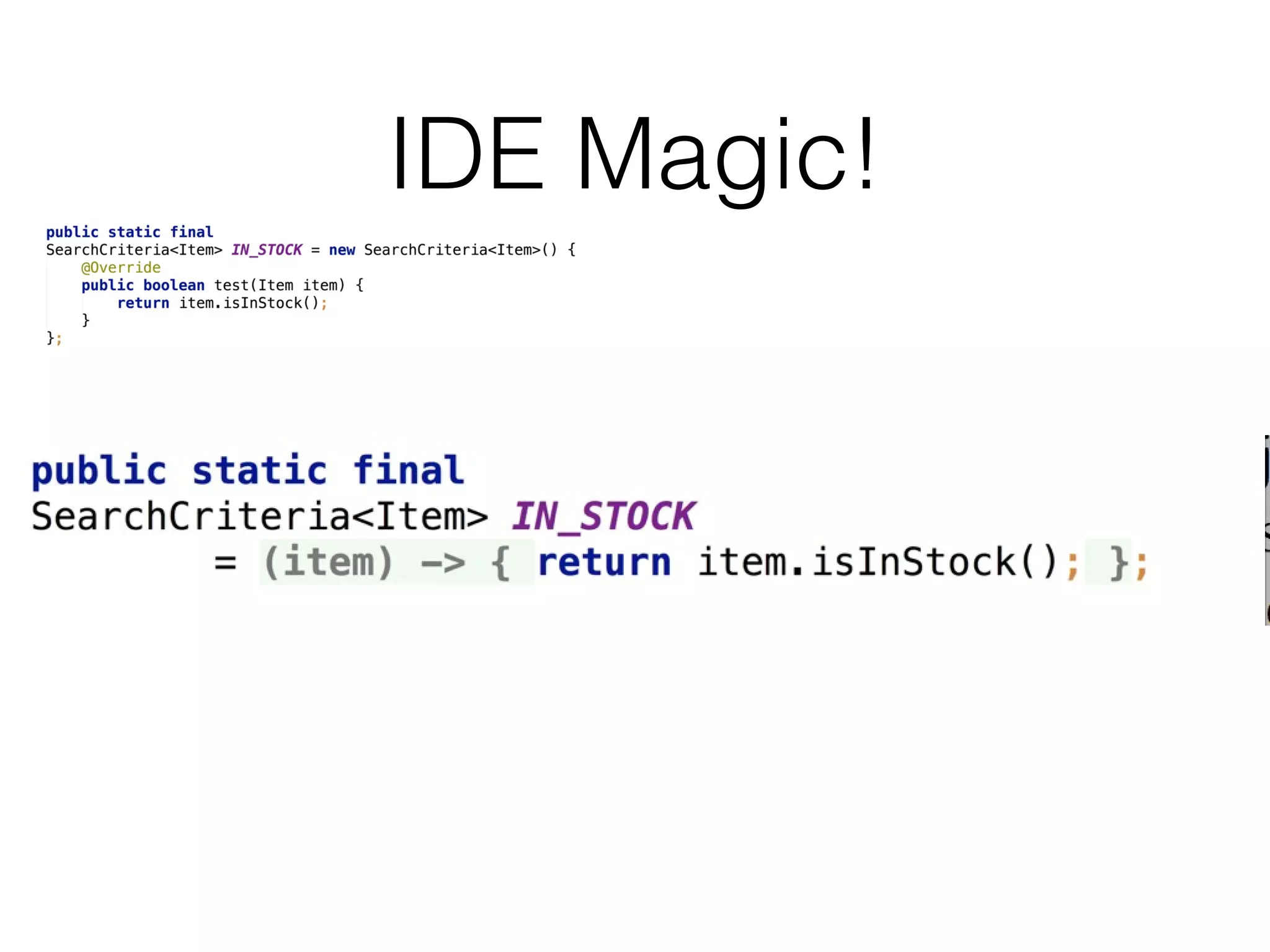
IDE Magic!
That’s It! For Java 6
Enter Java 8
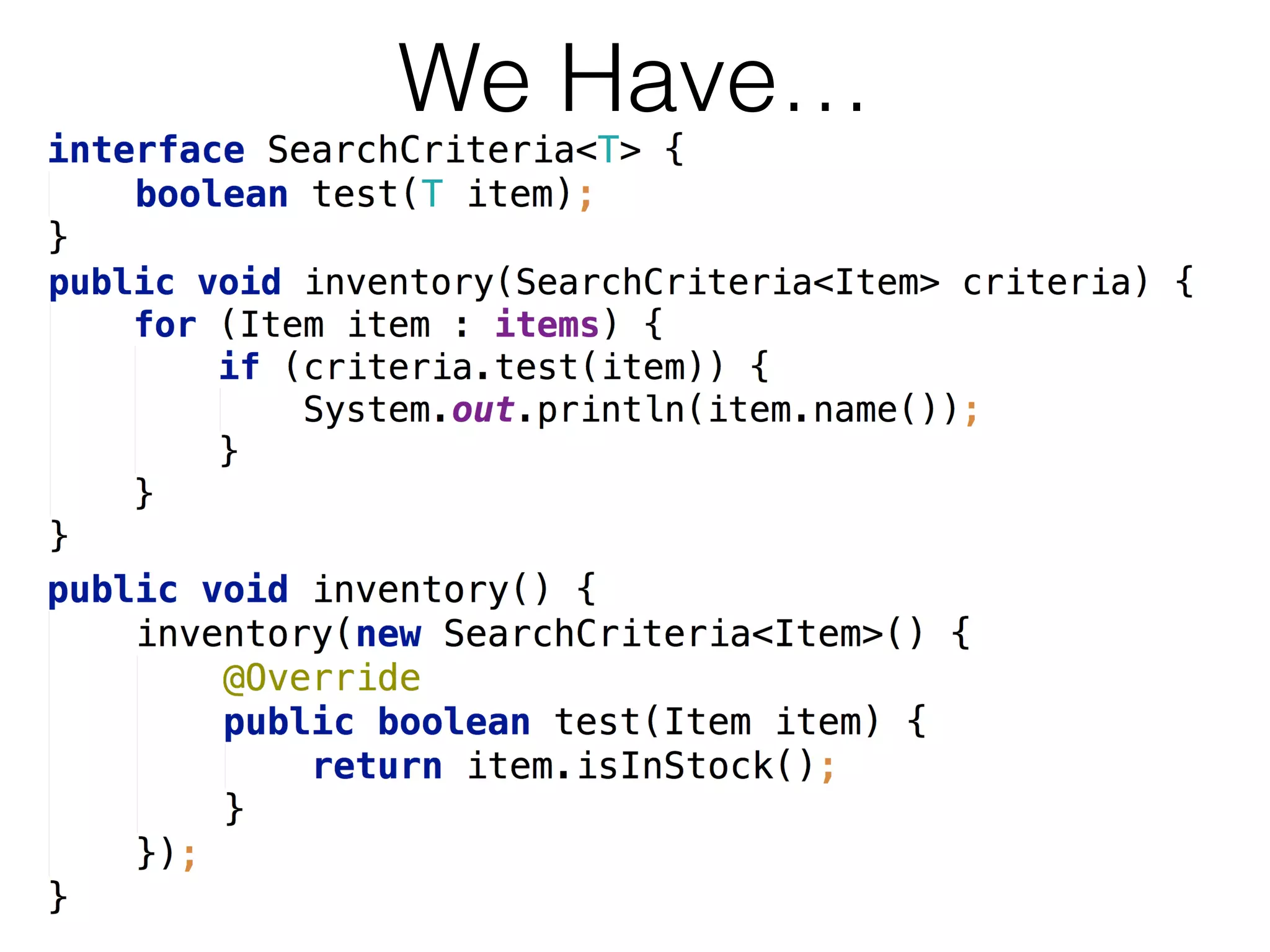
We Have…
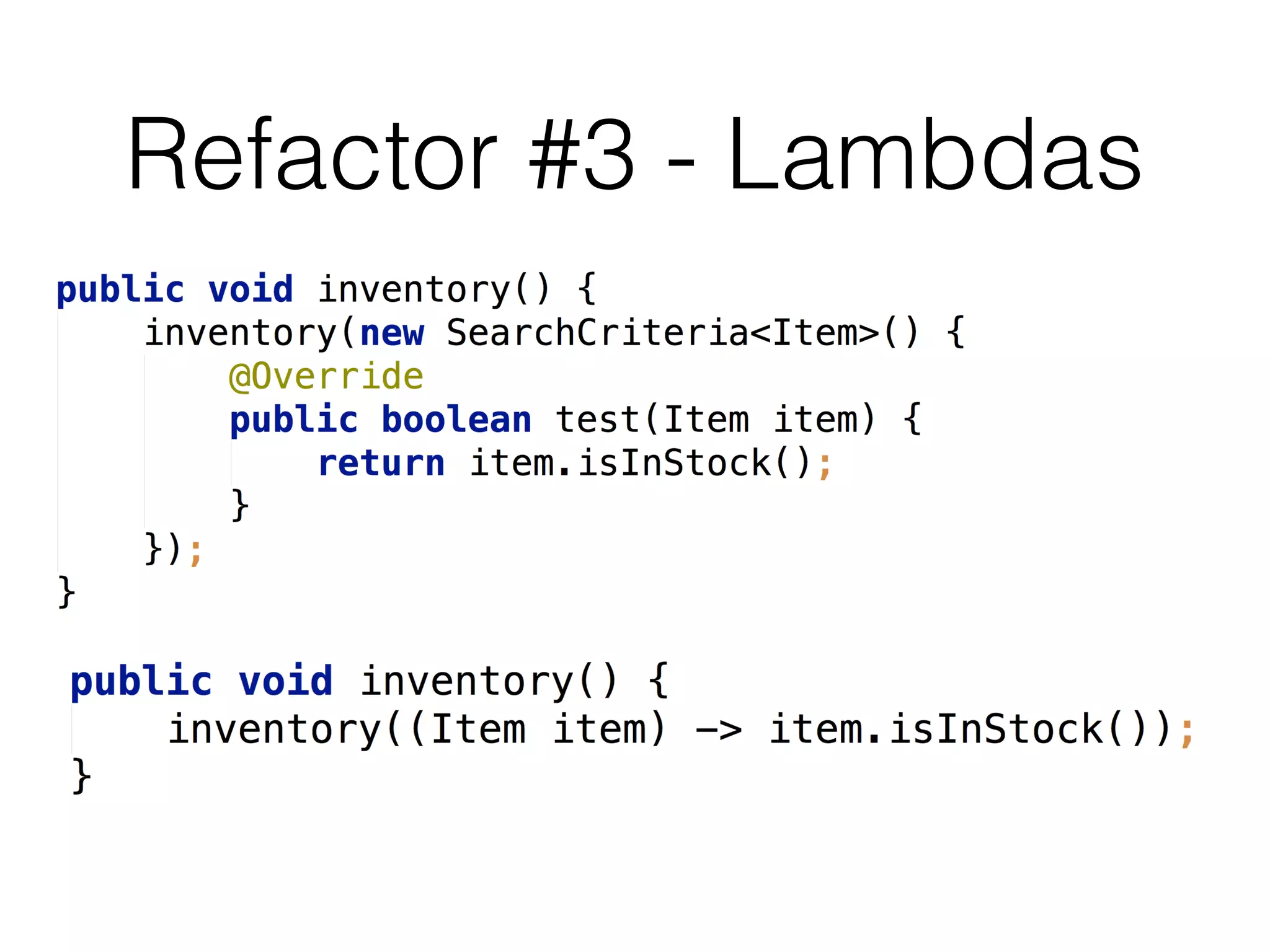
Refactor #3 - Lambdas
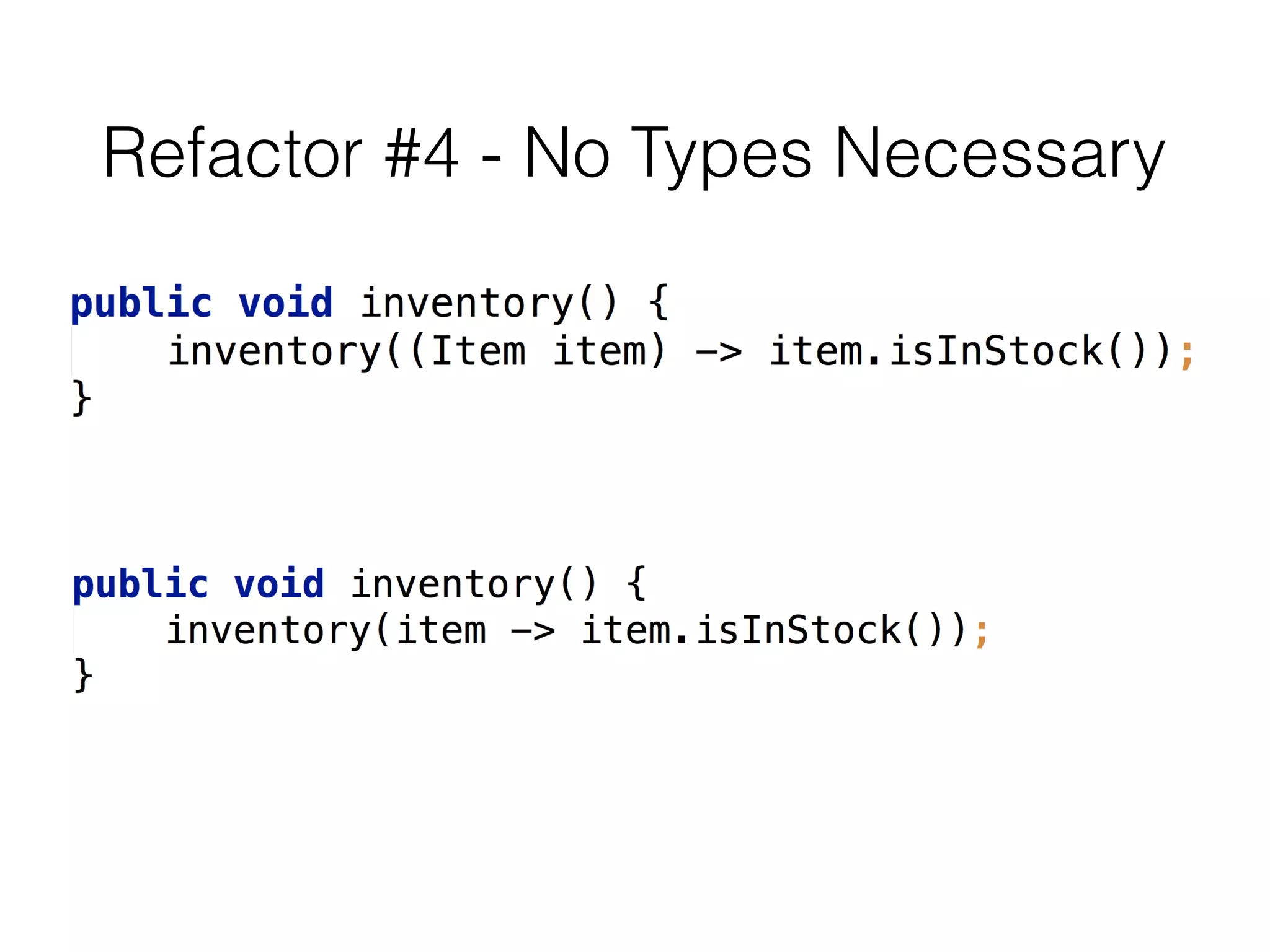
Refactor #4 - No Types Necessary
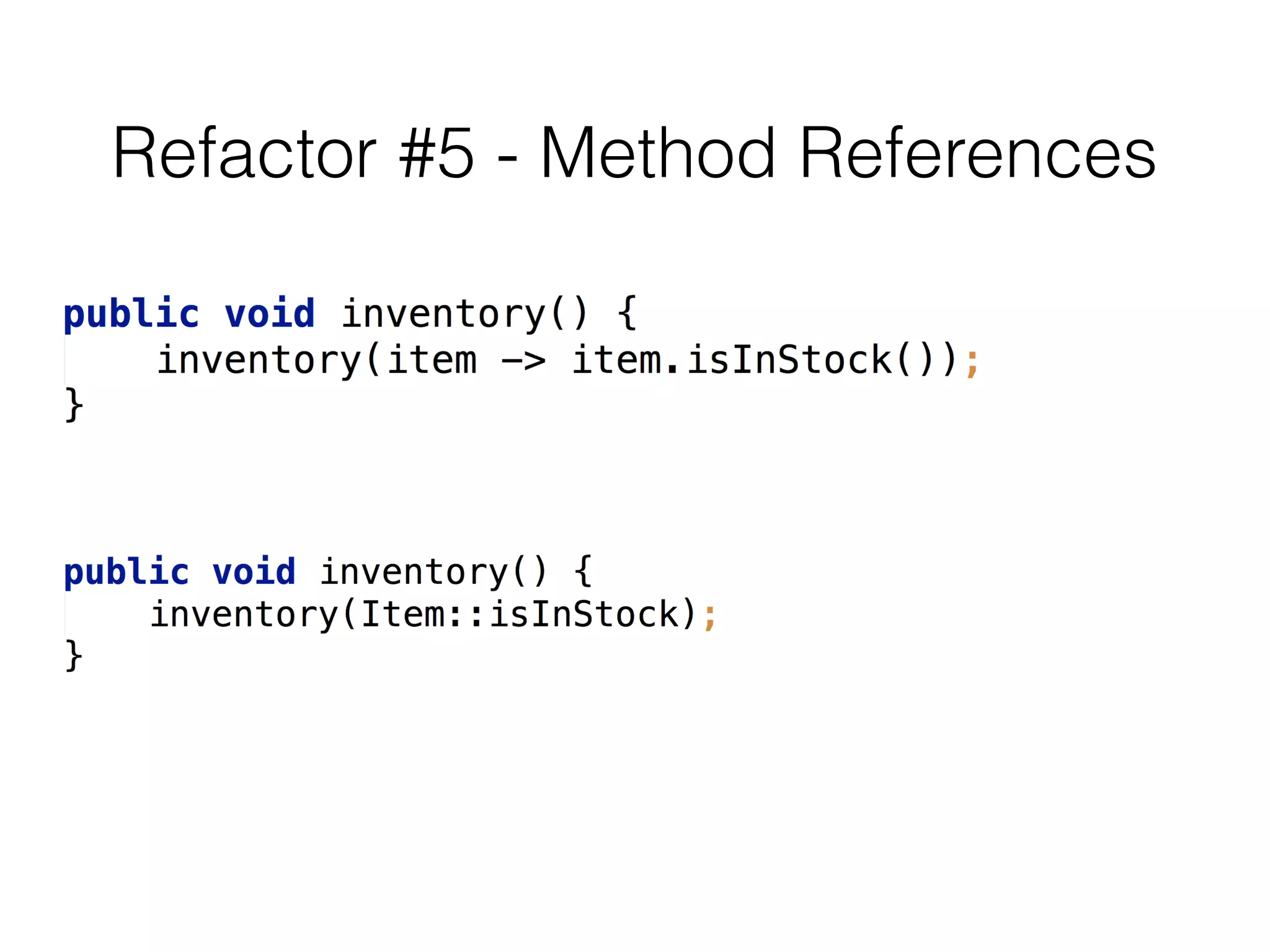
Refactor #5 - Method References
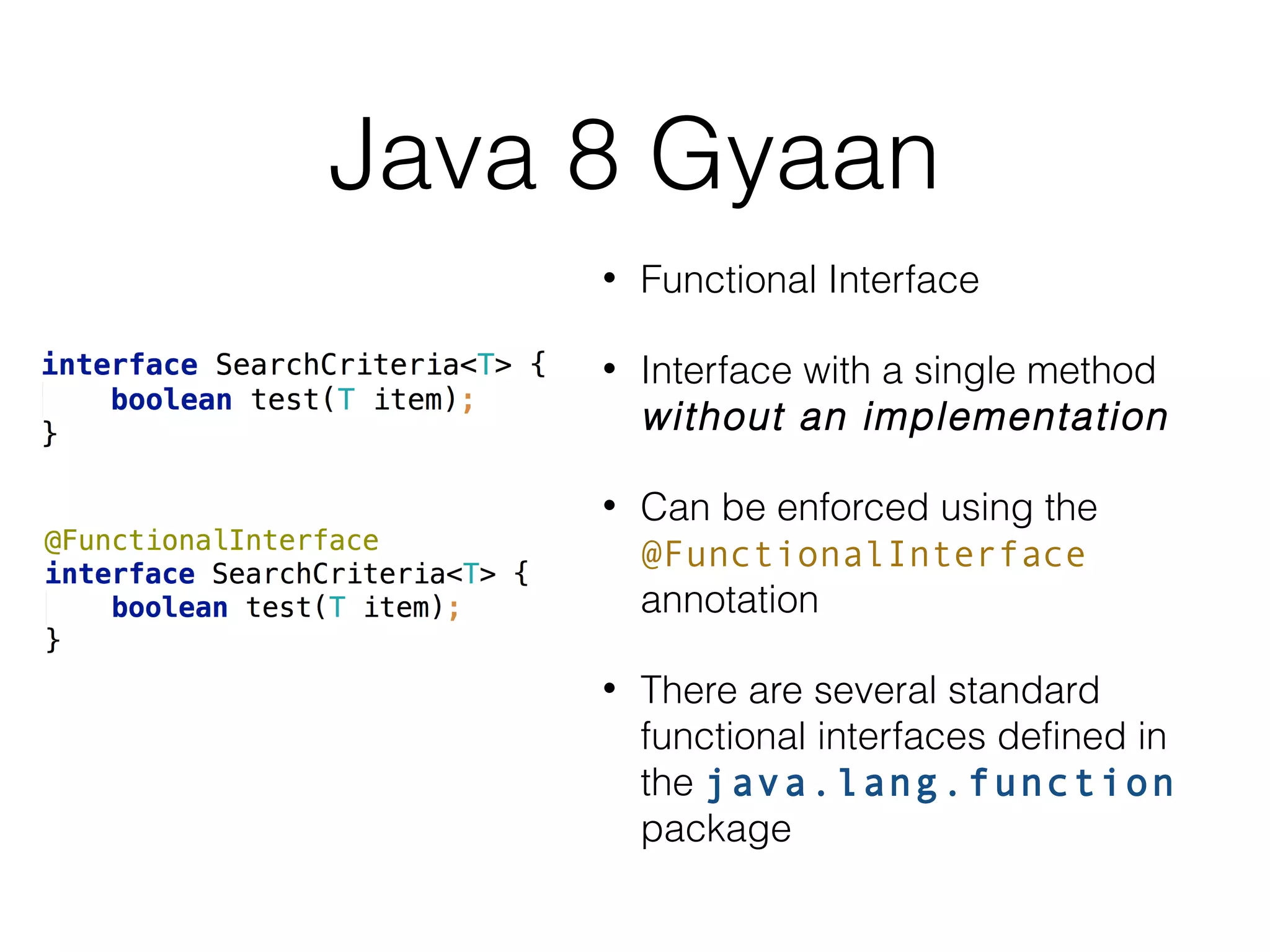
Java 8 Gyaan
•

Functional Interface

•

Interface with a single method
without an implementation

•

Can be enforced using the
@FunctionalInterface
annotation

•

There are several standard
functional interfaces defined in
the java.lang.function
package
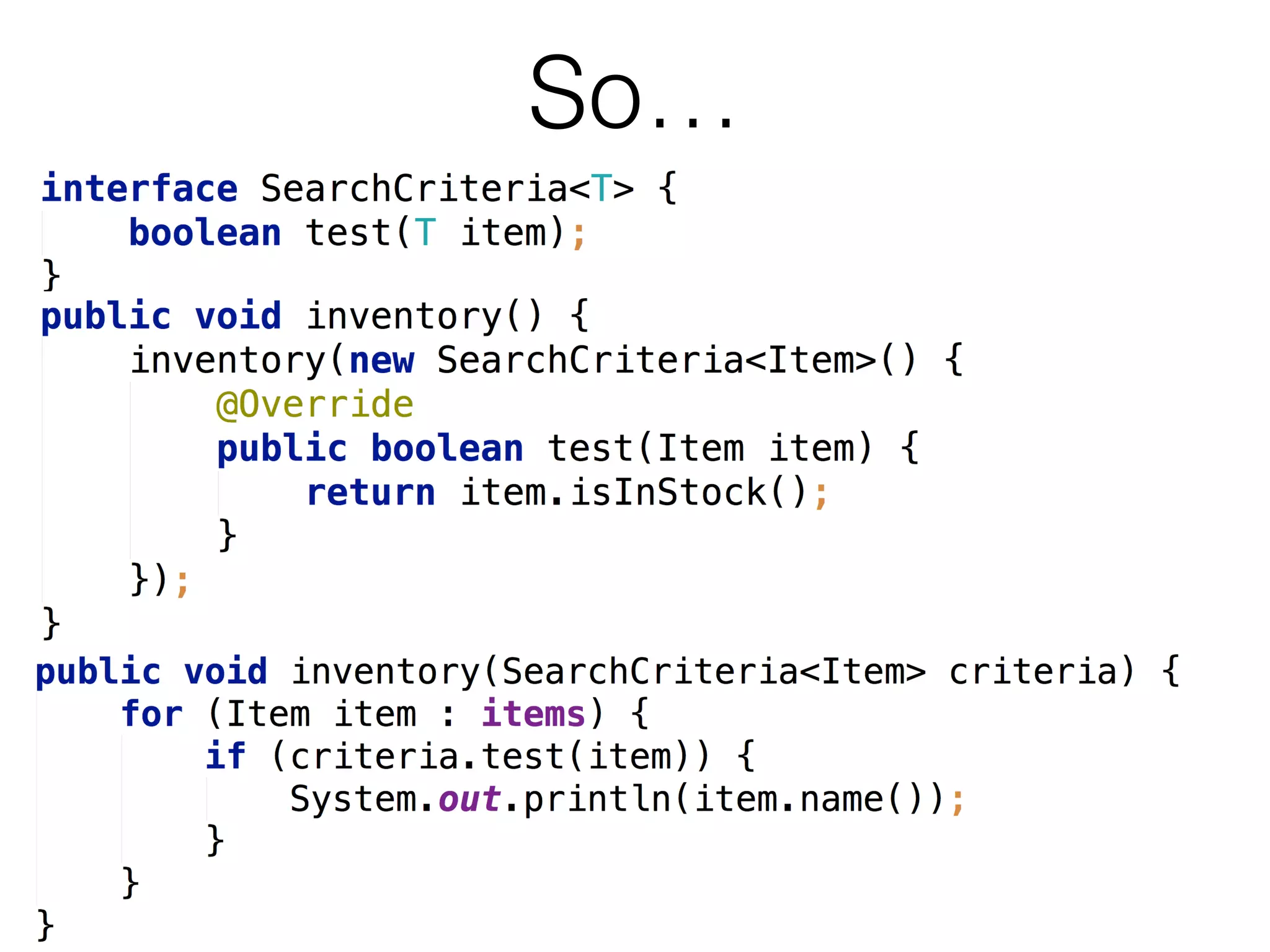
So…
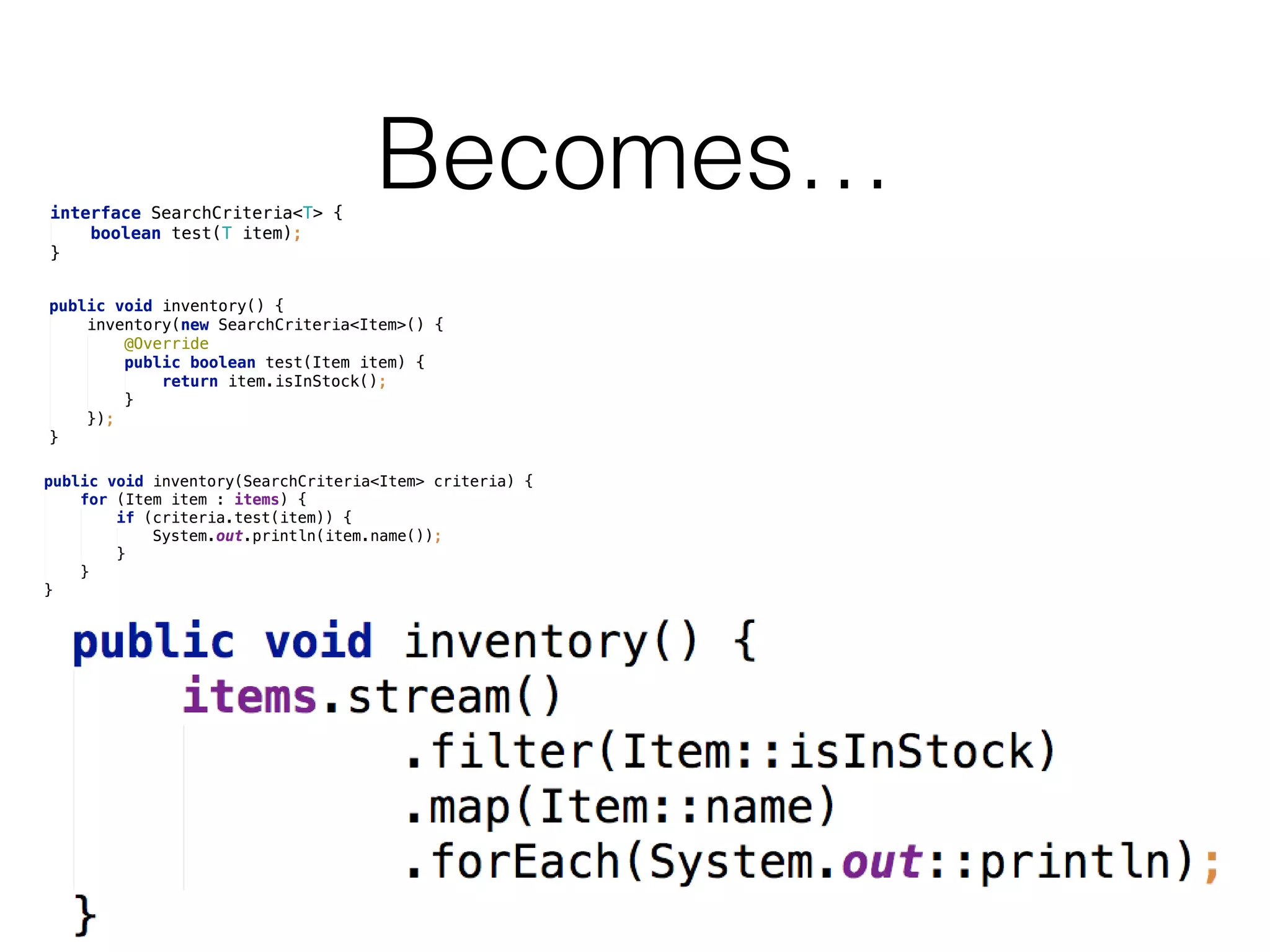
Becomes…
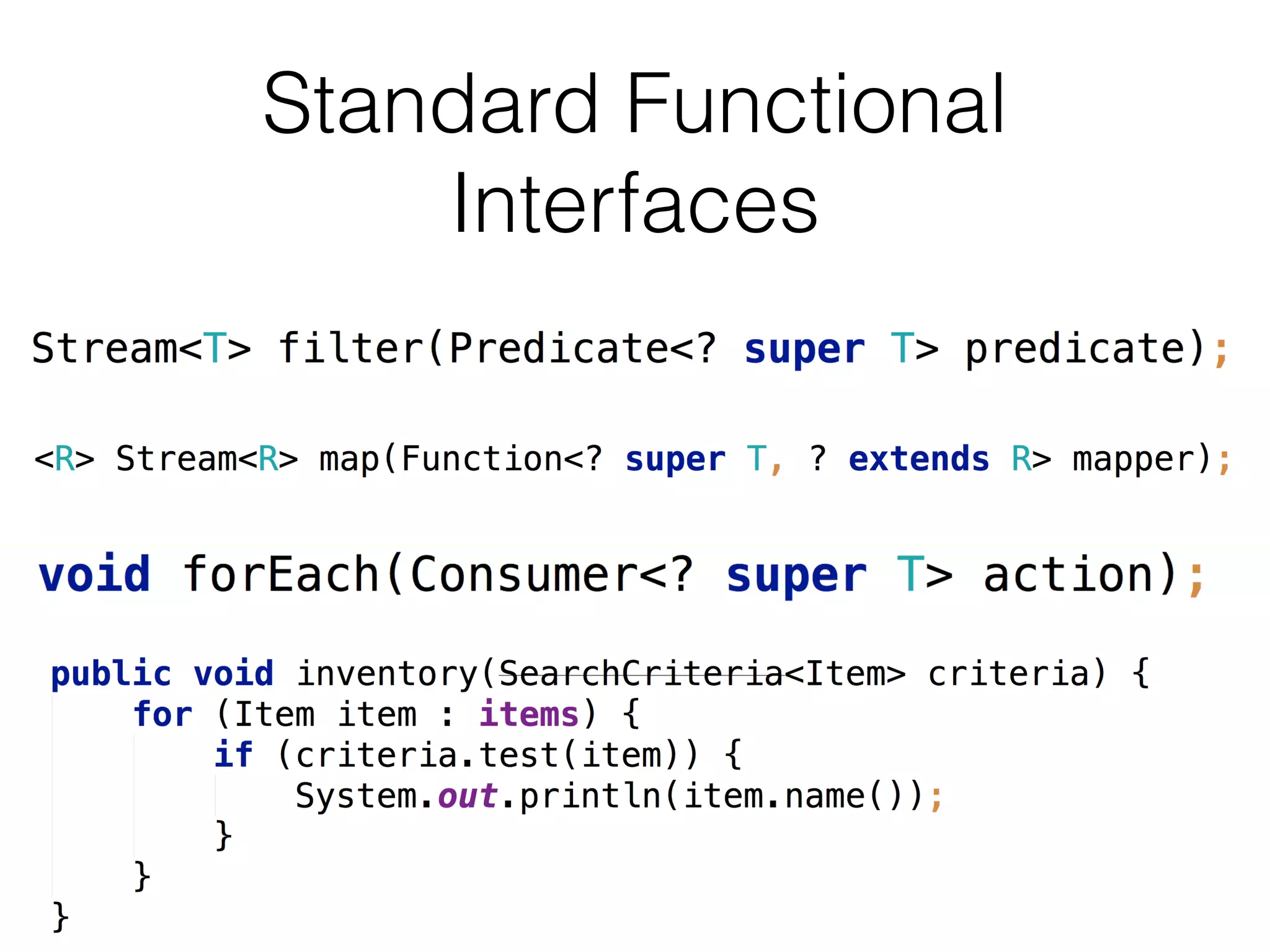
Standard Functional
Interfaces
Task 4 - Filter in-stock
items and print the Item not just its name
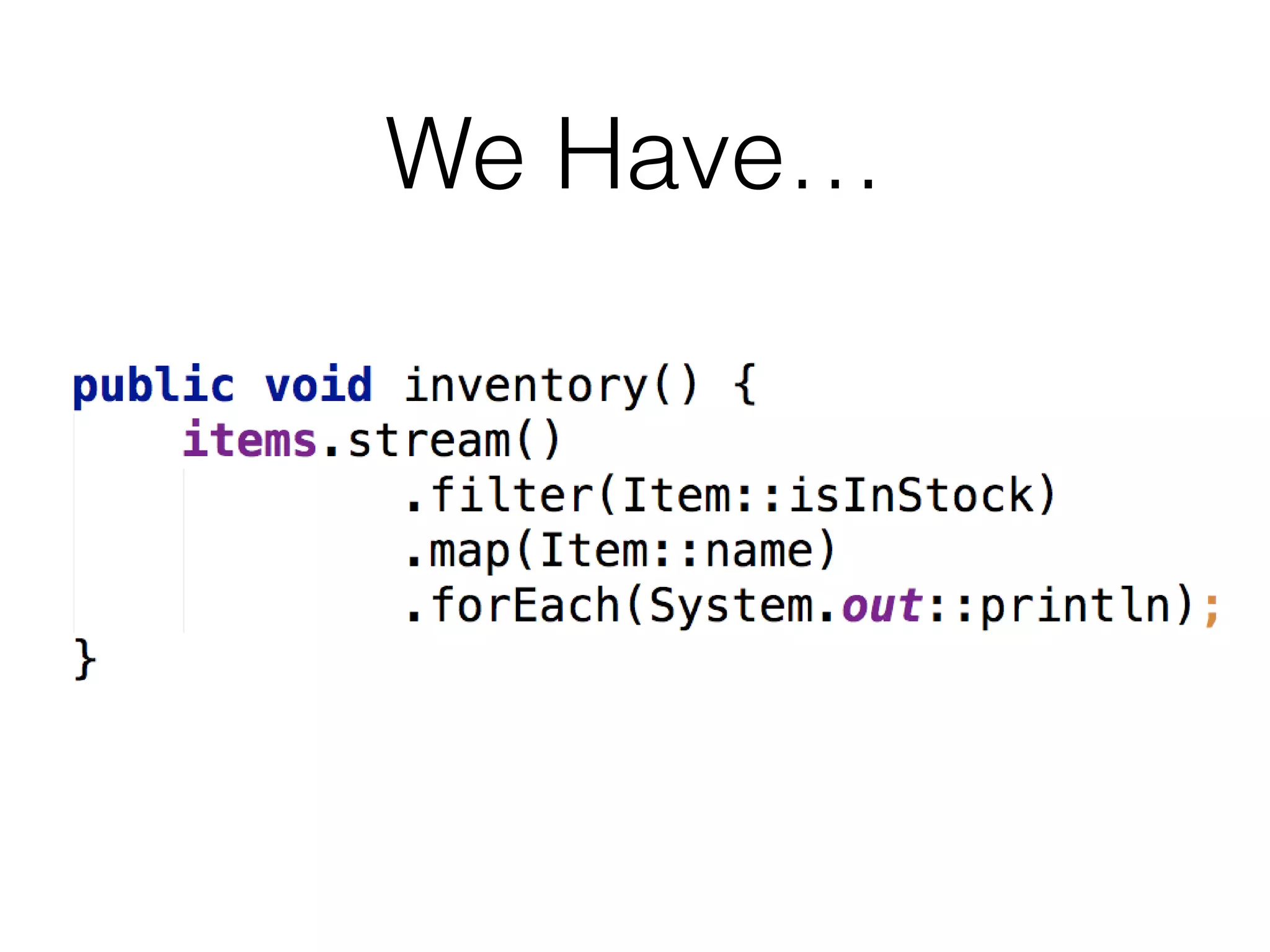
We Have…
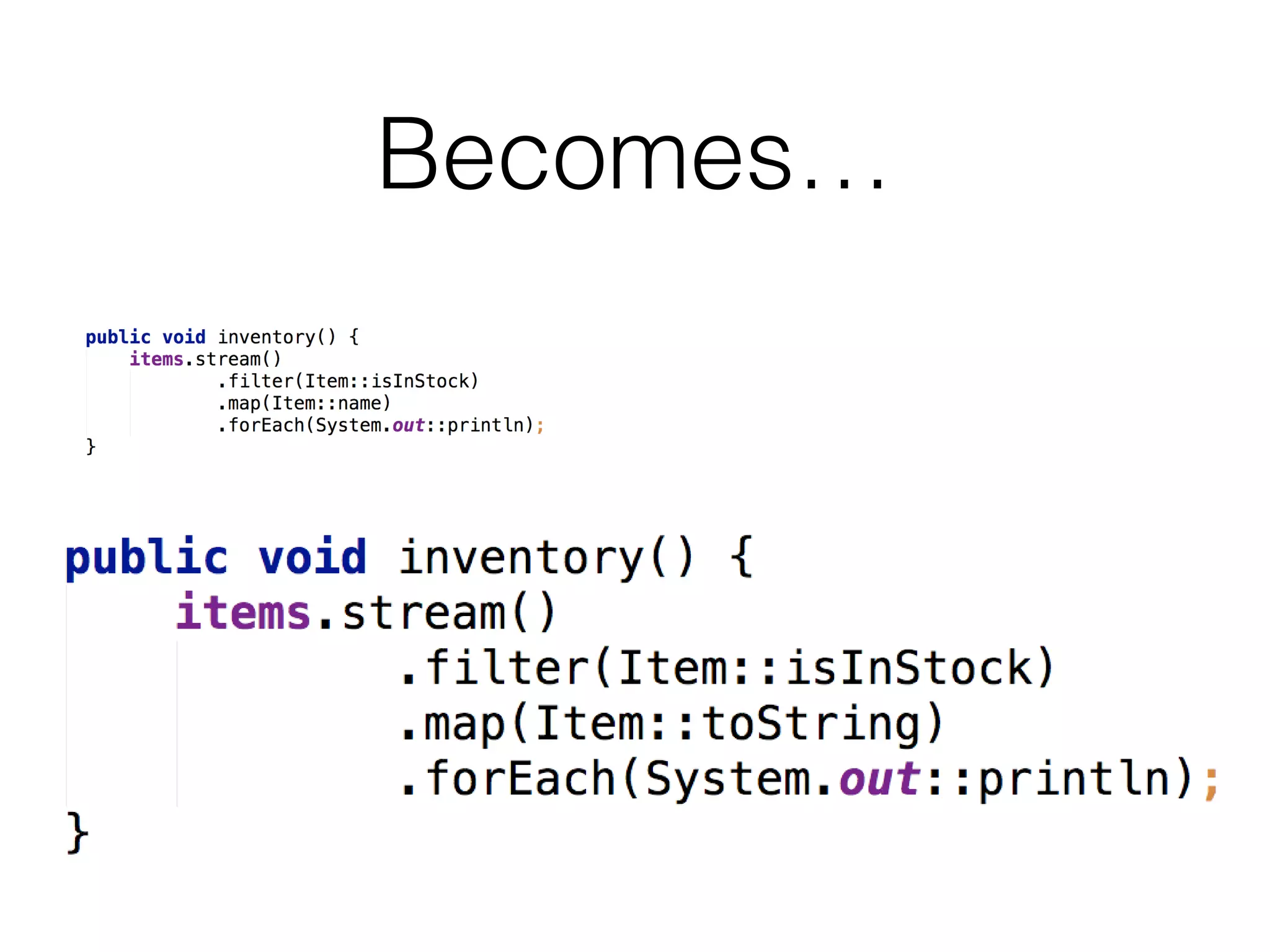
Becomes…
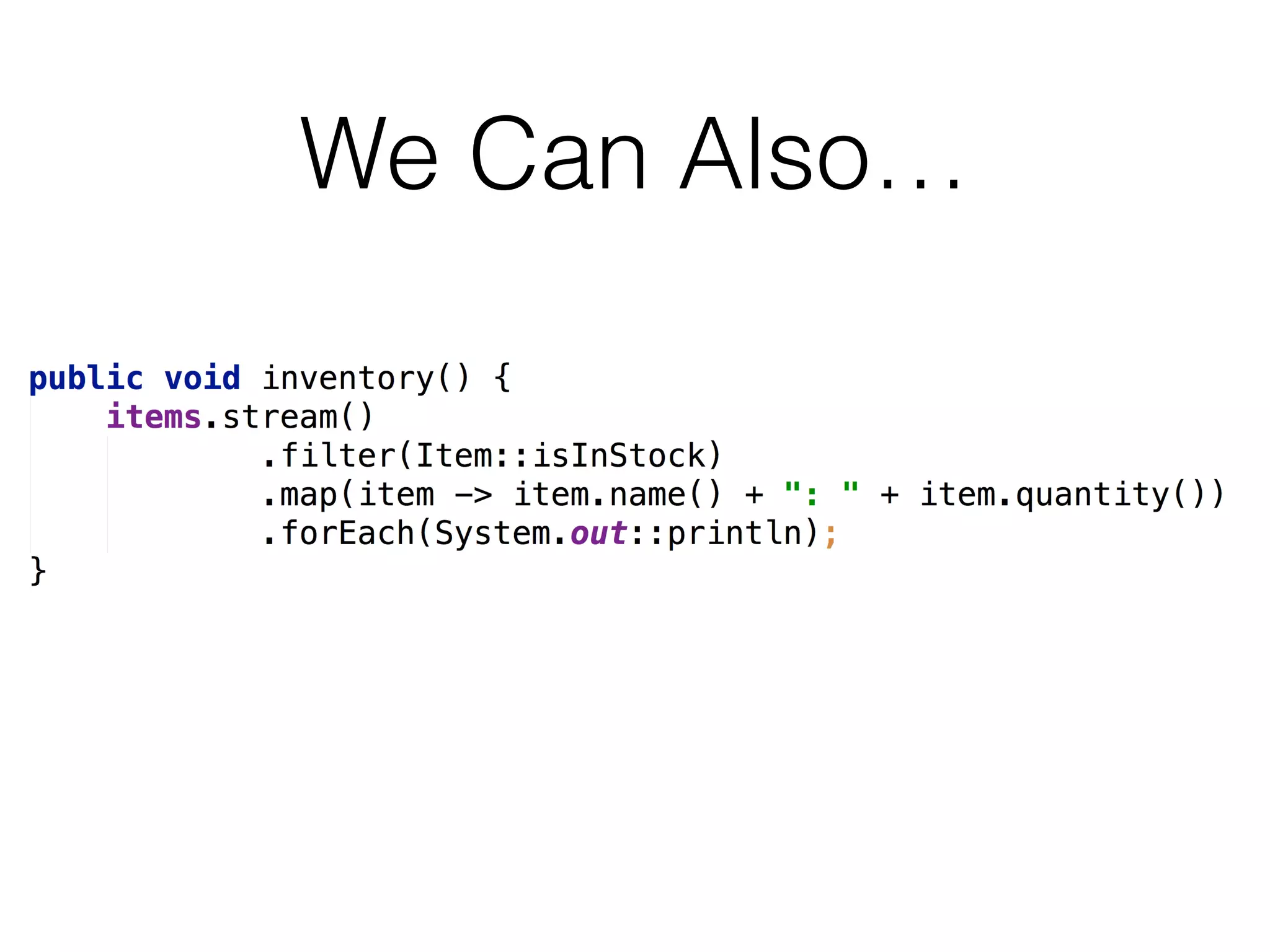
We Can Also…
Task 5 - Print the number
of items in inventory
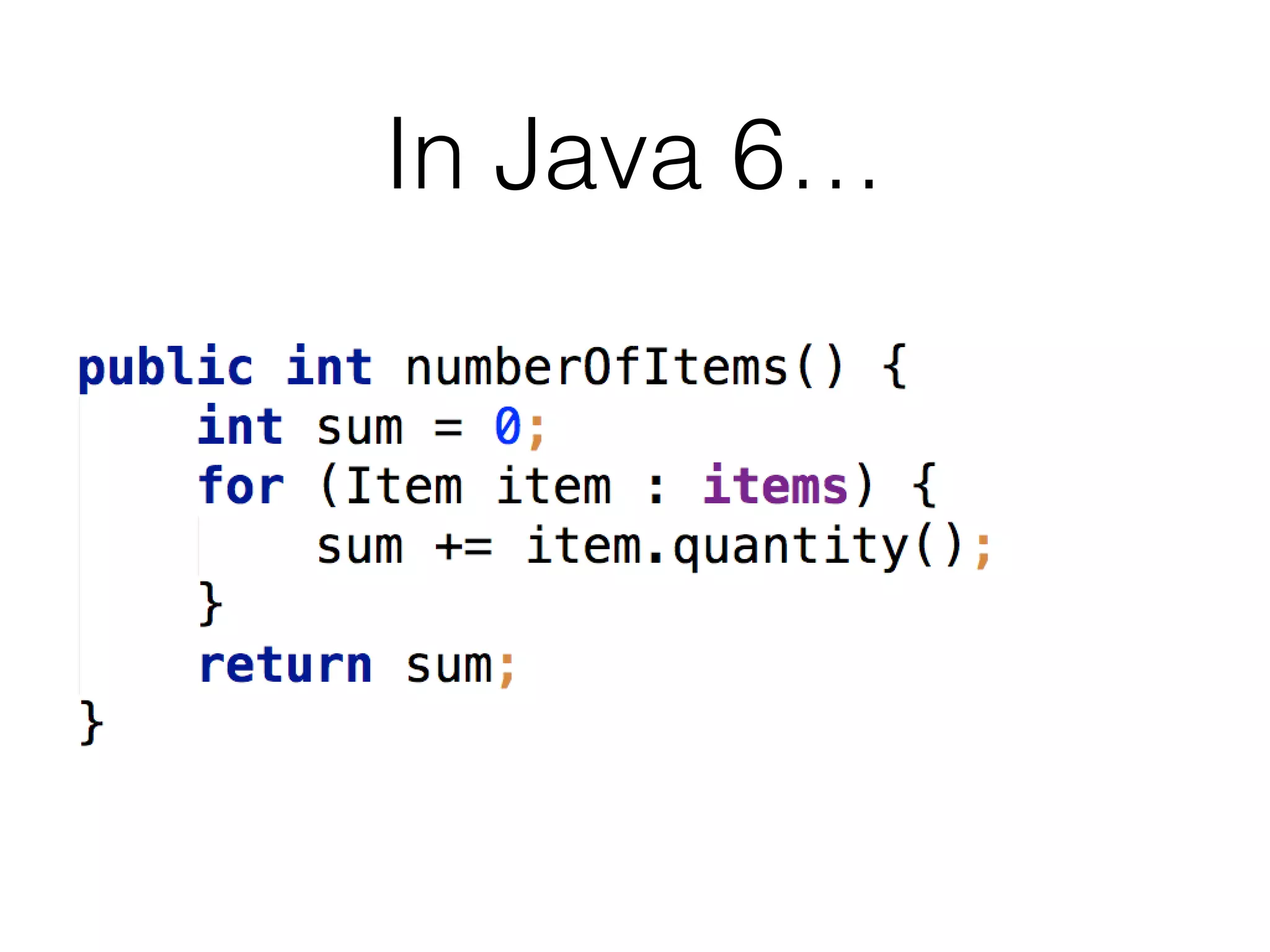
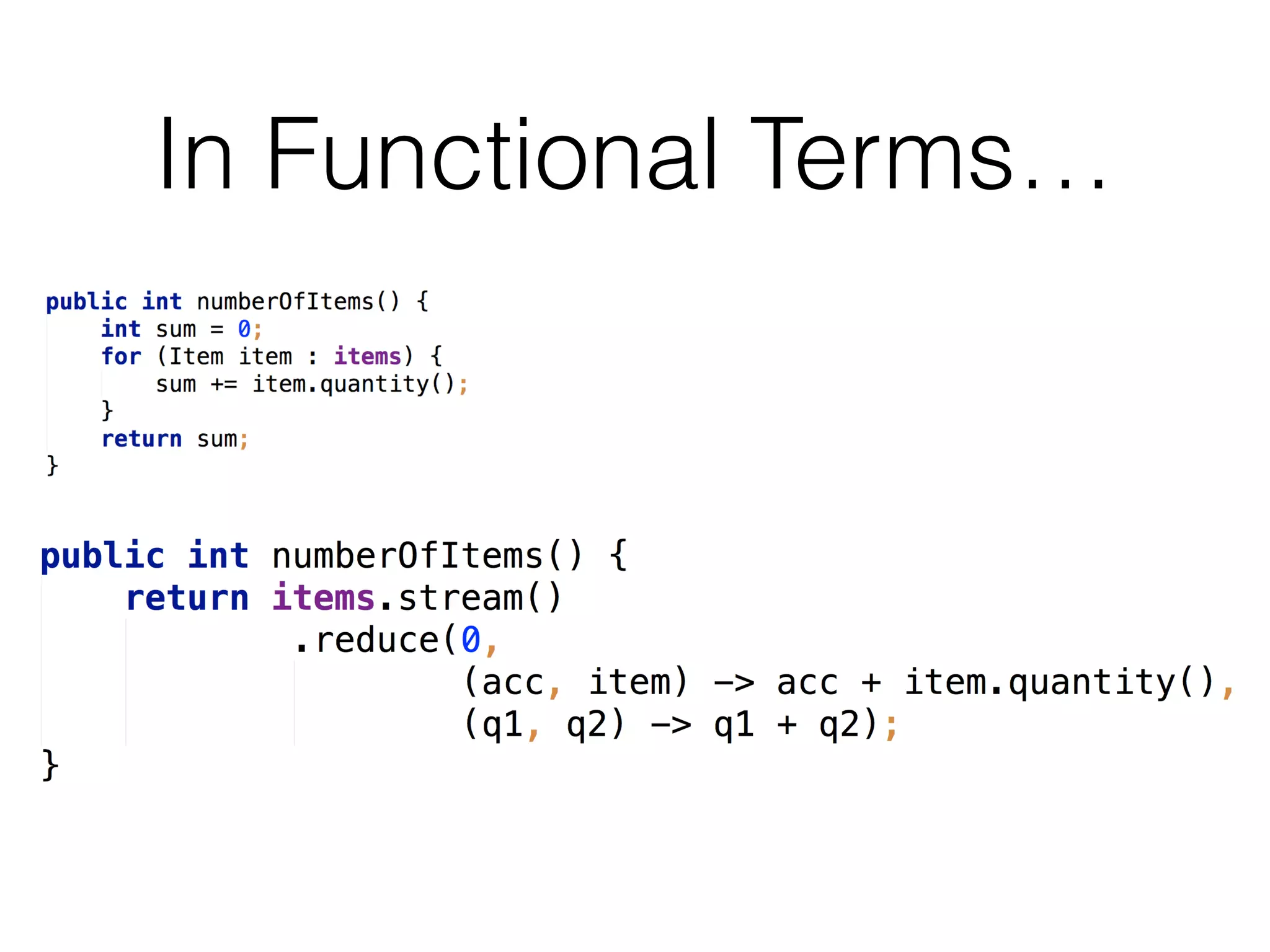
In Java 6…
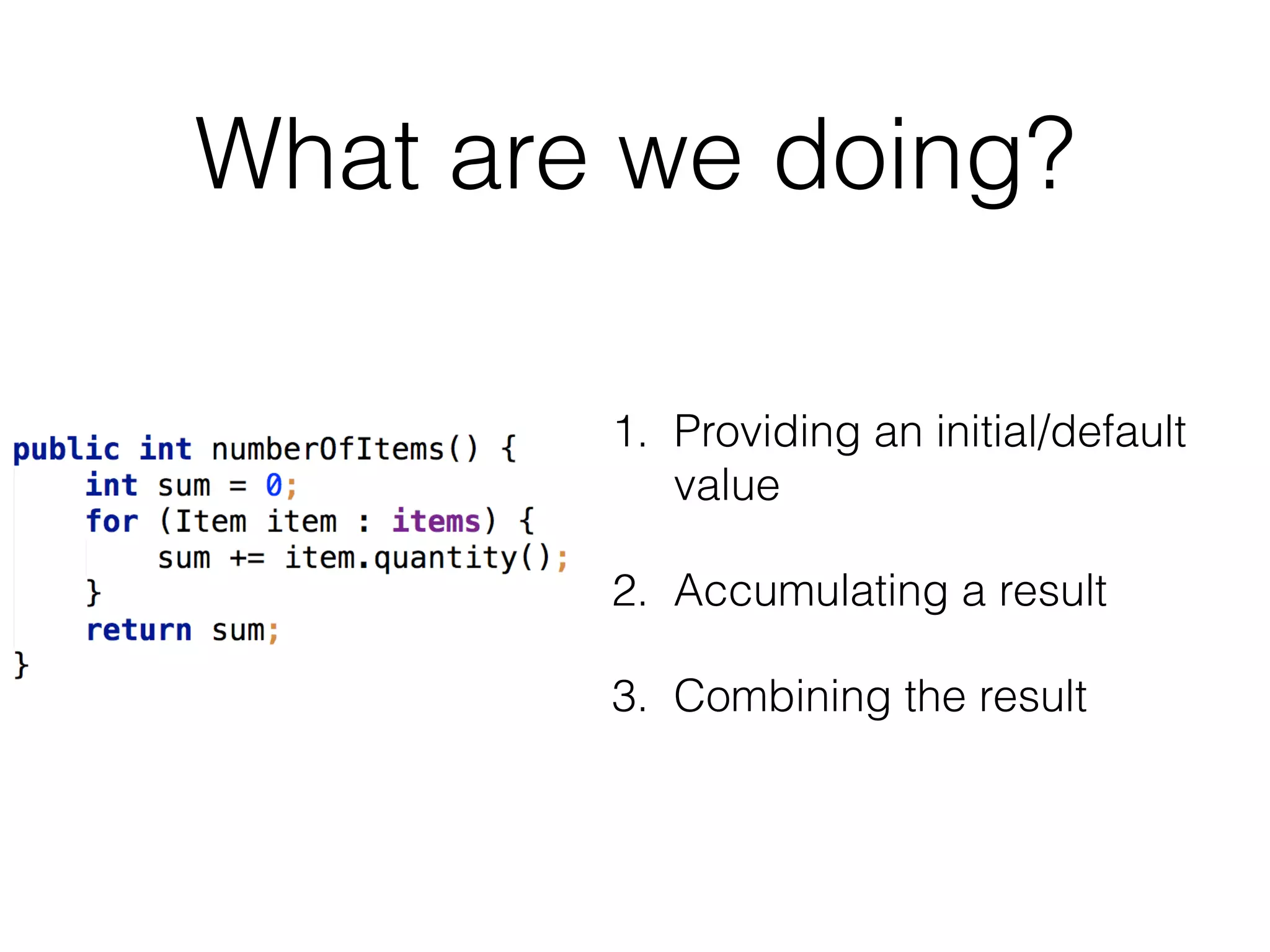
What are we doing?
1. Providing an initial/default
value
2. Accumulating a result
3. Combining the result
In Functional Terms…
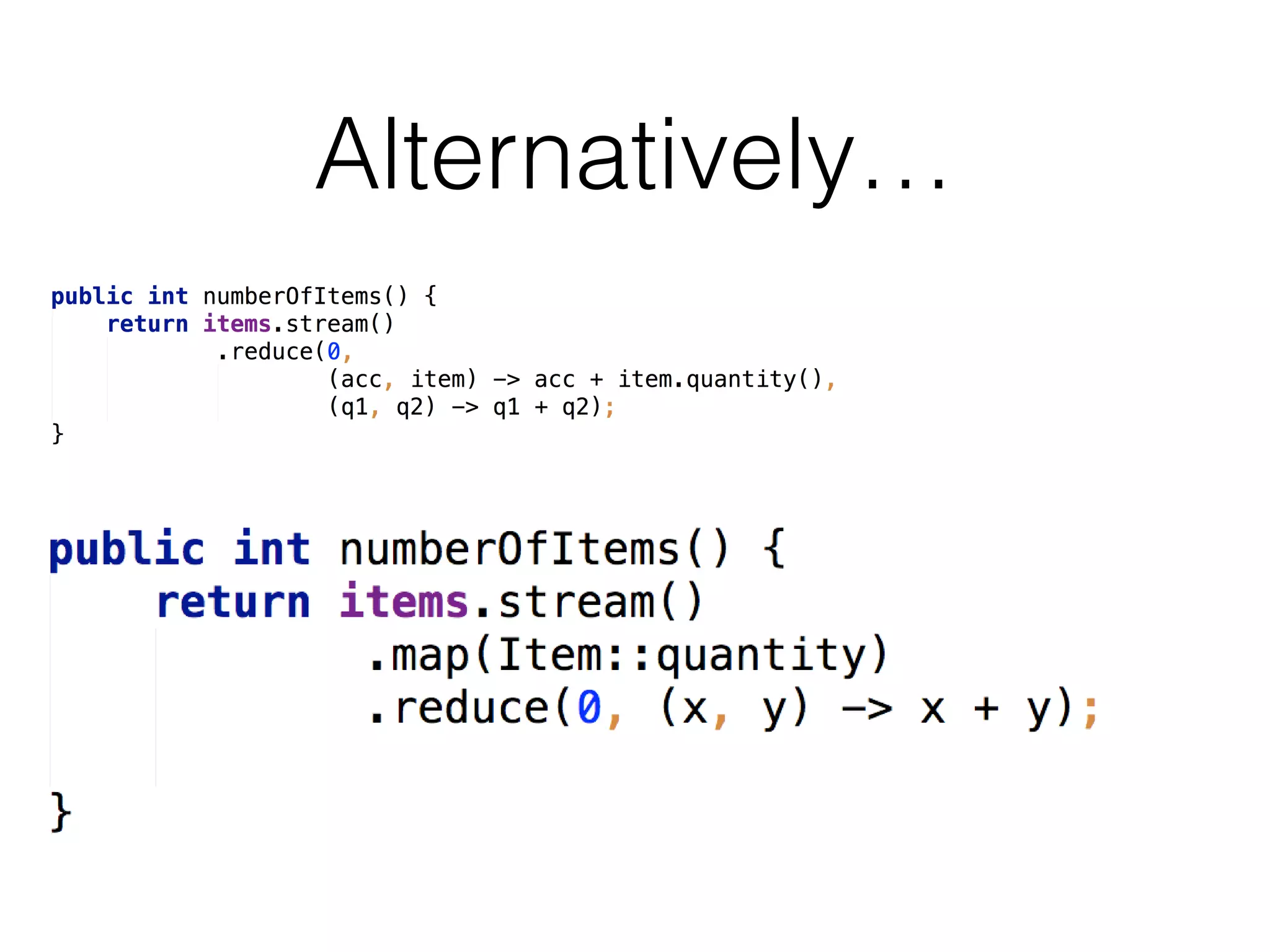
Alternatively…
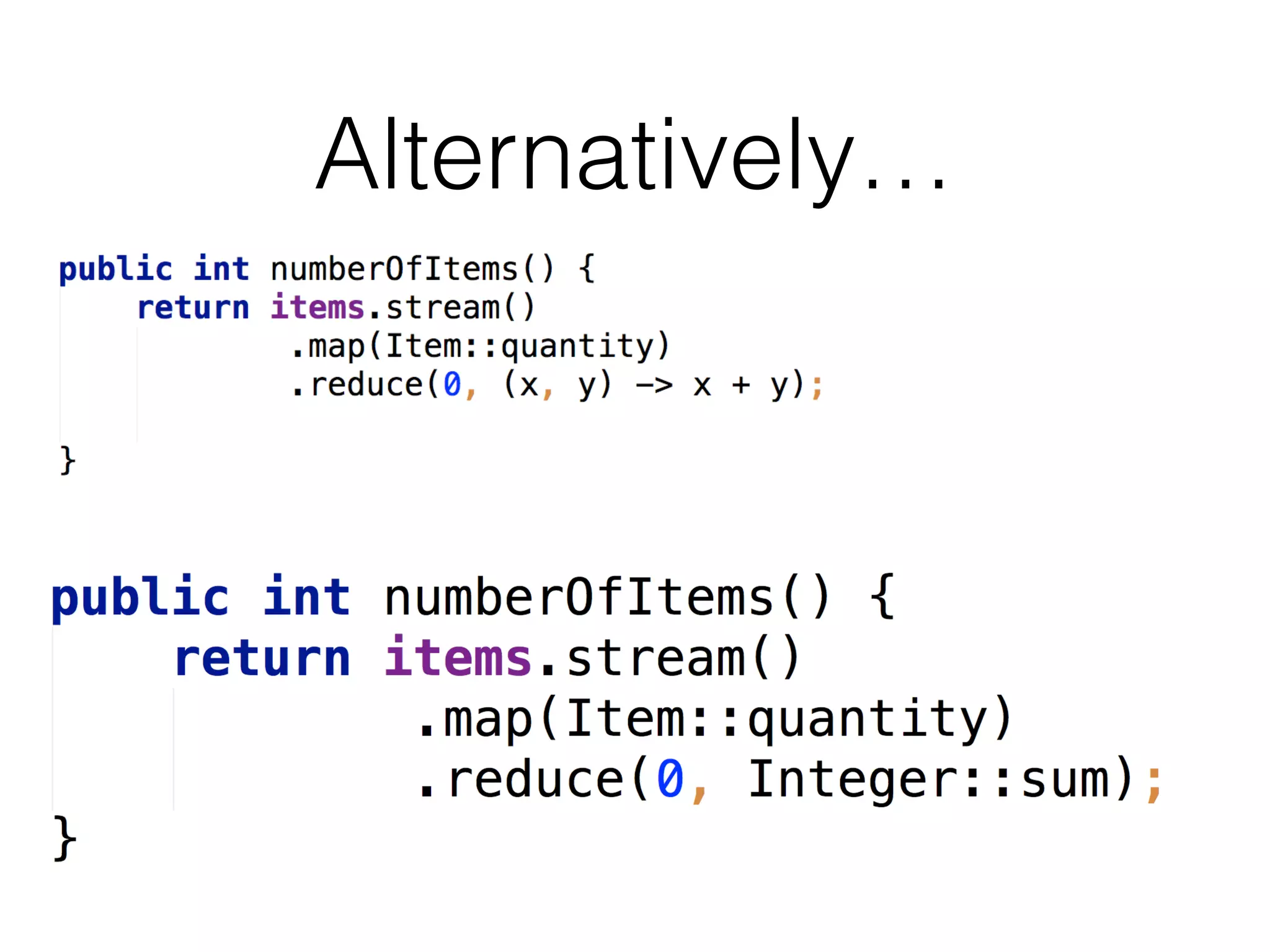
Alternatively…
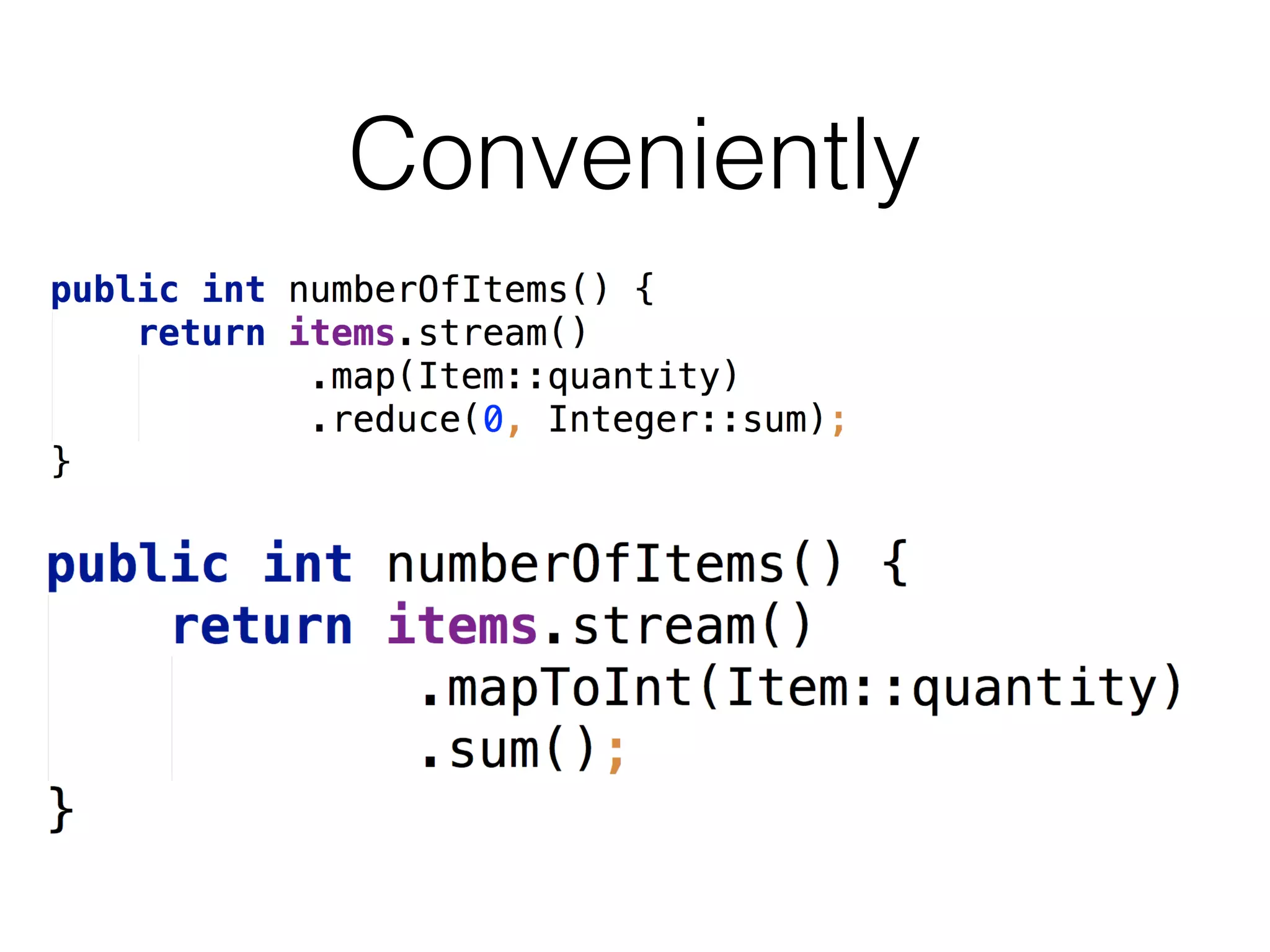
Conveniently
Task 6 - Print number of
items in all our
warehouses
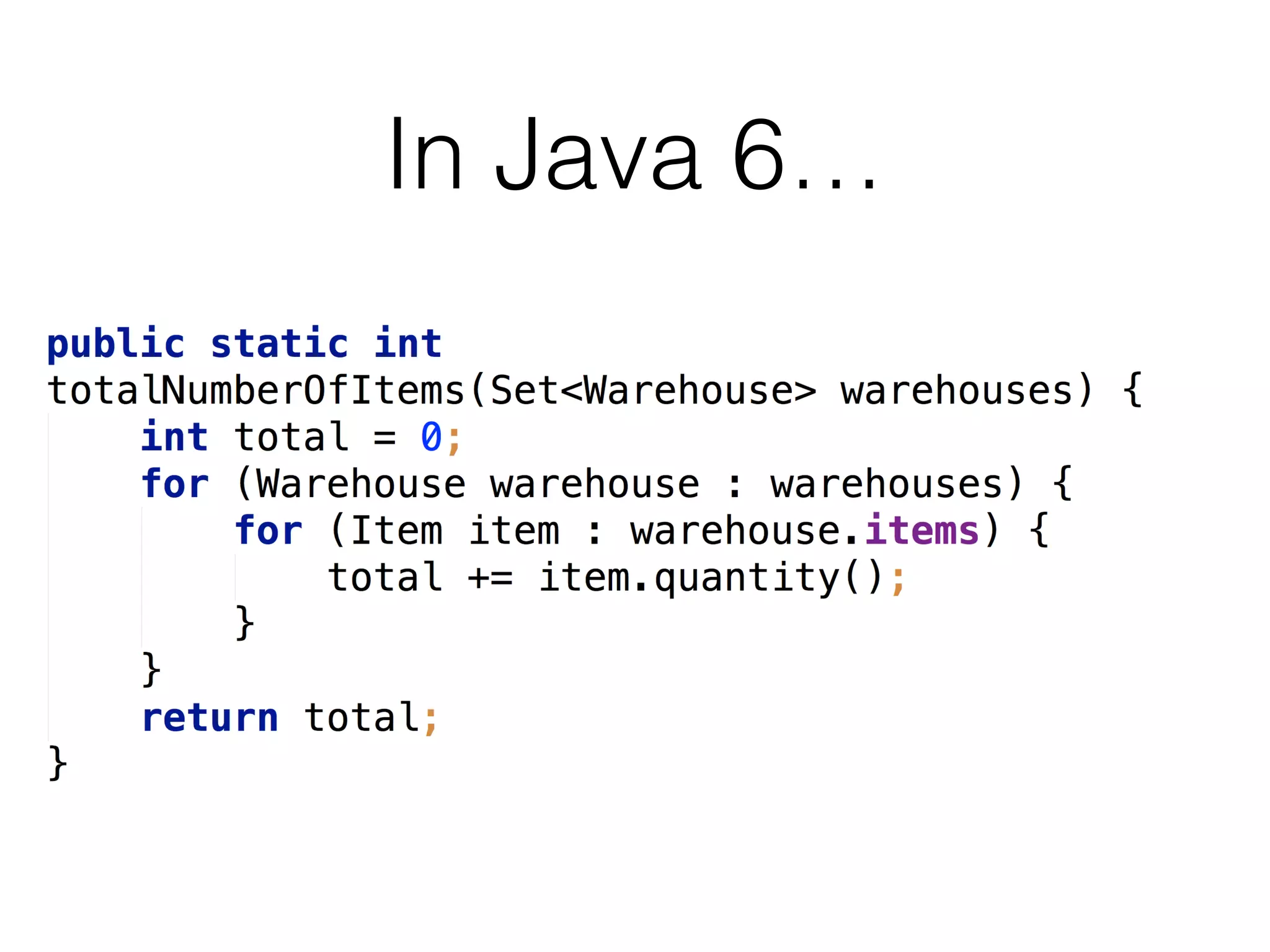
In Java 6…
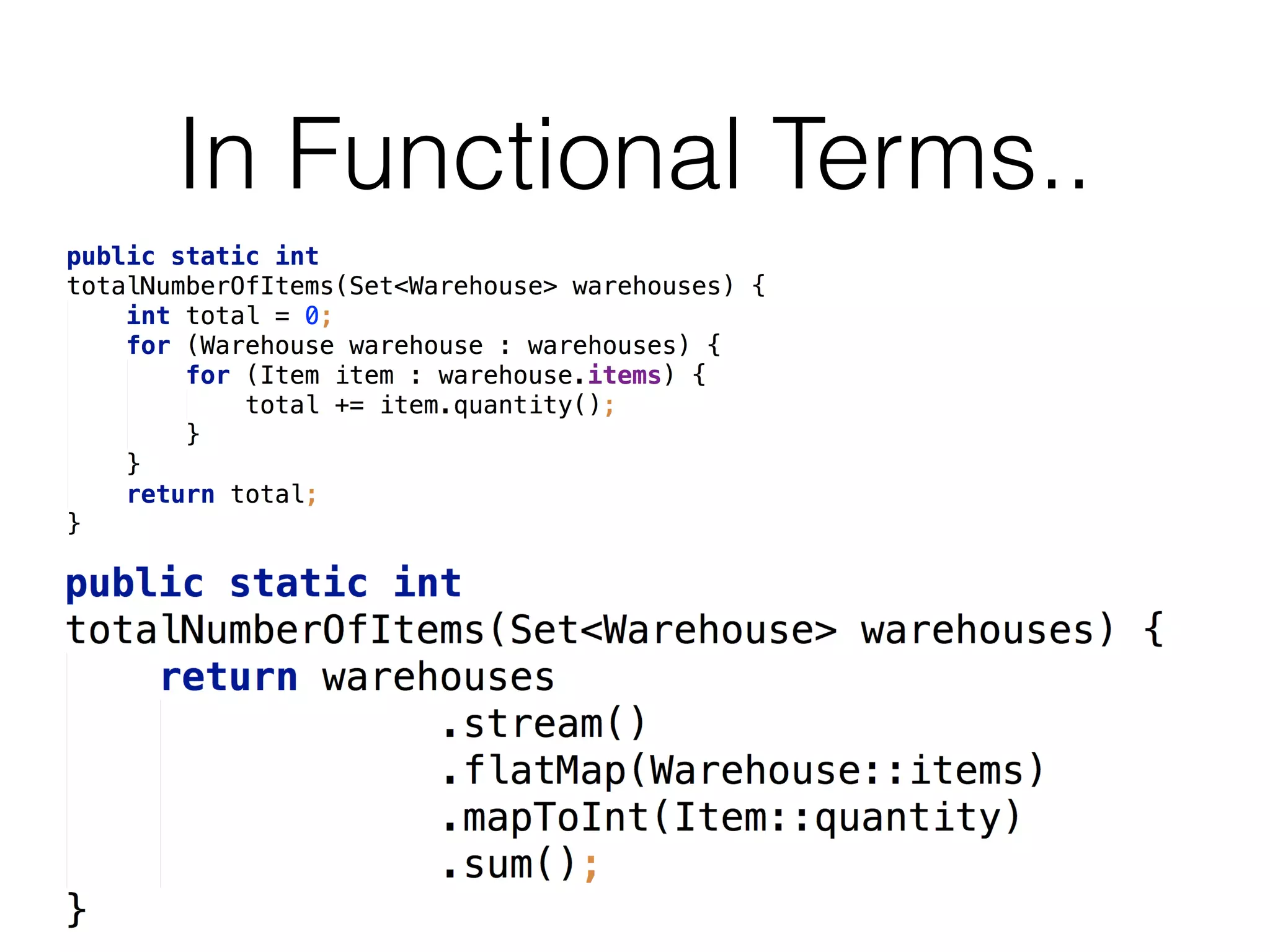
In Functional Terms..
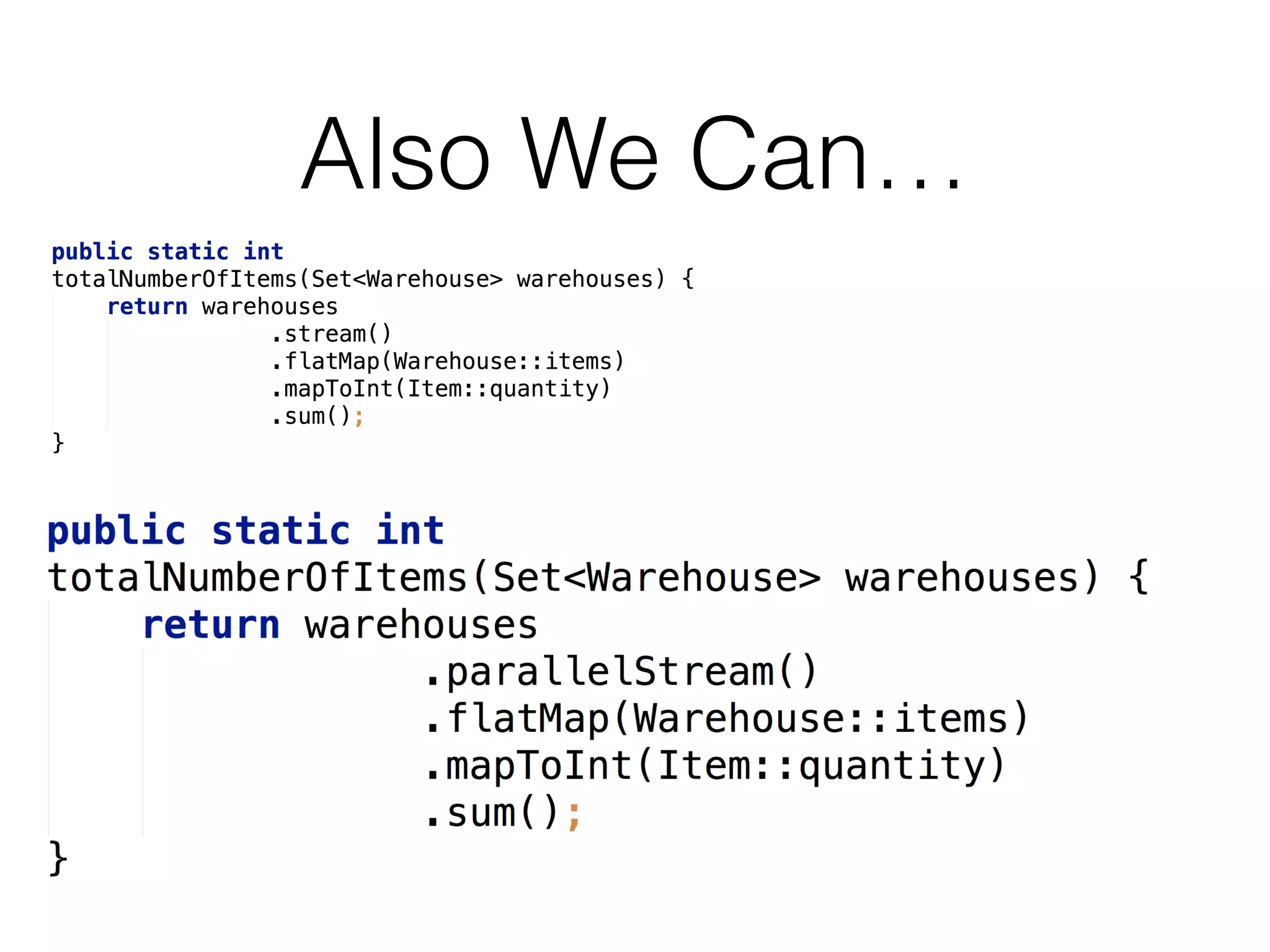
Also We Can…
Task 7 - Print the item
with the least amount
across warehouses
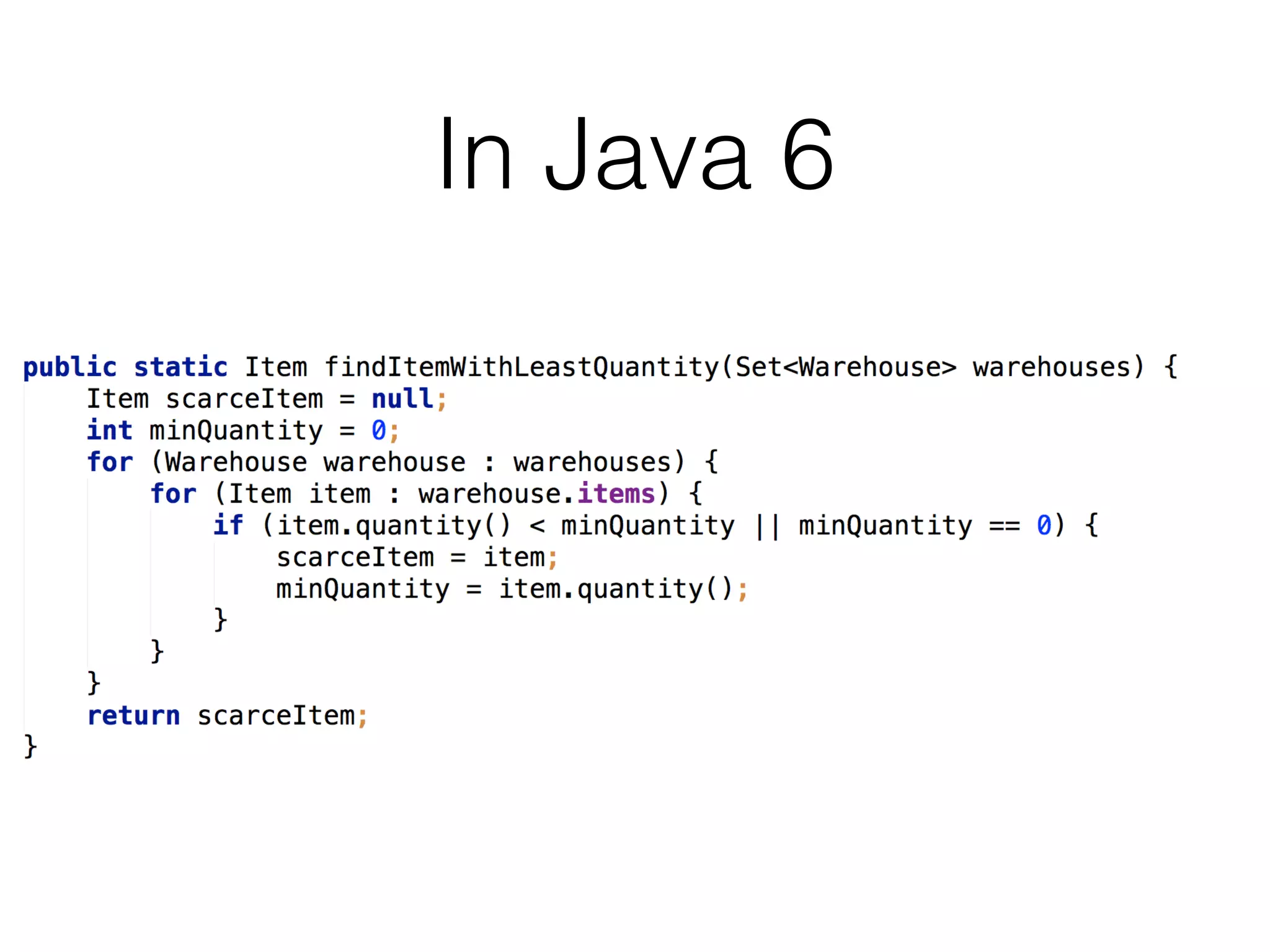
In Java 6
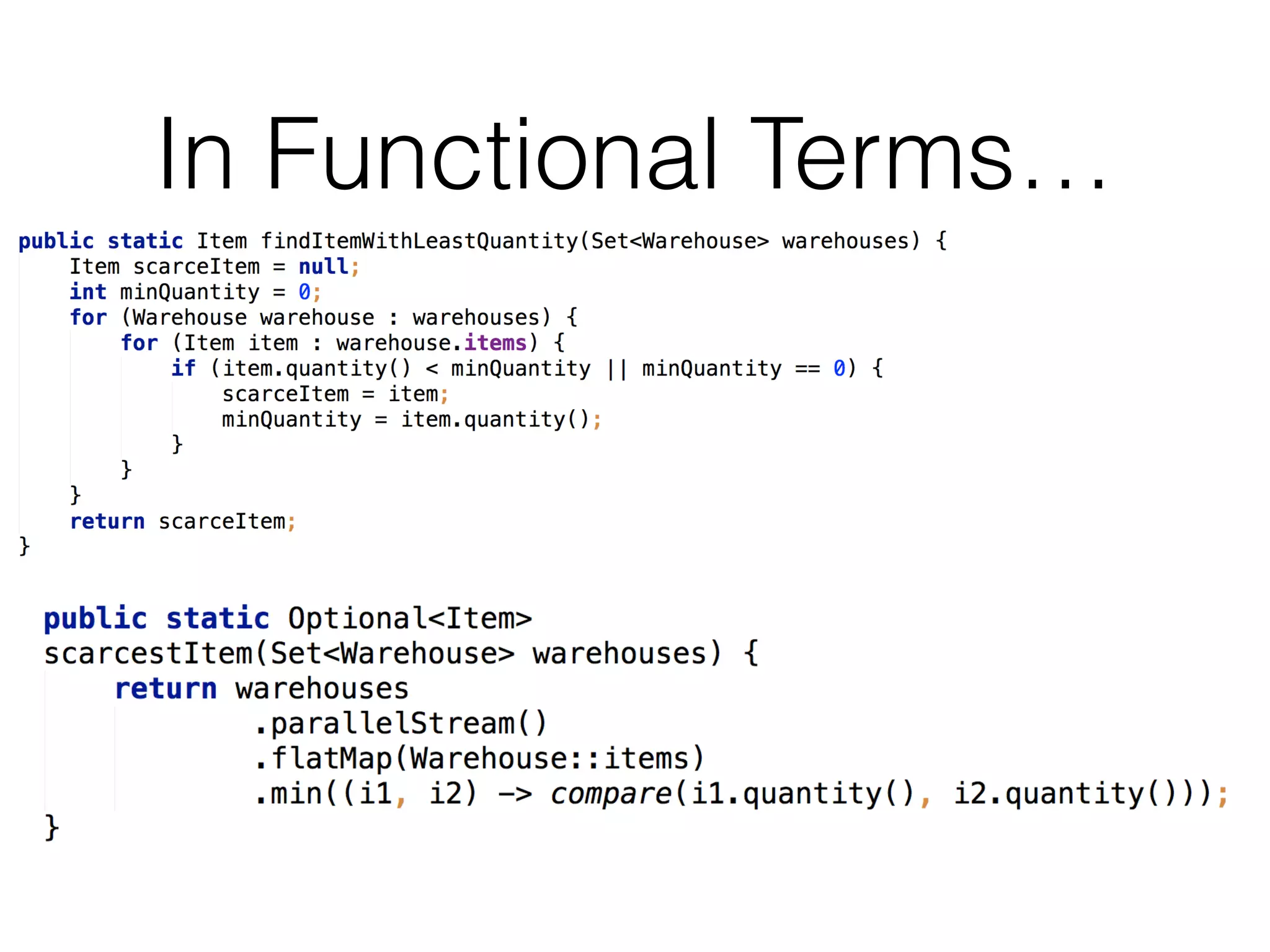
In Functional Terms…
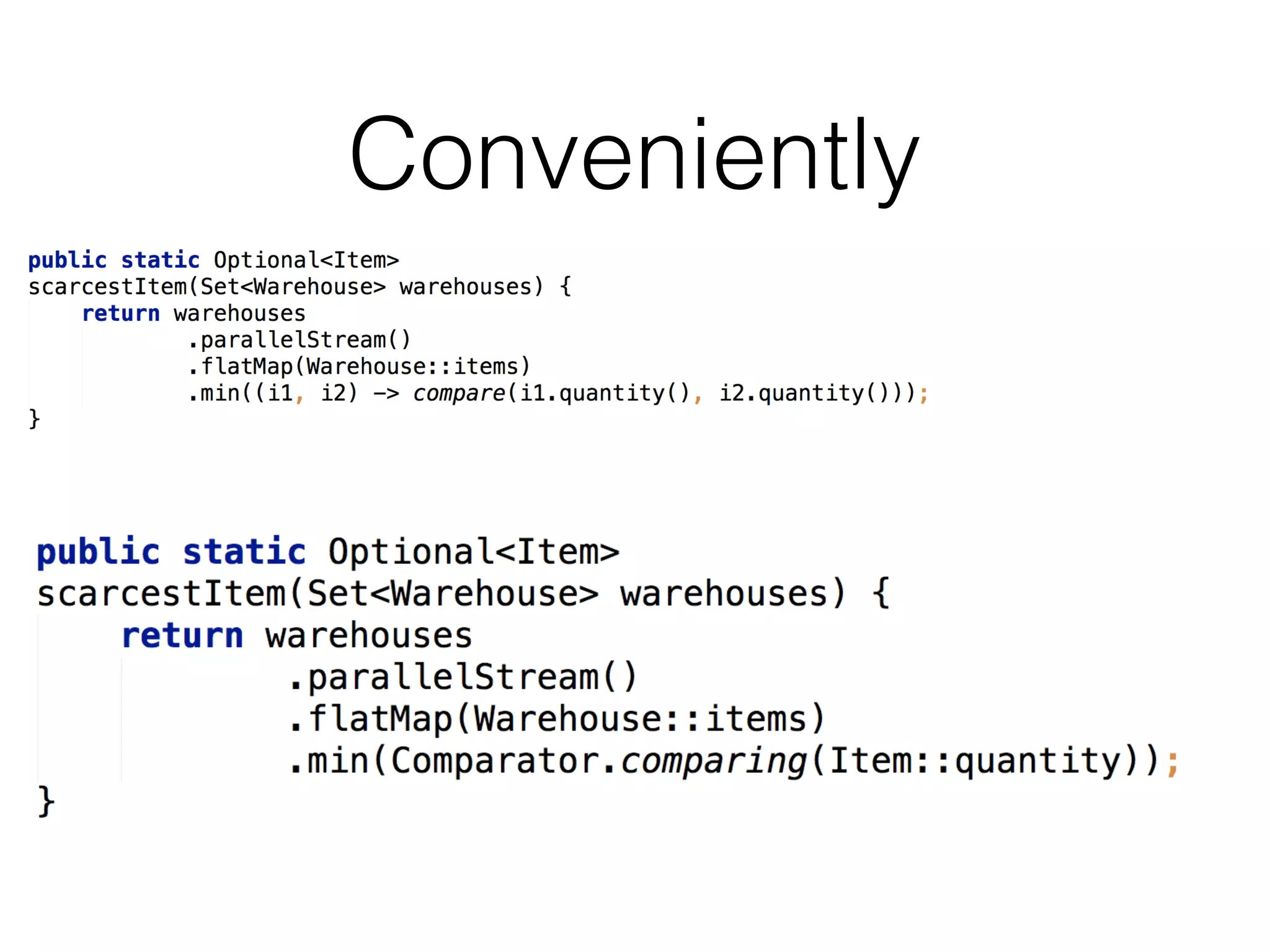
Conveniently
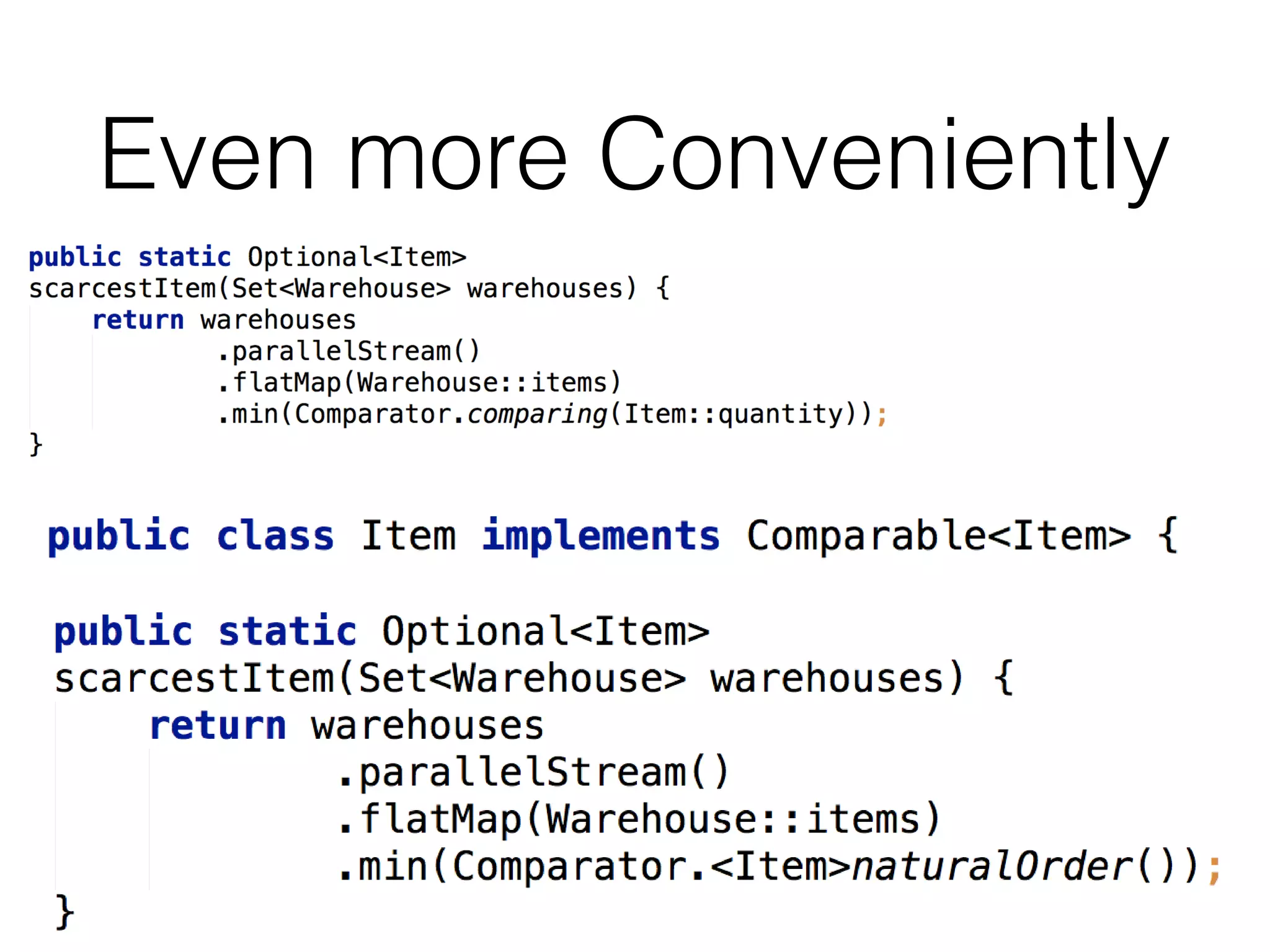
Even more Conveniently
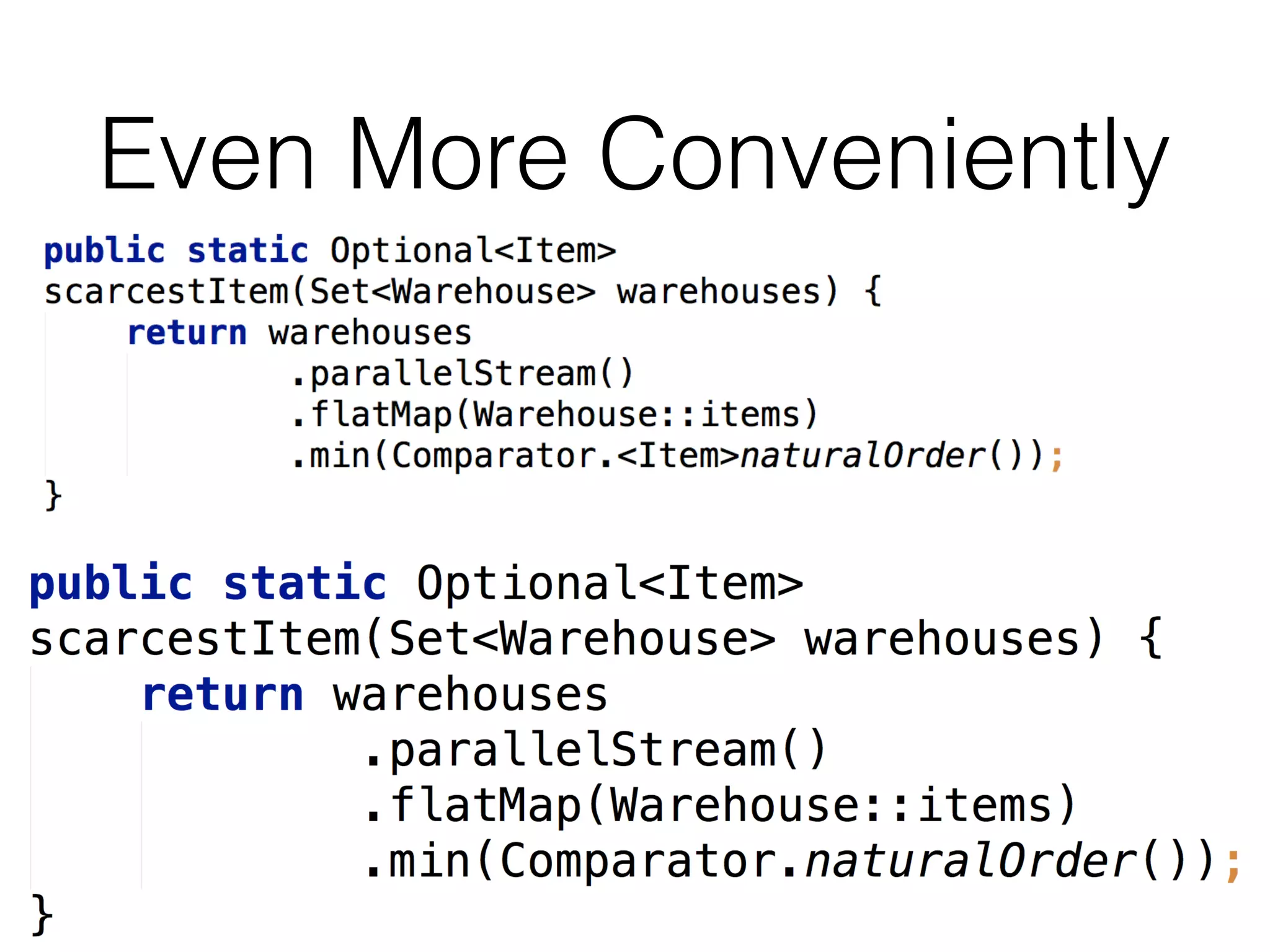
Even More Conveniently
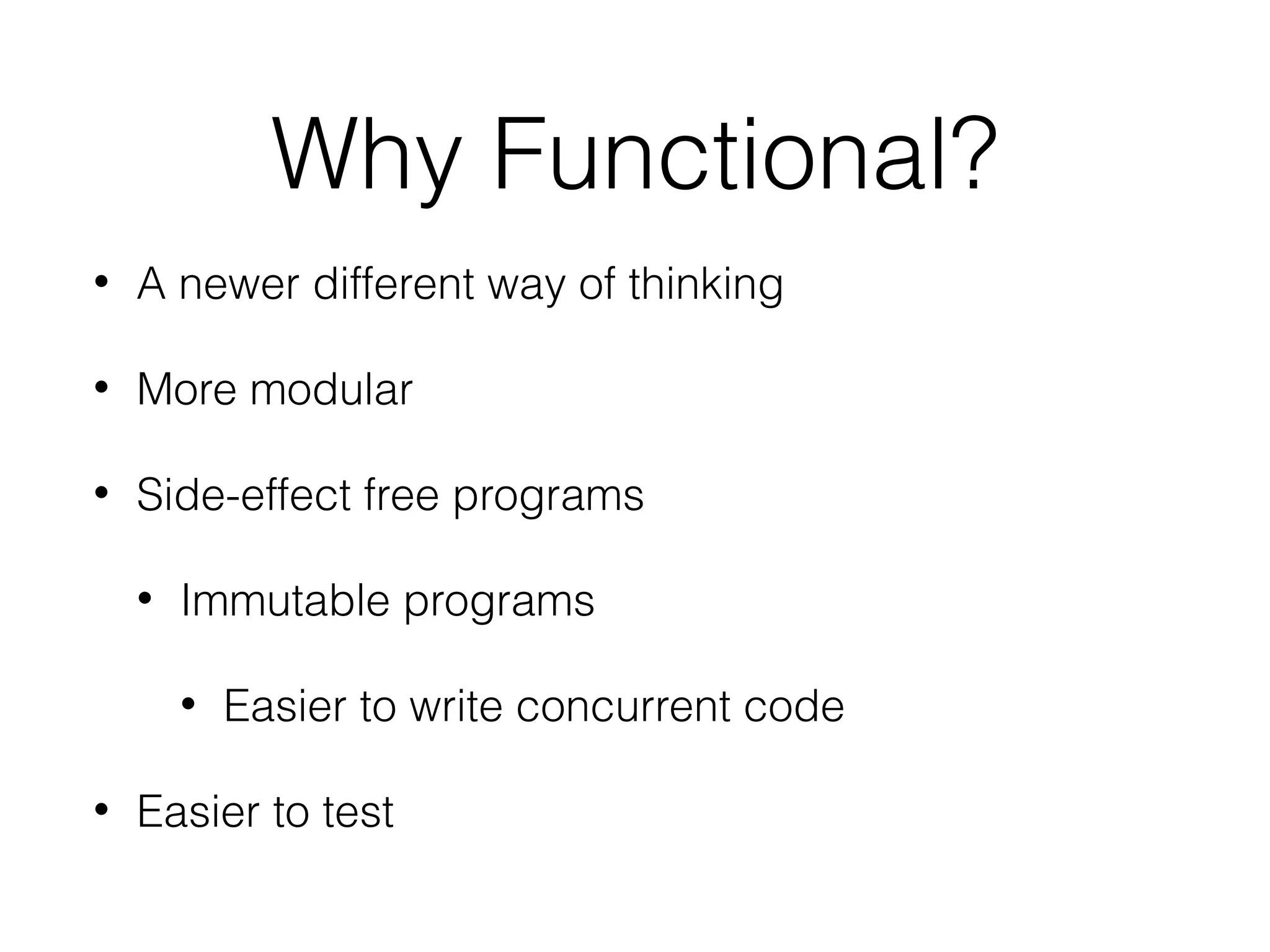
Why Functional?
•

A newer different way of thinking

•

More modular

•

Side-effect free programs
•

Immutable programs
•

•

Easier to write concurrent code

Easier to test
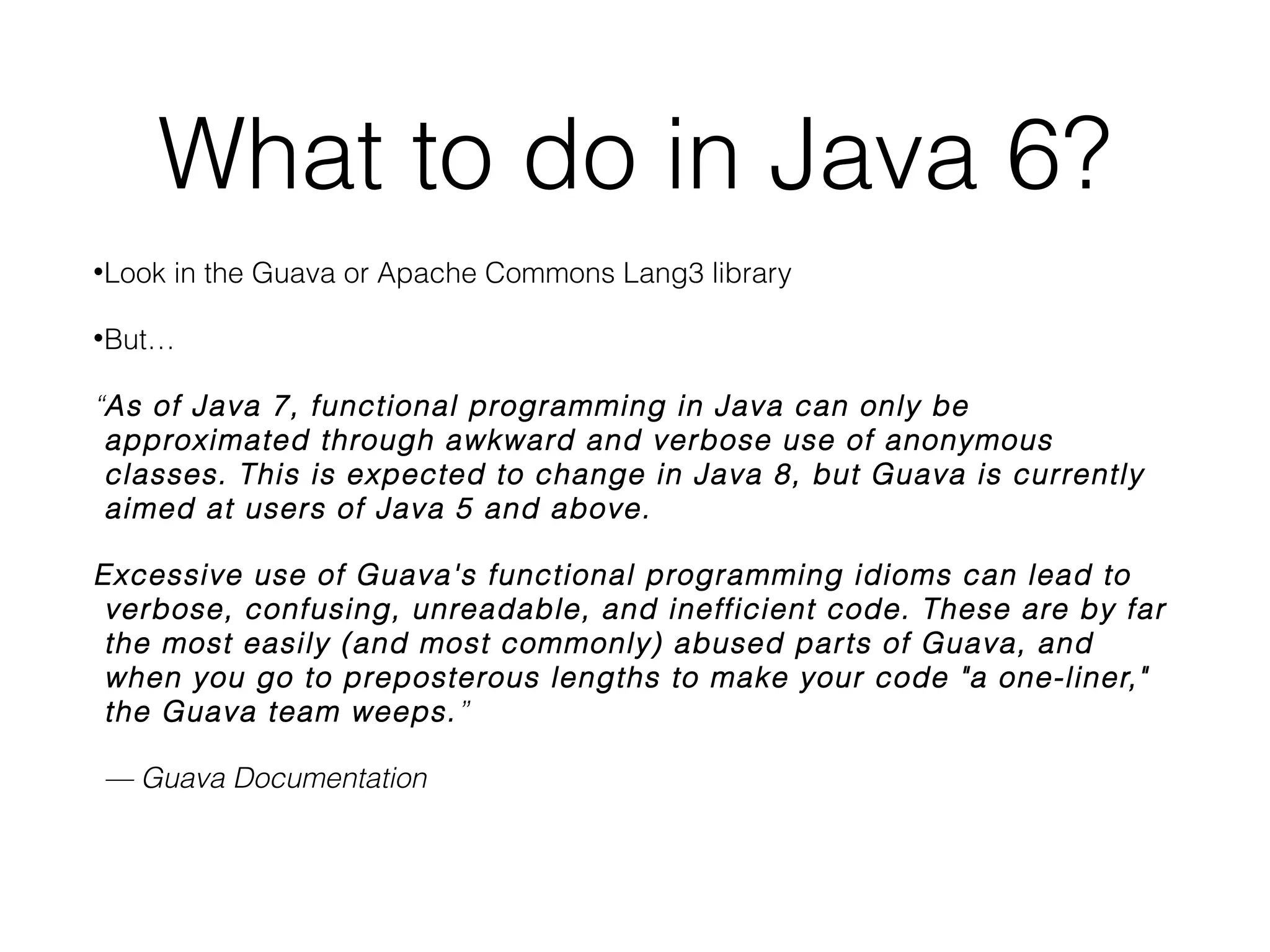
What to do in Java 6?
•

Look in the Guava or Apache Commons Lang3 library

•

But…

“As of Java 7, functional programming in Java can only be approximated
through awkward and verbose use of anonymous classes. This is expected to
change in Java 8, but Guava is currently aimed at users of Java 5 and above.!
Excessive use of Guava's functional programming idioms can lead to verbose,
confusing, unreadable, and inefficient code. These are by far the most easily
(and most commonly) abused parts of Guava, and when you go to
preposterous lengths to make your code "a one-liner," the Guava team weeps.”
— Guava Documentation
What to do in Java 6
•

First — Stop Whining

•

Prefer final variables

•

Minimize the use of void methods

•

Avoid use of mutable globals (statics)

•

Avoid returning nulls

•

Read Effective Java - And apply learnings!
Thank You!

Functional Programming in Java