INTRODUCTION TO A DETECTIVE STORY
 
1. The detective must be  memorable .
Fictional detectives are expected to be both  clever  and a bit out of the ordinary.  They must have some small  habit ,  mannerism ,  eccentricity ,  interest ,  talent  – anything that sets them apart from the crowd.
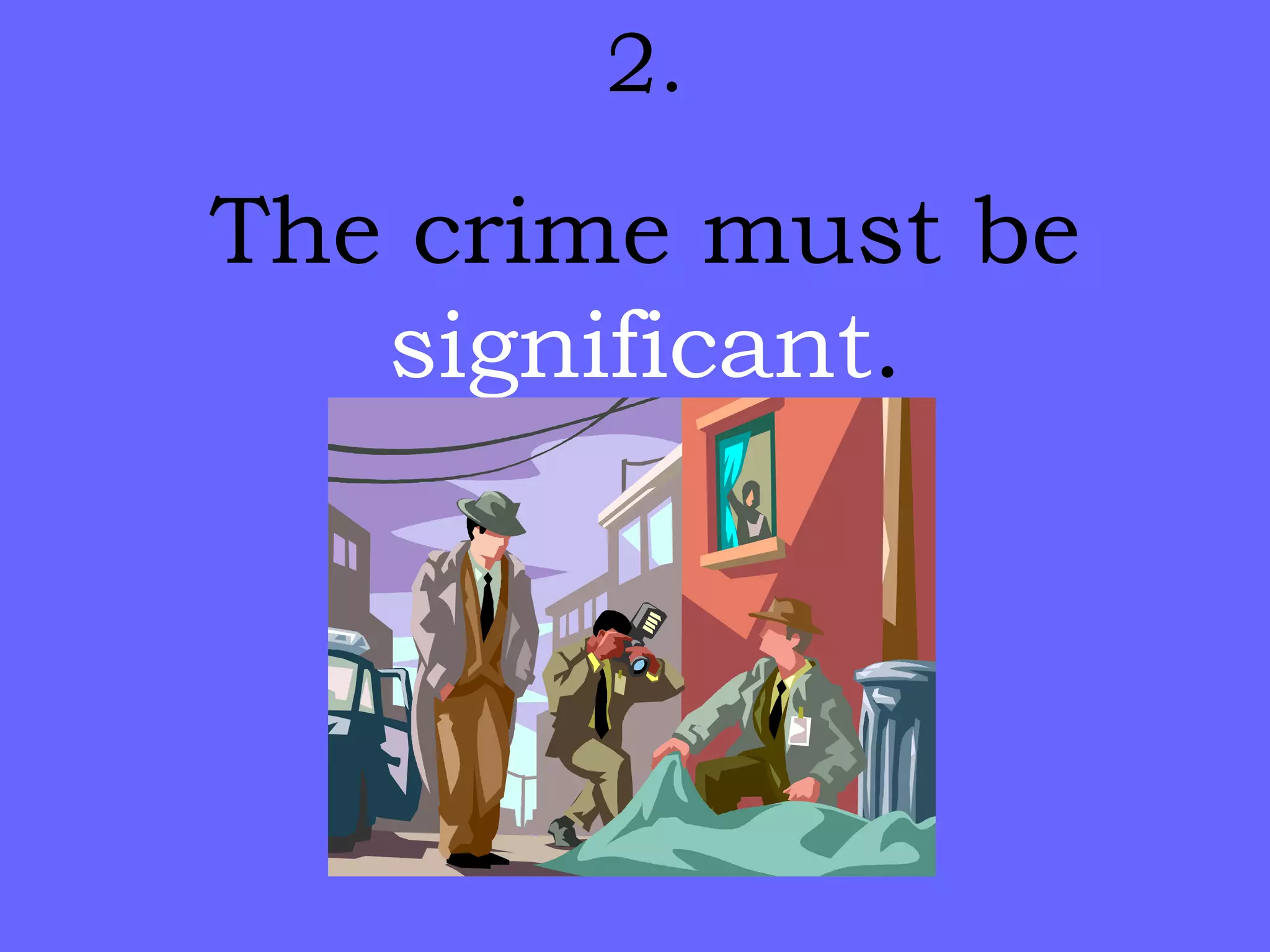
2. The crime must be  significant .
Traditionally, the detective novel is constructed around a  murder  or a  great   theft .  Murder is a crime that cannot be reversed or made amends for;  thus, it is a crime  worth   the detective’s (and the reader’s) time and efforts  to solve.
3. The criminal must be a  worthy opponent .
In real life, crimes are committed by ordinary, everyday, sometimes dull and stupid people. However, if fictional detectives are to show off their considerable skills, they must match wits with  adversaries of equal cleverness .  The mind of the criminal is often the  intellectual equal  of the detective’s.  The conflict becomes  a battle of intellects   between the detective, his/her opponent,  and  the reader.
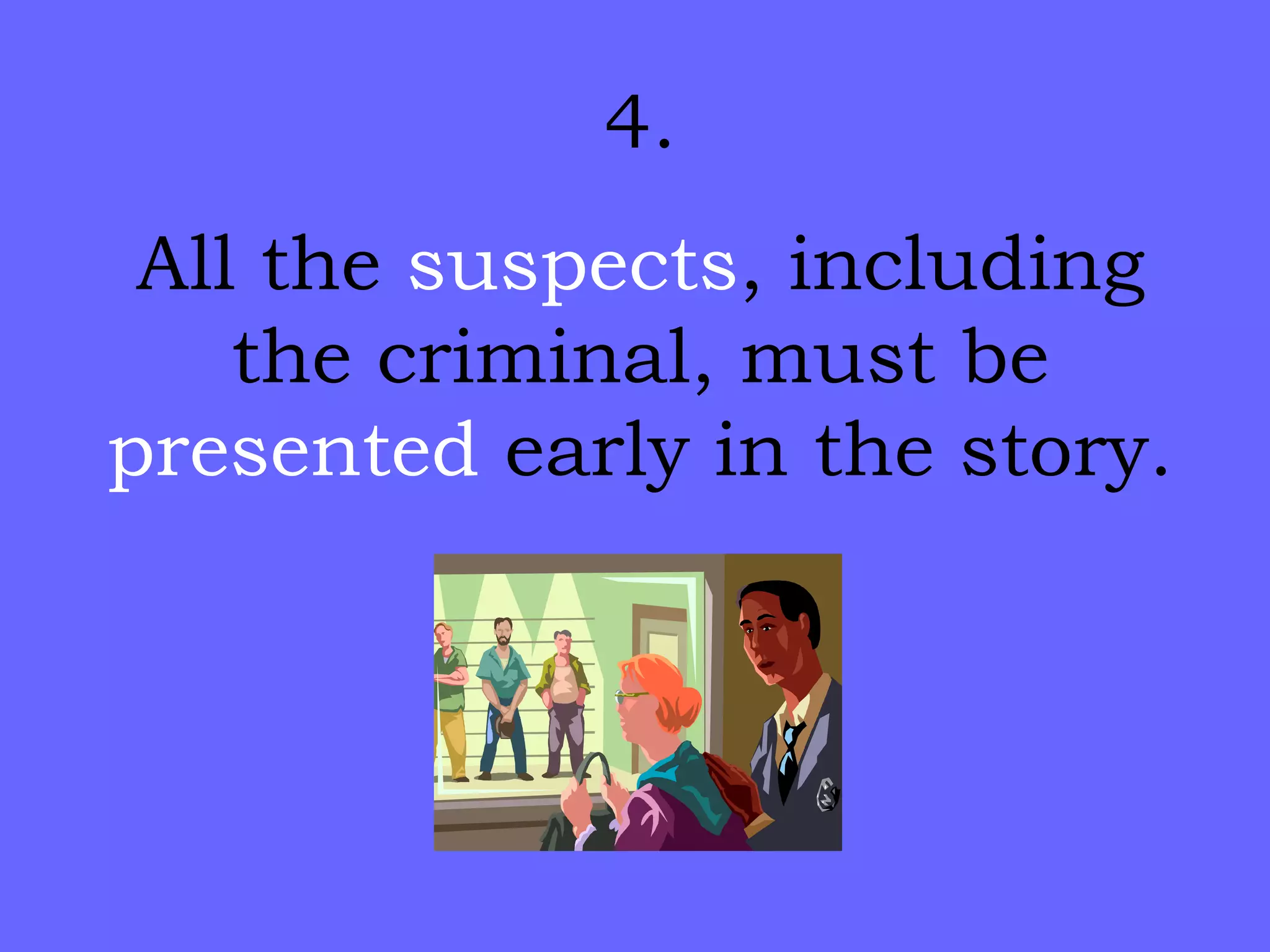
4. All the  suspects , including the criminal, must be  presented  early in the story.
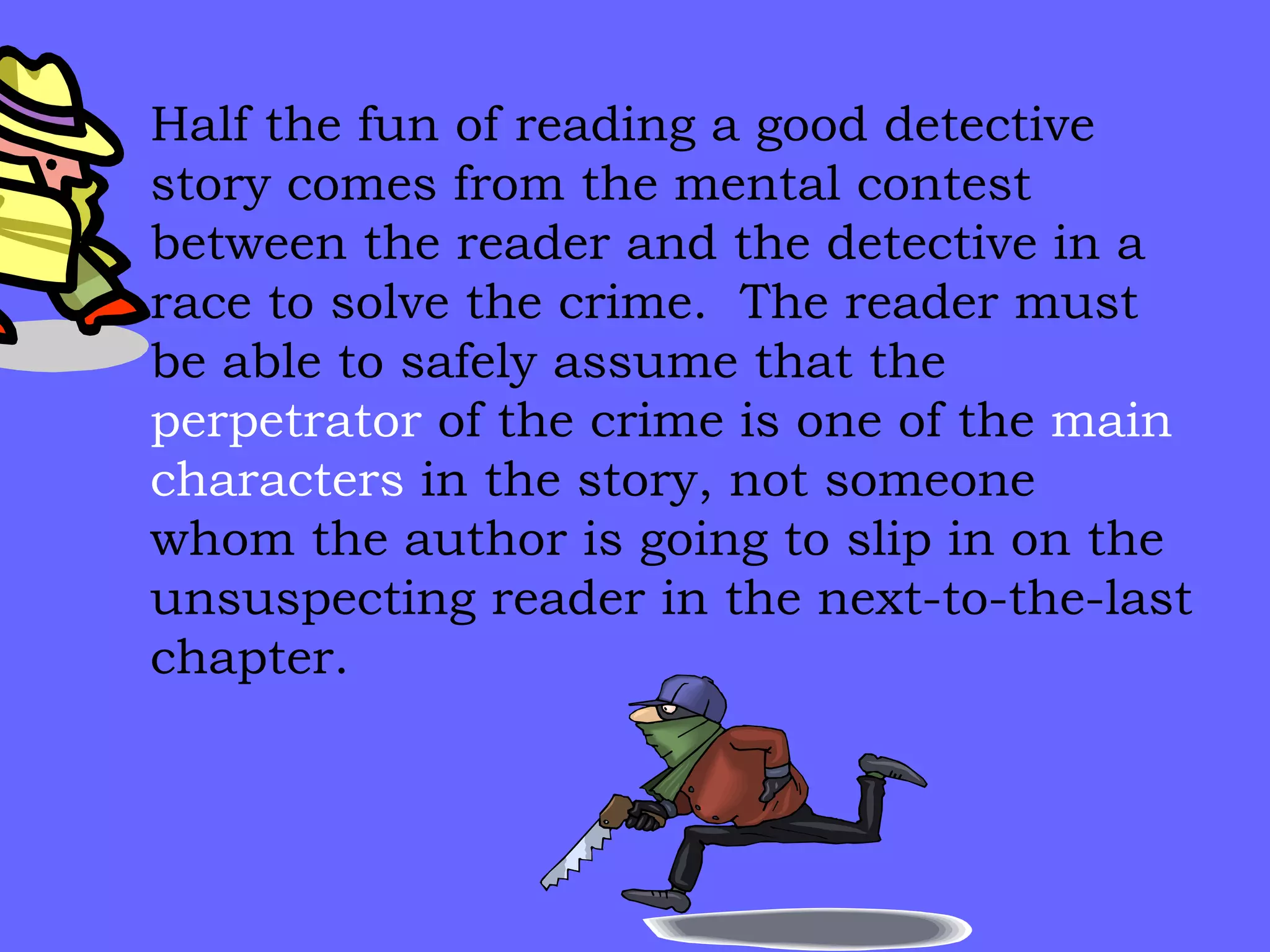
Half the fun of reading a good detective story comes from the mental contest between the reader and the detective in a race to solve the crime.  The reader must be able to safely assume that the  perpetrator  of the crime is one of the  main   characters  in the story, not someone whom the author is going to slip in on the unsuspecting reader in the next-to-the-last chapter.
5. All  clues  discovered by the detective must be  made available  to the reader.
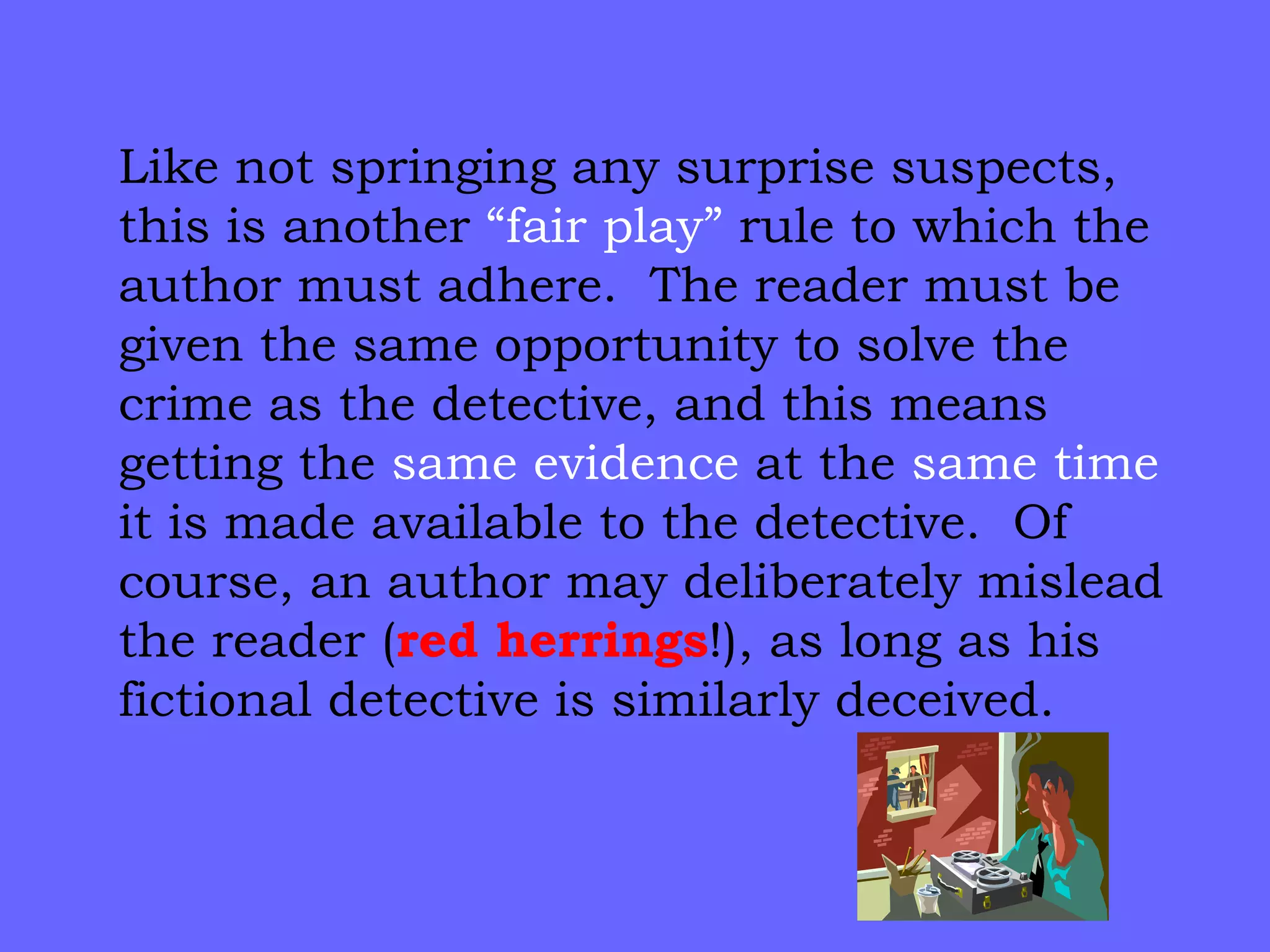
Like not springing any surprise suspects, this is another  “fair play”  rule to which the author must adhere.  The reader must be given the same opportunity to solve the crime as the detective, and this means getting the  same evidence  at the  same time  it is made available to the detective.  Of course, an author may deliberately mislead the reader ( red   herrings !), as long as his fictional detective is similarly deceived.
6. The  solution  must appear  logical  and  obvious  when the detective explains how the crime was solved.
The reader must be convinced that he could have come to exactly the same conclusion as the detective.  In the end, the reader  must see  how all the little tidbits of information fit together like so many pieces of a  jigsaw puzzle .  It is for this reason that detective stories are so appealing.
INTRODUCTION TO A DETECTIVE STORY 1.  The  detective  must be  memorable . 2.  The  crime  must be  significant . The  criminal  must be a  worthy   opponent . All the  suspects , including the criminal, must be  presented   early  in the story.  All  clues  discovered by the detective must be  made available  to the reader. The  solution  must appear  logical  and  obvious  when the detective explains how the crime was solved.

Elements of a Detective Story

  • 1.
    INTRODUCTION TO ADETECTIVE STORY
  • 2.
  • 3.
    1. The detectivemust be memorable .
  • 4.
    Fictional detectives areexpected to be both clever and a bit out of the ordinary. They must have some small habit , mannerism , eccentricity , interest , talent – anything that sets them apart from the crowd.
  • 5.
    2. The crimemust be significant .
  • 6.
    Traditionally, the detectivenovel is constructed around a murder or a great theft . Murder is a crime that cannot be reversed or made amends for; thus, it is a crime worth the detective’s (and the reader’s) time and efforts to solve.
  • 7.
    3. The criminalmust be a worthy opponent .
  • 8.
    In real life,crimes are committed by ordinary, everyday, sometimes dull and stupid people. However, if fictional detectives are to show off their considerable skills, they must match wits with adversaries of equal cleverness . The mind of the criminal is often the intellectual equal of the detective’s. The conflict becomes a battle of intellects between the detective, his/her opponent, and the reader.
  • 9.
    4. All the suspects , including the criminal, must be presented early in the story.
  • 10.
    Half the funof reading a good detective story comes from the mental contest between the reader and the detective in a race to solve the crime. The reader must be able to safely assume that the perpetrator of the crime is one of the main characters in the story, not someone whom the author is going to slip in on the unsuspecting reader in the next-to-the-last chapter.
  • 11.
    5. All clues discovered by the detective must be made available to the reader.
  • 12.
    Like not springingany surprise suspects, this is another “fair play” rule to which the author must adhere. The reader must be given the same opportunity to solve the crime as the detective, and this means getting the same evidence at the same time it is made available to the detective. Of course, an author may deliberately mislead the reader ( red herrings !), as long as his fictional detective is similarly deceived.
  • 13.
    6. The solution must appear logical and obvious when the detective explains how the crime was solved.
  • 14.
    The reader mustbe convinced that he could have come to exactly the same conclusion as the detective. In the end, the reader must see how all the little tidbits of information fit together like so many pieces of a jigsaw puzzle . It is for this reason that detective stories are so appealing.
  • 15.
    INTRODUCTION TO ADETECTIVE STORY 1. The detective must be memorable . 2. The crime must be significant . The criminal must be a worthy opponent . All the suspects , including the criminal, must be presented early in the story. All clues discovered by the detective must be made available to the reader. The solution must appear logical and obvious when the detective explains how the crime was solved.